Custom Streetwear, Casualwear & Denim Manufacturer•MOQ 50 pcs•Denim MOQ 100 pcs•7-Day Sample Available

220 GSM vs 260 GSM T-Shirts for Premium Basics
Understand 220 gsm vs 260 gsm t shirts with more practical factory-side context around material behavior, product feel, stability, and how the decision affects.

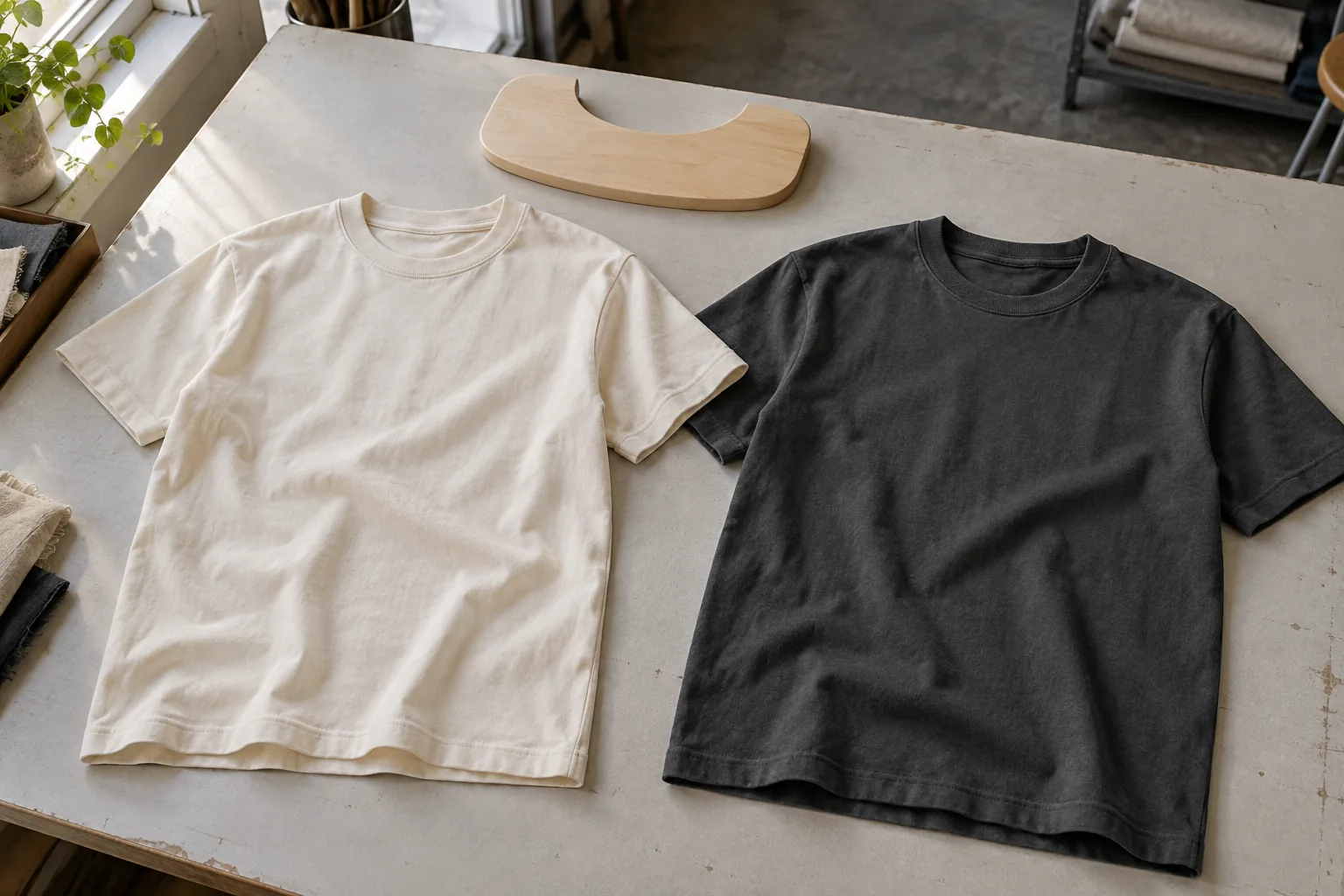
A premium T-shirt can feel substantial on the rail and still disappoint when its collar stays stretched after handling. Choosing between a 220 GSM body and a 260 GSM body therefore needs more than a weight comparison. For a close, clean crew neck, the useful question is whether the complete neckline returns to its intended shape after dressing, washing, and presentation.
This guide uses neckboard recovery to mean the neckline’s return after controlled stretching over a smooth display or test board. It is a practical buyer-defined check, not a recognized test standard or a substitute for wear trials. Used consistently, it helps buyers separate the effect of body weight from rib selection, neck opening geometry, and sewing settings before approving premium basics.
Make collar recovery the decision gate for body weight
GSM describes fabric mass per unit area; it does not specify collar elasticity. At equal fabric area, a 260 GSM body contains about 18% more fabric mass than a 220 GSM body. Actual garment weight also depends on pattern dimensions and trims. Neither figure tells you the rib’s knit structure, elastane content, finishing history, or ability to recover after extension.
The heavier option may suit a structured, roomy tee, but its neckline must work with that silhouette. A wide body and dropped shoulder can change how the garment hangs around the neck. The lighter option may produce a more flexible daily basic, yet an unsuitable rib can still flare outward. Evaluate both weights on the same wearer and in the intended size.
Set a commercial gate before sampling: the neck must pass the agreed recovery and appearance checks, then the body can be selected for drape and hand feel. This prevents a buyer from approving the most substantial swatch while leaving the most visible failure point unresolved.
Build a neckboard trial that another operator can repeat
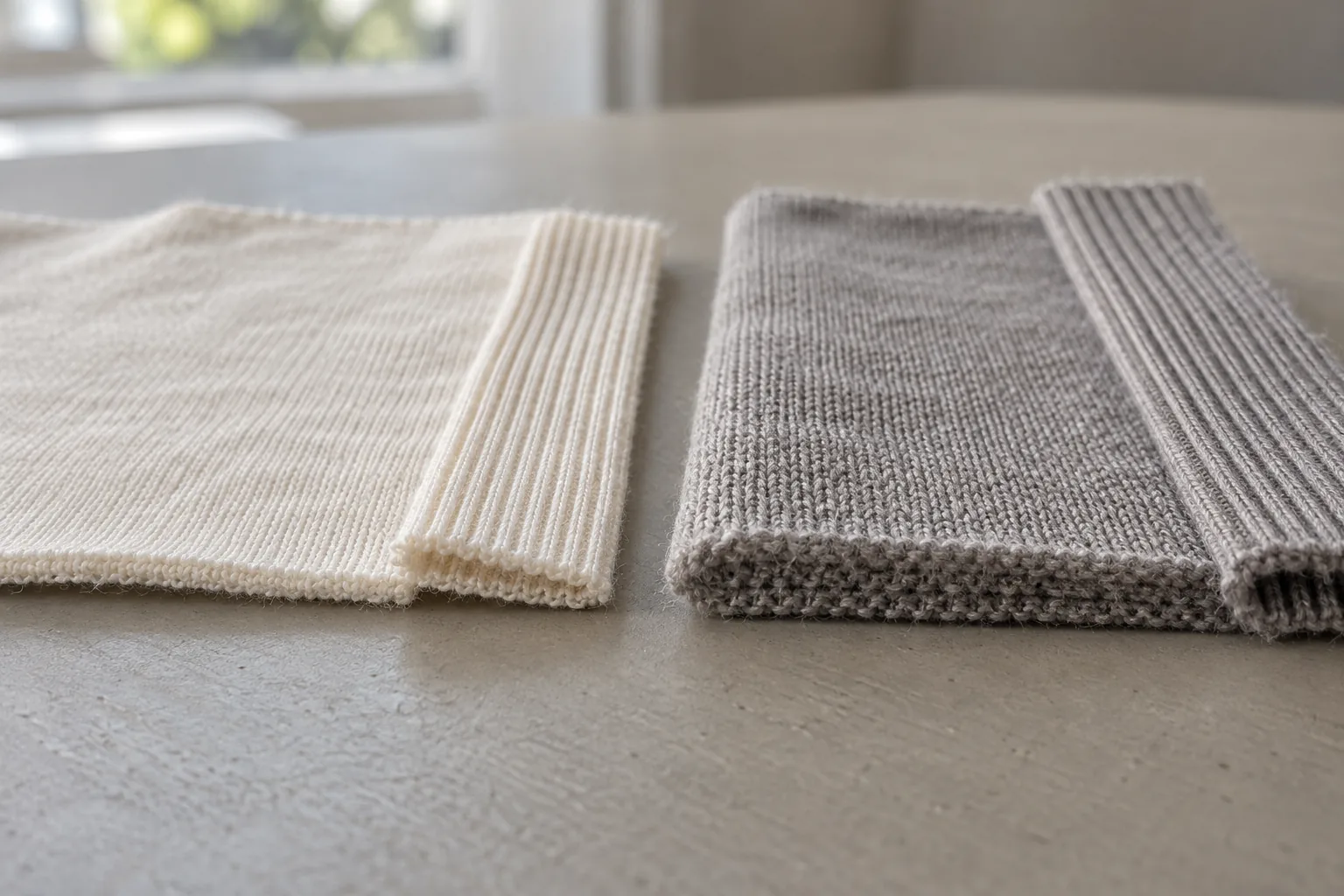
Specify the board’s outline, widest dimension, thickness, edge radius, and surface finish. Use smooth, rounded edges without sharp corners that could snag yarns. Record the insertion path and how far the board enters the opening. A board with the same width but a different outline can impose a different stretch, making results incomparable.
Choose its dimensions from the intended head passage and presentation use. Do not force every size onto an arbitrary oversized board. For a size range, confirm whether one board represents the intended use or whether smaller openings need a separate fixture. Photograph the setup alongside a dimensioned drawing.
Before testing, lay the garment flat without pulling it and allow it to relax under consistent room conditions. Mark measurement points in the test record rather than guessing where the collar looks widest. Measure the inside neck width between the same points each time; record front neck drop separately so a deeper, distorted opening is not mistaken for successful width recovery.
The following is an example development protocol, not an industry standard. Agree its suitability and acceptance limits with the manufacturer before treating it as a pass/fail requirement.
| Stage | Example buyer instruction | Record |
|---|---|---|
| Baseline | Relax flat for 24 hours before measurement | Inside neck width and front drop |
| Extension | Insert the agreed board for 30 seconds; repeat five times with 30 seconds between cycles | Board ID and any seam noise or damage |
| Recovery | Measure after 1 minute and again after 30 minutes | Residual width change and collar appearance |
| Laundered check | Repeat after three agreed care-label wash-and-dry cycles and relaxation | Recovery change and seam condition |
Use paired samples to expose the real weak point
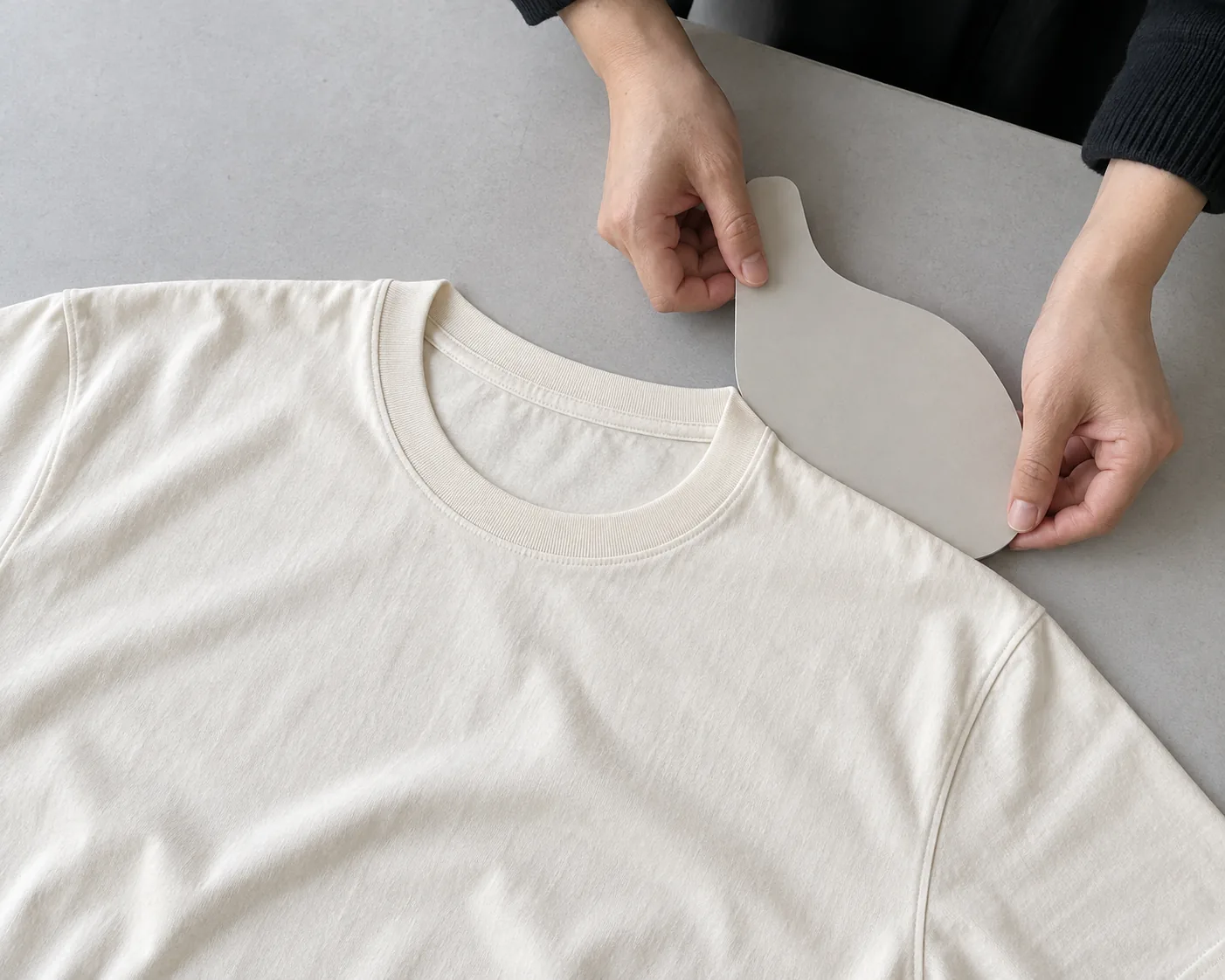
Start with one 220 GSM and one 260 GSM sample using the same target finished measurements, rib specification, and collar construction. Record any pattern or process adjustment needed to reach those measurements. Keep body composition and finishing as comparable as sourcing allows; otherwise, acknowledge that the comparison includes more than weight.
For each sample, record rib composition, structure, finished band width, cut length, and neck seam-line length. Calculate attachment ratio as rib length divided by neckline length, using the same seam-allowance convention. A ratio of 0.85 means the rib is 15% shorter than the neckline before attachment; it is an illustration, not a universal recommendation.
If both collars remain enlarged, investigate rib recovery before changing the body. If only one fails, inspect the body edge, stitch behavior, and relative shrinkage. Then change one variable at a time. Trying a new rib, shorter band, and different stitch setting simultaneously may improve the sample without revealing which correction bulk production must preserve.
Use more than one garment per candidate when the decision is close. A single well-sewn sample can conceal operator variation. Keep an untested control so repeated handling does not become an invisible difference between the two weights.
Read collar distortion before changing the specification
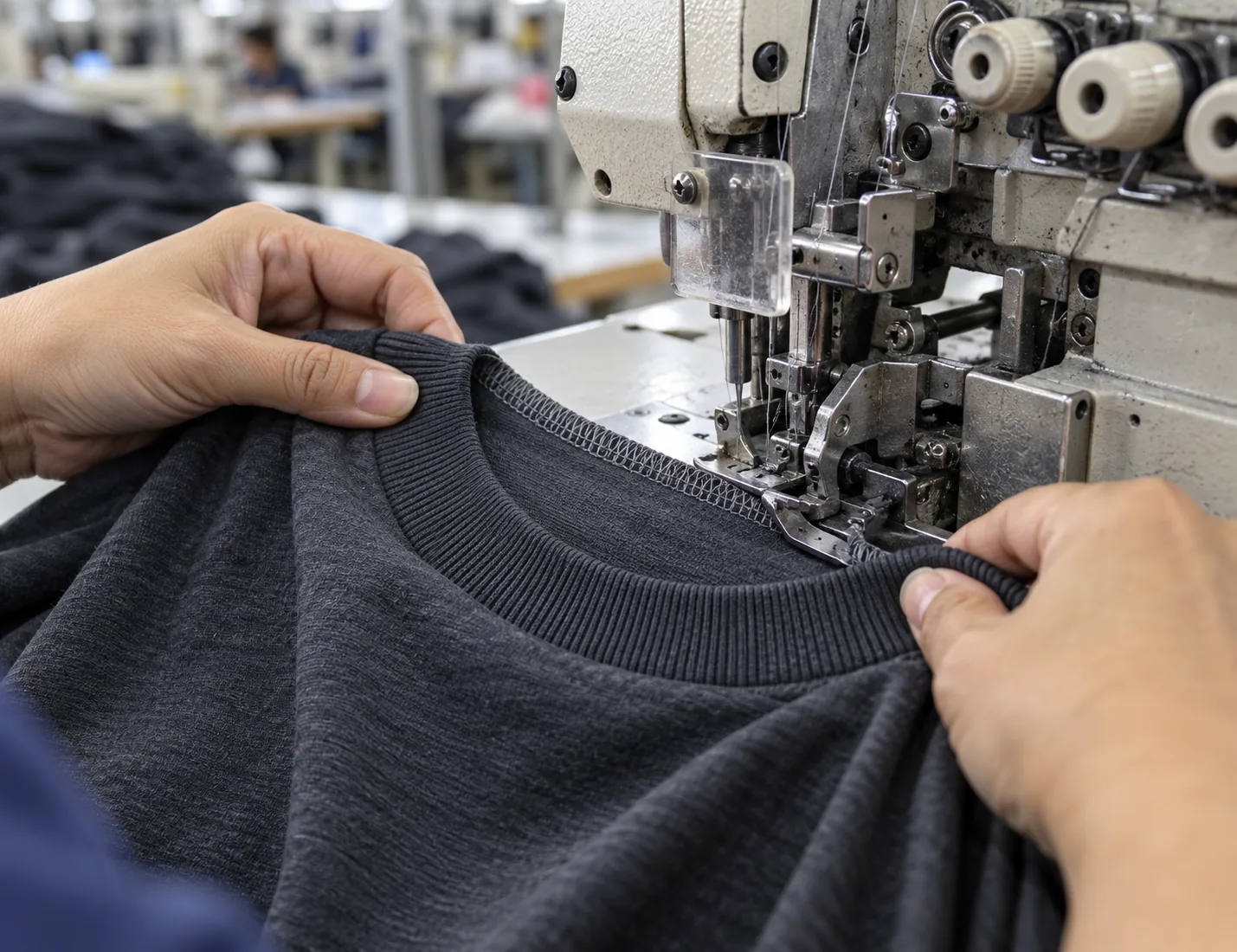
A neckline that stays wider after release suggests permanent extension somewhere in the system, but the rib is not automatically responsible. Compare the band with the surrounding body edge. A stretched jersey seam line can hold an otherwise resilient band open. Check whether cutting, handling, or feeding stretched the opening before sewing.
Rippling around the seam calls for a different investigation. Review rib length, differential feed, presser-foot pressure, and stitch balance. Shortening the band aggressively may pull the opening inward while creating puckers or making head passage uncomfortable. The buyer needs a wearable collar, not simply a smaller final measurement.
A collar that rolls after laundering can reflect differential shrinkage, band width, or construction imbalance. Measure body and rib changes separately where possible, and compare the washed garment with the control. Back-neck tape should also be checked for restraint or puckering; it supports a local seam area but does not establish recovery around the entire opening.
Put measurable release rules into the QC checklist
Calculate residual width growth as (recovered width minus baseline width) divided by baseline width, multiplied by 100. A neck measuring 180 mm initially and 184 mm after recovery shows approximately 2.2% growth. Keep the raw measurements: a percentage alone can hide rounding errors or inconsistent measuring pressure.
As an illustrative development target, a buyer might require no more than 3% residual width growth after 30 minutes, plus no visible flaring, broken stitches, or seam opening. Confirm the target per project against wear comfort, material capability, and measurement repeatability. Wash shrinkage must be assessed separately, since contraction can conceal extension damage in the final width.
- Match the approved materials: verify body and rib references, composition declarations, color, and finishing route against the sample record.
- Check construction: confirm finished band width, seam allowance, stitch formation, and back-neck reinforcement against the approved specification.
- Repeat consistently: use the recorded board, cycle count, timing, measurement points, and wash method.
- Inspect across production: agree sampling coverage across sizes, colors, and production stages; include the smallest opening rather than checking only the middle size.
- Control disposition: hold failing garments for investigation, document the correction, and retest before releasing the affected lot.
Reserve dedicated test garments where repeated stretching or washing makes them unsuitable for sale. StitchQuote includes QC before packing; the neckboard protocol, sample allocation, and release criteria should be agreed explicitly as part of the project requirements.
Resolve the last questions before approving the neckline
Should the heavier body automatically receive a heavier rib?
No. Rib mass does not establish stretch and recovery, and a thick collar may feel bulky at the seam. Approve its behavior, finished width, and appearance with the body. A shared rib may work across both weights, but paired garment tests should demonstrate that compatibility.
Can a flat collar still be too difficult to pull over the head?
Yes. A short, restrictive band may recover well while causing dressing discomfort or stressing the seam. Include a fit trial for the intended size range. Board recovery is only one acceptance gate; head passage and comfort remain separate requirements.
Does passing before washing qualify the bulk order?
No. Finishing and laundering can change both dimensions and recovery. Approve the intended wash-and-dry method, test laundered samples, and retain an approved reference. Bulk checks should use the confirmed production materials and construction rather than relying solely on an early development sample.
What should accompany a request for development samples?
Send the two body-weight options, finished neck measurements, rib details, board drawing, test sequence, and acceptance criteria. StitchQuote’s MOQ for most categories starts from 50 pieces per style. A 7-day sample is available for standard styles with confirmed specs and available materials; complex styles, custom washes, and custom-developed fabrics take longer. Confirm how the paired trial fits the sampling schedule before booking a launch.
Carry the approved recovery result into the production brief
Select the body weight only after reviewing recovery, comfort, washed appearance, and silhouette together. Attach the winning sample’s measurements and test photographs to the production brief, including the settings or material changes that made it pass. Keep the rejected result as a diagnostic reference so a later substitution does not silently reintroduce the same collar problem.
Related reading and project support:
- Prepare a tech pack with measurable neckline requirements
- Review sampling and MOQ planning
- Explore custom T-shirt manufacturing
- Contact StitchQuote about your sample brief
Request a manufacturing quote
Share your product type, quantity range, and destination. We usually reply within one business day.