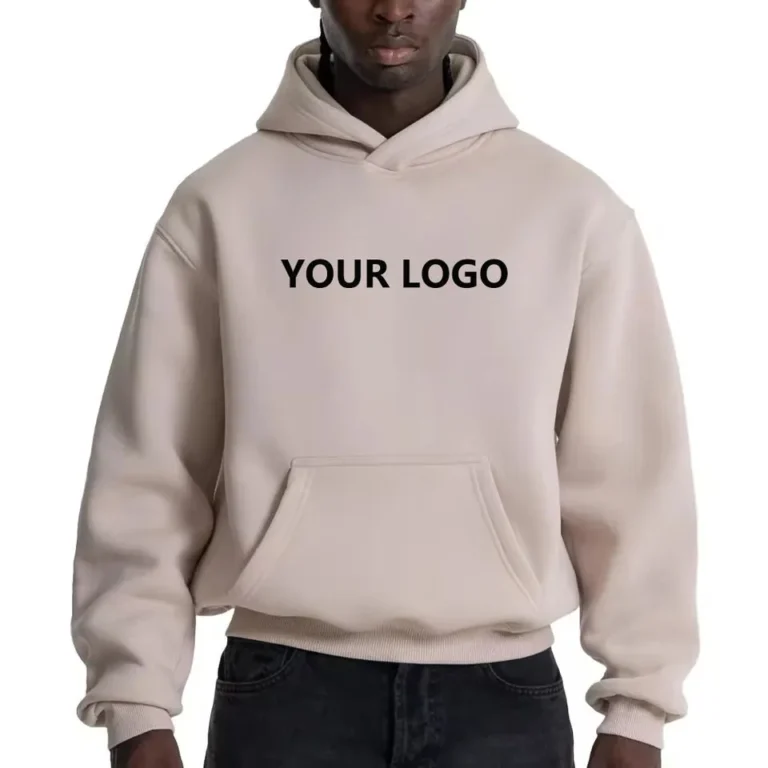
Apparel Manufacturing Resources for Brands

Resources & Guides is StitchQuote’s apparel manufacturing knowledge hub for brands developing streetwear, casualwear, and private label collections with clearer product decisions and more realistic production planning.

These articles are written from a factory-side perspective and focus on topics that directly affect sampling, MOQ, fit development, fabric selection, hoodie construction, and first-order execution. Instead of trend-heavy commentary, the goal is to help brands make better sourcing and development decisions before they waste time in avoidable revisions.

What you will find in this apparel manufacturing resource center

Start here if you are planning a new apparel program

Featured topic clusters and buying paths

Use these buyer paths to keep research focused

If you are narrowing a product brief or preparing to request a quote, you can also review our full product catalog and manufacturing services alongside the latest guides below.

Research by buying stage: turn reading into production decisions

Use these apparel manufacturing resources to build a decision record for each style. At every stage, save the approved specification, its revision date, and the person responsible for signing it off. This gives your designer, buyer, and production contact one reference when a fabric substitution, fit correction, or delivery question arises.

Planning & MOQ: define a manageable first order

Start with a style-by-color-by-size quantity grid, then identify which variations need separate fabric, trims, or decoration setups. StitchQuote’s MOQ for most categories starts from 50 pcs per style; denim starts from 100 pcs per style, with color splits and material requirements confirmed per project. Before requesting samples, decide which features define the product and which can change if sourcing constraints emerge.

Tech pack & sampling: make approval measurable

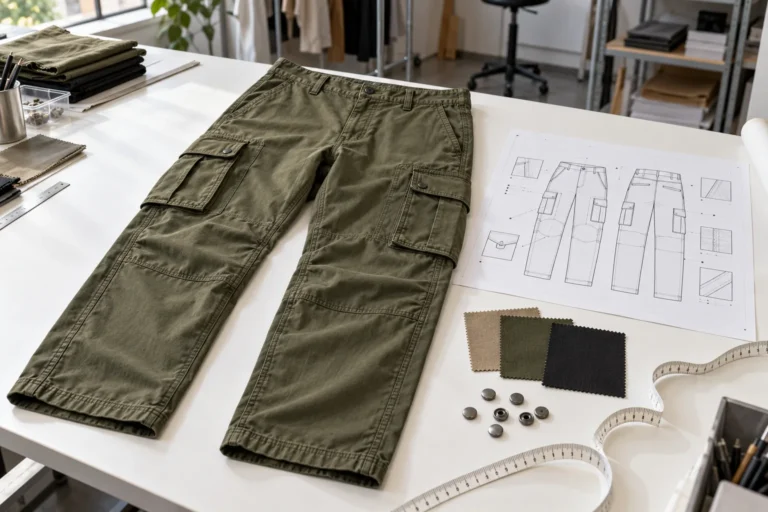
Document measurement methods alongside target dimensions: specify whether chest is measured flat, where body length begins, and whether waist measurements are relaxed or stretched. Include graded sizes, seam details, artwork dimensions, and a revision log; return sample comments as numbered corrections with photographs and measurements. A 7-day sample is available for standard styles with confirmed specifications and available materials; complex styles, custom washes, and custom-developed fabric take longer.

Fabric & construction: compare tees, hoodies, bottoms, and denim

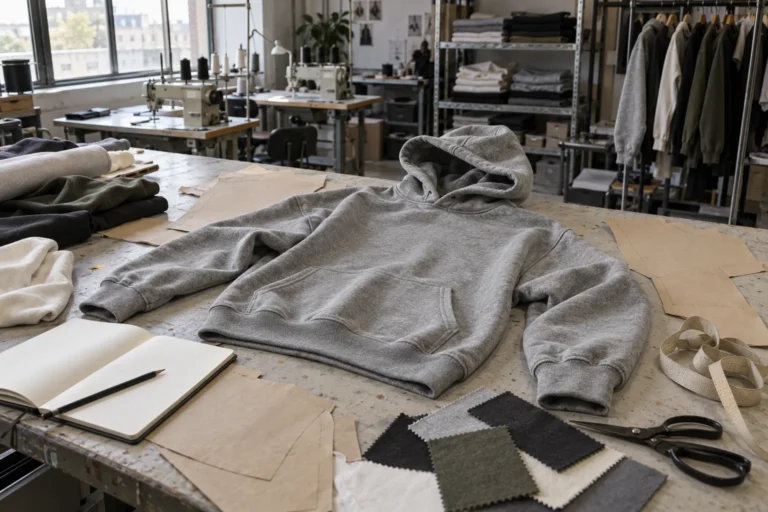
For tees, compare jersey composition, GSM, shrinkage, and neck rib recovery; for hoodies, distinguish loopback French terry from brushed fleece and assess rib against the body fabric. For bottoms, review rise, seat ease, waistband stability, and pocket reinforcement; for denim, evaluate weight, stretch recovery, and the finished wash together. Record the intended care method before testing, because fit and handfeel approvals should reflect the garment customers will actually wash and wear.

Cost & quoting: compare the same specification

Send every supplier the same quantity grid, fabric specification, decoration sizes, trim list, packaging requirements, and delivery destination. Request separate clarification of development charges, bulk unit costs, and freight responsibilities; a lower unit quote may exclude items included elsewhere. Fabric consumption, wash complexity, embroidery stitch count, print setup, and custom hardware can change costs, so record assumptions before comparing offers.

QC & bulk: connect approvals to inspection

Before bulk, agree on the approved reference sample, measurement tolerances, acceptable shade variation, and defect classifications. StitchQuote provides QC before packing; confirm the inspection scope, reporting format, and response to discrepancies for your project. Track production against these approvals, and require written agreement whenever bulk materials or construction differ from the approved specification.

Glossary for sourcing conversations

Term Meaning and practical use
MOQ Minimum order quantity; clarify whether it applies per style, color, or material.
GSM Grams per square meter, a fabric weight measure rather than a quality grade.
Tech pack The controlled specification for measurements, materials, construction, decoration, and packaging.
PP sample Pre-production sample used to confirm the intended bulk materials and workmanship.
Size set Samples across agreed sizes used to check grading and fit consistency.
AQL Acceptance quality limit used in statistical inspection plans; not a promise of zero defects.
Shade band Approved physical references defining acceptable color variation across fabric lots.
BOM Bill of materials listing fabric, thread, trims, labels, and other required components.
FOB Free on Board: a sea or inland-waterway term with delivery aboard the vessel at the named shipment port.

FAQ: what should buyers resolve next?

Can I approve bulk from photographs alone? Photographs help verify visible details, but cannot reliably establish handfeel, stretch recovery, or fit. Review physical samples and record measurement and wash-test results before approval.

Does heavier fabric always make a better garment? No. Yarn, knit structure, finishing, and construction also affect performance. Match weight to intended use and evaluate shrinkage, recovery, and comfort together.

What should I send for a first quotation? Submit your tech pack or annotated references, quantities by style and color, size range, material preferences, branding details, and target delivery date through the quote form. Flag unresolved decisions so the quotation can state its assumptions.