Custom Streetwear, Casualwear & Denim Manufacturer•MOQ 50 pcs•Denim MOQ 100 pcs•7-Day Sample Available

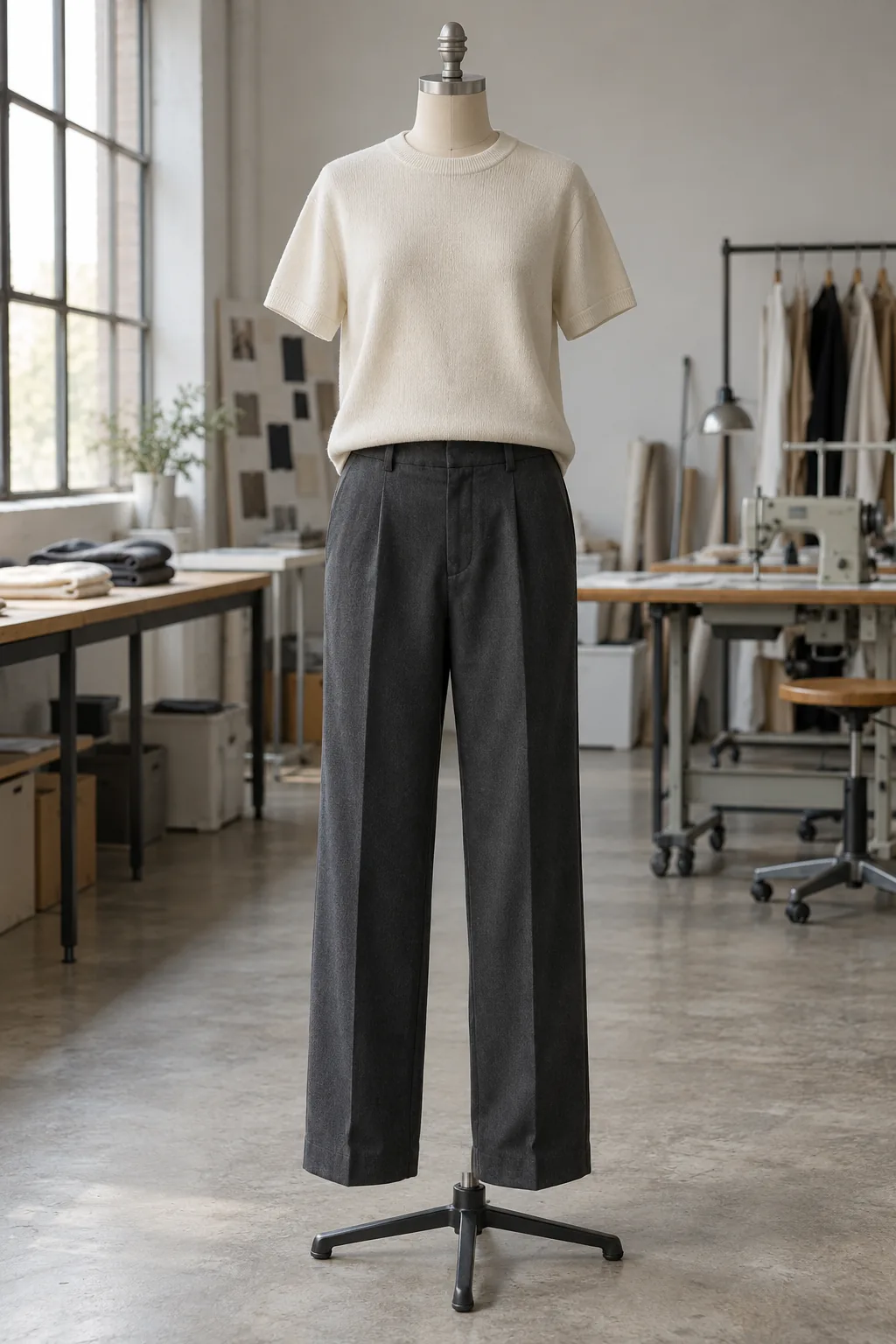
How to Start a Private Label Casualwear Brand
Learn how to start a private label casualwear brand with a realistic first collection plan, clearer MOQ decisions, better sampling flow, and stronger factory communication.

A casualwear label becomes tangible when a buyer can explain how its clothes should feel, move and hold their shape. A mood board may establish an atmosphere, but it cannot tell a sample maker whether a trouser waistband should sit flat under a shirt or whether an overshirt must fit over a sweatshirt.
To start a private label casualwear brand, turn that atmosphere into decisions about the garments themselves. This guide focuses on the product brief before sampling: choosing the right structure, specifying useful details and defining what an acceptable finished piece looks like. The result should be a collection whose character remains clear even when the logo is covered.
Translate the wearing occasion into a garment brief
Begin with a specific day in the customer’s life. Clothes for a warm commute and an air-conditioned workplace need different properties from clothes for an outdoor weekend. Write down the expected climate, hours of wear, movement and layering. These observations give fabric sourcing and pattern development a common direction.
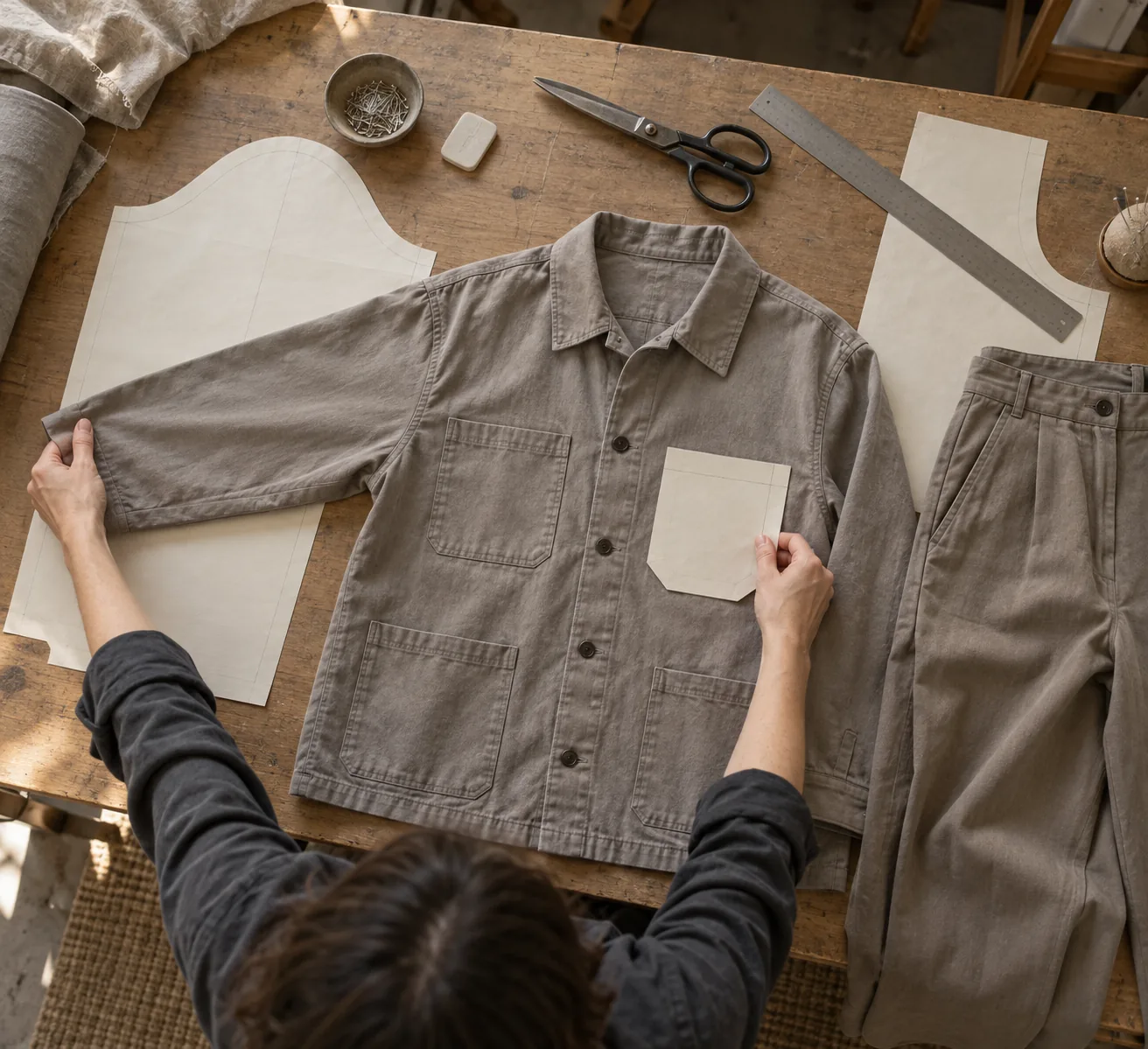
Consider a casual trouser intended for sitting at a desk and walking home. It may need a stable waistband, enough room through the seat and pockets that keep a phone secure. A relaxed overshirt for the same wearer needs sleeve room without cuffs that obstruct the hands. Those are concrete design requirements; “comfortable premium essentials” is not.
Give each garment three non-negotiable qualities and one acceptable compromise. For example: opaque fabric, unrestricted sitting and machine-washable care, with a slightly more textured surface accepted. This helps resolve competing sample comments without continually changing the product’s purpose.
Choose fabric by behavior before choosing its weight
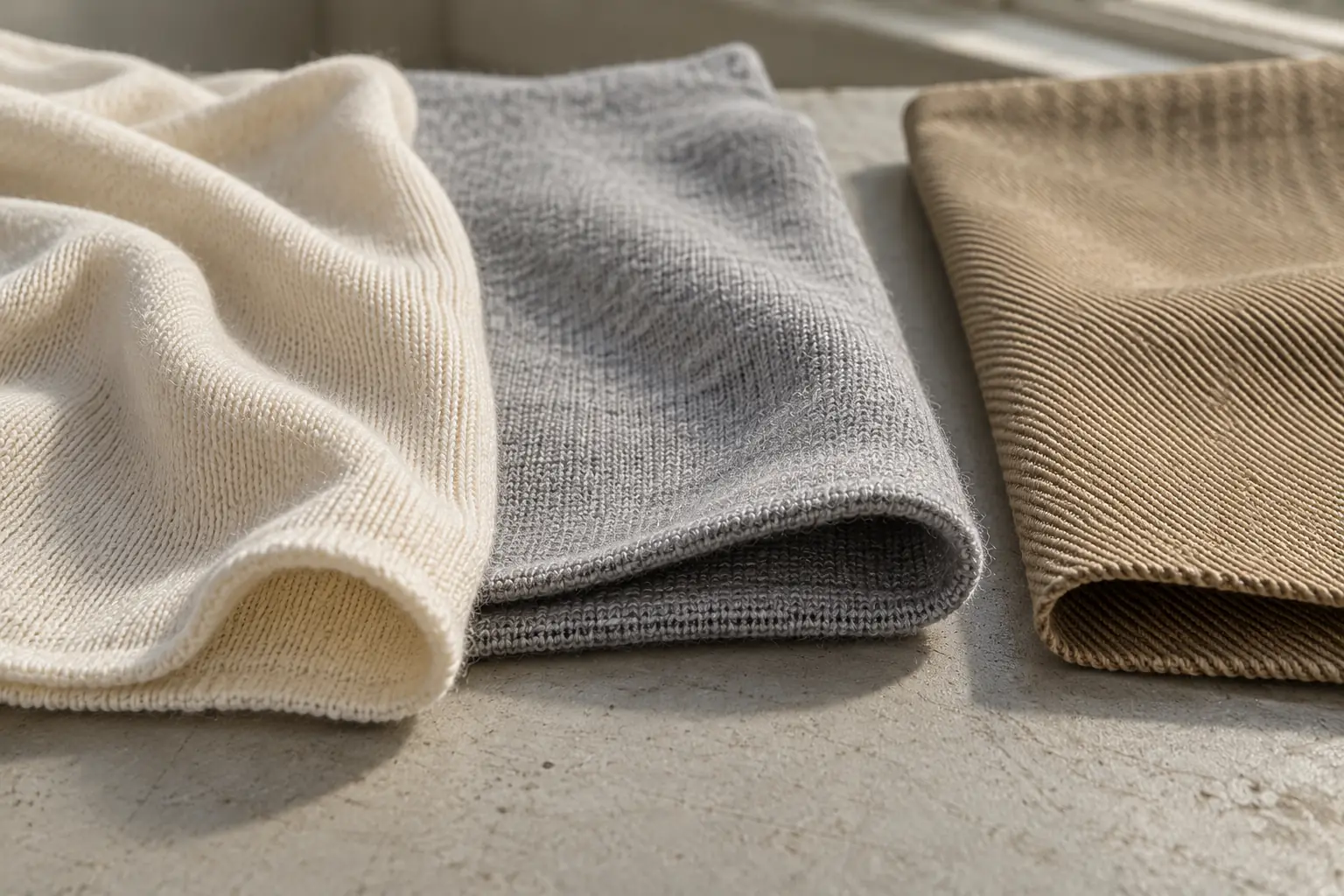
Fabric weight alone cannot predict softness, opacity or drape. Two materials with similar weight can produce very different silhouettes because of yarn, knit or weave structure, finishing and fiber composition. Review swatches alongside the intended construction, then evaluate the actual garment after washing under the proposed care conditions.
| Desired garment behavior | Candidate to explore | Question for the sample |
|---|---|---|
| A top that falls softly | Supple single jersey | Does it cling or become sheer when stretched? |
| A smoother, more structured top | Interlock knit | Does the finished piece feel too warm? |
| A trouser with a clean outline | Woven twill | Does the seat remain comfortable when sitting? |
These are starting points, not fixed recipes. Ask for the proposed composition, finish and care method in writing. If stretch is essential, distinguish between fabric that extends easily and fabric that recovers after use. Knees, elbows and neck openings reveal poor recovery more clearly than a flat swatch does.
Describe shape through relationships between measurements
A label such as “relaxed” leaves too much interpretation. Explain how shoulder width, chest width, body length and sleeve volume work together. A wide top with a short body creates a different impression from one with the same width and a longer hem. For trousers, connect rise, hip ease, thigh width and leg opening.
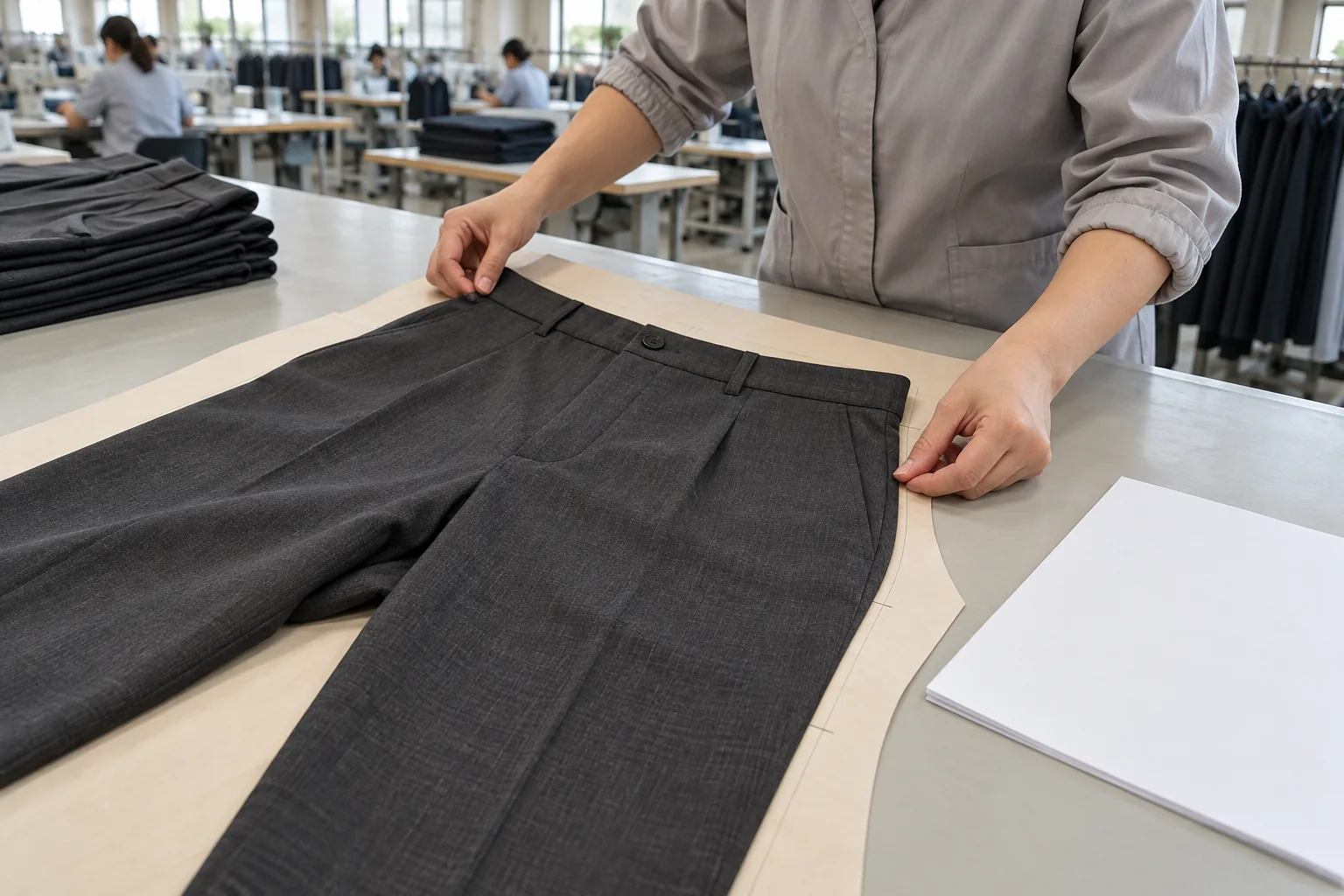
Choose a base size and record the fit model’s relevant body measurements. Assess the sample standing, sitting and reaching, with the intended layer underneath. Photograph consistent views and describe the location of each problem. “Waistband pulls down when seated” gives the pattern maker more useful information than “fit feels off.”
Then review the size progression. Increasing every measurement by the same amount will not preserve proportion across sizes. Agree on measurement points, grading and tolerances, and confirm which additional sizes need physical review before bulk cutting.
Engineer the details customers handle every day
Details become brand signatures when they work repeatedly. For a trouser, specify the pocket opening, bag depth and attachment so the pocket supports its intended contents. For an overshirt, assess button spacing while seated and cuff openings with sleeves pushed up. On a knit top, review neckline recovery after dressing and washing.
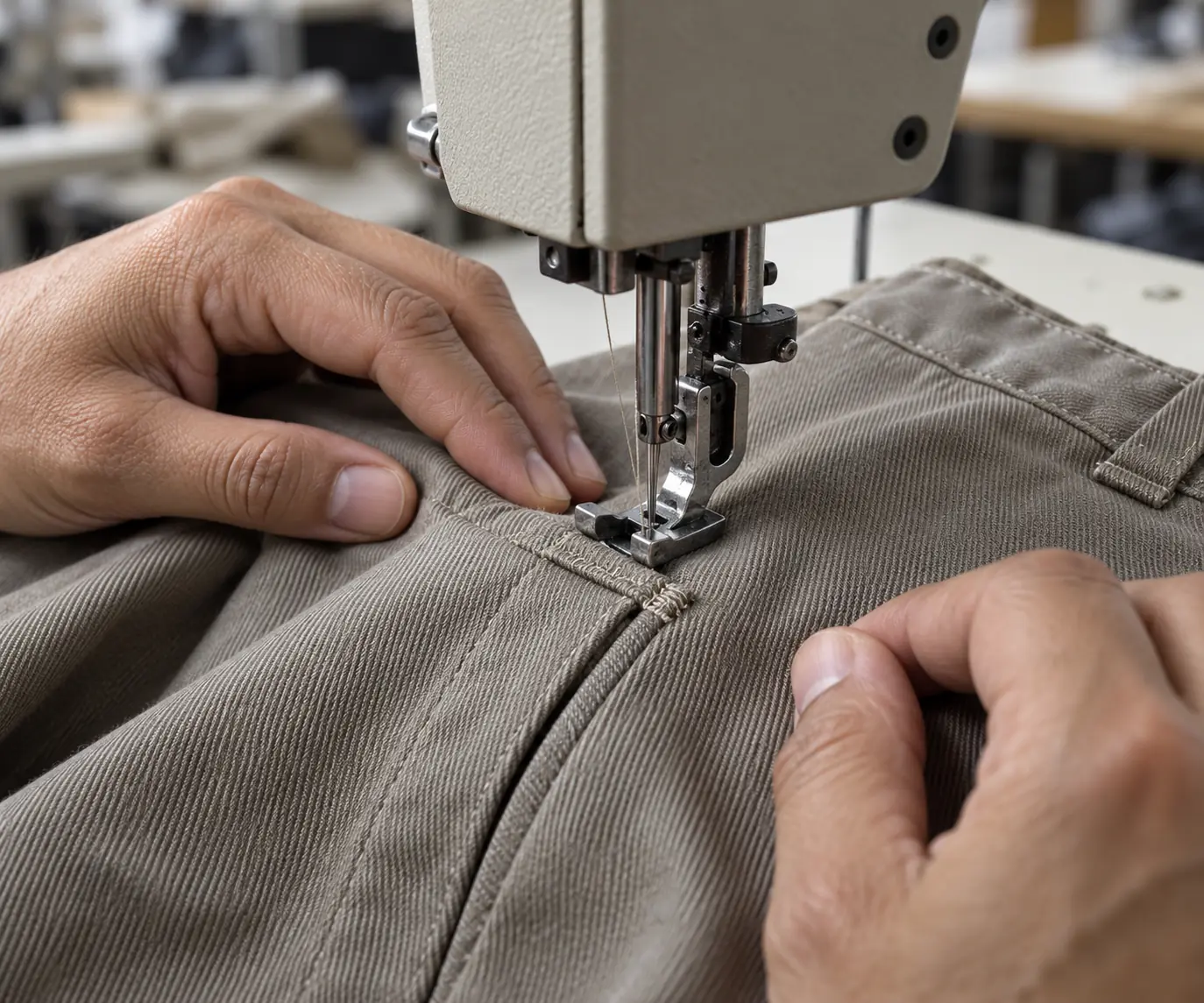
Record reinforcement locations and seam finishes in the brief. Ask the sample maker to recommend suitable construction where you lack technical certainty, then document the agreed result. Dense stitching or heavy reinforcement can create stiffness in a light fabric, so judge durability and comfort together.
Branding also interacts with construction. An embroidered motif can distort a lightweight panel; a woven label can irritate the neck if its edge or position is poorly chosen. Review the actual decoration and label placement on the intended material, including their appearance after care.
Separate garment essentials from sourcing-dependent options
Before requesting a quote, distinguish fixed decisions from alternatives. Your preferred fabric behavior may be essential while the exact shade remains negotiable. A standard button may serve the design while a specially developed fastener adds a separate sourcing dependency. Ask suppliers to identify substitutions explicitly rather than assuming every quoted option is equivalent.
StitchQuote provides cut-and-sew, private label, sampling, fabric and trim sourcing, branding through woven labels, prints and embroidery, and QC before packing. MOQ for most categories starts from 50 pieces per style; denim starts from 100 pieces per style. Confirm how the proposed colors, sizes and material choices affect the specific order.
A 7-day sample is available for standard styles with confirmed specifications and available materials. Complex styles, custom washes and custom-developed fabrics take longer. Use that distinction when choosing between a readily available fabric and a developed material, and confirm the project schedule separately.
Build acceptance checks around the product promise
Write the checks before approving the sample. If the product promise is easy everyday wear, appearance on a hanger is insufficient. Keep an approved reference sample and a written specification so the production review has a shared basis.
- Dimensions: Check agreed measurement points against the specification and tolerances, with a defined method for measuring elastic areas.
- Care response: Compare dimensions, twisting, surface appearance and decoration before and after the agreed wash and dry procedure.
- Movement: Check sitting, reaching and bending for pulling, restricted openings or unwanted exposure.
- Construction: Inspect skipped stitches, seam puckering, pocket attachments, closures and reinforcement at agreed stress points.
- Consistency: Compare color, trim placement and garment appearance against approved references before packing.
Agree on inspection coverage and how defects will be resolved. A sample review establishes the target; bulk QC checks whether production meets it.
Make the measurement sheet reproducible
Give each measurement point a diagram and a method, not just a number. For a jersey top, define half-chest width as the straight distance between side seams at a stated distance below the armholes. Define body length from the high shoulder point beside the neck to the hem, and specify whether sleeve length starts at the shoulder seam or center back. These methods produce different results on dropped-shoulder garments, so the measurement name alone is insufficient.
For trousers, distinguish a relaxed waistband measurement from an extended one, state whether the waistband is included in rise measurements, and locate thigh width a specified distance below the crotch. Measure garments flat without stretching them unless the measurement explicitly requires extension. Record whether the specification applies before washing or after the approved care procedure; otherwise, shrinkage and sewing variation can become confused.
As an illustrative starting proposal for discussion, a buyer might allow plus or minus 1 cm on half-chest width and body length, with plus or minus 0.5 cm on a pocket position. These are not StitchQuote tolerances or universal standards. Agree achievable limits for the material and construction before approval. Remember that a 1 cm difference in flat half-chest width represents roughly 2 cm around the body, which can noticeably change the intended ease.
Turn a first order into a clear costing and QC brief
Consider a hypothetical first order of 60 jersey tops in one style and one color, split into 10 small, 20 medium, 20 large and 10 extra-large pieces. This exceeds the stated starting MOQ of 50 pieces per style for most categories, but the buyer must still confirm fabric availability and the proposed size split. Denim would require at least 100 pieces per style. Submit the quantity breakdown alongside the measurement sheet so the quote describes the order you actually intend to place.
For fabric sourcing, a buyer could propose 100% cotton single jersey at 180–200 GSM as a starting range for a lightweight everyday top. Treat this as a sourcing brief, not a claim about available stock. Ask for the actual proposed weight, composition and finish, then check opacity in the chosen color and dimensional change after care. A heavier alternative may increase fabric consumption by weight and shipping weight without delivering the preferred drape.
Request a cost breakdown that distinguishes fabric, cutting and sewing, decoration, labels, packing and any development charges. Extra panels add cutting and sewing operations; embroidery size and stitch count affect decoration work; custom trim can introduce minimum purchasing quantities beyond garment requirements. Compare quotations against the same specification and ask whether leftover specially purchased materials are included or handled separately.
Before production, approve the fit, material, color, branding placement and packing instructions in a dated specification revision. For this example, ask QC to report measurement deviations by size, examine neckline shape and seam appearance, and verify the packed size totals against the 60-piece allocation. Agree how many pieces receive each check and what happens when a check fails. This makes the inspection result actionable rather than a general statement that the garments look acceptable.
Questions about defining the first garments
Can one fabric work for both a top and trousers?
Possibly, but approve it for each use. A material that drapes well on a top may lack opacity, abrasion resistance or recovery for trousers. Matching color does not require identical construction.
Should a reference garment replace written measurements?
No. Use it to communicate proportion or hand feel, then document the required measurements and intended changes. A worn reference may already have stretched or shrunk, making it an unreliable production standard.
When should a wash effect become part of the specification?
Before fit approval if it changes shrinkage, softness or appearance. Assess the sample after the intended treatment and record the approved result. Custom washes also require additional development time.
Related reading and next steps
- Prepare a tech pack for your garment decisions
- Review sampling and MOQ considerations
- Explore private label manufacturing services
- Discuss your garment brief with StitchQuote
Request a manufacturing quote
Share your product type, quantity range, and destination. We usually reply within one business day.