Custom Streetwear, Casualwear & Denim Manufacturer•MOQ 50 pcs•Denim MOQ 100 pcs•7-Day Sample Available
How Long Does Clothing Sampling Take
Learn how long clothing sampling really takes, what delays sample development, and how brands can reduce revision rounds with a clearer tech pack and faster approvals.

How long does clothing sampling take? The useful answer depends on what the sample must prove. A garment made to explore sleeve volume has a different job from one used to authorize production. Both may look finished in a photograph, but they support different buying decisions.
For a brand buyer, the practical starting point is to name the uncertainty you need to resolve. Then request a sample suited to that question and agree what evidence will close it. This approach gives each development round a clear purpose and makes a quoted completion date more meaningful.
Ask which decision the next garment will support
Before requesting a sample date, write a one-sentence objective: “Confirm that the cropped overshirt layers over a heavyweight tee without pulling across the back.” That is more actionable than “Make a sample for approval.” It identifies the wearer, intended use, and feature that needs attention.
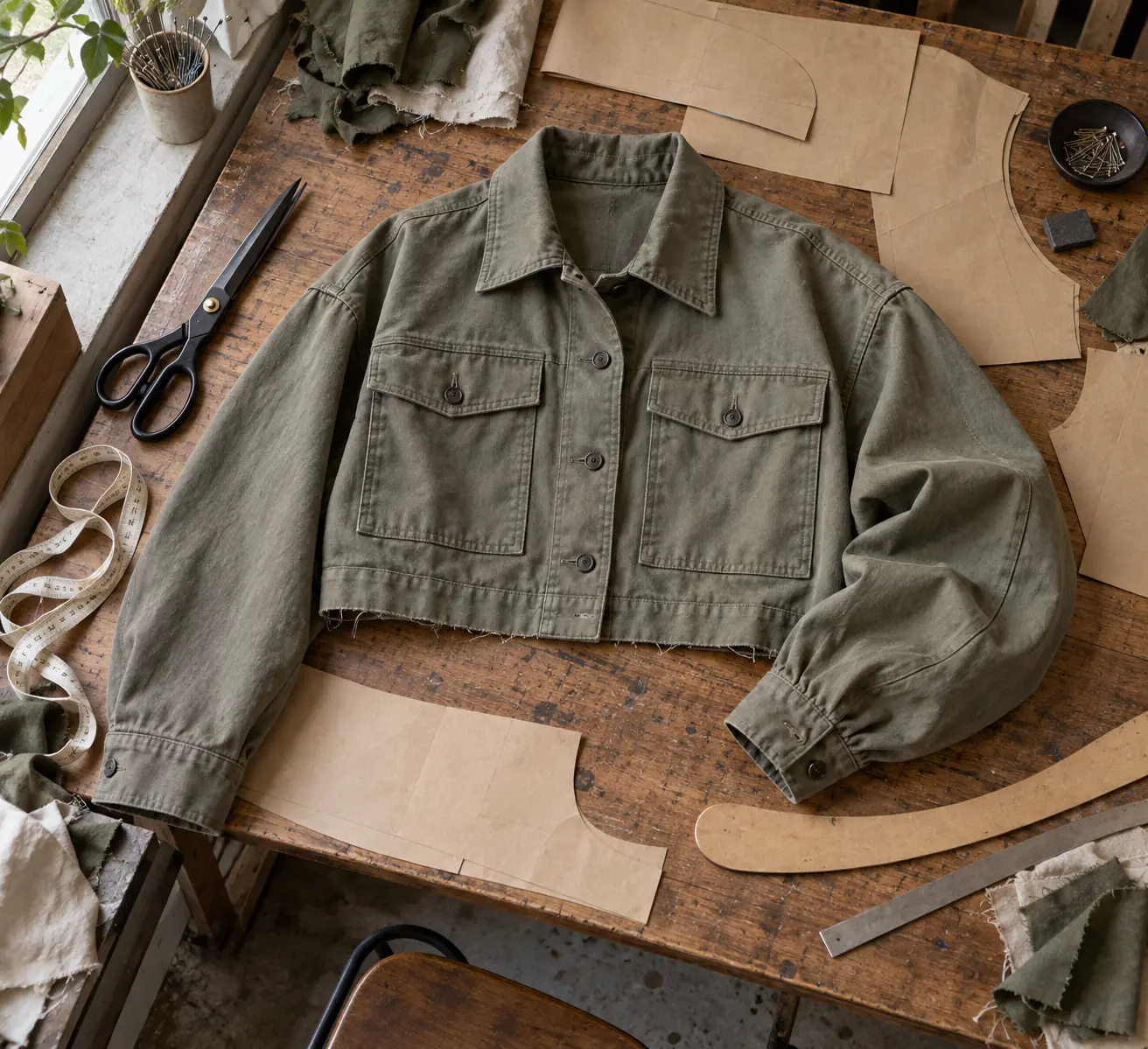
Agree on the sample’s scope with the manufacturer. Sample-stage names vary between suppliers, so describe the actual decision as well as using a label. Specify whether substitute fabric is acceptable, whether decoration is required, and which details can remain provisional.
A narrowly scoped sample can answer a question sooner, but its approval should stay equally narrow. Accepting the overshirt’s shape does not automatically approve its final fabric, snaps, or embroidery. Record those outstanding decisions separately.
Use a shape sample to test the design’s basic logic
An early prototype helps establish whether a design works as a garment. Consider a casual trouser with a curved side seam and oversized knee panels. The first useful question may be whether the panels sit correctly when the wearer bends, rather than whether the final topstitch thread is the right shade.
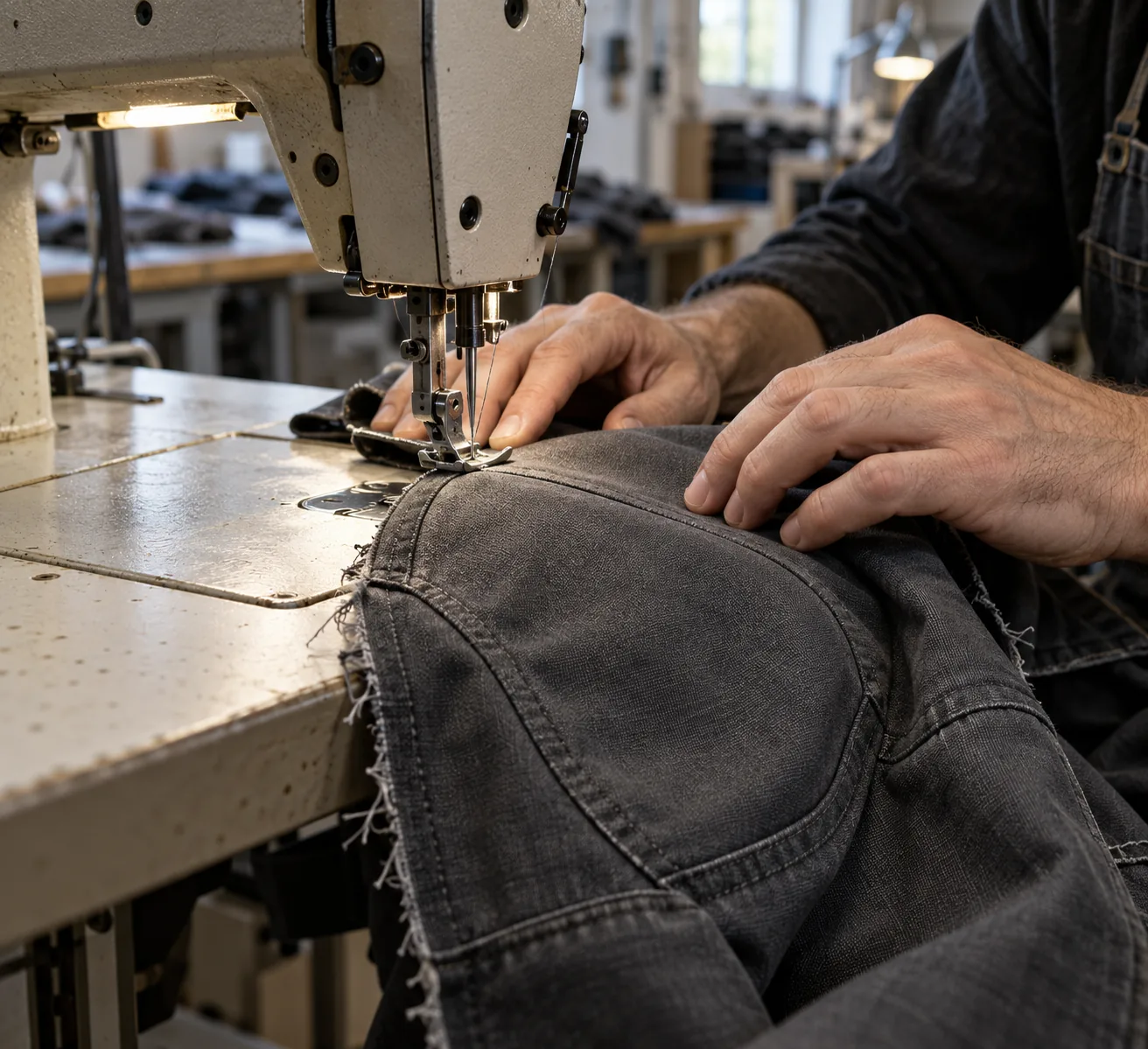
Provisional materials can be suitable for this stage if their limitations are understood. A lightweight substitute will not reliably demonstrate the drape of dense twill. If weight or stretch drives the silhouette, using a closer material match may be necessary even for the first version.
The output should be a design decision: retain the panel layout, move the seam, or reconsider the cut. Spending time perfecting small branding details before this decision can mean repeating work after the pattern changes.
Separate body fit from fabric behavior
A fit sample tests how the pattern relates to the intended wearer. For a boxy tee, check shoulder position, neck opening, chest ease, and hem balance on a consistent fit model. Repeat the same movements and measurement method across versions so that comments describe actual changes.
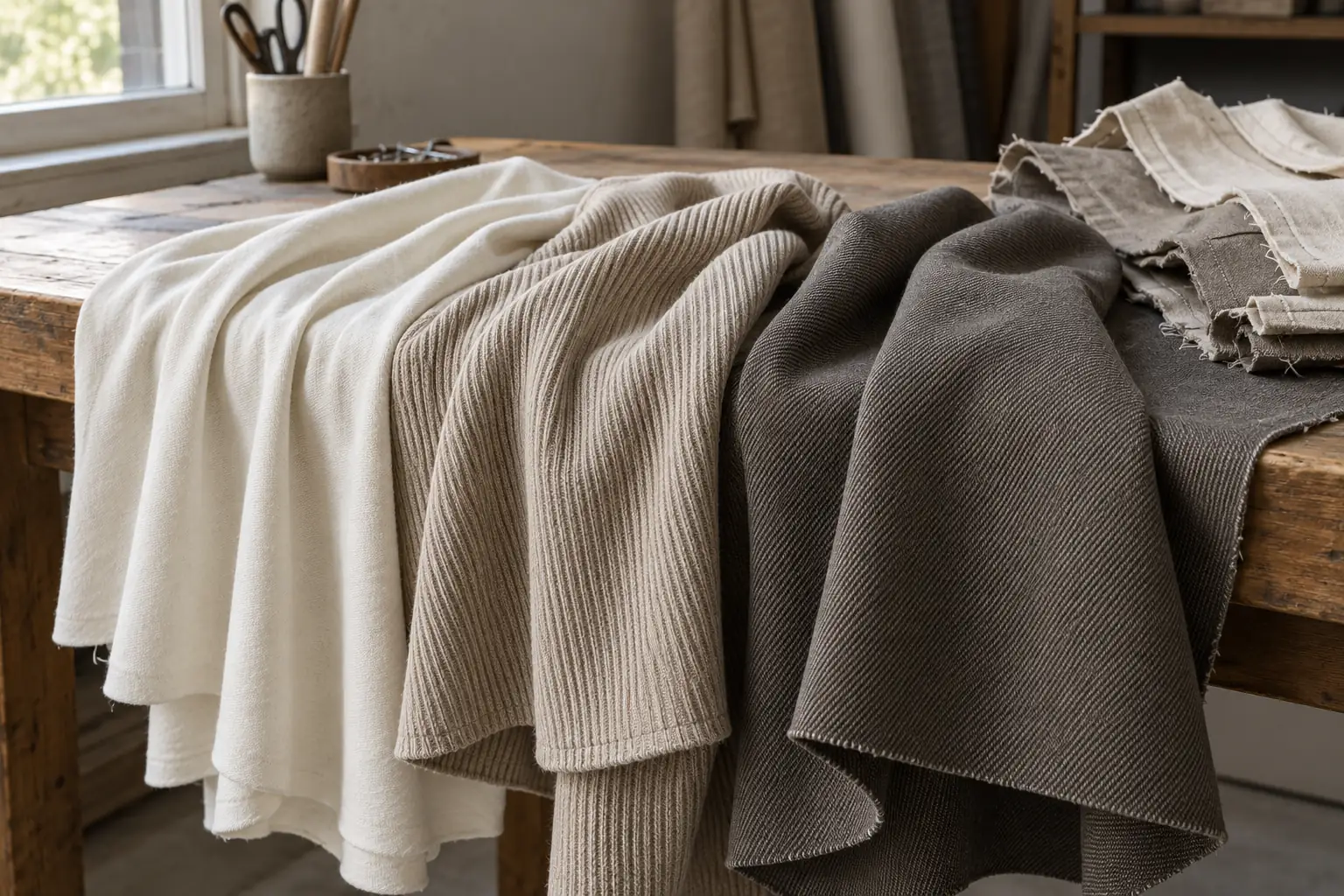
Fabric evaluation asks a separate question: will the chosen material preserve the intended result? A rib neckline may recover differently after washing; a washed denim leg may twist or change dimensions. Evaluate the relevant treatment under agreed conditions and retain before-and-after measurements where needed.
These evaluations can overlap when representative materials are available. When they are not, state which findings remain provisional. A good fit in substitute cloth is useful evidence, but it does not establish the final garment’s shrinkage, hand feel, or recovery.
Reserve production approval for a representative sample
A production approval sample should represent the agreed product closely enough to guide manufacturing. Confirm its fabric, trims, construction, decoration, and finishing against the specification. If a component differs, document the exception and decide whether another physical check is required before authorizing the affected work.
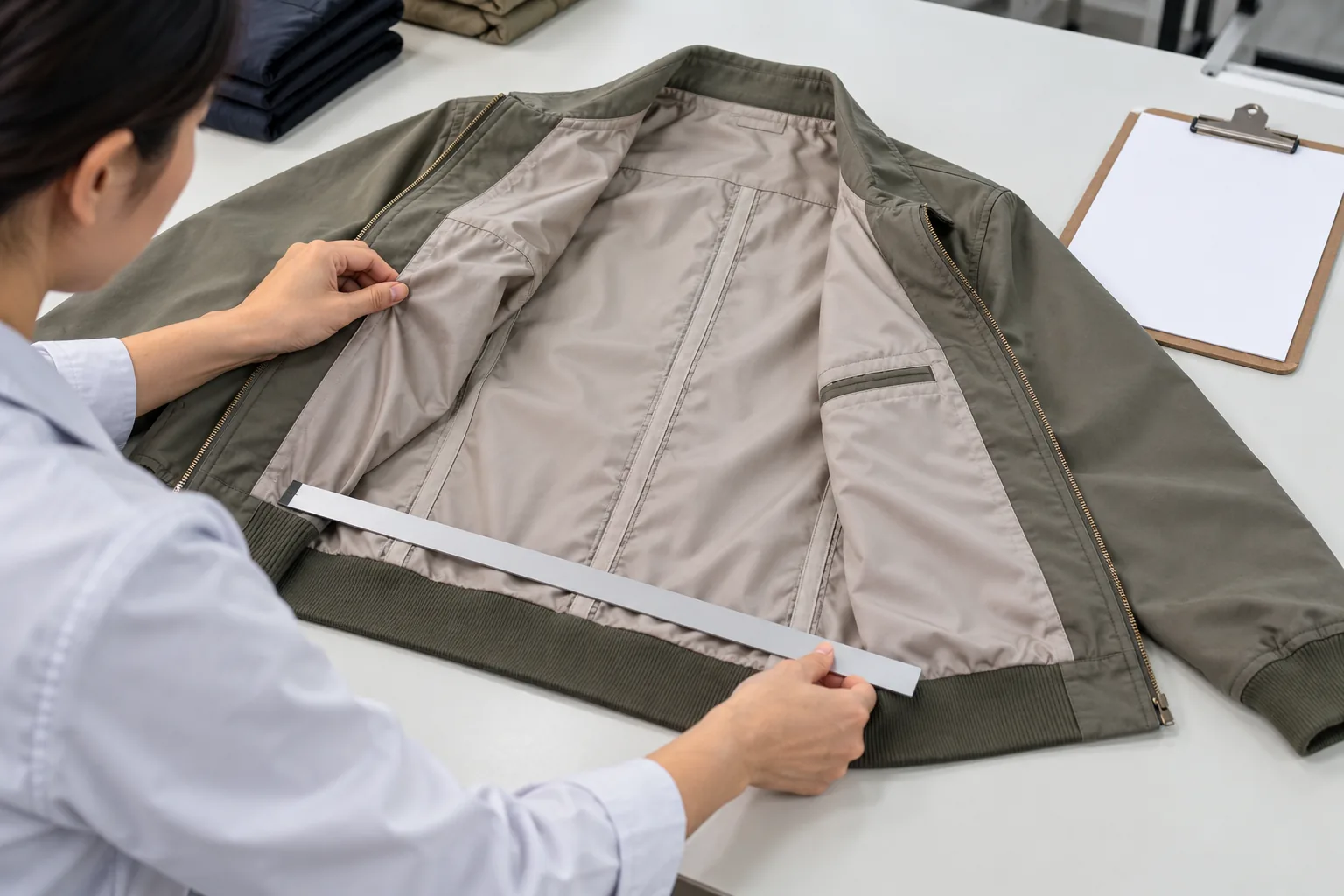
One approved size also leaves questions about the rest of the range. A size-set review may be appropriate when grading, proportions, or fit at the range extremes creates uncertainty. Agree which sizes need physical review rather than assuming a base-size sample proves every size.
Retain an identified reference sample and the matching specification version. The purpose is to give the buyer and factory a shared comparison point. Approval based only on a photo can miss stiffness, interior construction, and how the garment feels in use.
Attach the quoted time to a defined sample outcome
StitchQuote offers a 7-day sample for standard styles with confirmed specifications and available materials. Complex styles, custom washes, and custom-developed fabrics take longer. Confirm the applicable scope and timing for your project; that availability does not mean every style can complete every development stage in seven days.
Ask what the quoted endpoint means: ready for inspection, ready for dispatch, or received by your team. Also clarify whether the estimate covers one sample version or any agreed correction work. Shipping and buyer evaluation need their own calendar space.
| Purpose | Evidence needed | Decision supported |
|---|---|---|
| Explore shape | Wearable prototype with relevant proportions | Keep or change the design |
| Assess fit | Consistent wearer and measurement record | Accept or revise the pattern |
| Assess material | Representative fabric and relevant treatment | Accept material behavior |
| Approve production reference | Agreed components and documented specification | Authorize the defined production scope |
Not every project requires four separate garments. A straightforward style may combine purposes in one sample. A new wash or unfamiliar construction may need separate trials. Let unresolved product questions determine the work required.
Check evidence before closing a sample round
Review each sample against its stated purpose before giving approval. A short, repeatable checklist helps distinguish a successful stage from a garment that merely looks presentable.
- Identity: Record style, size, sample version, and specification revision.
- Measurements: Compare agreed points of measure and tolerances using the same method.
- Construction: Inspect seams, pocket openings, fastening function, and interior finishing relevant to this stage.
- Materials: Identify substitutions and any washing or finishing still outstanding.
- Branding: Where included, check placement, dimensions, and effect on garment comfort.
- Disposition: State approved, revision required, or approved only for a named purpose, with unresolved items listed.
StitchQuote’s services include cut-and-sew, private label, sampling, fabric and trim sourcing, branding through woven labels, prints and embroidery, and QC before packing. Sample approval establishes the reference for subsequent work; it does not replace checks on the garments produced.
Turn the fit brief into a measurable inspection sheet
For a tee sample, define each point of measure before cutting. Specify half chest measured flat at a stated distance below the armhole, body length from the high shoulder point to the hem, shoulder width between seam intersections, and sleeve length from the shoulder seam. Add neck opening width and front neck drop when the neckline is central to the design. A measurement diagram helps the buyer and sample room use identical endpoints.
Set tolerances by measurement and construction. As an illustrative proposal for discussion, a buyer might request a half-chest target of 56 cm with a tolerance of plus or minus 1 cm, and plus or minus 0.5 cm for neck opening width. These are proposed specification values, not StitchQuote standards or universal acceptance limits. Confirm feasibility with the manufacturer. Record actual measurements alongside targets: an observed chest width of 57.5 cm gives a clearer correction brief than “too wide.”
State whether dimensions apply before or after washing, and measure with the garment flat and unstretched. Record the wash and drying methods and repeat the same measurement points after treatment. A body length changing from 70 cm to 68.6 cm represents a 2% reduction. Compare that result with the agreed shrinkage requirement before deciding whether to revise the pattern or reconsider the material.
Connect sample decisions to a concrete order brief
Consider a hypothetical 100-piece cotton jersey tee order across four sizes. The brief should identify size quantities, the base sample size, intended fit, fabric composition, knit structure, and target weight, such as 220 GSM. GSM describes mass per square metre; it does not establish opacity, softness, or shrinkage. Evaluate those properties separately using representative material. Specify neck rib composition and construction too, because the body fabric alone cannot establish neckline recovery.
Sequence the approvals: confirm fabric and trims, review the base-size sample, consolidate corrections into one revised specification, and check any requested revision before production authorization. If proportions at the smallest and largest sizes remain uncertain, agree how those sizes will be reviewed. Match each sample version to its specification revision so an outdated measurement sheet cannot accidentally guide cutting.
Ask the quotation to identify cost drivers without assuming a particular price. Custom fabric development, additional sample rounds, multiple decoration placements, embroidery stitch count, special trims, and individual packing requirements can change the work involved. Clarify sample charges, applicable material minimums, and delivery charges separately. For the production QC brief, specify checks against the approved reference for agreed measurements, seam integrity, label accuracy, decoration placement, and size quantities. Define how defects will be recorded and resolved before packing so approval leads to an actionable inspection process.
Questions buyers ask when defining a sample’s purpose
Can a showroom sample also establish fit?
It can if its size, materials, and construction suit the fit review. A garment prepared mainly for presentation may contain provisional details. Confirm those before using it to approve the pattern.
Should every color receive its own full sample?
Base that decision on what changes between colors. Shared construction may need one reference, while color-dependent opacity, fabric behavior, or decoration contrast may warrant additional checks. Agree the evidence required for each variation.
Does a low order quantity remove any sample stages?
No. Quantity does not resolve fit or material uncertainty. StitchQuote’s MOQ for most categories starts from 50 pieces per style; denim starts from 100. Choose sample work according to the product questions still open.
What should a buyer send when requesting a date?
Send the current specifications, intended sample purpose, required materials, and the decision deadline. Identify acceptable substitutions explicitly so the proposed timing corresponds to evidence your team can actually use.
Related reading and project support
- Prepare specifications for your sample brief
- Review sampling and minimum order planning
- Keep this sampling timing guide for reference
- Discuss your sample requirements with StitchQuote
Request a manufacturing quote
Share your product type, quantity range, and destination. We usually reply within one business day.