Custom Streetwear, Casualwear & Denim Manufacturer•MOQ 50 pcs•Denim MOQ 100 pcs•7-Day Sample Available

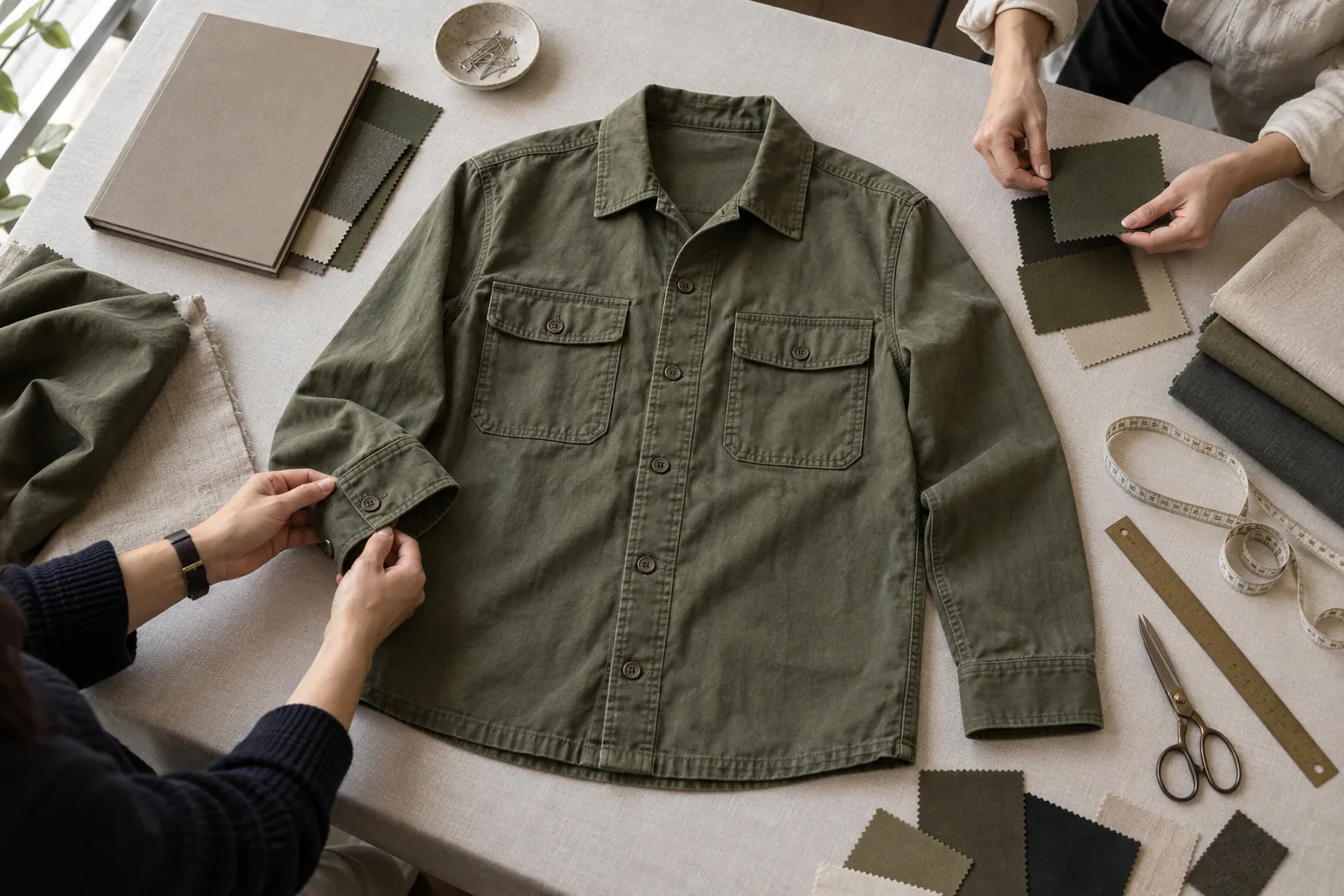
How to Prepare a Tech Pack for Apparel Manufacturing
Learn how to prepare a tech pack for apparel manufacturing with the key details factories need for quoting, sampling, fit review, trims, artwork, and smoother production communication.

A tech pack is ready to send when someone outside your brand can use it without silently filling in the gaps. For a buyer, the final review should test whether the documents support the next purchasing decision: requesting a comparable quote, authorizing a sample, or releasing an approved style into production.
Use this checklist before handing over a new design or revised specification. The aim is to expose contradictions, assign unresolved choices, and establish evidence for approval. A compact, consistent file is more useful than a large presentation whose pages disagree.
Identify the decision this version must support
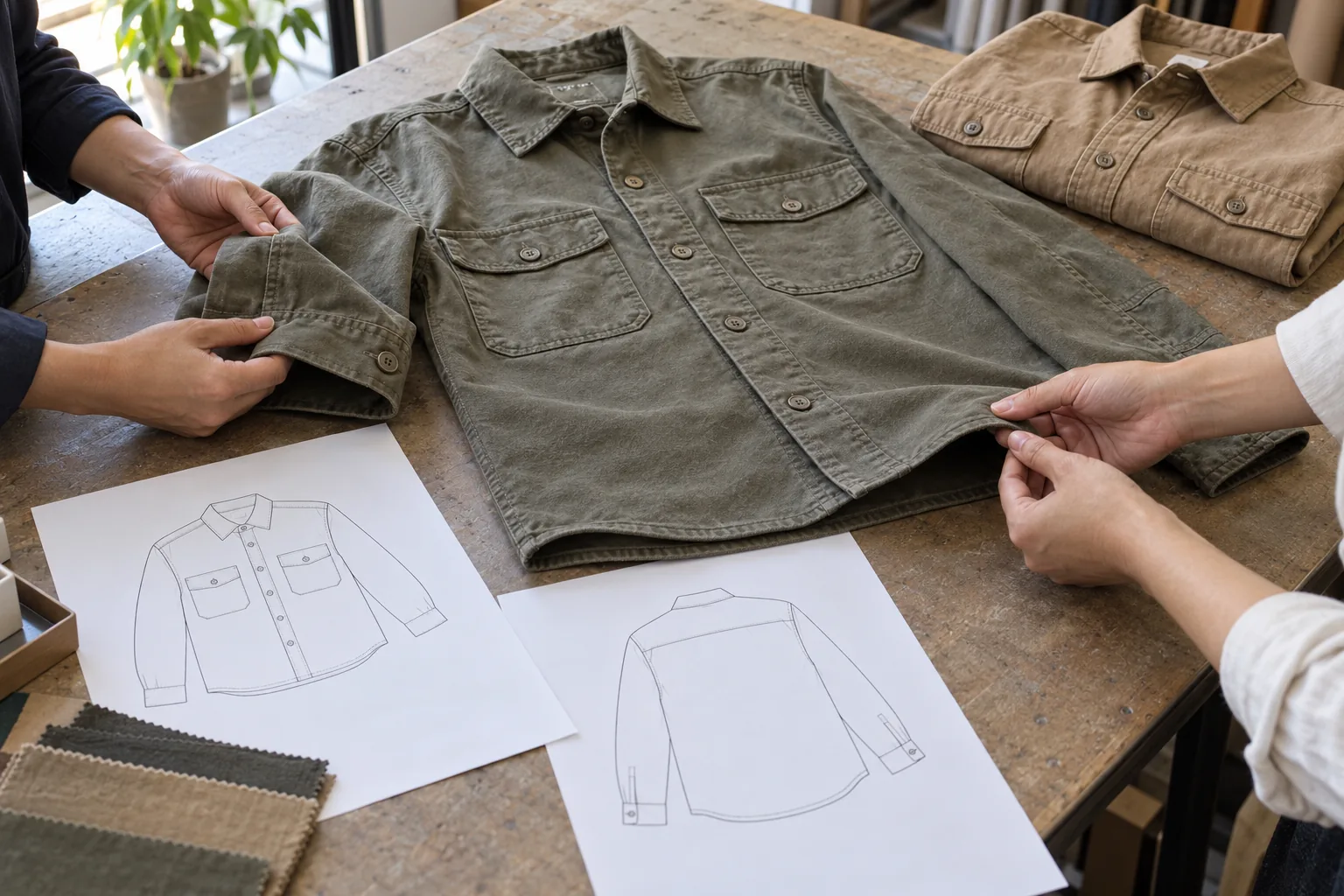
Start your review by naming the requested action. A quotation request can contain clearly identified alternatives. A sample authorization needs a selected route, or explicit agreement about what the sample will test. A bulk release should reference approved specifications and documented exceptions.
For example, a boxy overshirt might be quoted with either a stock twill or a heavier alternative. Before sampling, specify which fabric should be used. Otherwise, a fit rejection may actually reflect the behavior of an unselected material.
- Give the style a unique identifier, revision number, issue date, and named buyer contact.
- State the requested sample size, proposed size range, colorways, and quantity assumptions.
- Separate confirmed requirements from options awaiting a decision.
- Name who can approve fit, materials, decoration, and commercial changes.
Keep this status visible on the first page so an old quotation attachment cannot be mistaken for permission to start production.
Make every open choice visible before requesting costs
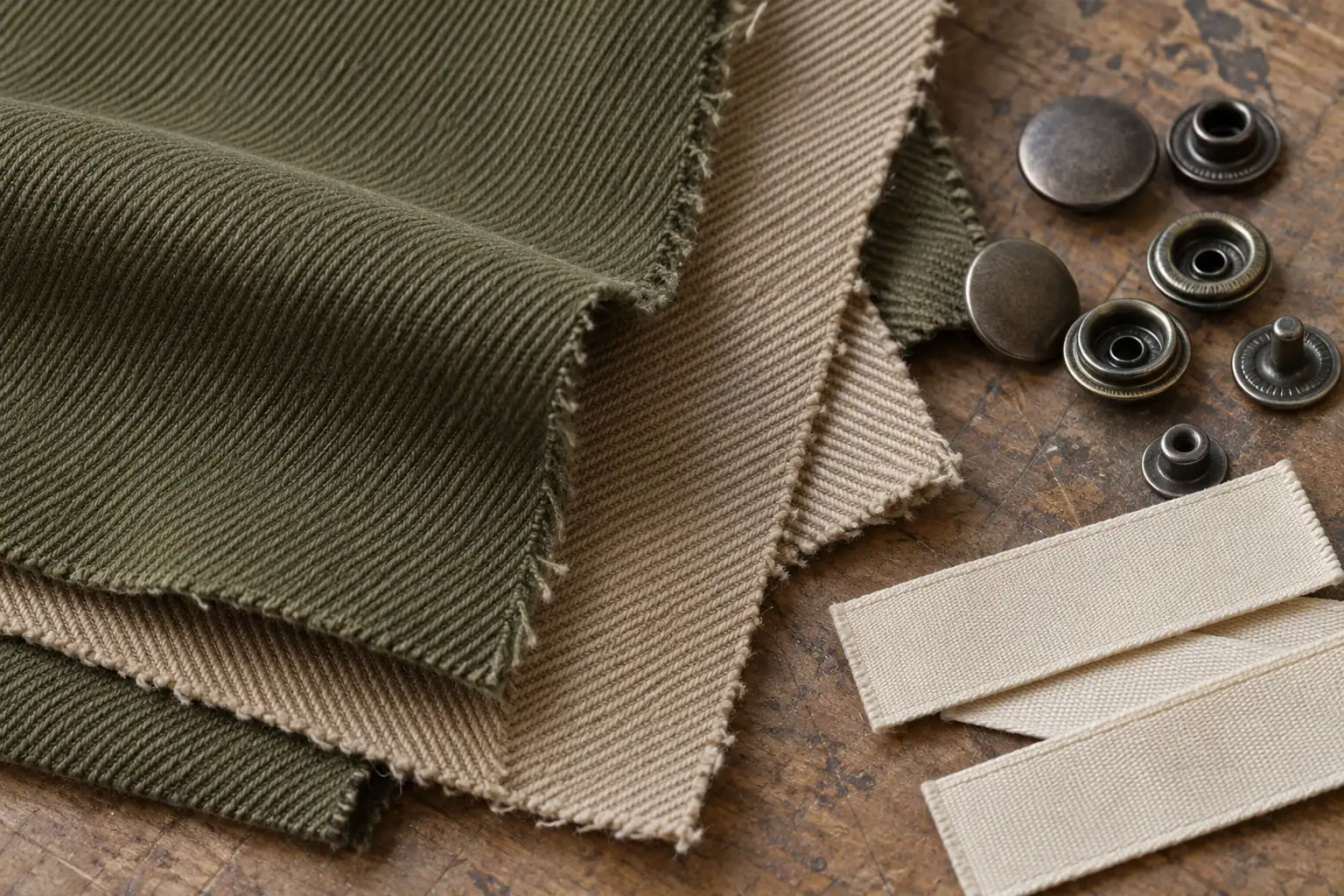
Read the pack as if you were pricing it. Can you distinguish supplied artwork from artwork still being developed? Does “metal fastener” mean a selected component or a sourcing request? Open choices are manageable when their commercial consequences are visible.
Use a short decision register alongside the specification. Ask the supplier to identify assumptions in its response, including proposed substitutes. This makes later comparisons more meaningful than comparing totals built around different materials.
| Unresolved item | Buyer instruction | Evidence needed to close it |
|---|---|---|
| Shell fabric | Quote the nominated twill; show alternatives separately | Approved swatch and agreed material specification |
| Snap finish | Source a dull finish with suitable attachment | Physical trim approval on the intended fabric |
| Inside branding | Hold label production until artwork approval | Approved artwork, dimensions, and placement |
At StitchQuote, MOQ for most categories starts from 50 pieces per style; denim starts from 100 pieces per style. Confirm the proposed order breakdown and material availability for the project instead of assuming every color or custom component fits the same purchasing arrangement.
Check that fit can be measured the same way twice
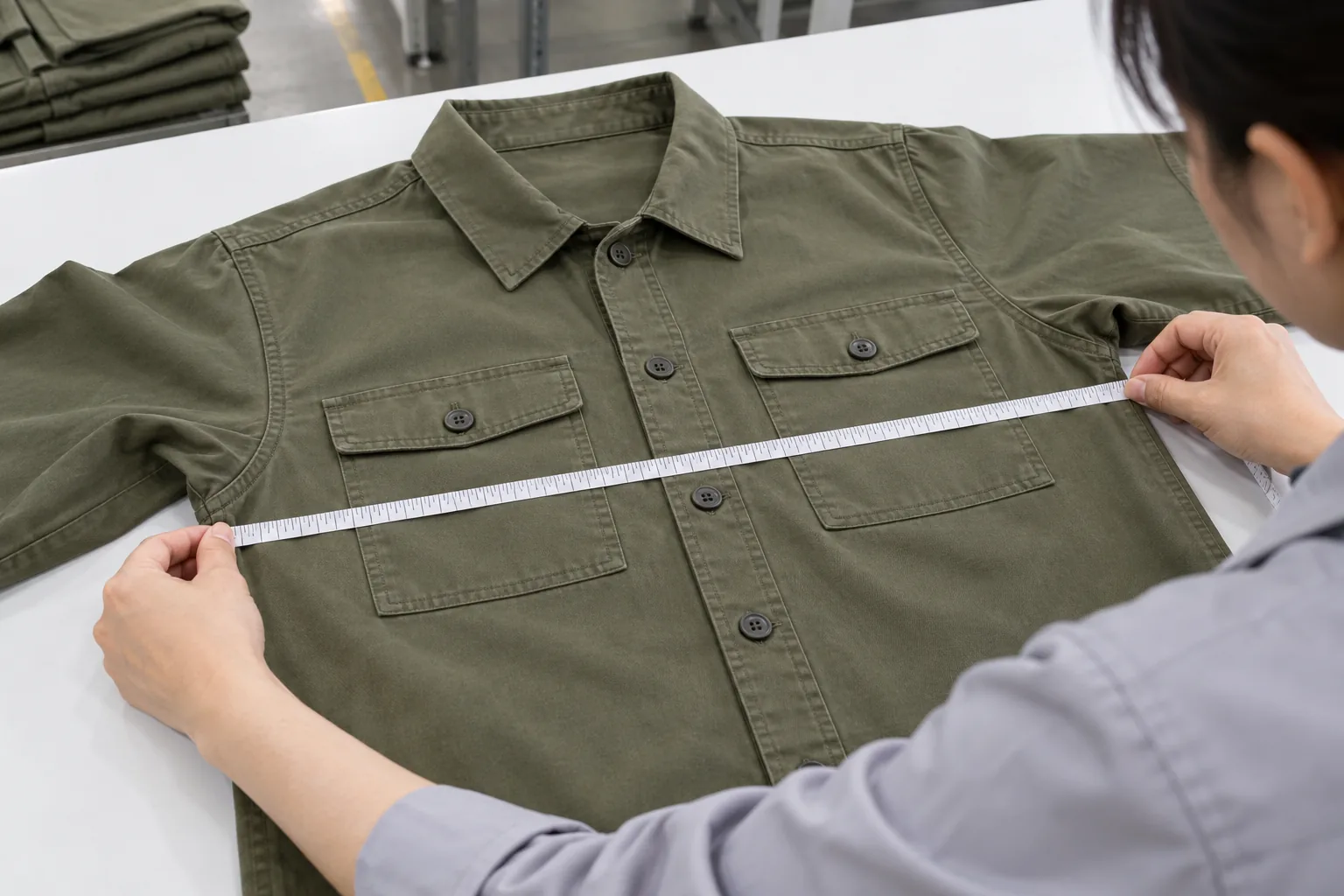
A measurement list needs a repeatable method. Identify each point on a diagram, state the units, and describe whether the garment is laid flat, fastened, relaxed, or stretched. Specify whether dimensions apply before or after the intended wash or finishing process.
Consider an elastic-waist short: one waist value cannot describe both its resting shape and usable stretch. Define the conditions for each measurement, then agree practical tolerances with the manufacturer. Avoid copying a universal tolerance across every point; a small opening and a long body panel have different consequences for fit.
- Check that the sample size matches the size chart and pattern request.
- Identify the reference garment, if used, and say which features to follow.
- Separate base-size approval from approval of the graded size range.
- State any required care treatment before fit assessment.
If the size range is still being developed, mark that limitation explicitly. Approval of one sample size does not establish that every other size has been reviewed.
Find instructions that disagree across pages
Check the flats, component list, construction notes, and artwork sheets against each other. Buyers often update a sketch without updating the trim count, or replace an illustration while leaving an earlier placement dimension intact. Those mismatches force someone to choose which instruction to follow.
For a utility overshirt, count the visible snaps and compare them with the component list. Trace the pocket opening shown on the flat against the construction detail. Check that an inside label will not land under a seam or an external embroidery backing.
For decoration, record finished dimensions and placement from a stable reference point. A location described only as “center front” may be unclear on an asymmetric design. Include artwork version, orientation, technique, and color reference, and request a suitable physical approval when appearance depends on the substrate.
Finish this review by removing superseded pages from the issue package. Retain the earlier version in your archive, with a change record explaining what the new issue replaces.
Build the QC checklist before the sample arrives
Write acceptance checks while the intended result is clear, rather than inventing criteria after seeing the sample. Connect each check to a specification, an agreed tolerance, or an approved physical reference. Distinguish a measurable failure from a new preference that changes the design.
- Identity: Verify style, revision, size, colorway, and material against the sample request.
- Dimensions: Record actual measurements using the agreed method and garment condition.
- Assembly: Inspect seam integrity, pocket symmetry, fastening alignment, and opening access.
- Branding: Check artwork scale, position, orientation, and label attachment.
- Function: Operate closures and check movement or access relevant to the garment.
- Finish: Review shade, surface appearance, loose threads, and agreed packing details.
Send consolidated feedback with marked photographs and a clear disposition: approved, revise, or awaiting a specific check. StitchQuote provides QC before packing; align the production inspection requirements with the approved specification so the buyer and manufacturer are checking the same result.
Specify fabric performance alongside weight
GSM describes fabric mass per square meter; it does not establish drape, opacity, stretch recovery, or shrinkage by itself. For an illustrative overshirt specification, a buyer might request a 240 GSM woven twill, then separately define fiber composition, weave, usable width, color reference, and finish. Treat that weight as a proposed design requirement, not a statement about available stock. Ask sourcing to identify the actual material offered and record any difference before approving it.
Usable width matters commercially because it changes how pattern pieces can be arranged during cutting. Directional prints, nap, checks requiring matching, and large sizes can also increase fabric consumption. Request separate explanations for changes driven by fabric consumption, additional sewing operations, decoration setup, or special trims. This helps a buyer assess whether simplifying a pocket or selecting an available trim would change the quotation without weakening the intended product.
For wash evaluation, record the treatment, drying method, and measurement condition before comparing results. If a marked fabric length changes from 50 cm to 48.5 cm, the dimensional reduction is 3 percent: divide the 1.5 cm change by the original 50 cm. Measure width separately because the two directions may behave differently. Agree acceptable results for the intended use, and check the finished garment as well as the fabric: interlinings, seams, and decoration can respond differently during care.
Turn a sample order into a measurable approval exercise
Consider a hypothetical order of 100 non-denim overshirts in one color, split into 20 small, 40 medium, 30 large, and 10 extra-large pieces. Record this breakdown in the quotation request, then identify medium as the initial fit-sample size. Confirm the size allocation and sourcing assumptions with the manufacturer before committing to the order. The initial sample should answer defined questions about fit, fabric behavior, pocket access, and closure performance.
Make the measurement sheet executable. For example, define half chest as the straight distance between side edges, measured 2.5 cm below the armhole with the garment fastened and laid flat. Define body length from the high shoulder point beside the collar to the bottom hem, and sleeve length from the shoulder seam to the cuff edge. Illustrate these paths so a curved tape route or a different starting point cannot produce a misleading result.
As an illustrative proposal for discussion, a buyer could set a medium half-chest target of 58 cm with a tolerance of plus or minus 1 cm, and a pocket-placement tolerance of plus or minus 0.5 cm from the specified reference. These are example acceptance limits, not universal standards or StitchQuote guarantees. Agree them against construction and fit needs before inspection. A measured half chest of 59.3 cm would then require investigation, while a result inside tolerance would still need a fit assessment. Record each actual value, the sample revision, and the agreed corrective action; never convert a failed measurement into approval merely by changing the target after inspection.
Close the handoff with a controlled approval record
Send one dated package containing the current specification, artwork, decision register, and relevant approvals. Ask the recipient to confirm the revision received and flag any requirement that cannot be executed as written. Acknowledging receipt and approving a technical exception are separate actions.
StitchQuote offers cut-and-sew, private label, sampling, fabric and trim sourcing, and branding through woven labels, prints, and embroidery. Identify which services your request needs. A 7-day sample is available for standard styles with confirmed specifications and available materials; complex styles, custom washes, and custom-developed fabric take longer.
When a change affects material, fit, or construction, record whether it requires another sample or other approval evidence. Preserve the approved reference and revision together for the production handoff.
Questions buyers ask during the final document review
Can I send the pack while one trim is undecided?
Yes, for an initial review or conditional quote. Identify the missing decision, request alternatives separately, and state which downstream action must wait for approval.
What if the factory suggests a different construction?
Ask what it changes in appearance, durability, fit, and processing. Document the accepted method in the next revision and decide what physical evidence is needed before approval.
Does an approved fit sample authorize every colorway?
Only if your approval explicitly covers them and the relevant evidence supports it. Different materials, finishes, or decoration combinations may need separate review even when the pattern is shared.
Related reading
- Preparing a manufacturing tech pack
- Sampling and minimum order planning
- Contact StitchQuote about your specification
Request a manufacturing quote
Share your product type, quantity range, and destination. We usually reply within one business day.