Custom Streetwear, Casualwear & Denim Manufacturer•MOQ 50 pcs•Denim MOQ 100 pcs•7-Day Sample Available

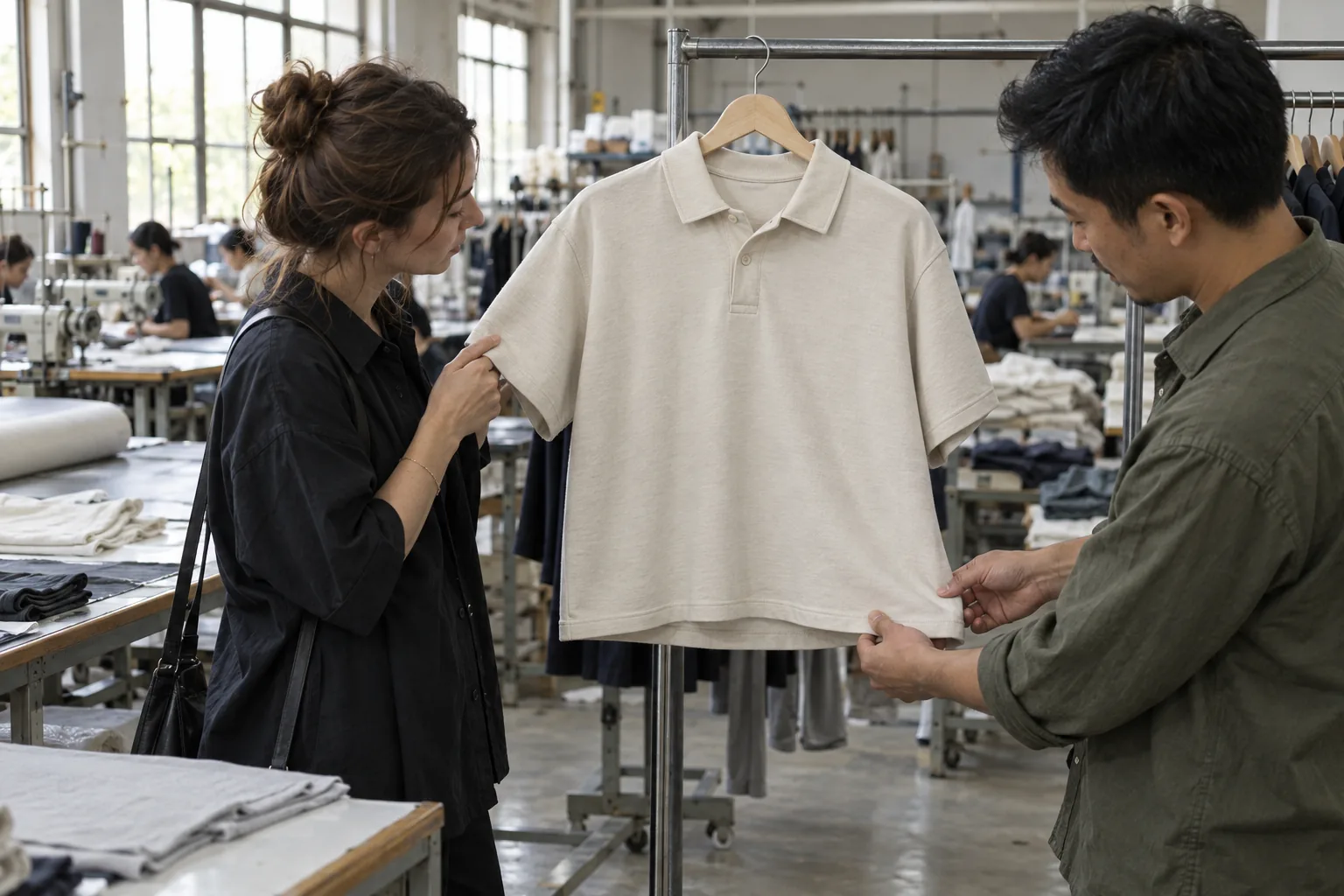
How to Choose the Right Clothing Manufacturer for a Startup Brand
Learn how a startup brand should choose a clothing manufacturer by comparing category fit, MOQ, sampling workflow, quote clarity, quality control, and communication.

A startup can lose weeks preparing a detailed production brief for a supplier that was never a viable match. Before paying for drawings, refining every measurement, or sending original artwork, establish whether the supplier can work within the boundaries of your first launch. This early screen needs a clear product idea, but it does not need a finished collection.
Choosing the right clothing manufacturer for a startup brand begins with deciding who deserves a full brief. Treat initial contact as a short qualification exercise: identify what would rule a supplier out, request evidence tied to those concerns, and advance only the candidates whose answers justify further development.
Write a launch boundary sheet before approaching anyone
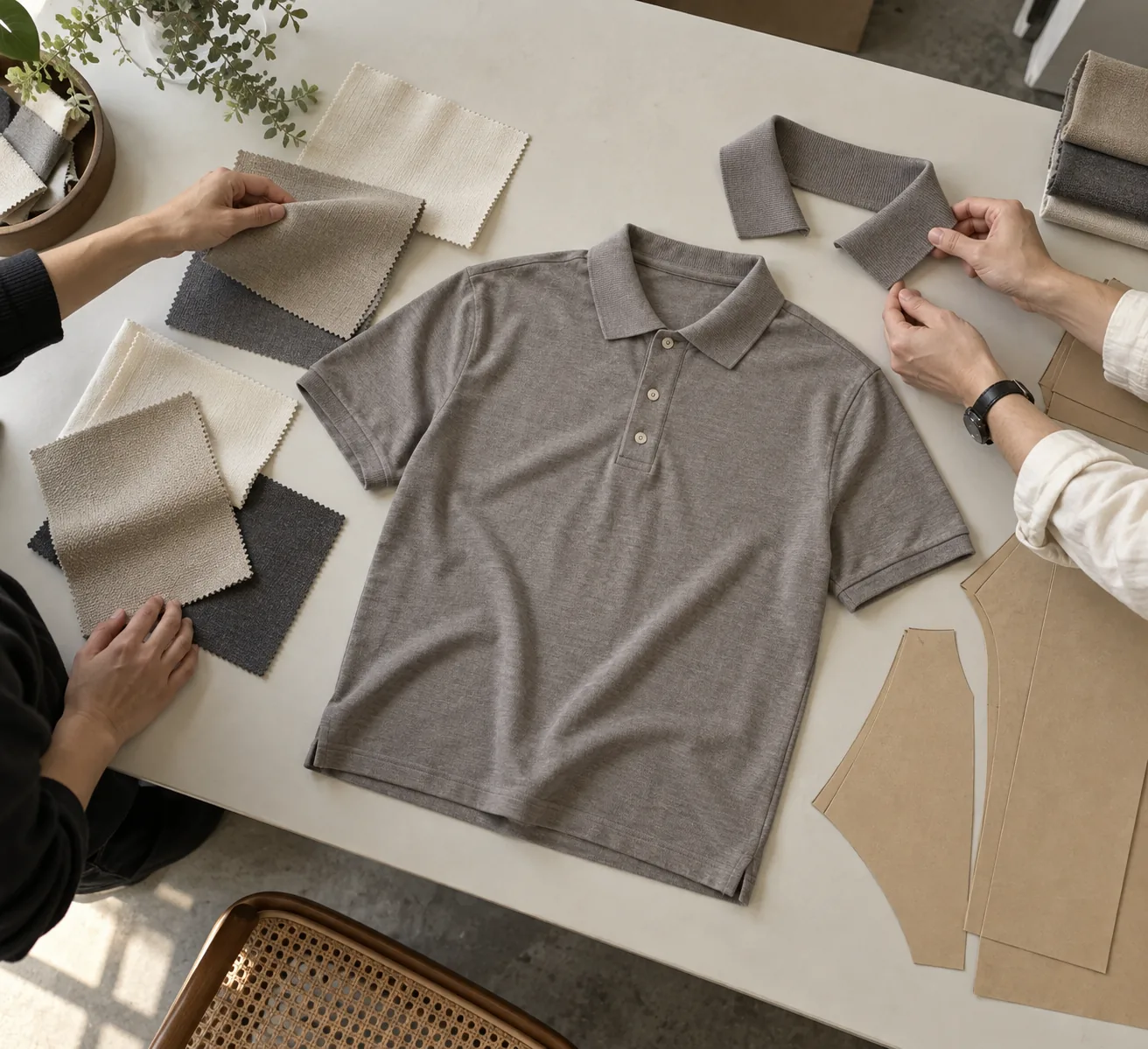
Prepare one page that explains what you intend to sell and which decisions remain open. Include the garment type, intended use, approximate order quantity, destination market, and whether your launch date is fixed or flexible. Separate requirements from preferences so a supplier can propose alternatives without accidentally changing the product.
For example, a startup planning a boxy jersey polo might require a stable collar and opaque body fabric while remaining flexible about the exact fabric weight. That is enough to ask useful feasibility questions. It is not enough to approve production, and it should not be presented as a complete specification.
- Must remain: the features that define the product or customer promise.
- Can change: materials, details, or timing you are willing to reconsider.
- Still unknown: decisions that require development or supplier input.
Do not ask for a firm unit price at this stage. Ask whether the project appears feasible and what information would be needed to establish scope.
Ask for evidence of the difficult operation
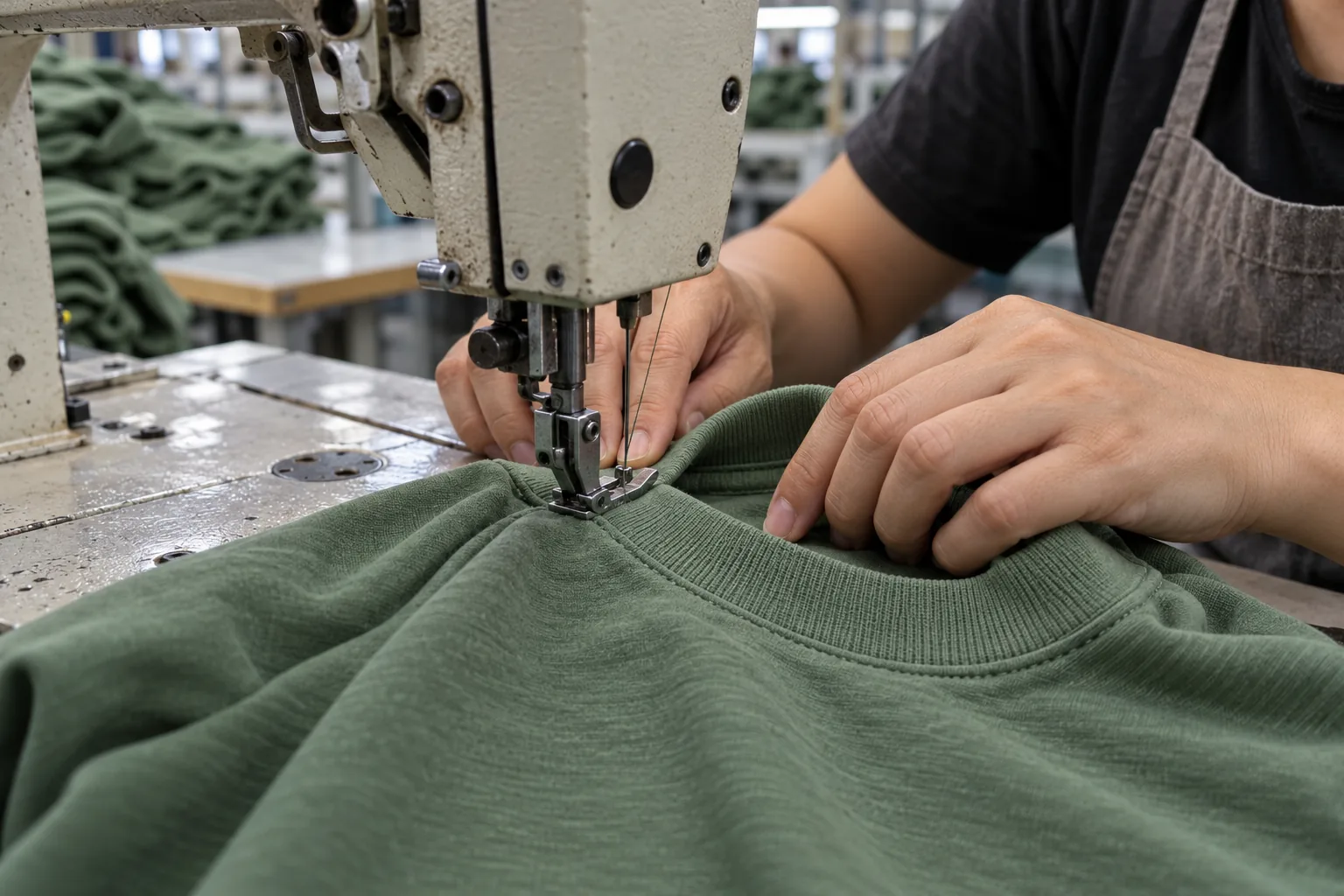
A broad product gallery says little about the specific challenge in your garment. Identify one demanding operation and ask how the supplier would approach it. For a lightweight overshirt, that might be keeping a curved hem flat. For a ribbed tank, it might be preventing the neckline from stretching during assembly.
Request close-up examples the supplier is permitted to share, an explanation of the construction, or a discussion of likely material constraints. A relevant explanation is more useful than a claim that every design is possible. Existing samples can demonstrate workmanship, but they do not prove that your proposed fabric will behave the same way.
Ask which steps happen at the supplier’s facility and which involve outside providers. External printing, washing, or embroidery is not automatically a reason to reject a candidate. What matters is who coordinates those steps, checks the result, and handles corrections.
Test whether the first order is feasible without redesigning the launch
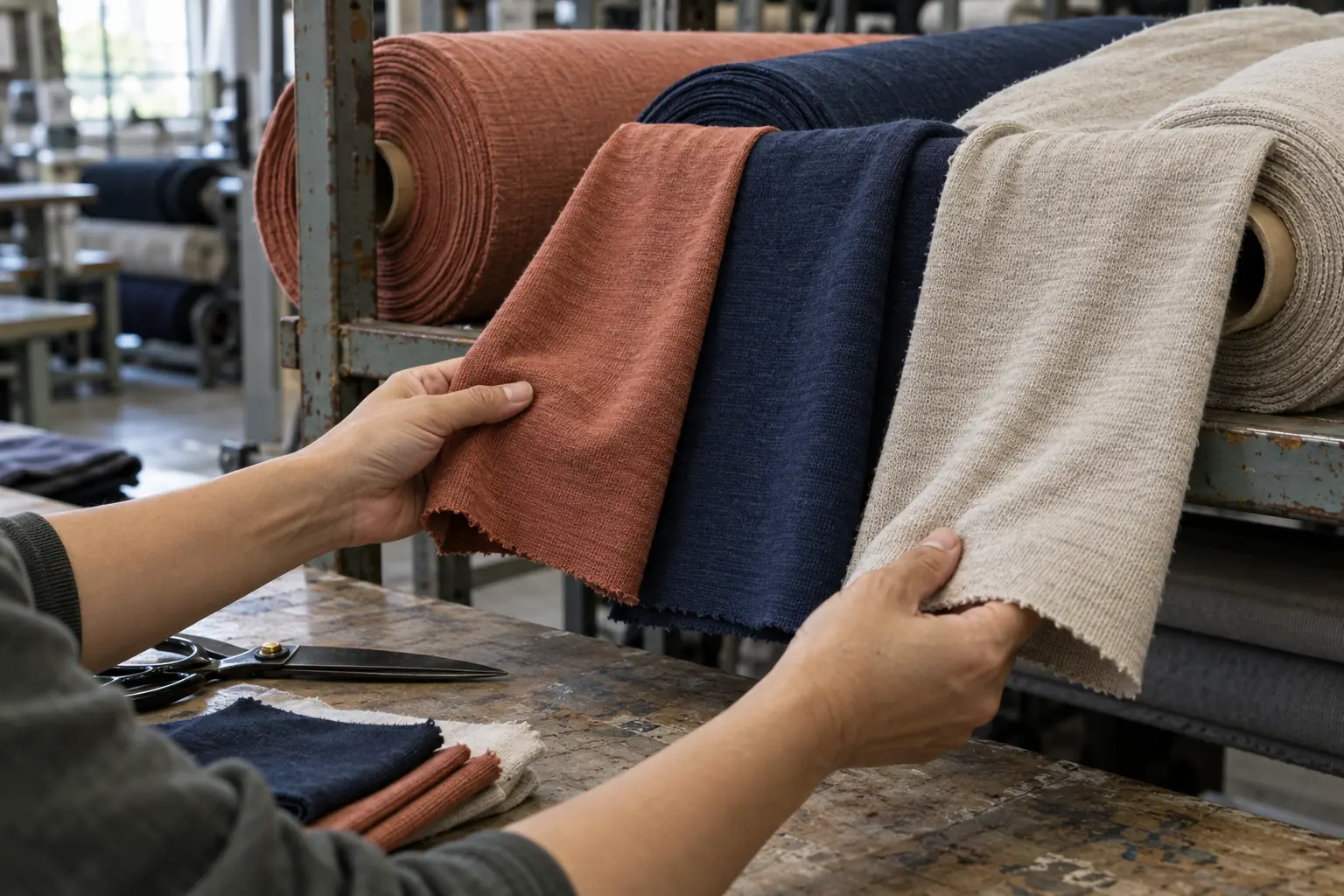
Give suppliers an illustrative order breakdown and ask them to identify the constraints. A proposed 60-piece style in three colors raises different sourcing questions from 60 pieces in one available fabric. Do not assume a stated style minimum guarantees every color, trim, or size split.
At StitchQuote, MOQ for most categories starts from 50 pieces per style; denim starts from 100 pieces per style. Confirm the proposed breakdown and material requirements for the actual project. These starting points are useful screening information, not a substitute for checking your assortment.
| Proposed requirement | Question to resolve early |
|---|---|
| Several fabric colors | Are suitable colors available without custom dyeing? |
| Custom metal hardware | Does the trim minimum exceed the garment order? |
| A fixed launch date | Which unresolved choices prevent a credible schedule? |
If feasibility depends on removing the feature that makes your product distinctive, pause before developing a full brief. A simpler launch may be sensible, but that should be your commercial decision.
Use the first response to define a paid development decision
The objective of screening is to decide whether to invest in development with a candidate. Ask what the next step would produce: a material proposal, a pattern, a fit sample, or another defined deliverable. Clarify what you must supply, which decisions require approval, and how revisions would be handled.
StitchQuote offers cut-and-sew, private label, sampling, fabric and trim sourcing, branding through woven labels, prints and embroidery, and QC before packing. State which support you need instead of assuming every service is included in one sample request.
A 7-day sample is available for standard styles with confirmed specs and available materials. Complex styles, custom washes, and custom-developed fabric take longer. During screening, ask what must be confirmed before that timing applies. An early inquiry with unresolved fabric and construction choices is not yet a sample-ready project.
Set an inspection gate before releasing the complete brief
A supplier does not need your final measurement chart to discuss how quality will be evaluated. Use the initial conversation to establish whether your priorities can become observable checks. “Premium quality” is too broad; a placket that lies flat and buttons that align are features both sides can examine.
- Identify the visible or functional defects that would make the garment unacceptable.
- Ask how measurements and tolerances will be agreed once the specification is complete.
- Confirm how fabric appearance, shade variation, and branding placement will be reviewed.
- Establish how sample comments become an approved reference for later checks.
- Ask how defects found before packing are recorded and resolved.
This is a screening checklist, not the final inspection standard. If a candidate cannot explain how approvals will be documented, resolve that gap before spending on samples. Keep the boundary sheet, supplier responses, and outstanding questions together so the later brief reflects actual agreements.
Turn the first fit sample into measurable decisions
For the boxy jersey polo, prepare a measurement worksheet before ordering a development sample. Define half-chest as the straight distance between the underarm points with the garment laid flat, body length from the high shoulder point beside the neck to the bottom hem, and shoulder width between the shoulder seams across the back. Specify sleeve length from the shoulder seam to the sleeve edge and record collar and placket dimensions separately. Include a sketch showing each measurement path; otherwise, two people can measure the same sample differently and both believe their result is correct.
Use proposed tolerances to start a discussion rather than treating them as universal factory standards. For example, a buyer might propose plus or minus 1 cm for half-chest and body length, with plus or minus 0.5 cm for placket length. Ask whether those limits are achievable in the selected fabric and construction, and agree them before approval. A tolerance describes acceptable variation around a target; it does not replace a size-grading rule. Check that adjacent sizes still produce the intended fit when measurements fall near their permitted limits.
Evaluate fabric weight alongside structure and finish. As an illustrative sourcing brief, request cotton jersey around 220–240 GSM, then assess swatches for opacity, stretch recovery, surface feel, and compatibility with the collar material. GSM means grams per square metre and does not establish quality by itself. Record whether weight refers to finished fabric, and agree a care method for evaluating the sample. Measure the same points before and after washing, calculate dimensional change as the difference divided by the original measurement, and inspect seam twisting, collar distortion, and print appearance. Resolve any resulting fit or material changes before approving the production reference.
Work through one order before comparing quotations
Consider an illustrative 60-piece polo order in one fabric color: 10 small, 20 medium, 20 large, and 10 extra-large. This meets StitchQuote’s starting MOQ of 50 pieces per style for most categories, but the color, size allocation, fabric availability, and branding still need confirmation. Send that exact breakdown with the intended label type and decoration dimensions. Ask whether an available fabric can cover the full quantity and whether extra material is needed for sampling, cutting losses, or replacements.
Request quotations against the same scope. Separate development and sample charges from garment production, and identify sourcing, labels, decoration, packaging, and delivery costs or exclusions. Embroidery stitch count, print color count, custom trim minimums, fabric consumption, and additional sewing operations can change the cost even when garment quantity stays constant. Ask which assumptions could change after sample approval, so the apparent difference between two offers does not simply reflect missing work.
Before packing, agree how the order will be checked against the approved sample and measurement chart. Specify coverage across sizes, checks for shade differences between panels, placket alignment, secure buttons, correct size labels, and branding placement measured from a named seam or edge. Record defects with photographs and quantities, assign a correction decision, and require a recheck of corrected pieces. Finally, reconcile accepted units against the size breakdown and packing list so a correct total does not conceal missing sizes.
Questions founders face before sharing a full specification
Can I screen suppliers while my design is still changing?
Yes, if you label unresolved choices clearly. Share enough information to test feasibility, then revisit the screen if the garment category, material, or quantity changes substantially. An answer about a cotton jersey top does not qualify the same supplier for a lined technical jacket.
Should I send original artwork in the first inquiry?
Usually a description of the branding method, approximate dimensions, and placement is enough for an initial discussion. Share production artwork when it is needed for a defined next step, after clarifying confidentiality expectations and how files will be used.
What if a supplier offers a sample immediately?
Ask what that sample will establish. An existing garment can help you assess workmanship; a development sample should test your specific decisions. Agree on its purpose before paying so you can judge the result against something concrete.
When is a candidate ready for the full brief?
Proceed when the main feasibility questions are answered, the next deliverable is defined, and remaining uncertainties have named follow-up actions. Screening reduces avoidable mismatches; sample evaluation is still necessary before committing to bulk production.
Resources for the candidates that pass your screen
Use these resources to move from an initial fit check to a documented development request.
- Prepare the technical brief for your selected candidates
- Review sampling and minimum-order planning
- Explore supplier selection for cut-and-sew streetwear
- Discuss your launch boundaries with StitchQuote
Request a manufacturing quote
Share your product type, quantity range, and destination. We usually reply within one business day.