Custom Streetwear, Casualwear & Denim Manufacturer•MOQ 50 pcs•Denim MOQ 100 pcs•7-Day Sample Available

FOB vs EXW in Apparel Manufacturing: Cost, Responsibility, and Scope
Compare FOB vs EXW in apparel manufacturing so you can read quote scope correctly, understand shipping responsibility, and avoid misleading price comparisons.

A small apparel order can meet a sewing minimum and still fall short of the quantity needed for a custom fabric, dye lot, or trim run. That distinction matters when comparing FOB vs EXW in apparel manufacturing: changing the shipping term does not remove production minimums, but it changes who organizes the work and carries the risk around the export handoff.
For brand buyers choosing between a small launch and a larger replenishment order, the useful starting point is a process map. Identify what must be bought or made in batches, then compare both commercial terms against the same garment specification, order quantity, and shipment plan.
Start with the smallest viable production route
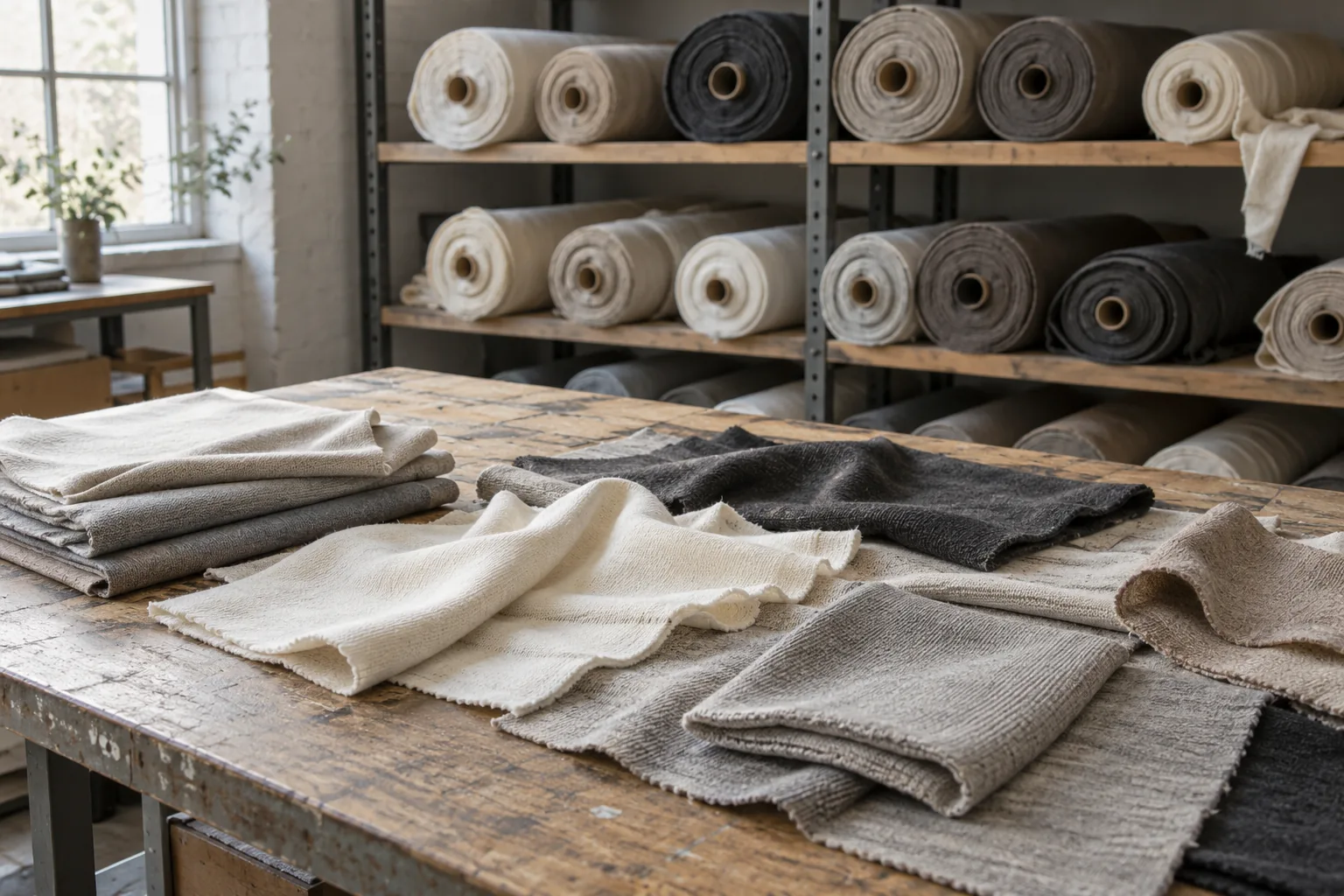
“MOQ per style” is only one boundary. Fabric mills, dye houses, decoration suppliers, and trim makers may each have separate batch requirements. Ask which minimum is binding and whether it applies per style, color, artwork, or material order. A total garment count alone cannot answer that question.
StitchQuote’s MOQ for most categories starts from 50 pieces per style; denim starts from 100 pieces per style. These starting points do not establish a universal minimum for every custom fabric or finish. Confirm the complete combination before building a purchase plan around it.
Consider a proposed 60-piece jersey top using available fabric and a woven label. Compare that with the same quantity requiring a specially developed fabric and several exclusive colors. The garment count is identical, but the second route introduces additional batch constraints. Neither FOB nor EXW makes those constraints disappear.
Separate process minimums from shipment charges
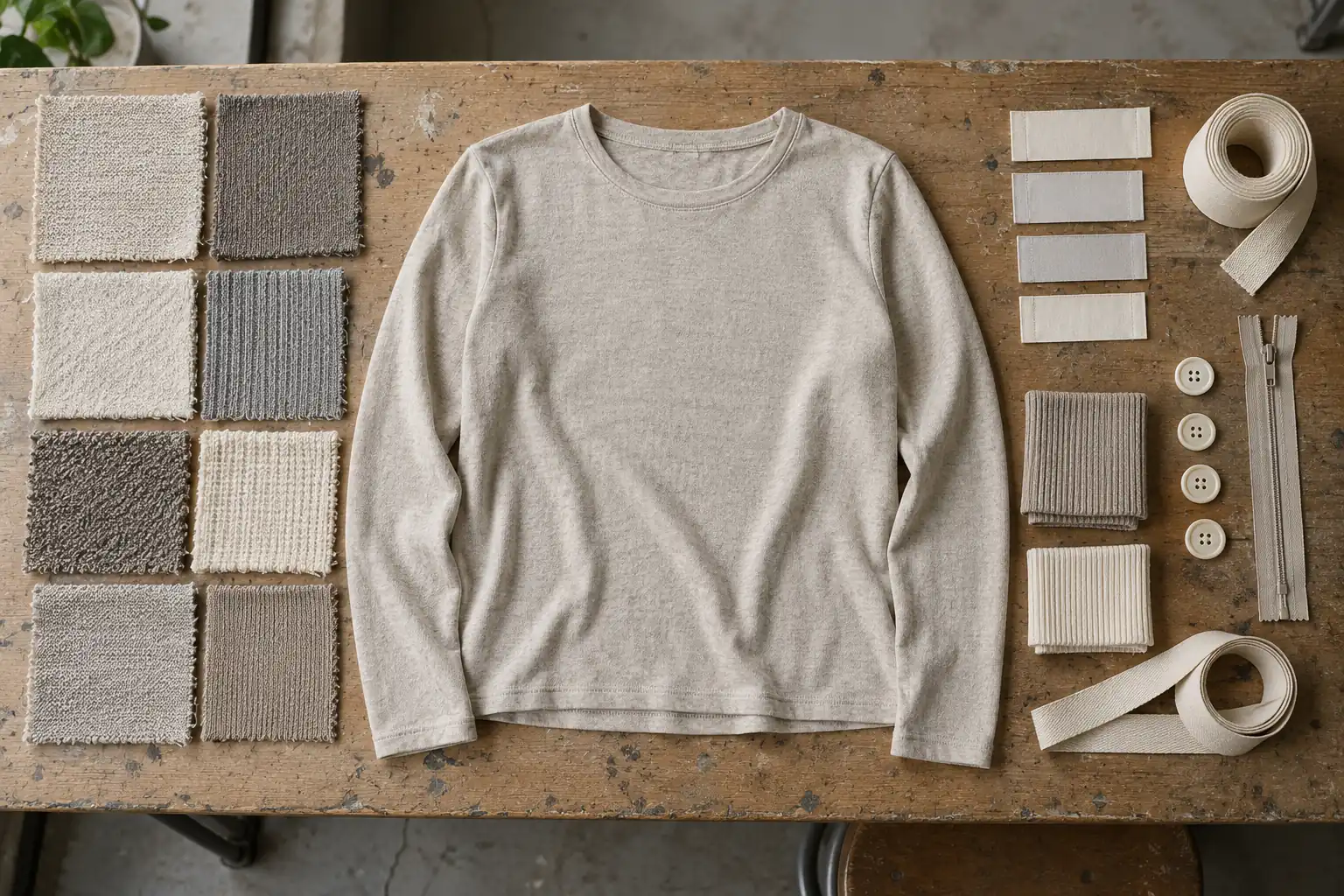
Request a breakdown that distinguishes production setup, materials purchased, finished garments, and shipment services. A setup charge may be spread over more units; a material minimum may instead leave unused stock. Those are different financial commitments and should not be buried in a single unit figure.
| Process | Potential batch constraint | Question for the quote |
|---|---|---|
| Fabric sourcing | Mill order or available roll quantity | What material balance remains after cutting? |
| Dyeing or washing | Color lot or treatment batch | Does each shade or wash require its own minimum? |
| Printing or embroidery | Setup per artwork and placement | Which setup costs recur on a reorder? |
| Labels and packaging | Supplier minimum per design | Who owns and stores any excess? |
| Export dispatch | Charges per shipment or booking | Which charges apply if delivery is split? |
Do not describe all five as a factory MOQ. Dispatch charges can make a small shipment expensive without preventing production. Conversely, paying more for transport cannot resolve an unavailable fabric batch.
Put an exact handoff beside each production option
Under EXW Incoterms 2020, the seller makes the goods available at the named place, normally without loading the collecting vehicle or clearing them for export. The buyer organizes those steps and onward transport. Check that the buyer’s logistics provider can actually arrange export formalities in the origin country; a collection booking alone is insufficient.
Under FOB Incoterms 2020, the seller clears the goods for export and delivers them on board the vessel at the named port of shipment. Risk transfers when the goods are on board. The buyer arranges the main carriage and handles import clearance and destination obligations. Neither term automatically requires cargo insurance.
FOB applies to sea and inland waterway transport. For air shipments, or containerized goods handed to a carrier at a terminal before vessel loading, discuss FCA with the logistics provider. Record the named place or port and the Incoterms version; “FOB factory” does not specify a valid FOB delivery point.
Compare a launch batch with a repeat order
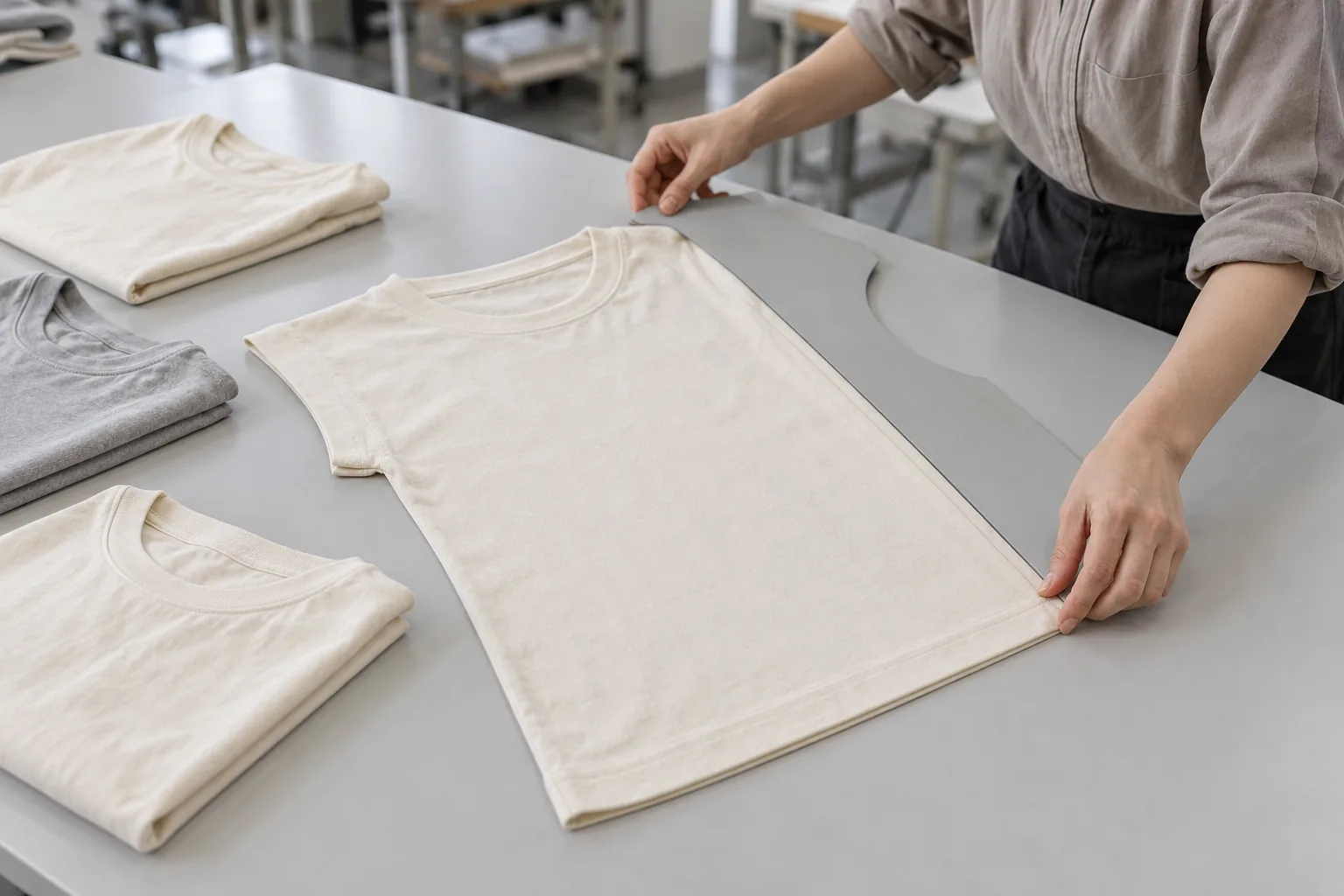
Build two scenarios using the same approved specification: the initial launch and a plausible reorder. For each, add garment production, separately charged setup, surplus materials, origin services, freight, insurance if purchased, destination handling, duties, and applicable taxes. Avoid adding origin services twice when they are already included in the seller’s price.
Divide the expected total by saleable units, not by the supplier’s fabric purchase quantity. Larger batches may spread setup and shipment charges, but that benefit can be outweighed by unsold stock. Treat projected savings as conditional on demand, rather than a reason to increase every process batch.
For a reorder, confirm that stored trims remain usable and the fabric is still available. A previous sample or retained label inventory does not guarantee an identical material route. EXW may suit a buyer consolidating goods through an established origin provider; compare that provider’s complete charges with the alternative handoff before deciding.
Approve the batch and packing details together
Quality approval and delivery risk are separate decisions. An approved sample establishes the product reference; it does not prove every bulk unit conforms. StitchQuote provides cut-and-sew, private label, sampling, fabric and trim sourcing, woven labels, prints, embroidery, and QC before packing. Agree on project-specific acceptance criteria before production.
- Specification: Confirm measurements, tolerances, construction, material references, artwork, and label placement.
- Batch consistency: Check shade variation, decoration alignment, wash appearance where applicable, and size assortment against the approval.
- Inventory: Reconcile finished quantities and document unused fabric or trims, including ownership and storage arrangements.
- Packing: Verify carton counts, assortment, weights, dimensions, and packaging requirements before freight booking.
- Release: Assign responsibility for reviewing QC findings and resolving defects before goods reach the agreed delivery point.
A 7-day sample is available for standard styles with confirmed specifications and available materials. Complex styles, custom washes, and custom-developed fabric take longer. Sample timing should therefore be checked against the selected process route, separately from bulk production and transport timing.
Make fabric weight and measurement rules part of the quote
A description such as “heavy cotton jersey” leaves room for materially different offers. Specify fiber composition, knit structure, target weight in grams per square meter (GSM), finish, and an approved color reference. For example, a buyer might request 220 GSM cotton single jersey for a structured T-shirt; this is an illustrative specification, not a StitchQuote stock-fabric claim. Ask whether the quoted weight refers to finished fabric and how variation will be checked. Fabric width, shrinkage, and the size mix also affect cutting consumption, so equal GSM does not necessarily mean equal material cost per garment.
Define each measurement point with a diagram and a method. For a jersey top, identify half-chest measured flat at a stated distance below the armhole, body length from the high shoulder point, shoulder width, sleeve length, and neck opening. State whether measurements are taken before or after washing and whether the garment should lie relaxed without stretching. Otherwise, two inspectors can record different results on the same item.
Set tolerances by measurement point rather than applying one allowance everywhere. As an example for discussion, a buyer could propose ±1 cm for body length and half-chest and ±0.5 cm for neck opening, subject to agreement for the fabric and construction. These are proposed acceptance limits, not a universal factory standard. Record the wash method and acceptable dimensional change separately; a garment that passes before washing may still fail the intended fit afterward. Approve any pattern adjustment against a washed sample before bulk cutting.
Work through a 60-piece launch before booking transport
Consider an illustrative order for one jersey-top style in one color: 10 small, 20 medium, 20 large, and 10 extra-large units. The total is 60 pieces, above StitchQuote’s starting MOQ of 50 pieces per style for most categories, but material availability and the proposed assortment still need confirmation. Send that size breakdown with the measurement chart, fabric specification, label artwork, and packing instructions so consumption and sourcing can be assessed together.
First, obtain confirmation of the fabric route and any excess label or material commitment. Next, review the sample for fit, stitching, opacity, decoration placement, and performance after the agreed wash. Record changes in one revised specification and approve it before production. During bulk QC, check measurements across sizes and compare shade across garments from different cutting bundles. Specify the inspection sample size and defect acceptance rules in advance, and require discrepancies in the size assortment to be reconciled before packing.
For the logistics comparison, ask for packed carton dimensions, gross weights, collection address, and the expected ready date. Have the forwarder price the same shipment under each suitable handoff, identifying loading, export documentation, origin handling, and destination charges. If FOB is proposed, confirm a sea shipment and named port; for air delivery, request an appropriate alternative such as FCA. Keep a separate line for unresolved costs rather than treating a missing charge as zero. This makes the comparison useful even before every transport expense is finalized.
Questions buyers ask before fixing the quantity
Can multiple styles share one fabric minimum?
Possibly, if they use the same approved material and the sourcing arrangement permits it. Confirm total consumption, color allocation, and cutting allowances. Sharing fabric does not automatically combine each style’s garment MOQ.
Does ordering extra labels make a reorder cheaper?
It may avoid another label purchase or setup, but only if the design stays unchanged and the stock remains usable. Document the quantity and ownership. Other production and shipment charges can still recur.
Can one production batch leave in two shipments?
Ask for a separate dispatch schedule and quote. Splitting finished goods may preserve the production batch while repeating collection, documentation, or handling charges. Confirm storage terms and the delivery point for each shipment.
What should an inquiry contain to compare both terms?
Provide the specification, quantities by style and color, decoration choices, packaging, destination, and intended transport mode. Request the same production scope under each suitable delivery term, with exclusions and material balances stated explicitly.
Related reading for your quotation brief
- Prepare a tech pack for a comparable production quote
- Review sampling and MOQ planning
- Explore hoodie manufacturing cost inputs
- Contact StitchQuote to confirm your process requirements
Request a manufacturing quote
Share your product type, quantity range, and destination. We usually reply within one business day.