Custom Streetwear, Casualwear & Denim Manufacturer•MOQ 50 pcs•Denim MOQ 100 pcs•7-Day Sample Available

How to Reduce Clothing Production Delays
Reduce clothing production delays by tightening approvals, clarifying material readiness, and fixing the handoff points that usually stall apparel programs before.

A clothing launch does not need a complicated control system to stay on schedule. It needs a few well-placed safeguards against the decisions that can stop work. For a small brand, adding extra sample rounds, backup fabrics and daily meetings to every order can consume the time those precautions were meant to protect.
To reduce clothing production delays without overbuilding the process, separate genuine stoppage risks from details that can be handled through normal production checks. This approach is especially useful when you are turning an accepted design into a first bulk order: protect the release date, keep the product recognisable, and spend attention where a missed decision would actually interrupt manufacturing.
Start with the consequence of being late
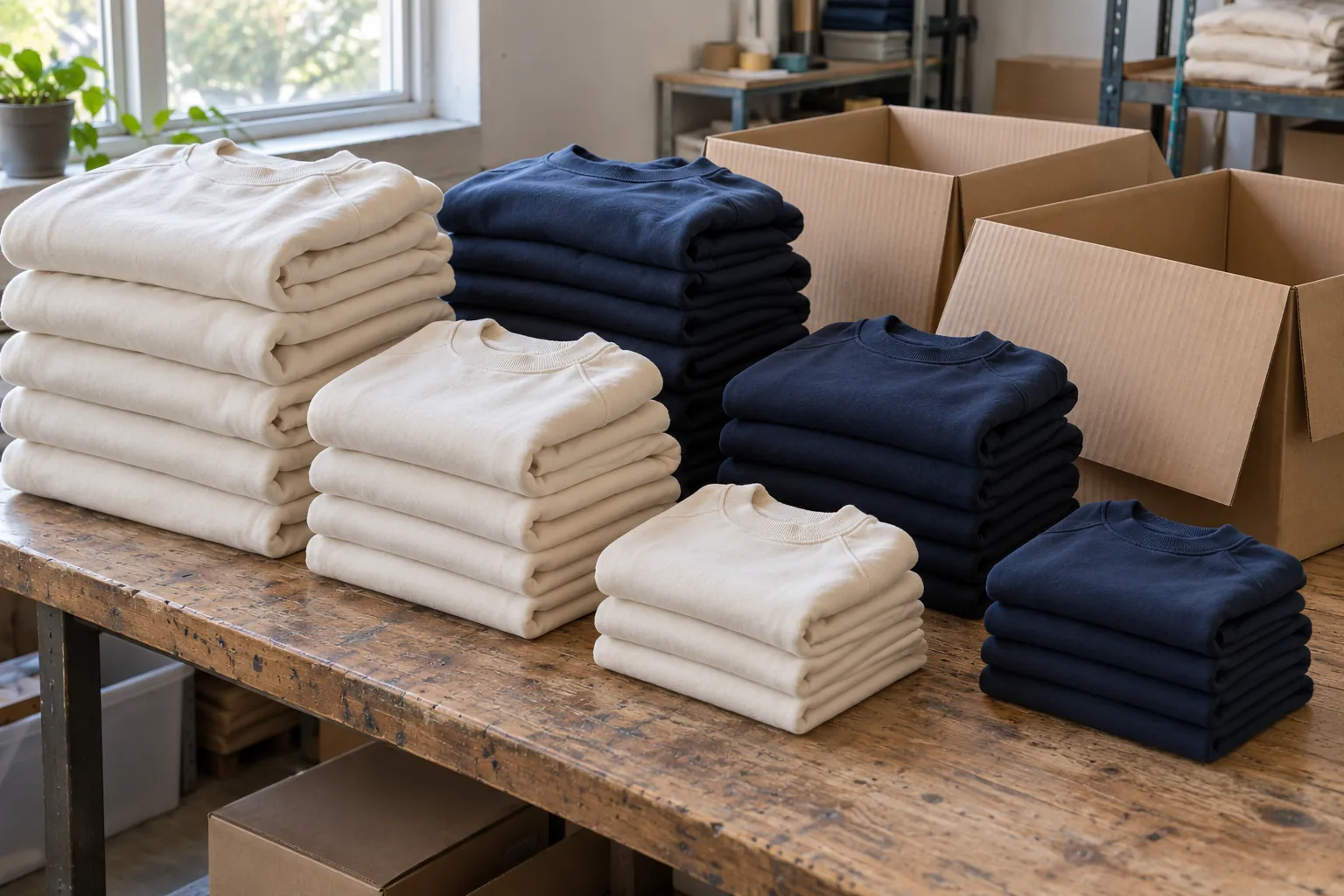
A wholesale delivery appointment and an online restock do not carry the same exposure. If a retailer requires complete size runs on a fixed date, shipping one colour early may solve nothing. If an established sweatshirt simply needs replenishment, a smaller first release may be useful, provided the buyer and supplier agree that splitting the order is feasible.
Write down the date that matters and what it means: ready for collection, handed to a carrier, or received at your warehouse. Then state what happens if it is missed. That consequence helps you decide whether to simplify the product, reserve contingency time or move the launch. Avoid treating a factory completion estimate as an arrival promise.
Give each uncertain detail a stopping test
Ask a practical question about every open item: can the next operation proceed correctly without this answer? An undecided neck label position may affect sewing assembly. A missing carton instruction may become critical closer to packing. Neither should disappear from view, but they do not require identical urgency today.
Use a small risk list instead of a sprawling tracker. Each entry needs one owner, a decision deadline agreed with the supplier and evidence that closes it. Keep subjective concerns off the list unless they can be translated into an approval criterion.
| Open issue | Possible stoppage | Proportionate safeguard |
|---|---|---|
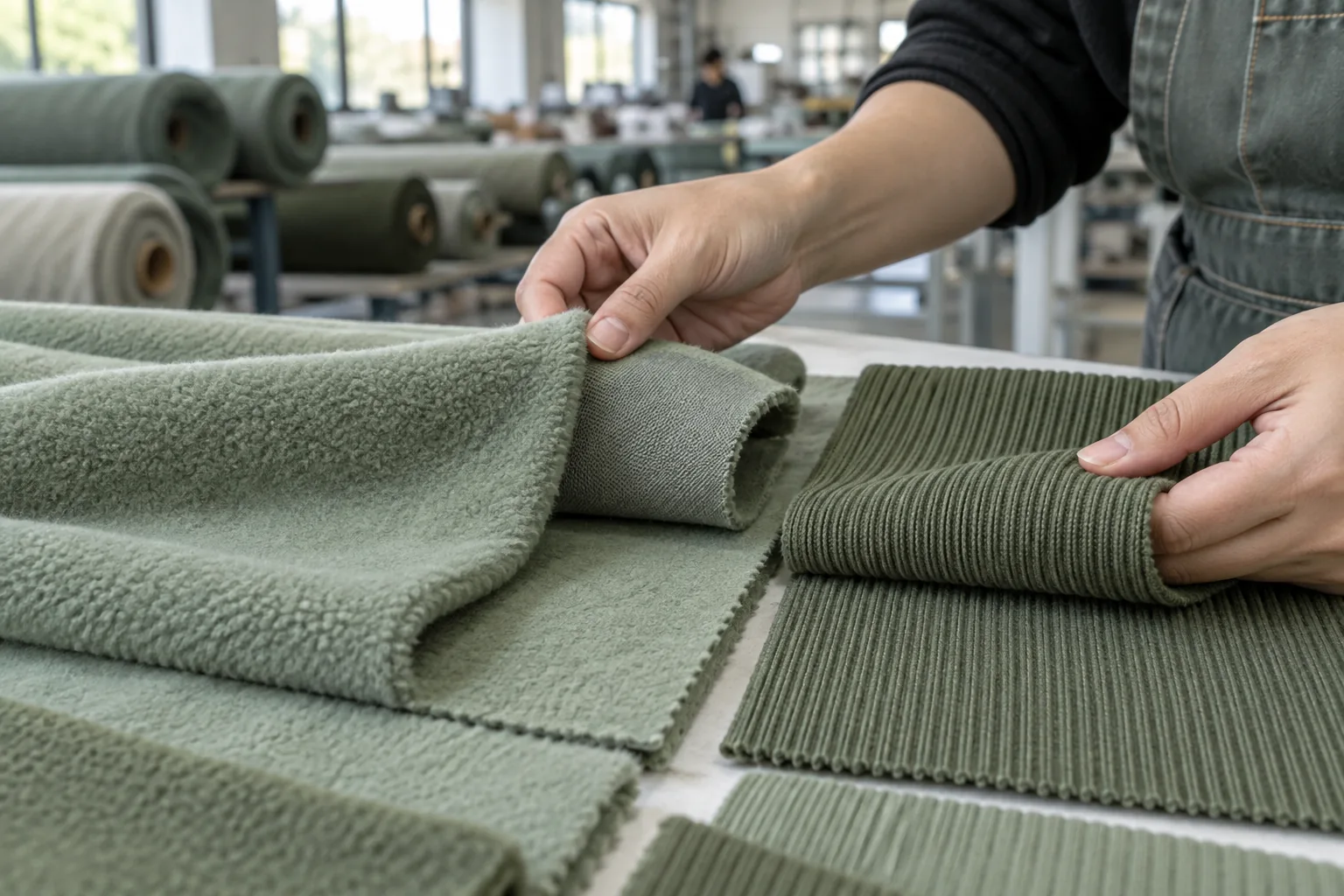
| Unconfirmed rib shade | Body fabric arrives without an acceptable matching component | Approve the combination before committing to affected materials |
| Unproven print on stretch fabric | Decoration fails after garments are assembled | Check a representative decorated swatch first |
| Missing carton size breakdown | Finished goods wait for packing instructions | Assign a buyer deadline before packing begins |
The point is not to predict every possible interruption. It is to make the few credible ones visible while there is still a low-cost response.
Buy evidence before buying extra sample rounds
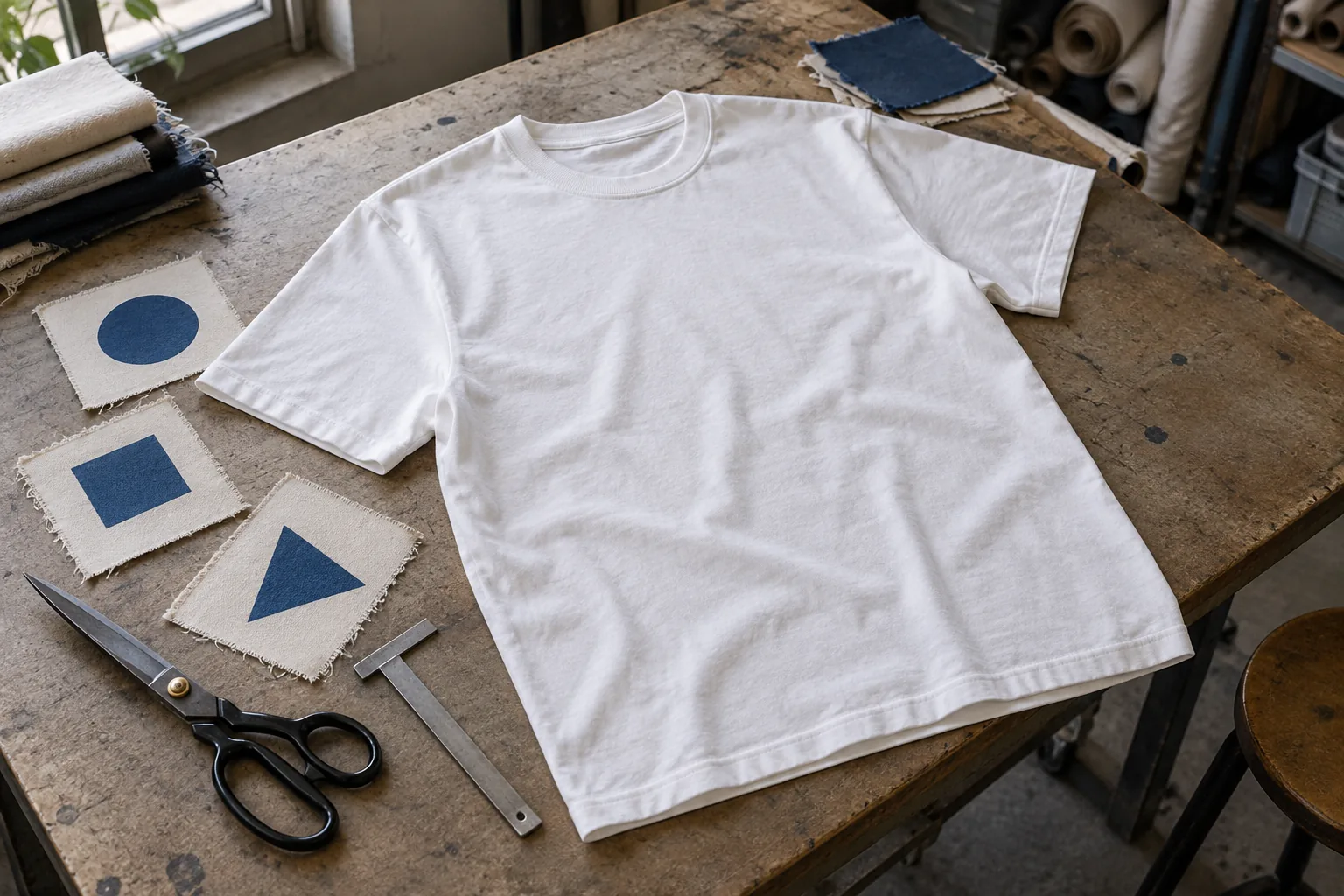
A full garment sample is valuable when you need to assess fit, construction or how components behave together. It is less efficient when the only unresolved issue is whether a print cracks after stretching. Ask which test or sample format can resolve the uncertainty, and confirm its limitations before relying on it.
For example, a new heavyweight T-shirt might need a garment wash assessment because shrinkage affects fit. A repeat style with a new artwork placement may need a placement check and decoration approval instead. A swatch cannot establish garment fit, and a good-looking photograph cannot establish handfeel.
StitchQuote offers a 7-day sample for standard styles with confirmed specifications and available materials. Complex styles, custom washes and custom-developed fabric take longer. Treat that availability as a conditional development option, not a bulk production deadline. Ask what must be ready before the sample timing can be confirmed.
Keep one fallback that preserves the product
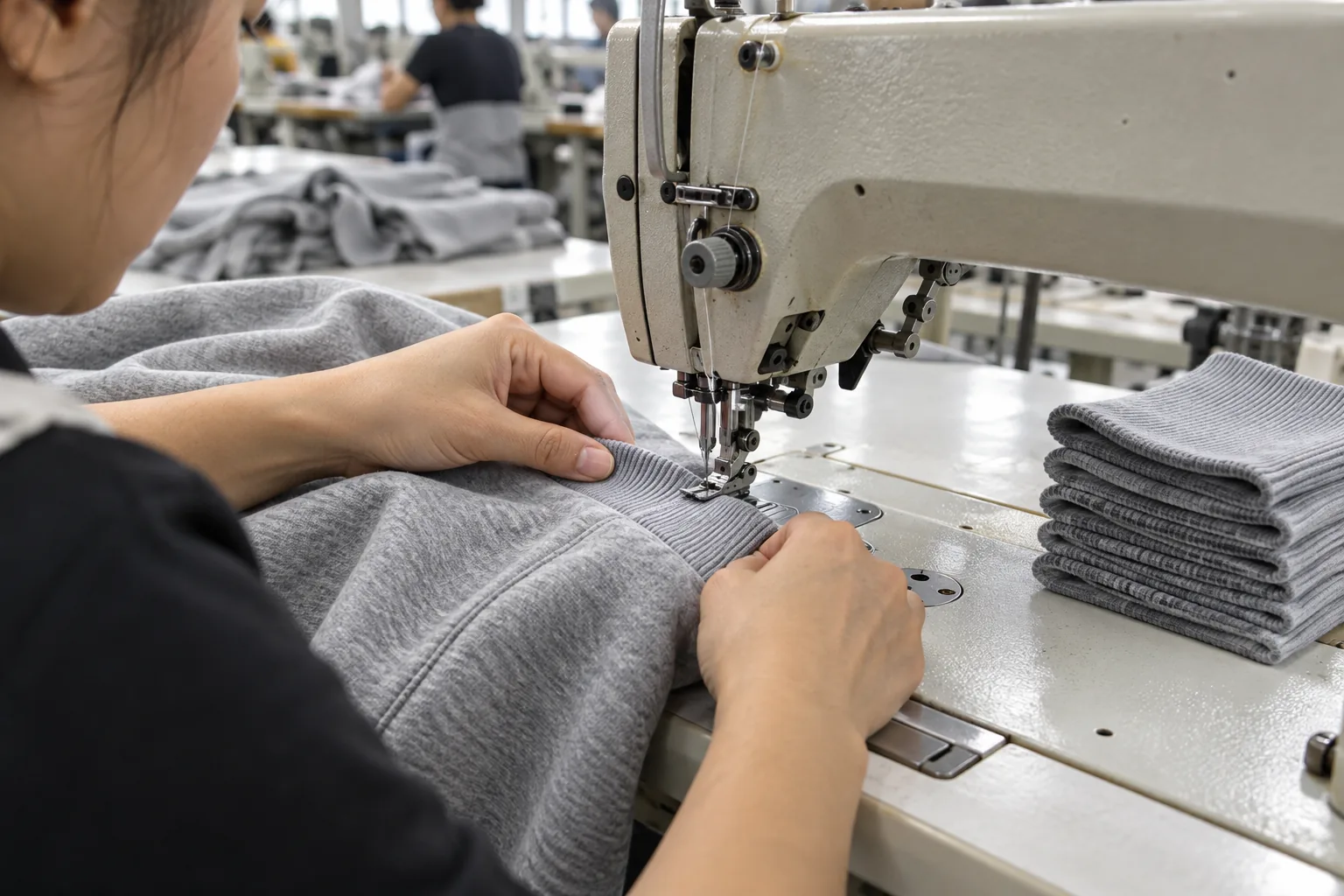
Multiple backup options can create more sourcing and approval work than they save. Choose a fallback only for a material or operation whose failure would threaten the order. Define what you can change and what must stay fixed. For a plain fleece set, using an approved available drawcord might be acceptable; replacing the main fleece could change weight, shrinkage and colour matching.
Set an expiry point for the preferred option. If a custom trim cannot be confirmed by the agreed decision date, the buyer either approves the fallback or accepts a revised schedule. A backup that still requires extensive testing at that point is not a dependable recovery route.
Keep quantity constraints in view as well. StitchQuote’s MOQ for most categories starts from 50 pieces per style; denim starts from 100 pieces per style. Confirm how the proposed colour and size breakdown affects your project before treating a smaller order as the solution.
Check the first repeatable result before defects multiply
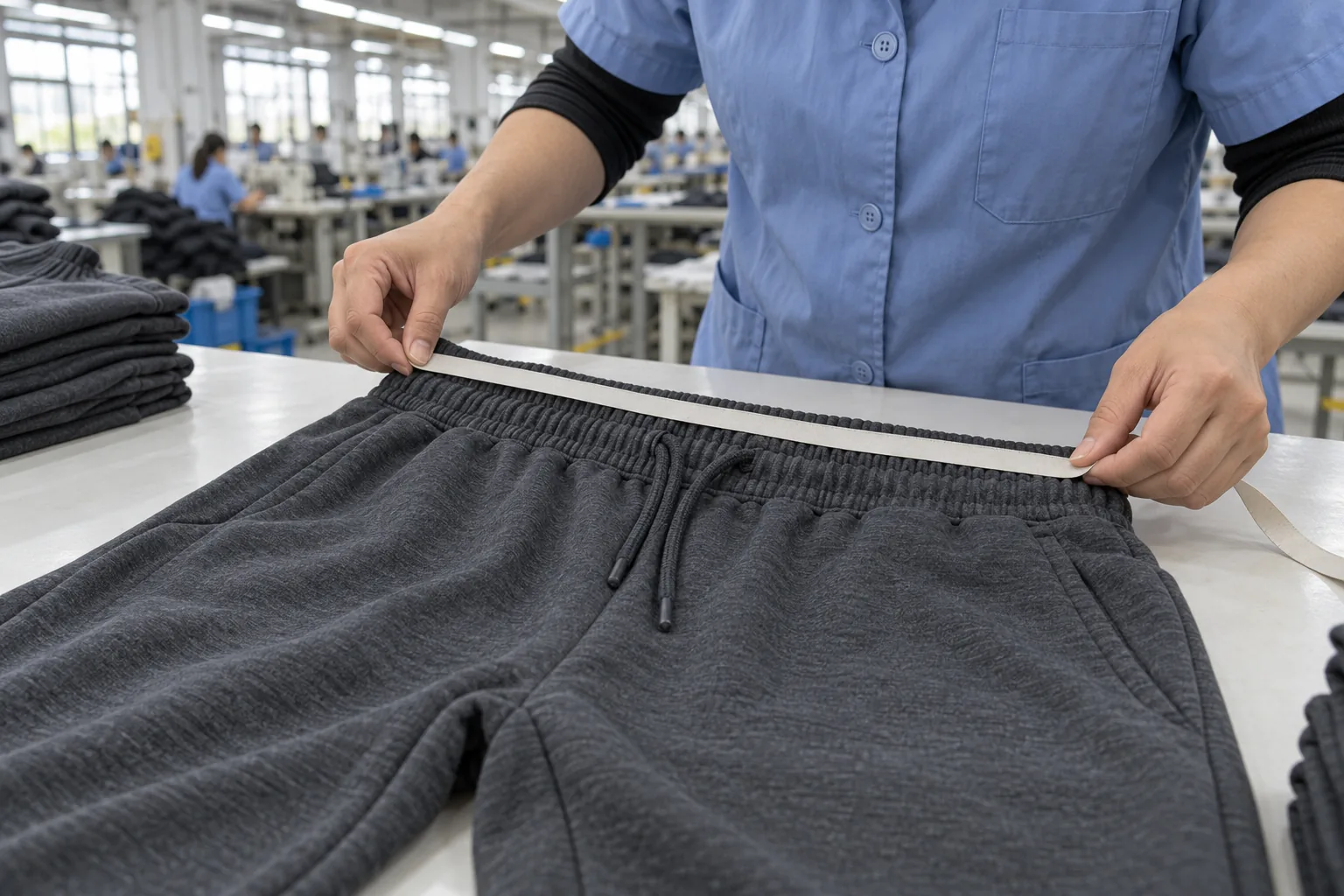
Inspection only at the end can reveal a problem when recovery is most expensive. Agree on a focused early check for the features most likely to create repeated rework. A jogger waistband deserves attention if elastic tension or assembly is new; a proven seam does not automatically need another approval meeting.
- Reference: Identify the approved sample and current specification revision so checks use the same target.
- Measurements: Name the critical points and agreed tolerances, including any required post-wash assessment.
- Materials: Verify the actual production fabric, rib and trims against approved references.
- Decoration: Check placement, appearance and the agreed performance criteria on representative work.
- Response: Decide who can release work after a discrepancy and which affected operations should wait.
StitchQuote includes QC before packing among its services. Discuss any additional early inspection needs during planning. Keep the checklist tied to the product’s risks; adding checks without an acceptance standard can generate questions without improving control.
Turn fit and fabric approvals into measurable release criteria
For a T-shirt, specify half-chest width measured flat below the armholes, body length from the high shoulder point to the hem, shoulder width between seam intersections, and sleeve length from the shoulder seam. Draw the measurement locations in the tech pack: “chest” alone does not tell an inspector where to place the tape. State whether the garment should be relaxed, conditioned after unpacking or washed before measurement, and use the same method for the sample and bulk checks.
As an illustrative starting point for discussion, a buyer might propose a tolerance of plus or minus 1 cm for half-chest and body length, with a tighter limit for a small neck opening or artwork position. These are proposed order criteria, not StitchQuote standards or universal tolerances. Confirm what the fabric and construction can consistently achieve before approval. Record the target for every size; a passing medium sample does not establish that the smallest and largest sizes are correctly graded.
Define fabric beyond a description such as “heavy cotton.” An example specification could request 240 GSM cotton single jersey, the intended fibre composition, an approved colour reference and a stated finishing requirement. GSM describes mass per unit area; it does not establish softness, opacity or shrinkage. Agree on an acceptable weight range and assess the actual fabric after the intended care cycle. Measure shrinkage separately in length and width, and check twisting, seam appearance and neck rib recovery. A substitute with the same GSM can still require a fresh approval if its knit structure or finish changes.
Work through one small order before releasing cutting
Consider a hypothetical 100-piece T-shirt order in one colour, split into 20 small, 40 medium, 30 large and 10 extra-large pieces. This clears StitchQuote’s starting MOQ of 50 pieces per style for most categories, but the buyer should still confirm fabric, decoration and size allocation feasibility. Put that exact breakdown on the purchase specification so the cutting plan, labels and packing instructions all refer to the same quantities.
First, resolve fabric availability and approve the sample measurements. Next, approve a decoration trial with artwork dimensions and distances from named seams. Then consolidate those decisions into one dated specification revision before authorising cutting. If the buyer changes the print size afterward, ask which work has already been completed and what requires replacement or rework. A written change decision prevents an old artwork file from remaining in use while the latest version sits in an email thread.
When comparing options, request separate explanations of the main cost drivers: fabric consumption and cutting waste, decoration setup, sewing complexity, custom trims, sample revisions and packing requirements. Extra colours may introduce additional material commitments or decoration setups even when total garment quantity stays constant. Before packing, reconcile quantities by size and check that garment size labels match the corresponding packaging. Resolve shortages and mislabelling while the goods are still accessible, rather than discovering them during warehouse intake.
Questions buyers ask when keeping controls lean
Do we need daily production calls for a small order?
Not necessarily. Agree on updates at meaningful milestones and immediate notification when a decision or material issue threatens the schedule. A short update naming the blocker, its impact and the required answer is more useful than a daily call with no new evidence.
Can we remove a risky feature after sampling?
Possibly, but request an impact review first. Removing a pocket or changing a closure can affect patterns, assembly and materials already purchased. Confirm the revised specification and whether another targeted check is needed before assuming simplification saves time.
When should we stop trying to recover the original date?
Reassess when the remaining plan depends on unconfirmed materials, skipped acceptance checks or transport assumptions nobody has verified. Ask for a revised sequence with explicit dependencies. Moving a launch can be more manageable than committing to a recovery schedule with no supporting evidence.
Bring a short decision brief to your supplier
Send the required delivery outcome, stable product specifications and the few uncertainties that could stop work. State who can approve changes and what substitutions are acceptable. This gives the supplier a concrete basis for discussing feasibility without building an elaborate reporting process around a small order.
Related reading and project support:
- Prepare specifications that make production decisions clear
- Review sampling and minimum order considerations
- Discuss your order’s timing risks with StitchQuote
Request a manufacturing quote
Share your product type, quantity range, and destination. We usually reply within one business day.