Custom Streetwear, Casualwear & Denim Manufacturer•MOQ 50 pcs•Denim MOQ 100 pcs•7-Day Sample Available

How to Read a Garment Factory Quote
Learn how to read a garment factory quote by breaking down scope, terms, MOQ logic, sample assumptions, and hidden variables before you compare suppliers.

A low unit price can become an expensive purchase once development charges, freight, customs clearance, and destination handling reach the same spreadsheet. Reading a garment factory quote means finding the cost of getting usable stock to the place where your brand can actually sell it.
Use the quotation as the starting point for a landed-cost comparison. Before paying a deposit, reconcile each supplier’s scope against the same product specification, delivery destination, and order quantity. The aim is a complete buying decision, with unresolved costs visible rather than silently treated as zero.
Choose the destination before comparing unit prices

“Delivered” is incomplete unless it names a location and explains who pays which charges. A quote ending at the factory gate cannot be compared directly with one covering transport to your warehouse. Record the Incoterm, named place or port, and applicable version, then ask for a plain-language list of included and excluded services.
Under EXW, buyers generally arrange collection and much of the onward transport work. FOB applies to sea or inland waterway transport and places delivery on board the vessel at the named shipment port. DDP assigns extensive delivery and import obligations to the seller, but still needs a precise destination and confirmation that the arrangement is workable for your market.
Have your freight forwarder or customs broker check the proposed terms. Confirm the importer of record, clearance responsibility, unloading arrangements, and any warehouse appointment charges. Incoterms divide delivery responsibilities and risk; they do not specify garment quality or replace payment terms.
Turn one headline number into a complete cost sheet
Create separate rows for the product, development, logistics, and import charges. This keeps a missing line visible. Ask whether each amount is fixed, estimated, conditional, or excluded, and assign someone to confirm it.
| Cost bucket | What to establish | Allocation basis |
|---|---|---|
| Bulk garments | Fabric, construction, decoration, labels, packing | Accepted order quantity |
| Development | Samples, patterns, setup, courier shipments | Units in the launch being evaluated |
| Transport | Collection, export handling, main freight, final delivery | Shipment weight or volume |
| Import and receipt | Duty, brokerage, applicable taxes, receiving fees | Broker and warehouse estimates |
A practical management calculation is total attributable purchase and delivery costs divided by expected saleable units. Include development when assessing the launch’s full economics; show it separately when comparing repeat-order costs. Avoid counting freight twice if it is already included in the supplier’s delivery basis.
Ask an accountant how recoverable import taxes should appear. They may affect cash needed at entry without becoming a permanent product cost. Duty classification, origin, customs valuation, and destination rules require market-specific confirmation, not a generic percentage copied from another brand.
Price the approved garment, not an unfinished assumption
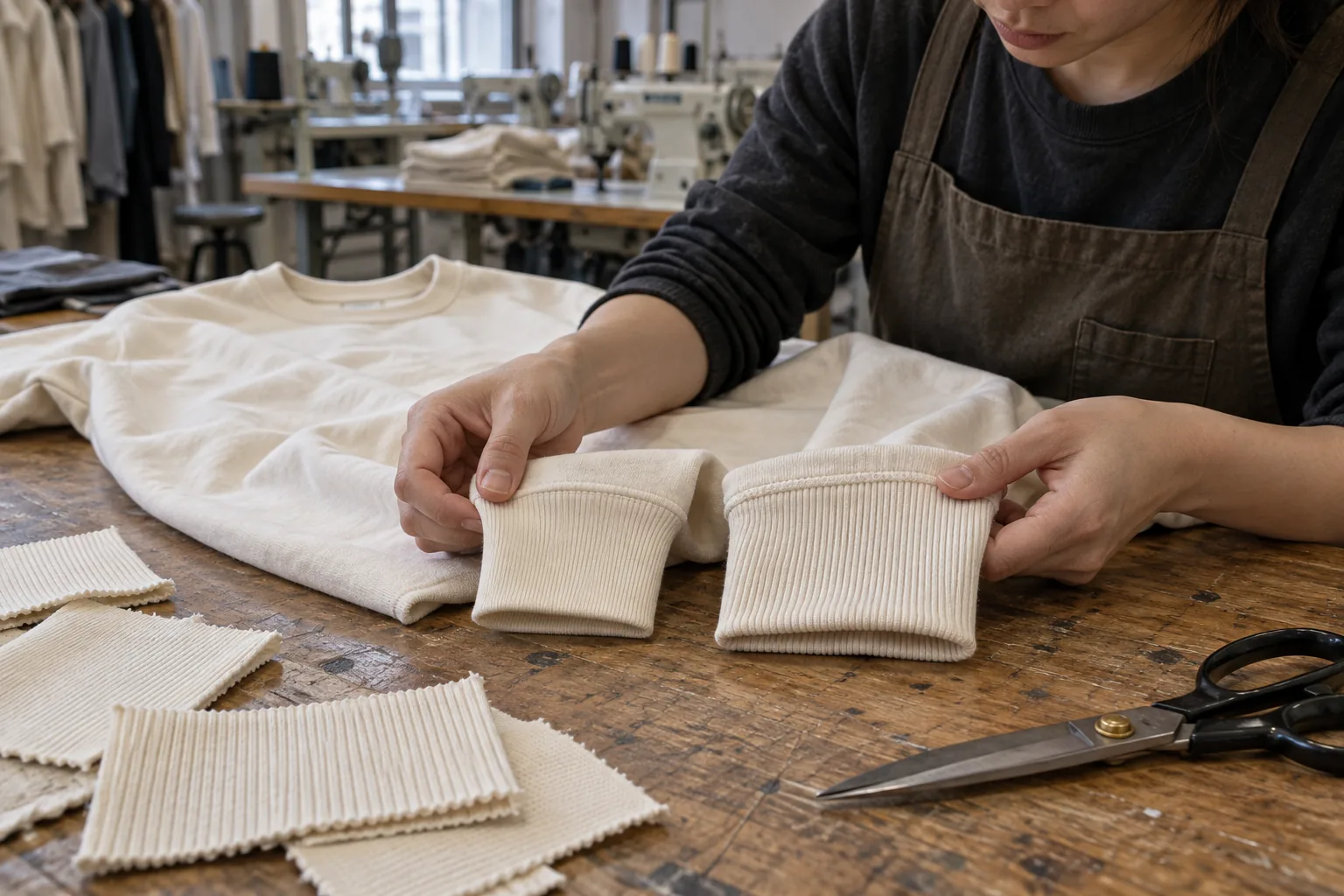
Two visually similar sweatshirts may carry different costs because of fabric weight, shrinkage requirements, rib quality, embroidery coverage, or individual packaging. Put the specification revision and sample reference on the quotation. Ask which inputs remain provisional and what event will make the price firm.
For example, replacing a small chest print with dense embroidery can affect setup, production time, backing materials, and the finished garment’s hand feel. A heavier fabric can increase both the garment price and transport weight. Evaluate the combined change before approving either option.
StitchQuote provides cut-and-sew, private label, sampling, fabric and trim sourcing, branding through woven labels, prints and embroidery, and QC before packing. Confirm the quoted scope for your project rather than assuming every available service is bundled. A 7-day sample is available for standard styles with confirmed specifications and available materials; complex styles, custom washes, and custom-developed fabrics take longer.
Test quantity savings against cash and shipment size
A lower price at a larger quantity does not automatically improve the purchase. Compare total cash committed, storage needs, and likely sell-through alongside landed cost per unit. An extra color can introduce material minimums or setup charges even when the overall order quantity stays unchanged.
StitchQuote’s MOQ for most categories starts from 50 pieces per style; denim starts from 100 pieces per style. Confirm how your proposed colors, sizes, and materials fit the order requirements. Do not assume a style minimum can be divided into any number of colorways.
Request estimated packed carton dimensions, gross weight, and carton count. Freight can depend on chargeable volume as well as actual weight, so bulky fleece may behave differently from lightweight shirts. Model consolidated delivery and split delivery separately: rushing a small launch allocation by air can erase a production-price saving.
Check saleable yield before authorizing the deposit
Receiving the ordered number of pieces does not guarantee the same number is ready for sale. If 100 garments arrive but five need repair, the full shipment cost is initially supported by 95 saleable units. This is a planning example, not a predicted defect rate. Use an explicit scenario instead of hiding quality exposure in an arbitrary surcharge.
- Product reference: Confirm the approved sample, measurements, tolerances, color standard, and decoration placement.
- Inspection scope: Agree checks for stitching, appearance, measurements, labels, quantities, and packing, with any testing separately identified.
- Release evidence: Define which inspection records or photos you need and when they arrive relative to shipment and payment.
- Failure response: Record who approves rework, who pays for reinspection, and how shortages or unresolved defects are handled.
- Commercial exposure: Confirm quote validity, currency, bank charges, payment milestones, and approval rules for extras.
QC before packing is a StitchQuote service. Agree the project’s acceptance criteria and remedies in writing; the presence of a QC line alone does not settle those terms.
Make fabric and measurement requirements measurable
Attach a measurement chart before requesting a firm price. For a sweatshirt, identify half-chest width measured flat at a stated distance below the armhole, body length from the high shoulder point, shoulder width between seams, sleeve length from the shoulder seam, and cuff opening measured relaxed. Specify whether measurements apply before or after washing, and keep the method consistent across the sample and bulk inspection. Otherwise, two inspectors can report different results on the same garment.
Set tolerances by measurement point rather than applying one allowance everywhere. As an illustrative starting proposal for discussion, a buyer might request ±1 cm on body length and half-chest width, with ±0.5 cm on a small pocket or decoration placement. These are proposed acceptance limits, not StitchQuote standards or universal industry tolerances. Ask production to confirm feasibility for the fabric, construction, and size range before including them in the approved specification.
Describe fabric beyond its weight. A request for 300 GSM fleece should also identify fiber composition, knit construction, brushed or unbrushed interior, color reference, and finishing requirements. State whether GSM is to be assessed on the finished fabric and agree an acceptable range and test method. Fabrics with the same GSM can differ in stretch, recovery, softness, and usable cutting width; those differences affect fit, consumption, and cost.
Use the sample to check the agreed wash and drying conditions. Record dimensions before and after washing, calculate dimensional change for each key point, and inspect twisting, surface appearance, and rib recovery. Ask which checks are included in sampling and which require separately quoted testing. If a fabric change is needed to achieve the agreed result, update both the specification and quotation before bulk approval.
Work through a small order before accepting the total
Consider a planning example of 100 sweatshirts in one style and one color, split into 20 small, 40 medium, 30 large, and 10 extra-large pieces. This is an example allocation, subject to confirmation of material and size requirements. Give every supplier that same breakdown, one fabric specification, one print size and placement, and the same label and packing instructions. Ask whether larger sizes change consumption or pricing and whether print setup is charged separately.
Build the order total from the quoted garment charges, confirmed development and branding setup, packing extras, and the transport and import estimates applicable to the chosen delivery term. Divide that total by 100 for the baseline unit calculation. Compare this with an alternative fabric or decoration option using a revised quotation, keeping quantities and delivery assumptions constant so you can isolate the effect of the change.
Before release, reconcile the packing list against all four size quantities and match carton markings to the receiving warehouse’s requirements. Confirm how size labels and barcodes will be checked, whether cartons contain mixed sizes, and how any shortage will be documented. This connects the quotation to stock receipt: a correctly made garment still creates avoidable handling work if its size identification or carton allocation is wrong.
Questions buyers ask when reconciling the final total
Can I compare quotes while freight is still unknown?
Yes, as a provisional comparison. Use the same forwarder assumptions, destination, shipment mode, and estimated packing data for each option. Mark freight as pending and refresh the estimate before committing to the delivery plan.
Should sampling costs disappear from a repeat order?
Only remove charges that genuinely will not recur. New colors, revised patterns, or changed decoration may require additional development. Ask whether any sample credit is conditional and show it only when its terms are confirmed.
Does a DDP price eliminate every arrival cost?
Do not assume so from the abbreviation alone. Verify the named destination, import arrangements, taxes covered, and receiving services. Ask about storage or redelivery charges caused by missed appointments, and resolve any exclusions that conflict with the stated delivery term.
What should the final approval record contain?
Keep one dated package containing the accepted quote, specification revision, quantity breakdown, packing assumptions, delivery terms, payment schedule, and unresolved-cost register. Request a revised quotation when an approved change affects scope, rather than relying on scattered messages.
Related reading and project support:
- Prepare the specifications behind your quotation
- Review sampling and MOQ considerations
- Explore hoodie manufacturing cost drivers
- Contact StitchQuote to discuss your quote scope
Request a manufacturing quote
Share your product type, quantity range, and destination. We usually reply within one business day.