Custom Streetwear, Casualwear & Denim Manufacturer•MOQ 50 pcs•Denim MOQ 100 pcs•7-Day Sample Available

Can You Order Multiple Colors in One MOQ
See when you can order multiple colors in one MOQ, what makes the order structure harder to execute, and how to keep color splits realistic. for clearer production.

Can you order multiple colors in one MOQ? Sometimes, but a style minimum does not automatically cover every color split. A single garment design can pass through several processes, each with its own purchasing or setup threshold. Your proposed assortment needs to work at each of those stages.
For a buyer preparing a purchase order, the useful question is which quantities can be combined and which must stand alone. StitchQuote’s MOQ for most categories starts from 50 pieces per style; denim starts from 100 pieces per style. Those starting points do not establish a universal minimum per color. Before committing to an assortment, separate the sewing quantity from the fabric, dyeing, decoration, and trim requirements.
Trace the minimum through the production route
Think of MOQ as several gates rather than one total. A factory may be able to sew the combined quantity while a material supplier requires a larger purchase for one shade. Alternatively, stocked fabric may be easy to obtain, but a custom zipper color may create the constraint.
Ask the quotation to identify the unit behind each minimum. Garments are counted in pieces, fabric may be purchased in meters or kilograms, and trims may come in packs. These quantities cannot be compared directly without fabric consumption, cutting loss, and purchasing allowances.
| Process | What may be combined | What needs separate confirmation |
|---|---|---|
| Cutting and sewing | Colors sharing the same construction | Accepted garment quantity per color |
| Fabric sourcing | Demand using the same fabric specification | Available stock or dye lot per shade |
| Decoration | Repeated artwork and placement | Ink, thread, or setup changes |
| Trims | Shared labels and standard components | Custom colors and supplier pack sizes |
Stocked fabric changes the color calculation
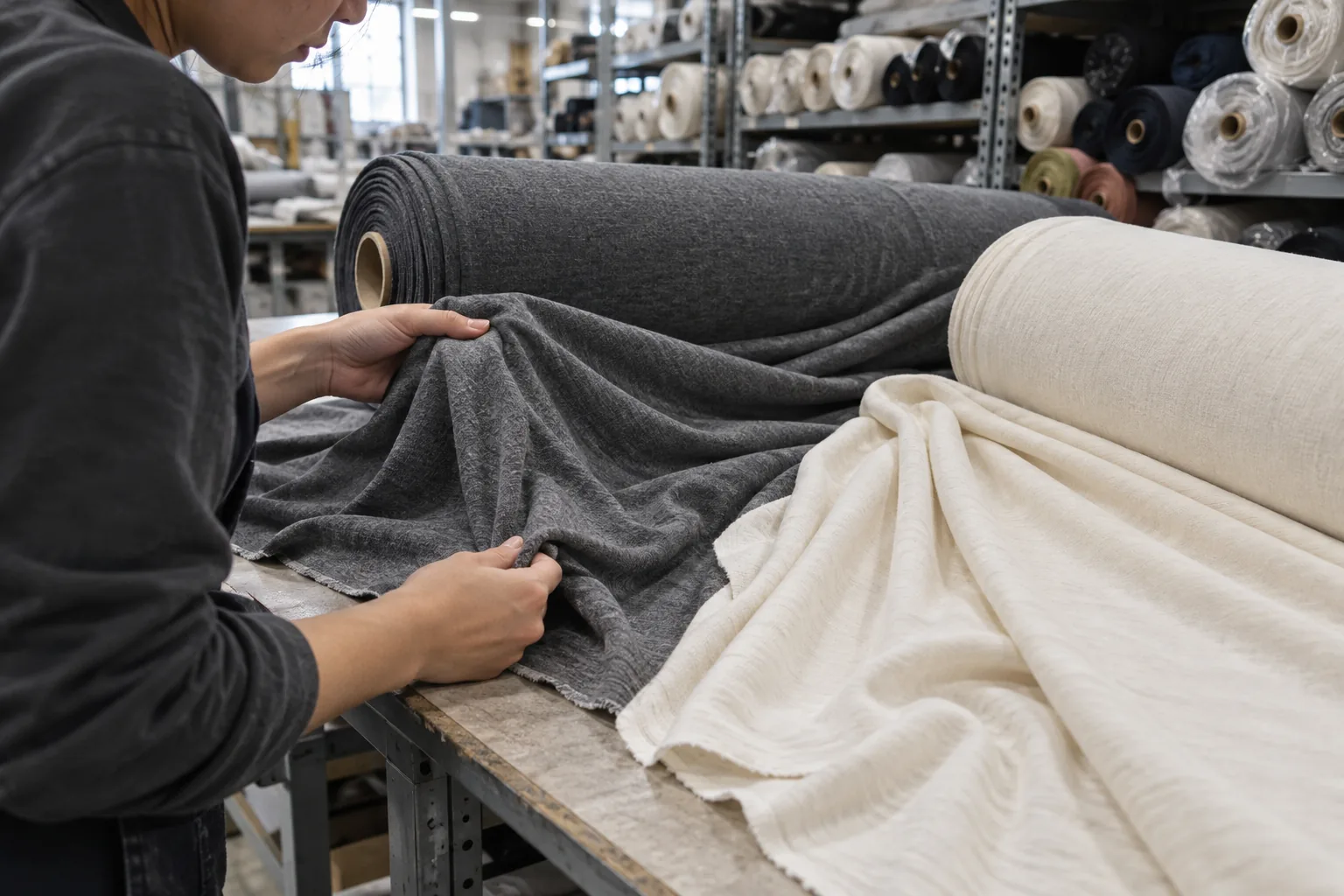
Using existing fabric colors can remove the need to commission a separate dye batch. It does not guarantee that every shade is available in the required quantity. Stock may also be divided between lots, with visible shade differences.
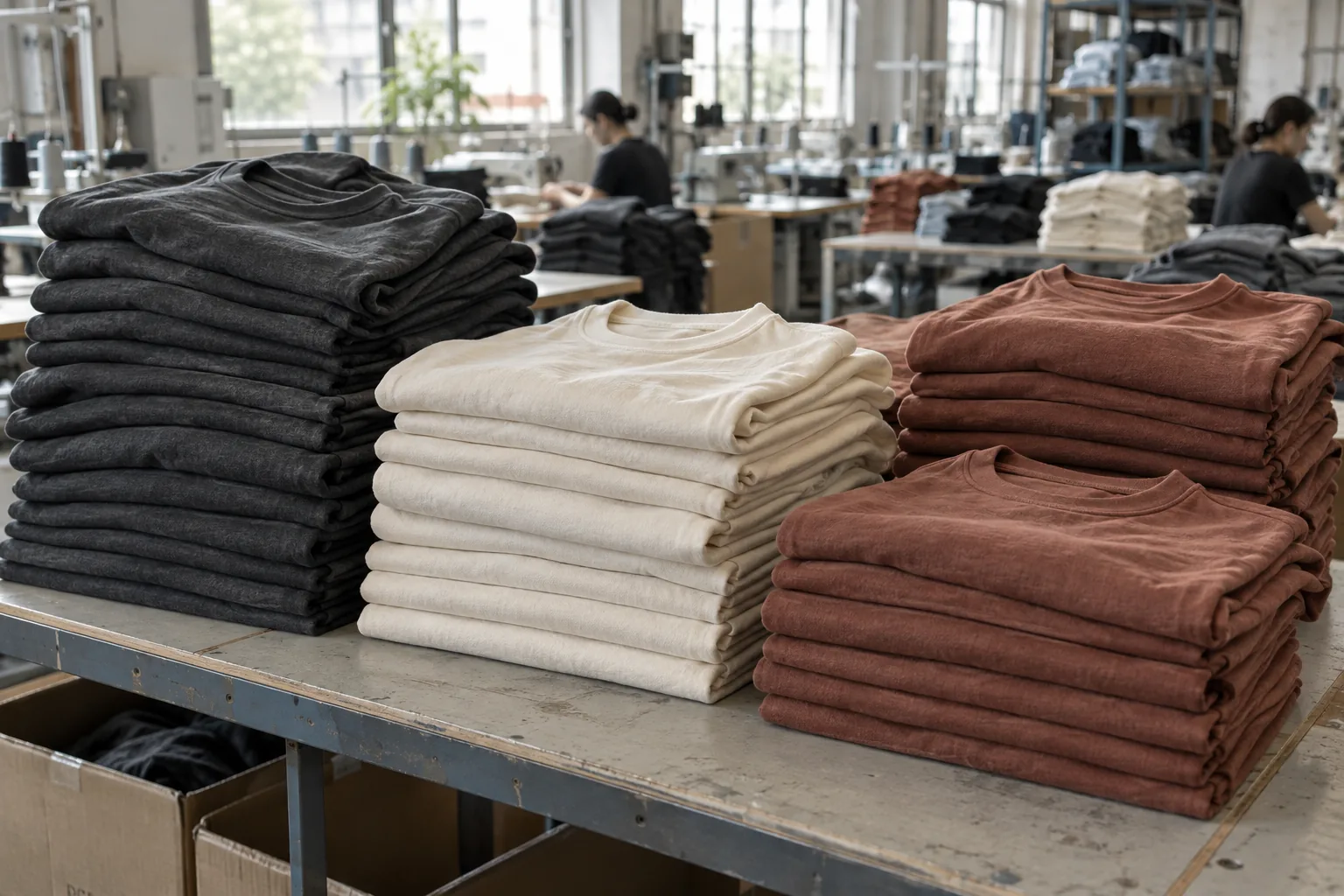
Consider a hypothetical 60-piece jersey top order split into 36 charcoal and 24 cream pieces. Before treating that as a workable two-color order, confirm that both colors use the same composition, weight, finish, and usable width. This example illustrates the review; it is not an approved StitchQuote split.
Request current availability and ask when material will be reserved. A swatch approval establishes an appearance reference, but it does not necessarily reserve stock. If one shade runs short, an alternative fabric could change drape or shrinkage enough to require another sample.
Custom dyeing and washes introduce separate batches
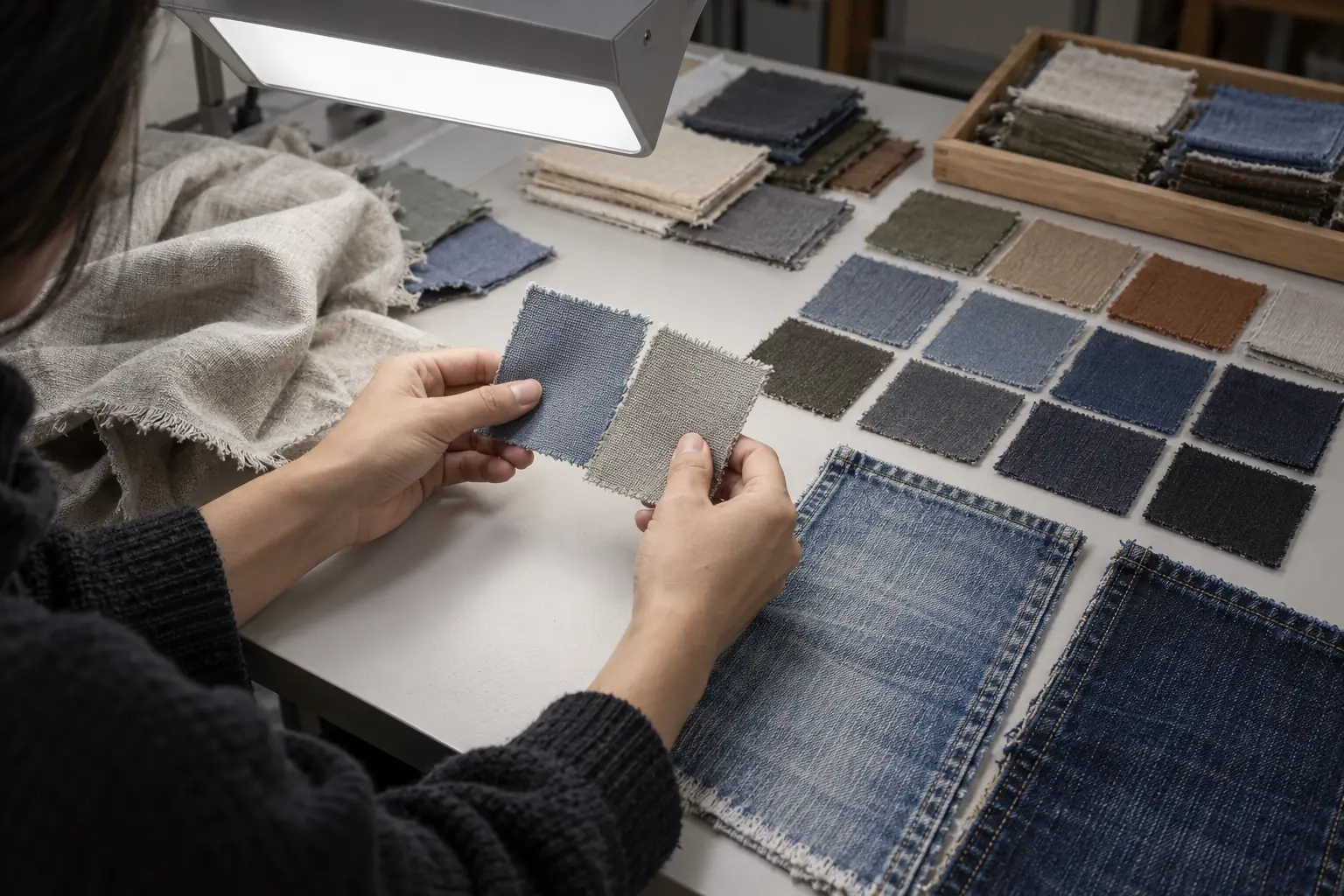
Custom fabric dyeing usually makes the individual shade a purchasing decision. Two colors using the same base fabric can still require separate dye batches. Ask whether the dyeing minimum is measured by weight or length, and how that converts into finished garments for your size range.
Garment dyeing moves color development later in production. Shared undyed garments may simplify some upstream work, but each final color still needs an agreed batch quantity and process. Shrinkage, seams, and trim compatibility should be assessed through the intended treatment.
Denim washes deserve the same scrutiny. One jean pattern with two wash effects can involve different finishing recipes and approvals. StitchQuote’s denim starting MOQ of 100 pieces per style does not by itself confirm a split between washes. Have each finish reviewed before allocating the order.
Decoration and trims can divide an otherwise shared order
Keeping artwork identical does not always mean keeping the decoration process identical. A print on a pale shirt may need a different ink approach from the same artwork on a dark shirt. Embroidery thread changes, backing requirements, and placement differences should also be disclosed.
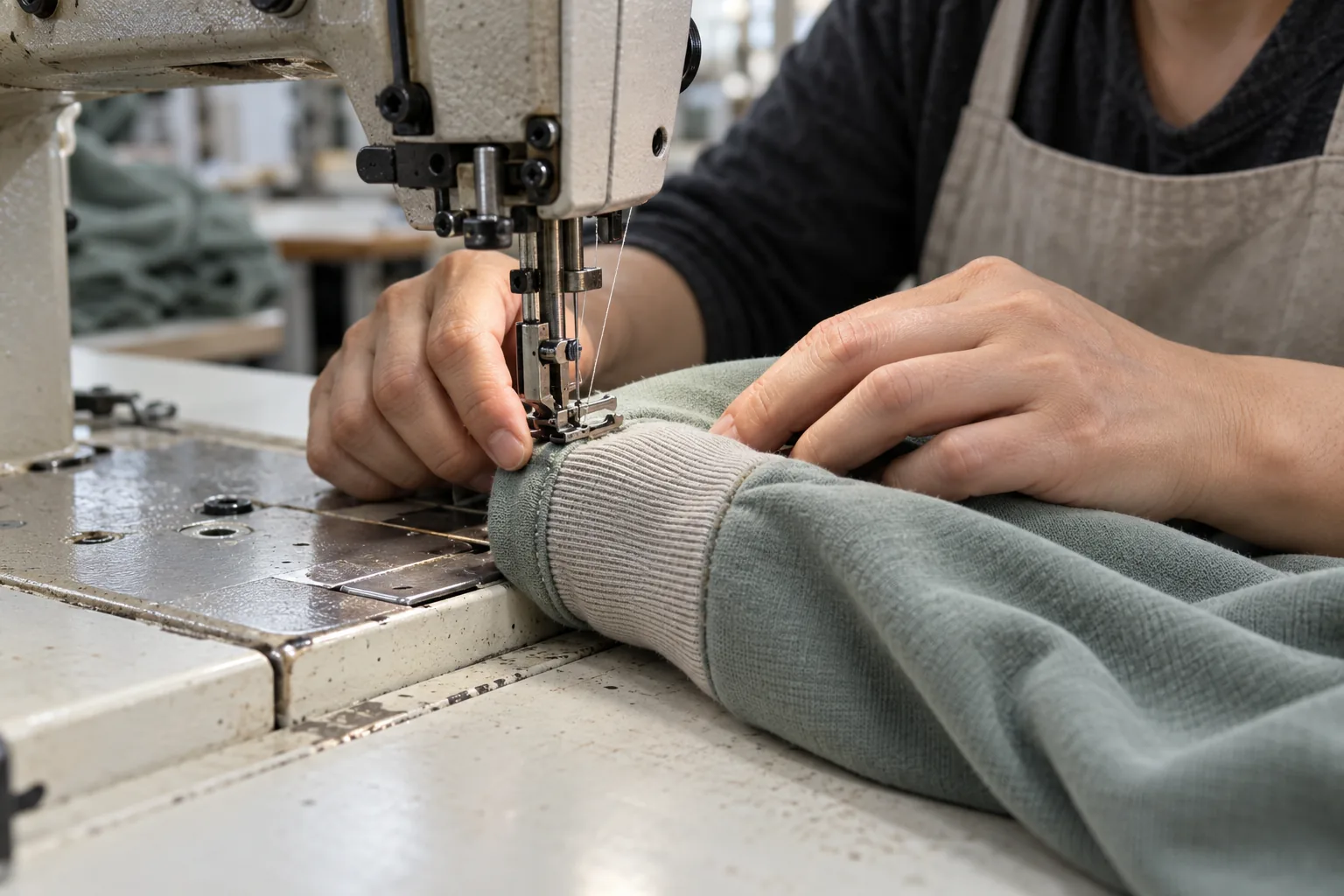
Check components beyond the main fabric. Matching rib, drawcords, zipper tape, and buttons can each require another purchase. A neutral drawcord used across three colors may simplify sourcing, while three custom shades may add unused stock or setup costs.
For every optional variation, ask what happens if it is standardized. The response helps you decide whether the visual distinction justifies a separate process. StitchQuote’s services include fabric and trim sourcing, plus woven labels, prints, and embroidery; the proposed combination still needs project-specific review.
Approve a color allocation before authorizing bulk
Send one allocation sheet showing pieces by color and size, with a process note for each color. State whether the fabric is stocked or custom dyed, identify decoration differences, and list any color-specific trims. Keep the construction specification consistent unless a difference is intentional.
Ask for a written decision on each process minimum and any excess material purchase. Establish who pays for surplus fabric or trims, who holds them, and whether they can support a reorder. An accepted garment total should not leave those obligations undefined.
StitchQuote provides cut-and-sew, private label, and sampling services. A 7-day sample is available for standard styles with confirmed specifications and available materials. Complex styles, custom washes, and custom-developed fabric take longer. Confirm which color and process the sample represents before applying its approval to other versions.
Check every color against its approved reference
A shared pattern does not make colors interchangeable during inspection. StitchQuote includes QC before packing. Agree on the color-specific checks and acceptance criteria before production so the inspection follows the intended assortment.
- Shade: Compare bulk material with the approved reference under agreed lighting, and check for mixed lots within garments.
- Fit: Check measurements after the specified finishing process, especially where colors use different treatments.
- Components: Verify rib, thread, fasteners, and drawcords against each color’s specification.
- Decoration: Check contrast, placement, and execution on every ground color.
- Packing: Reconcile color and size counts with the purchase order, including labels and carton allocation.
Turn the color split into a material calculation
Build the material estimate from the actual size allocation, rather than dividing a fabric purchase by an average garment weight. For the hypothetical 60-piece jersey top order, a buyer might allocate charcoal as 8 small, 16 medium, and 12 large, and cream as 6 small, 10 medium, and 8 large. Ask the cutting team to calculate consumption for each color using those quantities, the approved pattern, and the usable fabric width. Different size mixes can produce different cutting yields even when the garment construction is identical.
Specify the jersey precisely: for example, 100% cotton single jersey with a target weight of 180 GSM, subject to supplier confirmation and sample approval. GSM means grams per square meter; it does not describe usable width, knitting density, or shrinkage by itself. Request those details for both shades. If consumption is quoted in meters but fabric is sold by kilogram, the conversion requires width and GSM: 10 meters of fabric at 1.6 meters wide and 180 GSM has a theoretical weight of 2.88 kilograms. This calculation excludes purchasing allowances and does not establish the quantity needed for the example order.
Have the quotation show the net cutting requirement, the allowance for defects and cutting loss, and any additional material needed to reach a supplier minimum as separate entries. Also identify whether sample fabric comes out of the bulk reservation. This makes the cost of a small secondary shade visible and gives the buyer a concrete basis for comparing a smaller palette with the original assortment.
Define measurements and shade checks for each version
For a jersey top, define body length from the high shoulder point to the hem, half chest at a stated distance below the armhole, shoulder width between the specified seam points, and sleeve length from the shoulder seam to the sleeve opening. Include a sketch where a seam or measurement endpoint could be interpreted differently. Measure garments flat and relaxed, and specify whether acceptance applies before washing, after the intended factory finish, or after a defined wash test.
Set tolerances by measurement point instead of applying one blanket allowance. As an illustrative starting proposal for discussion, a buyer could request plus or minus 1 centimeter on body length and half chest, with plus or minus 0.5 centimeter on neck opening width. These are proposed criteria, not StitchQuote standards; suitability depends on fabric stretch, construction, size, and the intended fit. Record the agreed limits before bulk approval.
Check a sample of each color through the same agreed washing and drying procedure when evaluating dimensional stability. Record before-and-after measurements and calculate shrinkage as the measurement reduction divided by the original measurement, multiplied by 100. A body length changing from 70 to 68.6 centimeters represents 2% shrinkage. Compare results with the agreed requirement and investigate differences between colors before extending one sample approval across the assortment. Keep shade references labeled by color and lot so inspection can distinguish an approved shade variation from accidental mixing.
Questions buyers ask when splitting a style
Can a very small accent color share the main color’s minimum?
Only if its separate processes remain workable. A small accent run using available fabric and shared trims may be easier to approve than one requiring custom dyeing. Submit the exact quantity rather than assuming the larger color subsidizes it.
Does purchasing extra fabric solve a per-color shortfall?
It may solve the material supplier’s threshold, but sewing or decoration constraints can remain. Request confirmation of the complete route and the ownership of leftover material before agreeing to overbuy.
Can I change the split after approving the sample?
Request a feasibility review first. Reserved fabric, purchased trims, and scheduled batches may already reflect the original split. Confirm any cost or timing changes in writing before updating the purchase order.
Will a later reorder qualify for the same color split?
Do not assume it will. Stock availability, remaining materials, and process requirements need checking again. Retain approved references and specifications so the next quotation has a clear basis.
Related reading and project support:
- Request a review of your proposed color allocation
- Prepare manufacturing specifications in your tech pack
- Review sampling and MOQ guidance
- Understand hoodie manufacturing cost factors
Request a manufacturing quote
Share your product type, quantity range, and destination. We usually reply within one business day.