Custom Streetwear, Casualwear & Denim Manufacturer•MOQ 50 pcs•Denim MOQ 100 pcs•7-Day Sample Available
How to Combine Styles to Meet MOQ
See how to combine styles to meet MOQ without making the order unmanageable, and learn where shared fabrics or blocks can help the first production run.

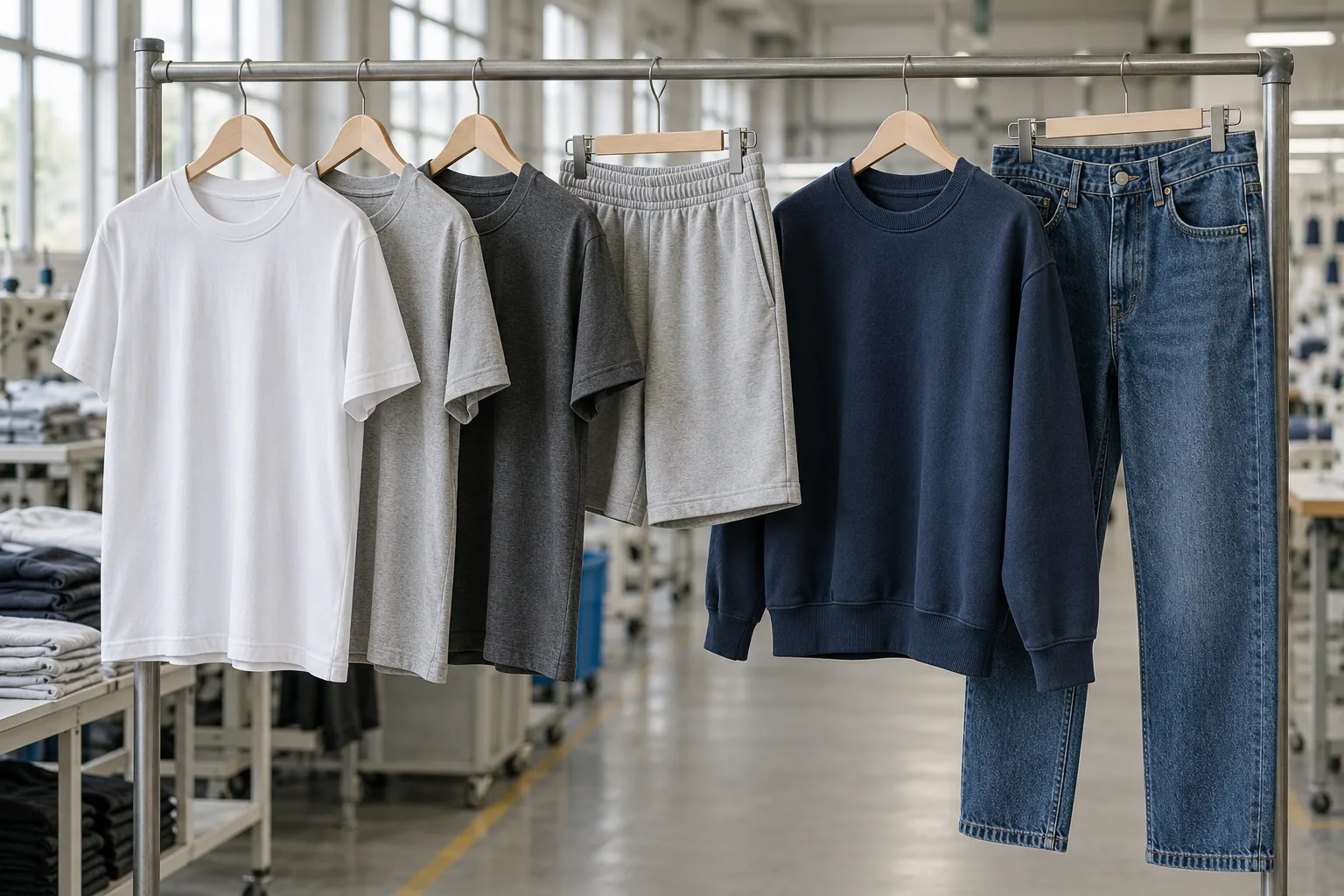
A collection total can look substantial while every production step sees a small order. A tee, a sweatshirt and a pair of shorts may share a launch date, but their fabric purchases, cutting plans and decoration setups can remain separate. Before combining quantities, identify which process can actually use the combined volume.
For buyers deciding how to combine styles to meet MOQ, the useful starting point is an assortment that is still editable. Map the proposed garments to materials and operations, then ask which minimum each grouping addresses. This lets you simplify the right variable before paying for samples or committing to fabric.
Separate the garment minimum from the process minimums
A finished-garment MOQ and a supplier’s material minimum answer different questions. The first concerns producing a style; the second may concern buying a fabric, dyeing a color or ordering a particular trim. Meeting one does not automatically satisfy the others.
StitchQuote’s MOQ for most categories starts from 50 pieces per style, while denim starts from 100 pieces per style. Those are per-style starting points, not a promise that unrelated styles can be added together. Any proposed grouping needs confirmation against its specifications and process requirements.
| Process | Potential shared basis | What still needs confirmation |
|---|---|---|
| Fabric purchasing | Identical fabric specification and color | Total consumption and purchasing minimum |
| Cutting and sewing | Related construction and compatible operations | Separate style quantities and cutting plans |
| Decoration | Same artwork, method and dimensions | Placement, substrate and setup requirements |
| Trims and finishing | Identical components or approved finish | Component minimums and treatment batches |
Pool fabric consumption before pooling garment counts
Consider a boxy jersey tee and matching jersey shorts. They might use the same fabric quality and color, allowing the buyer to discuss one material purchase. That does not make them one sewing style, and equal piece counts will not necessarily consume equal amounts of fabric.
Ask for estimated consumption by style and size mix, with cutting allowances identified. Fabric width, pattern shape and garment length affect the purchase requirement. A group of oversized tees can therefore create a different material requirement from the same number of cropped tees.
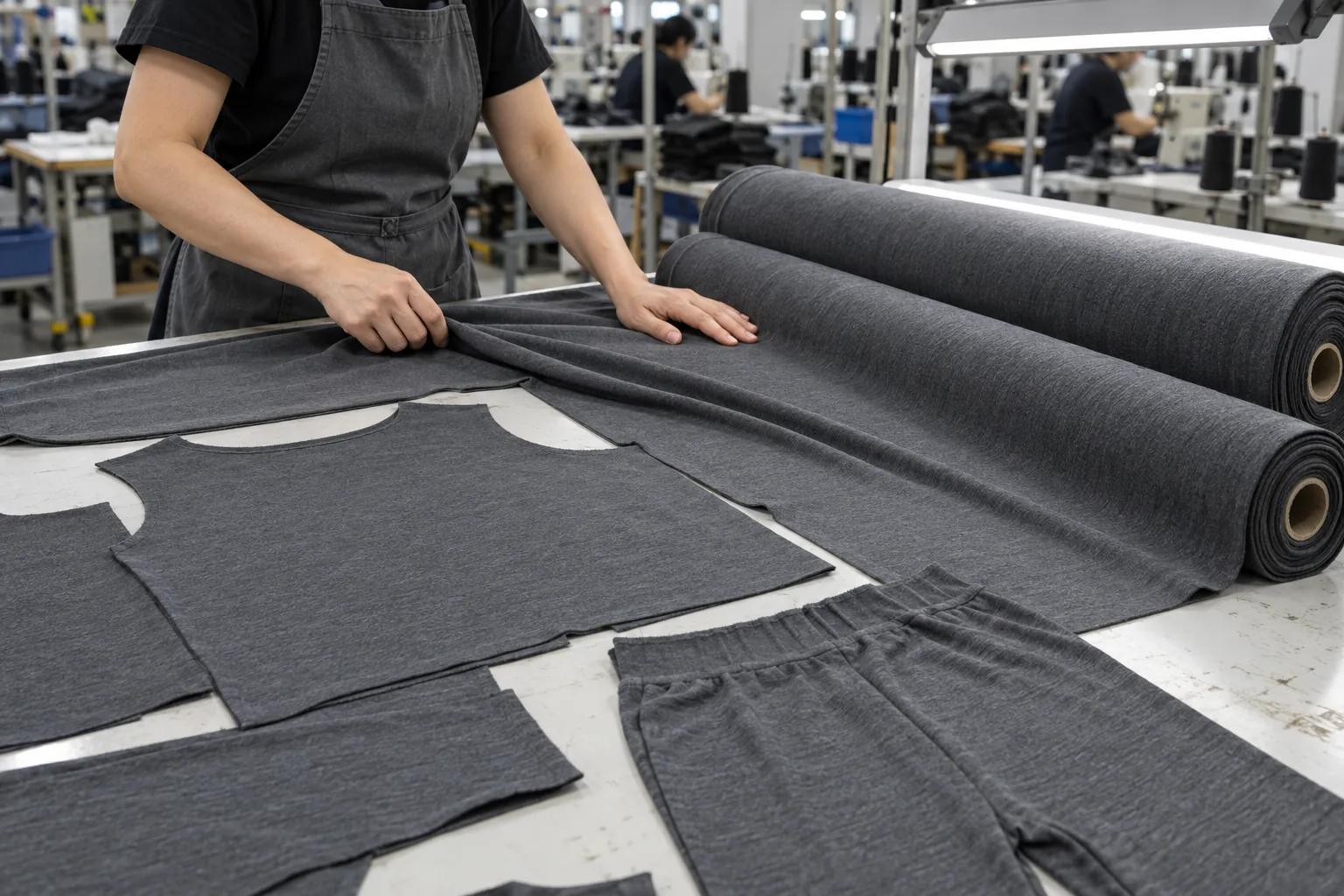
Keep the fabric code, weight, composition, finish and color reference identical wherever sharing is intended. Two shades described as charcoal may require separate sourcing or dye batches. If the supplier proposes excess material to reach a minimum, confirm who pays for it, who owns it and whether storage or later use is available.
Keep cutting and sewing splits visible
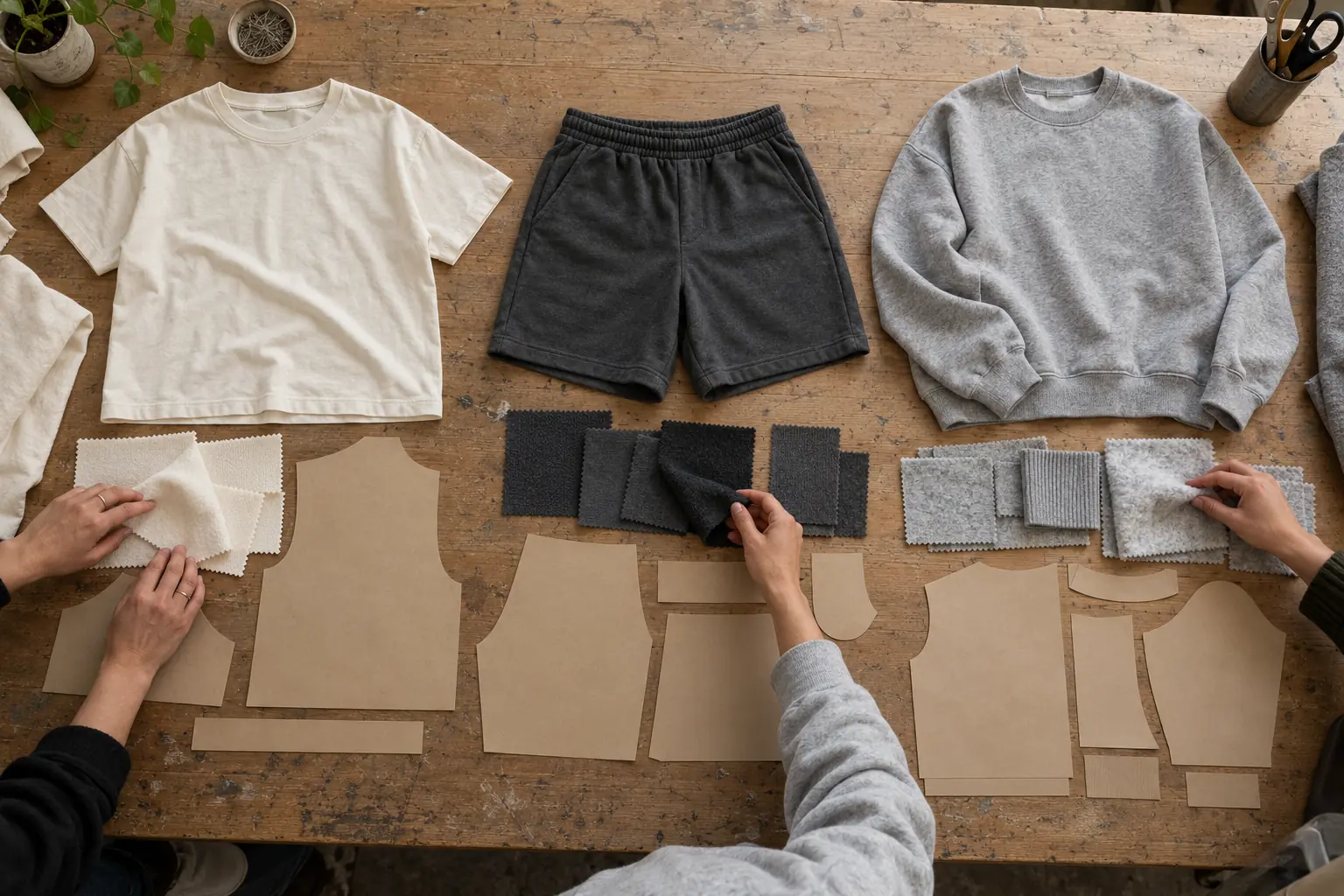
Similar-looking garments can require different patterns and operation sequences. Adding a zip opening to a pullover introduces components and sewing steps; changing a crewneck to a hood changes more than its sales name. Ask the factory to identify separate style codes before treating variants as a combined production group.
A more workable launch might retain one sweatshirt construction across a limited color selection, then postpone a second silhouette. Another collection may keep two silhouettes because both matter commercially, while sharing fabric to reduce material fragmentation. These are different compromises, and neither guarantees a reduced garment MOQ.
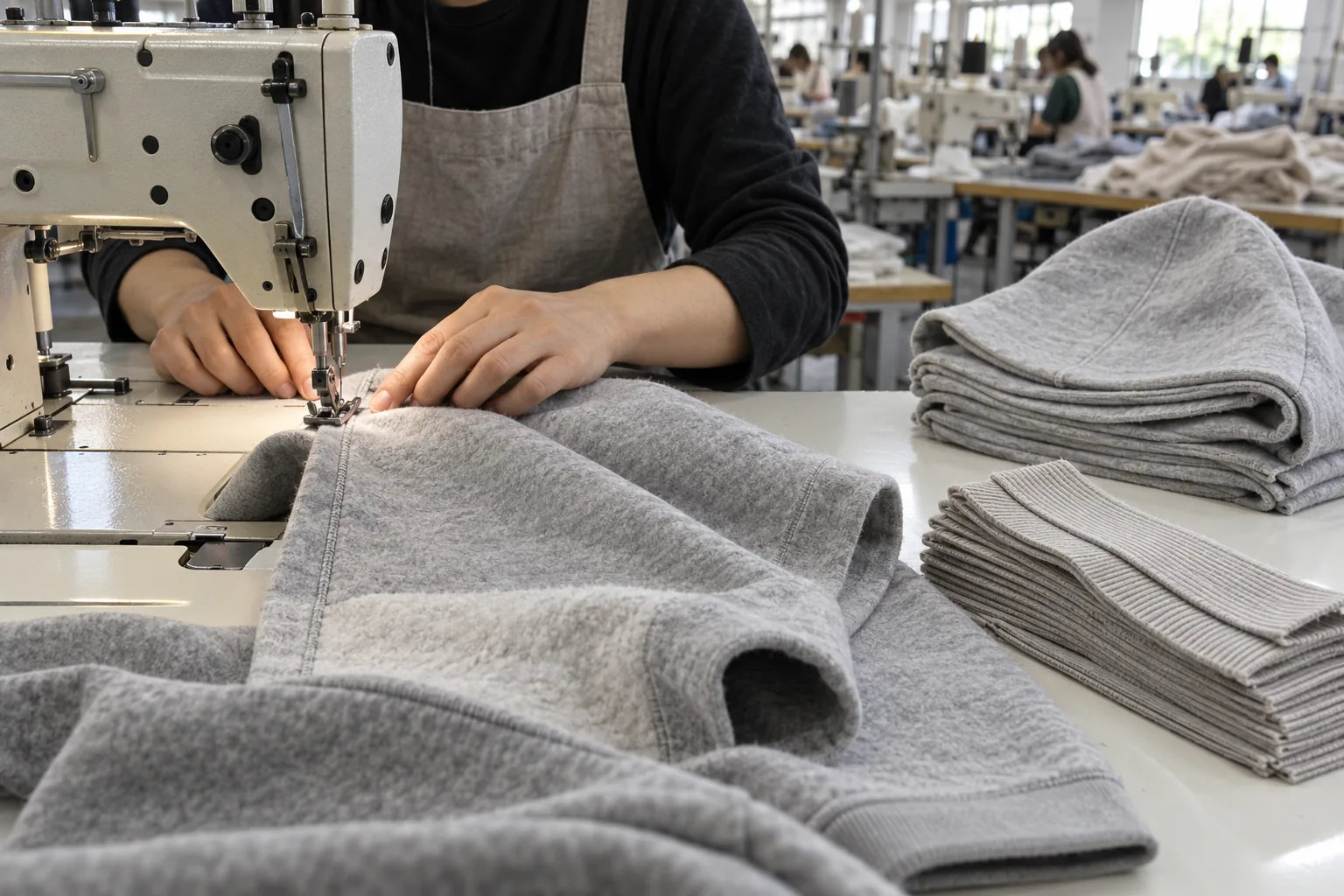
Include the size breakdown for every style and color. Size variants may share construction, but they still affect grading, markers and bundle control. Obtain written confirmation of acceptable splits instead of assuming a total quantity permits any assortment.
Check decoration, trims and washes as separate commitments
A common chest graphic may offer a shared decoration setup only if its artwork, dimensions, colors and application method stay consistent. The same design printed on jersey and heavyweight fleece can require different application settings or approvals. Ask what remains shared and what will be charged or scheduled separately.
Trims create another layer. One woven label specification may serve several garments, while different zipper lengths or custom drawcord colors create separate component requirements. Record any surplus trim quantities and their ownership so they do not disappear into an unexplained order allowance.
For denim, shared base cloth does not make different washes interchangeable. Treatment recipes and garment construction can change the result. A jacket and jeans intended to match should each receive an approved wash reference. Confirm treatment batch requirements and the 100-piece-per-style starting MOQ before planning a coordinated denim release.
Approve a process map before releasing the assortment
Build one proposal showing style quantities beside fabric consumption, decoration groups and trim requirements. Request a second version with one deliberate simplification, such as a single fabric color or a standard trim. Comparing these versions shows whether that change removes a minimum, reduces a setup or merely shifts unused stock elsewhere.
StitchQuote provides cut-and-sew, private label, sampling, fabric and trim sourcing, branding through woven labels, prints and embroidery, and QC before packing. Use the sampling stage to verify that the proposed shared inputs work on each garment. A 7-day sample is available for standard styles with confirmed specifications and available materials; complex styles, custom washes and custom-developed fabric take longer.
Before authorizing bulk, run this release checklist:
- Quantity approval: Each style, color and size split is accepted, with the applicable minimum recorded.
- Material identity: Samples intended to share fabric use the same approved specification, with shade variation assessed across garments.
- Construction checks: Each silhouette has approved measurements and its own relevant seam and fit checks.
- Decoration checks: Placement, appearance and agreed performance checks are approved on every relevant fabric.
- Finishing checks: Wash effects, dimensions after treatment and matching-set appearance meet the agreed references.
- Packing control: Style and size identification prevent shared materials from causing mixed garment counts.
Work through a shared-fabric order in measurable terms
As an illustrative planning exercise, consider 60 tees and 60 jersey shorts in one color, with each style split into 15 small, 25 medium and 20 large pieces. Each style clears the 50-piece starting point, but the proposed color and size splits still require acceptance. Specify the shared material as, for example, 100% cotton single jersey at a target 220 GSM, with the same finish and approved shade reference. This is a buyer’s proposed specification, not a statement of stock availability. Ask sourcing to confirm usable width, shrinkage expectations and whether the material suits both silhouettes.
Suppose the preliminary size-weighted consumption is 0.80 linear meters per tee and 0.65 per pair of shorts at the confirmed usable width. The base requirement is then 60 × 0.80 + 60 × 0.65 = 87 meters. If a separately agreed planning allowance is 8%, the estimate becomes 93.96 meters before supplier purchasing increments or minimums. These figures are illustrative: have the cutting team replace them with marker-based consumption and clarify whether shrinkage and cutting loss are already included, so allowances are not counted twice.
Request separate quote lines for garments, decoration setups, custom trims and any fabric surplus. Sharing cloth may reduce leftover material while additional pockets, waistband elastic, drawcord insertion and reinforcement keep the shorts’ sewing cost distinct. Compare the same quantities and specifications in both quote versions; otherwise, a lower total may reflect a changed fabric or reduced operation count rather than a saving from combined purchasing.
Define measurement and QC rules for every shared-material style
A common fabric approval should sit beside separate measurement sheets. For the tee, define half-chest width at a stated distance below the armhole, body length from the high shoulder point, shoulder width and sleeve length. For the shorts, define relaxed waist, stretched waist under an agreed method, front and back rise, inseam and leg opening. Include a sketch showing each measurement path and state whether garments are measured flat, relaxed and before or after washing.
Set tolerances by measurement point instead of applying one allowance to the whole garment. For discussion, a buyer might propose ±1 cm for tee half-chest and body length, and ±0.5 cm for a pocket placement dimension. These are example acceptance limits, not StitchQuote standards; confirm feasibility against fabric behavior, construction and the intended fit. Keep manufacturing tolerances separate from the grade increments that distinguish adjacent sizes.
During sampling, record dimensions before and after the agreed wash-and-dry procedure, then assess whether differential shrinkage affects the set’s appearance or fit. Check jersey shorts for opacity and seam strain during movement, and inspect the tee neckline for recovery and waviness. Before bulk release, agree on inspection coverage across styles, sizes and fabric lots, how defects are recorded, and who approves rework. Use the approved sample and measurement sheet together so a matching shade does not conceal an unacceptable fit.
Questions buyers ask when a shared process has limits
Can 30 tees and 20 shorts count as a 50-piece style?
Do not assume so. They are separate garment styles even if they use identical jersey. Shared material may help fabric purchasing, but StitchQuote’s starting MOQ for most categories is 50 pieces per style. Request project-specific confirmation.
Does using one graphic remove all print minimums?
No. Different dimensions, ink colors, fabric surfaces or application methods can create separate requirements. Submit the graphic with its size and substrate for each garment so the supplier can identify genuinely shared setups.
Should we buy extra fabric for a future silhouette?
Only after confirming that the future garment can use it and agreeing on ownership, storage and availability. Extra fabric may solve today’s purchasing minimum, but it also commits funds before the later style has been approved.
What should the first factory inquiry contain?
Send the assortment matrix, size splits, fabric specifications, construction references and decoration details. Mark which features are fixed and which can change. Ask for minimums by process and per style, plus any surplus materials required.
Related reading and project support:
- Prepare the technical specifications for your assortment
- Review sampling and MOQ planning
- Understand hoodie manufacturing cost factors
- Discuss your proposed style grouping with StitchQuote
Request a manufacturing quote
Share your product type, quantity range, and destination. We usually reply within one business day.