Custom Streetwear, Casualwear & Denim Manufacturer•MOQ 50 pcs•Denim MOQ 100 pcs•7-Day Sample Available

What to Check Before You Approve a Salesman Sample
Check the right details before approving a salesman sample so your team can support line review and commercial presentation without confusing it with bulk approval.

A garment can photograph beautifully and still need a fit correction. It can also fit exactly as intended while looking too unfinished for a showroom appointment. Before approving a salesman sample, decide which of those two problems you are trying to solve. A sales review and a fit review may use the same physical garment, but they should produce separate decisions.
For brand buyers, the useful question is whether the sample represents what customers will receive closely enough to support selling. That requires visible accuracy, credible fit, and a written boundary around unresolved details. Treat approval as permission for a specific use, rather than a general instruction to move ahead.
Give the sales review and fit review different jobs
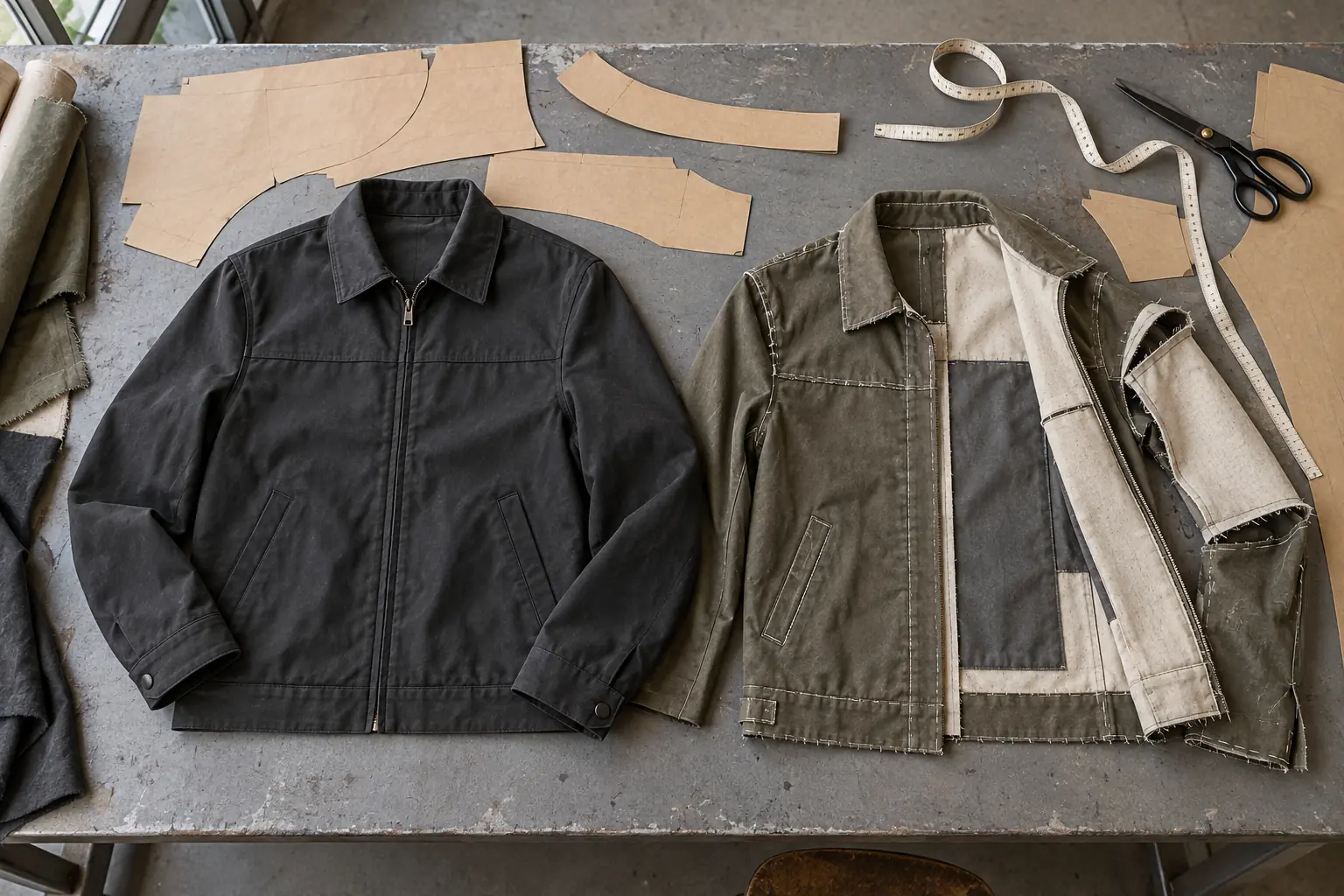
A fit sample tests the relationship between the pattern, the body, and movement. Reviewers examine balance, ease, length, and the way seams sit when someone wears the garment. Its appearance may be provisional if substitute materials or unfinished branding are explicitly agreed.
A salesman sample communicates the intended product to wholesale buyers, sales representatives, or a campaign team. Fabric character, silhouette, color, decoration, and finishing therefore matter immediately. An attractive substitute can still misrepresent the product if its drape or surface changes the buying decision.
| Review question | Fit decision | Sales decision |
|---|---|---|
| Does the shoulder sit correctly? | Assess pattern balance on the intended body. | Check that the displayed silhouette is credible. |
| Is this the intended fabric? | Identify effects on stretch, recovery, and ease. | Confirm the handfeel and appearance customers will judge. |
| Is branding final? | Check whether placement affects comfort or construction. | Verify artwork, scale, color, and visible placement. |
Use separate sign-offs even when one person owns both reviews. “Fit accepted; sales presentation pending” is more actionable than a single approved stamp.
Find the fit changes that would alter the sales promise
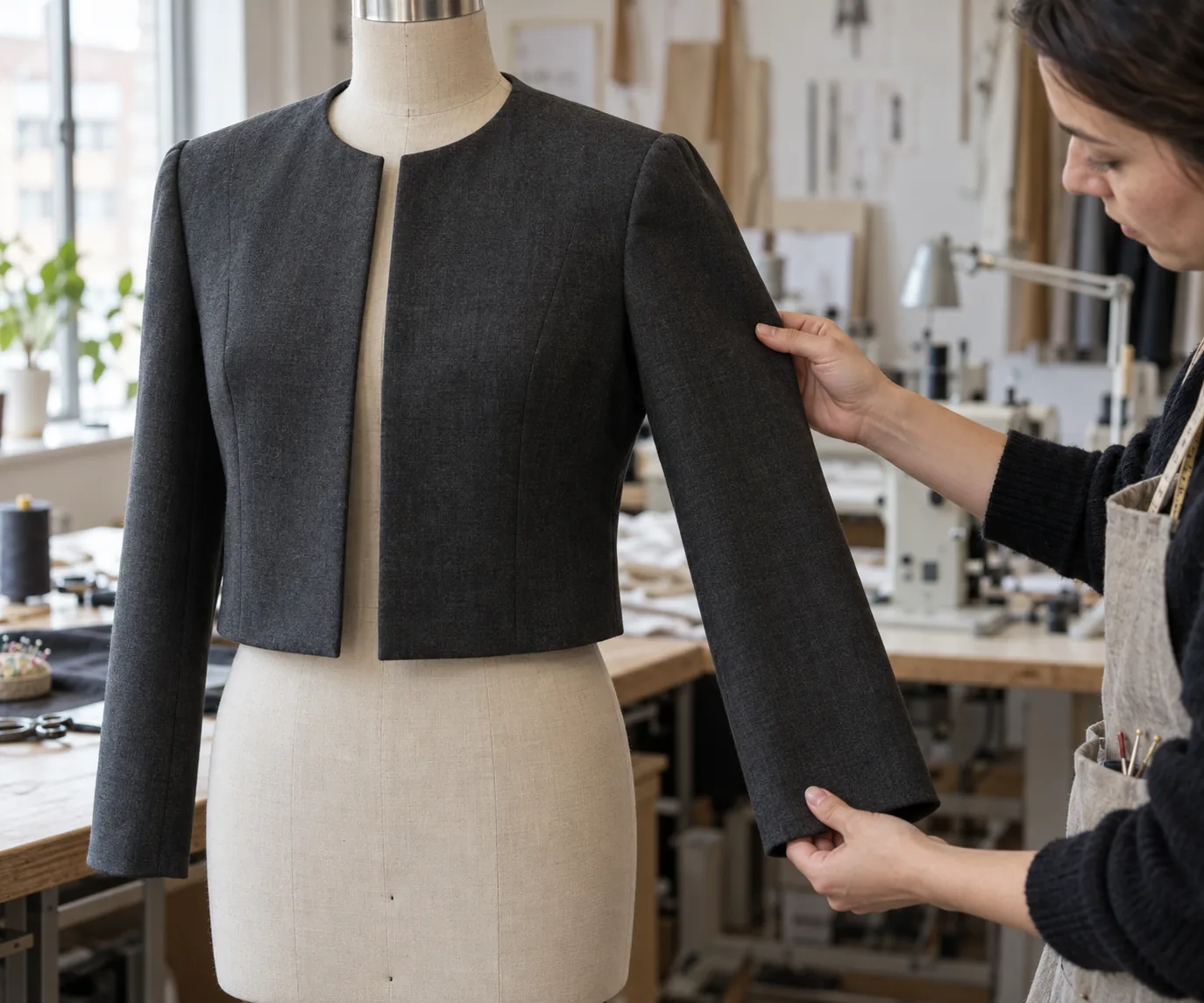
Not every open fit comment has the same commercial consequence. A small internal seam adjustment may leave the selling proposition intact. Changing a dropped shoulder into a closer shoulder, however, changes the shape a buyer thought they ordered. Identify these differences before a garment reaches an appointment or camera.
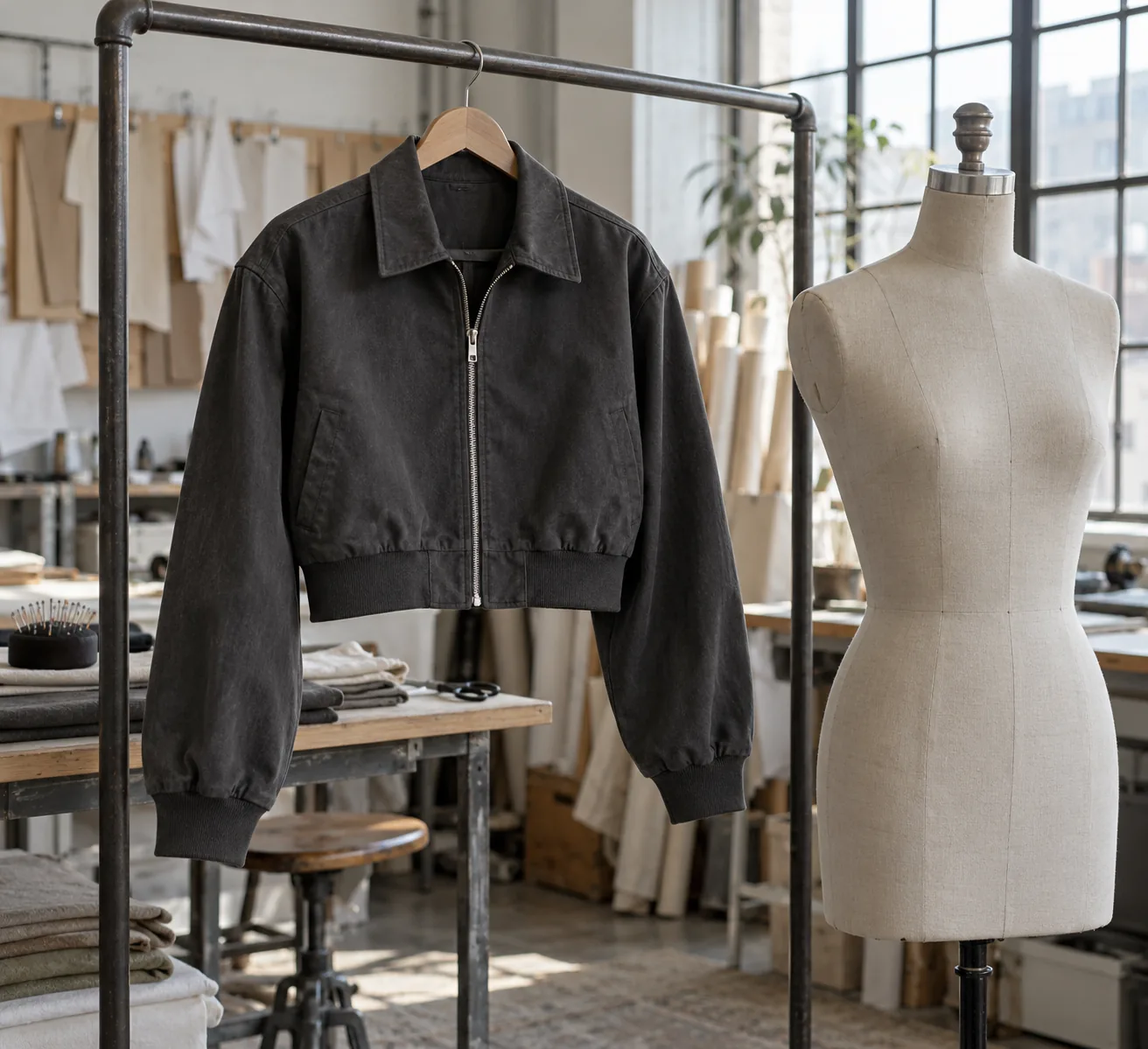
Consider a cropped zip jacket whose front hem rises when zipped. If the sales team displays it only open, the problem may disappear in photographs while remaining obvious in wear. Review it zipped, unzipped, seated, and with arms reaching forward. Record whether correcting the balance will change the advertised length or proportions.
For wide-leg denim, inspect the seat and thigh as well as the hem opening. A flattering static pose does not demonstrate adequate movement. If the wash is provisional, record that shrinkage and resulting fit still require confirmation in the intended process. Avoid accepting fit evidence from one treatment as proof for another.
Audit substitutions before they become customer expectations
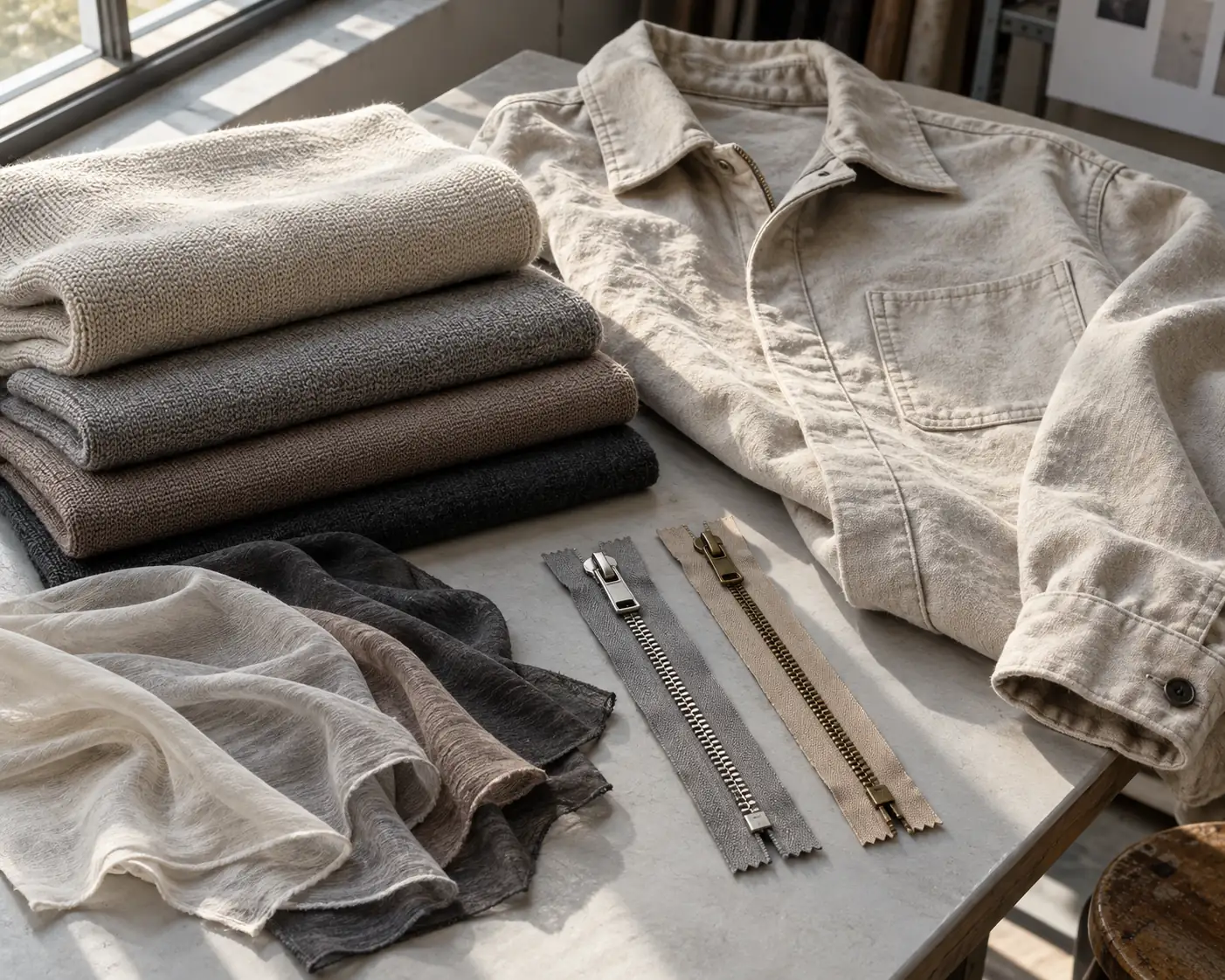
Create a short discrepancy record covering fabric, trims, color, decoration, and construction. For each difference, identify what is temporary, why it is being used, and how the intended version will be verified. “Similar fabric” is insufficient when softness or structure is central to the product.
For example, a heavyweight jersey overshirt made in a lighter substitute may hang closer to the body. Even if its measurements match the specification, it can suggest a different fit. A replacement zipper may also change the front line or create waviness. These are material differences with presentation consequences.
Classify each discrepancy by its effect on the sales encounter. A hidden temporary care label may be acceptable for an internal range review, provided required labeling is resolved later. A different embroidery size is much harder to accept for close-up product photography. If the intended result cannot be demonstrated, limit the sample’s use or request a corrected version.
Run a showroom QC check alongside the measurement check
Inspect the garment in the condition in which it will be presented. Steam or press it appropriately, then check whether preparation merely concealed a construction issue. Compare it with the current specification and approved references, rather than relying on memory of an earlier sample.
- Identity: Confirm style, sample size, revision, and color so comments attach to the correct garment.
- Silhouette: Compare front, side, and back views; check balance without pins or styling adjustments.
- Measurements: Record actual key measurements using agreed measurement points and tolerances. Identify fit comments that remain open.
- Surface quality: Look for stains, needle damage, puckering, uneven pressing, loose threads, and unintended shade variation.
- Function: Operate closures, test pocket access, and assess ordinary movement on the intended wearer or fit model.
- Sales details: Check visible labels, artwork scale, embroidery placement, and matching details across paired components.
- Evidence: Photograph discrepancies with useful close-ups and retain the reviewed garment’s identity in the approval record.
This review establishes suitability for the agreed presentation. It does not establish consistency across bulk production or replace a later production reference and production QC.
Write an approval that tells each team what happens next
State the permitted use, the accepted features, the unresolved changes, and the evidence needed to close them. Assign an owner to each action. Keep commercial presentation approval distinct from fit acceptance and authorization for bulk production.
A practical comment could read: “Accepted for showroom display in the reviewed size. Sleeve pitch remains open for fit review. Product photography must wait for the intended chest embroidery. This approval does not release bulk production.” Add dated photographs and the relevant specification revision so the instruction remains understandable after the garment changes hands.
Plan any replacement around its actual requirements. StitchQuote offers a 7-day sample for standard styles with confirmed specifications and available materials; complex styles, custom washes, and custom-developed fabrics take longer. Confirm project timing before scheduling photography or appointments. StitchQuote’s services include sampling, cut-and-sew, private label, fabric and trim sourcing, branding, and QC before packing.
Define measurement points before comparing fit results
A measurement sheet needs a repeatable method as well as a target number. For a zip jacket, specify whether the garment is measured zipped, laid flat, and relaxed. Define half chest at a stated distance below the armhole, body length from the high shoulder point to the finished hem, and sleeve length from the shoulder seam to the cuff edge. A dropped-shoulder sleeve measured from the neckline cannot be compared directly with one measured from the shoulder seam. Include a small diagram where the starting point could be ambiguous.
Set tolerances by measurement point and construction, rather than applying one allowance to the entire garment. As an illustrative buyer specification, a team might propose plus or minus 1 cm for flat half chest and plus or minus 0.5 cm for a pocket opening, then confirm whether those limits are achievable in the selected fabric. These are example discussion values, not StitchQuote tolerances. A measurement inside tolerance can still produce poor balance, so record measured deviations separately from on-body fit comments.
For washed garments, identify whether each target applies before or after washing. Measure the same marked points before and after the agreed care process, allowing the garment to dry and relax consistently. If a body length changes from 60 cm to 58.2 cm, the observed length shrinkage is 3%. Check width separately rather than assuming the same percentage in both directions. Use that evidence to discuss pattern compensation and repeat the review in the intended fabric and finish.
Connect material evidence to the replacement sample brief
Record fabric composition, knit or weave structure, weight in GSM, stretch direction, and finish beside the sample identity. A proposed 320 GSM jersey and a 260 GSM substitute differ in mass per unit area, but GSM alone does not establish stiffness, opacity, or recovery. Review swatches and the garment together: examine show-through under consistent lighting, compare the way the hem hangs, and check whether cuffs recover after normal wear. For a stretch fabric, agree on a repeatable extension and recovery test before interpreting results.
Consider a hypothetical order of 100 denim jackets in one style. That quantity meets the stated starting MOQ for denim, but size allocation, color assortment, and material availability still need confirmation. If the showroom sample uses a provisional wash, the replacement brief should identify the intended wash reference, finished measurement targets, hardware, and branding placement. Ask for the corrected sample to be measured after the intended wash; review its fit, shade, seam appearance, and closure function before closing those specific comments.
Separate essential corrections from optional upgrades when requesting a revised quote. Custom hardware, additional embroidery locations, specialty fabric development, and extra wash trials can affect cost or timing. Ask which changes require new sourcing or another sample round, and identify the exact reference that will govern each accepted detail. Keeping a dated correction list prevents a new fabric or decoration choice from silently reopening a previously settled sales promise.
Questions buyers ask when one garment serves two reviews
Can the same garment be used for fit and sales approval?
Yes, if its materials and construction support both evaluations. Record two outcomes. A garment can pass a fit review but require a presentation correction, or be suitable for a limited sales use while fit work continues.
Should we approve a sample that only looks right when pinned?
Pins change the evidence. Review the unaltered garment first and record any styling separately. If the pinned shape is the intended product, translate that shape into pattern corrections and verify it before treating photographs as an accurate representation.
Does approval in one size confirm the whole size range?
No. It confirms only what was reviewed in that size. Grading and size-range checks need their own evidence. Avoid promising consistent proportions across sizes solely because the showroom garment looks convincing.
Does sales approval settle the minimum order quantity?
No. Confirm order requirements separately. StitchQuote’s MOQ for most categories starts from 50 pieces per style; denim starts from 100 pieces per style. Sample acceptance should not be treated as confirmation of every proposed quantity or assortment.
Related reading and project support
- Prepare the specifications behind your sample review
- Review sampling and MOQ requirements
- Plan clothing sampling time
- Discuss your sample requirements with StitchQuote
Request a manufacturing quote
Share your product type, quantity range, and destination. We usually reply within one business day.