Custom Streetwear, Casualwear & Denim Manufacturer•MOQ 50 pcs•Denim MOQ 100 pcs•7-Day Sample Available

When Should a Brand Move from Sampling to Bulk
Know when a brand should move from sampling to bulk by checking fit stability, material readiness, approvals, and whether the style truly has a production standard.

A brand should authorize bulk cutting when its approved fit works across the intended size range, not simply when one sample looks right. The size set is the bridge between those decisions: it tests whether the grading rules preserve the garment’s intended proportions and movement beyond the base size.
Timing matters because a size set made too early proves patterns that may still change, while one reviewed after cutting leaves little room to correct them. For a new streetwear or casualwear style, place this review after base-size fit approval and before releasing the affected sizes for bulk cutting. Build the calendar around that decision, with time reserved for corrections.
Put the size-set review between fit approval and cutting release
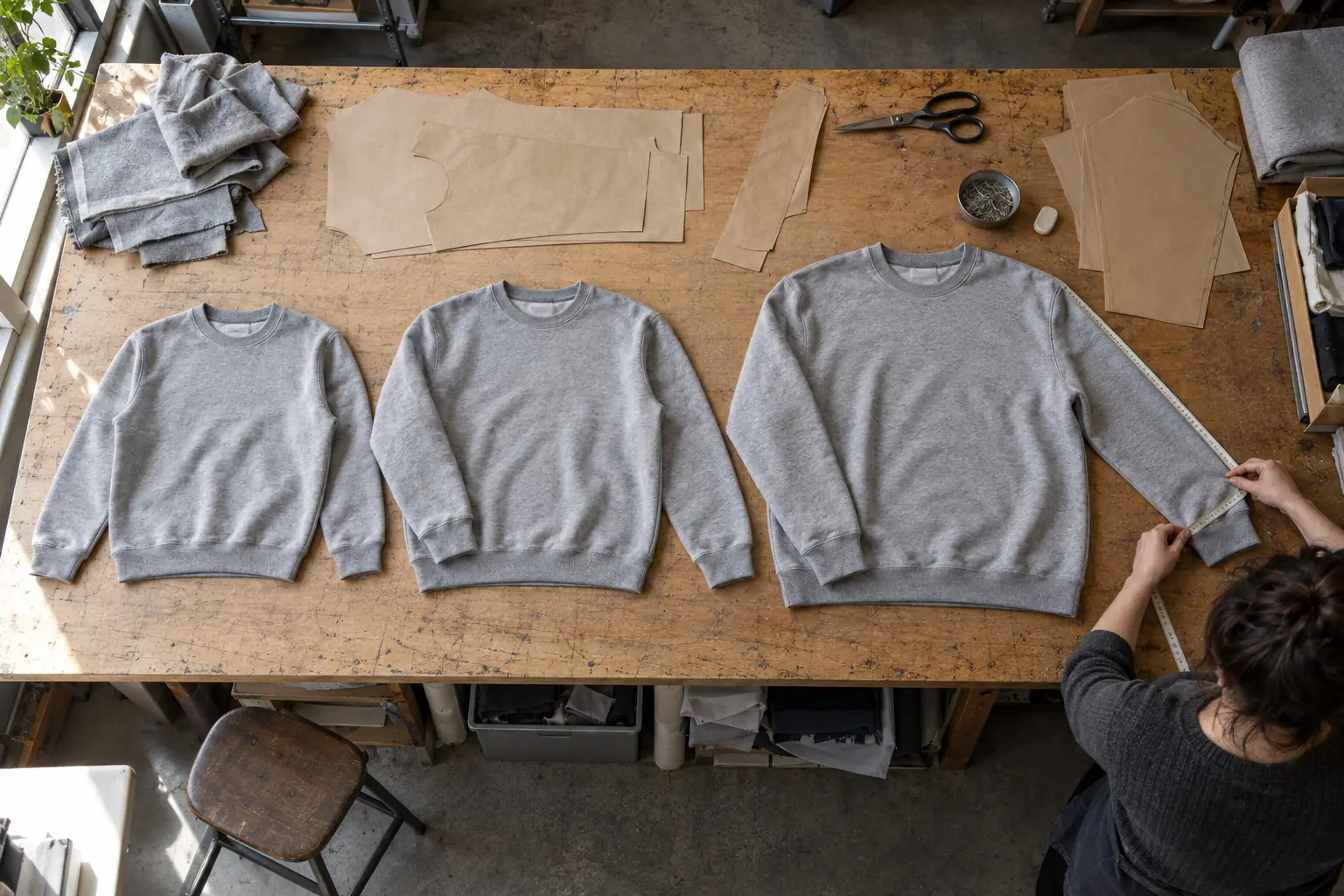
A base-size fitting establishes the silhouette, balance, construction and intended ease. A size set checks how those choices translate into other sizes. Approving the first does not automatically approve the second: a roomy medium sweatshirt can still become restrictive at the upper arm in larger sizes or overly long in smaller ones.
Schedule the set once base measurements, construction and grading instructions are stable. Agree which sizes will be made, what material they will use, who will assess them and when comments are due. Treat the cutting release as a separate written decision rather than an automatic consequence of receiving samples.
If the base pattern changes during the review, identify which graded patterns inherit that change. Those sizes may need another check before their approval remains valid.
Choose coverage from the garment’s fit risks
A full size set gives direct evidence for every offered size. Where a buyer proposes selected sizes instead, agree the reduced coverage with the manufacturer and record what remains untested. A small order does not make an unverified grade rule more reliable.
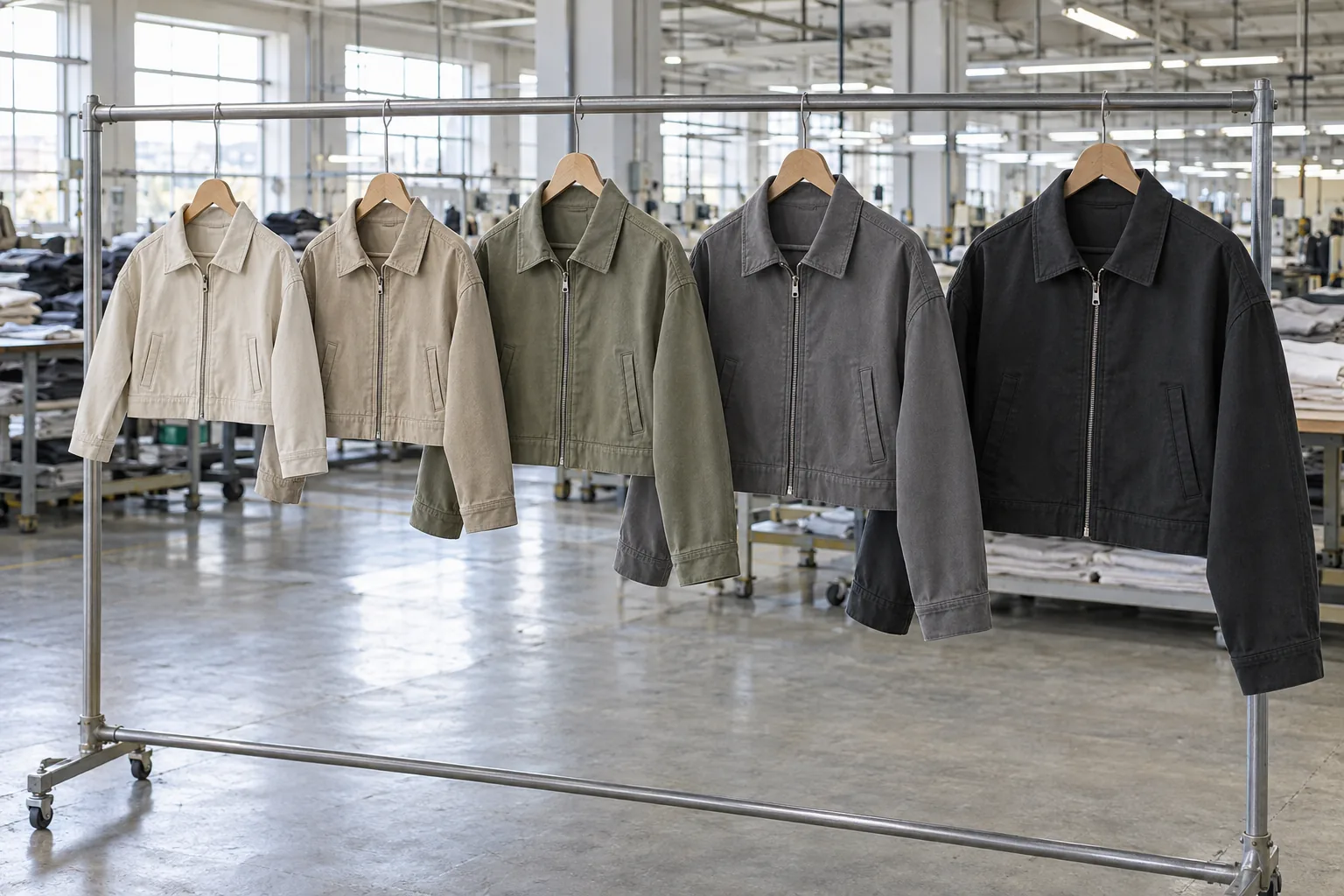
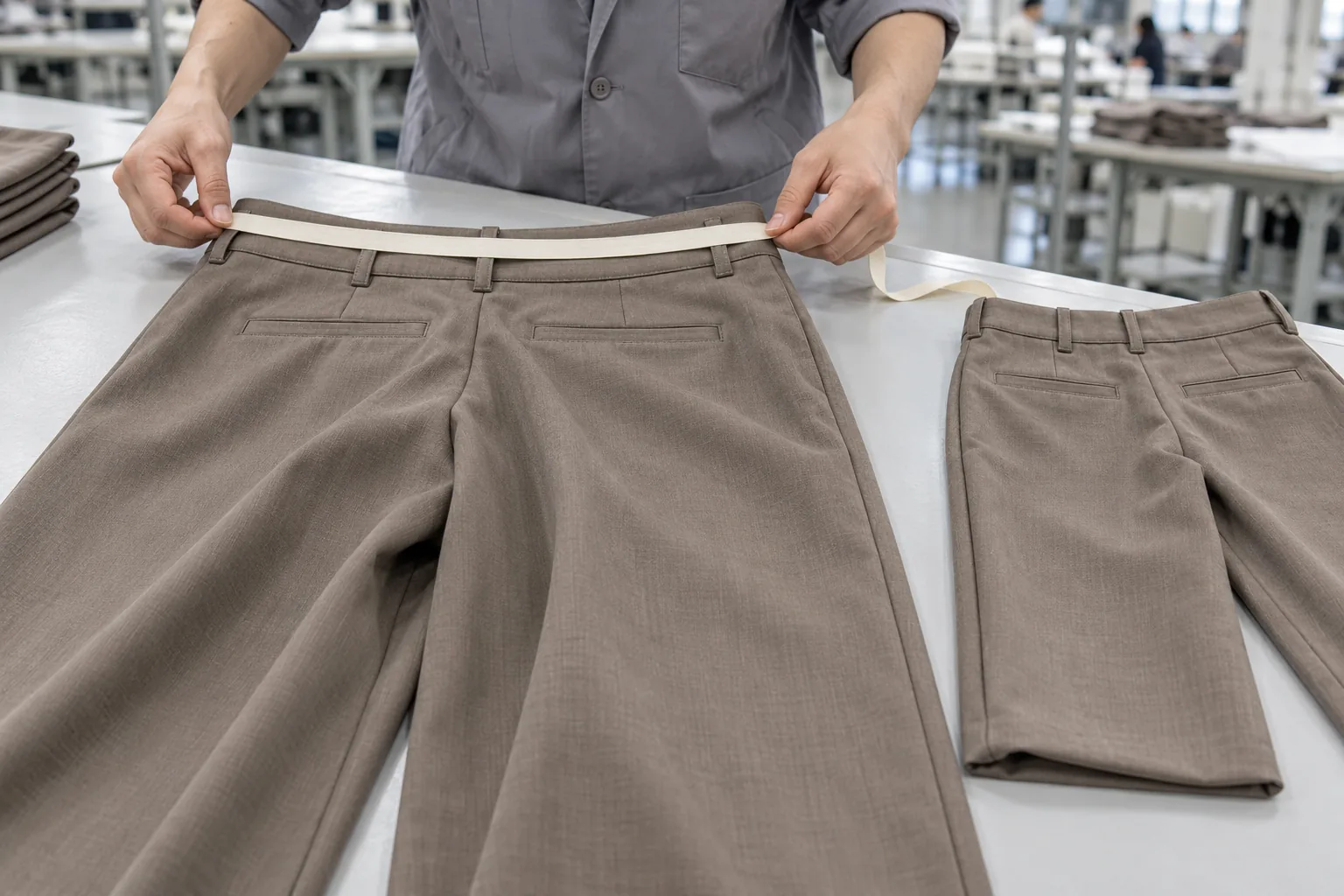
For a new wide-leg trouser block, waist, seat, rise and thigh relationships deserve attention together. Checking only waistband increments may miss a seat that becomes too shallow at the top of the range. For a cropped zip jacket, examine body length, sleeve length and pocket access as separate proportional decisions.
- New block or extended range: prioritize broad physical coverage, including the smallest and largest offered sizes.
- Established block: consider whether fabric, construction or intended ease has changed before reducing sample coverage.
- Size-dependent details: inspect pocket openings, hood dimensions, cuffs and artwork placement where scaling affects function or appearance.
Use wearers appropriate to the intended size and customer profile. Flat measurements alone cannot establish comfortable reach, sitting ease or garment balance.
Make the material representative before judging the grade

A substitute fabric can help reveal a construction problem, but its drape, stretch or shrinkage may make it unsuitable for final fit approval. Record any substitution explicitly. Do not let a sample in soft jersey silently stand in for a bulk fabric with less recovery.
For washed denim, assess the size set in the intended finished condition and agree how wash variation will be controlled. For fleece, confirm whether measurements refer to garments before or after the specified conditioning or laundering procedure. Comparing different states can produce misleading correction requests.
If the intended material is unavailable, separate preliminary pattern feedback from final approval. Identify the measurements and fit observations that require confirmation once representative fabric and processing are available.
Reserve correction time inside the launch calendar
Work backward from the planned cutting date. Allow time for sample making, delivery if required, measurement, fittings, consolidated comments and any remake. There is no universal number of days for this sequence; the required sizes, materials and finishing determine the schedule.
| Decision point | Evidence needed | Next action |
|---|---|---|
| Request the size set | Stable base fit and agreed grade rules | Confirm sizes, materials and review dates |
| Review the set | Measurements and wear observations by size | Approve or issue specific corrections |
| Release cutting | Closed corrections and matching pattern revisions | Authorize the documented scope |
StitchQuote offers a 7-day sample for standard styles with confirmed specifications and available materials. Complex styles, custom washes and custom-developed fabric take longer. That availability should not be treated as a promise that a complete size set, buyer review and correction cycle will fit into seven days; confirm the project schedule.
Use a size-by-size QC record to close the review
Keep one review sheet tied to the current specification revision. Record actual measurements rather than simply writing “fit approved.” Apply agreed tolerances to individual points, then assess the garment as a whole: several measurements near their limits can combine into an undesirable fit.
- Match each sample’s size identification to its pattern and measurement chart.
- Measure critical points using the same garment state and measuring method.
- Compare increments between adjacent sizes for unexpected jumps or reversals.
- Check movement, balance and ease on suitable wearers.
- Inspect functional details, including closures, openings and pocket access.
- Log each correction, its affected sizes, the responsible reviewer and closure evidence.
If a larger jacket binds during forward reach, specify the observed issue and affected size rather than requesting a general increase everywhere. Ask for the proposed pattern correction, then decide whether measurements suffice or a new physical sample is needed.
Size-set approval establishes the reference; production QC still needs to check that bulk garments follow it. StitchQuote’s services include QC before packing, but agree the project’s measurement checks and acceptance criteria in advance.
Send an approval that identifies exactly what can proceed
The final approval should name the style, covered sizes, specification revision, material and finishing references, and approved sample identification. Close conflicting comments before release. A message approving fit should not leave the factory guessing whether it also approves a revised size chart.
Confirm the order quantity and size breakdown alongside that record. StitchQuote’s MOQ for most categories starts from 50 pieces per style; denim starts from 100 pieces per style. Confirm the proposed size allocation and sampling requirements for the project. MOQ eligibility does not replace size validation.
Define measurement points before comparing sizes
A size chart needs measurement instructions as well as numbers. For a sweatshirt, specify whether half-chest is measured at the underarm seam or a defined distance below it, whether body length starts at the high shoulder point, and whether sleeve length includes the cuff. Lay the garment flat without stretching it, straighten seams without pulling, and use the same closure position for each sample. A change in technique can resemble a grading error.
For trousers, identify the distance below the waistband used for the hip measurement, the starting point for thigh width, and whether the waistband is measured relaxed or extended. Record front and back rise separately and state whether the waistband is included. Elasticated garments need an agreed extension method; pulling until the tape reaches a target does not provide a repeatable check.
Set tolerances by measurement point and construction rather than applying one allowance everywhere. As an illustrative buyer specification, a stable woven garment might use plus or minus 0.5 cm at a pocket opening and plus or minus 1 cm for overall length, subject to manufacturer agreement. These are example limits, not StitchQuote standards. Check whether the tolerance could obscure a size increment: if adjacent half-chest targets differ by 2 cm and each allows plus or minus 1 cm, two compliant garments could measure identically.
Turn a small sweatshirt order into a traceable approval
Consider a proposed 60-piece sweatshirt order split into 10 small, 20 medium, 20 large and 10 extra-large garments. This exceeds StitchQuote’s starting MOQ of 50 pieces per style for most categories, but the buyer still needs agreement on the size allocation and sample coverage. Keep the bulk allocation separate from the requested sample quantities so neither team assumes development garments count toward the selling stock.
Suppose the buyer specifies 320 GSM brushed fleece. Record fiber composition, knit construction, finish and the agreed weight tolerance alongside that target; GSM alone does not establish stretch, warmth or dimensional stability. Include a separate rib specification for cuffs and hem, because poor recovery can change the fit even when the fleece body measures correctly. Compare samples in the agreed finished state and record dimensional changes after the specified care procedure.
Before accepting the development schedule, request a breakdown of what drives the sampling scope: number of physical sizes, fabric sourcing, decoration setup, wash trials and possible remakes. Ask which changes require another sample and which can be closed with revised measurements. This makes the approval budget reviewable without assuming a standard price. File the accepted measurement sheet, wearer comments and pattern revision together, then use that same reference when reviewing production measurements.
Questions buyers ask before releasing graded patterns
Can we approve smaller sizes while correcting the largest?
Only consider a staged release after confirming that the correction does not affect shared grading logic or already approved patterns. Document the exact sizes released and the hold on others; discuss production feasibility with the manufacturer.
Does a repeat order need another size set?
Review what changed. A repeat using the same validated patterns, material behavior and processing may need less development, but a new fabric or wash can justify renewed checks. Retain the previous approval references for comparison.
Can photographs replace an in-person fitting?
Photographs help assess proportions and visible balance. They do not reliably establish pressure, movement or exact measurements. Combine remote images with measurement records and structured wearer feedback, and request a physical review where uncertainty remains.
Related reading and project support
- Prepare the specifications for a graded size review
- Review sampling and MOQ considerations
- Plan the clothing sampling timeline
- Discuss your size-set schedule with StitchQuote
Request a manufacturing quote
Share your product type, quantity range, and destination. We usually reply within one business day.