Custom Streetwear, Casualwear & Denim Manufacturer•MOQ 50 pcs•Denim MOQ 100 pcs•7-Day Sample Available

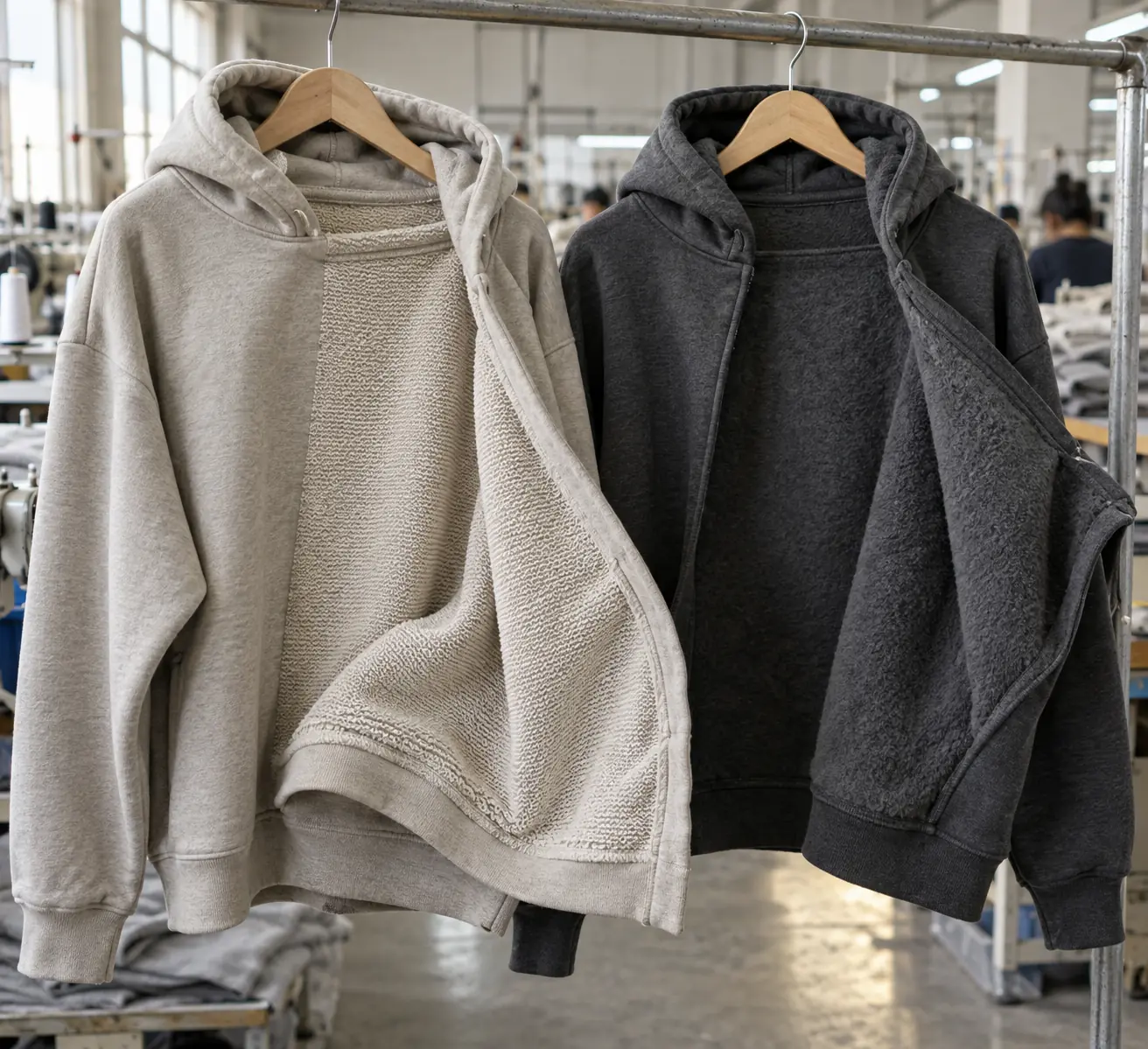
Cotton vs Cotton Polyester for Hoodies
Compare cotton vs cotton polyester for hoodies so you can balance comfort, shape retention, wash behavior, and price in the right hoodie program.

A cotton label cannot tell you whether a hoodie will feel cool against the skin or warm and softly padded. That distinction often starts with the inside surface: exposed loops in French terry or a brushed pile in sweatshirt fleece. For a buyer choosing between cotton and cotton polyester, comparing those constructions first makes fiber percentages much more useful.
This guide focuses on selecting fabric candidates for a hoodie sample before committing to bulk. Treat construction and composition as two separate decisions, then bring them together through wear, wash and production checks. The aim is a repeatable fabric specification that delivers the intended wearing experience.
Start with the inside surface your customer will wear
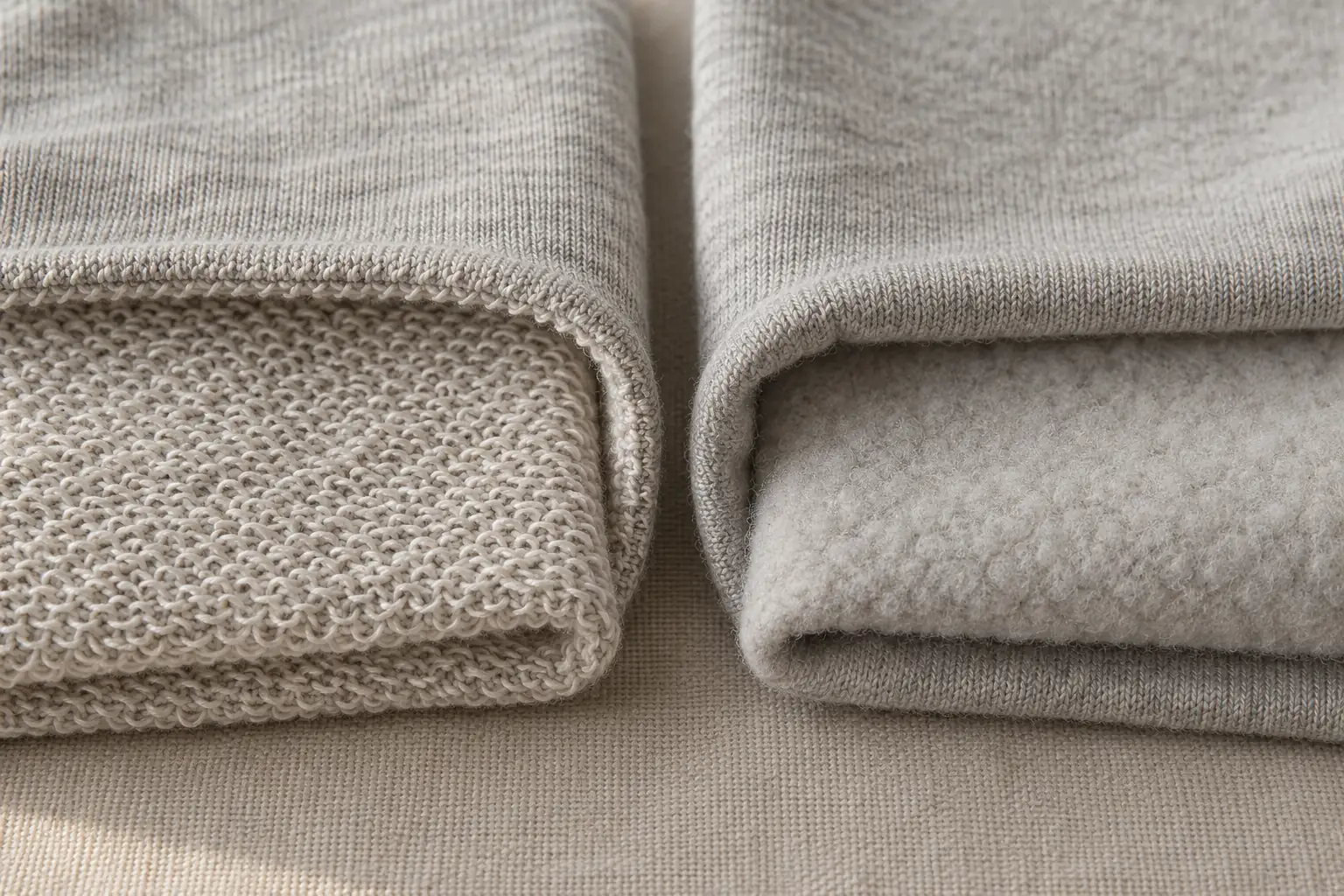
French terry has loops on its reverse side, while sweatshirt fleece has an interior brushed into a raised pile. Both can have a relatively smooth outer face. Here, fleece means brushed sweatshirt fabric, rather than the separate category of polar fleece used in outdoor layers.
For a hoodie intended to be worn over a T-shirt on mild evenings, an unbrushed loopback may provide the desired contact feel without a fluffy interior. For a cold-weather pullover, brushed fleece may offer a warmer initial impression. Actual insulation still depends on thickness, density, fit and layering; the construction name alone is insufficient.
Write the intended interior into the buying brief. “Soft cotton hoodie” leaves room for very different interpretations. “Visible reverse loops, no brushing, dry hand after washing” gives a supplier a clearer starting point. An equally useful fleece brief might request an even brushed interior with limited loose fiber release.
Build a four-way swatch comparison before choosing a blend
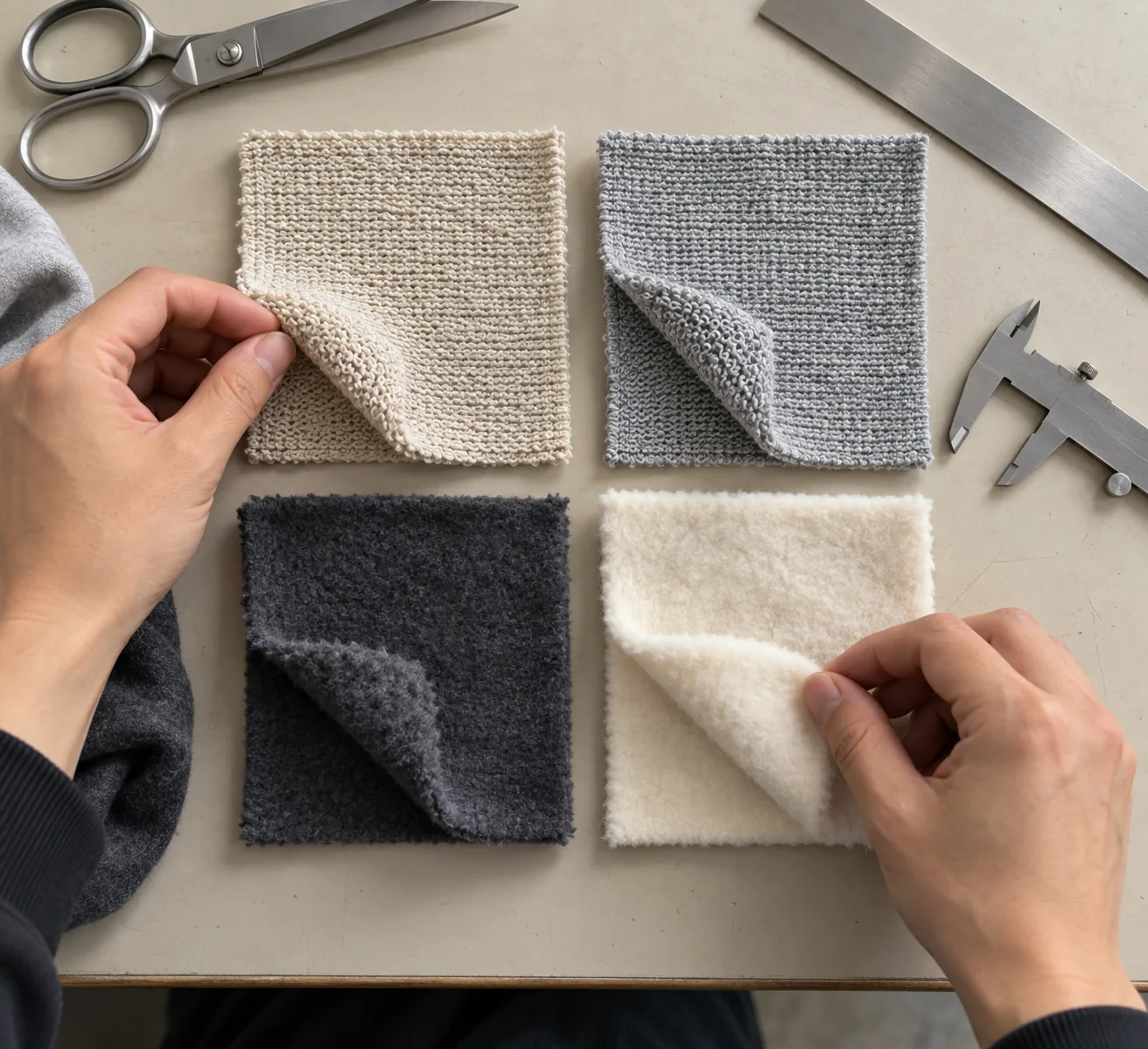
Request cotton and cotton-polyester candidates in both constructions when sourcing options permit. Keep their weights and finishes reasonably comparable, and record differences that cannot be controlled. Otherwise, a dense cotton terry can appear superior to a lightweight blended fleece simply because the comparison favors its weight.
| Candidate | Reason to sample | Question to resolve |
|---|---|---|
| Cotton French terry | Loop texture with an all-cotton direction | Does washing change length or seam alignment? |
| Cotton-polyester French terry | Loopback feel with a blended yarn system | Does the actual blend improve stability without changing the desired hand? |
| Cotton sweatshirt fleece | Brushed warmth with cotton composition | How does the pile look after laundering? |
| Cotton-polyester sweatshirt fleece | Brushed comfort with blended construction | Are pilling, shedding and face appearance acceptable? |
Polyester can contribute to dimensional stability and faster drying, but neither result is guaranteed by a percentage. Yarn quality, knitting, pretreatment and finishing also matter. Cotton can provide an absorbent, familiar hand, yet two cotton fabrics may differ substantially in shrinkage and surface wear.
Ask where the polyester sits, not just how much there is
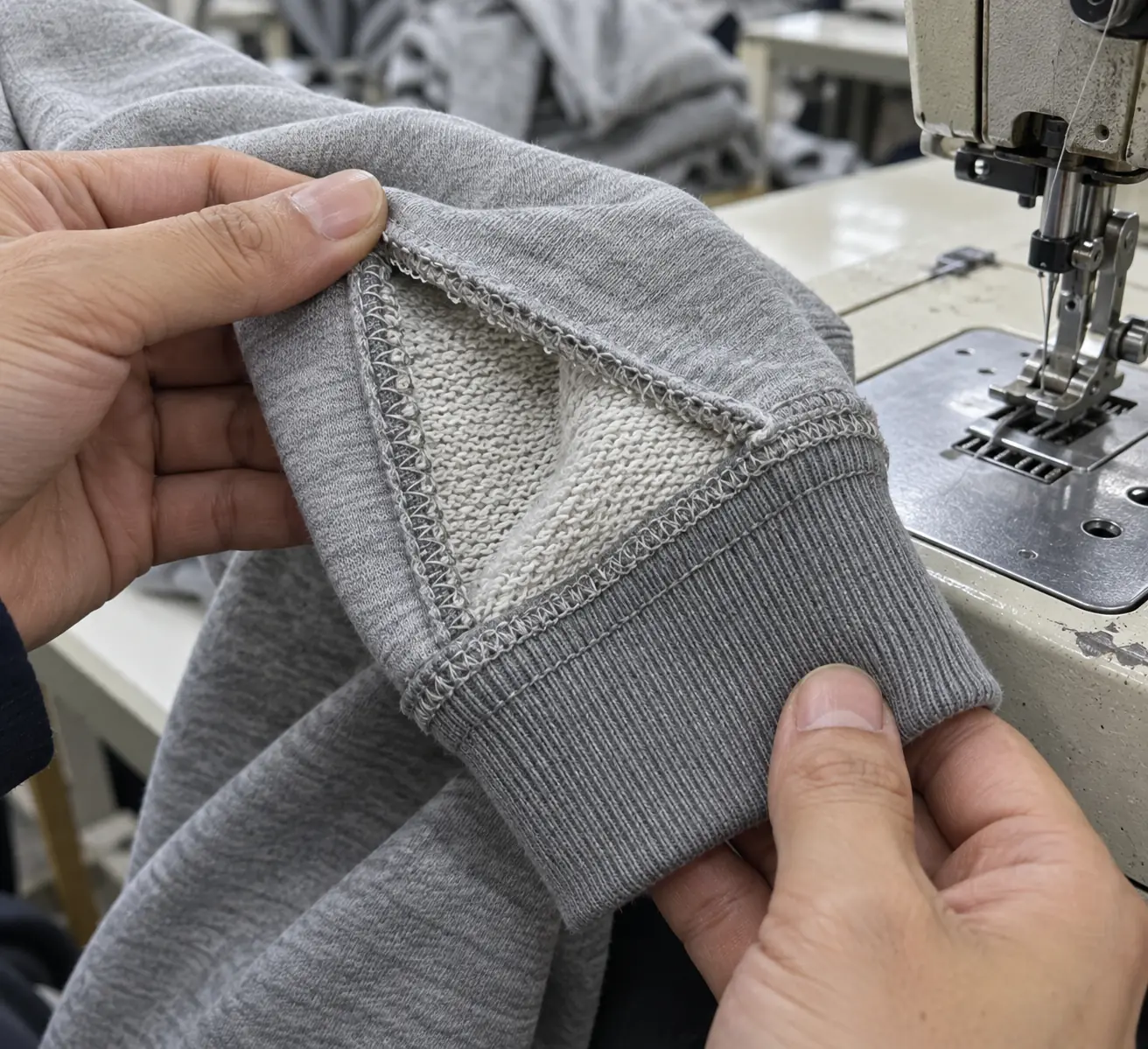
An overall blend declaration does not necessarily describe every surface equally. Some sweatshirt fabrics use different yarn compositions across the face, connecting structure and reverse. Ask the supplier to identify those components where relevant, alongside the verified overall fiber content.
This matters when a brand wants a cotton-facing surface for a particular print while accepting polyester elsewhere. It also matters when the customer touches the reverse directly. Do not describe a garment as all cotton because its face yarn is cotton; labeling must reflect the applicable rules and verified composition.
Separate the body fabric from cuffs and waistband in the specification. Rib may need a different composition to achieve recovery. Check its color, stretch and post-wash behavior against the selected terry or fleece rather than assuming a matching shade means a compatible material.
Let the hood and seams expose the construction trade-offs
Swatches cannot show how two layers behave around the head or how a waistband pulls against the body. Make the first garment sample in the intended construction, including the planned hood lining, pocket and rib. A thick brushed fabric can create substantial bulk at intersecting seams; a flexible terry can produce a hood that collapses more than the design intends.
For example, a cropped zip hoodie with a double-layer hood needs checks for neck balance, zipper waviness and front hem alignment. A long pullover intended for layering needs checks for sleeve movement and friction over an underlayer. These are different approval questions even if both products use the same fiber ratio.
Include decoration on the candidate fabric. Heat application can affect the hand or appearance of some finishes, and polyester-containing fabrics may need assessment for dye migration under the intended print process. Evaluate embroidery for puckering on the actual knitted structure. An undecorated sample leaves those interactions unresolved.
Approve the terry loops or fleece pile after care testing
Set a written care and inspection protocol before reviewing results. Use the intended care instructions, agree the number of wash cycles and condition samples consistently before measuring. Retain an unwashed reference. Establish project-specific tolerances rather than accepting “normal shrinkage” as an approval standard.
- Dimensions: Measure body length, chest, sleeves and hood opening before and after laundering; record seam twisting as well as size change.
- French terry reverse: Look for pulled loops, uneven loop formation and rough areas that become noticeable against skin.
- Fleece reverse: Check pile matting, uneven brushing and loose fibers transferred onto a contrasting underlayer.
- Outer face: Assess pilling, shade change and decoration appearance under consistent lighting.
- Assembly: Inspect pocket corners, hood seams, zipper attachment where used, and rib recovery after stretching and washing.
A home-style wash evaluation is useful for development, but it does not establish a formal pilling or colorfastness grade. If the purchase specification requires a test rating, agree the test method and acceptance level with the supplier before bulk approval.
Turn the selected sample into a reorderable fabric brief
Record construction, overall composition, available yarn details, weight and tolerance, finish, color reference and agreed wash performance. Identify whether fabric weight is assessed before or after a specified finishing stage. Attach approved swatches and a garment reference so that “same fleece” cannot quietly become a different brushing level on a reorder.
StitchQuote offers cut-and-sew, private label, sampling, fabric and trim sourcing, branding through woven labels, prints and embroidery, and QC before packing. MOQ for most categories starts from 50 pieces per style. Confirm the chosen material’s sourcing requirements before treating that starting quantity as a complete production plan.
A 7-day sample is available for standard styles with confirmed specifications and available materials. Complex styles, custom washes and custom-developed fabric take longer. Resolve the terry-versus-fleece direction early enough that material development does not become an unexpected part of the sample schedule.
Questions buyers ask when narrowing the shortlist
Can French terry still work for a winter hoodie?
Yes, depending on density, thickness, fit and layering. Compare complete garments in the intended conditions. A heavy loopback and a light brushed fleece cannot be ranked for warmth from their names alone.
Will a cotton-polyester fleece always pill more?
No. Fiber characteristics, yarn construction, brushing and use all influence pilling. Compare tested candidates under the same method rather than rejecting every blend or assuming cotton will remain smooth.
Can brushing be added after approving a terry sample?
Only treat it as a new development requiring supplier assessment and another approval. Brushing suitability depends on the fabric, and the resulting hand, thickness and dimensions may change. The original sample cannot represent that finish.
Should matching joggers use the identical fabric?
That can help coordinate color and hand, but assess knee bagging, seat abrasion and waistband recovery separately. A fabric approved for a hoodie has not automatically passed the wear demands of trousers.
Related reading and next steps
- Prepare an apparel tech pack
- Review sampling and MOQ guidance
- Understand hoodie fabric weight
- Discuss your hoodie fabric shortlist with StitchQuote
Request a manufacturing quote
Share your product type, quantity range, and destination. We usually reply within one business day.