Custom Streetwear, Casualwear & Denim Manufacturer•MOQ 50 pcs•Denim MOQ 100 pcs•7-Day Sample Available

Combed Cotton vs Carded Cotton for T-Shirts
Understand combed cotton vs carded cotton for T-shirts, including hand feel, yarn cleanliness, price impact, and how each option affects product positioning.

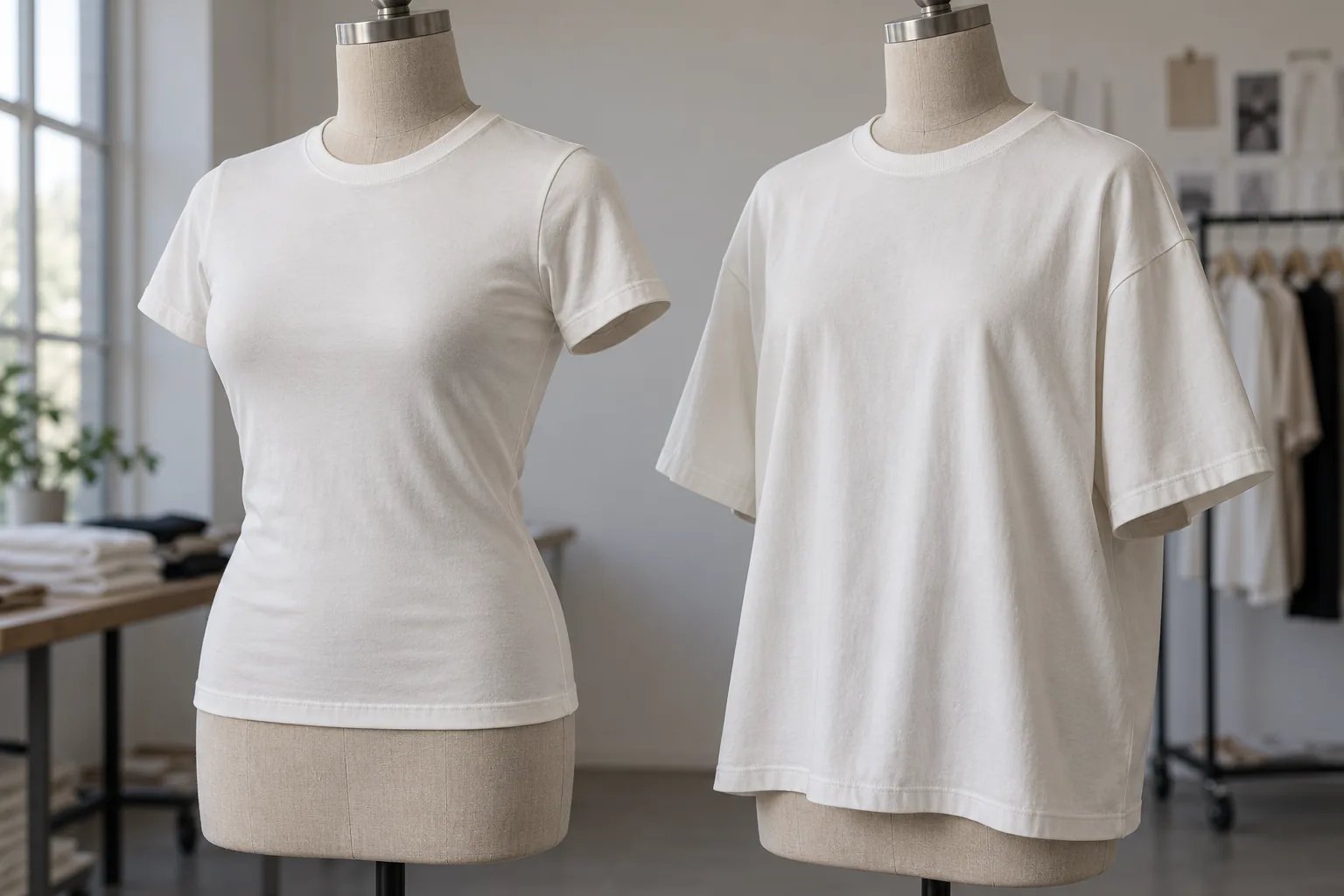
A T-shirt can feel excellent in the hand yet sit awkwardly from neck to sleeve. For a buyer choosing between combed and carded cotton, the shoulder is a useful place to test whether a fabric supports the intended silhouette. Ripples near the neck, diagonal drag lines, or a sleeve that hangs unevenly need a fit investigation before they become reasons to reject a yarn specification.
This guide approaches Combed Cotton vs Carded Cotton for T-Shirts through shoulder slope: the downward angle of the shoulder seam from the neck toward the arm. Use it when your fit block is nearly settled and you need to select a fabric, issue sample comments, and define a repeatable approval standard.
Make the shoulder line a fabric selection gate
Shoulder slope belongs to the pattern, but its appearance depends partly on how the fabric bends, stretches, and recovers. A more fluid jersey may follow the wearer’s shoulder closely; a firmer jersey may bridge over it. Neither response proves that the pattern is correct or incorrect. The question is whether the combination creates the shape in your product brief.
For example, a close-fitting layering tee should settle cleanly from the neck toward the shoulder tip. A wide, dropped-shoulder tee may deliberately extend beyond that point. Assessing both against the same seam position would produce misleading comments. Define the intended shoulder endpoint and sleeve fall before comparing cotton options.
Separate yarn refinement from the way jersey hangs
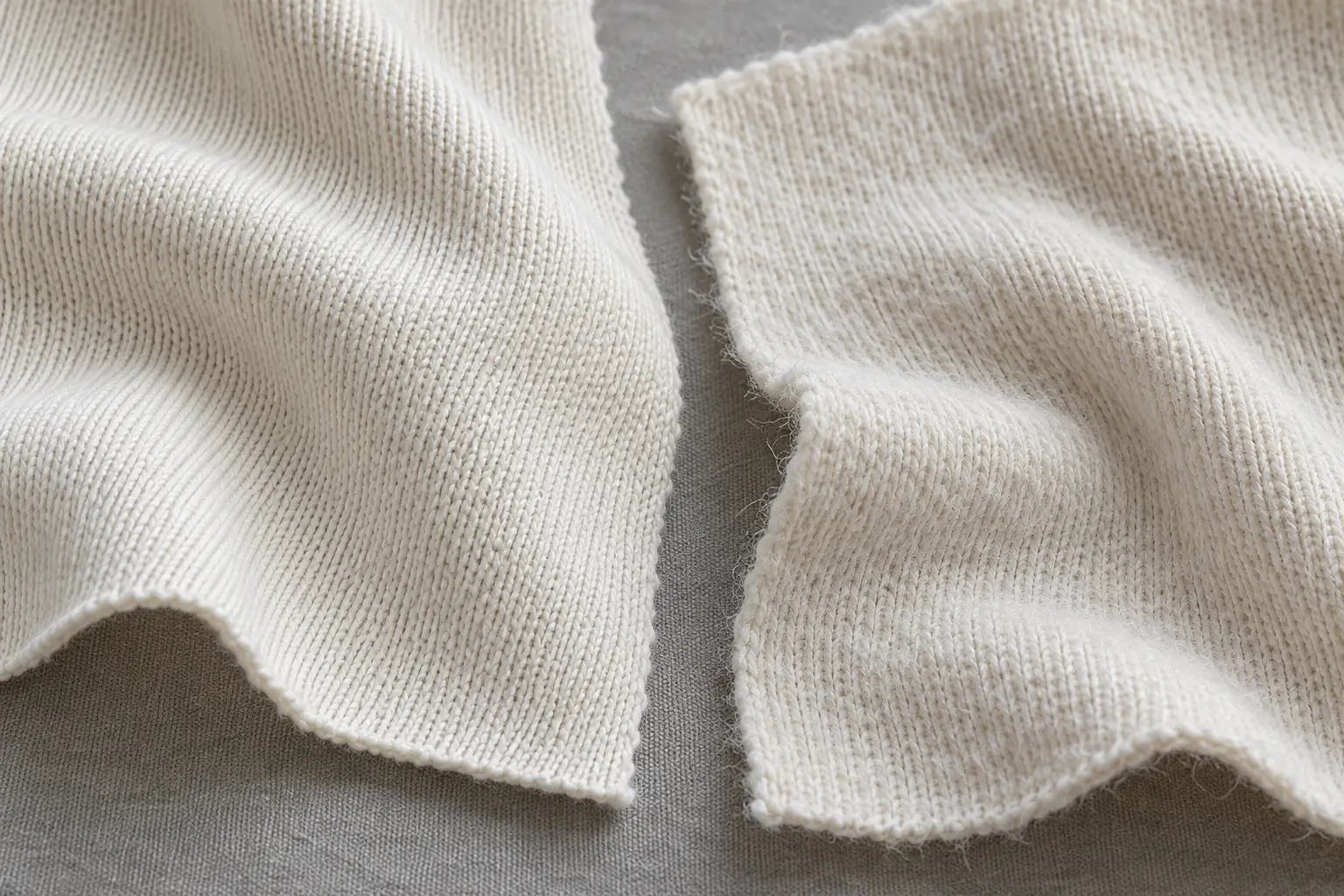
Carding prepares cotton fibers for spinning. Combing adds a preparation step that removes more short fibers and improves fiber alignment. Combed yarn commonly offers a smoother, less hairy surface than a comparable carded yarn. Carded cotton can suit a tee where a less refined surface is acceptable or desired.
Those differences matter for hand feel and surface presentation, but they do not establish shoulder slope. Yarn count, spinning method, knit density, fabric weight, finishing, and residual shrinkage also influence the garment. A dense combed jersey can feel firmer than a lighter carded jersey. Avoid specifications that treat “combed” as a substitute for softness, stability, or a particular fit.
Ask for candidate fabrics with comparable weight and construction when you want to isolate the effect of yarn preparation. If the options differ substantially, compare them as complete fabric packages and record those differences. Surface smoothness may help a clean graphic presentation, but decoration still needs its own trial on the selected fabric.
Build a paired sample around one shoulder block
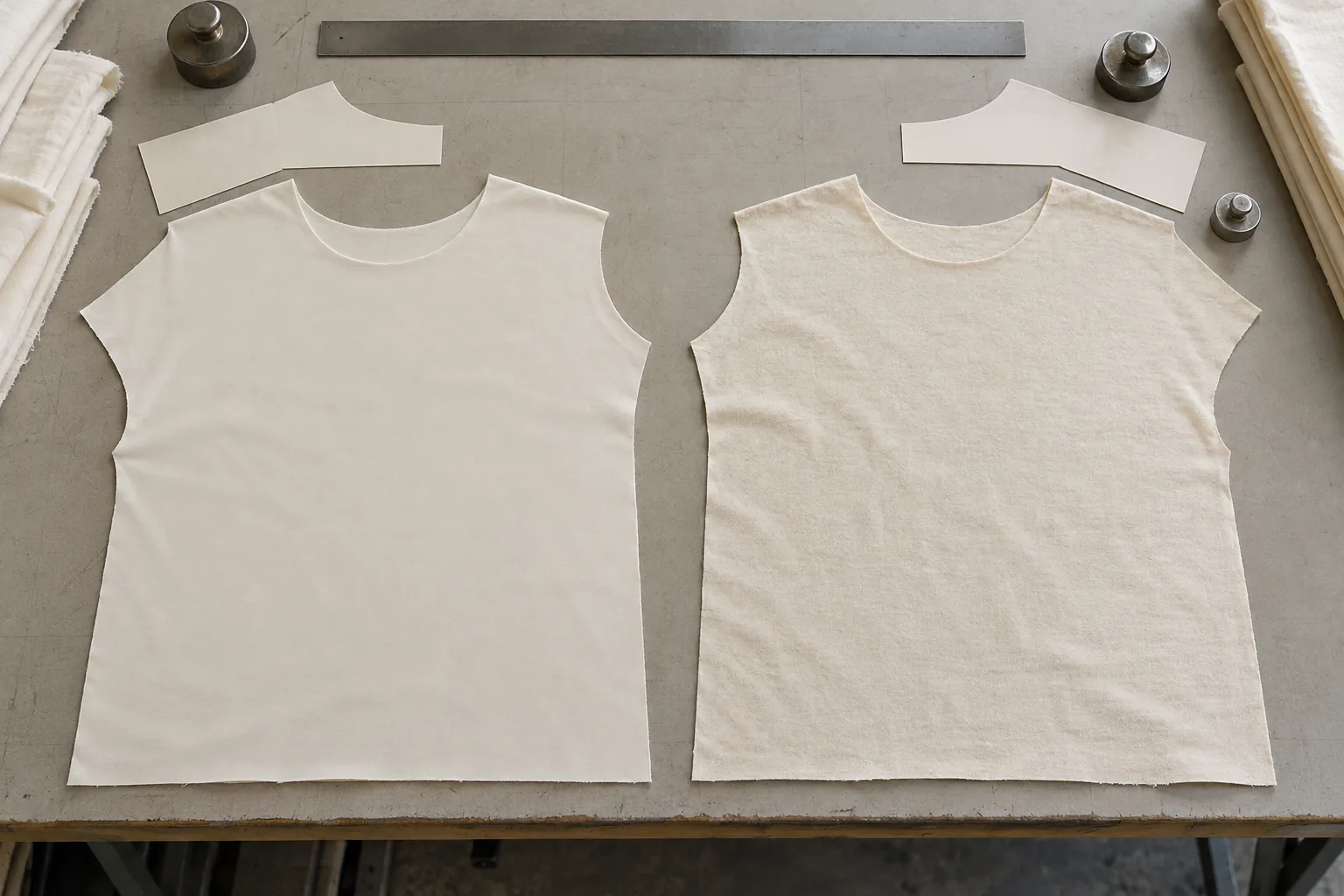
Request two samples from the same pattern revision, one in each candidate fabric. Keep the neckline, sleeve, seam allowance, shoulder reinforcement, and sewing method consistent wherever practical. Record any necessary construction change instead of allowing it to disappear into the comparison.
Fit both samples on the same person or form, in the same size and posture. Let the garments settle naturally without pulling the hem down or shifting the shoulder seams for photographs. Photograph the front, back, and side, then inspect the samples again after the agreed care cycle and drying method.
| Comparison point | Record on both samples | Decision it supports |
|---|---|---|
| Shoulder geometry | Neck point, shoulder endpoint, and seam angle | Whether the starting pattern suits the intended fit |
| Fabric response | Clinging, bridging, and recovery after handling | Whether the jersey supports the silhouette |
| After care | Changed seam position, puckering, and sleeve fall | Whether approval survives the care process |
Do not invent a universal acceptable slope or shrinkage limit. Establish project-specific measurements and tolerances with the pattern team. A single fit sample also cannot confirm that every graded size will behave the same way.
Read shoulder defects before changing the cotton
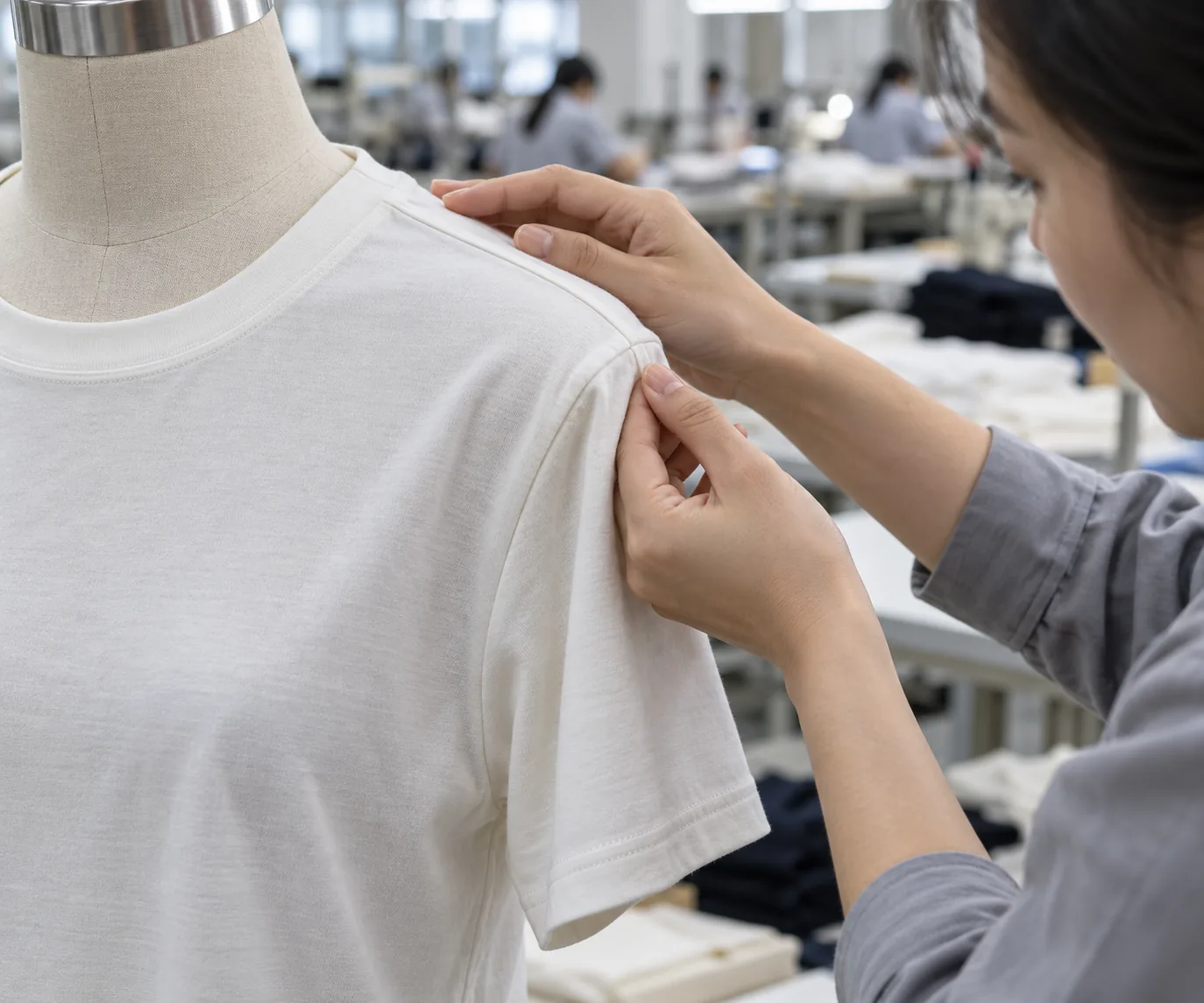
Diagonal folds around the upper chest or back can indicate a mismatch between the garment’s shoulder balance and the wearer. They can also arise from armhole shape, body width, posture, or sleeve interaction. Use the folds as a location for investigation, rather than proof that carded or combed cotton is unsuitable.
If a pattern technician pins a small shoulder adjustment and the distortion improves, test that correction in a new sample. If only one fabric bridges above the shoulder, investigate its bending behavior and construction. If a seam waves while the adjacent fabric lies smoothly, check sewing tension, feeding, and reinforcement before altering the pattern.
Changes that appear mainly after washing call for another branch of investigation: fabric shrinkage, twisting, rib behavior, or differential shrinkage between the body and shoulder tape. Switching cotton preparation without checking these variables can leave the same fault in the next sample.
Turn the approved shoulder into a QC checklist
A useful approval record combines dimensions with visible fit references. Flat measurements alone cannot fully describe shoulder balance. Retain the approved sample, identify its fabric and pattern revision, and record the care conditions used for evaluation. Include photographs that show the garment without styling adjustments.
- Pattern reference: Confirm the agreed shoulder drop, shoulder length, neckline position, and measurement method.
- Left-to-right balance: Check for unintended asymmetry in seam position and sleeve hang.
- Seam condition: Inspect skipped stitches, puckering, stretching, and reinforcement placement.
- Fabric consistency: Compare bulk material with the approved reference for weight, surface, and handling behavior.
- Care response: Recheck the specified measurements and shoulder appearance after the agreed wash and drying procedure.
- Size coverage: Review selected sizes across the range for grading-related changes in shoulder and armhole balance.
Agree how checks will be sampled and how deviations will be handled before bulk approval. StitchQuote provides QC before packing; the shoulder-specific criteria should be documented so they can be included in the project requirements.
Release the fabric choice with a clear sample brief
Choose the candidate that meets both the desired surface character and the approved shoulder silhouette. If both pass, use the confirmed quotation, decoration results, and material availability to complete the commercial decision. Do not pay for a yarn description expecting it to repair an unresolved fit block.
StitchQuote offers cut-and-sew, private label, sampling, fabric and trim sourcing, and branding including woven labels, prints, and embroidery. MOQ for most categories starts from 50 pieces per style. Confirm how quantities apply when you request multiple fabric options.
A 7-day sample is available for standard styles with confirmed specifications and available materials. Complex styles and custom-developed fabrics take longer. Include the shoulder reference, candidate fabric details, care method, and approval criteria in the brief so timing can be assessed against the actual request.
Questions buyers ask at shoulder-fit approval
Can I use one shoulder pattern for both cotton options?
Use one pattern for the initial comparison. Final patterns may need different adjustments if the fabrics have materially different drape or shrinkage. Approve each resulting fabric-and-pattern combination before production.
Does a smoother combed jersey hide an incorrect slope?
No reliable rule supports that expectation. A smoother surface changes appearance and touch, while the fabric’s structure affects how it reveals folds. Check the fit directly instead of assuming refinement will conceal imbalance.
Should shoulder tape be identical during comparison?
Keep it consistent initially to reduce variables. If a candidate needs different reinforcement, document that change and repeat the fit and care checks. Tape can affect stretching and seam behavior.
What should a useful shoulder correction comment contain?
Identify the sample revision, viewing angle, exact location, and observed problem. Add photographs and the agreed measurement method. Have the pattern team propose a controlled correction, then verify it on the next sample.
Related reading and next steps
- Prepare a tech pack with clear fit references
- Review sampling and minimum order planning
- Explore custom T-shirt manufacturing
- Contact StitchQuote about your sample brief
Request a manufacturing quote
Share your product type, quantity range, and destination. We usually reply within one business day.