Custom Streetwear, Casualwear & Denim Manufacturer•MOQ 50 pcs•Denim MOQ 100 pcs•7-Day Sample Available

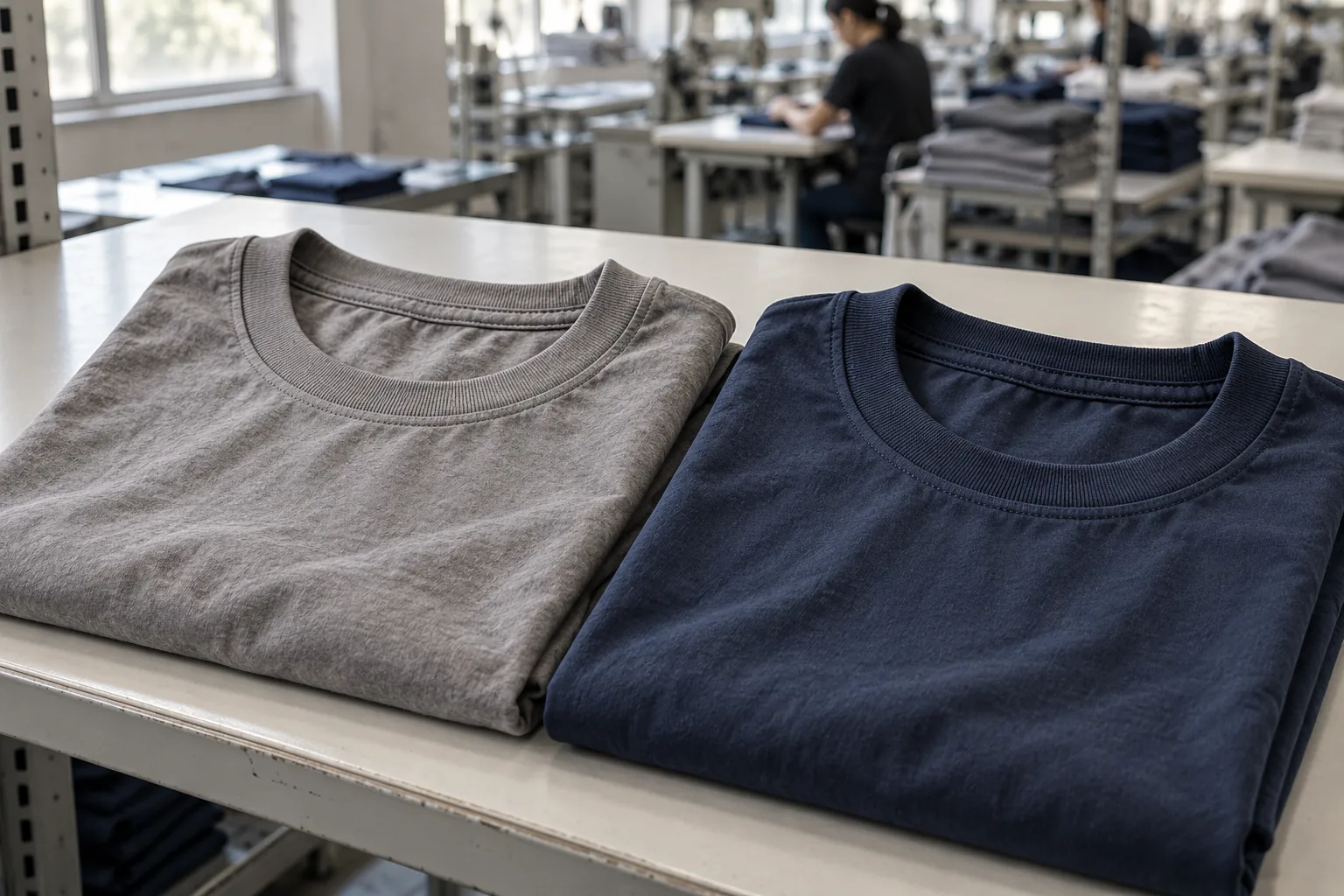
Ring Spun Cotton vs Open End Cotton
Compare ring spun cotton vs open end cotton to see how yarn type affects T-shirt feel, print surface, durability, and where each fabric direction makes sense.

A T-shirt can have a convincing body fabric and still disappoint at the neck. A collar that ripples, feels scratchy, or stays stretched after dressing changes the impression of the whole garment. For buyers comparing ring spun cotton vs open end cotton, rib quality makes the yarn decision concrete: judge the part customers touch and stretch repeatedly.
This guide focuses on approving neckbands, cuffs, and waist ribs before bulk production. Yarn spinning influences the result, but rib construction, elastane content, finishing, and attachment determine whether that result survives wear. Start with the required collar behavior, then choose the material combination that delivers it.
Read the yarn difference through the rib surface
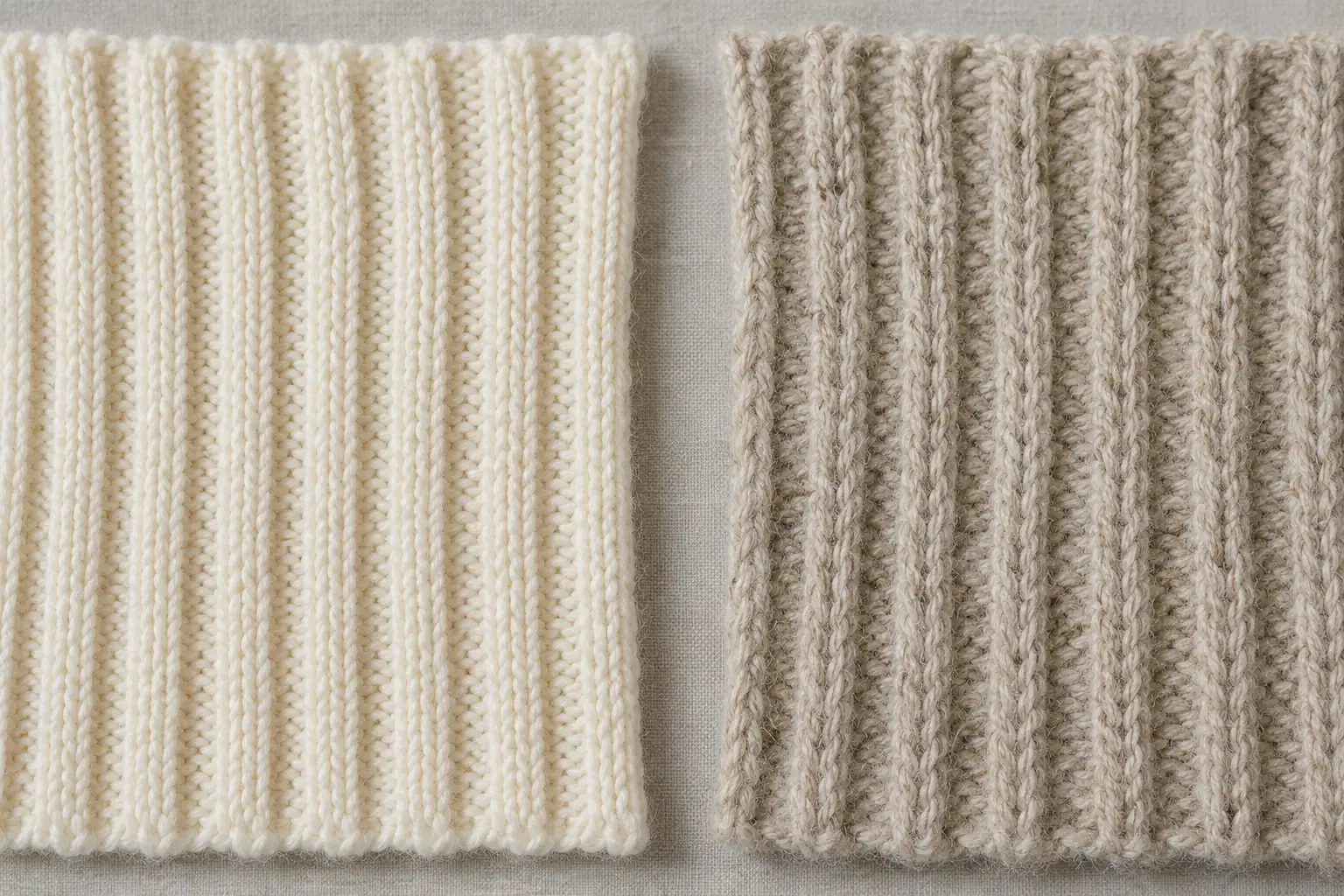
Ring spinning draws and twists fibers into yarn; open-end rotor spinning collects fibers in a rotor to form yarn with a different fiber arrangement. At comparable specifications, ring-spun yarn generally offers greater strength and can support a smoother, softer rib. Rotor yarn often gives a fuller, more textured character. Neither description guarantees the appearance of a finished collar.
Fiber quality, yarn count, twist, knitting density, and finishing can outweigh a simple spinning label. Combing is also a separate preparation choice: a ring-spun designation does not automatically mean combed cotton. Ask the supplier to identify the actual rib yarn rather than assuming it matches the garment body.
For a clean, close-fitting jersey tee, compare how sharply the rib columns read and whether the edge feels comfortable against the neck. For a dry-hand boxy tee, a more textured rib may suit the design. Approve the intended character explicitly; do not confuse texture with loose knitting or uneven yarn.
Make recovery a separate approval gate
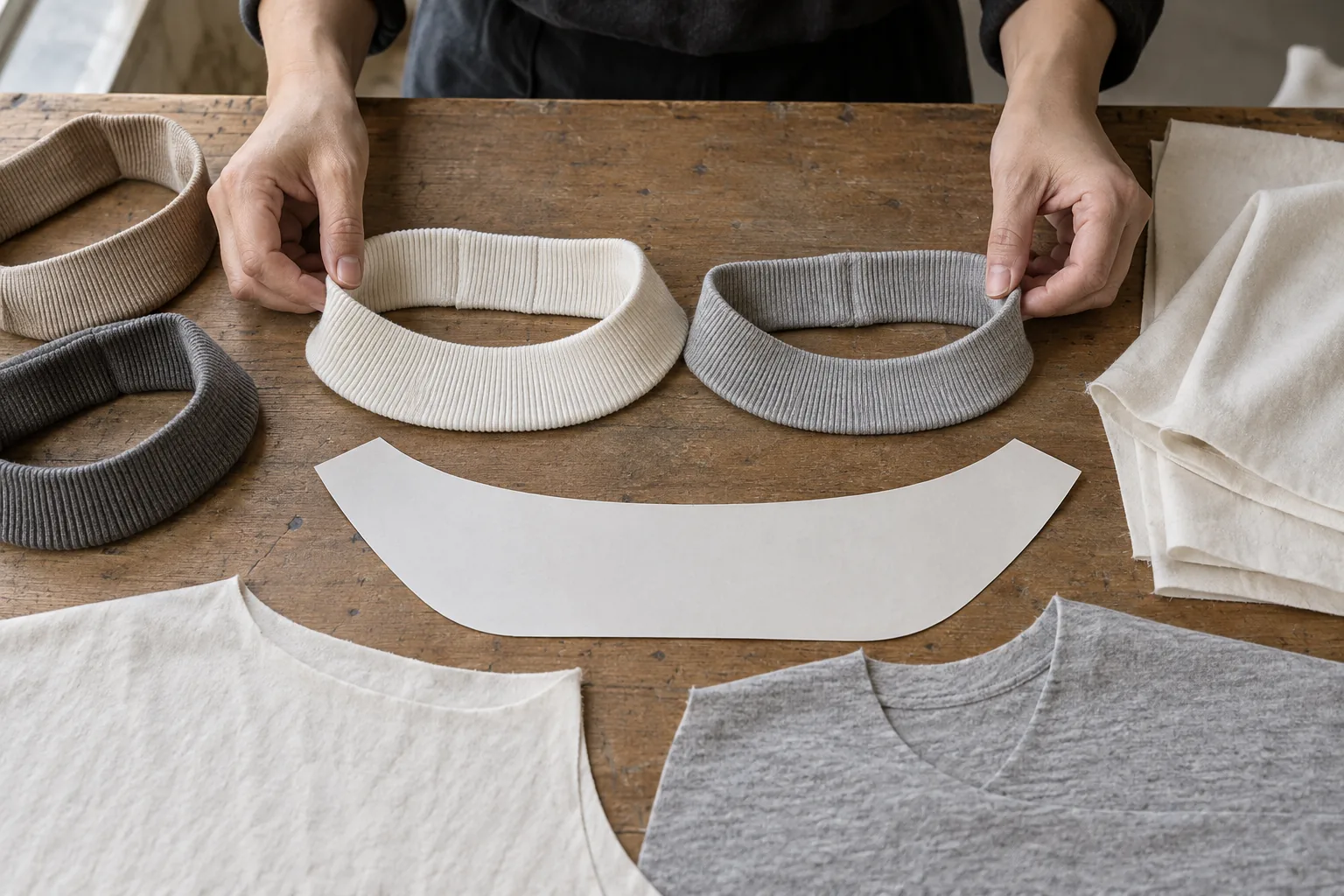
Softness and recovery are different properties. A pleasant cotton rib can remain enlarged after stretching, while a firmer rib may return more effectively. Ring-spun cotton is not inherently an elastic fiber, and choosing it does not solve a neckline that bags out.
Record the rib structure, such as 1×1 or 2×2, its finished weight, composition, and relaxed dimensions. If elastane is included, specify the blend and ask how the stretch component is incorporated. Its percentage alone cannot predict recovery. Stitch length, density, finishing, and heat exposure also matter.
Compare candidates using the same agreed extension, hold time, relaxation time, and number of repetitions. Measure the starting dimension and the residual growth afterward. Set acceptance limits with the supplier for the particular garment; an informal hand stretch is useful for screening, but insufficient for bulk approval.
Approve the collar and body as a working pair
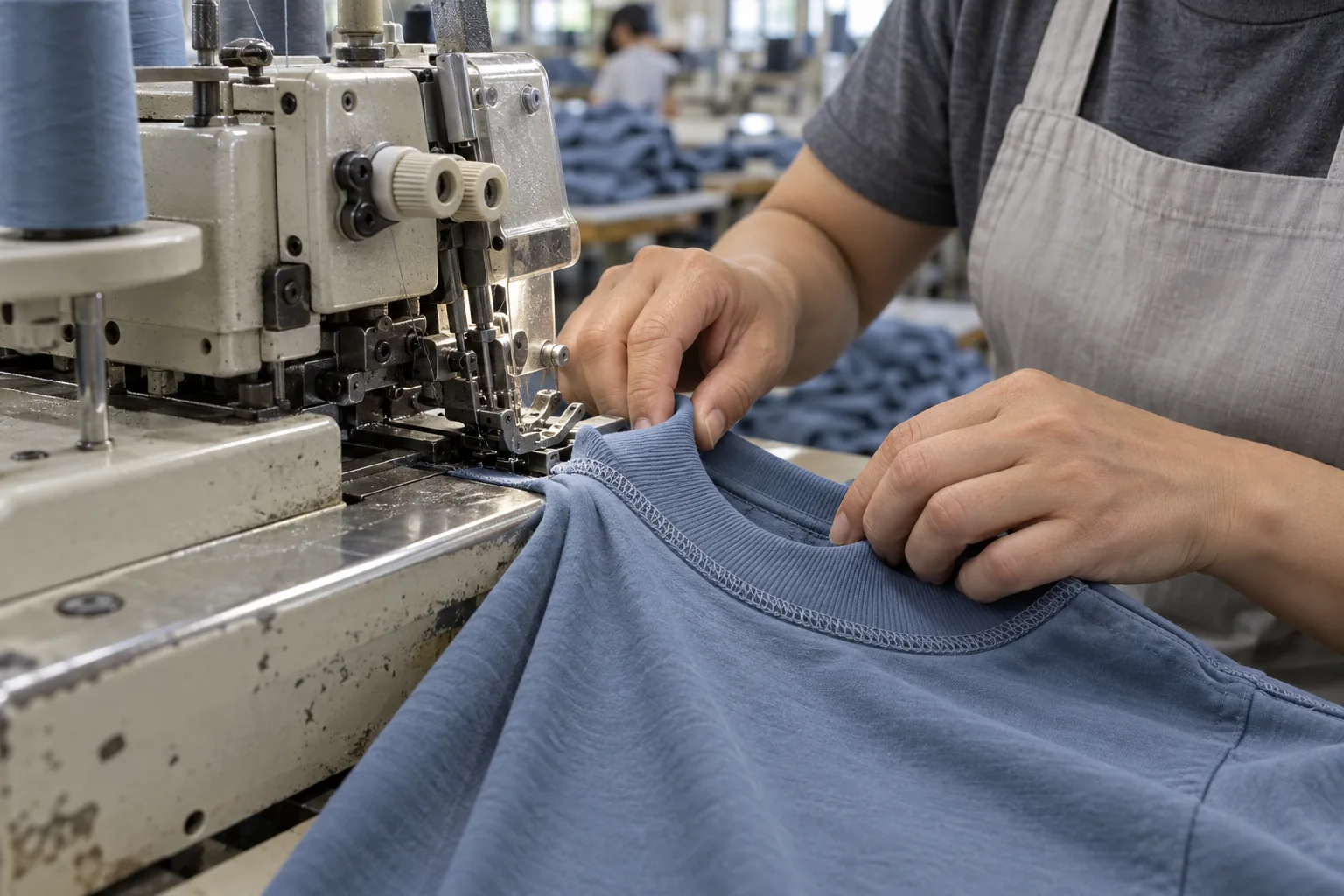
The body and rib do not have to use the same spinning method. A brand might evaluate a ring-spun rib against an open-end jersey body to get a particular neckline feel. That pairing needs a sewn trial because differences in shrinkage, shade, and surface texture become obvious at the seam.
Neckband length relative to the neckline seam, seam allowance, and sewing feed influence whether the collar lies flat. A band that is too short may pull the body into gathers; one that is too long may stand away. Do not prescribe one universal attachment ratio across sizes, rib constructions, and silhouettes.
| Trial garment | Rib priority | Approval evidence |
|---|---|---|
| Close-neck everyday tee | Comfortable stretch with controlled growth | Finished opening measured before and after repeated extension |
| Garment-washed boxy tee | Compatible shrinkage and surface character | Sewn sample evaluated after the intended wash |
| Heavy sweatshirt | Cuff and hem support without excessive pressure | Wear trial plus relaxed measurements after laundering |
For sweatshirts, body GSM helps describe weight but does not establish the correct rib specification. A heavy body can overwhelm a flimsy waistband, while an overly tight rib can distort the intended straight silhouette. Test the assembled garment rather than approving two separate swatches.
Build a rib-specific inspection record
Use one approved sewn sample and retain labeled rib swatches as references. Keep prewash and postwash measurements separate, and compare samples after the same conditioning and relaxation period. The checklist should distinguish material defects from attachment problems so corrective action reaches the right production step.
- Surface: inspect both relaxed and gently extended rib for uneven columns, holes, visible contamination, and unacceptable fuzz.
- Dimensions: measure finished band depth and opening using agreed measurement points without pulling the garment flat under tension.
- Recovery: repeat the approved stretch procedure and record remaining growth after the specified rest period.
- Seam behavior: check for skipped stitches, seam cracking during intended extension, puckering, and twisting at the band join.
- Wash response: follow the proposed care conditions and inspect collar shape, shrinkage mismatch, shade change, and surface deterioration.
- Bulk consistency: compare rib lots and garment sizes against the reference, recording where and how many units were checked.
Agree on tolerances, inspection sampling, and the response to failed checks before production. A photograph of a flat neckline cannot demonstrate recovery, and a single acceptable garment cannot establish consistency across a delivery.
Turn the selected rib into a reproducible order
Put the rib specification on its own line in the material list. Include yarn route, composition, construction, finished weight, color reference, band dimensions, and performance requirements. Mark which features are mandatory and require approval for substitutions. This prevents a general instruction such as “soft cotton collar” from becoming the purchasing specification.
StitchQuote provides cut-and-sew, private label, sampling, fabric and trim sourcing, branding, and QC before packing. MOQ for most categories starts from 50 pieces per style; denim starts from 100 pieces per style. Confirm whether the selected rib is available for the proposed order, especially when it needs custom development or dyeing.
A 7-day sample is available for standard styles with confirmed specifications and available materials. Complex styles, custom washes, and custom-developed fabric take longer. Include the intended rib evaluation in the sample brief so the approval schedule accounts for washing and recovery checks.
Define measurement points and tolerances in the sample brief
Lay the garment flat, let the rib relax, and smooth the body without pulling the opening. Define neck width as the straight distance between the neckline seam intersections at the two shoulder seams. Measure front neck drop vertically from a line connecting those points to the center-front neckline seam. Measure exposed band depth from the attachment seam to the folded edge at center front, center back, and both shoulders. Include a diagram so the factory and buyer measure the same points.
For an illustrative adult tee, a buyer might propose a 20 mm exposed band depth with a tolerance of plus or minus 2 mm, and a neck-width tolerance of plus or minus 5 mm around each approved size target. These are proposals for supplier review, not universal standards or StitchQuote guarantees. Confirm achievable tolerances with the selected rib and sewing method. Specify cut band width separately because it includes the folded construction and seam allowances.
Keep a laundering worksheet alongside the size chart. If a marked 200 mm rib length measures 194 mm after the agreed wash and drying procedure, its shrinkage is 3 percent: divide the 6 mm reduction by the original 200 mm. Record body shrinkage in the corresponding direction as well. Different shrinkage rates can distort the attachment seam even when each material appears acceptable alone. State the rest period before remeasurement and retain the wash conditions with the results.
Work through a small order before committing to bulk rib
Consider an illustrative order of 100 adult tees in one style and one color across four sizes. A development brief could request a 180 GSM cotton jersey body and two 1×1 rib candidates with documented compositions and yarn routes. This example does not imply stock availability. Request finished rib GSM, usable width, and consumption separately; the body weight cannot establish the rib purchasing quantity.
Confirm material availability and dye-lot minimums first. Next approve the sewn neckline, check measurements across the size range, and complete wash and recovery checks before releasing bulk cutting. If a rib substitution becomes necessary, require a new sewn approval rather than relying on a composition label. Inspect early production units in more than one size to catch grading or attachment problems before the whole order is assembled.
Ask the quotation to distinguish garment quantity from material commitments. Custom dyeing, specially knitted rib, additional colors, extra sample rounds, and unused minimum-order fabric can change the economics of a small order. Compare rib alternatives while holding body fabric, branding, packing, and inspection requirements constant. This gives the buyer a usable comparison of the material decision without mixing in unrelated garment changes.
Questions buyers ask before signing off the neckline
Does a ring-spun body guarantee a ring-spun collar?
No. Rib is a separate material and can have a different yarn route or blend. Request separate specifications for the body and bands, even when they share a color.
Can open-end cotton rib suit a premium-looking tee?
It can suit a deliberate textured appearance if the finished rib meets the required comfort, shape, and durability criteria. Judge the sewn result against the design reference rather than treating the spinning method as a quality grade.
Should a loose collar be fixed by adding elastane?
First check band length, knitting density, finishing, and attachment. Elastane may improve recovery, but changing the blend will not automatically correct an oversized band or uneven sewing feed. Re-sample the revised combination.
What should accompany a collar revision request?
Send measurements, photographs, wash conditions, and the exact stage when the problem appears. Specify whether the opening starts too large, grows during wear, or distorts after washing; each points toward different checks.
Related reading and project support
- Prepare a tech pack with separate rib specifications
- Review sampling and MOQ planning
- Understand hoodie body fabric weight
- Contact StitchQuote about your rib and garment brief
Request a manufacturing quote
Share your product type, quantity range, and destination. We usually reply within one business day.