Custom Streetwear, Casualwear & Denim Manufacturer•MOQ 50 pcs•Denim MOQ 100 pcs•7-Day Sample Available

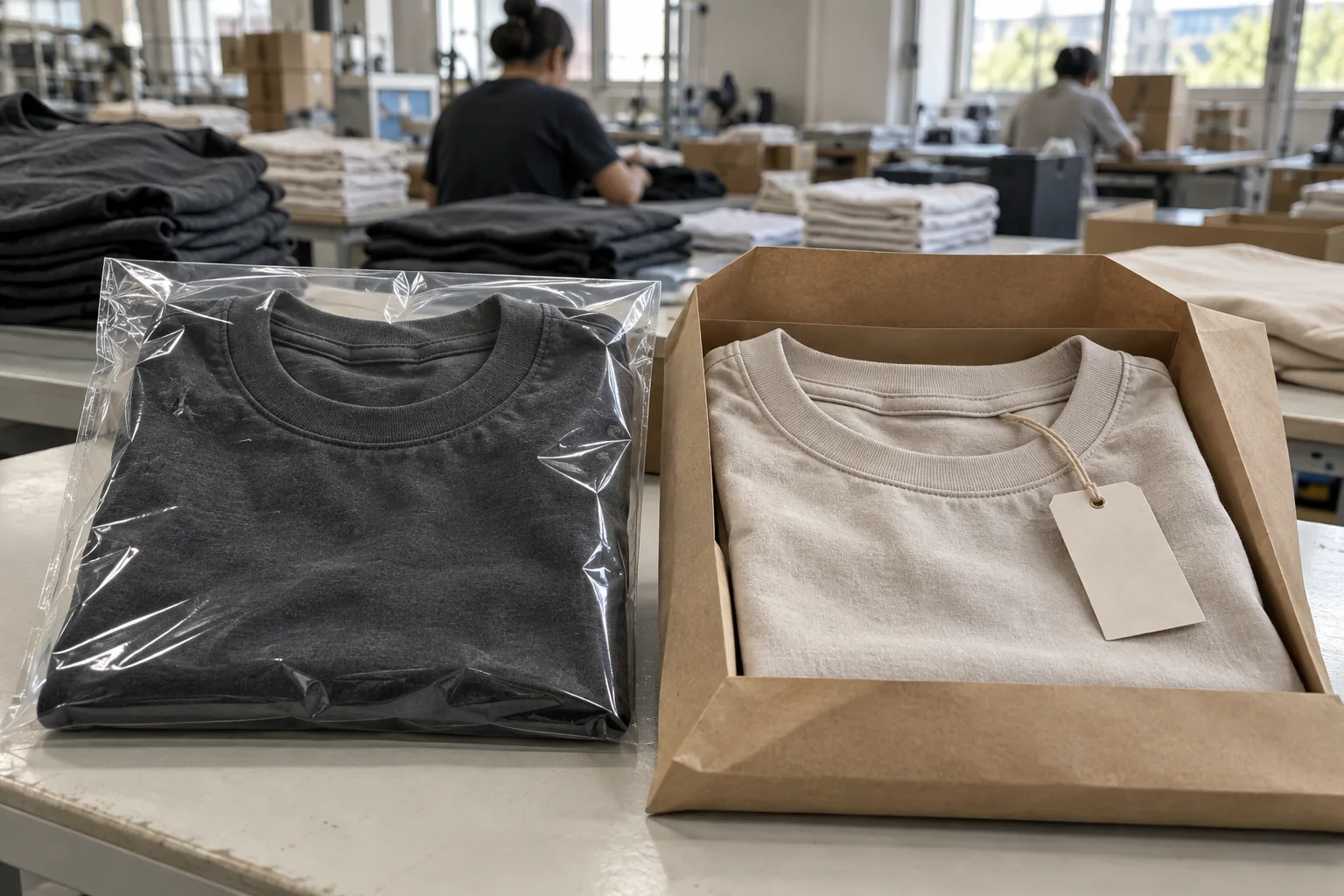
What to Put on Custom Hangtags and Packaging
Plan custom hangtags and packaging with the right information, brand hierarchy, and production practicality so your private label details add value instead of noise.

A garment packed for warehouse storage needs to be easy to identify and protect. The same garment heading straight to a shop floor needs to be ready for a customer to handle, compare and buy. Deciding between those destinations is the starting point for choosing hangtag content, bag labels and presentation materials.
For brand buyers, the useful question is what each person must see before opening the pack. A warehouse picker, retail associate and shopper need different information. Build the packaging brief around those handoffs, then decide which branded extras earn their place.
Choose the receiving destination before designing the pack
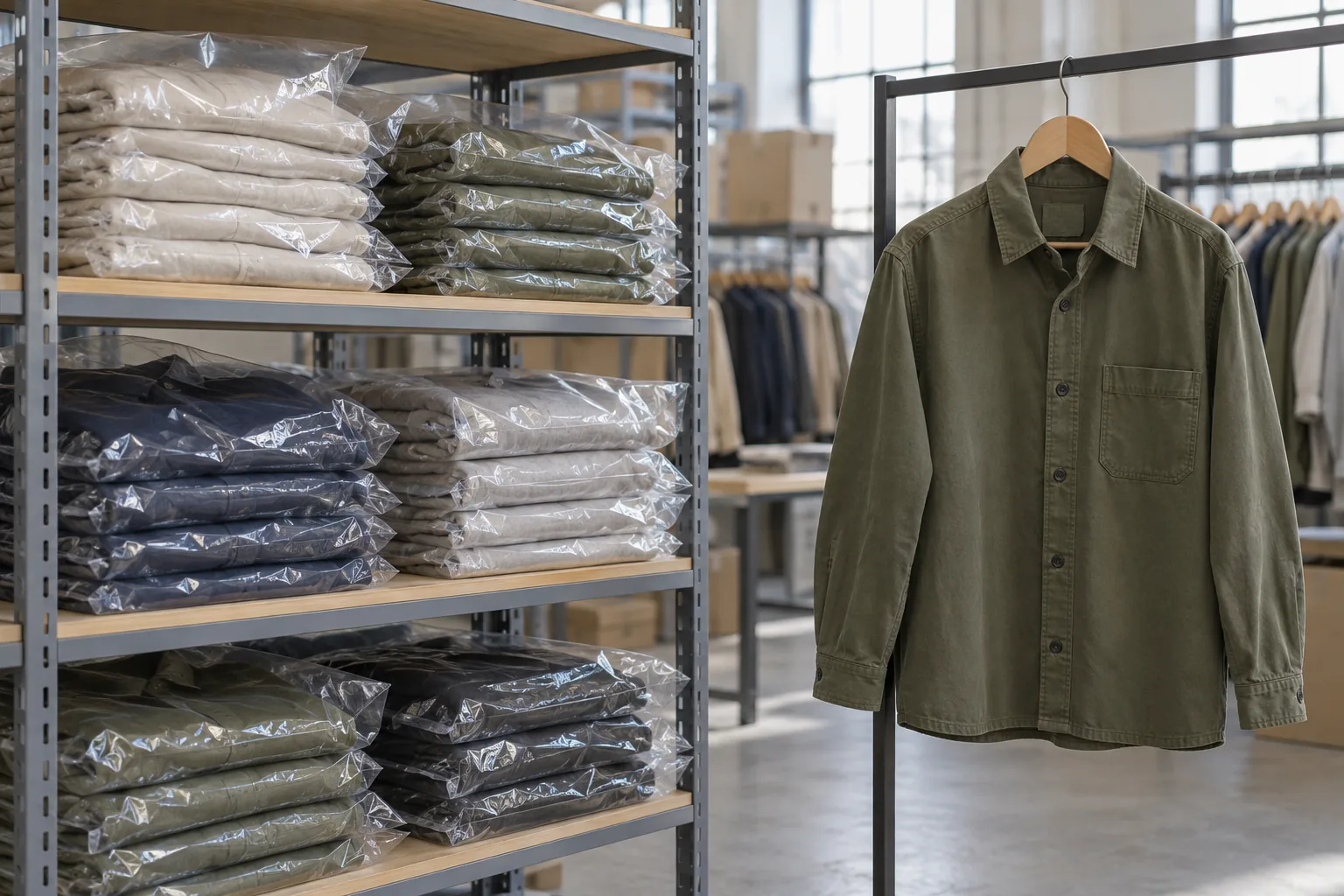
A basic polybag generally serves protection and stock handling. Retail-ready packing serves a defined selling environment: a garment might arrive folded for a shelf, tagged for a rail or arranged in a presentation sleeve. Retail-ready does not automatically mean a box, tissue and multiple inserts.
Consider a heavyweight tee sold through a fulfillment warehouse. If the warehouse removes the protective bag before dispatch, an elaborate printed bag may never reach the customer. For a boutique receiving overshirts, the priority may instead be a visible size, an accessible hangtag and a fold that staff can reproduce.
Ask the receiving partner whether bags stay on, who applies selling prices and whether goods must arrive hanger-ready. Record these answers before approving artwork. Otherwise, a well-designed pack can create extra unpacking and relabeling work.
Give the hangtag and the bag separate information jobs
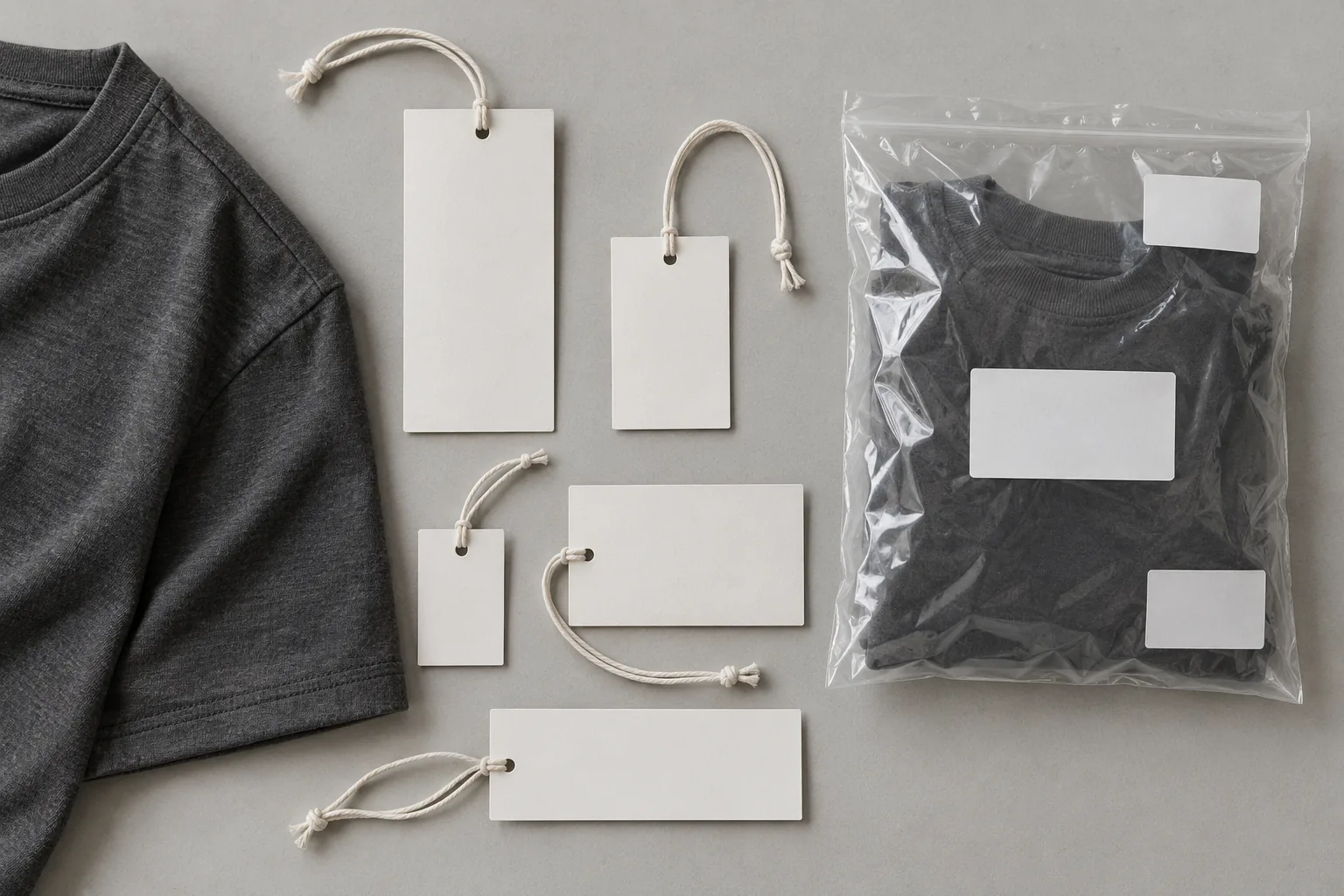
A hangtag speaks to the shopper while remaining attached to the garment. A bag label helps someone identify the enclosed unit without opening it. Repeating key identifiers can be useful; repeating every marketing sentence usually adds clutter.
| Information | Hangtag decision | Polybag decision |
|---|---|---|
| Style and size | Use a readable product name and size where helpful | Show the agreed SKU, color and size for handling |
| Barcode | Use the retailer-approved selling identifier if required | Use the receiving system’s required unit identifier |
| Brand message | Keep one concise, supportable product statement | Add only if the bag reaches the customer |
| Price | Reserve space if the retailer applies a ticket | Include only when the receiving specification asks for it |
Do not treat a removable hangtag as a substitute for required garment labeling. Fiber, care, origin and other requirements depend on the destination market and product. Confirm applicable garment and packaging requirements separately, including any bag warnings or material markings, before releasing copy.
Specify retail presentation as physical instructions
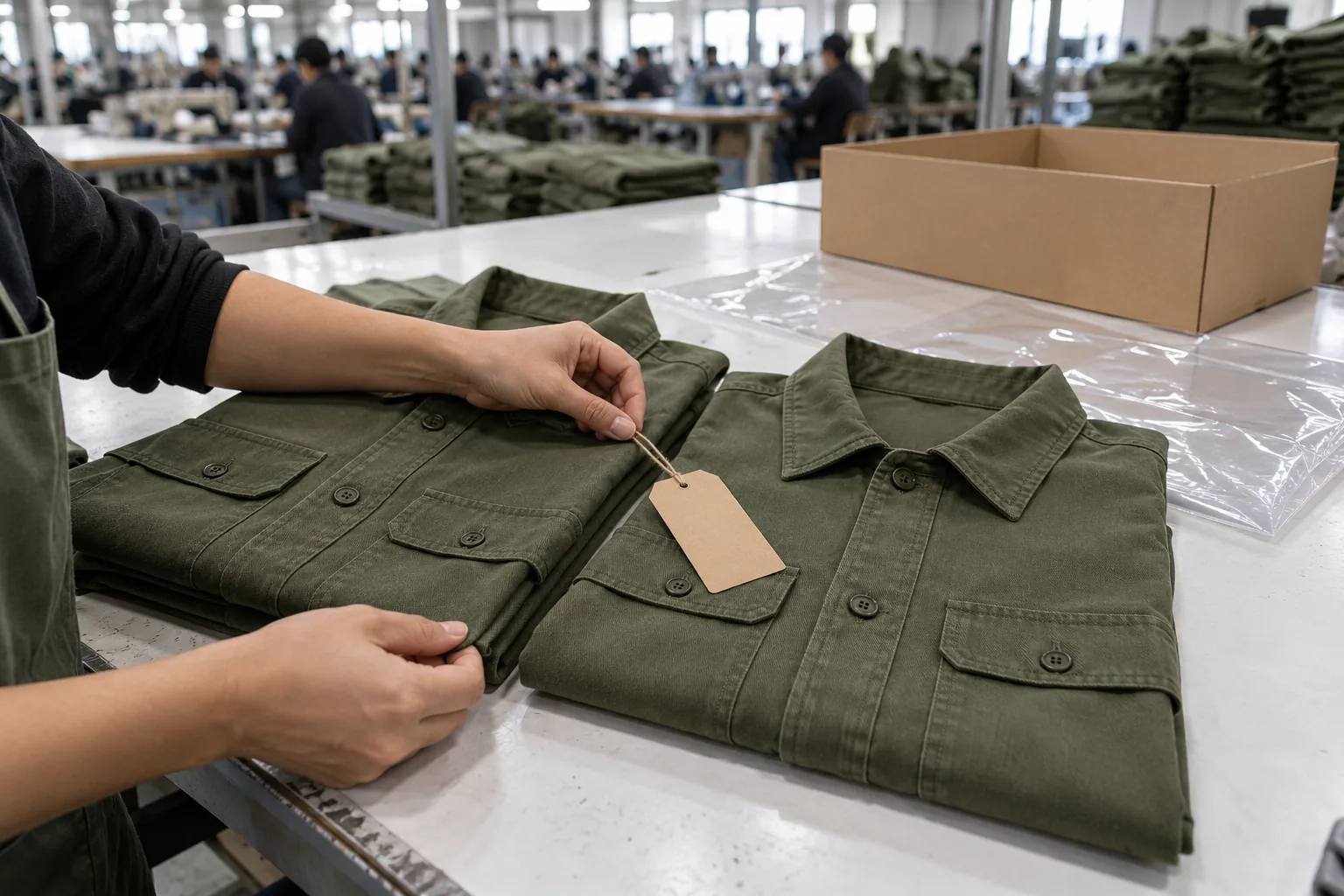
“Premium packaging” is too vague for production. Specify the folded dimensions, which garment panel faces outward, where the tag sits and how the closure works. If the customer must see an embroidered chest detail, show its position in a photograph of the approved fold.
For a zip hoodie, decide whether the hangtag attaches through an approved loop or another agreed point. Avoid leaving operators to choose a puncture location. For washed denim, trial the tag cord and card against the finished surface to check snagging, rubbing and color transfer.
Open the proposed pack as a customer would. Check whether removing the tag requires awkward cutting, whether the garment catches on the closure and whether excessive inserts fall loose. A retail presentation should be practical for staff to replenish as well as attractive on first opening.
Keep shared stock flexible across selling channels
If one production order supplies both online sales and stores, decide how late you can split the packaging. A shared protective bag and common hangtag may support both destinations, with channel-specific price tickets or sleeves added later. Confirm who performs that final step and where.
For example, a sweatshirt collection sold in two markets might share its brand-facing tag while using separate approved price stickers. Printing a fixed currency into every tag can make stock transfers harder. However, leaving ticketing to a warehouse only works if that service is agreed and the correct data is available.
Garment quantities and packaging quantities also need separate confirmation. StitchQuote’s MOQ for most categories starts from 50 pieces per style; denim starts from 100 pieces per style. Those figures do not establish the minimum run for a custom printed carton or specialty tag. Ask about packaging minimums, surplus ownership and storage before committing to a design.
Approve one complete packed unit before bulk packing
Separate artwork approval from packed-unit approval. A correct digital file does not prove that a barcode remains visible through a bag seam or that a large tag fits neatly inside the fold. Supply one controlled specification listing artwork versions, dimensions, materials, attachment positions and the SKU data source.
Request a representative packed unit using the intended garment finish and packaging components where possible. If substitutions are used during sampling, list them explicitly and identify what still needs approval. Keep photographs of the front, back and opened pack alongside written acceptance notes.
StitchQuote provides cut-and-sew, private label, sampling, fabric and trim sourcing, branding through woven labels, prints and embroidery, and QC before packing. A 7-day sample is available for standard styles with confirmed specs and available materials; complex styles, custom washes and custom-developed fabric take longer. Confirm the packaging sample schedule separately rather than assuming custom printed components follow the same timing.
Check identity, attachment and protection at the packing handoff
Agree who checks the finished pack as well as the garment. A sewing inspection cannot confirm a barcode applied afterward. Use the approved packed unit as the reference, and define what happens to units with mismatched tags or damaged packaging.
- Identity: Match garment size and color to the hangtag, bag label and packing record.
- Scanning: Test the actual printed barcode with the intended system, including through the bag if required.
- Attachment: Check that cords, fasteners and stickers do not damage fabric or obscure necessary information.
- Presentation: Compare fold orientation, tag visibility and component count with the approved sample.
- Protection: Check cleanliness, closure integrity and fit inside the shipping carton without excessive compression.
Set the inspection scope with the supplier before packing starts. Keep variant-specific labels separated at the workstation and recheck identification when changing sizes or colors.
Questions buyers ask when choosing the final format
Can a clear polybag still be retail-ready?
Yes, if it meets the retailer’s receiving and display requirements. A clean fold, correctly placed hangtag and readable identifier may be sufficient. Confirm whether the retailer displays the bagged garment or removes the bag.
Should the hangtag carry a retail price?
Only after confirming the selling channel’s rules. A reserved sticker area can accommodate changing prices or currencies, but retailers may require their own ticket format and placement.
What if the barcode data changes after artwork approval?
Pause the affected printing or labeling step, issue a revised data file and approve a fresh printed example. Identify any obsolete components so they cannot be mixed into the current run.
Is a branded box necessary for an online launch?
Base that choice on the delivery experience, fulfillment process and protection needed. Test a complete shipment configuration first; a presentation box may still need separate transport protection.
Related reading and project planning:
- Prepare a tech pack with clear production instructions
- Review sampling and MOQ planning
- Explore private label manufacturing support
- Discuss your garment and packaging brief
Request a manufacturing quote
Share your product type, quantity range, and destination. We usually reply within one business day.