Custom Streetwear, Casualwear & Denim Manufacturer•MOQ 50 pcs•Denim MOQ 100 pcs•7-Day Sample Available
How to Launch a Private Label Streetwear Capsule
Launch a private label streetwear capsule with a tighter range, stronger silhouettes, and a realistic development path that protects fit and brand identity.

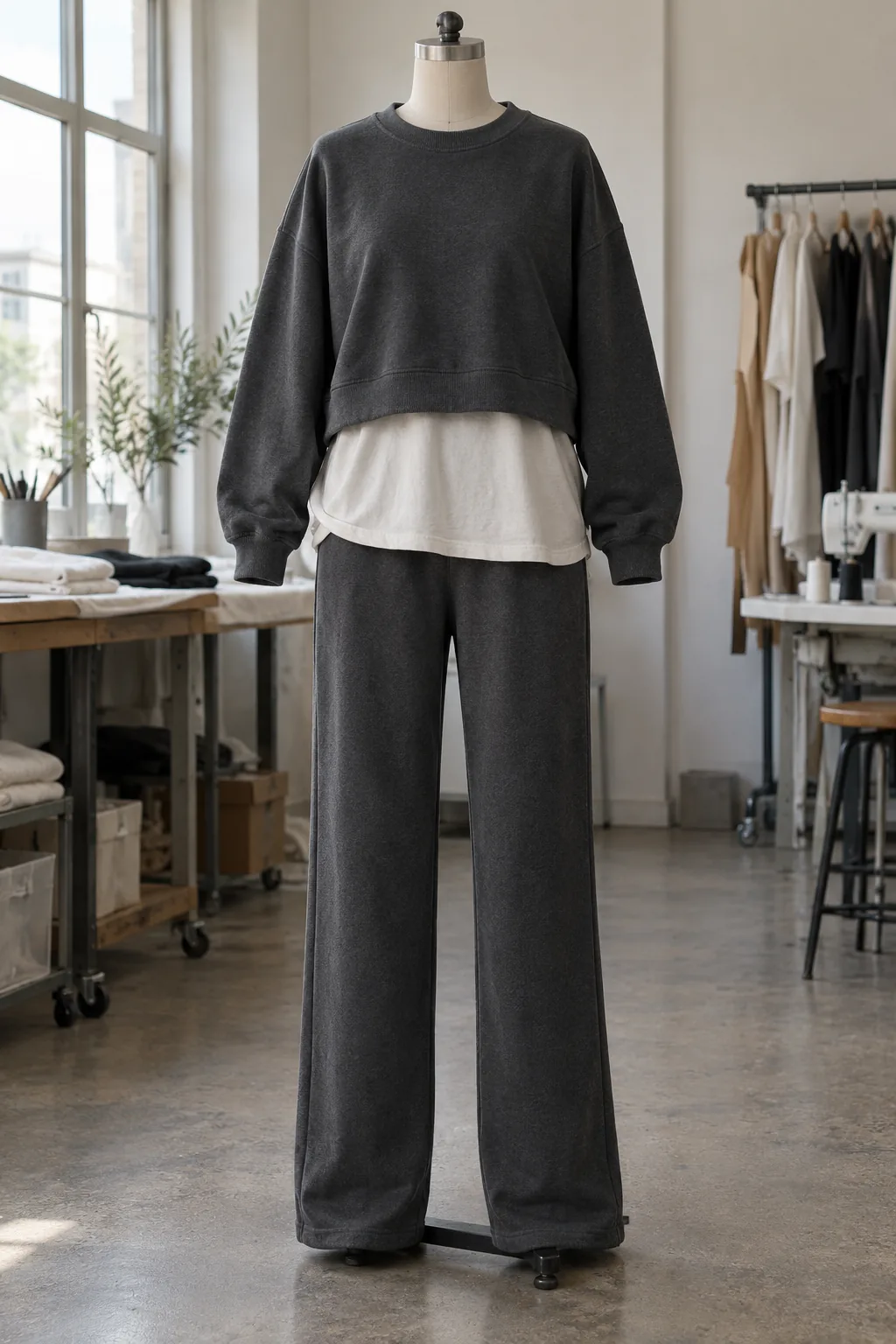
A streetwear capsule earns its identity through the clothes people wear together: the way a tee sits beneath a sweatshirt, where a trouser leg breaks, and how fabric moves across all three. Before choosing graphics or launch photography, decide which garment will lead the collection and what the supporting pieces must do.
This guide approaches how to launch a private label streetwear capsule as an assortment engineering exercise. The aim is to leave development with a small set of garments that work individually, form a convincing outfit, and have specifications clear enough to reproduce.
Give each garment a reason to be in the capsule
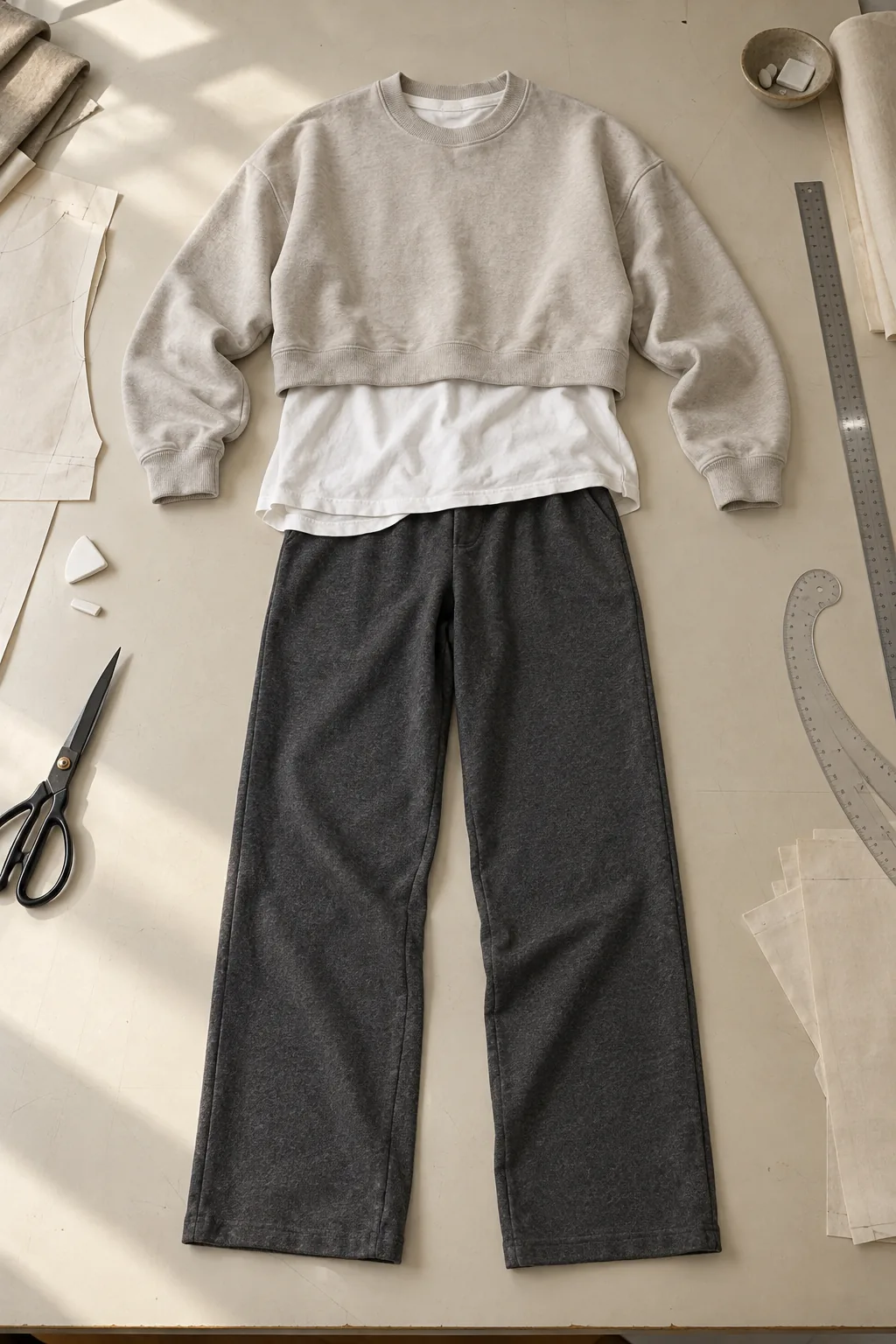
Start with one complete outfit rather than a list of trending products. A compact first release might pair a cropped crewneck with a longer tee and straight-leg jersey trousers. The crewneck supplies the recognizable silhouette; the tee controls layering; the trousers complete the proportions. Each piece has a job beyond carrying the same artwork.
Choose the lead garment according to the product promise you can describe most precisely. If the selling point is a sculpted sweatshirt shape, spend development attention on its shoulder, sleeve volume, hem tension, and body length. Adding an unrelated overshirt will introduce another fit problem without necessarily strengthening the outfit.
Write one sentence for every proposed style explaining why a customer needs it alongside the others. Remove pieces whose only distinction is a different logo placement. That leaves more room to resolve the garments that define the release.
Set the proportions across the outfit
“Boxy” and “oversized” describe impressions, not patterns. Define chest width, shoulder width, body length, sleeve length, and opening measurements for each top. For trousers, establish waist construction, rise, thigh room, knee width, and hem opening. Specify how and where each measurement is taken.
Then compare the garments while worn together. A tee that looks balanced alone may bunch beneath a shorter crewneck. A wide trouser leg can overwhelm a narrow sweatshirt hem. Record the intended layering relationship, including how much tee should show and whether the outer layer should rest on the waistband or hang freely.
Fit the base size first, but also review how grading affects the outfit. Simply adding equal amounts everywhere can change the intended shape at size extremes. Ask for the proposed grade rules and agree which proportions should remain visually consistent across the size range.
Match fabric behavior to each silhouette
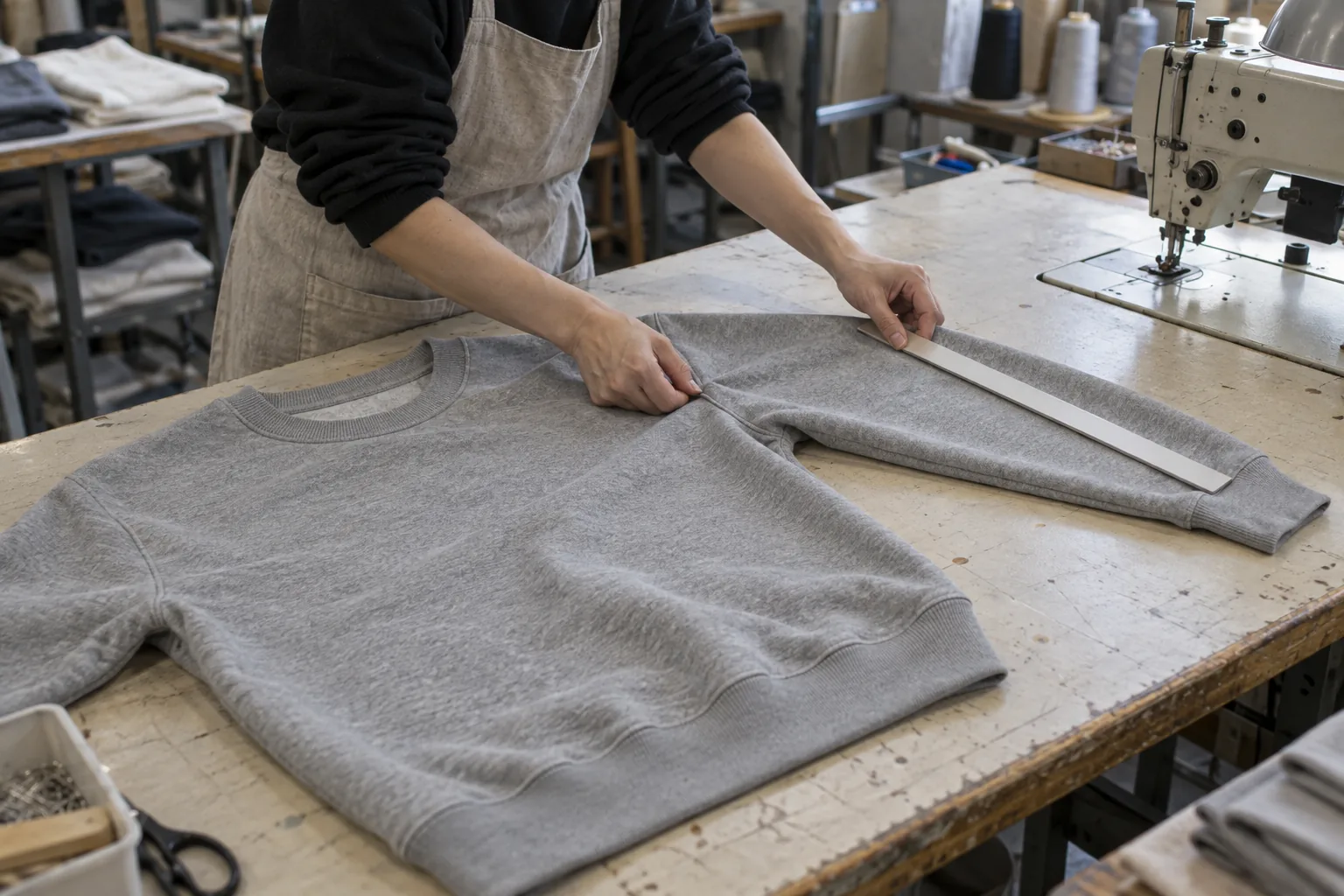
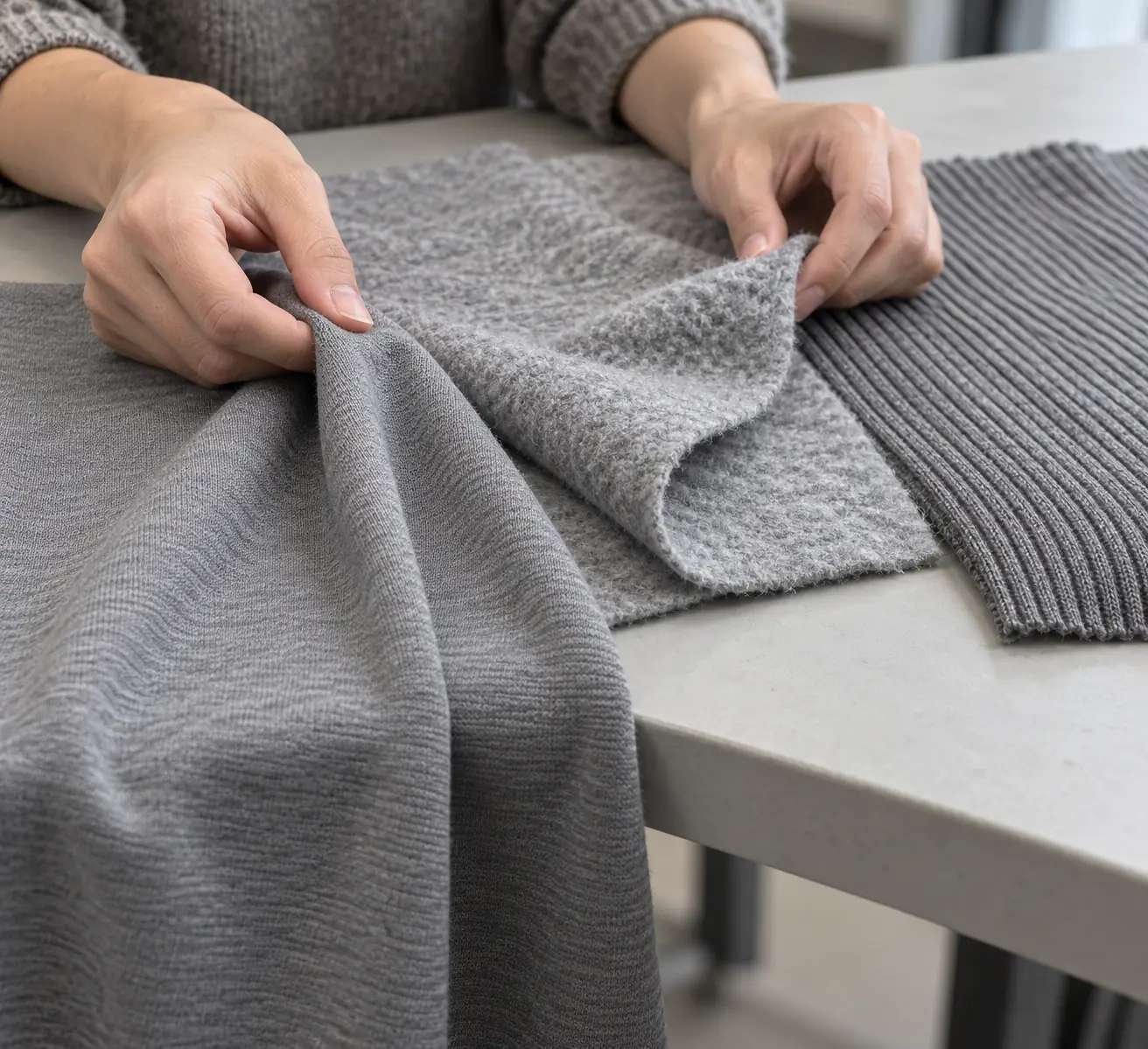
Fabric weight alone cannot predict shape. Two fabrics with the same stated weight may differ in density, stiffness, recovery, and surface character. A compact jersey may support a square tee silhouette, while a softer jersey may collapse toward the body. Request swatches and assess drape alongside composition and weight.
Supporting garments do not need identical fabrics, but their behavior should make sense together. A structured sweatshirt can pair with fluid trousers deliberately; it becomes a problem when the contrast is accidental. Consider handfeel against the skin, warmth when layered, and whether rib trims recover after stretching.
Check proposed care conditions during development. Shrinkage can alter the visible length difference between two tops, while twisting can pull a side seam forward. If several materials must share a color, approve their appearance together under consistent lighting. Different fibers and surfaces may show the same color target differently.
Choose construction details before adding decoration
Construction determines how a garment feels in use. A neckline needs suitable rib dimensions and recovery; a trouser waistband needs a clear elastic and drawcord specification; pockets need an opening and depth that suit their purpose. Resolve these choices before treating branding as the finishing answer.
| Garment decision | Sample check | Approval record |
|---|---|---|
| Tee neckline | Check stretching, comfort, and recovery | Rib material, finished width, and opening measurement |
| Crewneck hem | Check whether it holds or falls as intended | Rib dimensions and attachment construction |
| Trouser pocket | Check access and sag with everyday contents | Opening, bag depth, and reinforcement position |
Next, choose decoration that suits the approved surface. Dense embroidery can distort an unsuitable base; a large print can change handfeel. Test the actual technique on the intended fabric and evaluate placement on a sewn sample. Record dimensions and reference points rather than asking for artwork to be “centered like the photo.”
Keep color and quantity choices tied to garment readiness
Every extra color creates another combination to approve and stock. Begin with colors that make the outfit easy to understand, then assess whether an additional option adds a distinct use. Three styles in three colors already create nine style-color combinations before sizes enter the order.
StitchQuote’s MOQ for most categories starts from 50 pieces per style; denim starts from 100 pieces per style. Confirm color and size allocation requirements for the proposed order rather than assuming the style minimum permits any split. If denim is essential to the look, account for its different starting quantity when choosing the assortment.
StitchQuote provides cut-and-sew, private label, sampling, fabric and trim sourcing, branding through woven labels, prints and embroidery, and QC before packing. A 7-day sample is available for standard styles with confirmed specifications and available materials. Complex styles, custom washes, and custom-developed fabric take longer; confirm the applicable schedule for the actual garment.
Approve the capsule with a garment-level QC checklist
A good-looking outfit photograph cannot confirm production readiness. Review each sample against the same documented requirements, then repeat the outfit check. Agree measurement tolerances and inspection criteria with the manufacturer before bulk production, and retain an approved reference sample.
- Fit: Check specified measurements, left-right symmetry, and the intended layering lengths.
- Construction: Inspect seam security, neckline shape, hem behavior, pocket attachment, and waistband recovery.
- Materials: Compare fabric, rib, color, and handfeel with approved references.
- Care performance: Review dimensional change, twisting, surface appearance, and decoration after the agreed wash test.
- Branding and packing: Verify artwork size, placement, label details, size identification, and the agreed packing method.
Separate required corrections from optional design changes in sample comments. A late decision to shorten the body can affect artwork position and the whole layering relationship. Recheck affected details together instead of approving each change in isolation.
Build a measurement sheet that protects the layering plan
Give each point of measure a name, a diagram, and a finished-garment target in centimeters. For a tee, define body length from the high shoulder point beside the neck seam to the bottom hem. Define half chest as the flat width measured at a stated distance below the armhole, with the garment relaxed. For a dropped-shoulder sweatshirt, specify whether sleeve length starts at the shoulder seam or is measured from the center back neck; those methods produce different numbers. For trousers, list relaxed and stretched waist separately and state the stretching method.
Tolerances should reflect the importance of the dimension and the construction. As a discussion example, a buyer might propose plus or minus 1 cm for half chest and body length, with a tighter placement tolerance for a small chest logo. These are proposed acceptance limits, not StitchQuote specifications; agree achievable limits before approving production. Do not apply one tolerance automatically to every dimension, especially elastic openings and small trims.
Check the combined effect of permitted variation. If the tee is designed to extend 3 cm below the sweatshirt and each body length has a tolerance of plus or minus 1 cm, opposing variations could reduce the visible difference to 1 cm or increase it to 5 cm. That calculation assumes the garments sit at the same intended reference positions when worn. Use it to identify where tighter control or a larger design margin is needed, then confirm the relationship on the body.
Turn fabric approval into a repeatable wash check
Record fabric composition, knit structure, finish, and weight in grams per square meter (GSM), alongside the approved swatch. For example, a development brief could compare a 220 GSM jersey tee with a 320 GSM loopback sweatshirt. Those figures are illustrative material targets, not a statement of StitchQuote stock availability. Ask whether the quoted weight describes finished fabric, and agree an acceptable weight range with the supplier. Brushing, compacting, and washing can change handle and dimensions even when the fiber blend stays the same.
Measure the sample before washing, follow the proposed care instructions, and measure it again after drying and allowing it to relax under the same conditions. Record the wash cycle, drying method, and number of cycles so later checks can reproduce the test. A body length that changes from 70 cm to 68.6 cm has shortened by 2 percent: divide the 1.4 cm difference by the original 70 cm and multiply by 100. Assess that result against the agreed limit and the intended fit rather than treating a percentage alone as approval.
Wash the assembled garment as well as testing fabric. Rib, shell fabric, pocketing, and decoration can respond differently, producing a wavy neckline, puckered pocket, or distorted print. Photograph the same areas before and after testing and attach measurements to the sample comments. When requesting a revised quote, identify changes to fabric, decoration size, stitch complexity, trims, and packing separately. These choices drive material consumption and production work; keeping them explicit makes it easier to compare quotations for the same garment specification.
Questions about building the core assortment
Should all three pieces use the same fabric?
No. Choose materials for each garment’s function, then assess their compatibility. Shared handfeel or color can connect the pieces even when their weights and structures differ.
Can a tee be the lead garment?
Yes. A distinctive neck shape, sleeve proportion, or fabric character can establish the collection. Give those features measurable specifications so the product identity survives repeat production.
When should we remove a style from the first release?
Consider removing it when its fit, material, or construction remains unresolved while the other pieces are ready. Check that the remaining assortment still forms the intended outfit before changing the order.
Related reading and project support:
- Private label manufacturing support
- Preparing garment specifications in a tech pack
- Sampling and minimum order planning
- Discuss your capsule with StitchQuote
Request a manufacturing quote
Share your product type, quantity range, and destination. We usually reply within one business day.