Custom Streetwear, Casualwear & Denim Manufacturer•MOQ 50 pcs•Denim MOQ 100 pcs•7-Day Sample Available

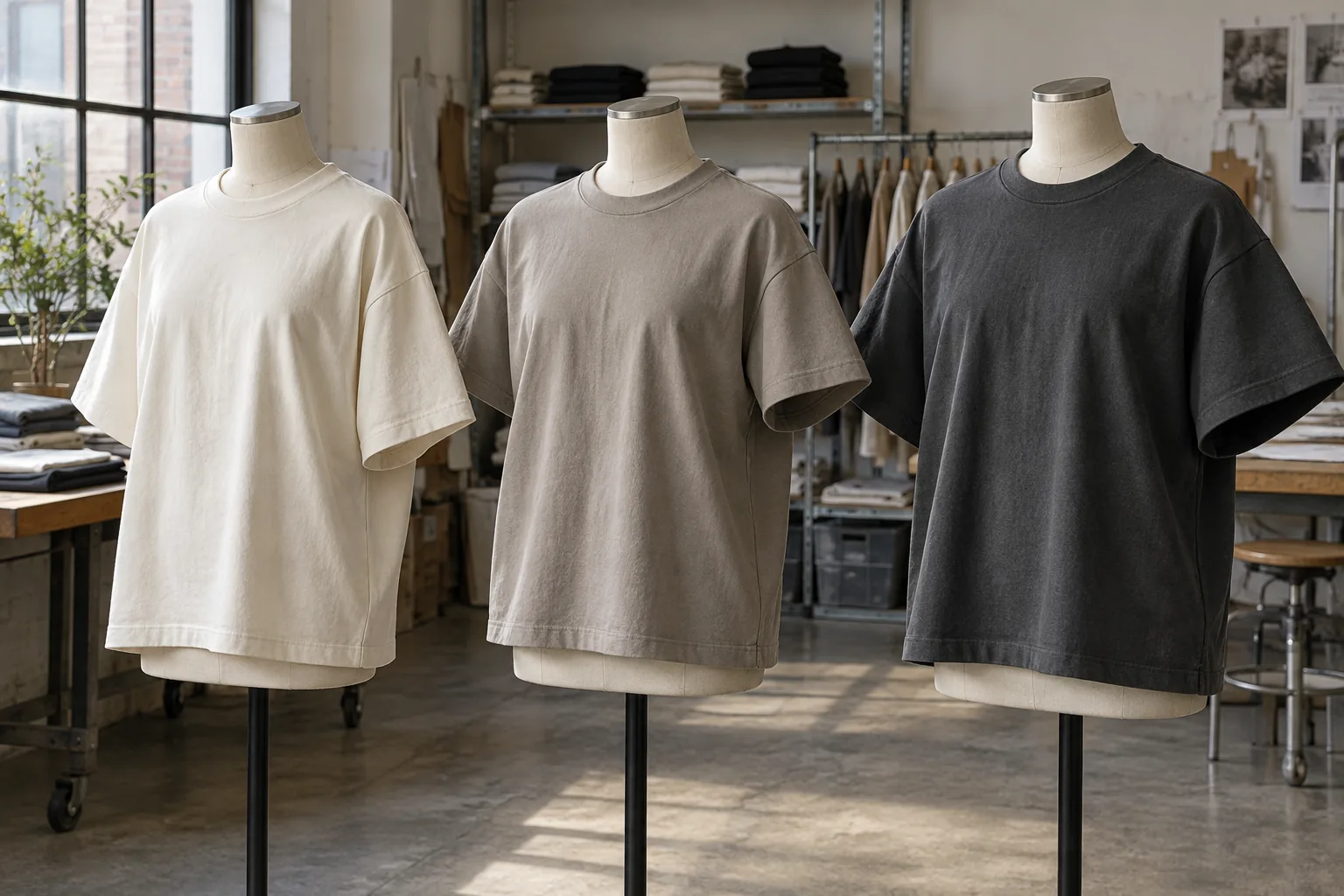
Boxy T-Shirt Fit Explained for Streetwear Brands: Measurements and Balance
Understand boxy T-shirt fit for streetwear brands through shoulder width, body length, fabric weight, and the balance that makes a tee feel intentionally boxy.

A wide chest and a shortened body do not automatically produce a convincing boxy T-shirt fit. The same pattern can look crisp in one jersey and collapse around the torso in another. Before approving measurements for a streetwear launch, decide how much structure the fabric should contribute.
GSM, or grams per square metre, measures fabric mass rather than thickness or stiffness. It is a useful sourcing filter, but it cannot predict the finished silhouette alone. This guide helps buyers choose a weight direction, compare samples fairly, and connect fabric approval to the measurements that keep a tee balanced.
Choose the wearing situation before the weight number
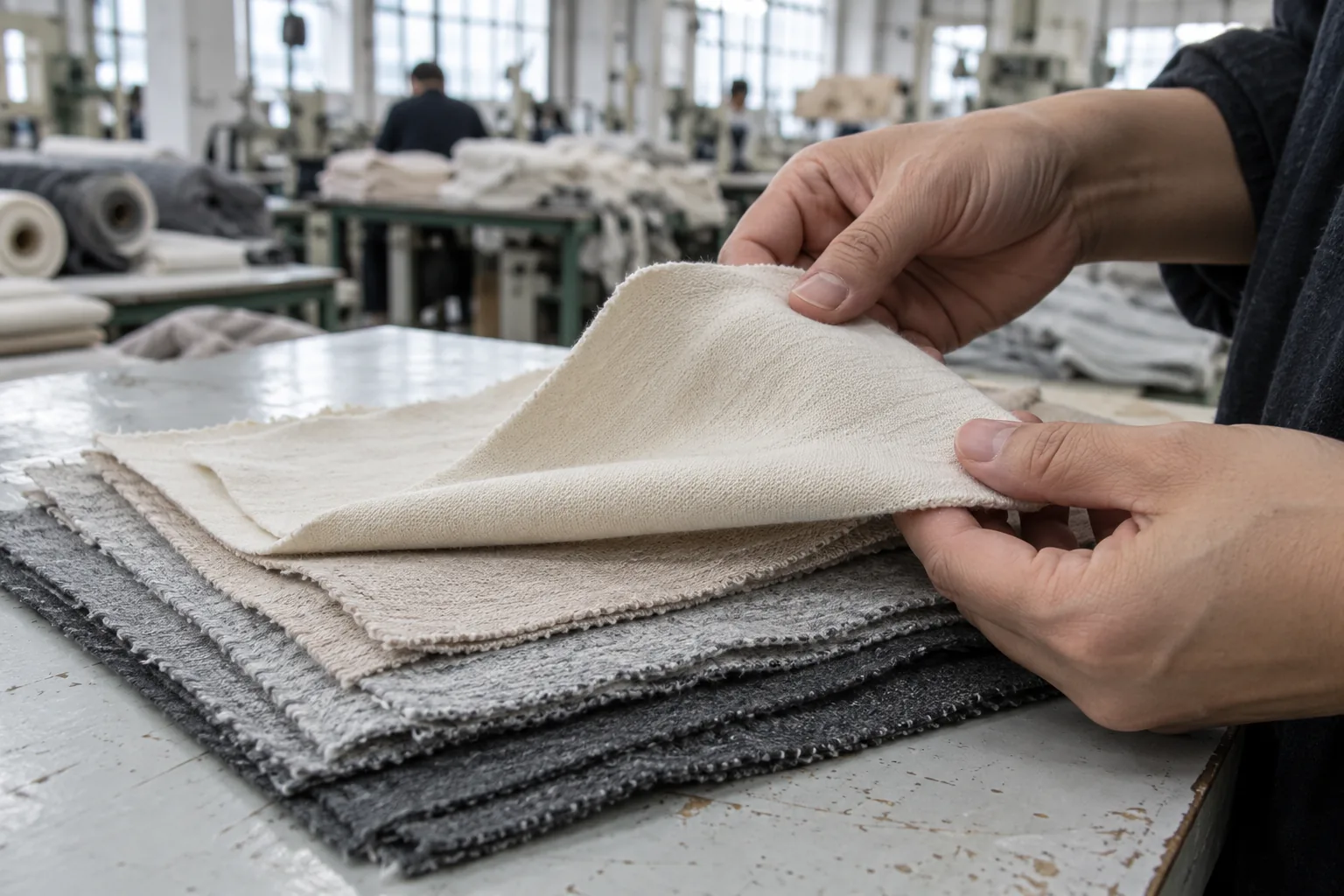
Start with the intended use: a breathable summer graphic tee, an everyday standalone basic, or a structured statement piece. Each can have a square outline, but the amount of fabric needed to support that outline differs. A buyer developing a warm-weather capsule may accept softer side folds to avoid an unnecessarily dense garment.
The following bands are indicative sourcing references, not universal definitions. Confirm fabric availability, composition, finishing, and the agreed finished GSM per project. Overlapping weights can behave differently because yarn, knit density, and finishing also affect the result.
| Indicative jersey weight | Possible product direction | First sample question |
|---|---|---|
| 160–190 GSM | Airier summer tee | Does the shoulder retain enough shape? |
| 200–240 GSM | Everyday streetwear basic | Do width and length remain balanced in motion? |
| 250–300 GSM | Substantial standalone tee | Does the sleeve feel bulky or restrict layering? |
Do not make the heaviest option the default premium choice. Extra mass can improve the presence of a garment while making its hem, collar, or underarm area feel cumbersome. The right weight supports the intended wearing experience.
Separate fabric mass from the way jersey bends
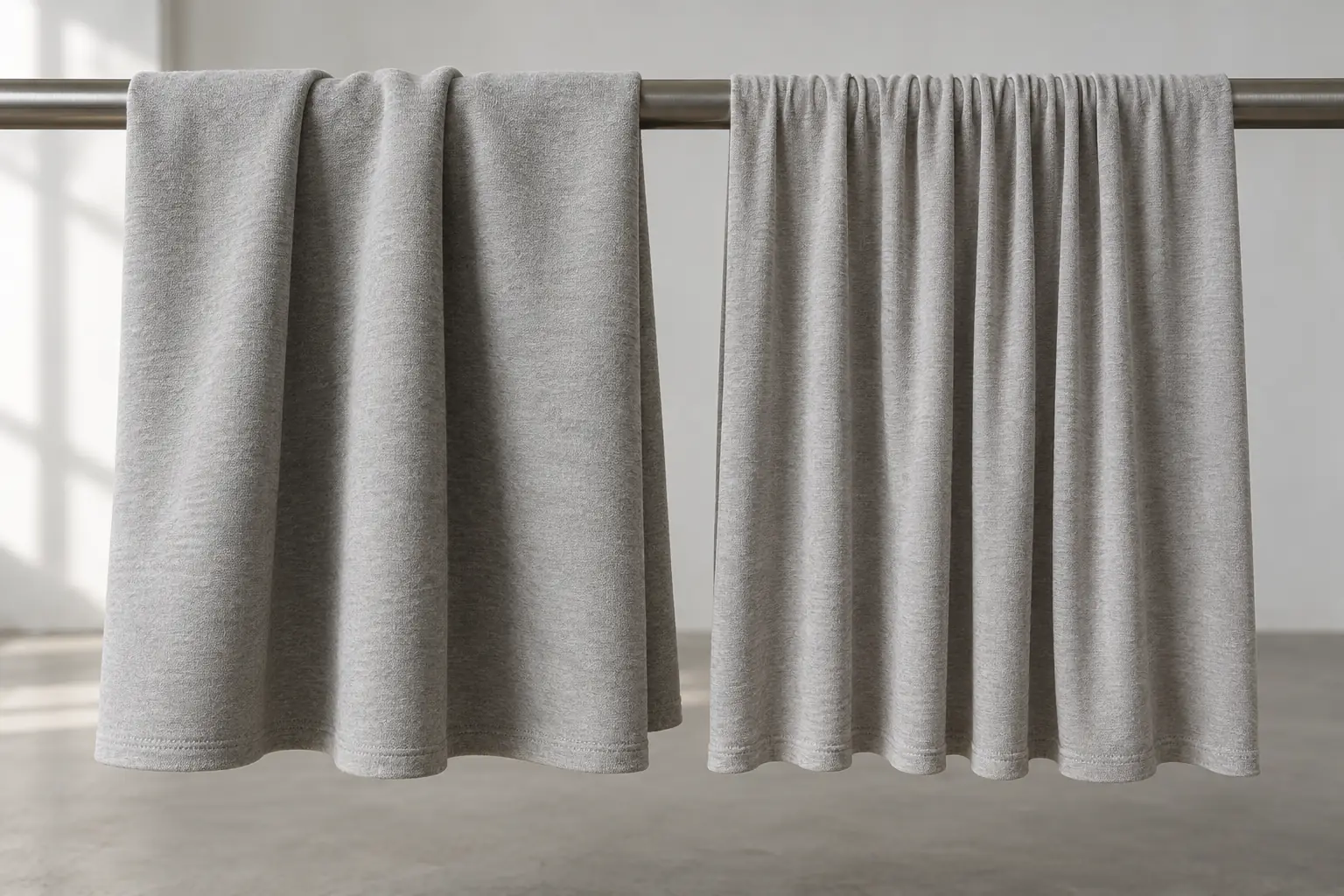
Request swatches large enough to fold, hang, and handle. Compare candidates with the same fibre composition where possible, and record the finish on each. A compact jersey and a softened jersey of similar weight may spread differently across the shoulder and fall differently below the chest.
Hang equal-sized panels over the same edge and observe the folds. Then scrunch and release them to compare recovery. These are screening exercises, not substitutes for garment samples. They help eliminate a fabric that plainly contradicts the desired outline before a pattern is adjusted around it.
Ask whether the quoted GSM refers to fabric before or after its intended finishing. A wash or softening treatment can change both dimensions and handle. Keep an approved physical swatch alongside the written specification; a number alone leaves too much room for interpretation.
Read width, length, and sleeve shape through the selected fabric
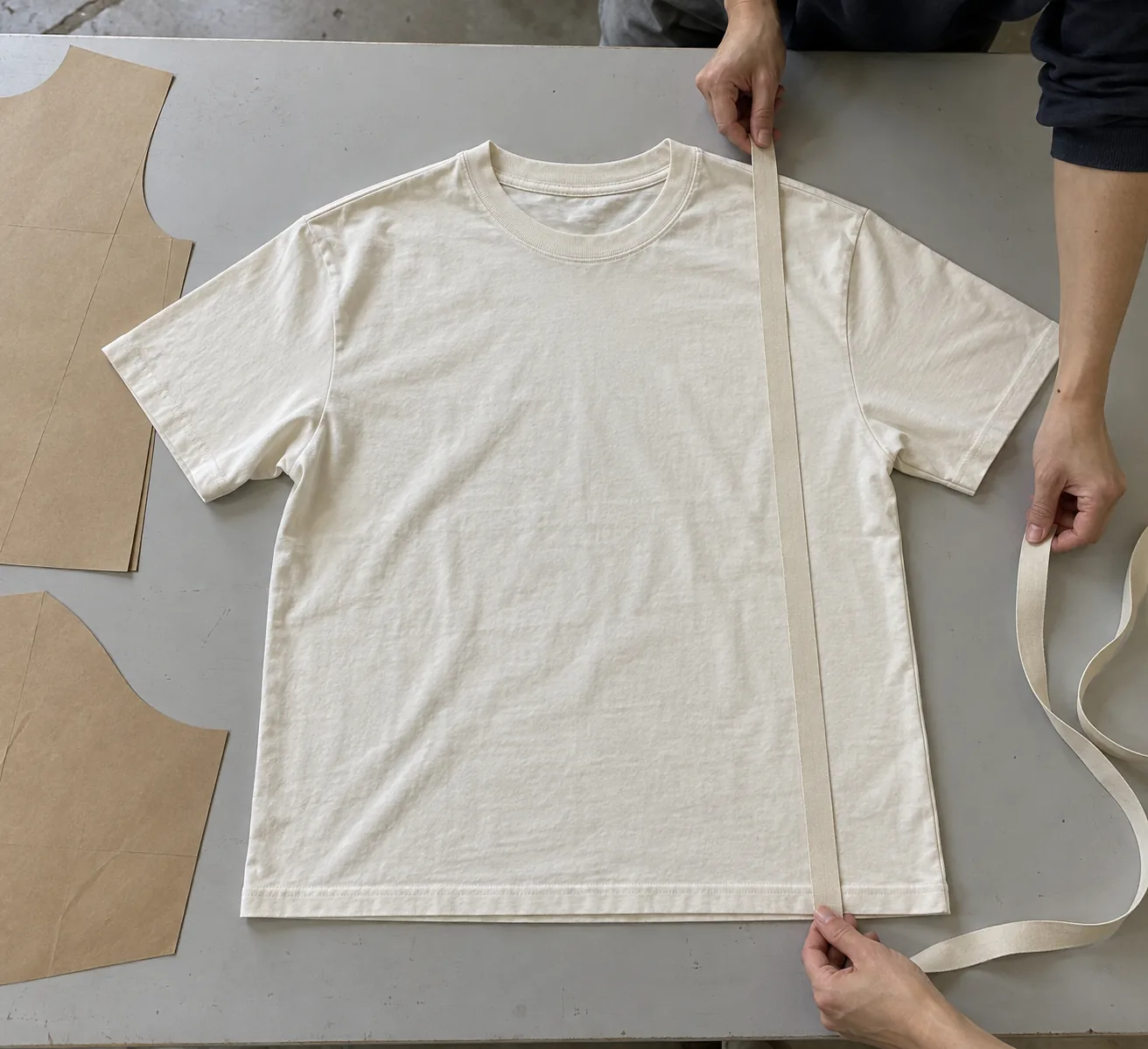
For boxy T-shirt fit, establish clear measurement methods for half chest, body length from high shoulder point, shoulder width, sleeve length, and sleeve opening. Specify whether measurements are taken before or after the agreed care treatment. Otherwise, two people can report different results from the same garment.
A denser jersey may hold a broad sleeve away from the arm. Copying that sleeve opening into a lighter, softer material can create a drooping fold instead. Similarly, a wide body in a fluid jersey may hang closer to the wearer and appear longer, even when its flat measurements match a more structured sample.
Assess the neck opening and rib with the body fabric too. A substantial jersey does not automatically need a very thick collar. Check whether the collar lies flat and whether the neckline pulls the shoulder inward. Judge the full outline from front, side, and back, with the wearer standing naturally.
Use a controlled sample comparison to lock the weight
When two fabrics remain plausible, sample the same base pattern in both before changing several dimensions. Keep the intended finish and decoration comparable. This isolates the fabric decision and prevents a wider chest on one sample from being mistaken for better fabric structure.
For example, an everyday tee might be compared in 210 GSM and 260 GSM jerseys. These are illustrative options, not prescribed specifications. Record sleeve projection, hem behaviour when sitting, shoulder folds, and comfort under a jacket. If the heavier version looks strong but feels restrictive, review the armhole and sleeve balance before adding body width.
Once the fabric direction is chosen, revise the pattern and approve a sample in the intended material and finish. Include the planned print or embroidery where it affects drape. A large decorated chest area can behave differently from an undecorated panel.
StitchQuote offers sampling, fabric and trim sourcing, cut-and-sew, private label, and branding through woven labels, prints, and embroidery. A 7-day sample is available for standard styles with confirmed specs and available materials; complex styles, custom washes, and custom-developed fabric take longer.
Check that bulk fabric preserves the approved outline
Before bulk approval, agree on measurable tolerances and a checking method. GSM tolerance and garment measurement tolerance are separate controls: passing one does not establish that the other is correct. StitchQuote includes QC before packing; the project specification should identify the checks needed for this silhouette.
- Fabric identity: Match composition, finish, shade, and handle against the approved reference.
- Weight verification: Agree how finished fabric GSM will be measured and how variation will be assessed.
- Proportion checks: Measure chest, body length, shoulders, and sleeve openings using the documented methods.
- Care response: Compare dimensions and appearance before and after the agreed wash and drying procedure; check twisting and uneven hems.
- Construction balance: Inspect collar recovery, shoulder seams, and hem waviness, then review the garment on a wearer.
Keep sample comments specific. “Sleeve stands too far from the arm” gives the pattern and fabric teams a clearer problem to solve than “make it less heavy.” Record the accepted correction in the approval documents.
Questions buyers ask before approving GSM
Can a lightweight jersey still look square?
Yes. Compact construction and controlled proportions can support a square outline at a lower weight. Expect a softer silhouette where the fabric lacks bending resistance, and verify it on a garment.
Should every size use a different fabric weight?
Usually the starting point is one approved fabric across the size range. Check grading on representative sizes because added width changes how the fabric hangs. Correct grading issues before considering separate materials.
Does a higher GSM prevent shrinkage?
No. Weight does not guarantee dimensional stability. Fibre, knitting, finishing, and care conditions all matter. Test the intended fabric and finish rather than assuming a heavier tee will keep its measurements.
Can two GSM options share one minimum order?
Confirm this before ordering. StitchQuote’s MOQ for most categories starts from 50 pieces per style, but that does not establish how a split across different fabrics will be counted. Ask for the proposed material allocation to be reviewed.
Turn the fit brief into repeatable measurement checks
Draw each measurement line on a flat garment diagram. For half chest, a buyer might specify a straight line 2.5 cm below the armhole, with the tee laid flat and the jersey relaxed rather than stretched. Define body length from the high shoulder point beside the neck seam to the bottom hem, and state whether the hem is included. Measure shoulder width between the shoulder seam intersections, sleeve length from the shoulder seam to the sleeve edge, and sleeve opening straight across the flattened opening. A dropped shoulder makes the sleeve starting point especially important.
Set tolerances by measurement point rather than applying one allowance everywhere. As an illustrative discussion starting point, a buyer could propose ±1 cm for half chest and body length, and ±0.5 cm for sleeve opening. These are proposed project limits, not StitchQuote defaults; confirm whether they suit the construction and fabric before approval. A collar or neckline may need a separate method and tighter control because a small dimensional change can noticeably alter its appearance.
Record wash results numerically. If a sample measures 60 cm in body length before washing and 58.8 cm after the specified wash and drying cycle, length shrinkage is (60 − 58.8) ÷ 60 × 100 = 2%. Calculate width change separately, and record the number of cycles. Do not enlarge the whole pattern by that percentage without checking each direction: jersey can change differently along its length and width. Let garments dry fully and relax under consistent conditions before comparison.
Build an order brief that exposes the main cost drivers
Consider an illustrative order of 100 tees in one style, one approved jersey, and one colour, allocated as 20 small, 30 medium, 30 large, and 20 extra large. List that size breakdown alongside the finished measurement chart, label positions, artwork dimensions, and packing instructions. StitchQuote’s MOQ starts from 50 pieces per style for most categories, with denim starting from 100; confirm fabric and colour requirements for the actual allocation rather than treating the style minimum as a guarantee for every variation.
Ask for fabric, decoration, trims, and finishing assumptions to be identified in the quotation. At equal usable area, 260 GSM fabric has approximately 24% more mass than 210 GSM fabric, but that does not translate directly into a 24% garment price increase. Usable fabric width, cutting layout, size mix, shrinkage allowance, and fabric price basis also affect consumption and cost. Print coverage, embroidery stitch count, extra labels, and additional wash treatments can introduce separate operations.
Before releasing the order, reconcile the approved sample with the final specification revision. Identify which physical sample controls fit, which swatch controls shade and handle, and which artwork file controls branding. Agree how measurements and visible defects will be recorded across sizes during QC, and how any failures will be corrected and rechecked before packing. This makes approval traceable when a bulk garment differs from the reference.
Prepare the fabric decision for a production enquiry
Send the selected weight direction, fabric reference, measurement methods, intended care treatment, decoration details, and sample observations together. This gives the manufacturer a clear basis for reviewing feasibility and identifying what still needs approval.
- Prepare an apparel tech pack
- Review sampling and minimum orders
- Explore custom T-shirt manufacturing
- Discuss your fabric and fit brief with StitchQuote
Request a manufacturing quote
Share your product type, quantity range, and destination. We usually reply within one business day.