Custom Streetwear, Casualwear & Denim Manufacturer•MOQ 50 pcs•Denim MOQ 100 pcs•7-Day Sample Available
How to Design Matching Sets for Streetwear
Design matching sets for streetwear with stronger proportion, fabric consistency, and commercial clarity so tops and bottoms feel like one real program.

A matching outfit can look resolved in a sketch while remaining unclear on a purchase order. Does an order for 50 mean 50 garments or 50 complete outfits? Can customers choose different sizes for the top and bottom? Those decisions determine how many pieces you need to develop, produce and hold in stock.
To design matching sets for streetwear, start with the unit you intend to sell. Then build the silhouette, color assortment and component quantities around that unit. This approach is especially useful for a first collection: it connects the creative direction to a realistic order instead of leaving the minimum order quantity discussion until after sampling.
Define what counts as one set before requesting a quote
A two-piece outfit is one retail concept, but its top and bottom are separate garments with different patterns, construction steps and size distributions. Do not assume that a supplier’s per-style minimum automatically applies to the complete outfit. Ask whether each component is treated as a separate style and how quantities are counted.
StitchQuote’s MOQ for most categories starts from 50 pcs per style; denim starts from 100 pcs per style. These are starting points, not a blanket promise of 50 complete sets across any combination of colors and sizes. Confirm the applicable minimum for each component and any material or color constraints for the proposed project.
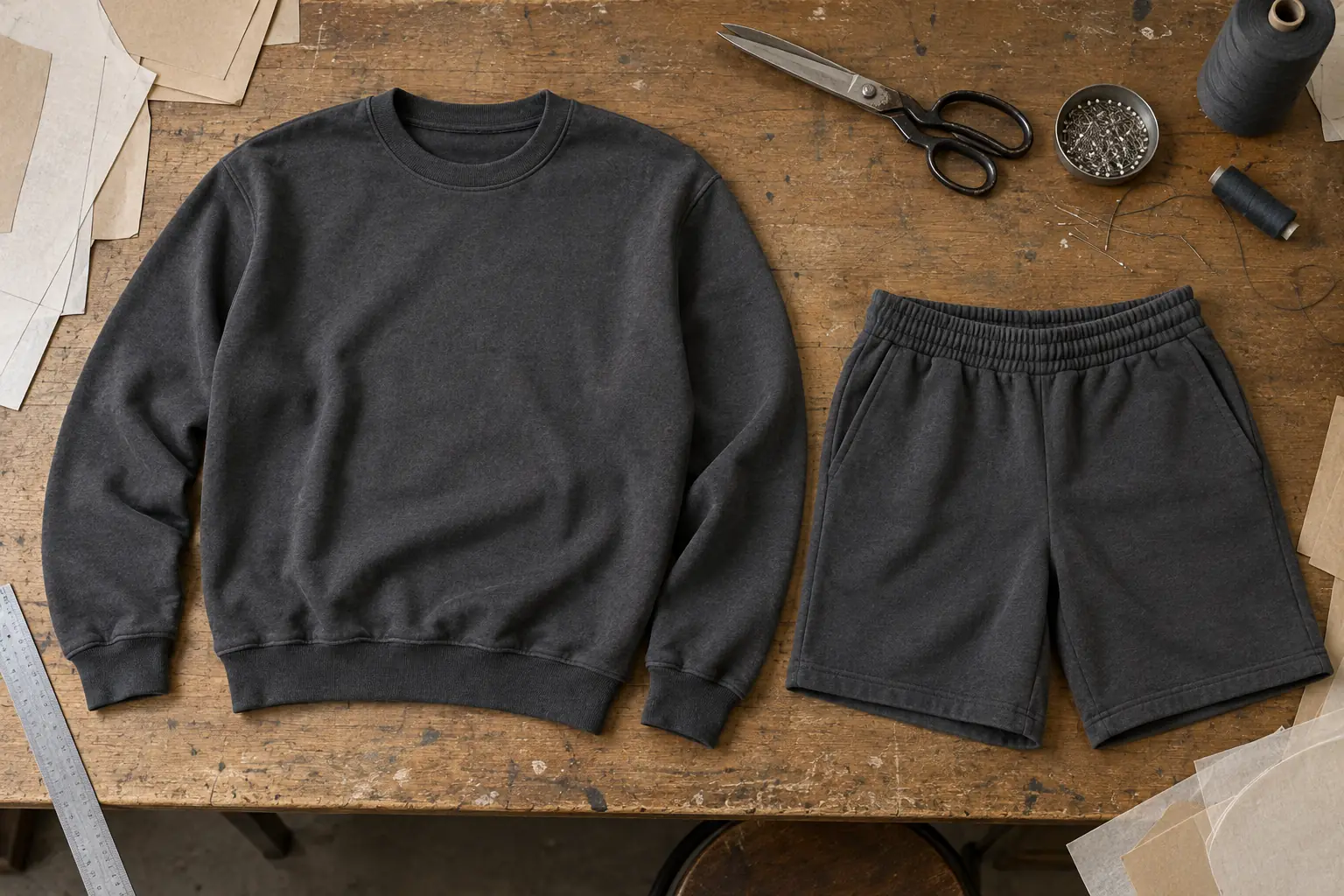
For example, 50 pullovers plus 50 shorts equals 100 garments and potentially 50 complete outfits. That only works if the accepted size combinations and available quantities align. State both garment totals and intended outfit totals in the inquiry so the quote has an unambiguous basis.
Choose a selling model that your size allocation can support
Fixed-size bundles simplify the offer: a medium top ships with a medium bottom. Mix-and-match sizing serves customers whose proportions differ, but it requires independent component inventory. Selling separates offers another route, although popular tops may sell out before their coordinating bottoms.
| Selling model | Quantity decision | Main exposure |
|---|---|---|
| Fixed-size bundle | Match top and bottom counts within each bundle size | Customers may need different sizes |
| Customer-selected sizes | Plan separate size curves for each component | Some combinations can become unavailable |
| Separates with outfit styling | Forecast demand for each garment independently | Uneven sell-through can break the outfit offer |
Equal totals alone do not guarantee complete bundles. If an illustrative order contains 12 small tops but only eight small bottoms, only eight small/small outfits are available. Build a component-level quantity sheet before approving the order, using your own customer evidence rather than assuming one universal size curve.
Spend the opening quantity on a coherent assortment
Every additional color creates another allocation decision. A collection with two top shapes, two bottom shapes and three colors may offer appealing combinations, but it also spreads demand across more stock positions. Ask which variations affect the supplier’s style count or material minimum; do not assume shared styling allows quantities to be pooled.
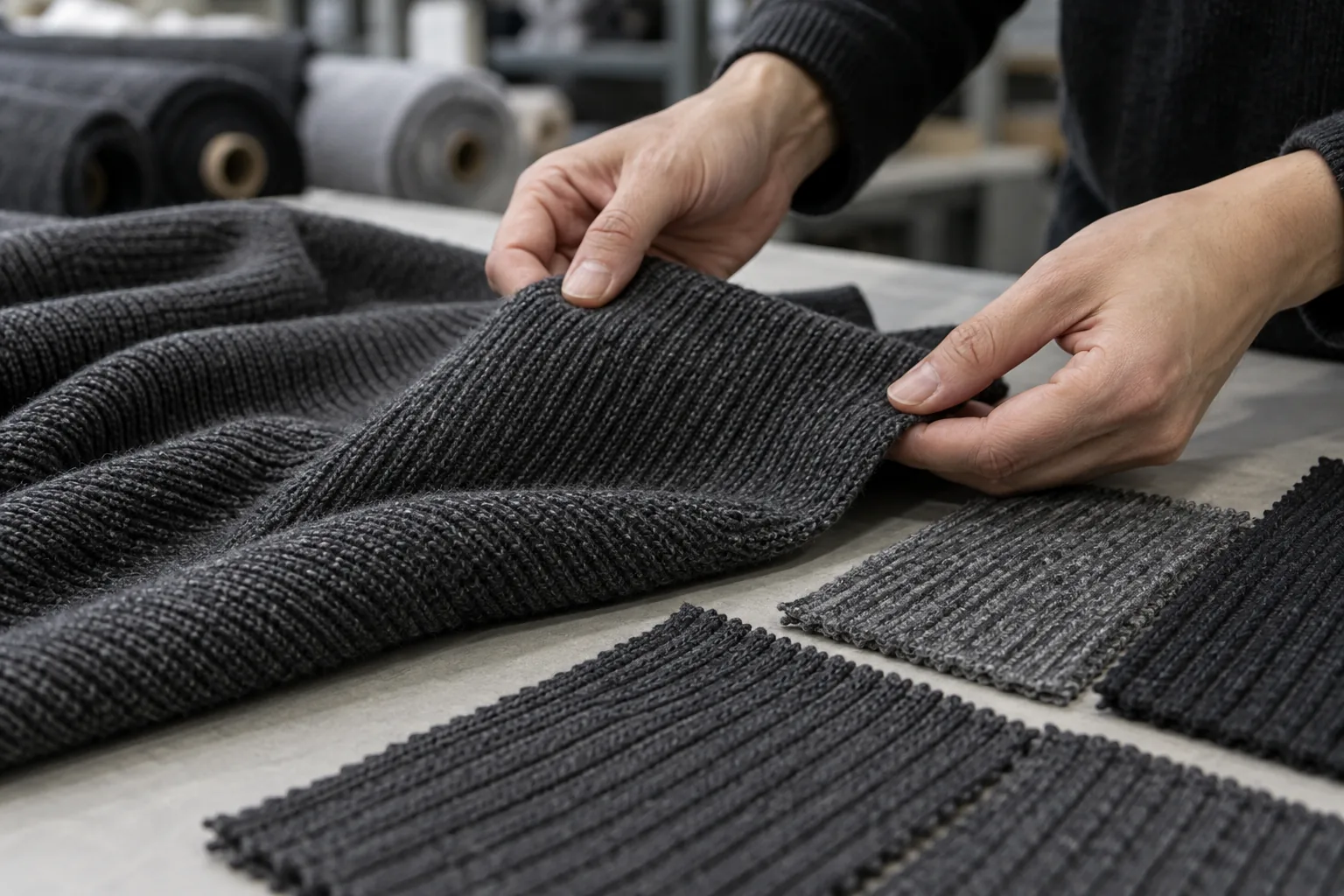
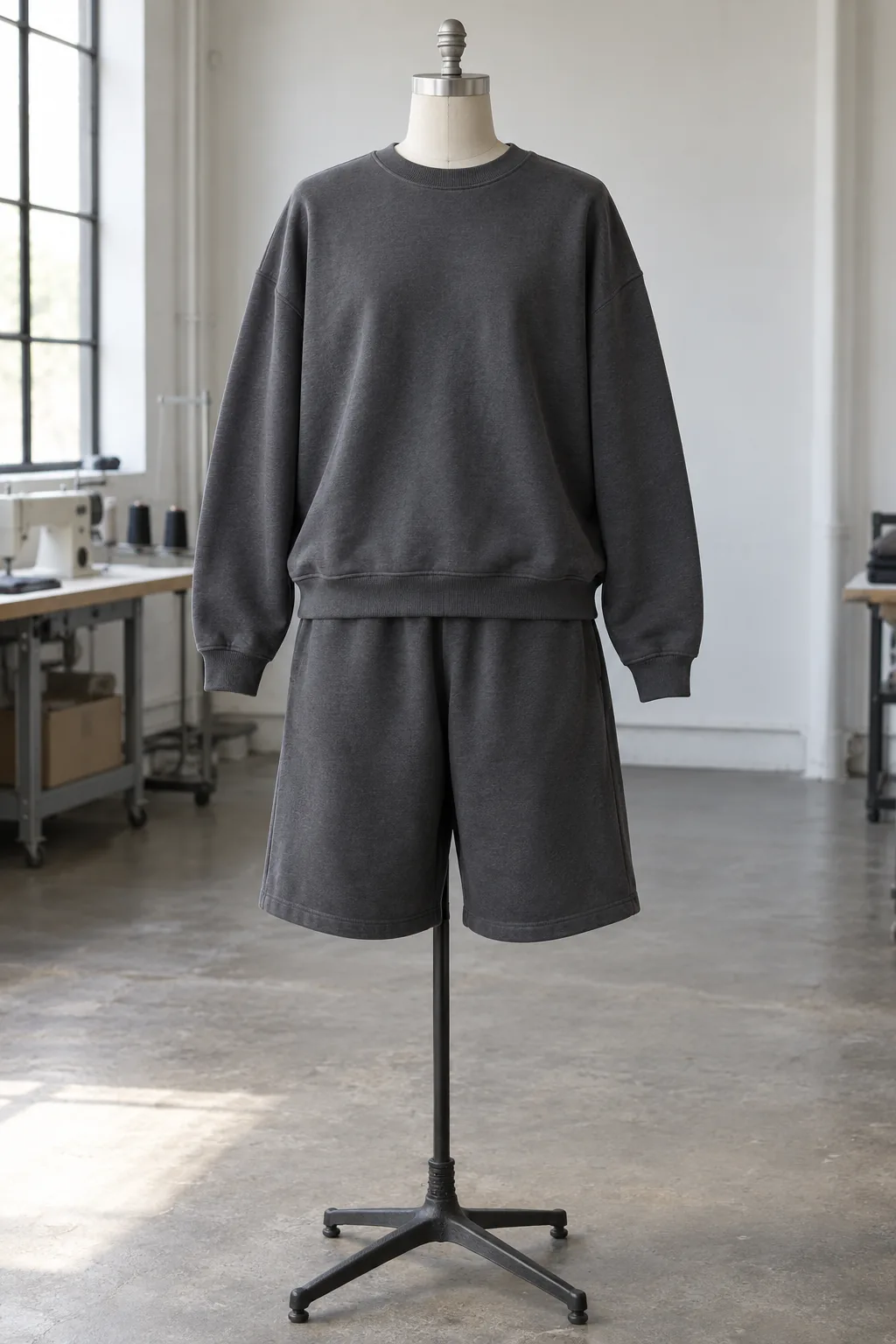
For an opening release, consider one anchor outfit, such as a boxy crewneck with relaxed knee-length shorts in one color. Give it a recognizable proportion through sleeve volume, hem position and leg width. A second color should earn its place through expected demand, rather than simply filling out a campaign image.
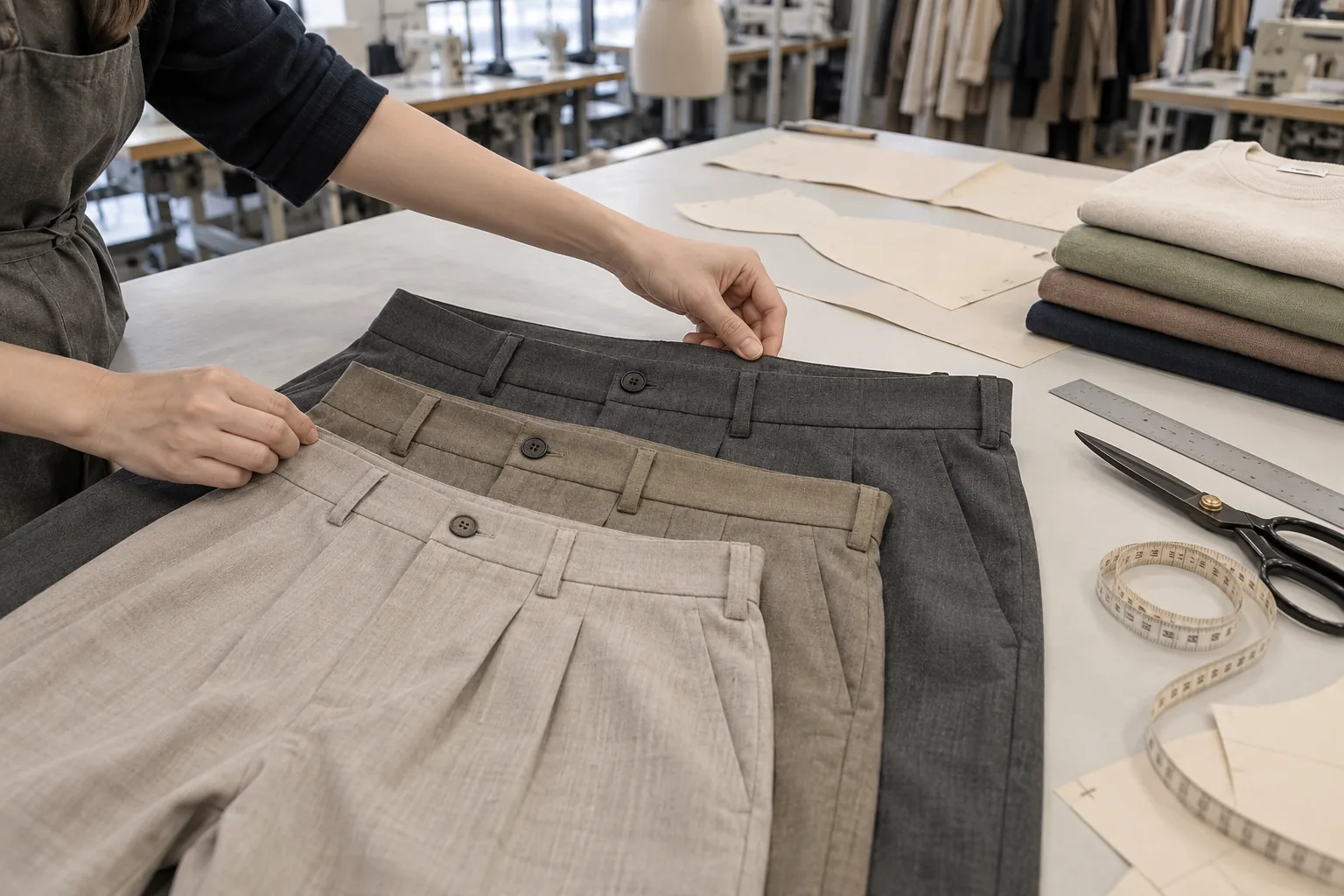
Shared fabric can help align appearance, but it does not erase separate garment minimums. Rib, pocketing, drawcords and decoration may also introduce sourcing constraints. If you combine a denim overshirt with jeans, account for the denim starting MOQ and confirm each component’s requirements before treating it as a small test capsule.
Sample the paired silhouette without losing component detail
Prepare separate specifications for the top and bottom, plus a shared outfit reference. The shared reference should explain the relationship: where the top hem sits against the waistband, how the sleeve volume balances the leg, and whether the outfit is intended to look compact or oversized. Each garment still needs its own measurements, tolerances, construction and branding positions.
A cropped zip jacket paired with wide-leg trousers illustrates the difference. The jacket can meet its individual length specification yet reveal more waistband than intended when the wearer reaches forward. Photograph the sample pair standing, seated and moving; record revisions against the relevant component rather than issuing a vague request to improve the fit.
StitchQuote provides cut-and-sew, private label, sampling, fabric and trim sourcing, and branding through woven labels, prints and embroidery. A 7-day sample is available for standard styles with confirmed specifications and available materials. Complex styles, custom washes and custom-developed fabric take longer. Confirm whether the proposed sample schedule covers both garments and their intended finishes.
Approve quality as an outfit and as two garments
A component can pass an individual inspection and still look wrong beside its partner. Establish a paired approval reference and document acceptable differences before production. StitchQuote provides QC before packing; agree on the project checks and packing method so outfit-level concerns are visible during that stage.
- Color relationship: compare top and bottom side by side under the same agreed lighting, including rib, thread and exposed pocketing.
- After-care appearance: assess samples after the specified care procedure for different shrinkage, twisting or changes in surface texture.
- Decoration balance: check artwork scale and placement on both pieces while worn together, especially where motifs sit near the waist.
- Fit compatibility: verify the intended top-and-bottom size combinations and the agreed measurement tolerances.
- Order completeness: reconcile component counts, sizes and colors against the allocation sheet before accepting the packed assortment.
Specify whether garments should be packed as fixed pairs or individually for later combination. Fixed bundles need accurate pairing; individually packed pieces need reliable identification and a clear reconciliation method. A shortage in either component limits the number of complete outfits you can fulfill.
Turn the silhouette into measurable approval points
For the top, specify half-chest width measured flat at a stated distance below the armhole, body length from the high shoulder point, shoulder width, sleeve length and hem opening. For the bottom, record relaxed and extended waistband widths, front and back rise, inseam, thigh width and leg opening. Include a measurement diagram: a sleeve measured from the shoulder seam cannot be compared directly with one measured from the center back neck.
Write tolerances beside individual measurements rather than giving the entire outfit one allowance. As an illustrative starting proposal for discussion, a buyer might request ±1 cm on body length and half-chest width, with ±0.5 cm on a small pocket or branding position. These are proposed acceptance limits, not StitchQuote standards; confirm what is achievable for the fabric and construction. A 1 cm difference in a flat half-chest measurement represents approximately 2 cm around the garment, so check how the permitted variation affects the intended fit.
Measure samples flat without stretching, using the same fastening position and method each time. Record dimensions before and after the agreed wash and drying procedure. Calculate shrinkage as the original measurement minus the after-wash measurement, divided by the original measurement, multiplied by 100. If a 60 cm top becomes 58.2 cm long, its length shrinkage is 3%. Compare that change with the bottom’s rise and waistband position before approving the paired proportions.
Specify fabric performance and isolate the cost drivers
Fabric weight alone will not define the outfit. An illustrative fleece brief could request 320 GSM fabric, but it should also state fiber composition, knit structure, brushed or loopback interior, stretch behavior and intended finish. Two fabrics with the same GSM can differ in thickness, drape and recovery. Ask for the actual proposed material and agree on an acceptable weight range before sampling; do not treat an example weight as a stocked StitchQuote option.
Check the same fabric in both applications. A material that holds a boxy sweatshirt shape may feel bulky at a shorts waistband where elastic, seam allowances and pocket bags overlap. Review pocket show-through, waistband recovery after stretching, and whether the shorts seat becomes baggy after wear. If different weights are chosen for comfort, approve the top and bottom together because surface texture can change how the same color appears.
Request a quote breakdown that distinguishes the two garments and identifies fabric, trims, decoration, finishing and packing assumptions. Wider legs and larger sizes affect fabric consumption; additional pockets add cutting and sewing operations; embroidery coverage and print locations change decoration work. Shared fabric may simplify sourcing, while custom rib colors or special drawcord ends can add separate material requirements. Compare revisions against the same quantity and size allocation so a cheaper quote does not conceal a changed specification.
Questions to settle before committing the set order
Can 25 tops and 25 bottoms meet a 50-piece minimum?
Do not assume so. StitchQuote’s stated starting minimum is per style for most categories, and the components may be separate styles. Submit the breakdown and obtain confirmation of the required quantity for each garment.
Should we order extra bottoms for mix-and-match sizing?
Only where demand evidence supports it. Different component size curves may justify unequal quantities, but surplus bottoms tie up stock. Model expected combinations and identify which component would run out first before adding units.
Can a replacement production run match the original outfit?
An exact visual match should not be assumed across production runs. Retain approved references and ask how new fabric or wash results will be compared. Consider whether customers will wear replenished pieces with garments from the earlier run.
What should the first inquiry contain?
Include the selling model, component sketches, proposed fabrics, colors, size quantities and intended number of complete outfits. Ask for component-level MOQ confirmation and sample timing before finalizing the launch assortment.
Related reading and project support:
- Prepare the specifications for each garment
- Review sampling and MOQ planning
- Discuss your set quantities with StitchQuote
Request a manufacturing quote
Share your product type, quantity range, and destination. We usually reply within one business day.