Custom Streetwear, Casualwear & Denim Manufacturer•MOQ 50 pcs•Denim MOQ 100 pcs•7-Day Sample Available

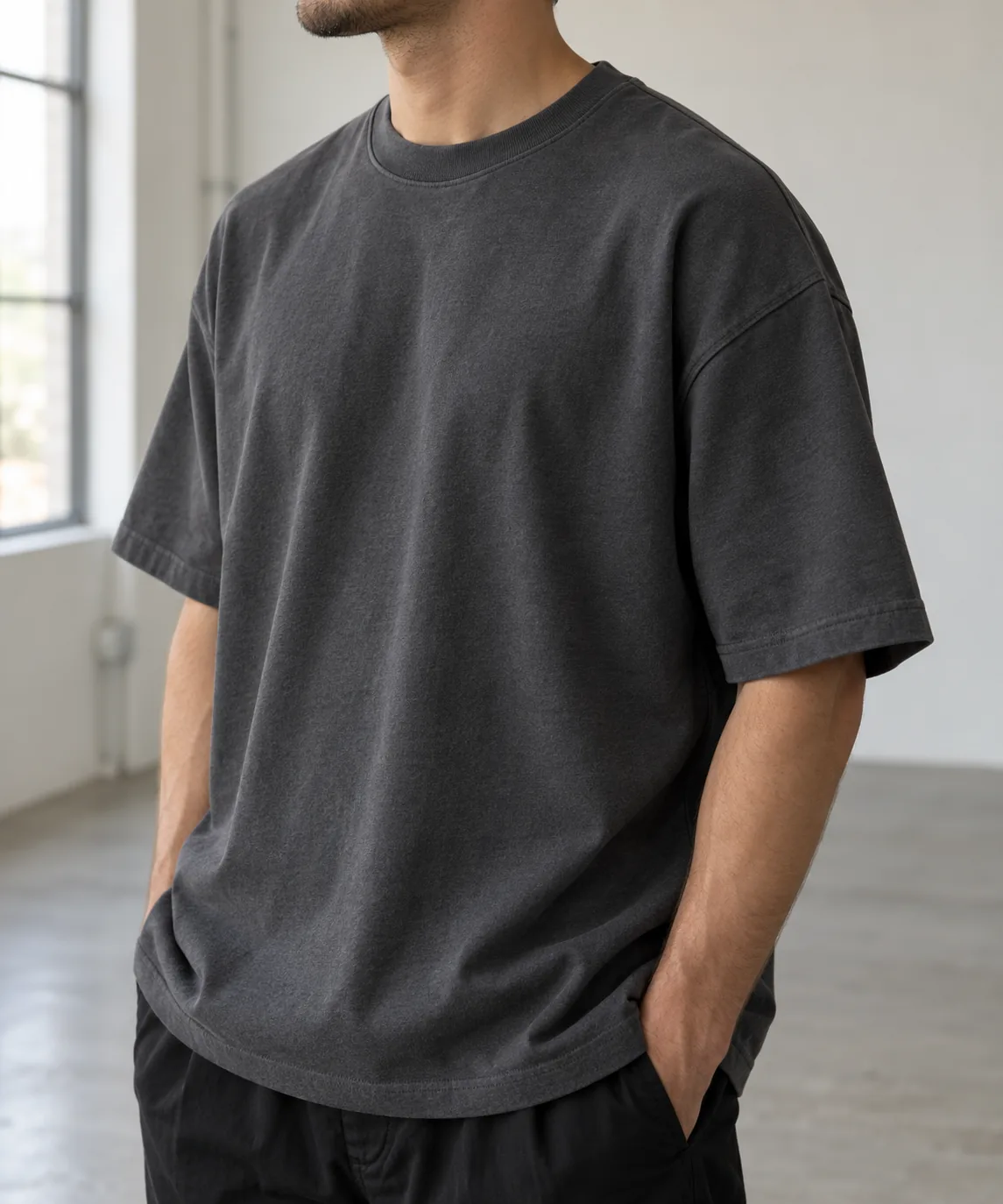
How Heavy Should a Streetwear T-Shirt Be
Decide how heavy a streetwear T-shirt should be by balancing hand feel, drape, silhouette, and price instead of chasing GSM for its own sake. for clearer production.

A streetwear tee can feel substantial in your hand yet sit awkwardly on the wearer. Before selecting the heaviest jersey on the swatch card, look at the line running from the neck to the sleeve. Shoulder slope determines how that fabric rests across the upper body, and fabric weight changes how clearly a mismatch shows.
For buyers choosing between sample fabrics, the useful question is which weight supports the intended shoulder shape. Treat GSM, the grams per square metre of fabric, as one input in a fit decision. Approve it alongside the shoulder pattern, fabric recovery and washed appearance.
Define the shoulder line before choosing a weight
Shoulder slope is the downward inclination from the neck-side shoulder point toward the armhole. It is separate from shoulder width: moving the sleeve seam outward creates a dropped shoulder, but does not specify how that extended area should angle or fall.
Start with a front and back reference showing the intended outline. A square, architectural tee needs a different balance of pattern and fabric body from a relaxed tee that follows the wearer’s shoulders. Identify whether the outer shoulder should project slightly, round softly or collapse into the sleeve.
Also define the intended customer’s fit range. A sample fitted only on a hanger cannot show whether the neckline lifts or fabric pools near the armhole on a person. Record the fit model’s relevant measurements and use the same model when comparing versions.
Build a fabric shortlist around shoulder behaviour
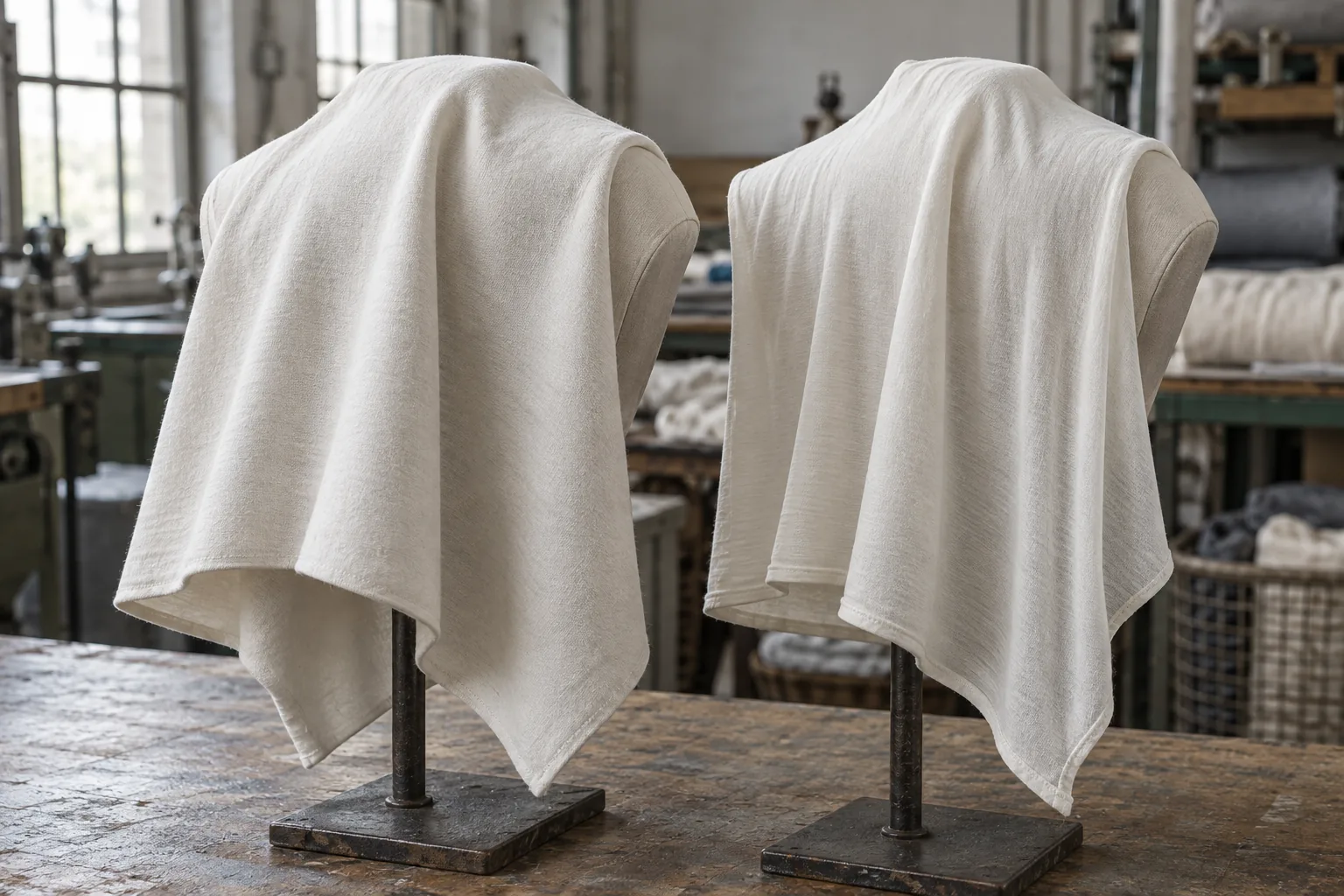
Weight does not measure stiffness. Yarn, knit construction, finishing and fibre composition can make two jerseys at the same GSM hang differently. A heavier, soft jersey may bend over a sloping shoulder readily; a firmer, lighter jersey may hold a more angular outline.
The following ranges are indicative sampling starting points, not StitchQuote specifications or universal quality grades. Confirm fabric availability and suitability per project, and assess the actual finished fabric rather than an unfinished swatch.
| Indicative jersey weight | Shoulder effect to investigate | Useful sample question |
|---|---|---|
| 180–220 GSM | May follow the body closely with limited projection | Does the intended shoulder line remain visible? |
| 220–260 GSM | Can balance drape and a defined outline | Does the extended shoulder fall smoothly into the sleeve? |
| 260–320 GSM | May add body or concentrate bulk at seams | Does the shoulder look deliberate without a rigid ridge? |
For a compact, boxy tee, shortlist one medium-weight jersey with a firm handle and one heavier option with softer drape. This comparison reveals more than simply ordering two progressively heavier versions of unrelated fabrics.
Use paired samples to isolate a slope problem
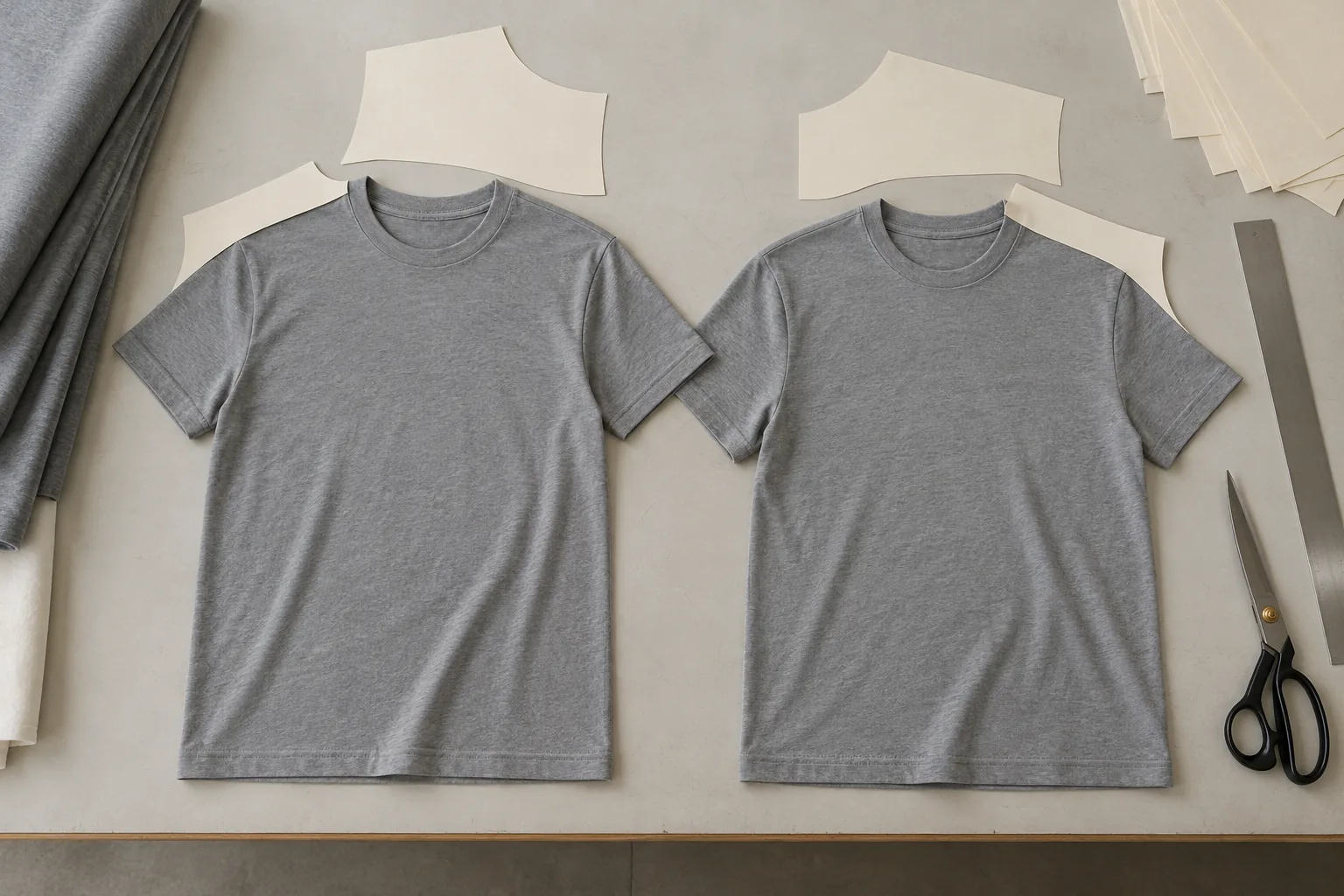
First compare two fabrics using the same pattern, seam construction and finishing route. Keep body width, sleeve shape and neckline constant. Photograph both tees from the front, back and side with the wearer standing naturally, arms relaxed.
Look for where the garment stops resting smoothly. Diagonal drag lines, a raised neckline or excess fabric near the outer shoulder can suggest a balance issue, but none proves that slope alone is wrong. Neck width, sleeve weight, armhole shape and sewing tension can produce overlapping symptoms.
After selecting a promising fabric, make the next comparison with only the proposed shoulder correction changed. Ask the pattern maker to explain any necessary armhole or sleeve adjustment. Do not approve a steeper slope, wider body and heavier fabric together without identifying which change solved the problem.
Check whether sewing is changing the approved line
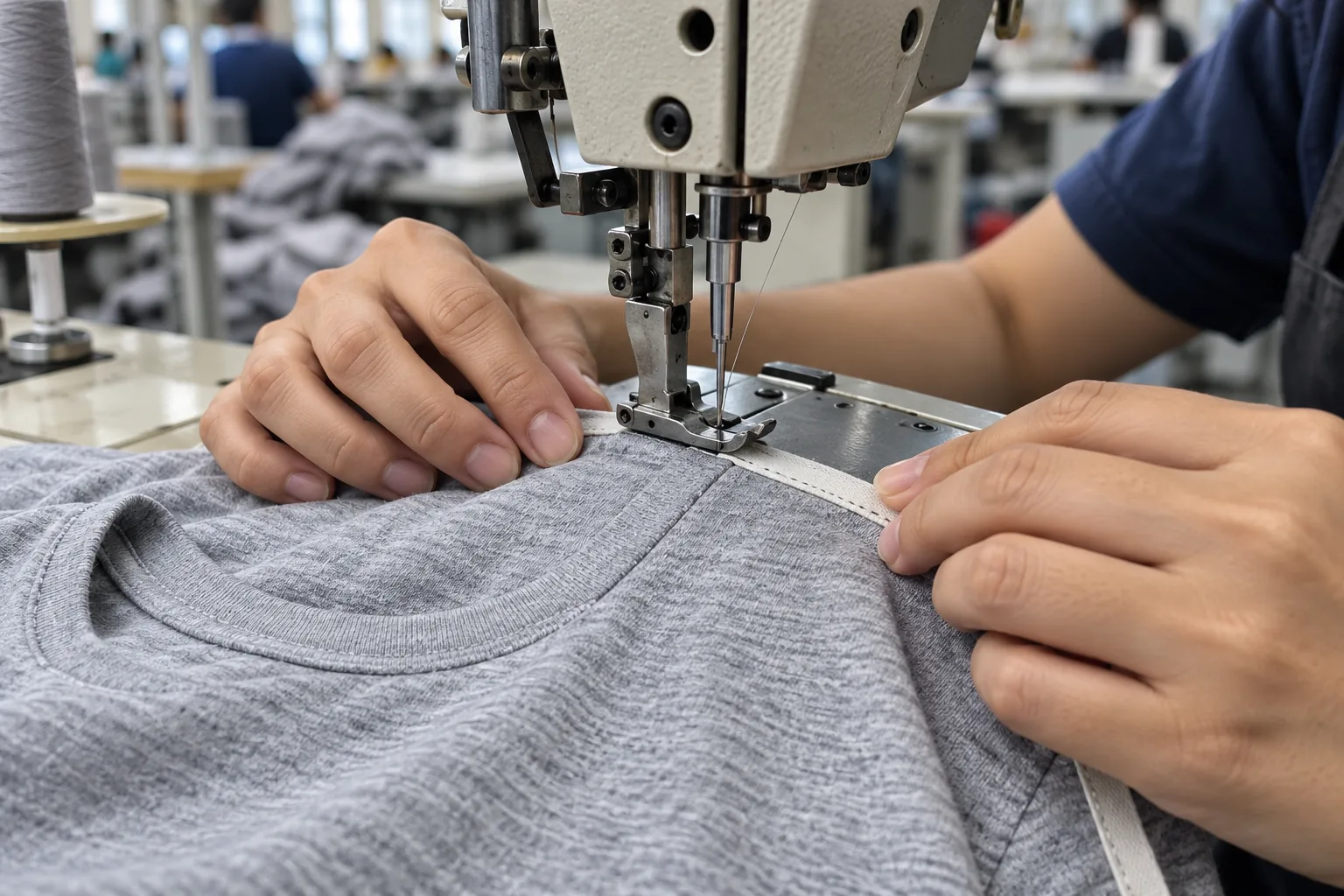
A satisfactory pattern can still produce an uneven shoulder if the seam stretches during assembly. Inspect the shoulder join for rippling, puckering and unequal front-to-back feeding. Check left and right sides against each other before requesting another pattern revision.
If shoulder reinforcement is used, specify its material, placement and application. A stabilizing tape may help control extension, but an unsuitable tape or application tension can create a firm ridge. Evaluate the actual seam in the selected jersey, especially where a dropped shoulder places it prominently on the upper arm.
Decoration also belongs in the sample. A large print near the upper chest or dense embroidery close to the shoulder can change local flexibility. Judge the decorated version before approving the final silhouette.
Make shoulder approval a measurable QC checkpoint
Use the approved sample as a visual reference and pair it with explicit measurement methods. Define the neck-side and outer shoulder endpoints, the garment’s laying position and whether a measurement follows the seam or a straight line. Agree tolerances per project; a vague instruction to keep the shoulders square is not inspectable.
- Pattern and dimensions: Record shoulder width and the agreed slope reference, together with neckline, armhole and sleeve measurements that influence the area.
- Symmetry: Compare shoulder joins, sleeve positions and the neckline on both sides without stretching the garment flat.
- Seam appearance: Check for puckering, extension, exposed reinforcement and uncomfortable bulk at intersections.
- Wash response: Recheck dimensions and on-body appearance after the agreed care cycle and conditioning procedure.
- Size coverage: Review representative smaller and larger sizes to confirm that grading preserves the intended shoulder shape.
If washing changes the silhouette, investigate dimensional change and seam behaviour before increasing GSM. More weight does not automatically prevent shrinkage or twisting.
Resolve these questions before releasing the style
Will heavier jersey make sloping shoulders look square?
It may add visual body, but it cannot reliably compensate for a mismatched pattern. Test the intended projection on the wearer; excessive stiffness can leave fabric standing away from the body.
Should a dropped shoulder use a horizontal seam?
Not automatically. The extended shoulder must transition from the wearer’s shoulder into the upper arm. Its angle depends on the desired silhouette, extension and sleeve geometry, so a flat drawing is insufficient for approval.
Can one slope specification cover every size?
A consistent design intent can cover the range, but the pattern needs suitable grading. Check size samples rather than assuming a single angle or vertical drop will behave identically across different widths.
What should accompany a shoulder-focused sample request?
Send the measurement sheet, fit references, fabric shortlist, decoration placement and care requirements. StitchQuote offers sampling, fabric and trim sourcing, cut-and-sew, private label, branding and QC before packing. MOQ for most categories starts from 50 pieces per style. A 7-day sample is available for standard styles with confirmed specifications and available materials; complex styles, custom washes and custom-developed fabrics take longer.
Turn the shoulder brief into a repeatable measurement sheet
Give each point of measurement a diagram and a code. For shoulder seam length, identify the neck seam intersection and the armhole seam intersection, then state whether the tape follows the seam curve. For across-shoulder width, show the two outer endpoints and measure straight across the back with the tee relaxed. These dimensions answer different questions and should occupy separate rows on the specification sheet.
Record slope on the pattern using the vertical drop from the neck-side shoulder point to the outer shoulder point against a defined horizontal reference. Keep this pattern reference separate from the finished-garment measurement: soft jersey can shift when laid flat, making a small vertical drop difficult to reproduce. Use a marked photograph or pattern diagram to prevent inspectors from choosing different baselines.
As an example for discussion, a buyer might propose a tolerance of plus or minus 0.5 cm for an individual shoulder seam and plus or minus 1 cm for across-shoulder width. These are illustrative starting values, not StitchQuote standards; agree achievable limits with the maker for the actual fabric and construction. Add a separate left-to-right symmetry criterion, because two seams could each pass their individual tolerance while looking visibly uneven together.
For wash evaluation, label the sample and record the same measurement points before washing and after the agreed drying and relaxation procedure. If a body length changes from 72 cm to 70 cm, the reduction is approximately 2.8 percent: divide the 2 cm loss by the original 72 cm. Calculate width change separately. Record the care cycle and photograph any shoulder ridging or side-seam rotation so dimensional results remain connected to appearance.
Plan a small tee order around approval and cost drivers
Consider a hypothetical order of 100 boxy tees in one style, split into 20 small, 40 medium, 30 large and 10 extra-large units. This is a planning example, not an agreed production offer. StitchQuote MOQ starts from 50 pieces per style, with denim starting from 100; confirm any fabric, colour and trim minimums separately before fixing the assortment. Splitting a small order across several colours may introduce material purchasing constraints even when the style quantity meets the garment minimum.
Begin with a confirmed measurement sheet and two available jersey candidates. Compare them on the same pattern, select the fabric, then resolve the shoulder correction before approving decoration and labels. Allow separate time in the buying calendar for delivery, your fit review and any revision instead of treating the sample window as the entire approval cycle.
Request a quotation that identifies fabric composition, finished GSM, usable width, finish, seam reinforcement, decoration method and label requirements. Higher GSM increases fabric mass at the same area, but consumption also depends on garment size, fabric width, shrinkage allowance and cutting layout. Custom dyeing, additional print placements, embroidery stitch count and special trims can change costs independently of shoulder fit. Resolve these choices before comparing quotations so a cheaper option does not conceal a different construction.
Before bulk cutting, approve the final sample and lock the measurement sheet revision. At the start of sewing, check a small set of completed garments against that reference for shoulder length, symmetry and seam extension. Record defects by size and operation, then agree corrections before the same fault spreads through the order. Repeat the agreed wash check on production fabric rather than assuming the development sample represents every subsequent batch.
Related reading for your shoulder-fit brief
- Prepare the tech pack and measurement references
- Review sampling and minimum order planning
- Explore custom T-shirt manufacturing
- Discuss your shoulder-fit sample with StitchQuote
Request a manufacturing quote
Share your product type, quantity range, and destination. We usually reply within one business day.