Custom Streetwear, Casualwear & Denim Manufacturer•MOQ 50 pcs•Denim MOQ 100 pcs•7-Day Sample Available

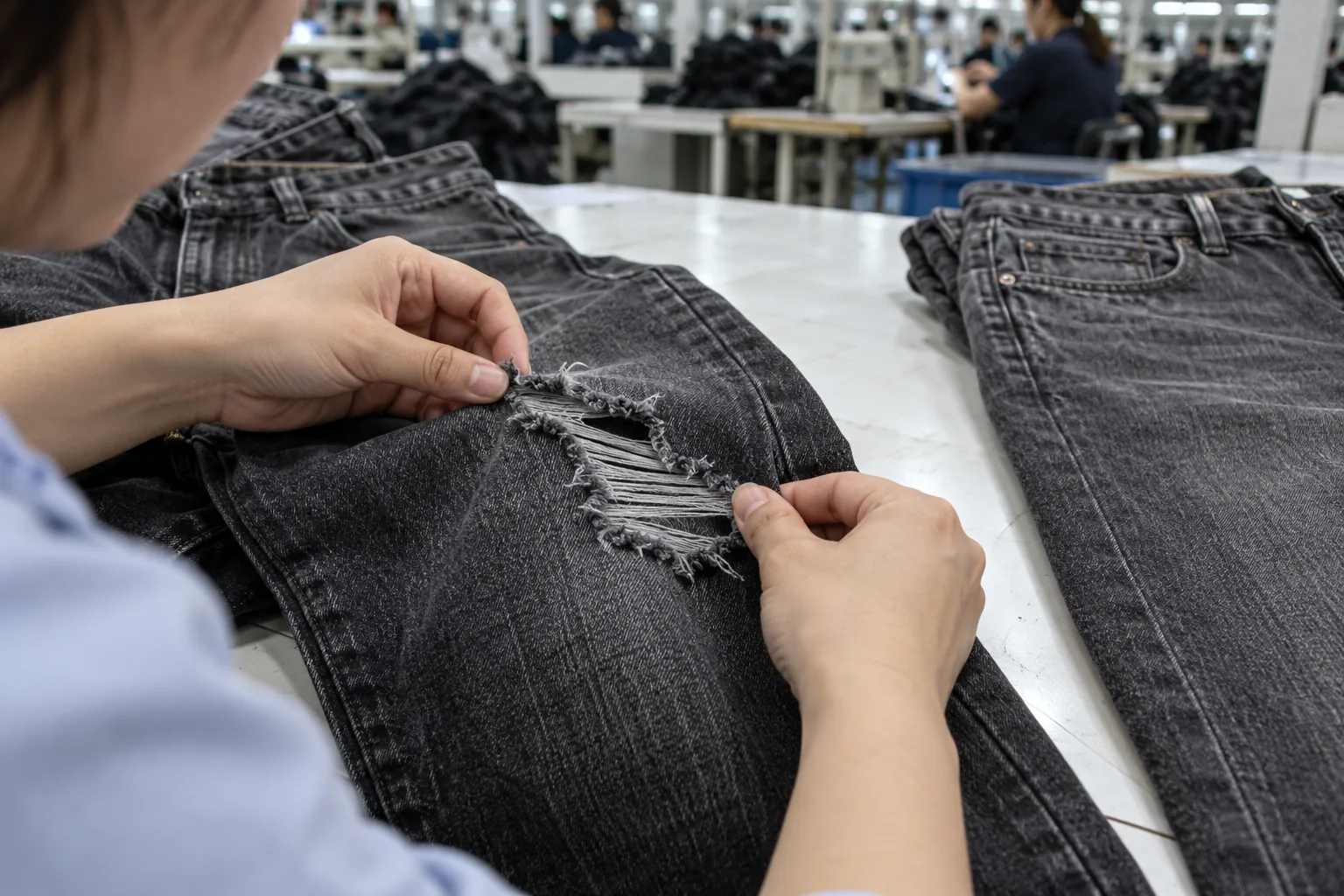
Washed Black vs Vintage Wash in Streetwear Production
Compare washed black vs vintage wash in streetwear production so you can choose the right finish, mood, and bulk control strategy for your garments.

A black denim capsule can look worn without looking damaged. That distinction matters when choosing between washed black and a vintage wash: neither name tells a factory whether the finished jeans should have intact surfaces, softened edges, exposed yarns, or open holes. Shade and distress are separate decisions, even when a reference image combines them.
For a brand buyer developing a streetwear range, the useful question is how much visible wear belongs on each product. Set that boundary before approving a wash sample. It gives designers, sourcing teams, and inspectors a shared basis for deciding whether a garment looks intentionally aged or has crossed into an unwanted defect.
Choose the wear level before the shade name
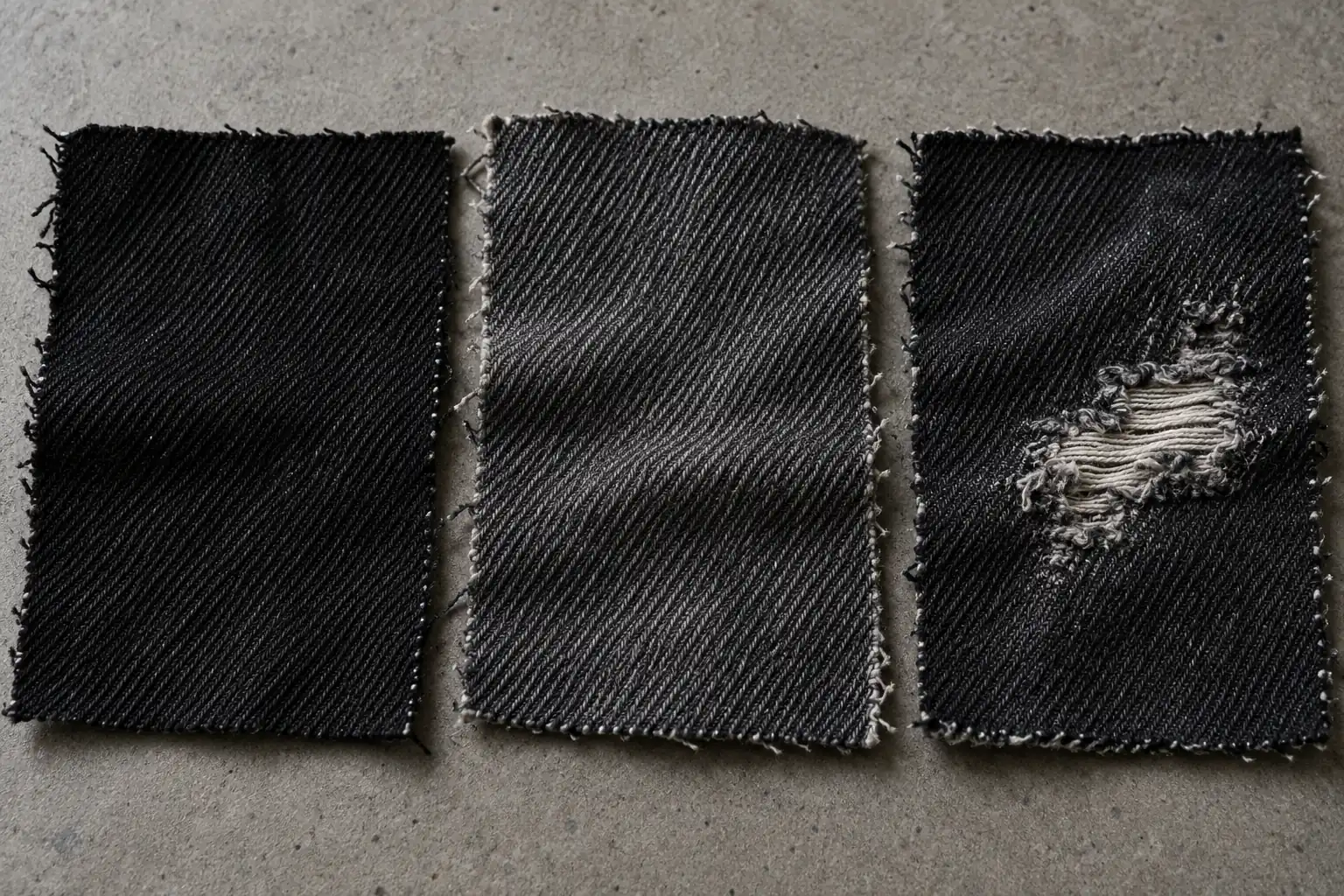
Washed black generally describes a black color family softened or faded through finishing. Vintage wash suggests an aged appearance, but it does not define a universal recipe or require ripped fabric. Either direction can remain clean, and either can include deliberate distressing. Treat these terms as starting descriptions rather than production specifications.
Separate your reference into three features: base shade, fade distribution, and physical damage. A charcoal straight-leg jean with pale seam edges and intact knees is a clean aged garment. A darker carpenter jean with frayed pocket openings is distressed even if its overall color stays deep. Calling both “vintage” leaves the most consequential difference unresolved.
Make one explicit decision for each style: intact throughout, controlled surface abrasion, or approved openings. Then select the shade that supports it.
Give clean and distressed pieces different jobs in the range
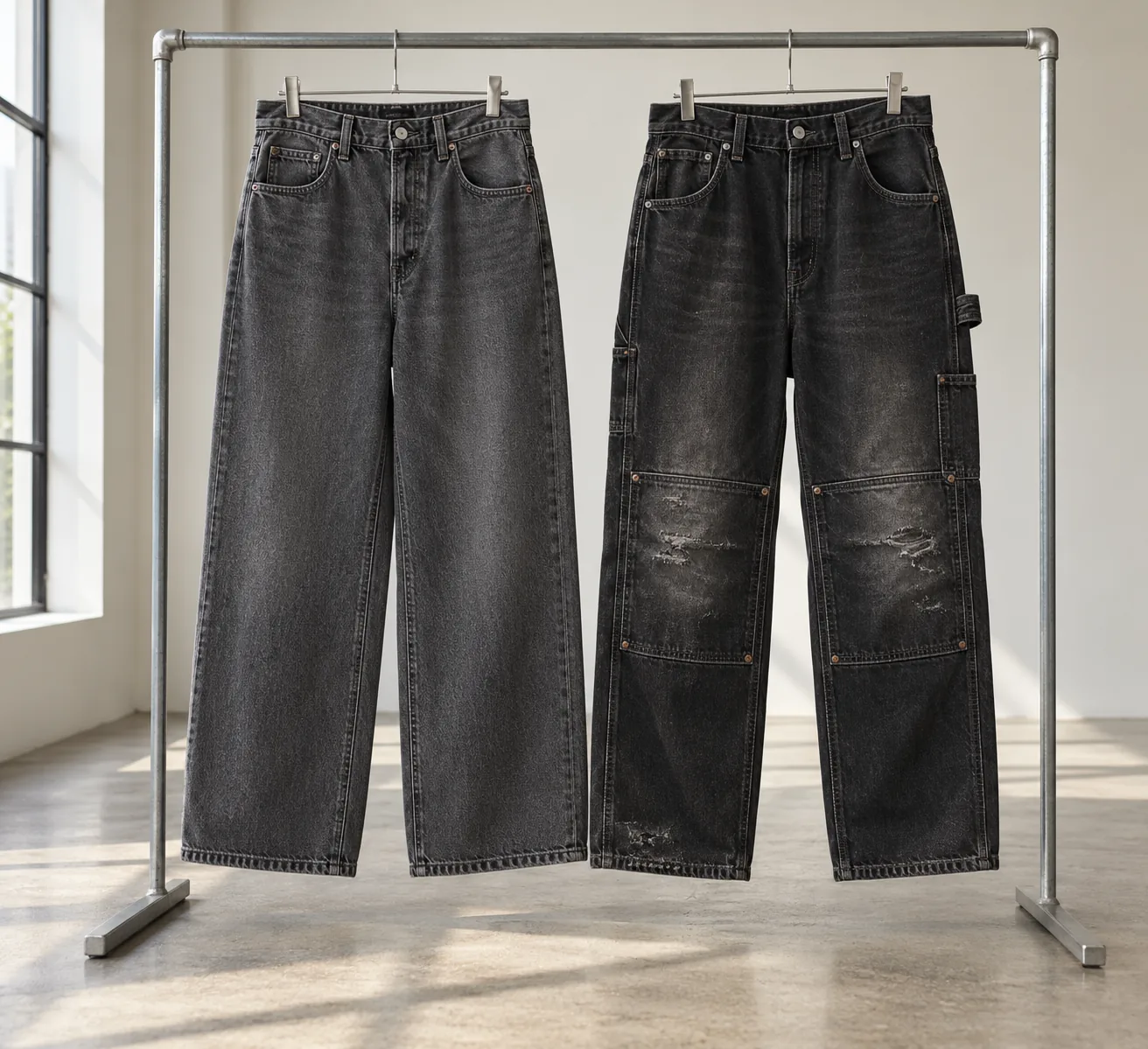
A clean finish can make a wide-leg jean easier to merchandise alongside both graphic tees and tailored outerwear. A visibly distressed pair can serve as the statement piece, with wear placement contributing as much as the silhouette. This is an assortment choice; heavier distress is not automatically a more premium result.
| Range role | Finish direction | Boundary to specify |
|---|---|---|
| Repeat everyday jean | Washed black with restrained fading | No broken surface yarns or holes |
| Aged utility piece | Vintage character with intact panels | Defined seam contrast and fade zones |
| Statement denim | Localized distress over an approved shade | Mapped abrasion, openings, and protected areas |
Use the intended retail presentation to test the choice. If the clean jean must coordinate with a black denim overshirt, review them together under the same lighting. If a distressed knee is the focal point, judge it on the body as well as flat: placement that works on a table can look awkward when the wearer bends.
Translate distress into a map the sample room can use
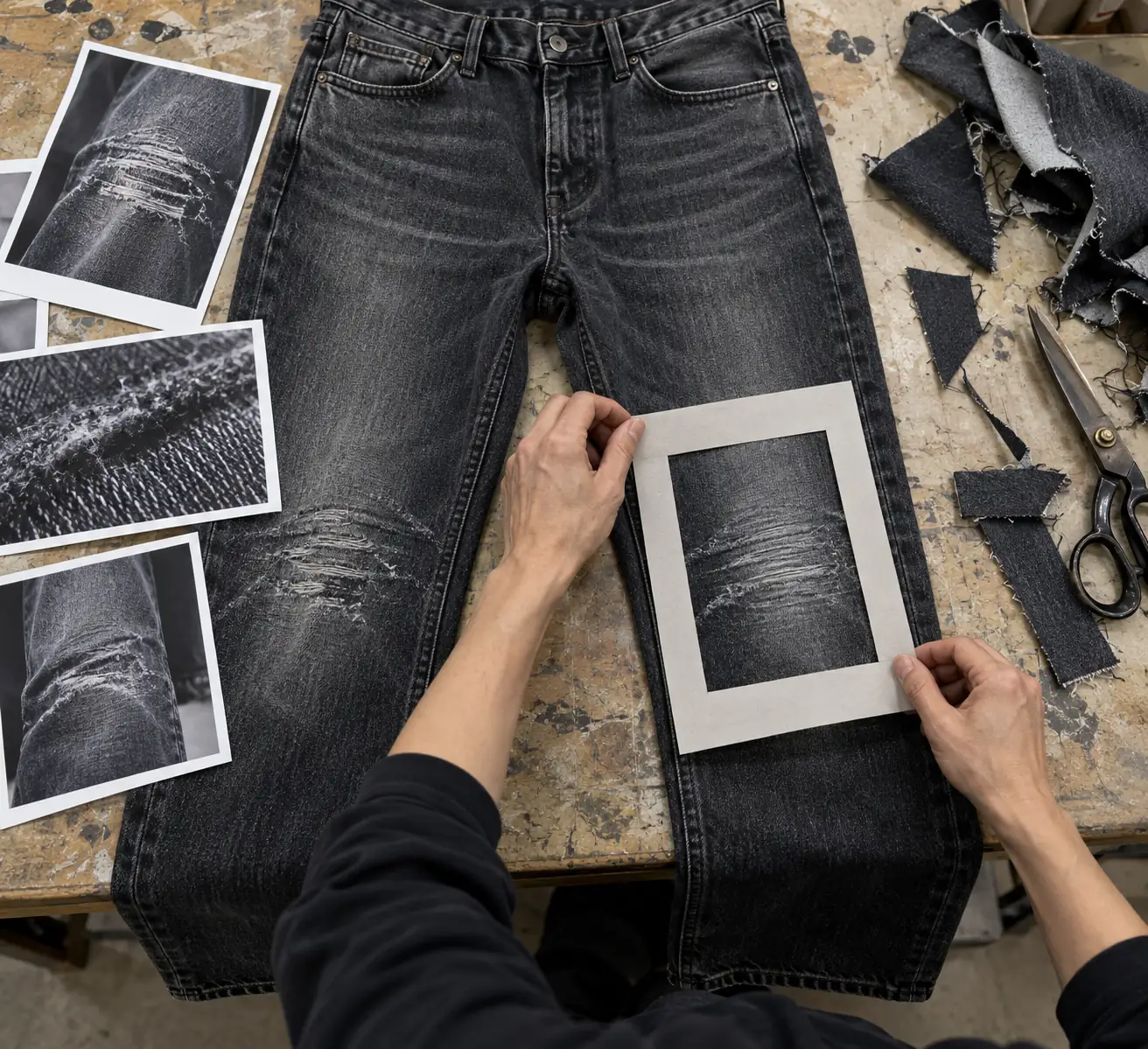
A mood image communicates atmosphere but rarely communicates limits. Add front and back garment views showing each treatment zone. Locate knee abrasion from a named measurement point, define its width and height, and identify areas that must remain intact. Specify whether visible white yarns are acceptable and whether an opening may pass through the fabric.
For clean styles, write exclusions with equal care: no holes, no loose fringe, and no unintended abrasion around belt loops or pocket corners. Edge fading can be acceptable while broken yarns at the same edge are rejected. Include close-up references that make this distinction visible.
Discuss placement across sizes instead of assuming one fixed distance will suit every garment. A distress patch may need its relationship to the knee reviewed through the size range. Record the approved approach in the specification so a larger size does not inherit an accidental placement from the base sample.
Use sampling to expose the cost of the chosen wear
Compare clean and distressed trials on the same intended denim where practical. Different fabrics can respond differently to washing and abrasion, making an attractive reference unreliable as a prediction. Inspect the finished hand feel, shade, dimensions, and worn areas together; a successful color match does not establish that the garment still fits or holds up as intended.
Ask for the quote to identify the treatments associated with each option. Localized manual work, protective backing, or additional review samples may change the cost and schedule. Request project-specific confirmation rather than assuming a darker garment needs less processing or that every vintage effect requires the same operations.
StitchQuote’s denim MOQ starts from 100 pieces per style; most other categories start from 50 pieces per style. Confirm how proposed finish variants affect the order plan. A 7-day sample is available for standard styles with confirmed specifications and available materials, while complex styles, custom washes, and custom-developed fabric take longer. A new distress treatment should therefore have its sampling schedule confirmed separately.
Inspect the boundary between intentional wear and damage
QC needs two standards: what the approved wear should look like, and what the garment must still do. Establish acceptable visual variation using approved physical references. A single photograph can hide texture, exaggerate contrast, or make a weak patch look sound.
- Shade and contrast: compare base color and faded zones under consistent lighting, including front-to-back balance.
- Clean surfaces: check for accidental cuts, broken yarns, and fraying in areas approved as intact.
- Distress placement: check zone location, extent, and opening size against the agreed specification.
- Construction: inspect nearby seams, pocket attachments, belt loops, and any specified backing for unintended damage.
- Fit after finishing: verify agreed finished measurements, leg twist, and the position of wear when the garment is worn.
- Care behavior: review agreed laundering trials for opening growth, fraying, shrinkage, and color change before bulk approval.
Agree on test methods and acceptance limits per project. StitchQuote provides QC before packing, but the buyer’s approved distress boundaries are still essential to interpreting an unusual-looking surface correctly.
Freeze the wear standard before approving bulk
Keep an approved garment and detail images tied to the current specification. Record shade, distress placement, permitted variation, finished measurements, and any required backing together. If a revision changes abrasion intensity, review its effect on both appearance and fabric integrity before replacing the approval standard.
StitchQuote offers cut-and-sew, private label, sampling, fabric and trim sourcing, and branding through woven labels, prints, and embroidery. Include those elements in the development brief so their relationship to the wash can be reviewed. A clean back pocket with embroidery and a heavily abraded pocket need different placement discussions.
Specify fabric weight and finished measurement methods
Record fiber composition, fabric weight in GSM or ounces per square yard, stretch direction, and the supplier’s fabric reference before comparing wash trials. For conversion, 12 oz per square yard is approximately 407 GSM; this describes mass per area, not guaranteed strength or hand feel. Two denims at the same weight can have different yarn structures, stretch recovery, and responses to abrasion. Ask whether the quoted weight describes incoming fabric or finished washed material so comparisons use the same basis.
Make the measurement sheet specific enough for two people to repeat it. Measure the waistband flat with the closure fastened and state whether the result is a half-waist width or full circumference. Define front rise from the crotch seam intersection to the top waistband edge, inseam along the inside leg seam, and hem width across the flattened opening. For thigh width, name a fixed distance below the crotch. Measure finished garments after they are dry and have rested for an agreed period, using the same handling method for samples and bulk checks.
Set tolerances for each point after reviewing the sample. As an illustrative negotiation starting point, a buyer might propose plus or minus 1 cm for flat half-waist and inseam, and plus or minus 0.5 cm for hem width. These are proposed limits, not StitchQuote standards or universal denim tolerances. A 1 cm difference in half-waist represents roughly 2 cm around the body, so check whether that variation preserves the intended fit and separation between adjacent sizes.
Plan an order around a repeatable approval record
Consider a hypothetical order of 100 pieces of one black straight-leg denim style in one approved finish. A buyer could allocate 10 small, 30 medium, 35 large, and 25 extra-large pieces, then confirm the size breakdown and material availability. This illustrates the stated denim minimum without assuming that different styles or wash variants can be combined to meet it. Submit a graded measurement chart, fabric reference, trim list, artwork placement, and distress map as one dated package.
Review the sample in a fixed sequence: fit and finished measurements, overall shade, local abrasion, then trims and branding. If the waist needs correction and the knees need less abrasion, record both changes in one revision log and identify which details remain approved. Confirm whether a revised finished sample is needed before bulk cutting or washing; a fit correction can change how a distress zone sits on the leg.
For costing, ask which charges relate to development and which recur per garment. Fabric consumption can change with usable width, size mix, and cutting allowances for wash shrinkage. Manual distressing, reinforcement, additional wash trials, and trim application sequence can also affect the quote. Before packing, compare garments from the size range against the current approval record and document agreed corrections. Keep inspected measurements and close-up images with the order so a reorder starts from a clear production reference.
Questions buyers ask about clean versus distressed denim
Can a vintage wash have no holes at all?
Yes. An aged effect can rely on shade variation and seam contrast while leaving the fabric intact. State “no openings or broken surface yarns” if that is the intended boundary.
Can one approved shade cover both wear levels?
It can be a shared target, but approve each finished treatment. Distressing changes local contrast, and additional processing may alter how the overall shade appears.
Should a knee opening be identical on every pair?
Specify an acceptable location and size range, then confirm what the chosen process can reproduce. Define visible limits rather than asking inspectors to judge whether each pair has the same character.
Related reading and project support:
- Prepare the garment specification
- Review sampling and minimum orders
- Document denim wash approval
- Discuss your denim project with StitchQuote
Request a manufacturing quote
Share your product type, quantity range, and destination. We usually reply within one business day.