Custom Streetwear, Casualwear & Denim Manufacturer•MOQ 50 pcs•Denim MOQ 100 pcs•7-Day Sample Available

How to Brief a Factory When You Only Have References and No Full Tech Pack
Learn brief factory without tech pack through a clearer factory-side view that helps brands reduce rework, align sample goals, and move toward approval with better.

A reference photo can communicate a mood immediately, but it cannot tell a factory which fabric, construction, or finishing route to price. If you send the same images to three suppliers, you may receive three quotes for materially different garments. The cheapest offer may simply contain the most economical assumptions.
You can brief a factory without a full tech pack by creating a shared quotation baseline: a short document that separates confirmed choices from open questions. At this stage, the goal is to make supplier responses comparable before investing in detailed development. Treat every reference as evidence of a specific feature, rather than as a complete specification.
Give each reference a single job in the quote
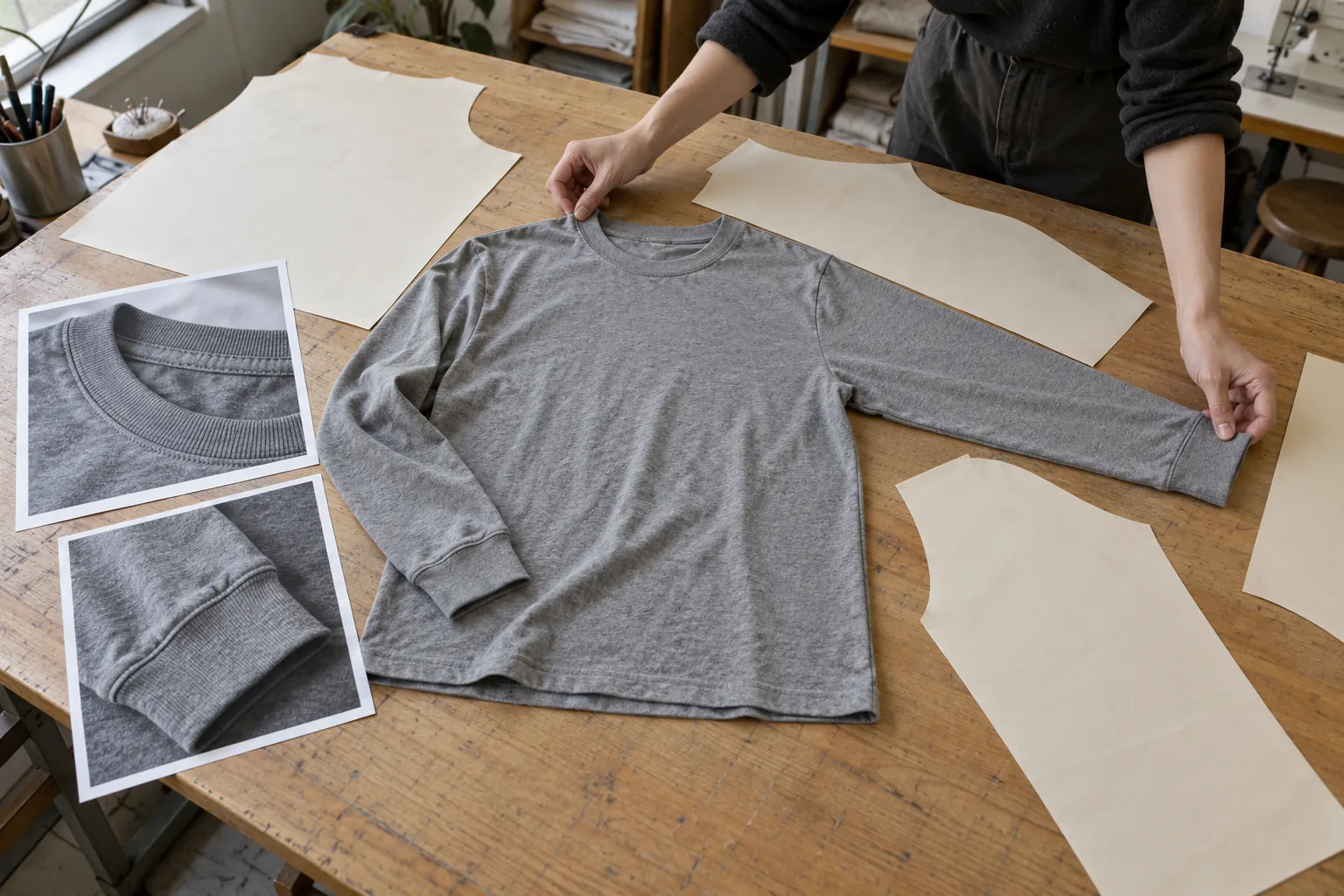
Start with one lead image that shows the overall silhouette. Add supporting references only where they clarify a separate detail. For a relaxed jersey long-sleeve, you might use one image for body proportions, a close-up for the neckline, and your own sketch for cuff depth. Explain which features to ignore, especially visible branding, styling accessories, and photographic color effects.
Label each reference with a simple identifier in your brief. A supplier should be able to write “neckline follows reference B” without guessing which image you mean. If two images disagree, state which one takes priority. Otherwise, one factory may quote a ribbed collar while another prices a bound neckline.
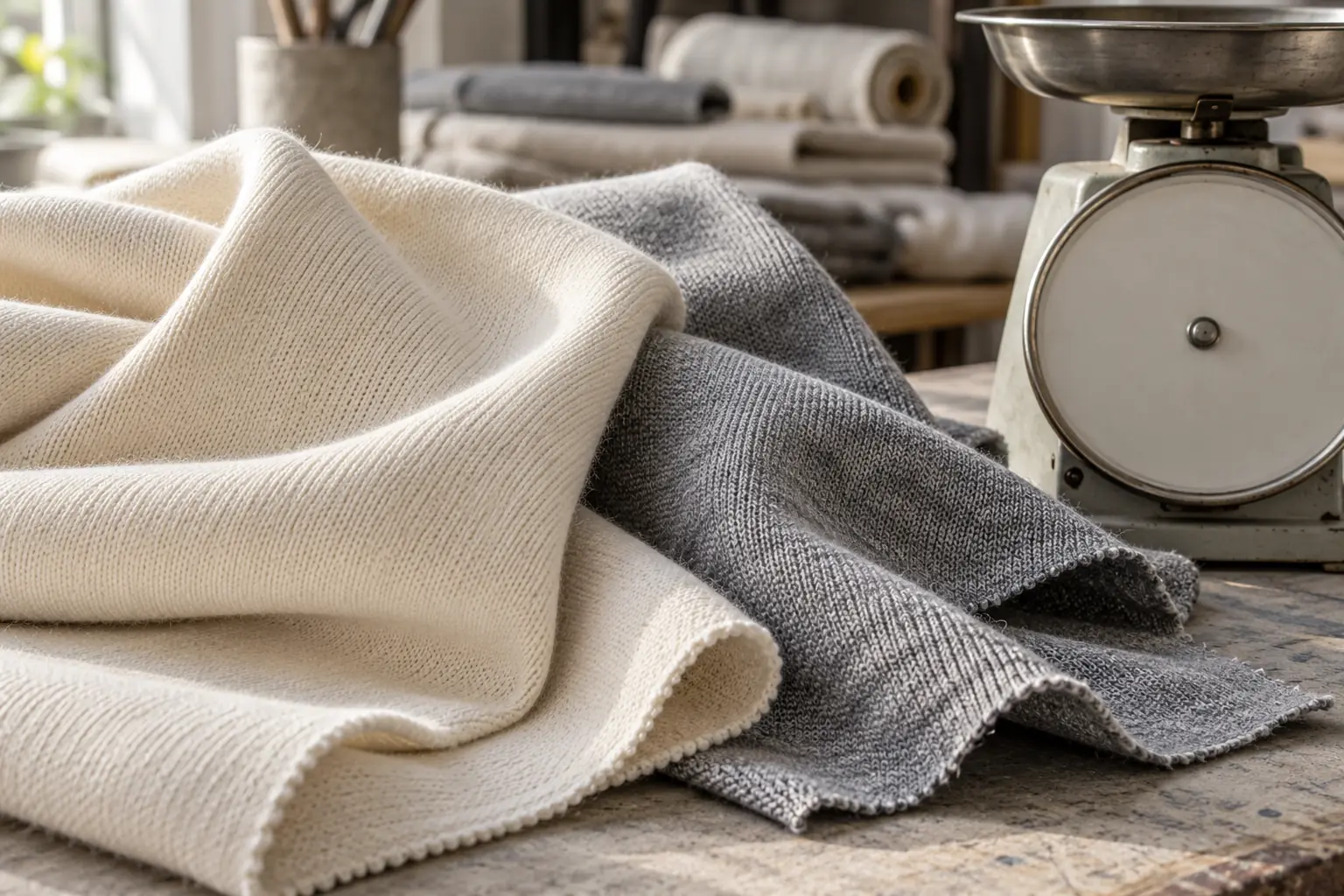
Describe observable targets rather than adjectives alone. “Premium and heavy” leaves too much room for interpretation. A provisional fabric composition and weight, plus a description of the desired surface and drape, gives suppliers a common starting point. Mark these as quotation assumptions until you approve physical materials.
Build a minimum specification that everyone receives
Your quotation brief does not need every production detail, but it must cover decisions that change cost. Use one version for all suppliers. The following example is a buyer-created baseline, not a standard specification or a promise that every factory can meet it.
| Decision | Shared quotation baseline | Still to verify |
|---|---|---|
| Fabric | Cotton jersey, provisional 240 gsm, no garment wash | Hand feel, shrinkage, available colors |
| Shape | Relaxed long-sleeve; base-size chest width and body length supplied | Shoulder position and sleeve balance on sample |
| Branding | One woven neck label; no external decoration | Label dimensions and attachment method |
| Order | 150 pieces, one color, stated size breakdown | Material and trim minimums |
| Packing | Individual plain bags, bulk cartons | Bag specification and carton arrangement |
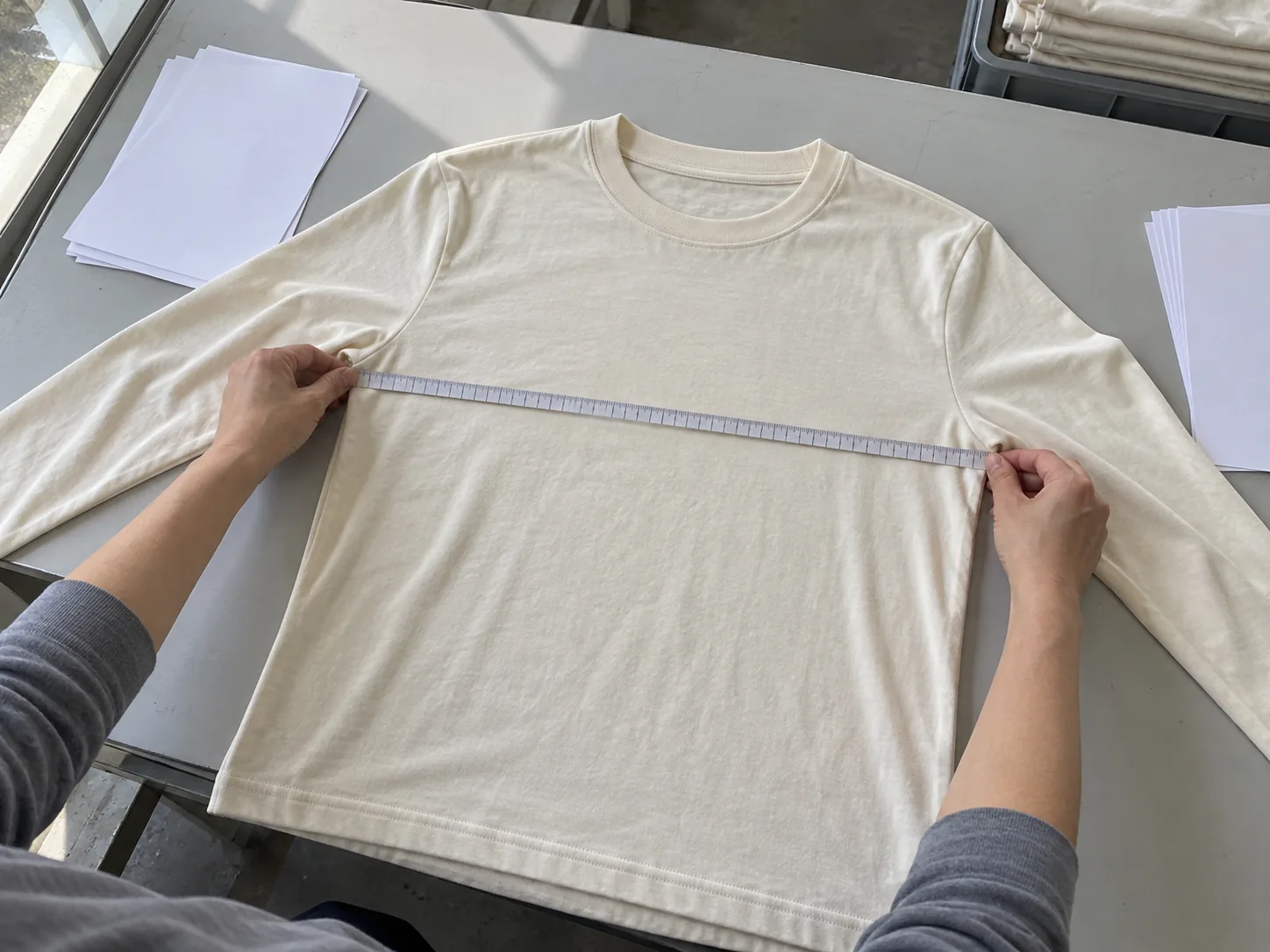
Include measurement instructions with your provisional dimensions. Specify whether chest width is measured flat and where body length starts. A measured garment you own can provide useful evidence, provided you identify its size and explain what should change. Photos alone are unreliable for judging dimensions.
Require an assumption sheet beside every price
Ask each supplier to return three things: the price against your baseline, a list of deviations, and a list of exclusions. Give them permission to propose alternatives, but require those alternatives to appear separately. A lighter fabric or simpler cuff may be worth considering; it should not silently replace your requested garment.
Commercial terms also need a common basis. Request the quotation currency, delivery term and named location, quote validity, payment schedule, and whether freight, duties, or taxes are included. Separate sample charges, pattern development, decoration setup, and bulk unit pricing so one-time charges do not disappear inside an apparently attractive unit rate.
Ask what the quoted timing starts from: deposit, material approval, sample approval, or another event. A short production estimate offers little comparison value if suppliers are using different starting points. Record any material reservation conditions alongside timing.
Close the differences before choosing a sampling partner
Put the returned assumptions side by side before ranking prices. If one supplier quotes available jersey and another quotes custom-developed fabric, ask both to price the same agreed route. If a supplier cannot meet a requirement, retain that exception in your comparison instead of treating its price as equivalent.
Resolve the largest differences first: fabric, wash, decoration method, quantity, and construction. Small packing details matter, but they rarely explain a major gap as effectively as a different material choice. Send a revised baseline to every remaining supplier whenever you change a cost-driving requirement.
MOQ needs its own check. StitchQuote’s MOQ for most categories starts from 50 pieces per style; denim starts from 100 pieces per style. Confirm how your proposed colors, size breakdown, fabric, and trims affect the actual project. A style minimum alone does not establish that every material or color split is feasible.
Use the sample as a check on the quoted assumptions
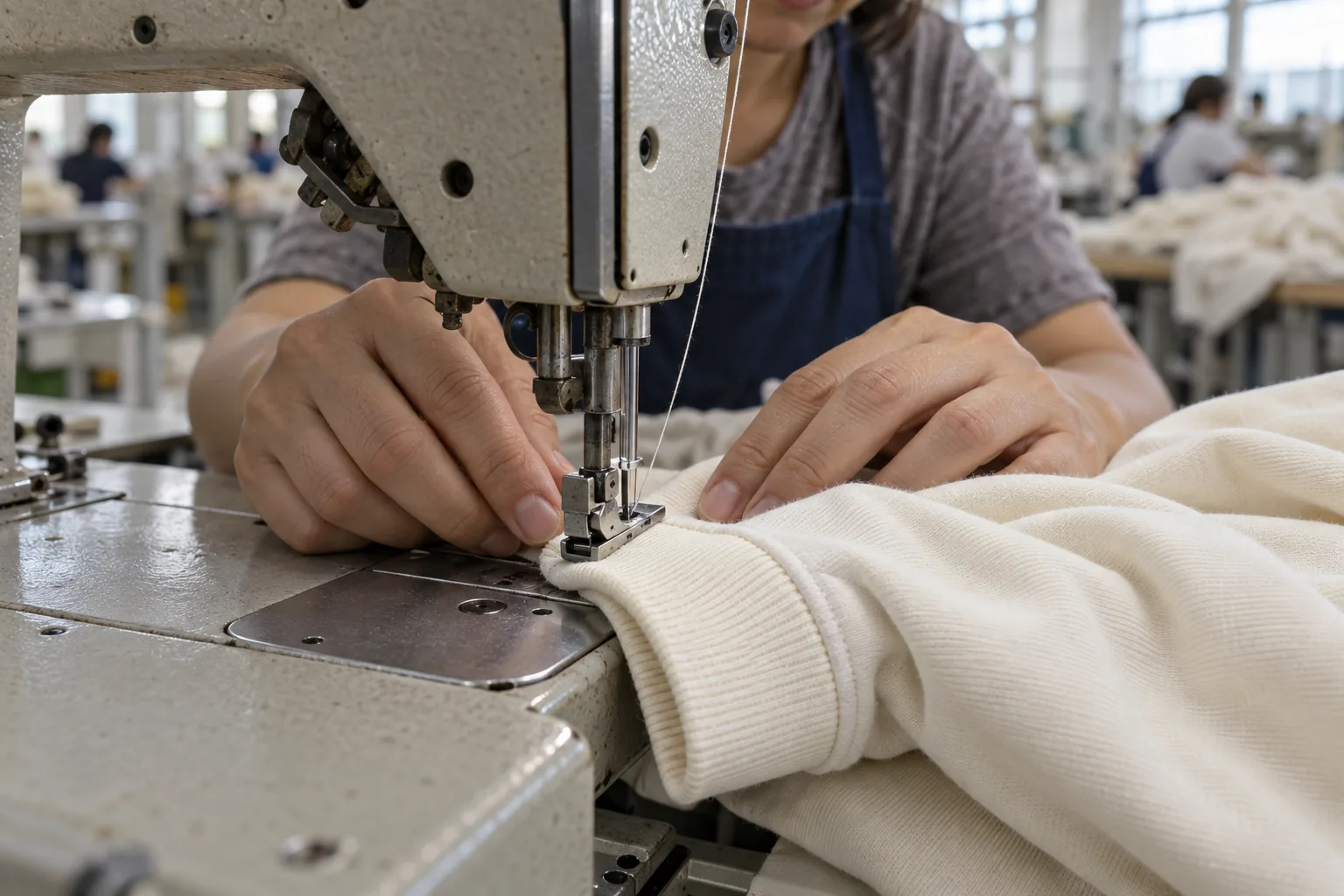
Choose a sampling partner once the quotation scope is clear enough to evaluate. State which questions the first sample must answer: perhaps neckline recovery, sleeve volume, and whether the proposed jersey delivers the intended drape. Keep a record connecting the sample to the brief version and material selection used for its price.
StitchQuote offers cut-and-sew, private label, sampling, fabric and trim sourcing, branding through woven labels, prints and embroidery, and QC before packing. A 7-day sample is available for standard styles with confirmed specs and available materials. Complex styles, custom washes, and custom-developed fabric take longer.
Use this checklist during sample review and carry approved criteria into later QC:
- Check base-size measurements against the agreed measurement method and tolerances.
- Confirm the fabric identity, weight, surface, and color against the proposed material.
- Inspect neckline recovery, cuff attachment, seam appearance, and garment balance.
- Review label placement and packing details against the quoted scope.
- Record wash-test observations under an agreed method, including dimensional changes.
- Separate corrections from new design requests, then obtain any resulting price or timing revision.
An attractive sample does not close an unresolved specification. Before bulk approval, turn accepted sample details into written requirements so production and QC have a repeatable standard.
Define measurement points before discussing fit tolerances
For the relaxed jersey example, give each measurement a start point, an end point, and a handling instruction. Measure the garment flat on a level surface without stretching it. Define chest width as the straight distance between side edges at a stated distance below the armhole, such as 2.5 cm. Define body length from the high shoulder point beside the neckline to the bottom hem, excluding the collar. For sleeve length, specify whether the tape starts at the shoulder seam or center back neck; these methods produce different numbers, especially on a dropped shoulder.
A buyer might propose a base-size chest width of 58 cm and body length of 72 cm, each with a tolerance of plus or minus 1 cm. These are illustrative development targets, not StitchQuote specifications or universal tolerances. Ask the supplier to confirm achievable limits for the selected fabric and construction. Give smaller features, such as cuff depth and label position, their own agreed limits. State whether acceptance measurements apply before washing or after a defined care cycle.
Keep size grading separate from tolerance. Grading defines the intended difference between sizes; tolerance describes permitted variation around each size target. A medium sample within tolerance does not verify the large pattern. Request a size measurement chart and identify which additional sizes need checking before bulk cutting.
Turn the 150-piece example into a material and QC plan
Expand the example order into an explicit allocation: 30 small, 60 medium, 45 large, and 15 extra-large garments in one color. Ask the supplier to calculate fabric requirements using that size mix, usable fabric width, and expected cutting and shrinkage allowances. A different size distribution can change consumption even when the total quantity stays at 150. Confirm that the proposed fabric and woven-label quantities satisfy the relevant sourcing minimums.
The provisional 240 gsm target describes fabric mass per unit area, not thickness, softness, or opacity. Ask for the knit structure, fiber composition, usable width, and finishing condition alongside weight. Compare swatches in consistent lighting and assess drape and stretch recovery physically. Agree how fabric weight will be checked and what variation is acceptable instead of treating nominal GSM as an exact reading on every test.
For dimensional checks, record measurements before washing, use an agreed wash and drying procedure, and measure again after the garment has relaxed. If a 72 cm body length becomes 69.8 cm, the length reduction is approximately 3.1 percent: divide the 2.2 cm change by the original 72 cm and multiply by 100. Assess width separately and inspect twisting, puckering, and collar distortion. Decide whether the result requires a fabric change, pattern adjustment, or further testing before approving production.
Define a QC record that identifies the style, size, measurement result, defect location, and disposition. Agree inspection coverage and how failures trigger rework or further checks. Count finished pieces against the approved size allocation, check size labels against garment measurements, and reconcile carton contents before packing approval.
Questions buyers ask before the brief is complete
Can a factory quote if I have no physical reference garment?
It can provide a provisional quote using images and stated assumptions. Supply approximate base-size dimensions and material targets, and ask which unknowns could change the price. Treat the result as conditional until those unknowns are resolved.
Should I disclose my target cost in the first brief?
You can share it as a development constraint. Still request a price for the common baseline, with cost-reduction proposals listed separately. This shows whether a supplier meets your target through efficiency or through changes to the product.
What if one supplier recommends a better construction?
Evaluate the recommendation on its merits, including appearance, durability, and sampling implications. If you adopt it, update the brief and request revised quotes from the suppliers you are still comparing.
When should the brief become a full tech pack?
Build out the production documentation as materials, fit, construction, grading, and branding are approved. The quotation brief establishes a common starting point; the completed specifications must capture what bulk production is expected to reproduce.
Related reading for your next sourcing decision
- Turn an approved brief into a tech pack
- Review sampling and MOQ considerations
- Assess a cut-and-sew streetwear manufacturer
- Discuss your reference-based brief with StitchQuote
Request a manufacturing quote
Share your product type, quantity range, and destination. We usually reply within one business day.