Custom Streetwear, Casualwear & Denim Manufacturer•MOQ 50 pcs•Denim MOQ 100 pcs•7-Day Sample Available

China Clothing Factory vs Local Sourcing for Small Apparel Brands
Use this factory-side guide to compare china clothing factory vs local sourcing for small apparel brands more clearly across supplier fit, quote scope, approvals.

A local workshop quotes one amount for your first sweatshirt run; a China clothing factory quotes another. Before treating the gap as a sourcing advantage, check whether both suppliers priced the same garment. One may include fabric, grading and individual packing, while the other assumes you will deliver cut-ready fabric and approved patterns. Those are different purchases.
For a small apparel brand, the useful comparison happens between an initial estimate and a paid sample. This is when you can still correct exclusions without redesigning a launch around them. Build a common specification, separate necessary costs from optional upgrades, and ask each supplier to explain deviations. The result should reveal which offer can deliver your approved product at a manageable total commitment.
Give both bidders one version of the garment
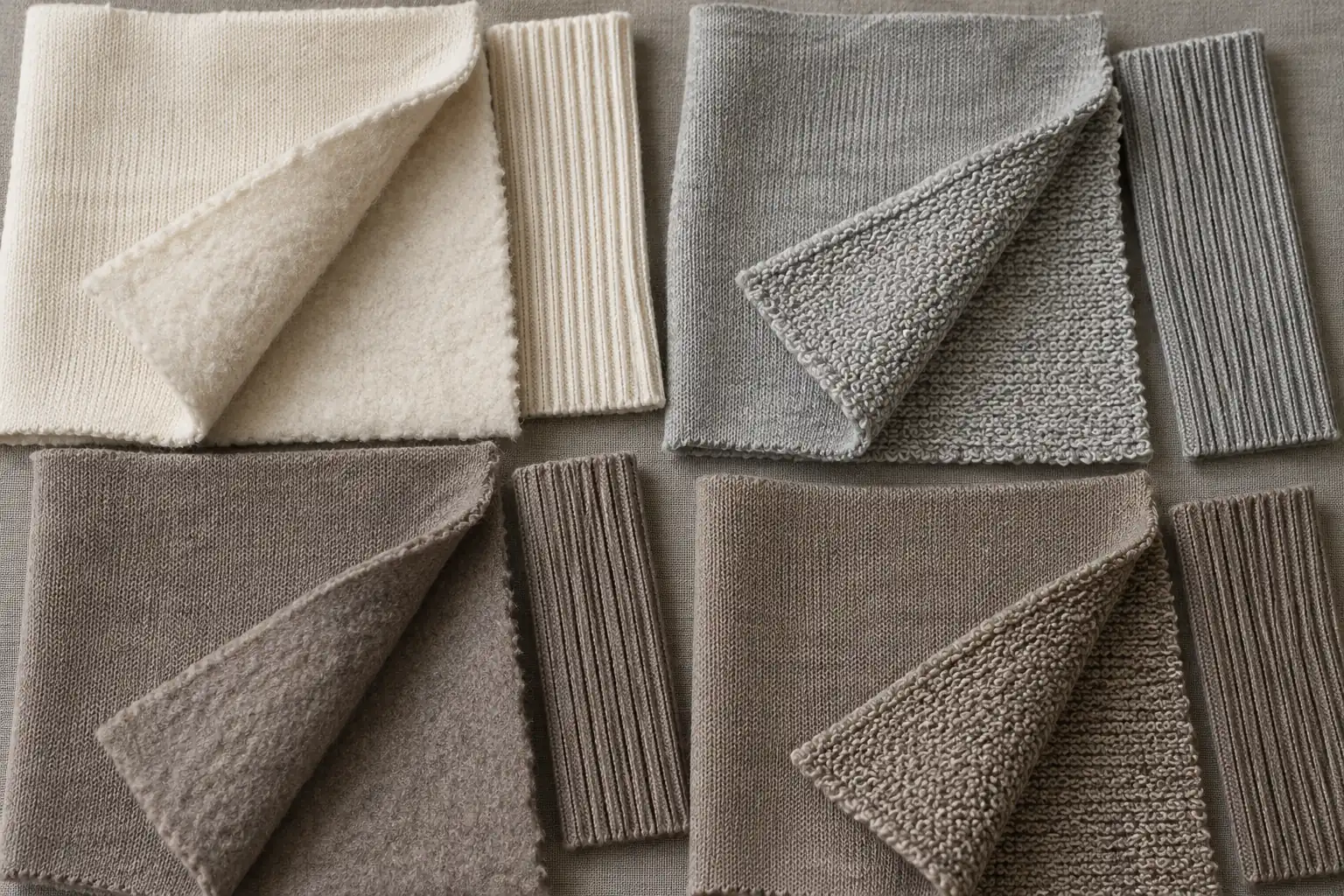
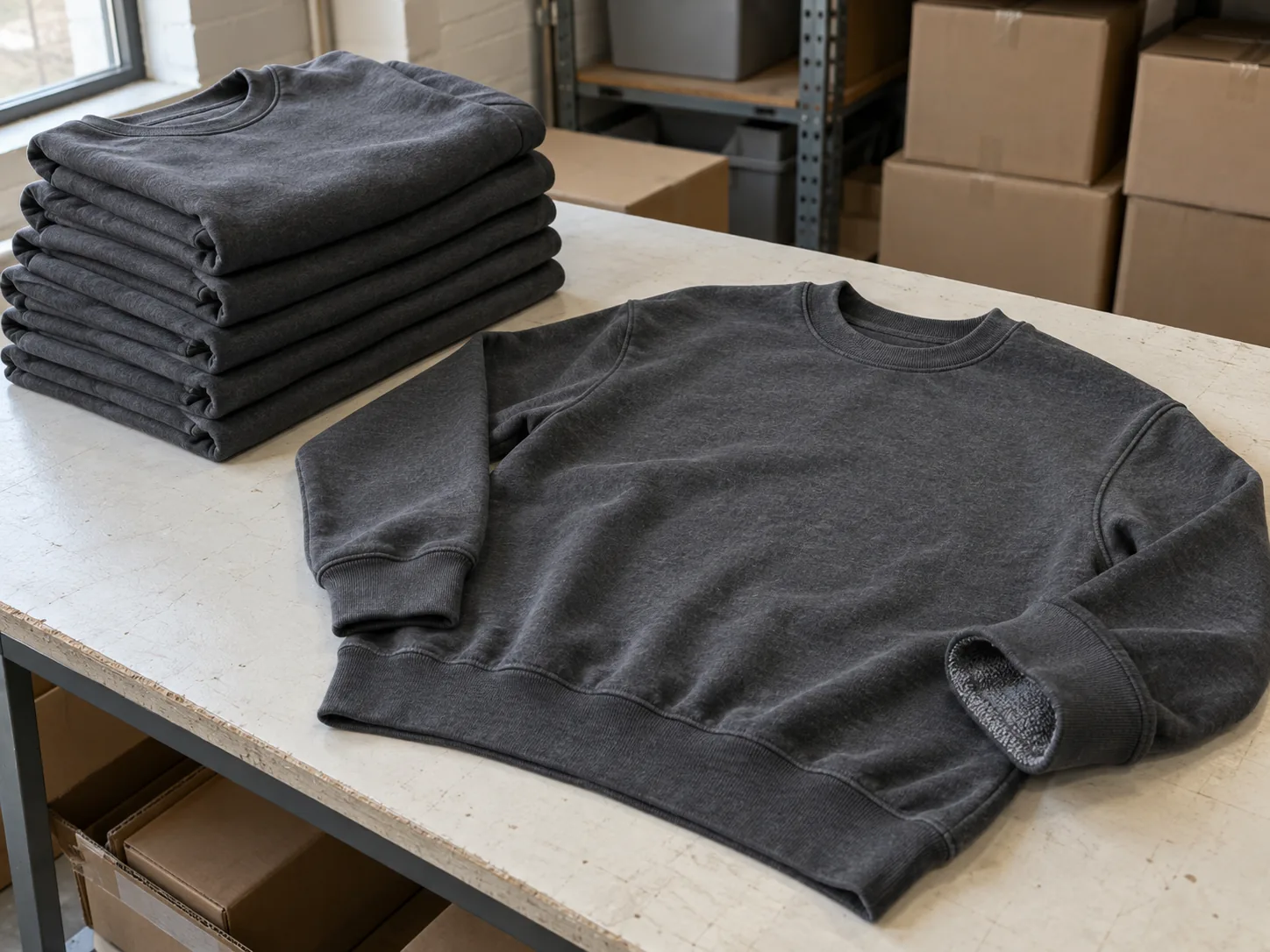
Use a specific test order: 80 unisex crewneck sweatshirts, one color, sizes XS through XL, with a small chest embroidery. This is an illustrative buying brief, not a universal minimum. Specify whether the body uses brushed fleece or loopback terry, its fiber composition, target finished weight, and whether the fabric is compacted or otherwise treated to control shrinkage.
A request for “heavy cotton” leaves too much open. For this example, request 100% cotton loopback terry at 360 gsm, with an agreed weight tolerance, and identify the rib composition separately. Set chest, body length, sleeve length and shoulder measurements by size. State whether measurements apply before or after washing, and show the measuring method for each point.
Include embroidery dimensions, position measured from fixed garment points, thread colors and backing expectations. Add seam construction, neck tape, care-label content, folding and packing. Send the same dated revision to both bidders. If a supplier proposes a stock fabric at a different weight, ask for that as a separately labeled alternative; keep the original specification visible.
Make every quote disclose what you still have to buy
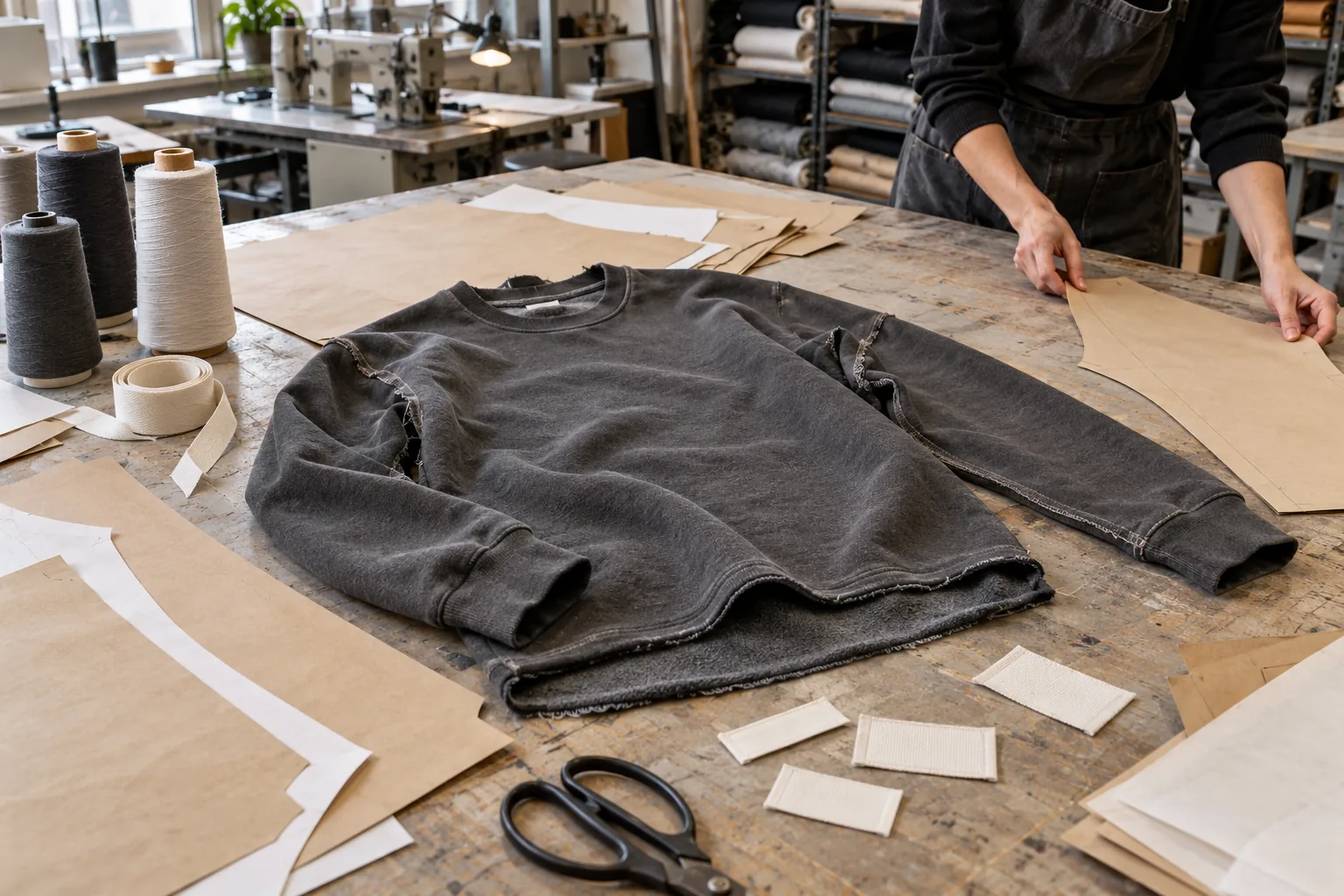
Ask each bidder to return a scope breakdown, even if it normally quotes one price per piece. A local sewing-only offer can be appropriate when you already own patterns and fabric. A full-package offer can be appropriate when you need sourcing and development. Compare the completed purchasing package rather than assuming either business model includes everything.
| Quote component | Common comparison question |
|---|---|
| Development | Are patterns, grading, samples and revisions included or separate? |
| Materials | Does the price cover the specified fabric, rib, trims and sourcing? |
| Decoration | Are embroidery setup, application and any minimum charges included? |
| Release condition | Are inspection, labels, individual packing and cartons covered? |
| Delivery | What named destination and shipping terms does the offer cover? |
Also record currency, quote validity, payment milestones and tax treatment. For international shipments, request the applicable Incoterm and named place; confirm which transport, clearance, duty and tax obligations remain yours. For local sourcing, establish whether collection or delivery is included. A nearby address does not automatically mean goods arrive at your fulfillment center without another charge.
Keep unanswered items marked “unconfirmed,” not zero. If one bidder includes two development samples and another includes one, request the cost of a second round rather than assigning an imaginary allowance.
Separate the unit price from the cash needed to launch
Build two totals. The first is the cash required for the initial order: development, bulk garments, mandatory setup, packing, transport and applicable import costs. The second is the estimated repeat-order total using the same garment and quantity. Keep reusable development charges separate, and confirm whether patterns or embroidery files can actually be reused without another fee.
Then divide the initial total by the units you can reasonably plan to sell. Suppose your 80-piece order reserves four pieces for photography and reference retention. The planned sales denominator is 76, before any defects or returns. Apply the same reservation rule to both offers; otherwise, your cost comparison changes merely because you counted stock differently.
Check minimums at the style, color, fabric and trim levels. A low garment minimum may still leave a commitment to unused custom rib or branded zipper pulls. Ask who owns leftovers, how they are stored, and whether they can support a reorder. At StitchQuote, MOQ for most categories starts from 50 pieces per style; denim starts from 100 pieces per style. Confirm the proposed color and size breakdown for the actual project.
Price the approval route before promising a launch date
Request a timeline with separate stages for material confirmation, sample development, buyer review, revisions, production and delivery. “Production takes three weeks” is not an arrival promise if the countdown begins only after fabric approval. Ask what event starts each stage and which decisions must arrive from your team.
Proximity can make an in-person fitting practical, but check appointment availability and whether the workshop holds your production slot during revisions. For an overseas supplier, establish how sample shipments, consolidated comments and approval records will work. Neither route benefits from scattered feedback that changes the neckline after the size set is approved.
Use one sample evaluation sheet for both bidders. Record measurement results, fabric hand, seam behavior, decoration and wash response. If the first sample fails because the brief was incomplete, distinguish that from a supplier missing a confirmed requirement. This distinction helps estimate the likely revision workload.
StitchQuote offers a 7-day sample for standard styles with confirmed specs and available materials. Complex styles, custom washes and custom-developed fabric take longer. Treat sample development and transit as separate schedule entries, and confirm project timing before attaching either to a public launch.
Attach the same acceptance checklist to both orders
A quote is only comparable when both suppliers agree on what an acceptable garment looks like. Establish measurement tolerances and defect handling before bulk authorization. The following sweatshirt checks are illustrative buyer requirements to discuss with each supplier, not universal apparel standards.
- Dimensions: Propose a tolerance of ±1 cm for half-chest and body length, measured flat without stretching. Agree tighter or different limits where the construction requires them, and include a diagram.
- Wash response: Measure a sample before and after an agreed wash-and-dry cycle. Specify the permitted dimensional change, such as a proposed maximum 5% shrinkage, and assess twisting separately.
- Embroidery: Compare dimensions and placement with the approved reference. Check for puckering, loose threads, exposed rough backing and distortion when worn.
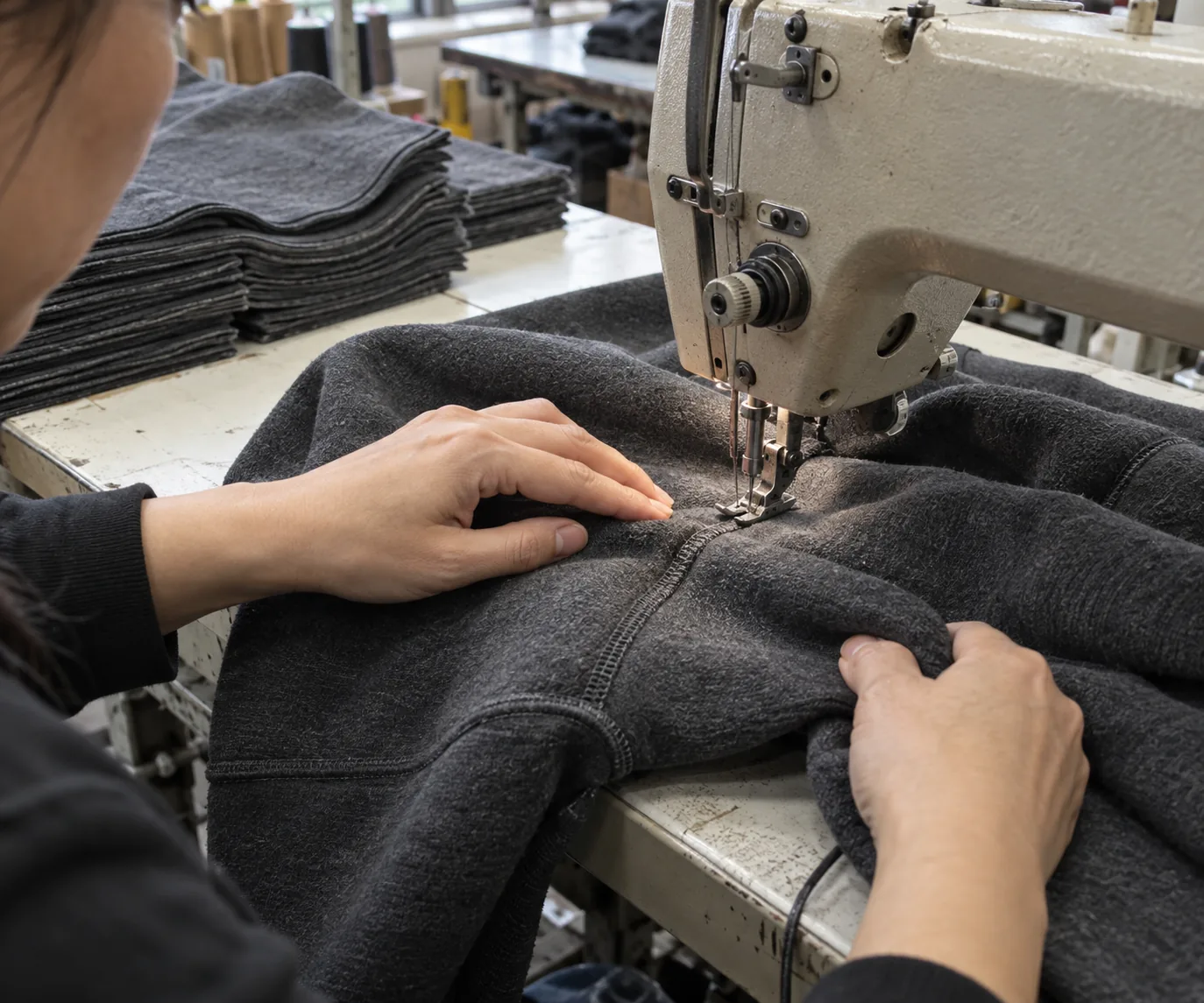
- Construction: Inspect underarm joins, rib attachment and neck seams for skipped stitches, open seams and uneven feeding. Confirm seam stretch suits the fabric.
- Order accuracy: Reconcile sizes, colors, care labels, carton counts and packing instructions with the purchase order before dispatch.
Agree whether inspection covers every unit or a defined sample, who records results, and what happens when a check fails. Put repair, replacement and shipping responsibilities in writing. StitchQuote’s services include QC before packing; buyers should still confirm the inspection scope and reporting needed for their order. Apply that same request to the local bidder.
Choose using documented gaps, then authorize a sample
Compare the offers only after each bidder has either accepted the common brief or listed exceptions. Rank those exceptions by consequence: a different fabric can change the product, an omitted grading charge changes the budget, and an uncertain material booking changes the schedule. Avoid hiding all three inside a single subjective supplier score.
A local offer may be the better fit when repeated fittings and access to buyer-owned materials are central to the project. An overseas offer may be the better fit when its confirmed scope combines the development and production services you need. StitchQuote provides cut-and-sew, private label, sampling, fabric and trim sourcing, and branding through woven labels, prints and embroidery. Request those services explicitly where required.
Authorize sampling against the agreed brief, then revise the comparison using the actual sample results and updated bulk offer. Keep the approved sample, specification revision and commercial terms together so your final decision is tied to evidence.
Questions buyers ask when quotes still do not match
Can I compare a stock blank with a custom-sewn sweatshirt?
Only as alternative product strategies. A stock blank has existing fit and construction limits. Request a separate custom-sewn quote if matching your own pattern is essential; otherwise, record which design requirements you are willing to change.
Should sample charges be spread across the first order?
Include them in the initial cash comparison, then show them separately for repeat-order planning. If a supplier offers a sample credit, record its conditions and apply it only when your proposed order qualifies.
What if one supplier will not disclose individual cost components?
A supplier can retain its internal costing while confirming inclusions. Ask for a written scope, exclusions and prices for optional changes. If those remain unclear, you cannot reliably compare its total commitment.
Does a cheaper reorder justify a higher first-run commitment?
Calculate both scenarios, but base the launch decision on demand you can support. Confirm reorder minimums, material availability and pricing validity before assuming the second run will recover the first run’s extra cost.
Related reading and project support:
- Prepare a tech pack for comparable supplier quotes
- Review sampling and MOQ considerations
- Evaluate a cut-and-sew streetwear manufacturer
- Contact StitchQuote with your specification and order breakdown
Request a manufacturing quote
Share your product type, quantity range, and destination. We usually reply within one business day.