Custom Streetwear, Casualwear & Denim Manufacturer•MOQ 50 pcs•Denim MOQ 100 pcs•7-Day Sample Available
Private Label Clothing Manufacturer in China for Startup Brands
Use this factory-side guide to compare private label clothing manufacturer in china for startup brands more clearly across supplier fit, quote scope, approvals, and.

On This Page
This guide is for startup brand teams preparing their first private-label program after an initial product direction has been chosen. It focuses on first-order readiness: a focused launch range, named approval owners, sample-to-bulk gates, branding decisions, risk controls, and records that can support a reorder.
A first private-label order is a program, not a single purchase decision. Product, fit, fabric, branding, samples, approvals, production handoff, launch timing, and reorder records have to move in a controlled sequence. A startup can have a strong design and still be unready to place an order if nobody owns comments, artwork versions keep changing, or the sample has no written pass-fail standard.
Use this guide to decide whether a startup’s first private-label program is ready to move from brief through samples, bulk handoff, launch, and reorder. For supplier comparison, quantity allocation across styles, colors, and sizes, and unit-economics decisions, read the low-MOQ manufacturer guide for startup brands. This guide stays with program readiness: a focused range, named approval owners, controlled files, and clear release gates.
See the private label clothing manufacturer hub for the commercial route and the clothing manufacturer for startup brands hub for broader startup manufacturing support.
Who this program guide is for
Use the guide before requesting a final bulk commitment, not only after a problem appears. It is especially useful when the founder is also the designer and buyer, when several freelancers or partners comment on samples, or when the launch calendar has been set before fabric, artwork, and packaging approvals are complete.
First-order readiness does not mean every future product decision is fixed. It means the current launch has a clear job, each item has a reason to exist, every approval has an owner, and unresolved questions are recorded with a deadline and consequence. The factory should not have to infer which comment is final or which file controls production.
Define the first order’s job
Write one sentence explaining what the first order must accomplish. Examples include validating one core fit, launching a small coordinated capsule, testing a decoration direction, or establishing a repeatable branded basic. The sentence should guide what stays in the program and what waits for a later release.
Then state the launch constraints without turning this page into a supplier-price comparison: target customer and use case, intended selling window, delivery destination, required product standards, brand presentation, internal approval capacity, and the latest date each decision can close. The purpose is to see whether the team can operate the program it has imagined.
| Readiness question | Ready evidence | If missing |
|---|---|---|
| What must this release prove? | One written launch objective | Style additions cannot be prioritized |
| Who gives final product approval? | One named owner and one comment channel | Factory receives conflicting revisions |
| What releases bulk? | Named sample, artwork, material, measurement, trim, and packaging approvals | “Approved” means different things to different people |
| What must be reusable? | Controlled files and approved physical or digital references | The next order starts from memory |
Build a manageable launch range
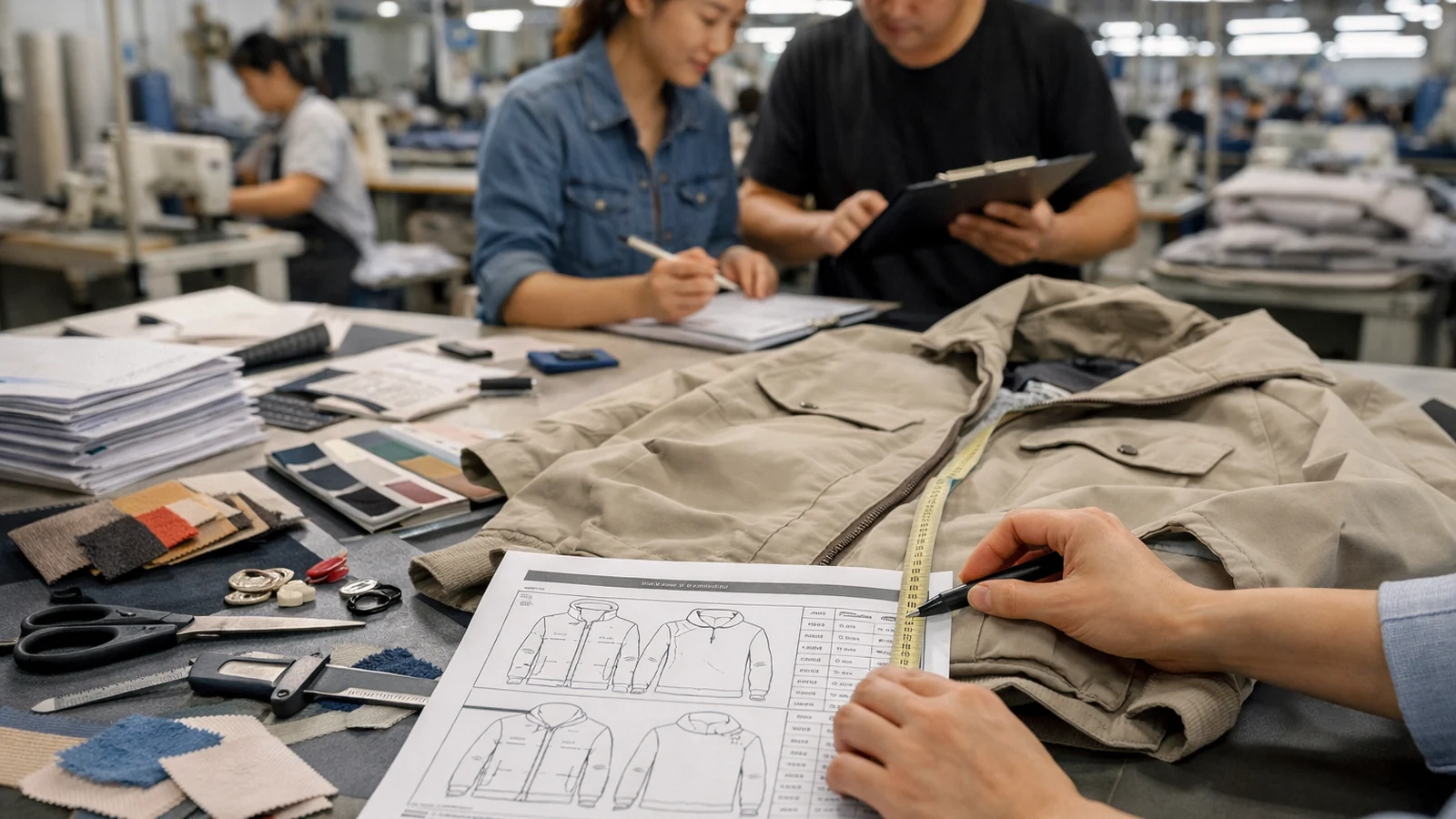
Give each proposed style a role: core product, coordinated layer, statement item, or deliberate test. If the team cannot explain why a style belongs in the first release, remove it from the initial program plan until the product, approval, and launch workload can support it.
Look for shared decisions across the range. Products may share a fabric family, color direction, label set, packaging system, artwork language, or fit block. Shared elements can make the program easier to control, but only when the specification makes them truly common. Similar-looking items with different fabric behavior, construction, or wash routes still need separate approval logic.
There is no universal “correct” first-order style count. Readiness depends on how many products the team can brief, sample, comment on, photograph, launch, and document without creating version confusion. Supplier comparison, detailed quantity allocation, and unit economics belong in the low-MOQ startup sourcing guide, not in this program-readiness decision.
Set approval gates and owners from sample to bulk
Map the program as decisions, not only dates. A workable sequence might include brief release, material direction, development or fit sample, artwork and trim approval, size or pre-production confirmation when required, bulk release, in-production checks, final inspection, and shipment handoff. The exact sample names and sequence can vary by product and supplier; define what each gate must prove.
- Brief owner: keeps the tech pack, bill of materials, artwork list, and commercial note aligned.
- Fit owner: consolidates measurement and wear comments into one instruction set.
- Brand owner: controls logo files, label copy, trim appearance, packaging, and version approval.
- Bulk-release owner: confirms that all required gates are closed before production starts.
- Delivery owner: confirms packing, documents, destination, and handoff requirements.
One person can hold several roles in a small startup. The control comes from naming the role and keeping one approval record, not from having a large team. Use sampling and MOQ to plan the development path and the tech-pack guide to structure product instructions.
Plan the private-label package in layers
Separate the core garment from the brand layer. The core garment includes fit, pattern, fabric, construction, color, and performance expectations. The brand layer can include neck and care labels, size identification, hangtags, patches, hardware, decoration, packaging, stickers, inserts, and carton marks.
For every brand element, record whether it is essential for the first launch, the file or physical reference that controls it, who supplies it, what must be sampled, and what can be deferred. This prevents a late packaging or trim idea from silently reopening product cost, sourcing, or timing.
The private-label manufacturing hub explains the commercial route. Program planning adds the operating layer: which elements are required now, which approval closes each element, and which records need to survive after shipment.
Create a first-order risk register
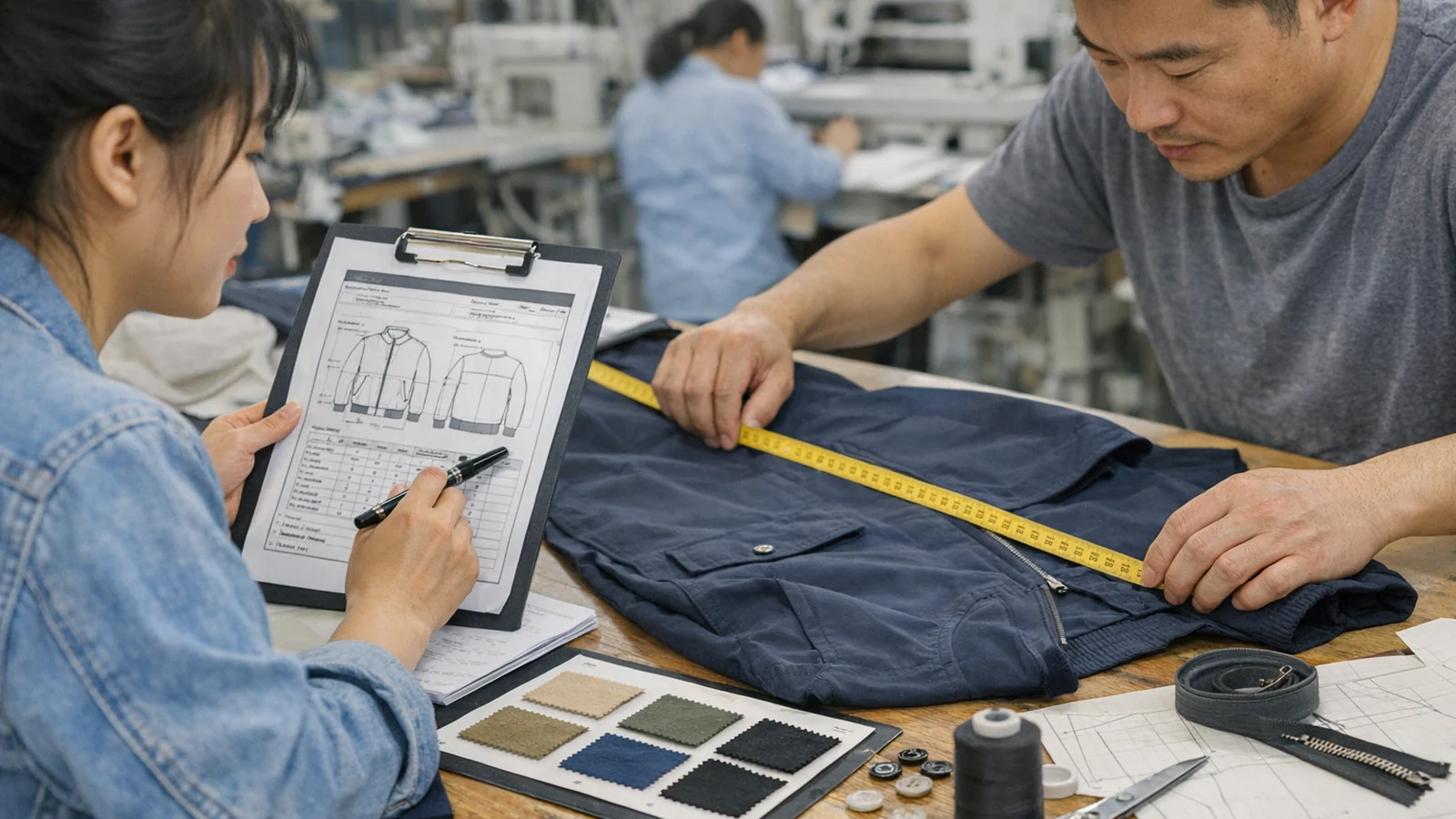
A risk register does not need complex software. Use one row per unresolved issue and include the decision owner, due date, production consequence, and fallback. Review it whenever sample comments are issued.
| Risk | Early evidence | Control | Owner |
|---|---|---|---|
| Fit direction is moving | Reference and measurement chart disagree | Freeze one base size and record approved changes | ___ |
| Artwork version confusion | Multiple files use similar names | Versioned artwork register with dimensions and placement | ___ |
| Branding blocks bulk release | Label copy or packaging remains open | Name final deadline and approved fallback | ___ |
| Reorder cannot match | Approved standards live only in messages | Build an approval pack and shipment closeout record | ___ |
Startup first-order readiness worksheet
Complete this before treating the program as bulk-ready. “Open” is an acceptable answer only when it has an owner, deadline, and fallback.
| Program decision | Evidence or file | Owner | Status / due date |
|---|---|---|---|
| First-order objective and launch range | Program brief | ___ | ___ |
| Fit and measurement standard | Tech pack, measurement chart, reference | ___ | ___ |
| Fabric, colors, and product-relevant tests | Specification and approved submission | ___ | ___ |
| Artwork, labels, trims, and packaging | Versioned component register | ___ | ___ |
| Sample gates and comment method | Approval plan and comment template | ___ | ___ |
| Bulk-release checklist | Signed or dated approval record | ___ | ___ |
| Reorder pack and issue log | Controlled production record | ___ | ___ |
Worked example: a focused first private-label program
Illustrative example only: a startup plans one core T-shirt and one hoodie using a coordinated color direction and one label system. The T-shirt’s job is to establish the base fit and everyday product; the hoodie’s job is to add a higher-value layer. Before asking for bulk release, the brand assigns one fit-comment owner, locks artwork filenames and placements, lists which labels and packaging items require physical approval, and defines which sample or submission closes each decision.
The program plan does not decide which supplier wins, how units should be allocated, or whether the unit economics work; those belong in the sibling low-MOQ sourcing analysis. It shows whether the team can run the chosen program without ambiguous approvals. If the hoodie fit, label copy, or packaging remains open, the risk register names the owner, deadline, and fallback rather than allowing the factory to infer the answer.
Before moving forward, ask whether every style has a launch role, every approval has one final owner, the critical files use controlled versions, the bulk gate is written, and the order can be reconstructed later from the retained records. When those items are ready, use StitchQuote contact to discuss the program with a product-specific brief.
Frequently Asked Questions
When is a startup brand ready to request its first private-label order?
The brand is ready when it can name the launch purpose, the focused product range, the approved or target fit, the branding package, the decision owners, the sample gates, the delivery destination, and the conditions that must be true before bulk production starts.
How many styles should a startup include in its first private-label program?
There is no universal number. Use the smallest range the team can brief, sample, approve, launch, and support without losing control of fit, artwork, comments, or records. Add styles only when each one has a clear role in the launch.
Is first-order planning the same as comparing low-MOQ suppliers?
No. Supplier comparison asks which factory, quantity allocation, and unit economics fit the order. First-order program planning asks whether the selected concept can move through approvals, bulk handoff, launch, and reorder with named owners and stable records.
What records should a startup keep for a reorder?
Keep the approved tech pack and measurement chart, approved sample reference, fabric and trim specifications, artwork versions, color references, packaging instructions, bulk inspection record, shipment details, and an issue log showing any approved changes.
Request a manufacturing quote
Share your product type, quantity range, and destination. We usually reply within one business day.