Custom Streetwear, Casualwear & Denim Manufacturer•MOQ 50 pcs•Denim MOQ 100 pcs•7-Day Sample Available


How the EU Unsold Clothing Rules Could Change Inventory Planning for Fashion Brands
Learn how the EU's unsold clothing rules could change inventory planning, returns strategy, and resale thinking for fashion brands selling into Europe.

The EU unsold clothing rules make a buying decision harder to separate from what happens after a garment fails to sell. For a brand selling into Europe, the useful question is whether each purchase order has a credible route through sale, return, repair and remaining-stock handling before production begins.
This buyer checklist turns that question into approval gates for apparel orders. It focuses on evidence a merchandising, sourcing and warehouse team can share: variant demand, repeatable specifications, inspection results and stock disposition records. Use it to challenge an order while quantities and construction choices can still change.
Check who owns the obligation before approving the buy

The EU framework addresses destruction of unsold consumer products, including a prohibition covering specified apparel, clothing accessories and footwear, alongside disclosure obligations. Applicability depends on matters such as company size, product scope and timing. Do not turn a policy headline into a blanket instruction that every garment must be donated or that every business has identical duties.
Before releasing an EU-facing order, have the responsible compliance person confirm which entity and products fall within scope, the applicable dates, and the documentation needed for any permitted exception. Treat this as a recorded business decision. An overseas manufacturing location alone does not resolve the obligations of the business placing or handling goods in Europe.
The buyer’s practical gate is an accountable owner for remaining stock. Name who authorizes markdown, repair, resale, donation or another lawful route, and who retains the evidence. Do not assume recycling automatically falls outside a destruction restriction. A proposed route needs review for its actual treatment of the goods, rather than its reassuring label.
Require a demand reason for every size and color
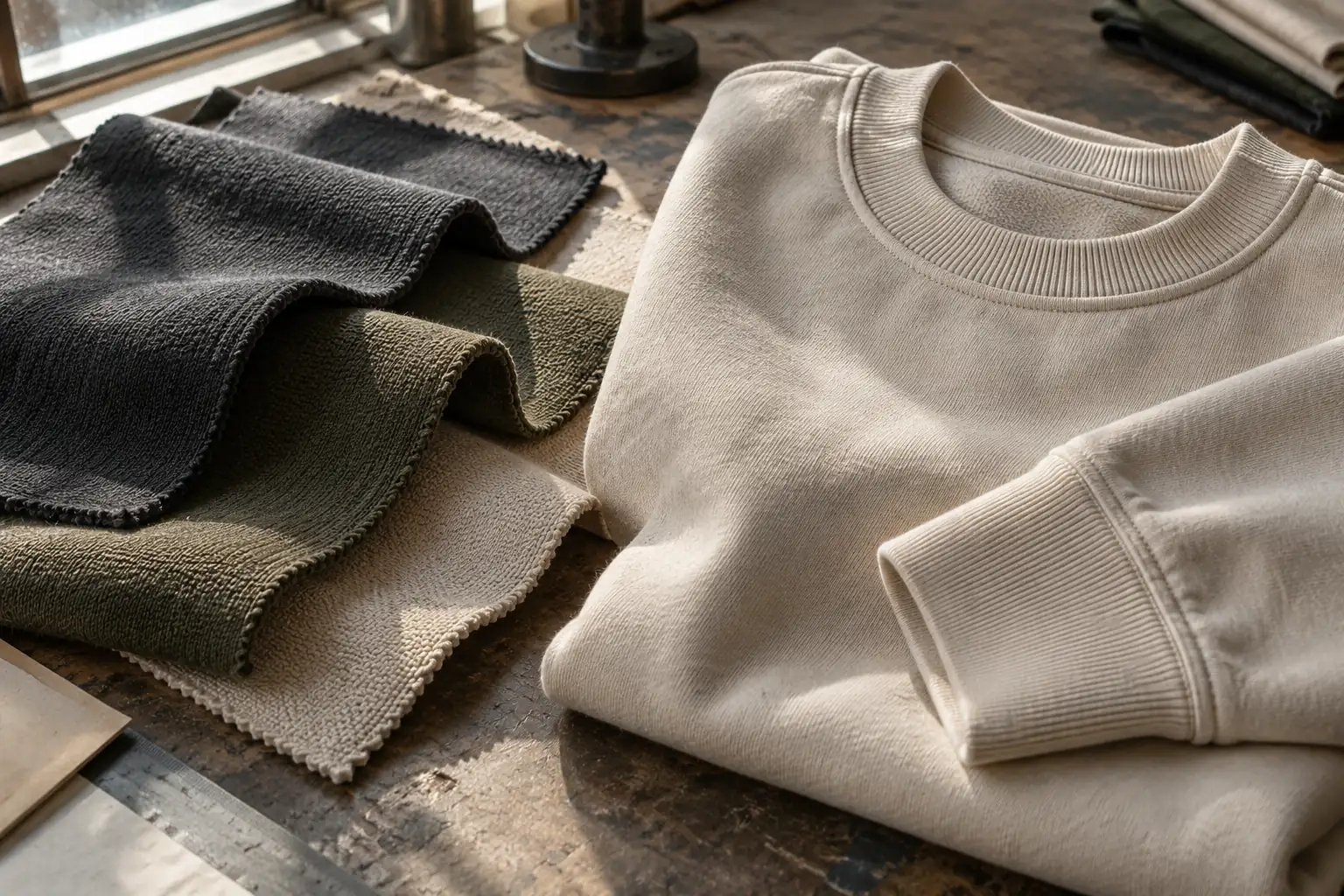
A style total can hide weak buying decisions. A 120-piece sweatshirt order divided between three colors and five sizes creates 15 inventory positions. An even allocation would put eight units into each position, but that arithmetic says nothing about whether shoppers want those combinations. Approve the size-color matrix using sales, waitlists, preorder evidence or a clearly stated test hypothesis.
Separate gross sales from retained sales when using historical data. If a size sells quickly but comes back frequently because sleeves are short, ordering deeper into it repeats a fit problem. Review return reasons beside demand and distinguish customer preference from a correctable specification issue.
| Buying check | Evidence to attach | Decision if evidence is weak |
|---|---|---|
| Color depth | Comparable retained sales by color | Reduce speculative variants |
| Size allocation | Sales and fit returns by size | Review grading before adding units |
| Launch quantity | Demand window and receipt date | Recalculate exposure to late arrival |
| Repeat order | Material availability and confirmed lead time | Do not assume rapid replenishment |
StitchQuote’s MOQ for most categories starts from 50 pieces per style; denim starts from 100 pieces per style. Those starting points do not establish a minimum for each color or size. Confirm the proposed split and any fabric, trim or wash constraints before treating a small opening order as feasible.
Freeze the details that determine whether a garment stays sold
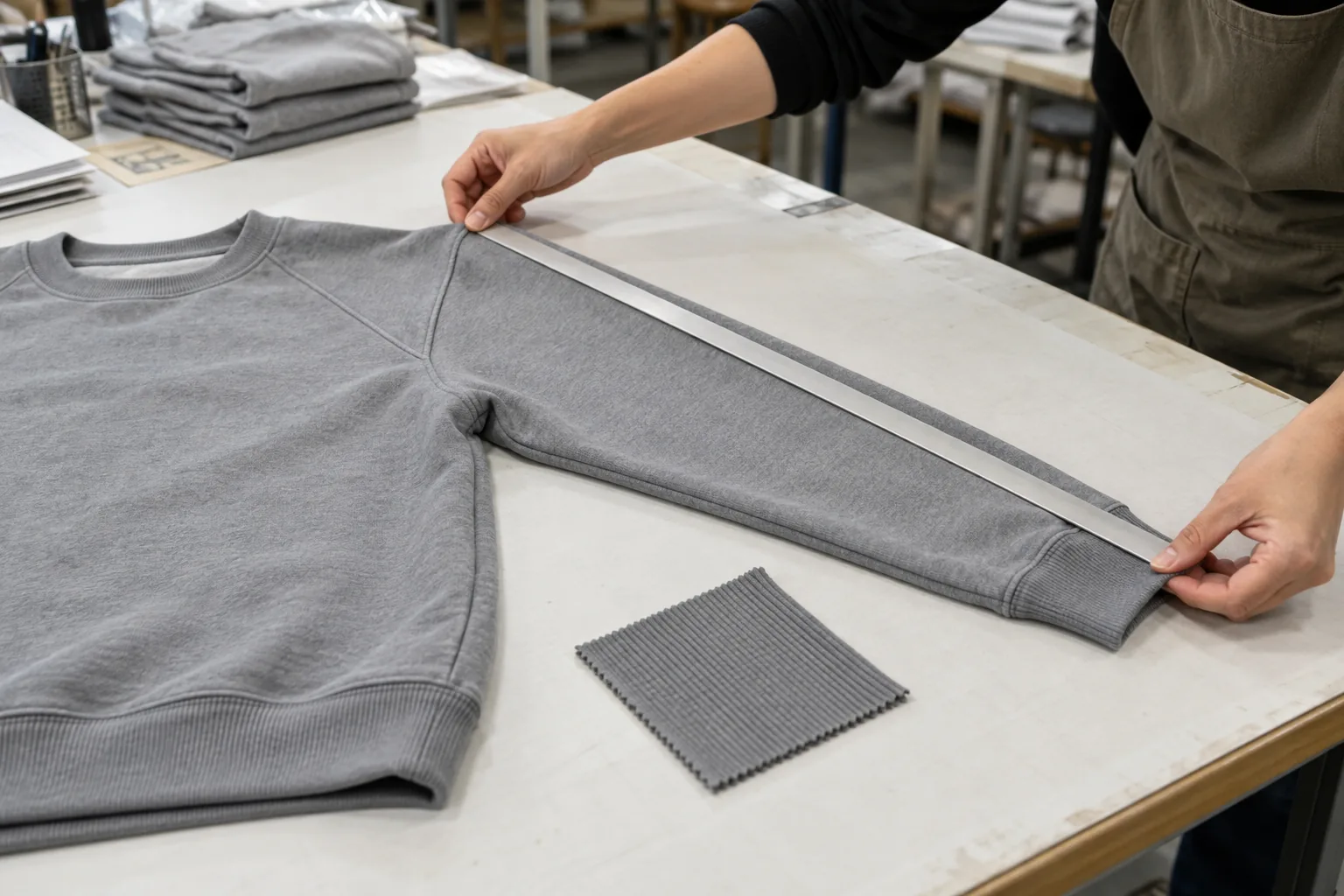
Inventory prevention includes reducing avoidable returns. For a heavyweight jersey top, specify finished chest width, body length, sleeve length, fabric composition, target weight and the measurement method. State whether dimensions apply before washing or after an agreed wash procedure. A measurement without its method gives the factory and warehouse room to reach different conclusions.
Use tolerances that suit the construction and intended fit. For example, a buyer might propose plus or minus 1 cm for half-chest width and body length on a particular sweatshirt. That is an illustrative starting point, not a universal factory standard. Agree each tolerance with the supplier and assess whether combined variation would noticeably change the silhouette.
For washed denim, evaluate the approved appearance alongside measurements after finishing. A wash that changes hand feel, shade or leg shape can create returns even when the unwashed construction was correct. Keep an approved reference and define acceptable variation instead of asking production to match an ambiguous image.
StitchQuote offers sampling, fabric and trim sourcing, cut-and-sew, private label and branding through woven labels, prints and embroidery. A 7-day sample is available for standard styles with confirmed specifications and available materials. Complex styles, custom washes and custom-developed fabrics take longer. Sample timing is not a promise of bulk delivery or replenishment timing.
Make the repeat-order option concrete before reducing opening stock
A smaller first buy only helps if the next decision is realistic. Ask whether the same fabric specification can be sourced again, whether a new dye lot may differ, and whether branded trims have separate minimums. An available sewing slot cannot compensate for an unavailable fabric or a custom zipper with a longer procurement cycle.
Build the reorder review backward from the last useful selling date. Include time for material confirmation, production, inspection, transport and receiving. Then identify the latest date when sales evidence could trigger an order. If useful evidence arrives after that date, the style does not have a practical in-season replenishment option.
For example, an undecorated core tee may offer more flexibility than a sweatshirt with a dated event print, provided the supplier confirms the production sequence. Ask whether decoration can be decided later and what that changes in handling, cost and schedule. Delayed branding still leaves physical garments to manage; it does not remove inventory exposure.
Document who owns any reserved fabric or trims, how long the reservation lasts and what happens if no repeat order follows. Moving excess commitment upstream is still a buying decision, even when it has not yet become finished clothing.
Use a release checklist that catches future return stock
QC should test whether the goods can be sold as described and consistently identified. StitchQuote includes QC before packing. Buyers should agree the inspection scope, acceptance criteria and response to failures before bulk production, rather than assuming that the word “QC” defines every check.
- Measurement: Check agreed points across relevant sizes and colors against the approved specification. Record the inspected quantity and actual results, including deviations.
- Appearance: Compare shade, wash effect, print placement and embroidery against approved references under consistent viewing conditions.
- Function: Check closures, pocket access, seam integrity and any construction feature likely to fail during normal handling.
- Care performance: Use the agreed wash procedure to assess dimensional change and appearance. Record the procedure so later comparisons mean something.
- Identification: Match garment size, composition and care information to the approved requirements, and verify that packaging identifies the correct variant.
- Failure handling: Separate goods awaiting review from accepted goods. Assign rework, reinspection or disposition responsibility before shipment release.
Pay particular attention to systematic failures. A mislabeled size can affect an entire packing group, while a wrong care instruction can produce repeated customer complaints. Inspection sampling is not proof that every unit is defect-free; use findings to decide whether broader checks or corrective work are needed.
Give remaining stock a traceable route before launch
Create separate inventory statuses for saleable returns, repairable items, goods awaiting assessment and confirmed unsaleable goods. “Unsold” describes a commercial outcome; it does not establish physical condition. A sealed return and a garment with a broken closure need different handling even when both miss the original selling season.
Define the first review date and the evidence required for each route. A repair decision might need photographs, a defect code, an agreed repair method and a reinspection result. A transfer for resale or donation should retain quantities, item identification, recipient information and transfer documentation. Confirm that the receiving channel can actually use the goods.
Keep a record connecting units received, units sold and retained, returns, transfers and remaining balance. This supports reconciliation and can help the responsible team assemble required disclosures; it is not a substitute for checking the applicable reporting format. Feed recurring reasons for leftover stock into the next buying gate, especially weak colors, fit failures and late arrivals.
Questions buyers should settle at the order meeting
Does a low MOQ make an order compliant?
No. A lower commitment can reduce potential surplus, but compliance depends on applicable obligations and actual handling. A small order with poor records or an unsuitable disposal route still needs attention.
Should we hold spare trims for repairs?
Consider it where replaceable buttons, snaps or other components could restore saleability. Agree compatibility, quantity, ownership and storage. Spare trims help only if someone can perform and verify the repair.
Can returned units count toward available stock immediately?
Only after the agreed assessment confirms their condition and identification. Keep unassessed returns out of saleable availability so replenishment decisions do not rely on units that may require repair or another route.
What should accompany the next supplier enquiry?
Send the size-color matrix, measurement and material requirements, target receipt window, sample approval needs and intended repeat-order assumptions. Ask for constraints against that specific plan so the opening quantity reflects a production route the supplier can confirm.
Related reading and next steps:
- Prepare the specifications behind your buying checklist
- Review sampling and minimum order planning
- Discuss your proposed order with StitchQuote
Request a manufacturing quote
Share your product type, quantity range, and destination. We usually reply within one business day.