Custom Streetwear, Casualwear & Denim Manufacturer•MOQ 50 pcs•Denim MOQ 100 pcs•7-Day Sample Available

How to Use First-Order Feedback to Build a Better Second Drop
Learn how to turn first-order feedback into a stronger second apparel drop without repeating the same fit, MOQ, branding, and costing mistakes in the next launch.

A first release gives a brand something more useful than a list of requests: evidence of where customers struggled with the garment they actually received. The challenge is deciding which signals justify a production change. A handful of comments can tempt a small label into replacing its fabric, rebuilding its fit, and doubling its assortment before it understands the original problem.
A better second drop reduces the biggest proven risk while preserving what already worked. Treat each revision as a claim to test, with a defined failure, a limited intervention, and an approval condition. That approach gives your manufacturer a usable brief and protects the next order from becoming an expensive restart.
Separate repeatable failures from requests for something new
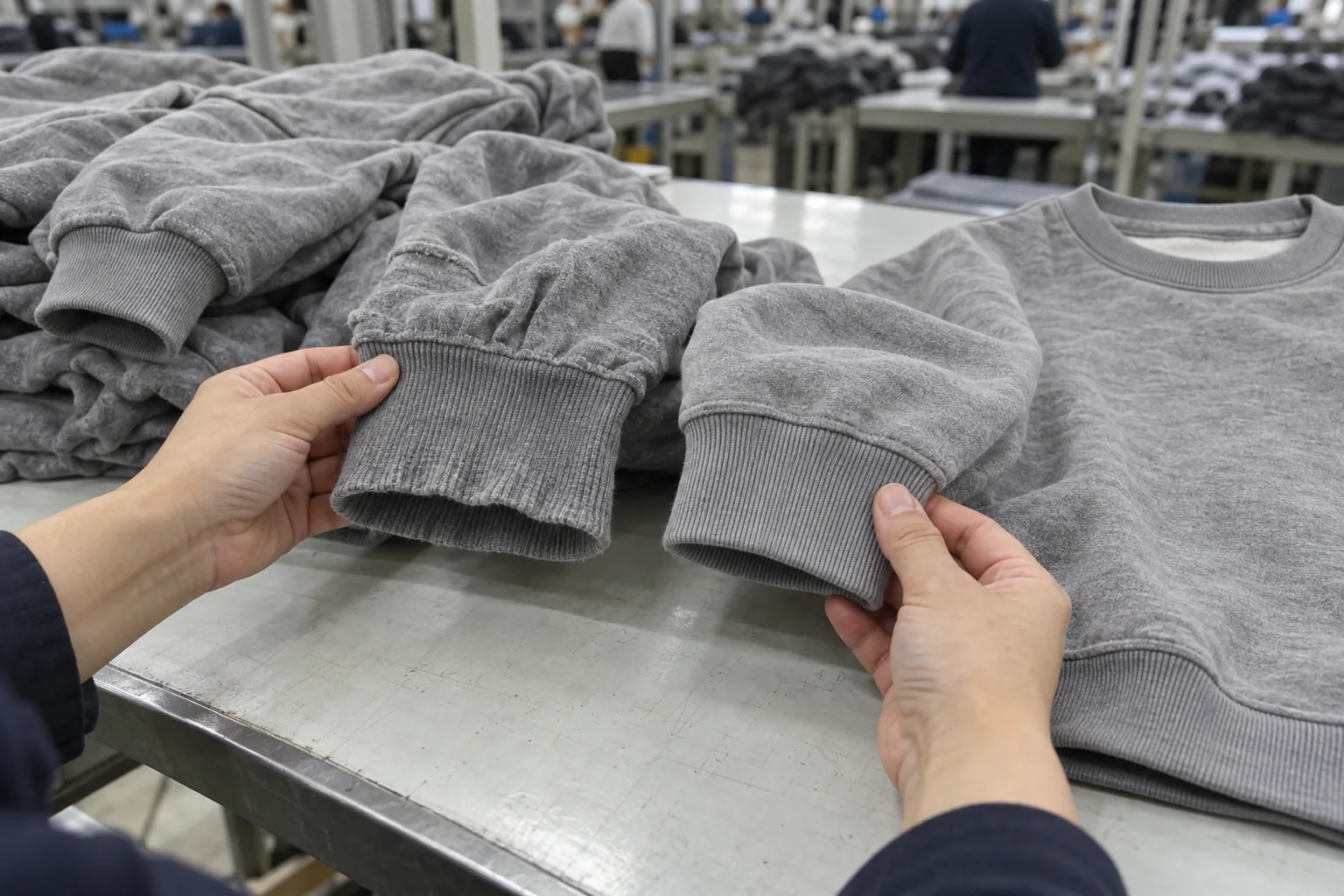
Build a feedback log with one row per affected garment, rather than one row per message. Capture the style, size, color, delivery batch if known, complaint, wear or wash history, and available photos or measurements. Link repeat messages to the original case so an active conversation does not look like several independent failures.
Keep the denominator visible. Six reports of a tight cuff among twenty delivered small hoodies deserve a different investigation from six among two hundred. Neither count alone proves a pattern defect. Check whether the reports concern the same size, whether customers followed the care instructions, and whether affected pieces match the approved measurements.
Separate observations into product failure, expectation mismatch, and new demand. A pocket seam opening during normal use is a failure. A boxy tee feeling wider than the product photos suggested may be an expectation problem. Requests for a zip version are new demand. Only the first category automatically calls for a technical investigation; the others may need clearer selling information or a separate development decision.
Put a change budget around the next release
A change budget limits uncertainty, not merely spending. For a small reorder, a useful starting rule is one major correction per style, plus directly dependent adjustments. This is a planning choice, not a manufacturing standard. If a verified problem creates a safety concern, stop and resolve it rather than forcing it inside the budget.
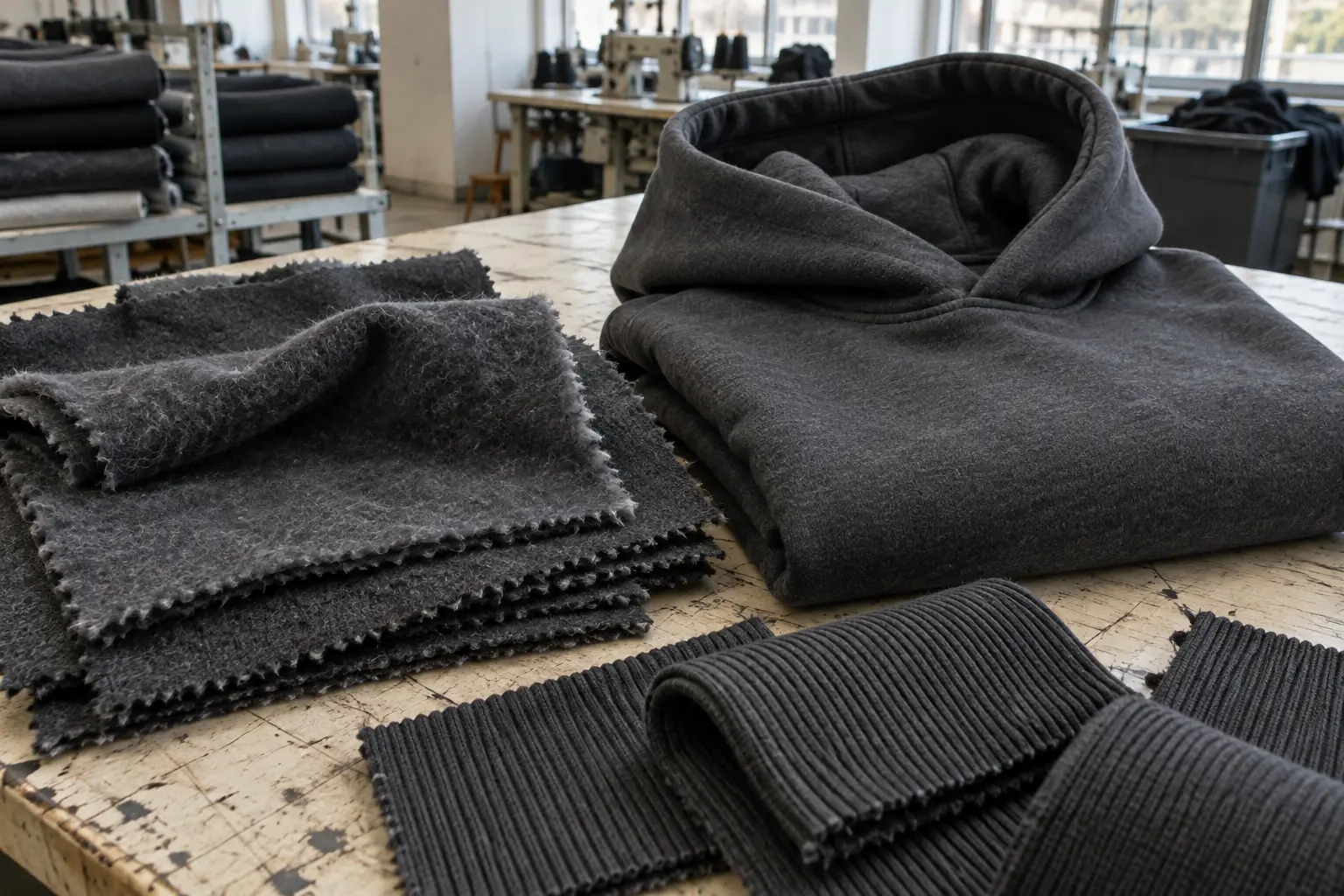
Suppose a pullover fits well through the body but customers struggle to push their hands through the cuffs. Investigate cuff opening, rib stretch and recovery, and attachment construction. Do not also introduce a heavier fleece, a cropped body, and a larger embroidery. Those changes would make it harder to tell whether the cuff correction improved the garment.
| Evidence | Smallest useful response | Hold for later |
|---|---|---|
| Pocket opening tears at one corner | Review reinforcement and seam allowance locally | Replacing the entire pocket shape |
| Delivered tee matches spec but looks shorter online | Correct garment measurements and fit imagery | Regrading every size immediately |
| Repeated cuff restriction on compliant samples | Test opening and rib behavior together | Switching the whole fleece program |
Record what stays fixed alongside what changes: fabric reference, body measurements, approved color, artwork size, and label placement. These boundaries let the supplier identify a revision that accidentally disturbs an established feature.
Turn the loudest complaint into a measurable hypothesis
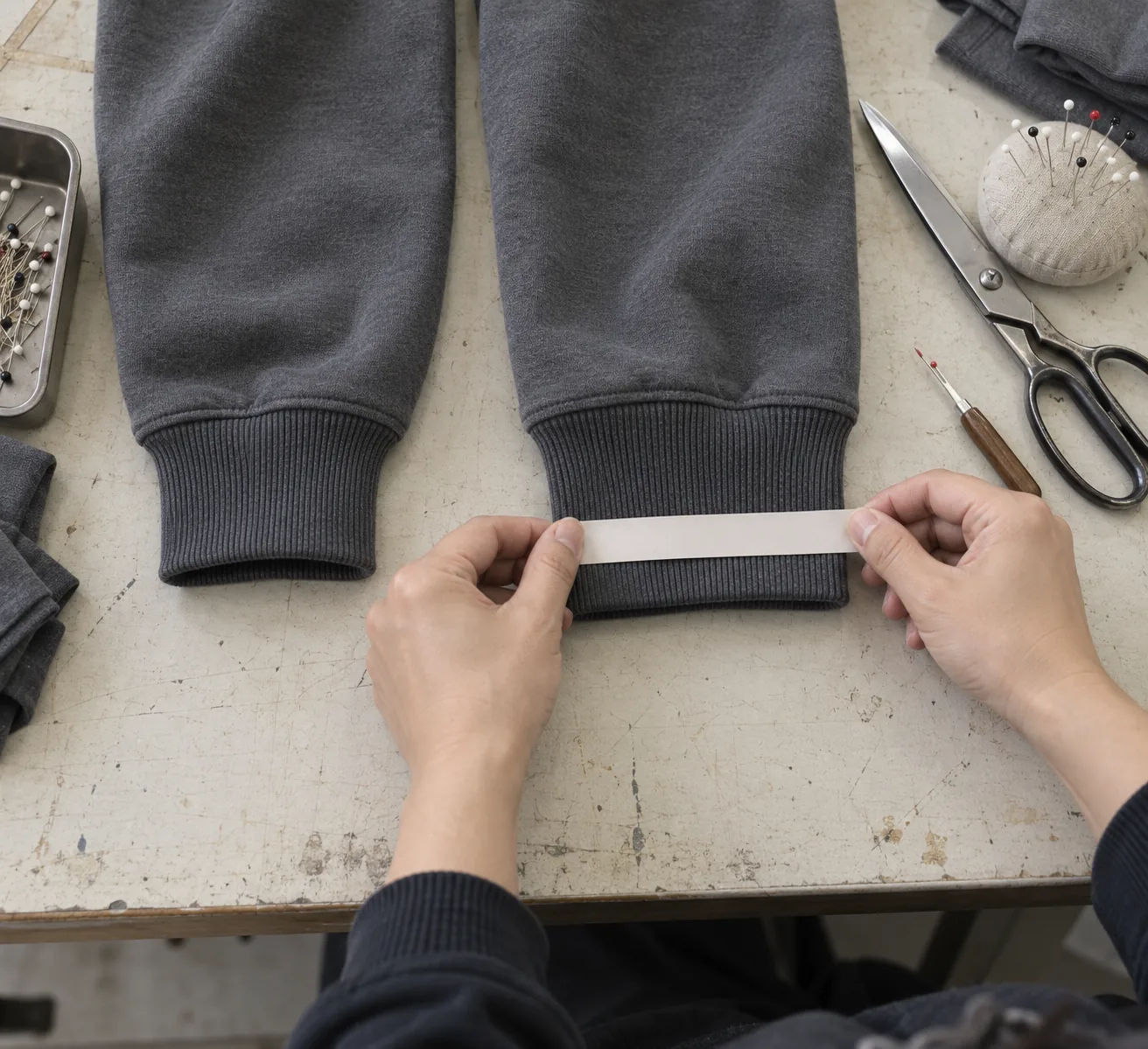
“Improve comfort” cannot be approved consistently. A testable hypothesis might be: the cuff feels restrictive because the relaxed opening is too small, even though the sleeve length is correct. Confirm that explanation against a retained production piece and an affected return before altering the pattern. If production missed the existing specification, restoring compliance may solve the problem without redesign.
For an illustrative trial, increase a flat cuff opening from 8.5 cm to 9.5 cm while keeping the rib reference and sleeve length unchanged. Define where the opening is measured, with the garment relaxed and laid flat. A proposed tolerance such as ±0.5 cm needs agreement for that construction; it is not a universal apparel tolerance. Evaluate hand passage and recovery as well as the ruler result.
Use the same discipline for wash complaints. Record the care cycle, drying method, measurement points, and before-and-after dimensions. A body length changing from 70 cm to 67.9 cm represents 3% shrinkage. Whether that is acceptable depends on the agreed requirement and intended fit. Changing the pattern to compensate before checking fabric behavior could conceal an unstable material issue.
Buy the smallest sample that answers the question
Choose the sample scope from the failure mechanism. A pocket reinforcement problem may first be evaluated on a sewn component using the intended fabric and thread. A rise adjustment on denim requires a complete garment because waistband position, seat shape, and movement interact. A component test can remove an early uncertainty, but it cannot approve fit or the finished garment.
Ask for an unchanged reference and one revised version where practical. Compare them on the same wearer under the same conditions. For the cuff example, check putting the hoodie on, removing it, pushing sleeves up, and recovery afterward. Agree on repetitions and observation criteria before testing so approval does not depend on whichever impression is freshest.
Check an additional size when the suspected issue involves grading, rather than assuming a satisfactory medium proves the full range. At StitchQuote, a 7-day sample is available for standard styles with confirmed specs and available materials. Complex styles, custom washes, and custom-developed fabrics take longer. A familiar silhouette does not guarantee the shorter route if its revised material must be developed.
Keep uncertain demand out of the committed assortment
A second release often expands because customers mention colors or variants that were unavailable. Treat these comments as leads, then compare them with size-level sales, returns, and availability. A sold-out black medium and an unsold sand extra-small do not establish a clean color preference if the size mix and exposure differed.
Allocate the next order around the proven garment first. Before adding a new variant, ask what evidence supports its quantity and which existing units it displaces. A waitlist or direct purchase-intent survey can help, but expressions of interest are not completed sales. Avoid translating every requested option into a separate production commitment.
StitchQuote’s MOQ for most categories starts from 50 pieces per style; denim starts from 100 pieces per style. Confirm how the intended color and size splits affect the specific order rather than assuming every split is available at that starting quantity. Custom trims and sourced materials also need project-specific confirmation before the assortment is locked.
Make QC prove the correction survived production
The revised sample is only the reference. Bulk inspection needs to test the original failure mode and check that its correction did not introduce another problem. Keep the approved sample, revision identifier, measurement sheet, and construction notes together so the earlier version cannot become the inspection standard by mistake.
- Identity: Verify that inspected pieces use the approved fabric, rib, trims, and revision. Similar-looking materials can behave differently.
- Measurement: Check the revised point using the agreed method and tolerance, with coverage across relevant sizes and colors.
- Function: Repeat the agreed use check, such as cuff passage or pocket handling, rather than relying on appearance alone.
- Wash behavior: Where relevant, assess dimensional change and appearance using the agreed care conditions and acceptance limits.
- Adjacent effects: Inspect sleeve gathering after a cuff change, or puckering and fabric damage around added reinforcement.
- Disposition: Record defects and define who approves rework, reinspection, or release before packing.
Agree on inspection coverage before production; do not invent a sampling plan after finding a defect. StitchQuote provides QC before packing, alongside cut-and-sew, private label, sampling, fabric and trim sourcing, and branding services. The buyer’s brief should specify the checks needed to verify this particular correction.
Questions before committing to the corrected drop
Should one detailed complaint trigger a sample revision?
It should trigger investigation if the evidence is credible. Request measurements or inspect the piece, then compare it with the approved reference. One confirmed construction failure can matter more than several vague preferences, but it does not establish how widespread the issue is.
Can the second drop keep the original size chart?
Only if that chart still accurately describes the revised garment. Identify whether each listed value is a body measurement or a finished garment measurement. Update affected values and fit guidance when necessary; otherwise returning customers may choose a size using obsolete information.
What if the correction makes a previously happy customer dislike the fit?
Include an established customer fit profile in the comparison, not just the dissatisfied profile. If the change serves a different wearer rather than correcting a defect, consider whether it belongs in a separate fit later. Do not quietly redefine a successful core silhouette.
When is the brief ready to release?
Release it when the problem, approved correction, unchanged references, order breakdown, and acceptance checks are recorded together. Log unresolved ideas for later development. The next release should carry a demonstrable improvement, with enough continuity to learn whether it worked.
Related reading and project support:
- Prepare a tech pack that records the approved revision
- Review sampling and MOQ before expanding quantities
- Contact StitchQuote to discuss your second-drop brief
Request a manufacturing quote
Share your product type, quantity range, and destination. We usually reply within one business day.