Custom Streetwear, Casualwear & Denim Manufacturer•MOQ 50 pcs•Denim MOQ 100 pcs•7-Day Sample Available

What Buyers Should Clarify Before Sampling a Denim Jacket
Use this buyer checklist to prepare a denim jacket sample brief more clearly across wash direction, fit target, hardware, panel layout, and approval order.

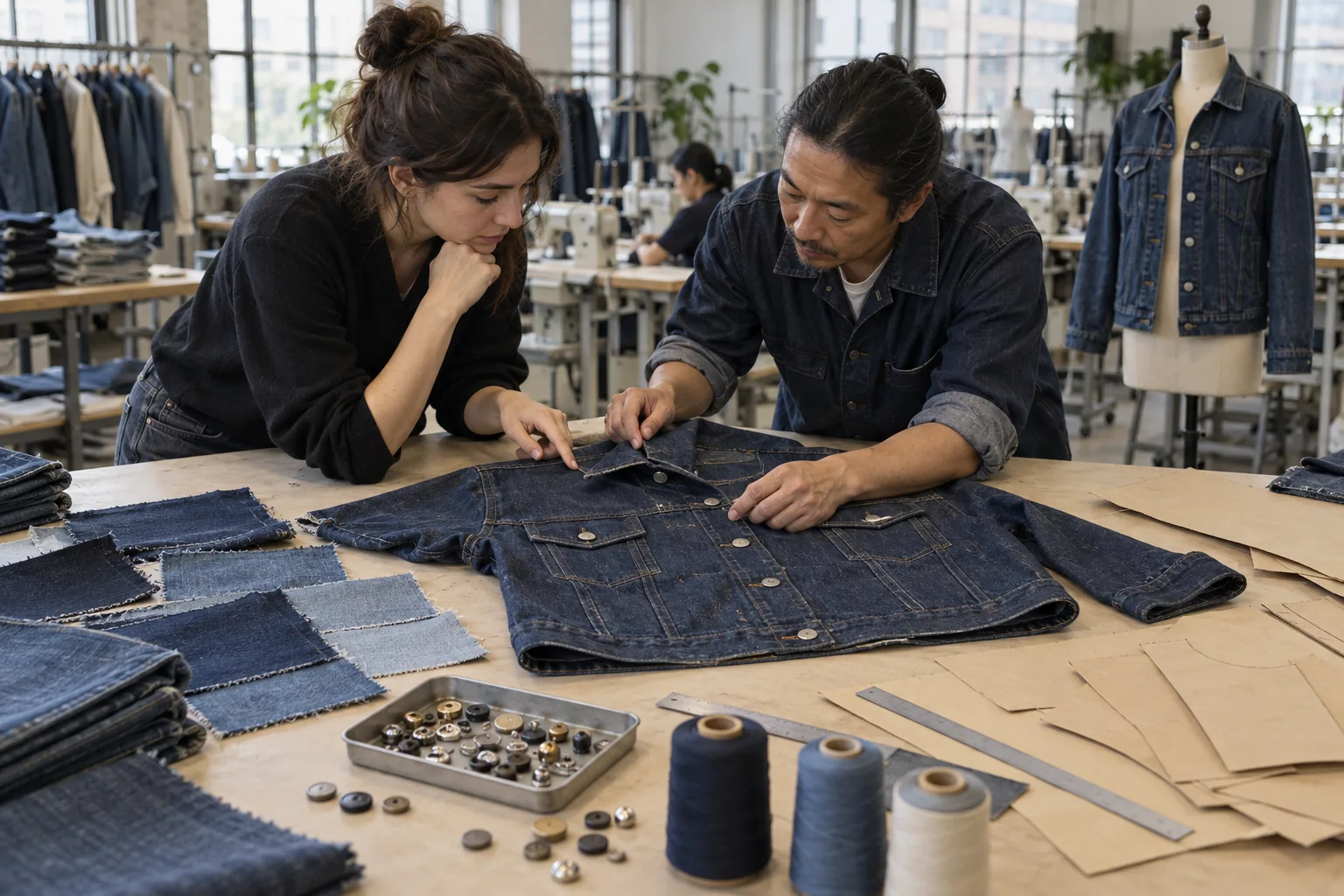
A denim jacket sample can look right on its own and still leave the most important color question unanswered: what will the rest of the order look like beside it? Indigo variation becomes especially visible across a jacket’s broad back, paired chest pockets, sleeves and collar. Before development begins, buyers need to specify which variations belong to the design and which would make a garment unacceptable.
For buyers sampling a denim jacket, shade lot control starts with the brief. A shade lot is a group of material or garments managed together because their color falls within an agreed range. Fabric dye lots, roll differences and garment wash batches can all affect that grouping. The first sample should establish a usable reference and expose the limits of repeating it.
Decide where shade differences will matter to your customer
Start with the selling context. Jackets displayed together on a store rail invite direct comparison; individually shipped online orders may instead be judged against product photography. Neither channel removes the need for consistency, but each reveals different failures. Clarify whether every jacket must sit within one narrow visual family or whether approved light, middle and dark groups can coexist within the order.
Then separate variation within a garment from variation between garments. Slight overall differences between two jackets may be acceptable, while one pale sleeve attached to a darker body may not be. Describe intended contrast by location: brighter pocket edges, lighter sleeve creases or stronger seam abrasion. Do not let a general request for a “vintage effect” authorize unrelated panel mismatch.
A practical brief might require left and right chest pockets to read as a pair, both sleeves to share the body’s undertone, and the collar to remain within the approved overall shade range. These are proposed visual requirements, not universal industry tolerances. Agree them with the manufacturer before cutting the first development garment.
Give the sample fabric an identity that survives cutting
A fabric swatch without a source record is a weak starting point. Ask the supplier to record the fabric article, composition, construction, weight, finish, dye lot and roll reference used for the sample. Where information is unavailable, mark it as unconfirmed. A sample made from convenient stock can demonstrate silhouette, but its color should not automatically become a promise for a different bulk fabric.
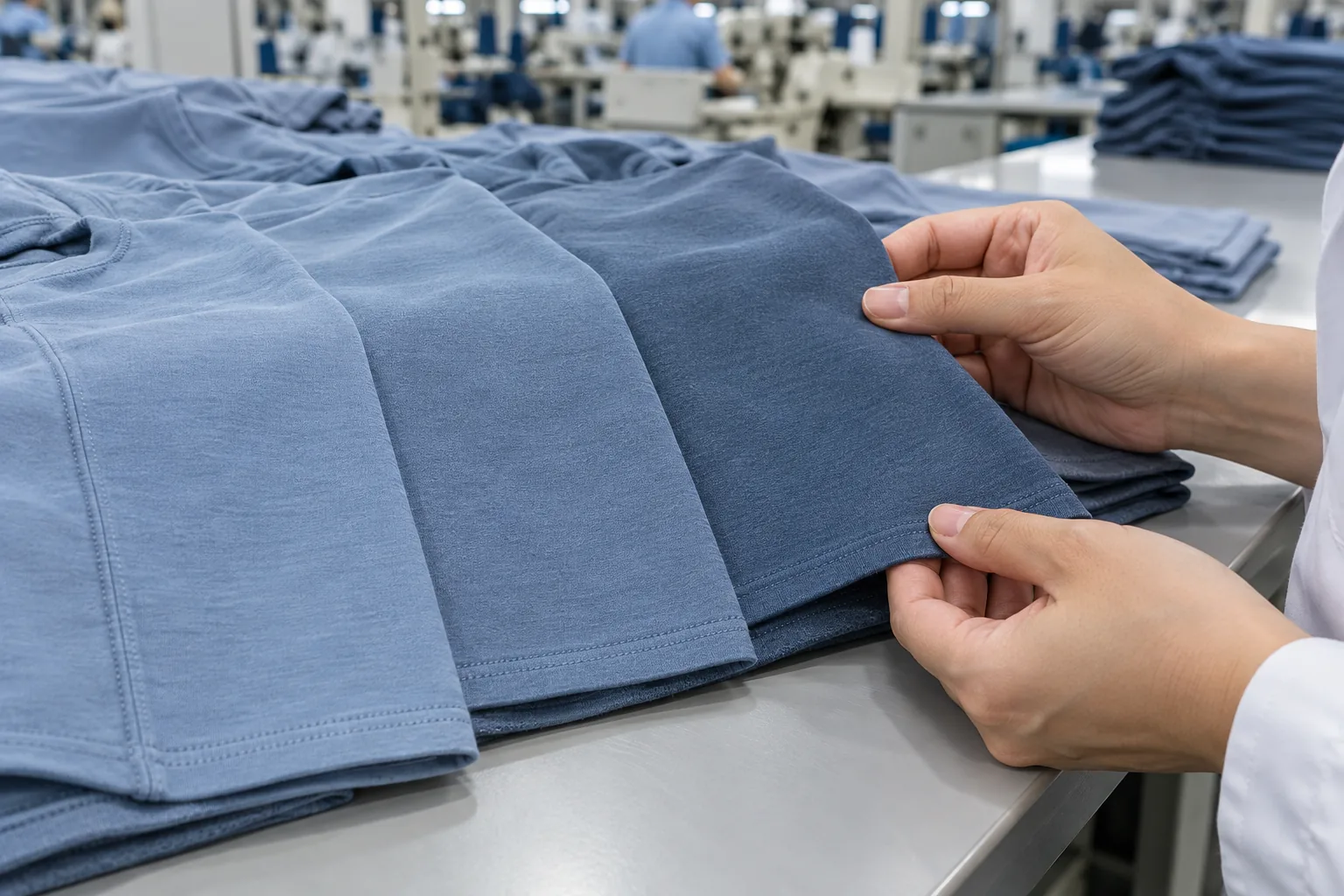
Request shade comparisons from representative roll positions before allocating production fabric. Depending on roll length and observed variation, that may involve comparing width positions and material from different points along the roll. The supplier should propose a workable sampling plan. Retain identified swatches so that a later mismatch can be traced to incoming material rather than attributed to washing by default.
Ask whether the intended fabric can be reserved and what changes would trigger another trial. A switch in fabric source, weight or finishing route can alter wash response. For a washed indigo jacket, even a similar unwashed shade does not establish equivalent results after processing. Confirm how the replacement material will be compared in a small wash trial.
Build a shade reference set instead of approving one photograph
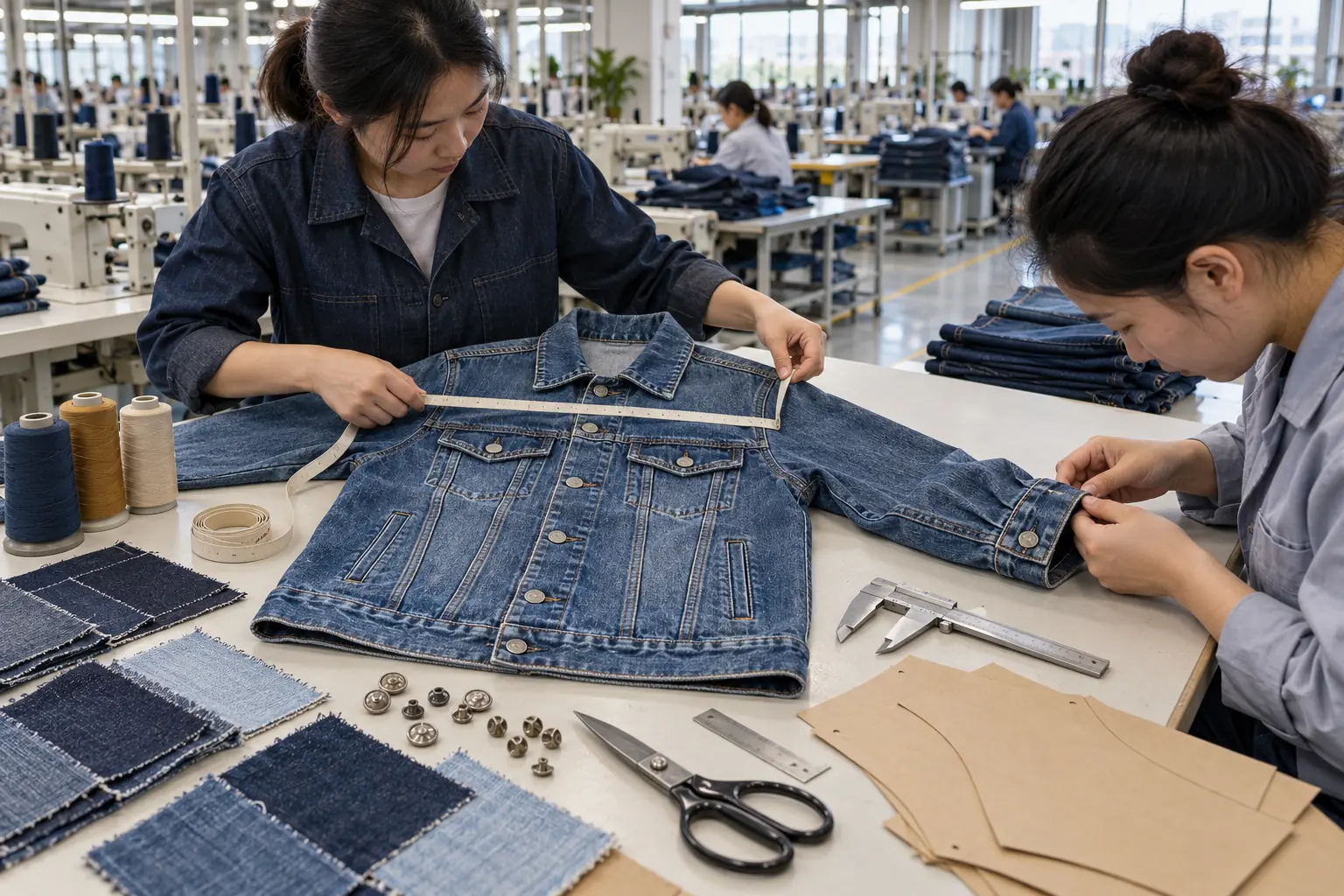
A single attractive sample establishes a target, but it rarely explains the limits around that target. Before requesting development, decide whether the approval set should include a center reference and acceptable light and dark boundaries. These boundaries must also preserve undertone: a greener jacket is not necessarily acceptable simply because its darkness falls between two approved pieces.
Use physical references viewed under agreed lighting. Daylight simulation and the intended retail lighting are useful comparison conditions when available; specify the actual conditions used. Phone photographs help locate an issue, but automatic exposure and white balance can hide differences. Allow samples to dry fully and reach the agreed conditioning state before assessment.
| Reference | What it controls | Buyer decision |
|---|---|---|
| Center garment | Overall shade and wash character | Approve the intended appearance |
| Boundary swatches or garments | Permitted lightness and undertone variation | Accept or narrow the proposed range |
| Panel comparison | Relationships within one jacket | Identify prohibited mismatches |
If instrumental color measurement is proposed, agree the color-difference formula, instrument settings, measurement locations and acceptance limit per project. Textured, abraded denim needs consistent measurement areas and visual review. A numerical pass on a flat back panel does not resolve a visibly mismatched pocket flap.
Make cutting and wash batches part of the sample brief
Ask how matched components will stay together from cutting through sewing. Bundles should retain their roll or shade-group identity, including small pieces such as cuffs, pocket flaps and waistband tabs. A replacement panel pulled from an unrelated bundle can produce a conspicuous mismatch after washing even when the unwashed pieces look close.
Washing introduces a second grouping system. Development equipment and bulk equipment may differ in load size and mechanical action, so a successful sample recipe is not sufficient evidence of bulk repeatability. Request records of the sample’s processing route and ask which conditions need validation before the production wash proceeds. Recipe details alone cannot compensate for changed fabric or loading.
Specify how garments from each wash batch will be identified and compared against the retained references. For example, require review of representative garments from the first production batch before releasing the remaining batches, with the sample count agreed for the order. Also decide who can release a borderline batch and whether production must pause while that decision is pending.
Keep reworked garments identifiable. Additional processing may change shade, hand feel, dimensions and abrasion. Reapproval should cover those affected properties rather than color alone.
Use the first jacket to test a practical shade checklist
Write the inspection checklist before the sample arrives. That prevents the review from becoming a vague instruction to “make it more consistent.” Inspect the jacket flat and hanging, with the front closed and sleeves visible, under the agreed lighting. Compare it with the reference set rather than relying on memory.
- Overall shade: Check lightness and undertone against the center and boundary references, including the broad back panel.
- Paired components: Compare sleeves, chest pockets, flaps and cuffs for unintended contrast.
- Panel joins: Look for abrupt color changes across yokes, side seams and waistband joins.
- Wash placement: Confirm that abrasion and highlights follow the intended locations without disguising mismatched base shades.
- Traceability: Verify that the sample can be connected to its fabric source and wash trial record.
- Disposition: Record approval, rejection or a specific revision, with a named decision owner.
For each failure, identify the location and comparison condition. “Left sleeve appears greener than body under the agreed retail light” gives the factory a useful investigation point. Keep shade comments separate from fit comments so that a pattern revision does not accidentally imply color approval.
For bulk QC, agree the inspection method, coverage and handling of failures before packing. Sampling cannot guarantee that every garment is free of mismatch; decide whether additional sorting is needed when variation appears. Segregate disputed pieces until the buyer and supplier agree their disposition.
Set the commercial limits before requesting development
At StitchQuote, denim starts from 100 pieces per style. That minimum does not establish how many fabric lots or wash batches an order will require. Ask how the proposed quantity, fabric availability and shade expectations fit together. Splitting a small order across several shade targets may create additional development and material requirements that need project-specific confirmation.
A 7-day sample is available for standard styles with confirmed specifications and available materials; complex styles, custom washes and custom-developed fabric take longer. Treat a shade-boundary study or replacement-fabric trial as explicit development work when discussing timing. StitchQuote’s services include sampling, fabric and trim sourcing, cut-and-sew, private label, branding and QC before packing.
Send a concise decision package: intended selling context, fabric reference, panel-matching rules, physical shade targets, review conditions and approval owner. Ask the manufacturer to identify anything the first sample cannot prove. That answer helps define the next validation step before a purchase commitment relies on an untested assumption.
Questions buyers ask about shade-controlled development
Can a jacket from our archive serve as the color master?
Yes, if its condition is documented and both sides can access an agreed physical reference. Wear, laundering and light exposure may have changed it. Identify which areas represent the target and which aged effects should be excluded.
Should each size receive a separate shade approval?
Size alone does not define a shade lot. Base the approval plan on fabric groups and wash batches, while checking whether size-related loading or construction differences affect appearance. Include representative sizes when those differences are relevant.
What happens if bulk fabric cannot match the sample?
Request a new wash trial on the proposed bulk material before accepting a substitution. Compare it with the original reference and explicitly approve any revised target. Keep both records so the production team knows which standard governs the order.
Can packing solve an order with several acceptable shades?
Packing by approved shade group can support consistent store allocations, but it cannot repair mismatched panels or make rejected shades acceptable. Agree grouping and carton identification before packing, and confirm that the arrangement fits your fulfillment process.
Related reading
- Document shade requirements in your tech pack
- Review sampling and minimum order planning
- Follow the denim wash approval process
- Discuss your jacket development brief with StitchQuote
Request a manufacturing quote
Share your product type, quantity range, and destination. We usually reply within one business day.