Custom Streetwear, Casualwear & Denim Manufacturer•MOQ 50 pcs•Denim MOQ 100 pcs•7-Day Sample Available

How to Ask Better QC Questions When Working with a New Manufacturer
Use this factory-side guide to compare ask better qc questions when working with a new manufacturer more clearly across supplier fit, quote scope, approvals, and.

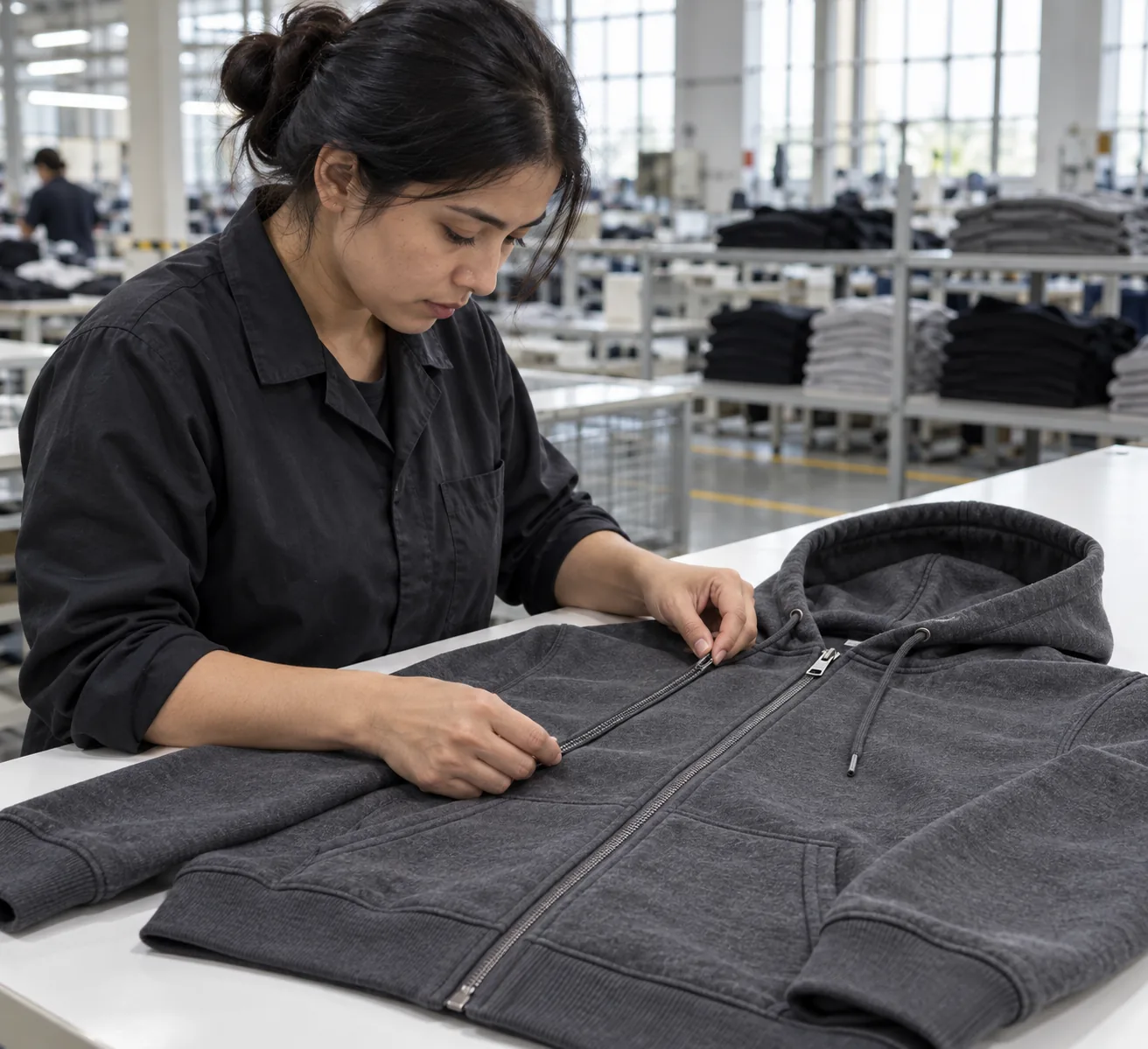
A new manufacturer can promise careful inspection without sharing your definition of an acceptable shipment. Before placing an order, ask how the factory will select garments, classify defects, and respond when inspection results fail the agreed plan. Those answers turn a reassuring conversation into a release decision you can actually review.
Acceptance quality limit, or AQL, planning is useful at this buyer stage because it makes both sides describe their rules before production starts. It does not guarantee a defect-free delivery, and an AQL number is not permission to ship that percentage of faulty garments. Use the questions below to establish an inspection agreement for your first streetwear, basics, or denim order.
Ask what shipment the acceptance decision will cover
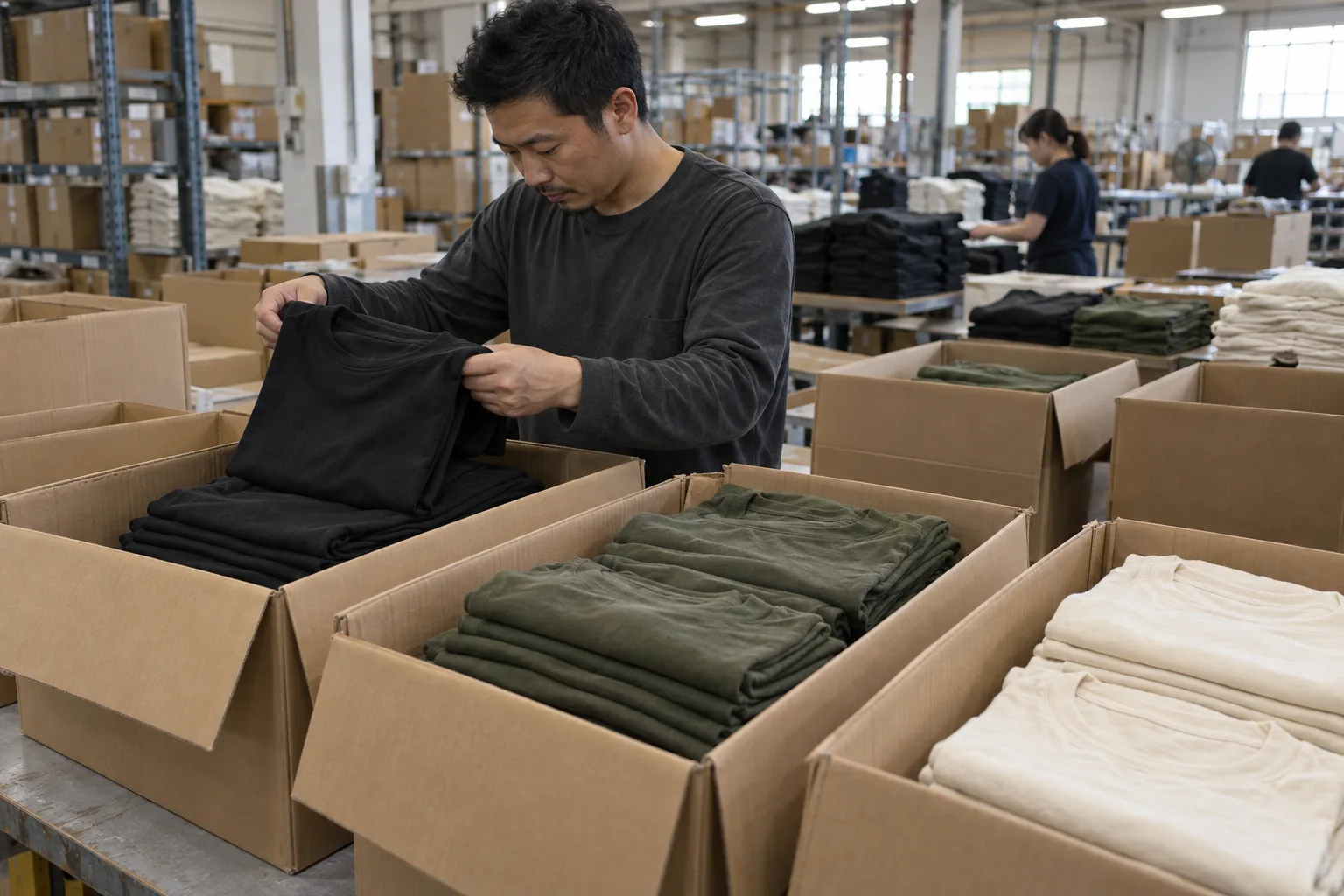
Start with: “What exactly counts as one inspection lot for this order?” A lot should identify the production being accepted or rejected. Record the style, purchase order, quantity, colorways, size breakdown, and relevant production or finishing batches. Combining unrelated garments can hide a problem affecting only one group.
Consider a first order of 150 heavyweight tees split across three colors. If the black version uses a different print process, ask whether it needs a separate lot or an additional targeted check. Do not assume a random sample from all 150 pieces will adequately examine every color, size, and decoration variation.
Ask who chooses the units and how selection happens. The manufacturer should explain how inspectors reach different cartons or production groups, rather than receiving a handpicked stack. Distinguish the random acceptance sample from extra risk checks: testing additional printed panels is useful, but those results need their own documented decision rule.
Get the complete sampling plan behind the AQL number
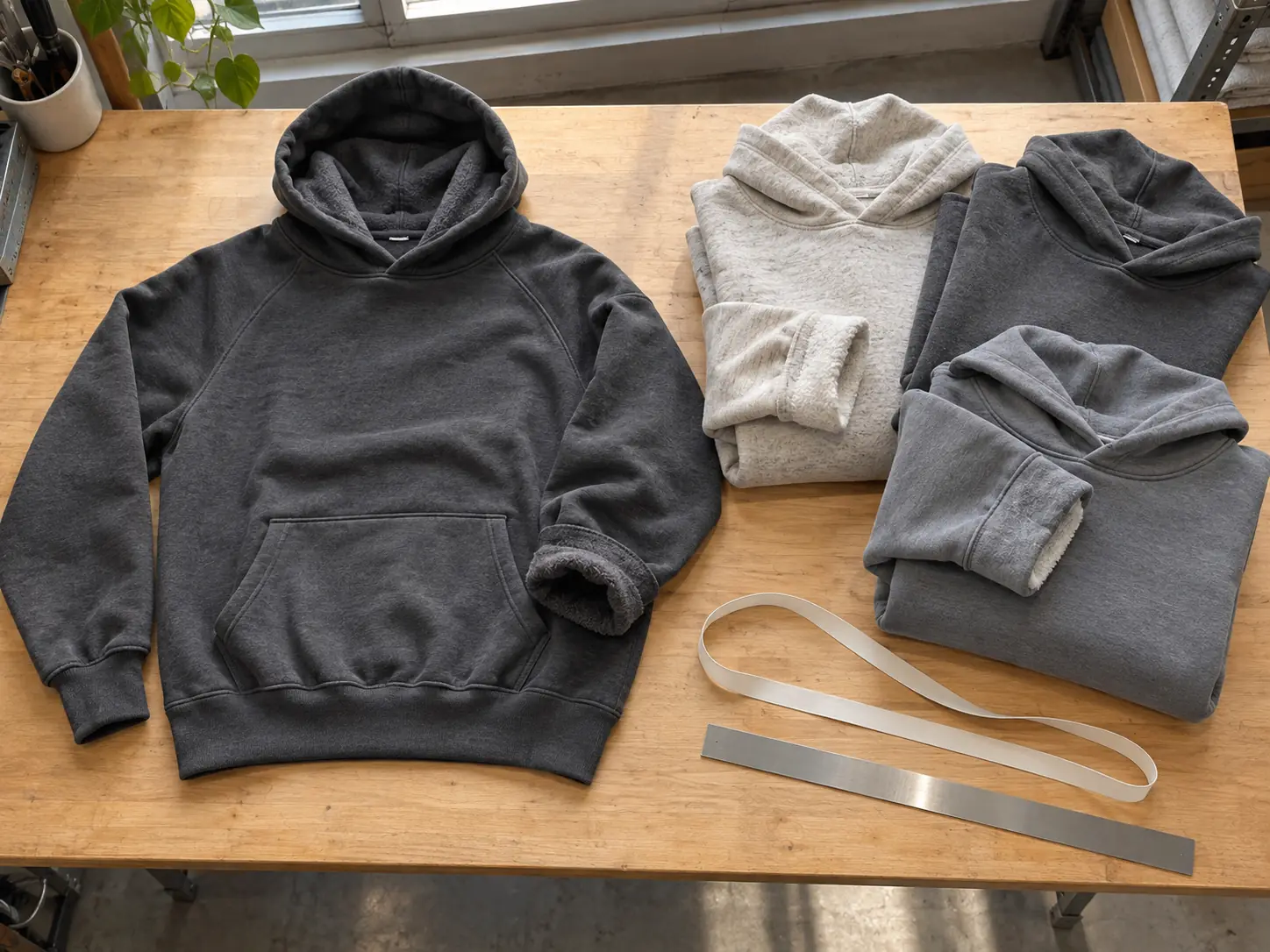
“We use AQL 2.5” leaves too much unanswered. Request the named sampling standard and edition, inspection level, normal or tightened inspection status, single or other sampling method, lot size, resulting sample size, and acceptance and rejection numbers. A recognized scheme such as ISO 2859-1 may be proposed; using a sampling standard does not establish factory certification.
Major AQL 2.5 and minor AQL 4.0 are familiar industry starting points, not universal recommendations or confirmed StitchQuote settings. Agree values for the actual product and risk. The selected standard’s tables determine the plan; do not calculate the allowable failures by multiplying the sample size by the AQL percentage.
| Ask for | Why the answer matters |
|---|---|
| Standard, level, and inspection status | These determine which sampling rules apply. |
| Lot quantity and sample size | The buyer can verify how the inspection scope was derived. |
| Acceptance and rejection numbers by class | Inspectors have explicit limits for the release decision. |
| Counting method | Defective garments and individual defects are different measures. |
Ask the supplier to return the completed plan, not just a standard’s name. For small lots, compare its inspection burden with checking every garment for selected attributes. Full inspection can be sensible for label identity or decoration presence, while destructive testing still requires a separately agreed sample.
Build defect classes around the customer’s experience
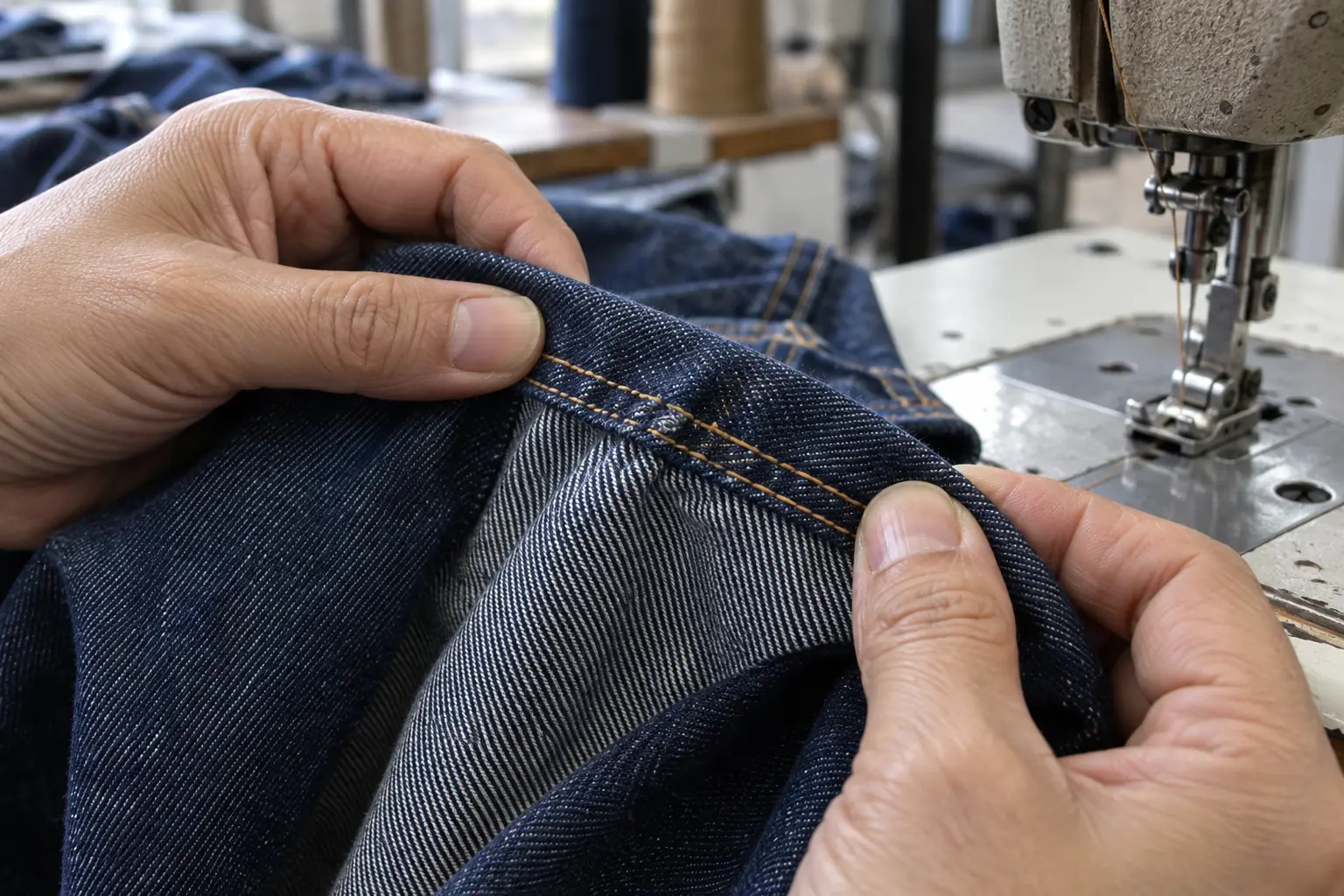
Ask: “Can we classify these actual failure examples before approving production?” Supply annotated reference photos and explain the consequence. A critical defect concerns safety or a serious regulatory issue; a major defect affects function, fit, or saleability; a minor defect is a lesser departure from the agreed workmanship standard. Product context determines the final classification.
For a zip hoodie, an inoperative zipper could be major, while an easily removable thread end might be minor. A sharp metal fragment requires immediate containment. For denim, an open crotch seam is materially different from an intended abrasion within the approved wash reference. Agree placement and extent limits for distressing so intentional design does not become a blanket excuse.
Define critical findings through a separate zero-acceptance and escalation rule. Zero findings in a sample cannot prove the whole lot is safe. Ask which preventive controls or full checks address the hazard and who investigates a discovery. Also settle whether one garment with several issues counts once at its highest severity or under another method consistent with the chosen plan.
Separate measurement limits from acceptance limits
AQL answers whether a lot meets the sampling plan; it does not tell an inspector how to measure a sleeve. Ask which tech pack revision and approved reference will govern inspection. Include points of measure, garment positioning, conditioning requirements, measuring tools, and tolerances by point and size.
For example, a buyer might propose a flat half-chest tolerance of ±1 cm and a neck-rib height tolerance of ±0.3 cm for a particular tee. These are illustrative project specifications, not universal allowances. Confirm feasibility during sampling, then record whether an out-of-tolerance result is major or minor and whether repeated fit deviations trigger additional investigation.
Do not bury wash performance in a visual sampling agreement. State the wash method, number of cycles, drying method, measurement timing, and allowed dimensional change separately. Likewise, print adhesion, seam strength, and colorfastness need defined methods and acceptance criteria. Ask which tests are performed, on how many specimens, and how failure affects shipment.
Use a release checklist that can survive a failed inspection
Ask to see the proposed report format before the first bulk inspection. It should let you reconstruct the decision without relying on a message saying “QC passed.” The following checklist makes missing information visible:
- Identity: purchase order, lot quantity, inspected quantity, style, colors, sizes, and specification revision.
- Selection: where units were drawn from and how random selection and variant coverage were handled.
- Evidence: defect photographs, measurement records, severity assignments, and counts using the agreed method.
- Decision: applicable acceptance and rejection limits, test outcomes, unresolved issues, and release authority.
- Containment: location of held stock, sorting scope, repair responsibility, and reinspection requirements.
Set the failure workflow in advance. If a lot is rejected for skipped stitches, repairing only the sampled pieces does not resolve the lot. Ask how the affected stock will be isolated, whether every piece needs sorting, how the cause will be corrected, and how the corrected lot will be presented for a fresh inspection.
Agree responsibility for reinspection costs and schedule changes commercially before production. Any concession should identify the specific issue, affected quantity, and authorized approver. Safety or legal requirements cannot be waived through a routine commercial concession. Keep pre-packing workmanship checks and final packaging verification distinct so a garment pass does not conceal incorrect size stickers or carton contents.
Make the first order prove the inspection agreement
Request a marked-up inspection plan alongside sample comments. An approved sample establishes appearance and construction targets; it cannot demonstrate that a later bulk lot meets its acceptance criteria. Use the first order to verify whether the manufacturer can apply the agreed definitions and produce usable evidence.
StitchQuote provides cut-and-sew, private label, sampling, fabric and trim sourcing, branding through woven labels, prints and embroidery, and QC before packing. Ask how those services will support your proposed inspection plan, including any tests or inspection stages requiring separate confirmation. QC before packing alone does not specify an AQL level, independent inspection, or laboratory test scope.
MOQ for most categories starts from 50 pieces per style; denim starts from 100 pieces per style. A 7-day sample is available for standard styles with confirmed specifications and available materials. Complex styles, custom washes, and custom-developed fabrics take longer. Treat that sample timing separately from the time needed for bulk inspection, corrective work, or test results.
Questions buyers ask before signing the QC plan
Can I require every size to appear in the sample?
Yes, but agree how this fits the random sampling method. Additional size coverage may be a separate measurement check with its own acceptance rule. Do not silently substitute a curated size set for the sample specified by the acceptance plan.
Does passing inspection mean I should expect no defects?
No. Sampling carries a risk of accepting a lot with defects or rejecting an otherwise acceptable lot. It supports a defined decision under uncertainty. Prevention, production controls, and clear specifications remain necessary even when the final sample passes.
What if a defect appears only after washing?
Use the agreed performance test and shipment-hold rule. A visual inspection pass does not override a failed wash test. Confirm testing early enough that results arrive before release, and retain identifiable test specimens and records for investigation.
Can we change the limits after seeing inspection results?
Avoid retroactively changing the plan to obtain a pass. Hold the lot, assess the findings, and document the correction or permitted concession. Any revised inspection requirements should have explicit approval and a clear effective scope.
Related reading and next steps:
- Prepare measurable requirements in your tech pack
- Review sampling and MOQ planning
- Explore quality control
- Discuss your first-order inspection requirements
Request a manufacturing quote
Share your product type, quantity range, and destination. We usually reply within one business day.