Custom Streetwear, Casualwear & Denim Manufacturer•MOQ 50 pcs•Denim MOQ 100 pcs•7-Day Sample Available

Why a Cheap Sample Can Lead to a More Expensive Bulk Order
Learn cheap sample expensive bulk order through a clearer factory-side view that helps brands reduce rework, align sample goals, and move toward approval with better.

A low sample fee can be useful when you are testing a silhouette or deciding whether a design deserves further development. The cost problem begins when that limited experiment becomes the reference for a bulk order without a clear record of what was tested, what was substituted, and what still needs approval.
For brand buyers, a disciplined sample comment sheet connects those decisions. It turns observations into instructions, separates corrections from new requests, and gives both parties a basis for checking whether the bulk quotation still covers the approved garment. A cheap sample becomes expensive when its unanswered questions travel into production.
Give the first sample a defined assignment
Before reviewing the garment, write its purpose at the top of the comment sheet. A shape trial made in available fabric might help assess pocket placement, but it cannot establish the final hand feel or shrinkage behavior of a different production fabric. A showroom sample may communicate appearance without proving repeatable construction.
List every known substitution alongside that purpose: temporary zipper, approximate rib, unfinished branding, or a different fabric weight. Treat each as an open decision with an owner. Otherwise, a substitute that helped keep the initial fee low can quietly become an assumption in the bulk quotation.
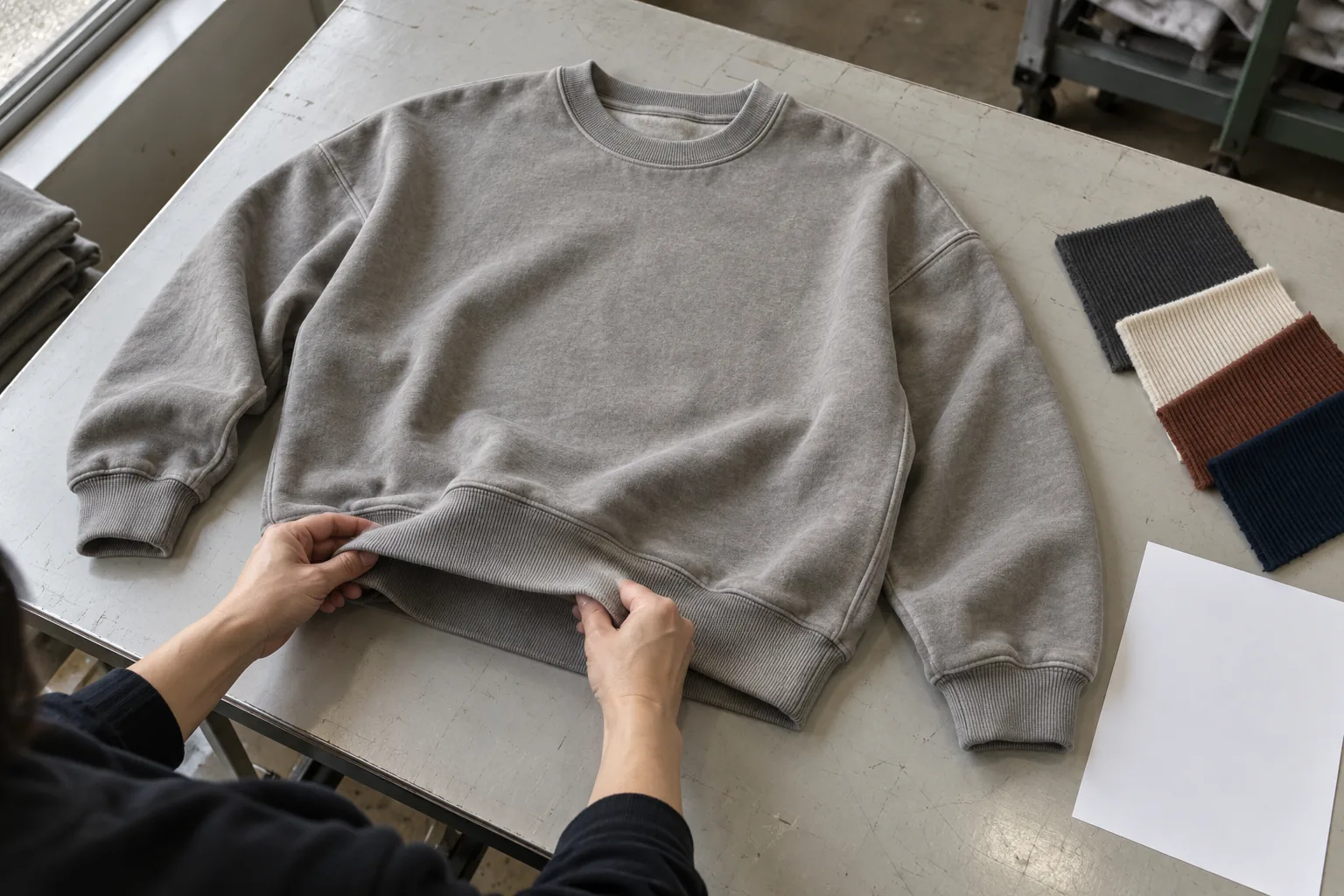
For example, a boxy sweatshirt sampled with stock rib may look acceptable on a hanger. If the buyer later requests firmer recovery at the hem, the team needs to confirm the rib specification and its effect on fit, sourcing, and cost.
Write comments that another person can close
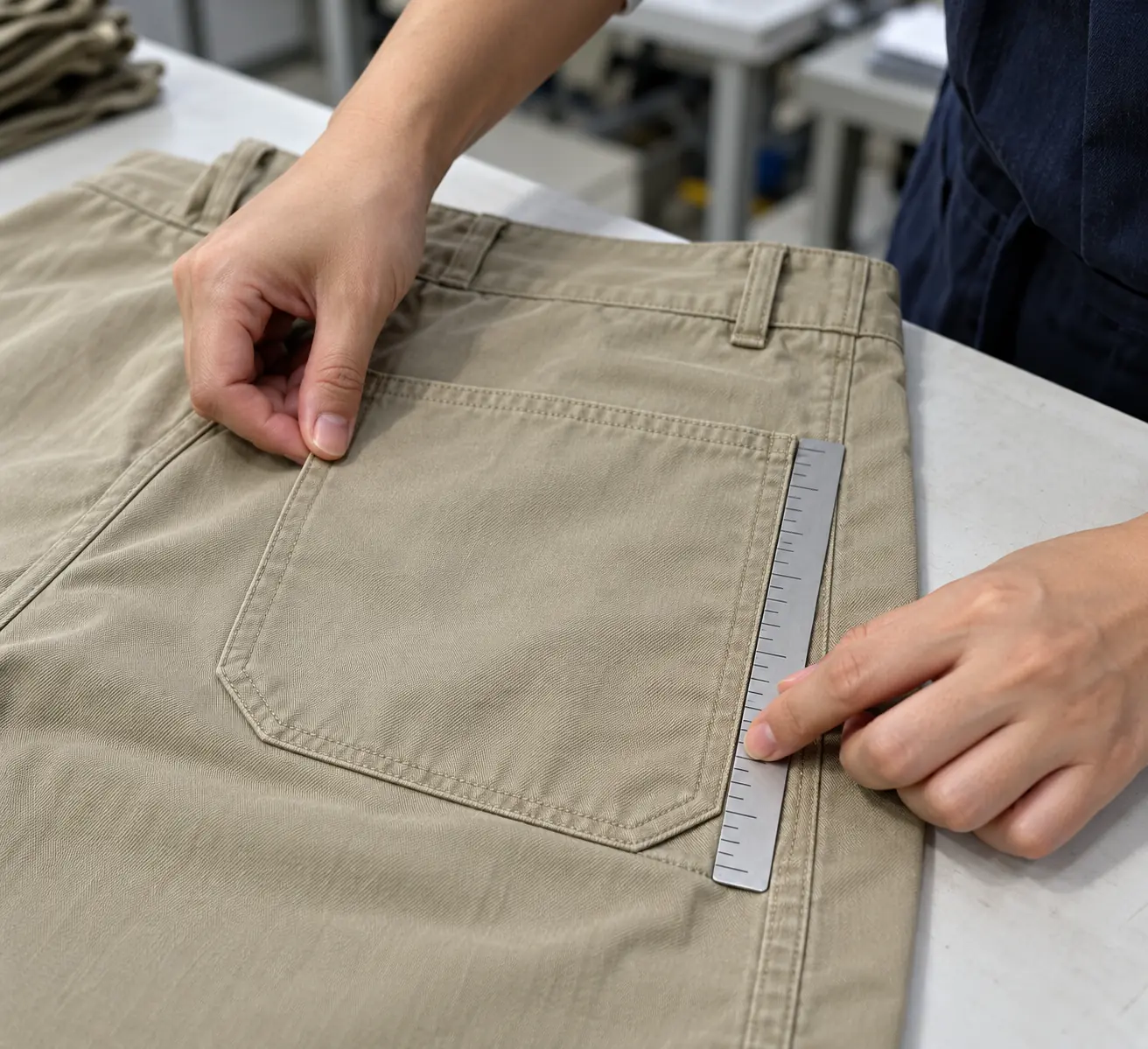
“Make the pocket better” is feedback, but it is not an executable instruction. Identify the location, describe the observed issue, state the required result, and specify the evidence needed to close it. Pair photographs with measurements rather than expecting a photograph alone to establish scale.
| Review item | Actionable comment | Closure evidence |
|---|---|---|
| Pocket position | Move the pocket top to the revised distance from the waist seam shown in the specification. | Measured image and updated specification |
| Hem distortion | Investigate waviness and submit a corrected finish using the proposed production fabric. | Physical sample reviewed flat and worn |
| Embroidery backing | Propose a softer backing while preserving the approved embroidery appearance. | Stitch-out reviewed on the intended fabric |
Use stable item numbers so replies refer to the same issue. Include the style code, sample round, reviewed size, date, and specification version. If a measurement changes, update the master specification as well as the comment sheet; two competing records invite mistakes.
Separate repairs from changes to the brief
Not every comment is a correction. A seam that differs from the agreed construction is different from a buyer deciding to add an internal pocket after seeing the sample. Mark each item as a correction, design change, clarification, or accepted deviation. That distinction helps explain why a revised quotation may be needed.
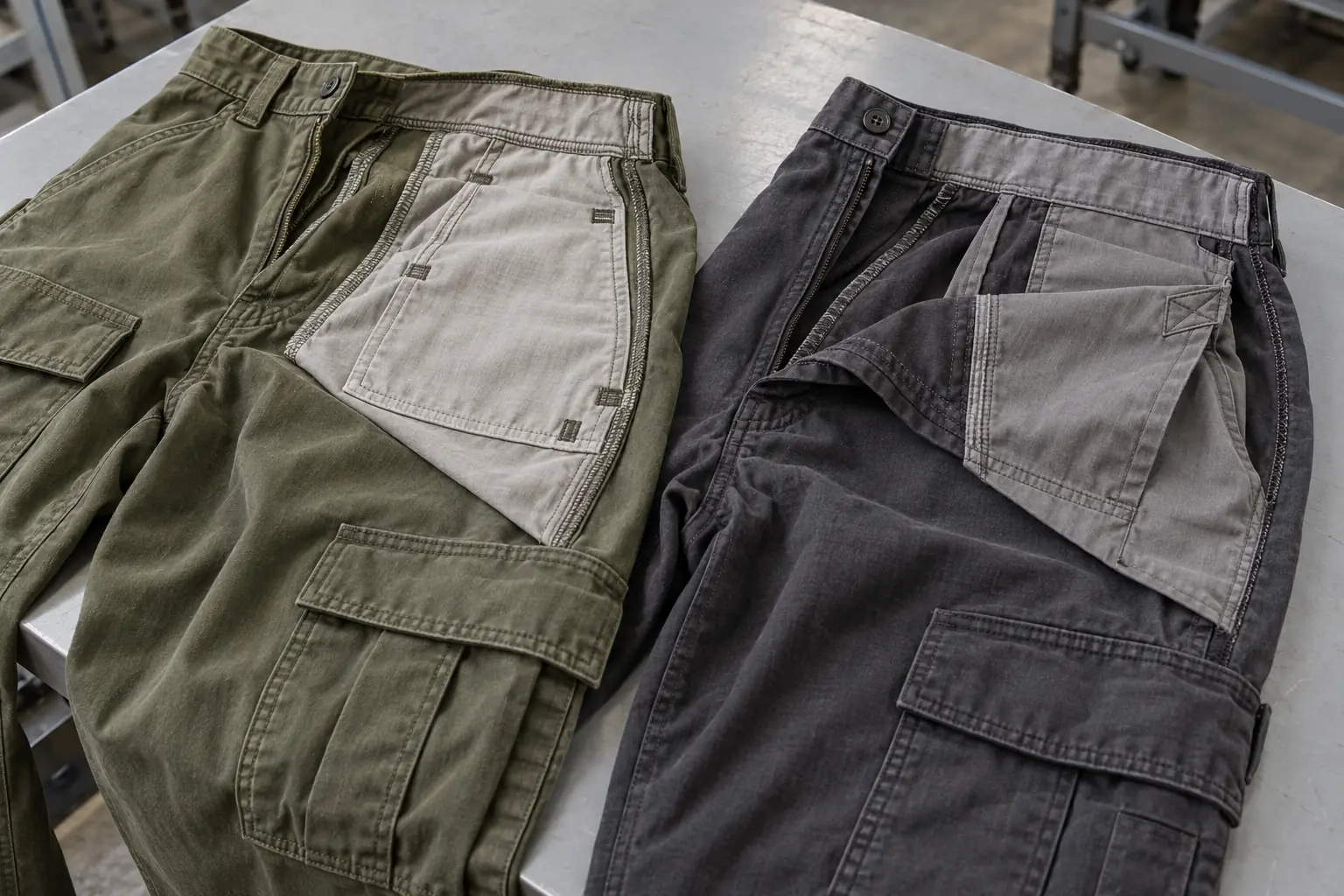
Consider a cargo trouser reviewed in lightweight fabric. Switching to a heavier cloth and adding reinforced pocket openings can affect sewing operations and garment behavior. The comment sheet should request an impact response covering materials, construction, sample needs, and bulk cost before the change is accepted.
Ask the supplier to distinguish a revised unit cost from a separate development charge. Do not assume the original sample payment includes every later experiment. Resolve the scope in writing while the decision is still reversible.
Make one person responsible for the consolidated reply
Fit, design, and merchandising teams may assess the same sample differently. One reviewer wants a shorter body; another wants more room for a large chest graphic. Sending both comments separately leaves the factory to guess which instruction takes priority.
Assign one buyer-side owner to reconcile the feedback and issue a single dated sheet. Keep earlier versions for reference, but clearly identify the current release. Requests made in messages or calls should enter that record before anyone acts on them.
Ask for a response against each item: understood, clarification required, proposed alternative, or completed with evidence. Silence is not closure. If the supplier proposes a different method to achieve the requested result, record the buyer’s acceptance before treating it as the new standard.
Use the comment sheet as a bulk-release checklist
The last review should establish whether production can follow a coherent set of instructions. A visually appealing sample is insufficient if its fabric, measurements, or branding still differ from the documents used for costing. Check the sample and records together.
- Identity: Confirm the approved sample, style code, size, and document versions match.
- Materials: Resolve temporary fabrics and trims, with approved references for the intended production materials.
- Fit: Verify revised measurements against agreed tolerances and identify any size-related checks still required.
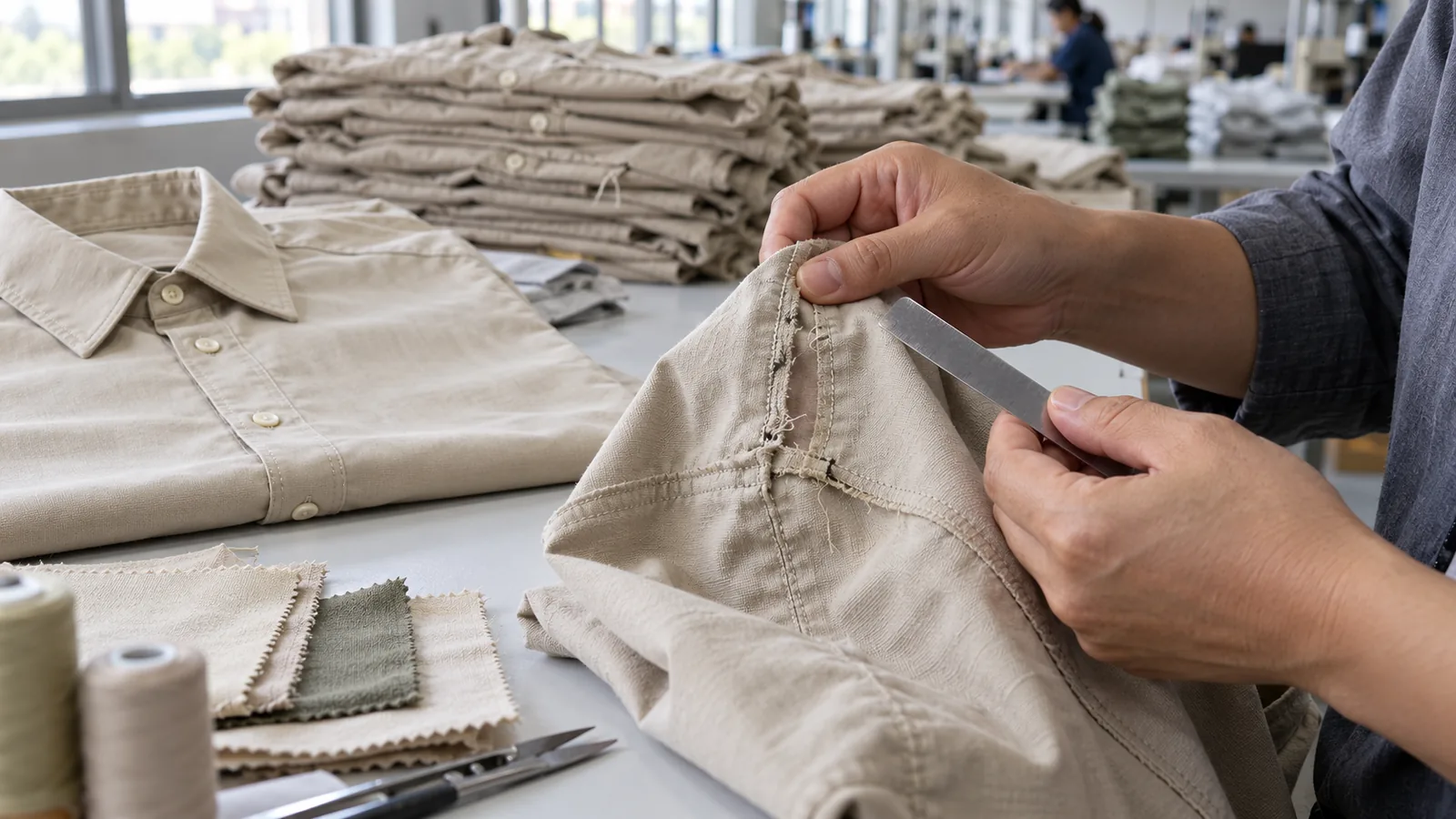
- Construction: Close sewing and finishing comments with appropriate evidence rather than an unsupported “done.”
- Branding: Confirm artwork version, placement, dimensions, and the approved application reference.
- Commercial alignment: Check that the bulk quote reflects accepted changes and explicitly lists any remaining exclusions.
Carry the relevant acceptance criteria into the production QC instructions. StitchQuote provides QC before packing, but the criteria still need to reflect the approved product. An unresolved development choice should return to the decision owner instead of becoming an improvised inspection standard.
Define repeatable measurement and fabric checks
For a sweatshirt, specify half chest measured flat at a stated distance below the armhole, body length from the high shoulder point to the finished hem, and sleeve length from a named seam or neck reference. State whether rib is included in each length. Lay the garment flat without stretching it and record measurements in one unit throughout the sheet. A photograph showing the tape position helps reviewers repeat the same method.
Give each measurement its own agreed tolerance. As an illustrative starting point for discussion, a buyer might propose plus or minus 1 cm for half chest and body length, but plus or minus 0.5 cm for pocket placement. These are proposed acceptance limits, not universal standards or StitchQuote specifications. Confirm their feasibility for the garment, fabric, and measuring method before approval. Keep the intended design measurement separate from the allowed manufacturing variation.
Record fabric composition, knit or weave, finish, and target GSM, meaning grams per square metre. An illustrative brief could specify 100% cotton brushed fleece at a target 320 GSM, with the acceptable weight range agreed separately. Attach the approved fabric reference and identify rib separately because its stretch and recovery affect openings even when the body fabric stays unchanged.
For wash checks, measure the same marked points before and after the agreed care cycle and drying method. If a 70 cm body length becomes 68.6 cm, the length reduction is 2%. Compare that result with the agreed shrinkage limit and assess twisting, surface change, and rib recovery separately. State whether the measurement specification applies before or after washing so pattern adjustments address the correct target.
Work through a small order before accepting the revised quote
Consider a hypothetical order of 100 sweatshirts in one style, two colors, and five sizes. Provide the exact quantity for every color and size combination, with the total adding up to 100. Confirm whether that split works with material and trim sourcing requirements; a style-level minimum alone does not establish that every color allocation is practical.
Suppose the first sample used temporary rib and a plain chest, while the final brief adds embroidery. Request a revised material list, an embroidery stitch-out on the intended fleece, and confirmation of finished placement dimensions. Ask which changes affect fabric consumption, cutting, sewing time, decoration setup, backing, and packing. These concrete cost drivers help explain a revised quotation without assuming that the sample fee predicts the final unit cost.
Connect each approval to a production check: verify the fabric reference against incoming material, check embroidery placement on an early finished garment, and compare finished measurements with the current size specification. Agree on the inspection scope and how deviations will be reported and resolved. Preserve the approved sample and dated documents as the shared reference so a later QC finding can be traced to a measurable requirement.
Questions buyers ask when the sample fee looks attractive
Can we approve the fit while leaving the fabric open?
You can record a limited fit approval, but state the material used and what must be rechecked. A different fabric can change drape, stretch, and dimensional behavior. Do not label that approval as full bulk readiness.
Does every closed comment require another complete sample?
No. A clear measured photograph may resolve a simple placement issue, while a construction detail may need a physical section. Fit, hand feel, or interacting changes can require a complete garment. Agree on suitable evidence for each item before the next round.
How should a fast sample promise appear in the schedule?
Separate sample preparation from buyer review and revision time. StitchQuote offers a 7-day sample for standard styles with confirmed specs and available materials. Complex styles, custom washes, and custom-developed fabric take longer; unresolved comments also need time for decisions.
Does a small order make incomplete comments less important?
No. An unclear instruction can affect the whole run regardless of quantity. StitchQuote’s MOQ for most categories starts from 50 pieces per style; denim starts from 100. Confirm the project scope and close the approval record before committing to bulk.
Related reading
- Prepare the technical reference behind your comments
- Review sampling and minimum order quantities
- Plan time for sampling and review
- Discuss your sample brief with StitchQuote
Request a manufacturing quote
Share your product type, quantity range, and destination. We usually reply within one business day.