Custom Streetwear, Casualwear & Denim Manufacturer•MOQ 50 pcs•Denim MOQ 100 pcs•7-Day Sample Available

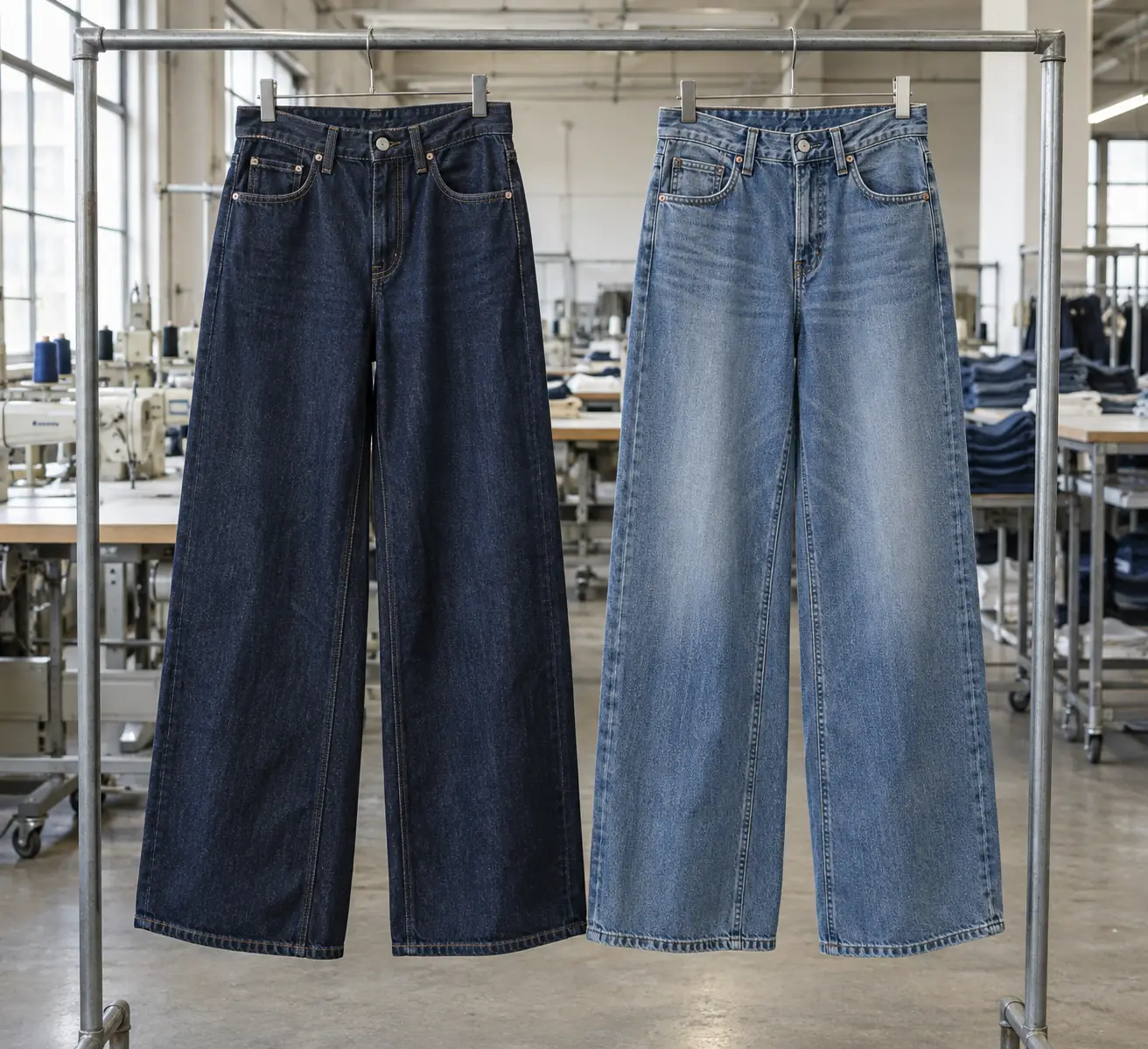
Denim Fit Sample vs Denim Wash Trial: Which Should Come First?
Understand denim fit sample vs wash trial with more practical factory-side context around material behavior, product feel, stability, and how the decision affects.

A denim fit sample checks the pattern on a body; a wash trial checks what a proposed finishing route does to the fabric and garment. Neither can answer the other’s questions completely. When the wash recipe could change shrinkage, stretch recovery, seam behavior or leg balance, approving fit before testing that recipe creates a weak foundation for production.
The practical answer is to establish construction feasibility early, test the likely wash on representative material, then approve final fit on a garment processed with the selected recipe. A mild rinse on familiar fabric may need less exploration than a heavily faded finish on an untested stretch denim. The buyer’s job is to decide which uncertainty must be removed before the next sample is cut.
Let the proposed recipe determine the first approval gate
Start by asking whether the desired appearance depends on a process that substantially changes the cloth. A dark, minimally processed jean and a pale, abraded carpenter jean may share a block, but they do not necessarily share a development sequence. Washing can alter dimensions, softness and the way a wide leg hangs. Local abrasion can also weaken areas that must survive normal wear.
If the block is new, make an initial construction sample to check pocket access, rise shape and assembly. Treat its fit as provisional. If the block is established but the finish is new, prioritize a representative wash trial. When both are unfamiliar, run those investigations in parallel, then bring them together in one washed fit garment.
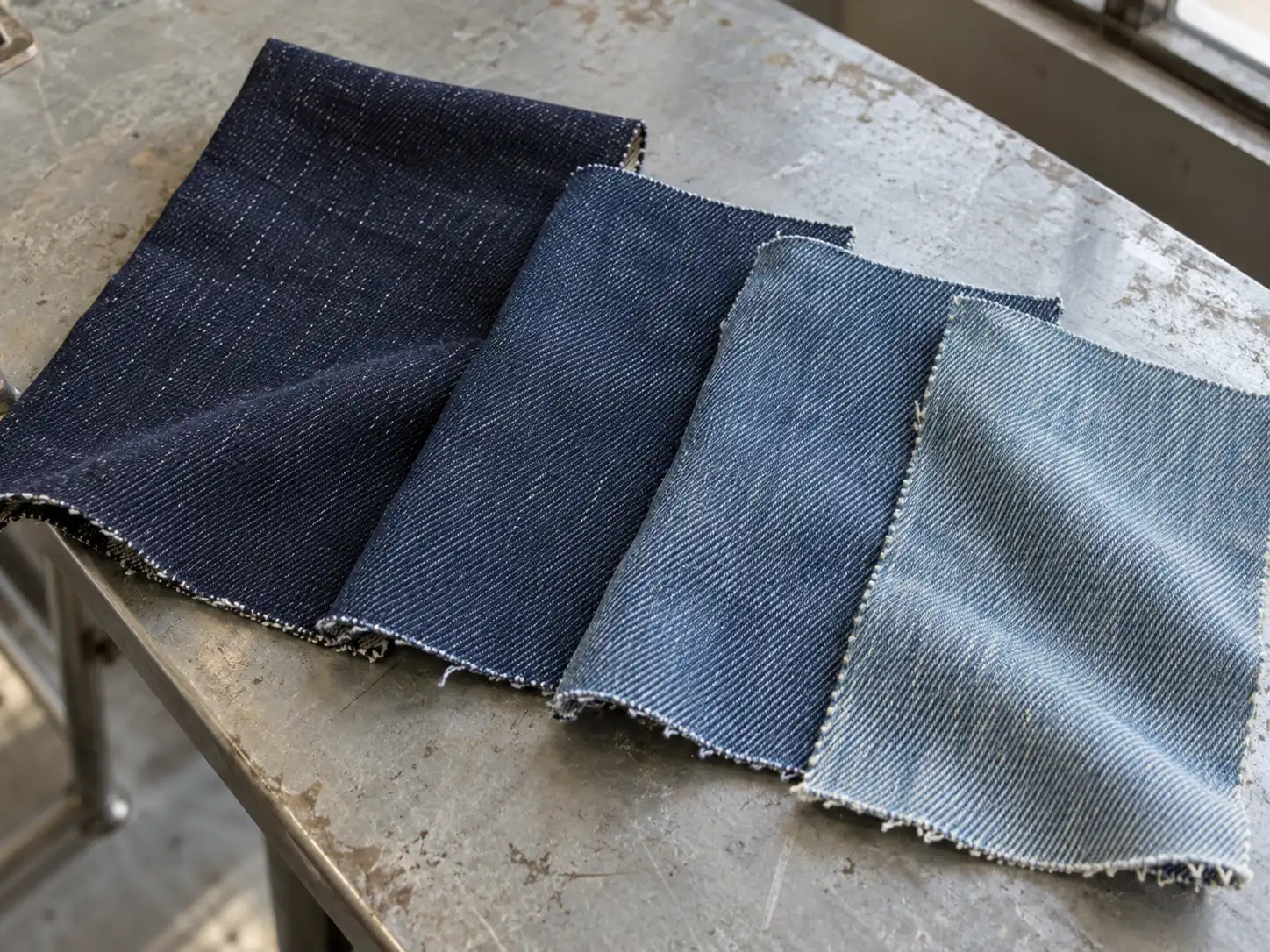
A swatch trial can screen shade and handle, but it cannot prove waistband distortion, pocket puckering or leg twist. Move promising recipes onto a sewn trial garment before selecting the route for final fit approval.
Turn a visual reference into a controlled trial brief
“Vintage blue, soft hand” leaves too much open. Define the base shade, contrast at seams, acceptable cast, fading locations and whether the finish should feel crisp, drapey or broken in. Supply front, back and detail references with separate comments. One photograph may show the right thigh fade but an unwanted green cast; make that distinction explicit.
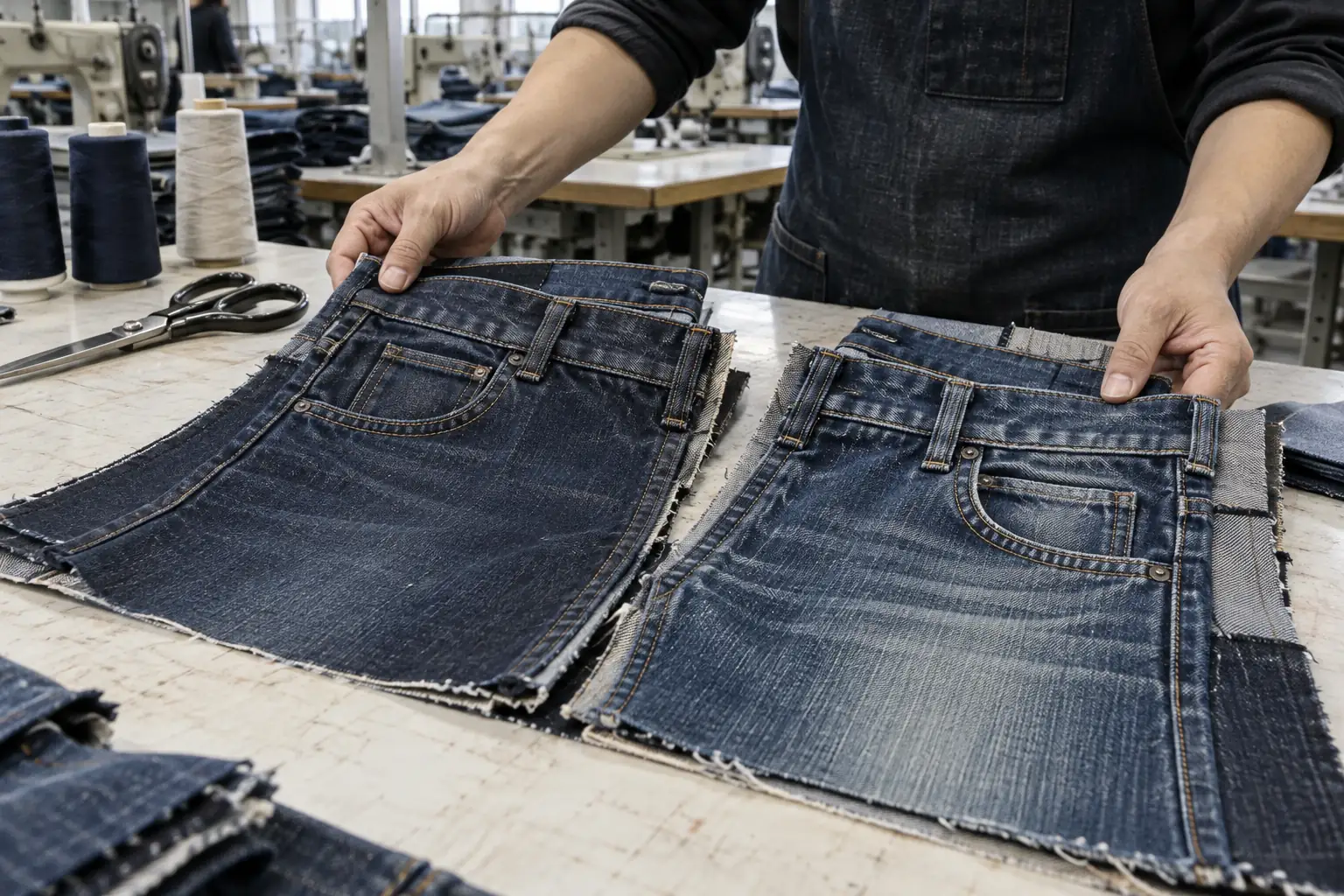
Identify the fabric article, composition, nominal weight, stretch direction and lot used for the trial. Include relevant construction details: pocketing, thread, waistband interlining and any trims entering the wash. Different pocketing may stain differently; a substituted thread can change seam contrast even when the denim shade is close.
Request a trial code for each option and a retained supplier process record. That record should distinguish the sequence of treatments, operating conditions, drying route and any localized finishing. Buyers need a reproducible reference and a clear revision history; they do not need to prescribe unfamiliar chemical settings themselves.
Limit the first comparison to a small, purposeful set. For example, compare two degrees of fading while holding fabric and construction constant. Changing the base fabric, abrasion map and softening treatment together makes the winning result difficult to explain or repeat.
Measure the recipe’s effect before correcting the pattern
Measure the same trial garment before and after processing, using identical points of measure and handling. Let the washed garment dry fully and relax under agreed conditions before measuring. Record that interval and whether the garment was pressed. Otherwise, apparent differences may reflect handling rather than a stable dimensional change.
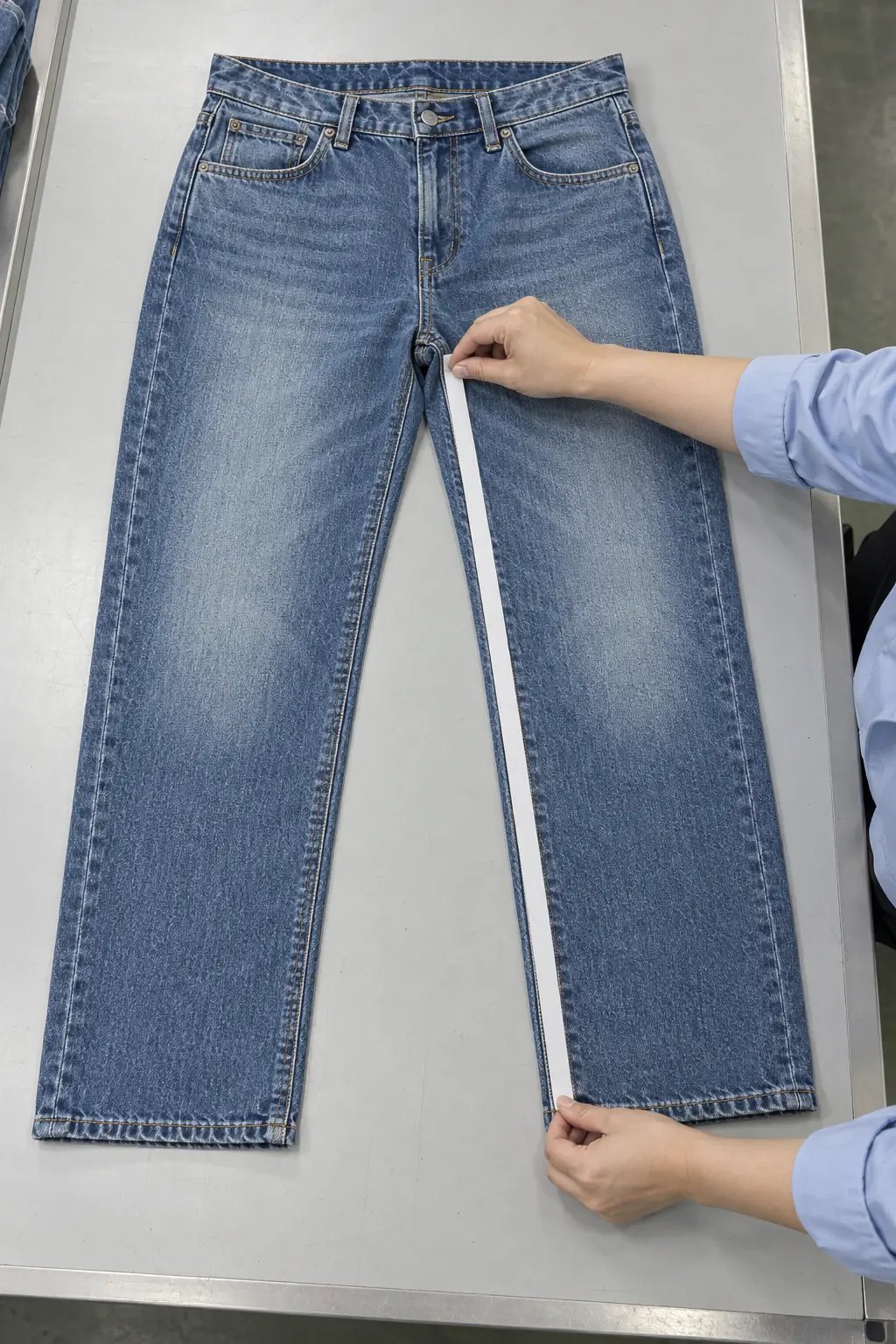
For a simple illustration, an inseam measuring 82 cm before processing and 79.5 cm afterward has shortened by about 3.0%. Reaching an 81 cm finished target would suggest roughly 83.5 cm before washing if that behavior repeats. This is a starting calculation, not authorization to lengthen every pattern piece by the same percentage.
Waist, hip, rise and inseam can behave differently because of grain direction, seam restraint and layered construction. Track them separately. For stretch denim, also assess recovery after wear or an agreed extension test: a waist that measures correctly flat may still grow excessively on the body.
Investigate inconsistent measurements before changing the pattern. If one leg rotates or only one side seam puckers, adding length may hide the symptom without addressing fabric skew or construction. Repeat the selected trial when the observed variation would materially affect the fit decision.
Give each sample a specific release decision
A sample becomes useful when its approval states what it releases. Avoid a single “approved” message covering shade, pattern and bulk readiness. Use a short sequence that keeps recipe selection separate from permission to cut production.
- Screen the finishing route. Compare coded trials for shade, hand feel, damage and dimensional behavior. Select a candidate recipe or request one clearly described revision.
- Build the fit confirmation garment. Apply measured compensation to the pattern, use the intended materials and process the garment through the selected route.
- Review fit after washing. Check the finished measurements and try the garment on the intended fit model. Approve the pattern and recipe together only when both meet the brief.
- Confirm production applicability. Agree how the sample result will be transferred to production equipment and loading conditions. Retain the approved garment and release records before bulk processing.
Assign one person to consolidate buyer comments. “Reduce thigh fading, keep base shade and softness” is actionable; conflicting messages from design and merchandising are not. Record the sample code, date, accepted attributes and unresolved points so the next round has a defined purpose.
Check the selected finish for defects that photographs miss
Recipe approval needs physical inspection as well as visual comparison. A convincing photograph cannot establish seam strength, internal staining or stable dimensions. Use the following checklist on the washed fit garment, then agree which checks and sampling levels apply to production.
- Dimensions: Check waist, hip, front and back rise, thigh, inseam and leg opening against the finished specification. Set tolerances by measurement point; an illustrative ±1 cm inseam allowance is not automatically suitable for the waistband.
- Shade and placement: Compare garments under consistent lighting, including the same front and back areas. Define acceptable shade variation with physical references where possible.
- Construction: Inspect belt-loop attachments, pocket corners, crotch seams and abraded areas for broken stitches, holes or excessive thinning. Check leg alignment without pulling the garment straight.
- Trim response: Examine zip operation, button attachment, pocketing discoloration and label condition. Identify which branding components should be applied after washing.
- Use performance: Agree appropriate checks for rubbing color transfer, dimensional stability after care and stretch recovery where relevant. Specify the method and acceptance criteria before interpreting results.
Hold approval when an attractive finish depends on unacceptable damage. Ask for a revised treatment and recheck affected properties. Cosmetic acceptance should never silently waive the garment’s functional requirements.
Freeze the recipe without assuming the scale-up is automatic
Once the washed fit garment passes, connect the pattern version, fabric identity, recipe code and approval sample in one release record. Changes to fabric lot, wash loading, drying or finishing sequence should trigger an assessment of whether another confirmation is needed. Small sample loads and production loads can behave differently, even with the same intended appearance.
Keep one approved reference protected from sunlight and repeated handling, with a working reference for comparisons. For deliberate variation, agree a bounded range rather than expecting every distressed garment to be visually identical. Size extremes may also need review when fading placement or proportions do not translate cleanly from the base size.
StitchQuote offers cut-and-sew, private label, sampling, fabric and trim sourcing, branding and QC before packing. Denim starts from 100 pieces per style; most other categories start from 50. A 7-day sample is available for standard styles with confirmed specifications and available materials. Complex styles, custom washes and custom-developed fabrics take longer, so confirm the development schedule around the actual trial work.
Questions buyers ask before signing the wash approval
Can we approve a recipe from a flat fabric swatch?
Use it to narrow the visual direction. A swatch does not reproduce seams, layered waistbands or pockets, so confirm the selected route on representative sewn construction before approving its effect on fit.
Does a small shade correction require another fitting?
Not automatically. Ask what changed in the process and compare finished measurements. If the revision affects shrinkage, handle or recovery, repeat the relevant fit checks instead of assuming it is purely cosmetic.
What if the fit passes but the wash is rejected?
Retain the pattern as a provisional reference and record the rejected recipe. Test the revised wash, then verify dimensions and drape again. Fit approval applies to the tested material and process combination.
Which reference takes priority when photos and the sample disagree?
Name the controlling physical reference in the approval record and use consistent viewing conditions. Photos support communication, but exposure and screen settings can distort shade. Resolve any disagreement before production release.
Related reading and project planning
- Prepare a tech pack with clear measurement and material specifications
- Plan sampling quantities and minimum orders
- Review the denim wash approval process
- Discuss your denim sampling brief with StitchQuote
Request a manufacturing quote
Share your product type, quantity range, and destination. We usually reply within one business day.