Custom Streetwear, Casualwear & Denim Manufacturer•MOQ 50 pcs•Denim MOQ 100 pcs•7-Day Sample Available


Why Small Brands Lose Time Between Sample Delivery and Sample Decision
Use this factory-side guide to compare small brands lose time between sample delivery and sample decision more clearly across supplier fit, quote scope, approvals.

A delivered sample does not automatically produce a decision. For a small clothing brand, the garment may spend days moving between a founder, designer and fit reviewer while reactions accumulate in messages. The factory receives several opinions, but no reliable instruction for the next round.
A disciplined comment sheet closes that gap. It connects each observation to a specific sample, an agreed requirement, an action and a person authorized to approve it. This article focuses on the buyer’s work after delivery: turning a physical garment into one controlled response that a sampling team can execute.
Open the comment sheet before opening the parcel
Create the review record before the sample arrives. Record the style code, sample size, round number, tech pack revision and purpose of the round. Leave spaces for receipt date, review deadline and final decision. These identifiers prevent comments on an earlier prototype from being applied to a later one.
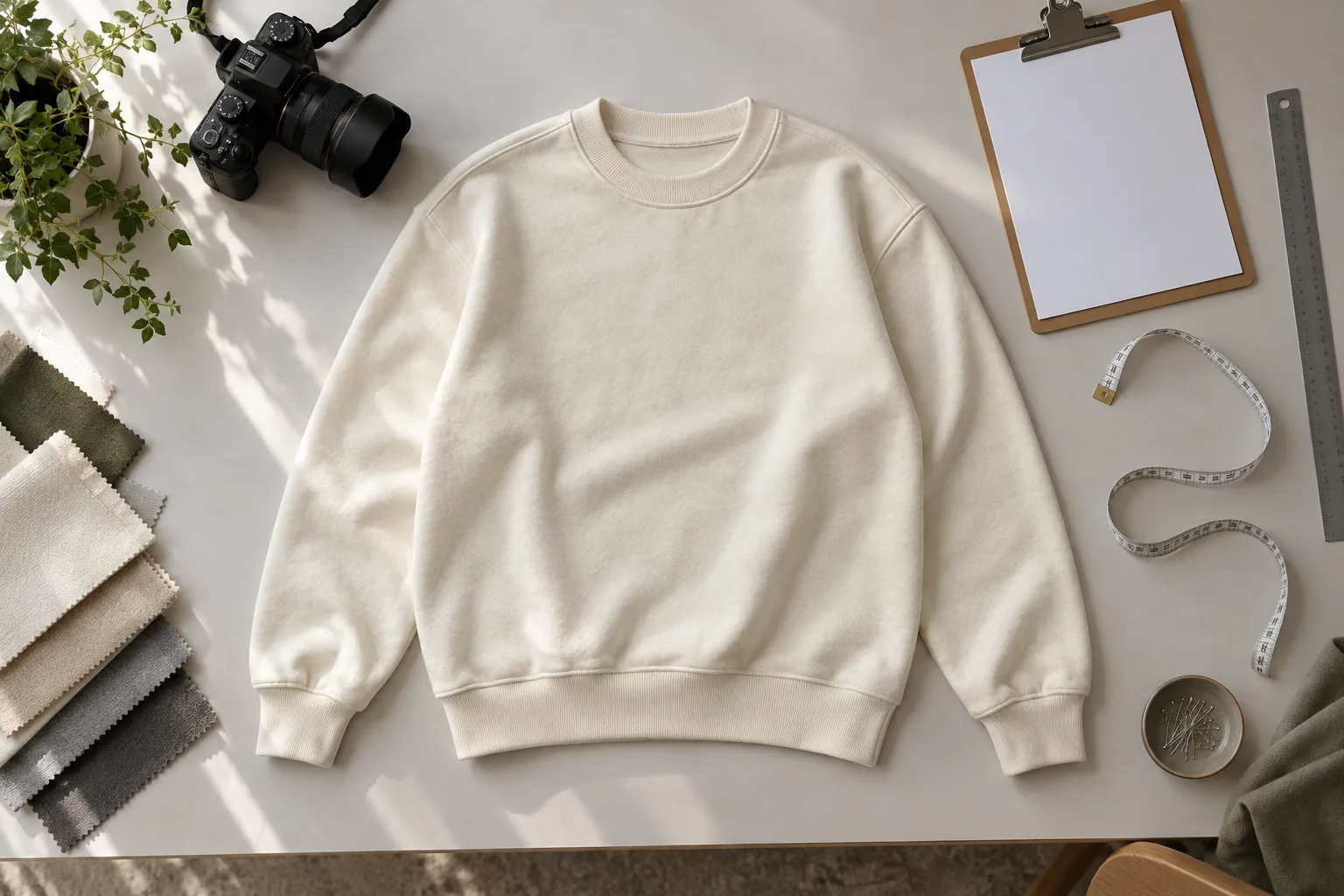
State what this sample can actually prove. A sweatshirt made in substitute fabric may help assess pocket placement, but its drape cannot establish approval of the intended fabric. Mark unavailable materials and other substitutions as unresolved, rather than letting silence become acceptance.
Book the review while the shipment is in transit. A practical internal target might be a consolidated response within two working days of receipt, provided reviewers and fit models are available. That is a buyer scheduling choice, not a promised manufacturing lead time.
Write each row as an instruction someone can verify
“Sleeve looks wrong” creates another conversation. A useful row records the location, observed result, required result and requested action. Add a photo reference where appearance matters. Keep each issue separate so that a completed correction does not hide an unresolved one.
| Field | Example entry |
|---|---|
| Issue and reference | Cuff opening; measurement point C; photo 03 |
| Observed result | Relaxed opening measures 11.5 cm flat |
| Required result | Confirmed specification is 10.5 cm flat |
| Requested action | Correct to specification; confirm measurement method |
| Closure evidence | Measurement record and revised sample fit check |
These dimensions are illustrative, not a recommended cuff specification. Use the dimensions and tolerances agreed for your own style. If the garment meets the specification but the brand now wants a different opening, describe that as a design change. Separating corrections from new requests helps the supplier explain any effect on timing, materials or cost.
Avoid prescribing a pattern alteration from appearance alone. Describe the fit problem and intended outcome, then ask the pattern team to propose the technical correction where needed.
Give conflicting comments one place to be resolved
Assign one person to issue the consolidated sheet. Other reviewers can contribute observations, but the supplier should receive a single agreed instruction set. This matters when, for example, a creative reviewer wants a longer tee while the fit reviewer wants its existing length retained.
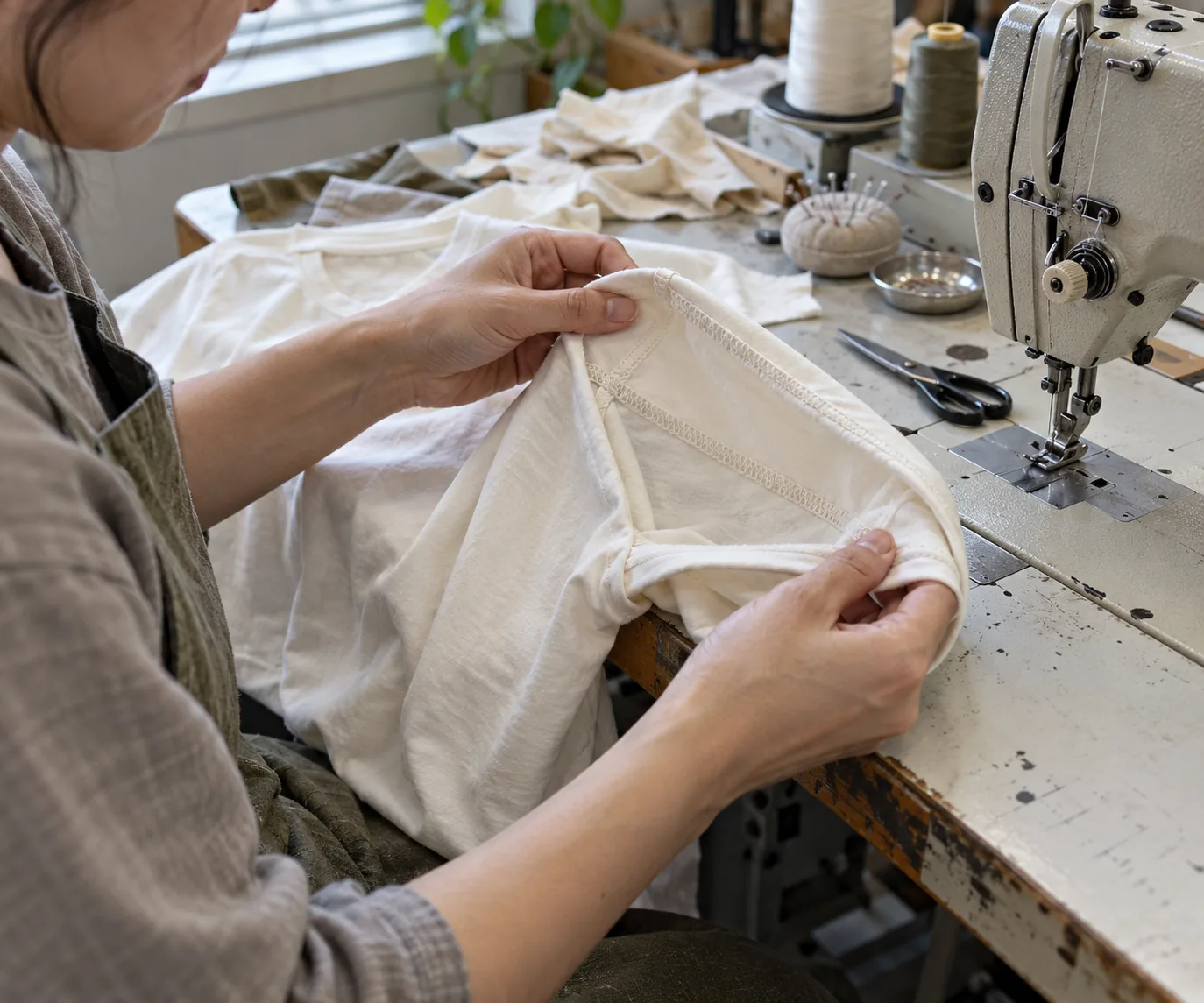
Resolve the conflict against the product brief, intended customer and recorded fit assessment. If the team cannot decide immediately, give the issue an owner and decision date. Do not send both alternatives as though they were compatible production instructions.
Set a cutoff for comments. After the sheet is issued, new requests need a dated revision and a clear description of what changed. A late message saying “also make it wider” should not silently override the approved measurement table.
Attach evidence that answers the factory’s next question
Photograph the full garment first, then the relevant detail. Use consistent front, back and side views for fit comparisons. For a twisted side seam, include a relaxed flat view and an on-body view where practical; a close crop alone can conceal how the garment is hanging.
Reference each image from its comment row. When measuring, show the measurement points and record whether the garment was measured relaxed, stretched, before washing or after washing. Apply the agreed measurement method consistently across rounds.
Some judgments need physical comparison. Phone photos can distort shade and texture, so do not treat an image as definitive color approval. Identify the agreed physical reference and request confirmation against it. For denim, record the wash version and measurement condition because a wash revision can affect both appearance and dimensions.
Agree measurement points before debating tolerances
For a sweatshirt review, define chest width as a flat measurement between named points below the armholes; record the distance below the armhole in the specification. Define body length from the high shoulder point to the bottom edge, stating whether the rib hem is included. For sleeve length, distinguish a shoulder-seam measurement from a center-back measurement. These methods produce different numbers, so a result without a method cannot reliably establish compliance.
Lay the garment on a level surface, smooth out folds without pulling the fabric and measure rib openings in their relaxed state unless the specification says otherwise. If two reviewers disagree, have them measure the same garment using the same marked endpoints before requesting a pattern correction. Record the actual result alongside the target instead of writing only “pass” or “fail.”
Set tolerances by measurement point and construction with the supplier. As an illustrative review rule, a 60 cm chest target with an agreed tolerance of plus or minus 1 cm permits 59–61 cm; a reading of 61.5 cm needs investigation. This is an example of applying a tolerance, not a StitchQuote standard. A small label placement or cuff opening may need a different allowance from a long body seam. Do not apply one blanket tolerance to every dimension.
Connect fabric approval to the next sample and order
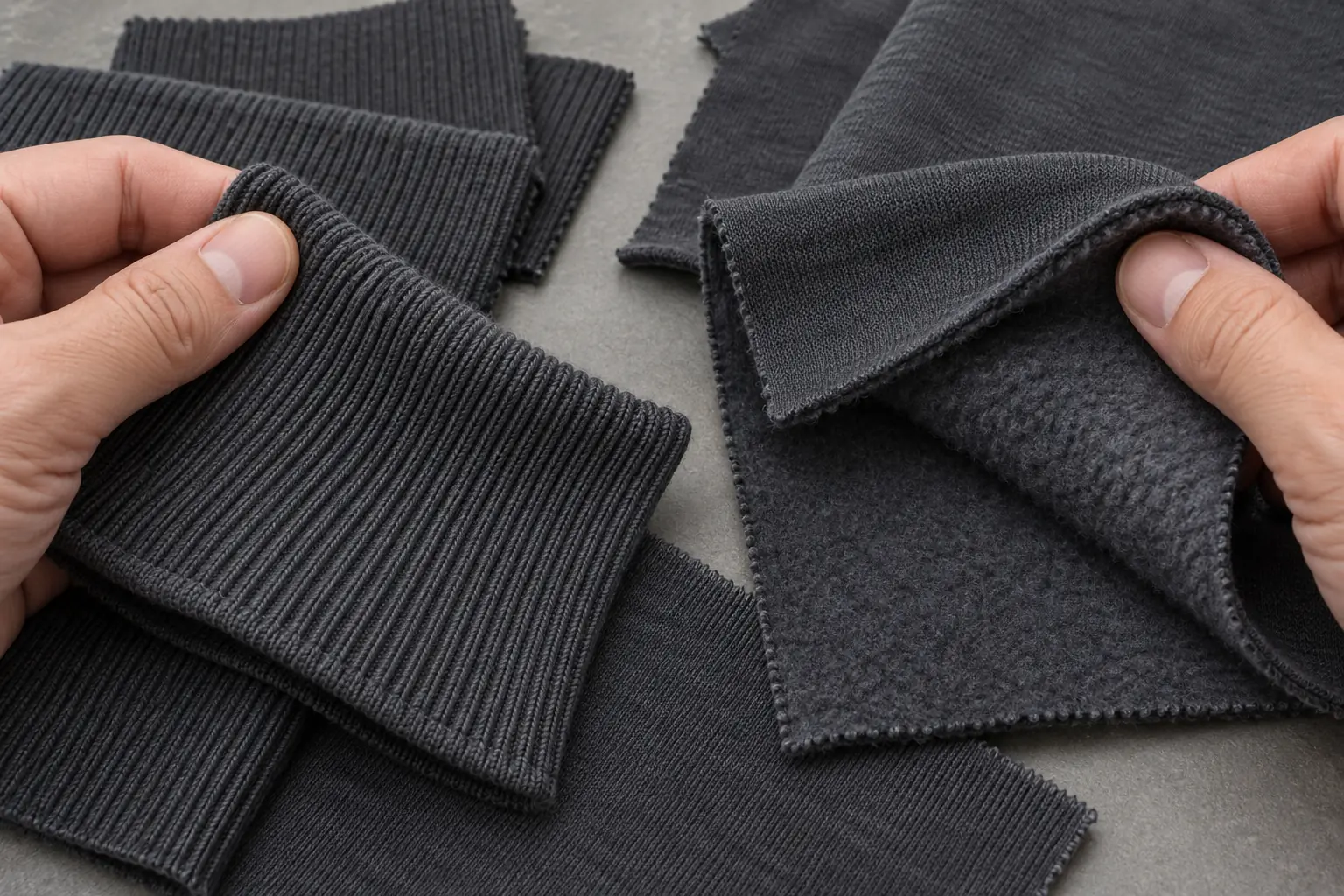
A fabric comment should identify composition, knit or weave structure, weight in GSM, finish and the reference swatch. For example, a buyer specifying 320 GSM brushed fleece should record whether the received sample uses that fabric or a substitute. GSM describes mass per square meter; it does not by itself establish softness, opacity, stretch recovery or warmth. Compare those properties separately, including how the chosen rib works with the body fabric.
Where washing performance matters, agree a wash and drying method before comparing results. Record measurements before and after the test, then calculate dimensional change at each relevant point. If a body length changes from 70 cm to 68.6 cm, the reduction is 2%. Judge that result against the agreed requirement, and note seam twisting, surface changes and print condition separately. A single satisfactory length result does not approve every aspect of the material.
Consider a hypothetical order of 100 sweatshirts in one style across four sizes. Review the base-size sample, then confirm the graded measurement table and whether additional sizes need physical checks before production. Attach the size quantities, approved fabric reference and branding artwork revision to the handover. Ask the supplier to confirm any color or trim constraints rather than assuming a style-level minimum guarantees every proposed split.
Before authorizing another sample, separate changes that affect pattern work from those affecting sourcing or decoration. A new fabric can change drape and fit; a larger embroidery can change stitch count and backing needs; an extra pocket adds cutting and sewing operations. Request an updated scope and quotation for the combined changes, with unresolved items clearly listed. This gives the buyer a concrete basis for deciding which revisions justify another round.
Close the review with a QC decision, not a collection of notes
Before releasing the sheet, check that it supports a defined next step. A sample can be useful for photography yet remain unsuitable as a bulk reference. Avoid an unqualified “approved” when only one feature or purpose has been accepted.
- Identity: Sample round, size and specification revision match the garment reviewed.
- Measurements: Results use the agreed method and are compared with confirmed tolerances.
- Construction: Seam, pocket, fastening and finishing issues have individual actions.
- Branding: Label, print or embroidery placement is checked against the relevant reference.
- Materials: Substitutions and outstanding fabric or trim approvals remain visible.
- Disposition: The sheet states whether to revise, hold for information or approve the defined scope.
Ask the supplier to acknowledge the issued revision and flag any instruction requiring clarification. Specify the evidence needed to close each item: a measurement report, detail photograph, physical swatch or revised garment. Fit changes commonly need a physical reassessment. Buyer sample review complements manufacturing QC; it does not replace inspection of production garments.
Questions buyers ask when a review stalls
Should we send the clear comments while one issue remains undecided?
You can share them for assessment, but mark the sheet as preliminary and identify the unresolved issue. State whether any work is authorized. An undecided fabric or silhouette change may invalidate other corrections, so ask which actions can safely proceed independently.
What if the supplier says a requested correction is already within tolerance?
Compare measurement methods and the agreed specification first. If the result is compliant but still unsuitable for your intended fit, revise the target explicitly. That creates a new requirement rather than an unexplained rejection of compliant work.
Does a seven-day sample mean a decision is possible in seven days?
No. StitchQuote offers a seven-day sample for standard styles with confirmed specs and available materials. Complex styles, custom washes and custom-developed fabrics take longer. Delivery, buyer review and unresolved comments also affect the time needed to reach a decision.
How should the final sheet support a StitchQuote enquiry?
Include the current specifications, sample references, consolidated comments and intended next step. StitchQuote provides sampling, cut-and-sew, private label, fabric and trim sourcing, branding and QC before packing. MOQ for most categories starts from 50 pieces per style; denim starts from 100. Confirm the proposed scope and schedule for your project.
Related reading and next steps
- Prepare the tech pack behind your sample comments
- Review sampling and minimum order quantities
- Understand clothing sampling timelines
- Contact StitchQuote about your next sample
Request a manufacturing quote
Share your product type, quantity range, and destination. We usually reply within one business day.