Custom Streetwear, Casualwear & Denim Manufacturer•MOQ 50 pcs•Denim MOQ 100 pcs•7-Day Sample Available

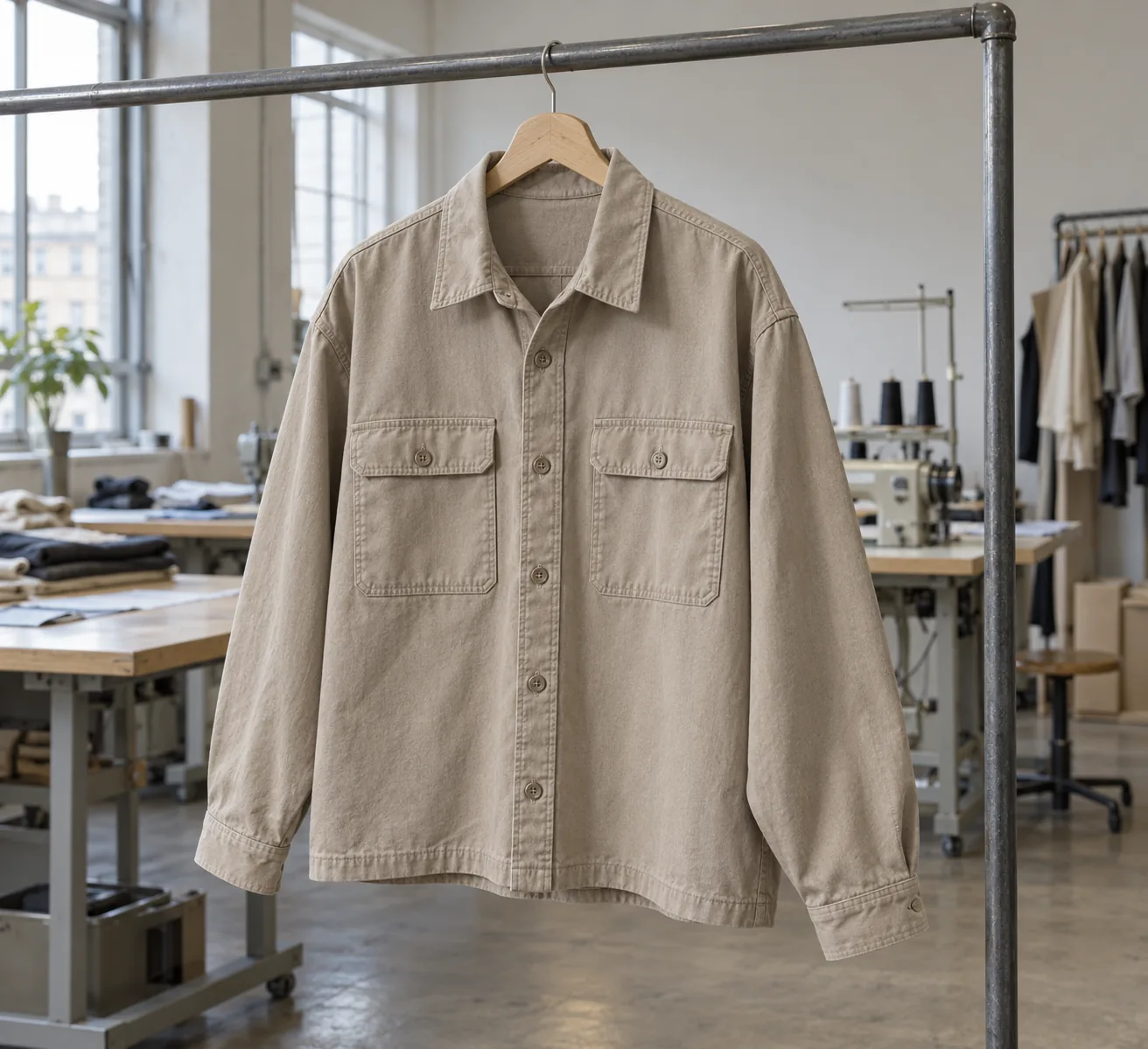
Fit Sample vs Prototype Sample in Clothing Development
Learn fit sample vs prototype sample through a clearer factory-side view that helps brands reduce rework, align sample goals, and move toward approval with better.

A development sample should answer a specific question before it earns an approval. Can the sketch become a workable garment? Does that garment sit and move correctly on the intended wearer? Those are different questions, even when the two samples look almost identical on a hanger. Confusing them can leave a brand approving a silhouette that has never been tested on a body, or paying for detailed fit corrections on a construction that will change.
For buyers comparing fit sample vs prototype sample in clothing development, the useful distinction is the decision each stage supports. A prototype tests the product idea and its construction; a fit sample tests the relationship between pattern, material and wearer. Sample names vary between suppliers, so put the purpose, materials and approval limits in writing before requesting either one.
Give each sample a question it can actually answer
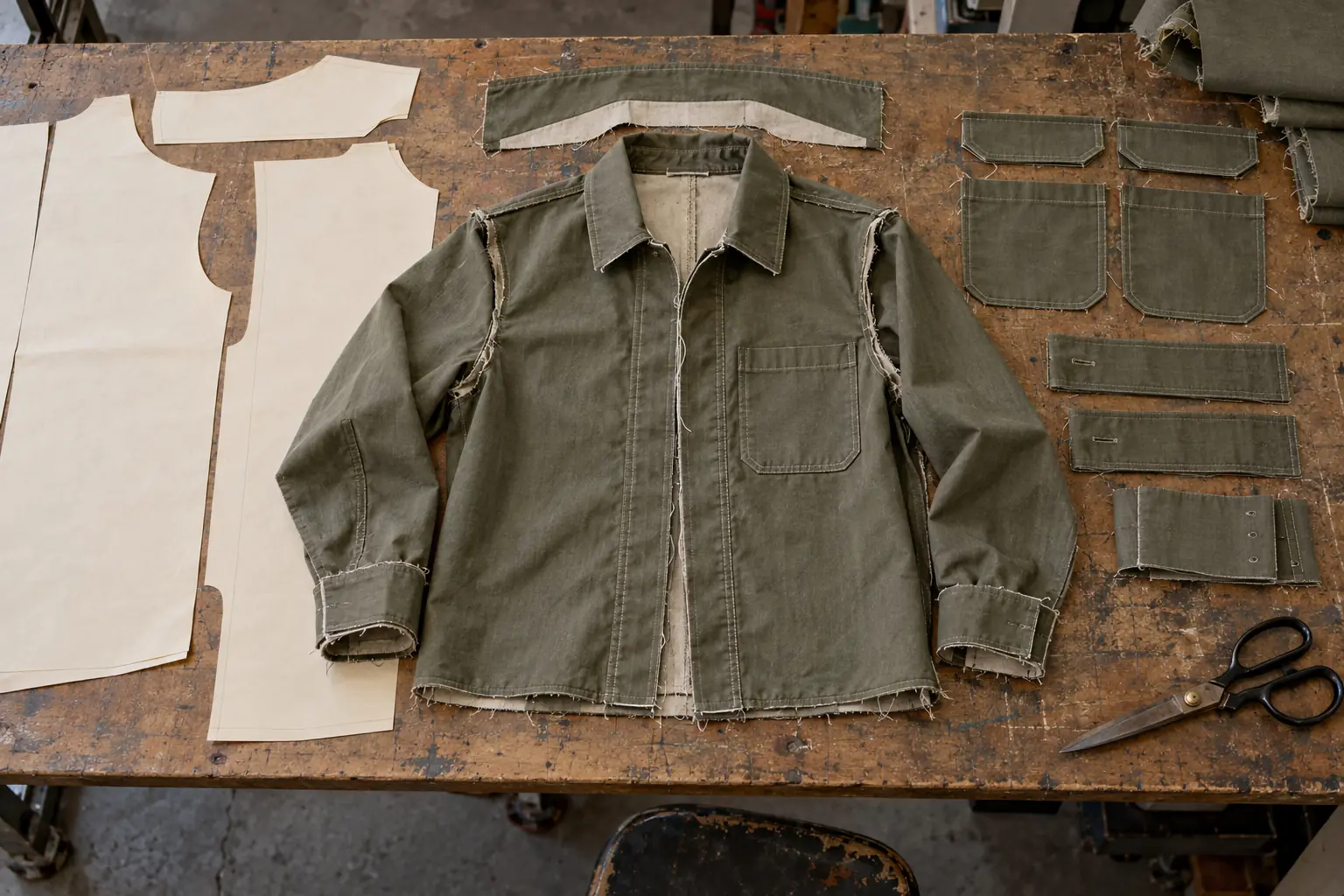
A prototype is usually the first physical interpretation of a design. Its job is to expose questions that a drawing cannot settle: whether a pocket opening is reachable, whether layered seams become too bulky, or whether a proposed collar can hold its shape. The prototype may use substitute fabric or temporary trims when the intended components are unavailable. Record those substitutions because they limit what the buyer can conclude.
A fit sample needs enough material accuracy to support decisions about balance, ease and movement. That does not always mean every label must be final. It does mean that fabric stretch, weight, recovery and finishing should represent the intended product closely enough for the assessment. A heavy rigid substitute cannot reliably establish the fit of a fluid stretch garment.
| Stage purpose | Useful evidence | Decision it supports |
|---|---|---|
| Prototype: prove the idea | Construction trial, proportions, access and assembly observations | Keep or revise the design and construction route |
| Fit sample: prove the wearing shape | Measured garment, controlled fitting, movement observations | Accept or revise the base-size pattern |
| Later production approval | Agreed materials, finish, workmanship and production details | Assess readiness against the agreed production requirements |
Use the prototype to settle construction dependencies
Consider a boxy overshirt with a concealed front fastening and large lower pockets. The prototype can reveal that the front facing interferes with the pocket bag, or that the proposed hem turn creates excessive bulk at the side seam. Resolve these conflicts before treating the chest width or front length as settled. Changing the facing or hem construction can alter how the garment hangs.
Ask the sample maker to identify compromises explicitly. A temporary button is generally less consequential to silhouette than a substitute interlining that makes the entire front rigid. A trial pocket might prove placement while leaving opening reinforcement unresolved. Comments should distinguish successful design features from temporary solutions so that neither disappears into a broad “looks good” response.
The prototype review should close with a short decision record: retain the dropped shoulder, reduce pocket depth, replace the fastening method, and carry the revised construction into the fitting round. If the design remains uncertain, another prototype can be more useful than labeling the next attempt a fit sample prematurely.
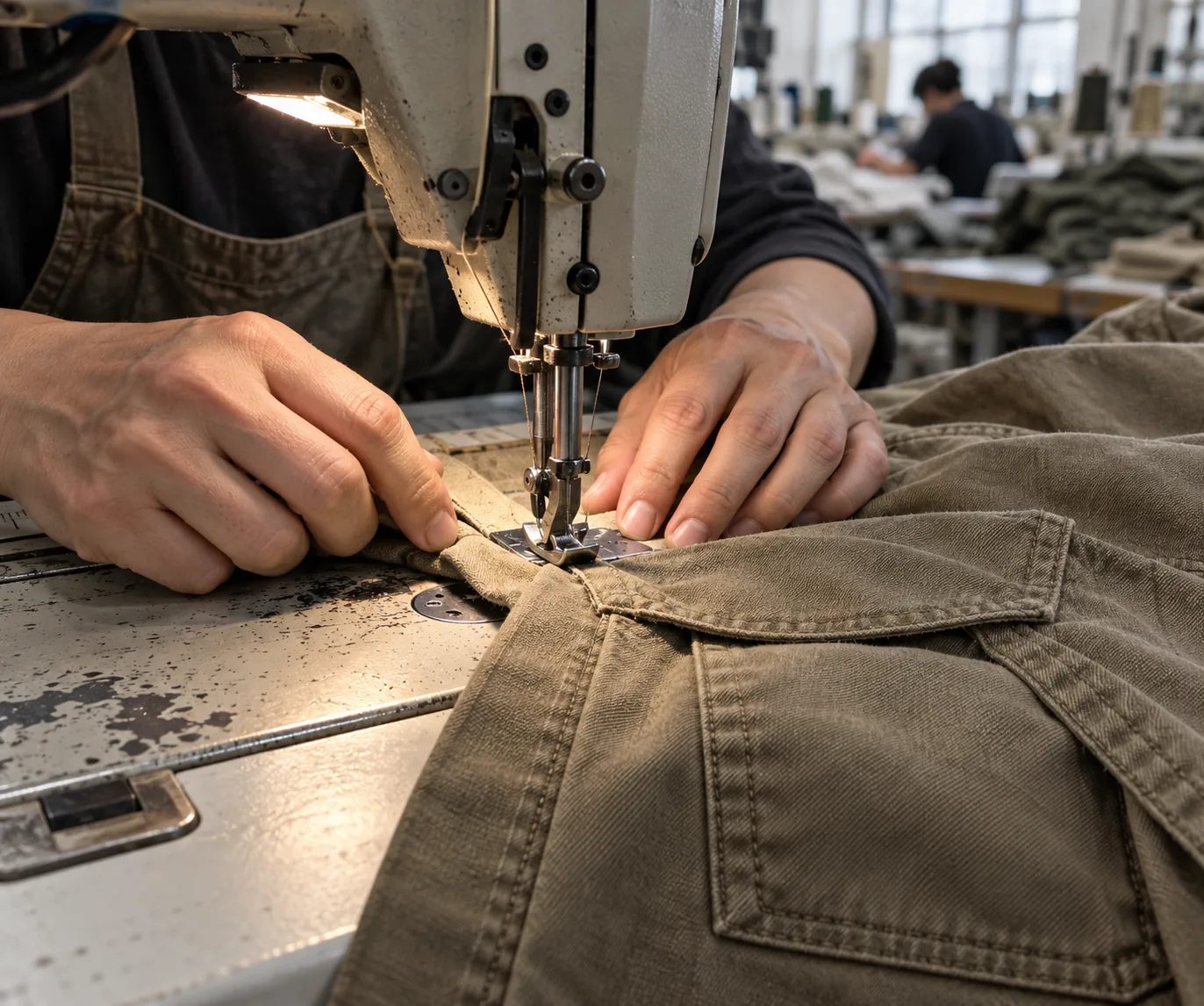
Make the fitting round a controlled wearing test
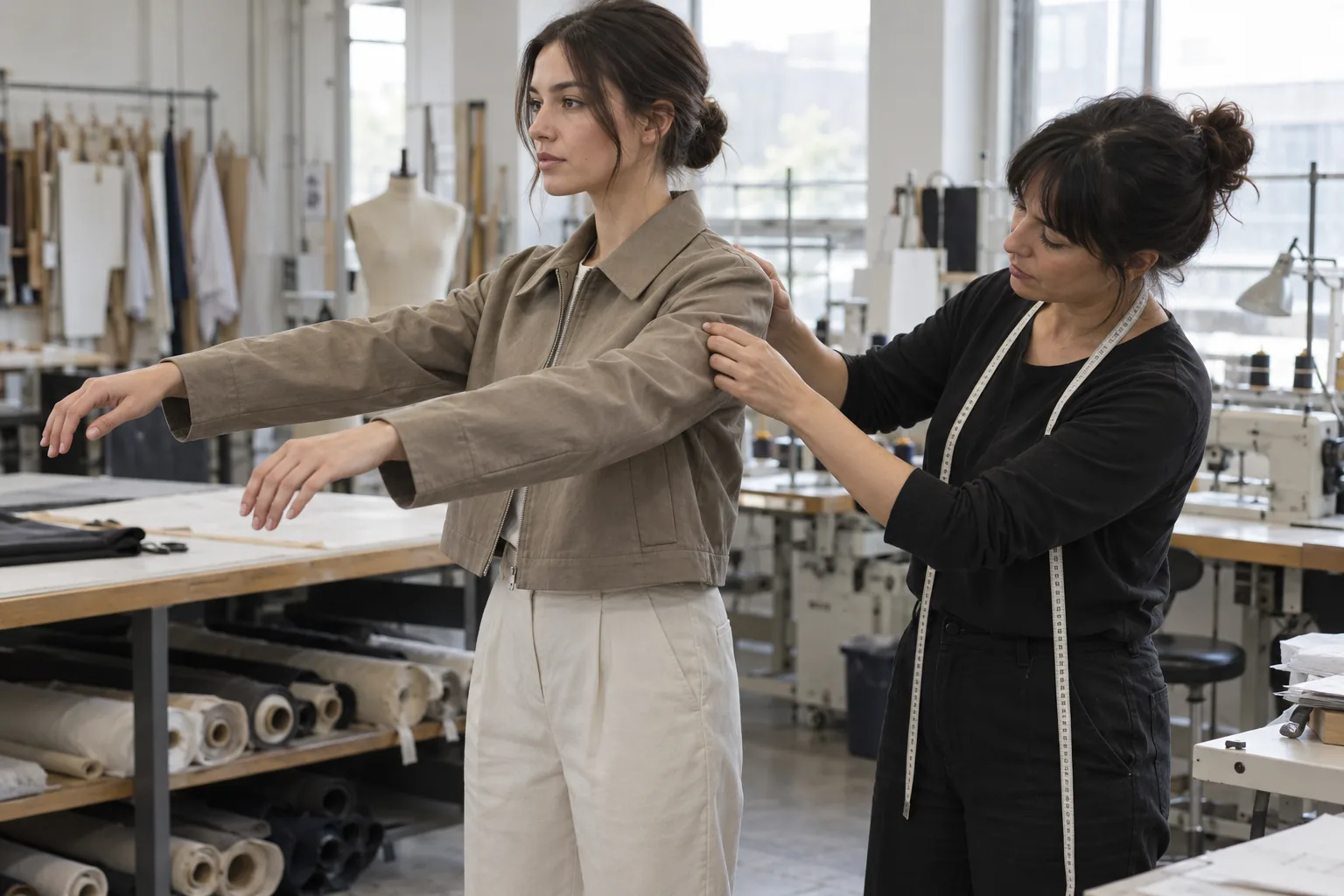
Choose a base size and a fit model whose recorded body measurements match the brand’s intended size standard. Use the same person across revisions when possible. Record the underlayers and intended wearing position: trousers worn at the natural waist cannot be compared directly with the same pair worn lower on the hips. Consistency makes differences between rounds easier to interpret.
Measure the garment before fitting it, using agreed points of measure. For a jersey top, these might include half chest, high-point-shoulder length, shoulder width, sleeve length and bicep width. Define where each measurement begins and whether the garment is relaxed or extended. “Chest 60 cm” is incomplete if one reviewer measures across the armhole and another measures below it.
Then observe standing posture and intended movement. For a cropped jacket, check forward reach and seated position as well as the front view. A sleeve that pulls the hem upward may require work on armhole shape or sleeve geometry; adding chest width alone may not solve it. Capture front, back and side photographs, plus close views of repeatable problems.
Decide when one garment can serve both purposes
A straightforward T-shirt based on an established pattern may allow construction and fit to be reviewed in one round. That works when the design is stable, the base size is defined and the sample fabric behaves like the planned production fabric. List both review purposes on the request, then record separate conclusions for construction and fit.
A washed denim trouser presents a different problem. An unwashed prototype can establish pocket construction and general proportions, but the intended wash may change dimensions, stiffness and seam appearance. Fit approval should reflect the relevant finishing state. Otherwise, a waistband accepted before washing may become an entirely different wearing experience afterward.
When fabric is still being developed, agree which observations remain provisional. Pocket reach may be assessable while drape is not. A successful combined round can reduce repeated work, but only if the buyer understands what was actually demonstrated. Neither a prototype approval nor base-size fit approval automatically confirms grading, all trims or bulk readiness.
Turn review comments into a bounded revision brief
Replace subjective requests with observations and an intended outcome. Instead of “make the sleeve more premium,” write: “The cuff catches above the wrist during forward reach; review sleeve length and elbow allowance while retaining the current shoulder position.” This gives the pattern maker a problem to solve without prescribing an unsupported correction.
Where a dimensional change is clear, state the current measurement, target and measurement method. For example: “Sample half chest measures 61 cm; revised target is 60 cm, measured flat 2.5 cm below the armhole.” Specify whether a requested reduction applies to the flat measurement or full circumference. Confusing those two can double the intended alteration.
Consolidate feedback through one approval owner and identify the sample version on every comment sheet. Separate required changes from questions and accepted details. End with the next round’s purpose, such as “verify revised sleeve mobility using the confirmed fabric.” This prevents an embroidery preference from silently reopening an accepted silhouette or a pattern update from being mistaken for production authorization.
Check the evidence before signing off the stage
Stage approval is a QC checkpoint with a defined scope. A fit sample can meet its measurements and still twist on the body; a prototype can look convincing while relying on an impractical seam assembly. Review the evidence appropriate to the decision and keep unresolved items visible.
- Identity: Confirm style reference, sample version, base size, pattern revision and finishing state.
- Material status: Record actual fabric and trims, substitutions, and any behavior those substitutions prevent you from evaluating.
- Measurements: Compare actual values with the current specification. Agree tolerances by measurement; an illustrative ±0.5 cm tolerance at a small opening is a discussion point, not a universal standard.
- Wear performance: Check balance, seam rotation, access, sitting and reaching against the intended use.
- Construction: Inspect seam junctions, pocket attachment, closures and stretch compatibility where relevant.
- Approval boundary: State exactly what is accepted and which items need another sample or later verification.
StitchQuote provides sampling, cut-and-sew, private label, fabric and trim sourcing, branding through woven labels, prints and embroidery, and QC before packing. Pre-packing QC serves a different purpose from development approval: it checks production workmanship and conformity rather than deciding the original fit direction.
Questions buyers ask when assigning the next sample
Can a prototype be used for a sales photo?
It can illustrate a direction, but a photograph does not establish fit approval. If the prototype uses substitute material or unfinished construction, communicate that status internally. Avoid letting styling choices, clips or a favorable camera angle become evidence that the pattern is ready.
Does fit approval cover every size in the range?
No. It usually establishes the reviewed base size under the recorded conditions. Grading changes proportions across sizes and may need separate size-set checks, especially at range extremes. Agree that verification scope before extending a base-size approval to the full size offering.
Does a seven-day sample mean development is finished?
No. StitchQuote offers a seven-day sample for standard styles with confirmed specifications and available materials. Complex styles, custom washes and custom-developed fabrics take longer. The offer concerns sample preparation under those conditions; fitting, buyer feedback and additional revisions still need their own planning.
Should order quantity determine the sample’s purpose?
Quantity affects project planning, but the sample still needs to answer the unresolved development question. StitchQuote’s MOQ for most categories starts from 50 pieces per style; denim starts from 100 pieces per style. Confirm project requirements while defining the sample brief, rather than assuming a small order makes fit verification unnecessary.
Related reading
- Prepare the technical pack for your sample brief
- Review sampling and MOQ considerations
- Plan the clothing sampling timeline
- Discuss your next sample with StitchQuote
Request a manufacturing quote
Share your product type, quantity range, and destination. We usually reply within one business day.