Custom Streetwear, Casualwear & Denim Manufacturer•MOQ 50 pcs•Denim MOQ 100 pcs•7-Day Sample Available

How to Decide Which Sample Comes First in a New Apparel Project
Learn first apparel sample through a clearer factory-side view that helps brands reduce rework, align sample goals, and move toward approval with better timing and.

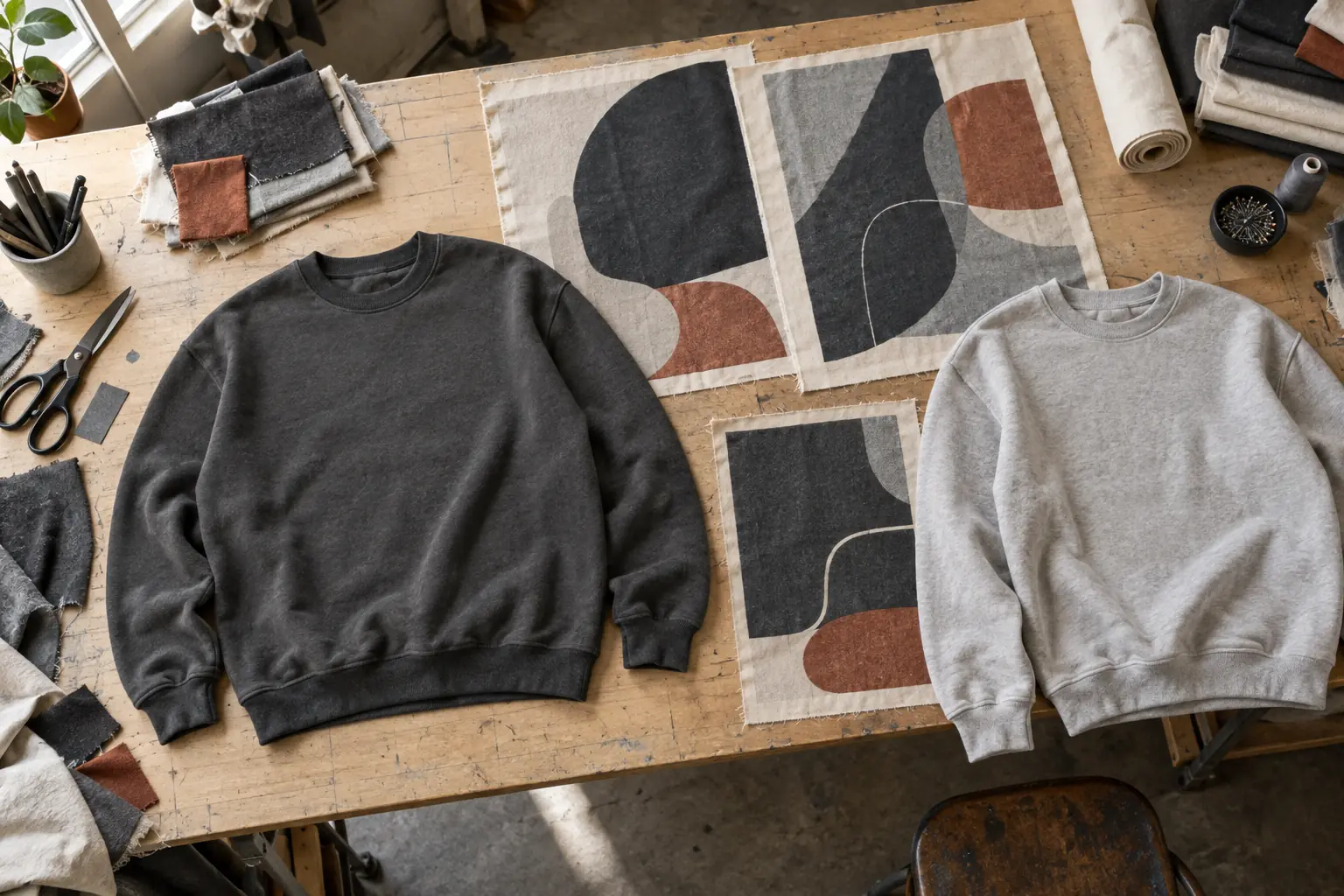
A new apparel project does not always need a complete garment as its first sample. If the main selling feature is a printed graphic, the first useful object may be a small panel of the intended fabric. It can expose an unsuitable print method before you spend a garment round approving something that will later change in weight, stretch, color, or hand feel.
For brand buyers developing graphic tees, sweatshirts, or printed casualwear, the decision is about which uncertainty can invalidate the others. Establish the print route before authorizing a final decorated sample, while keeping fit development moving where possible. Here is how to separate those decisions and give each physical sample a clear approval purpose.
Identify what the graphic could force you to change
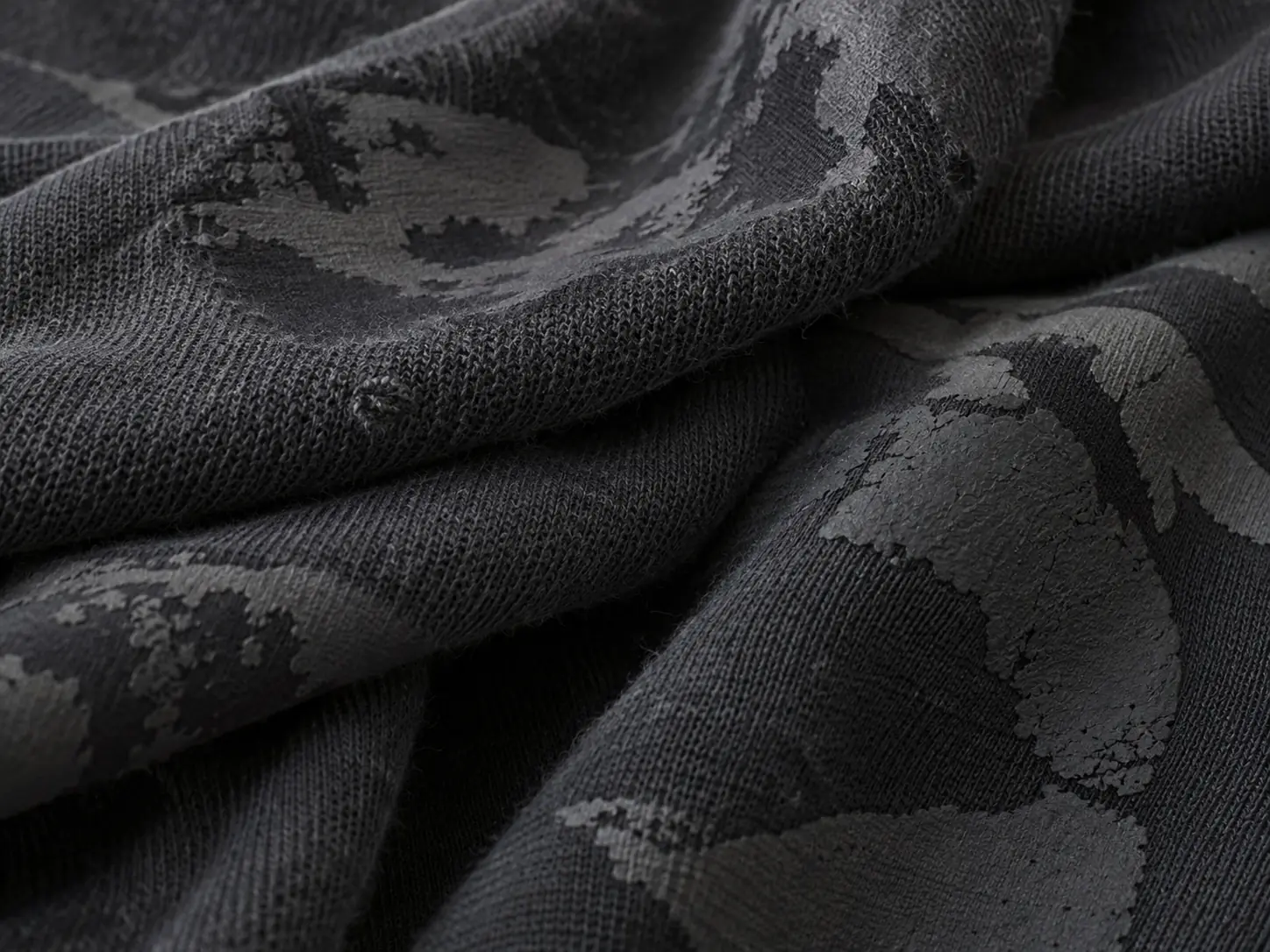
Start with the product promise. A washed charcoal tee with a soft, faded illustration has a different development risk from a polyester sports top carrying a bright opaque chest mark. On the tee, ink coverage may make the front feel heavier than expected. On the polyester top, heat exposure and dye migration may affect the graphic. Neither risk is resolved by approving an undecorated fit sample.
Write down three requirements that cannot move: for example, a soft surface, visible fine linework, and a graphic that remains recognizable after the agreed laundering test. Then identify what can move, such as the number of ink colors or the smallest detail. This gives the sample room a decision brief instead of an instruction to reproduce a reference image by any means.
If the decoration could require a different fabric, choose a print trial first. If the fabric is settled but the garment silhouette is untested, request a blank fit prototype alongside that trial. If the design crosses seams or depends on exact panel geometry, test the relevant construction before treating a flat print as representative.
Use a substrate trial to choose between viable methods
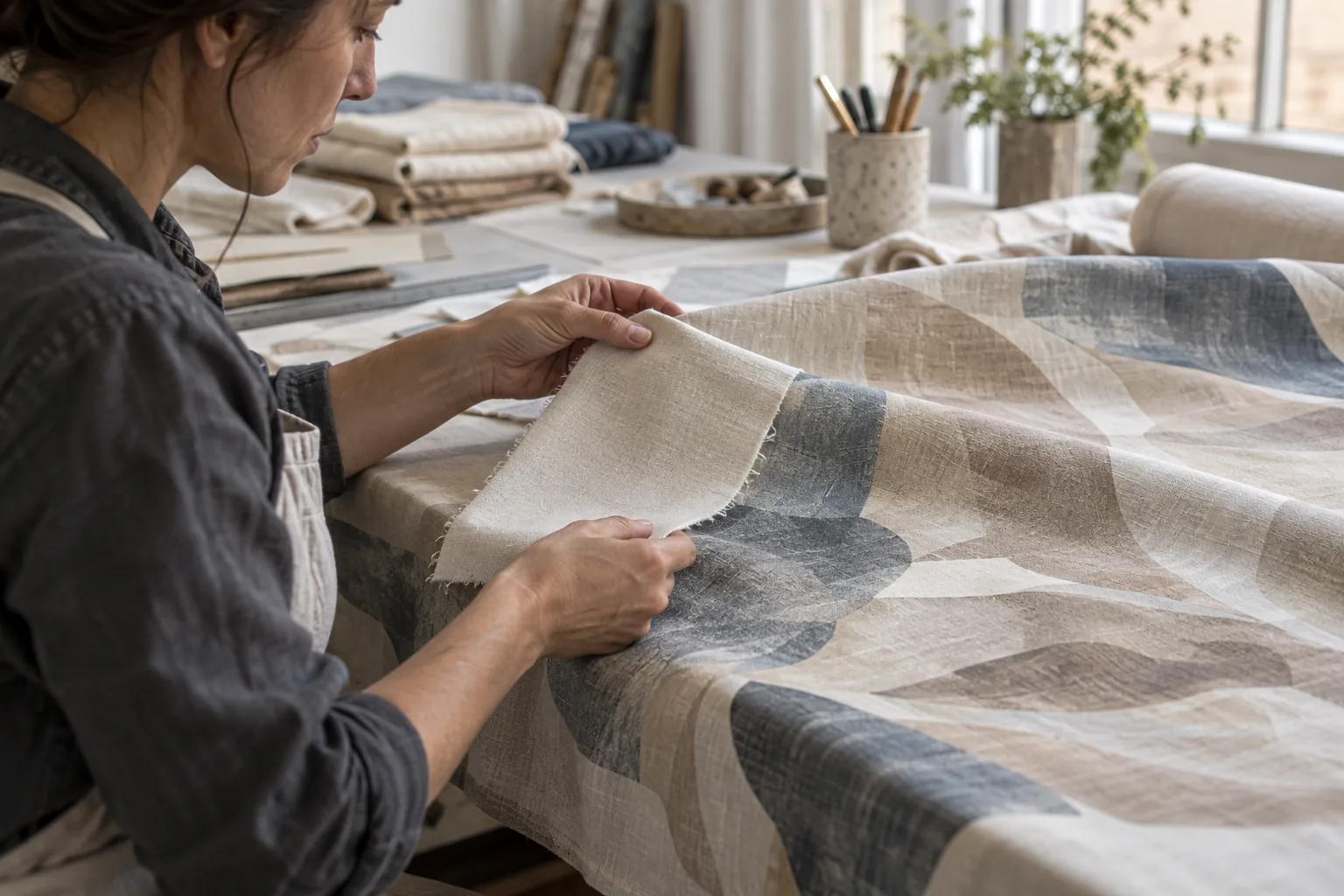
A strike-off is a print trial, often made on a fabric piece rather than a finished garment. Request enough material to judge the graphic at its intended scale and retain an unwashed reference. Supply the proposed fabric composition, weight, surface finish, color, and any planned washing treatment. A smooth white substitute cannot establish how an opaque graphic will behave on a dark brushed surface.
Ask the supplier to propose suitable methods against the same brief. Screen printing can involve different ink systems and underbases; these choices affect opacity and feel. Direct-to-garment printing depends on substrate and pretreatment compatibility. Transfers add their own adhesive, film, and heat-application considerations. Method names alone are insufficient approval specifications.
For a large tonal illustration on a cotton sweatshirt, compare the actual image area, including dense shadows and fine edges. A tiny isolated logo will not reveal how a broad printed area drapes. Record the process used on each trial so the approved appearance can be connected to a repeatable production route.
Some effects require further qualification. Discharge results depend on fabric and dye compatibility, and sublimation is generally associated with suitable polyester substrates. Treat these as candidates to test, never as guaranteed shortcuts to a particular finish.
Match the first physical sample to the unresolved risk
Use the following decision table when issuing the first sample request. These are development choices, not a requirement to purchase every sample type. Each request should name the question it must answer and the decisions it cannot yet settle.
| Unresolved question | First sample to request | Approval boundary |
|---|---|---|
| Will the print stay soft on the selected dark fabric? | Full-scale strike-off on the intended substrate | Appearance and feel; garment fit remains open |
| Does an unfamiliar boxy silhouette fit correctly? | Blank fit prototype, with print trials in parallel | Measurements and balance; decoration remains open |
| Can artwork continue across a pocket or seam? | Printed construction mock-up of the affected area | Assembly and alignment; whole-garment fit remains open |
| Will the approved print sit correctly on the approved fit? | Complete decorated sample | Combined appearance, placement, and performance |
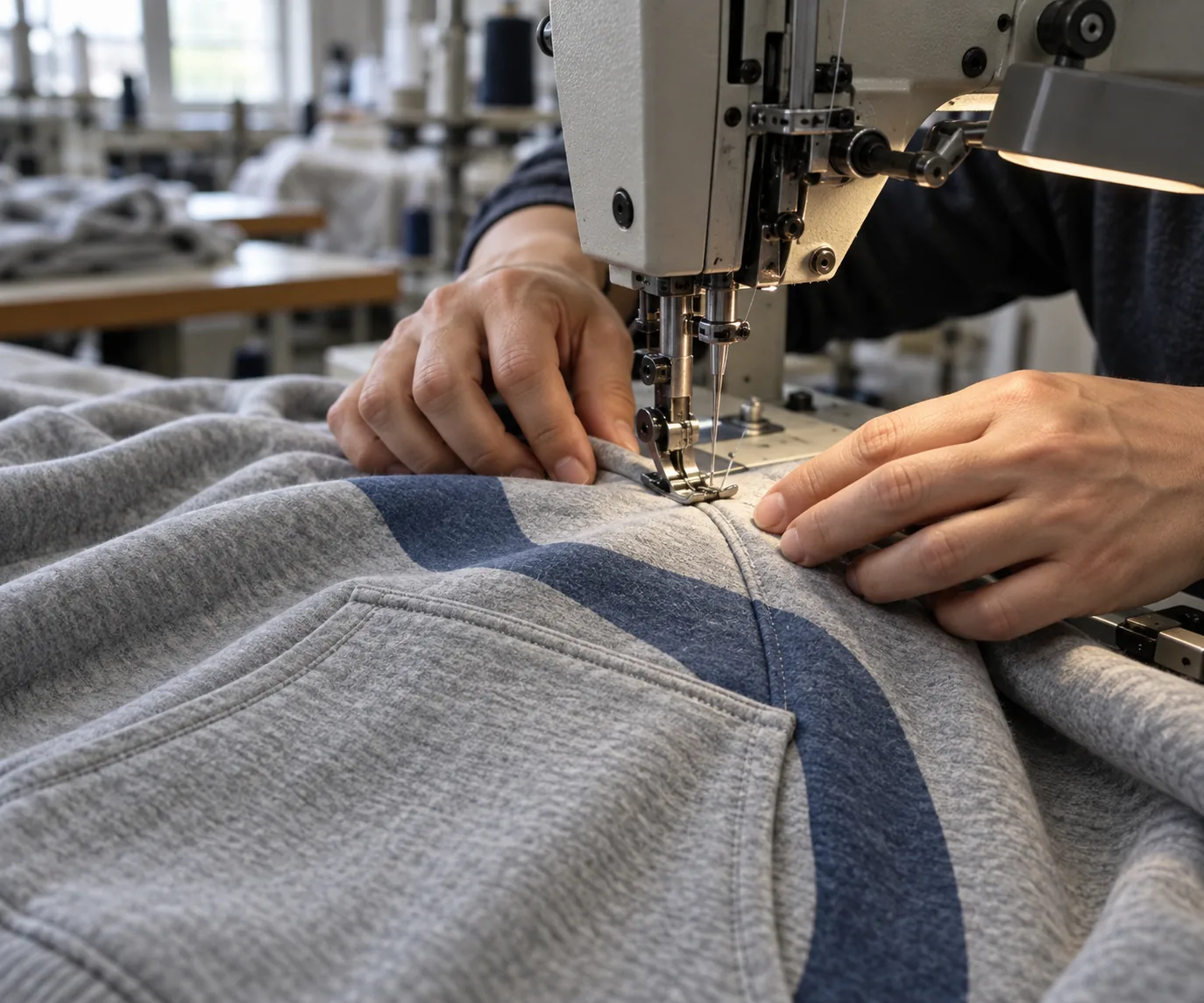
Consider a hoodie with artwork interrupted by a kangaroo pocket. A flat strike-off may establish color and texture, but it cannot show whether assembly hides a critical detail. A front-panel mock-up with the pocket attached answers that narrower question without waiting for a complete size set.
Likewise, a print approved on a loose fabric panel may look distorted over a fitted garment. Once fit is settled, assess the decoration on the worn silhouette. The final sample joins the approved components and checks their interaction.
Freeze artwork instructions before the decorated round
Convert visual preferences into a controlled print specification. Include the artwork file version, physical dimensions, color references, orientation, and a placement diagram. Specify whether dimensions refer to the visible graphic or its file boundary; transparent margins can otherwise create confusing measurements.
Define placement from a stable garment landmark. For example, measure from the center-front neckline seam to the top visible edge of the design, with the garment laid flat and relaxed. State whether the target applies before or after washing. Avoid directions such as “slightly lower” without a revised dimension.
Choose tolerances with the supplier rather than copying a universal number. A proposed placement tolerance of ±5 mm might be a discussion starting point for one chest graphic, but suitability depends on graphic size, garment construction, and production capability. A narrow design beside a zipper may need a different allowance.
Address grading explicitly. Decide whether all sizes share one graphic size or whether smaller and larger garments need separate artwork dimensions. Also confirm whether printing happens before assembly, after sewing, or before a garment wash. Changing that sequence after approval can change both appearance and alignment.
Check the printed garment after use conditions, not just unpacking
The complete decorated sample needs a QC review that connects the print to the garment. Agree on laundering conditions, the number of cycles, drying method, and acceptance criteria before testing. A buyer might request an initial five-cycle development check; that is a project proposal, not a universal durability standard or a substitute for any required testing.
- Record a baseline: photograph the unwashed garment under consistent lighting and measure print width, height, and placement. Keep an untouched approved reference.
- Inspect color and edges: compare against the agreed reference for opacity, unwanted halos, registration shifts, and visible fabric show-through.
- Check feel and movement: assess stiffness across the printed area and stretch it only to an agreed, realistic wear condition. Look for lifting or cracking.
- Review laundering effects: examine peeling, color change, surface damage, and distortion. Measure garment shrinkage separately so it is not confused with a print-position error.
- Check assembly interactions: inspect pocket edges, seams, rib areas, and any press marks or surface flattening caused by application heat.
Write comments as observations tied to a sample identifier: “lower edge lifted after the agreed wash check” is actionable. “Quality feels wrong” is not. If the supplier changes ink, adhesive, pretreatment, or curing conditions to correct a failure, repeat the affected checks before signing off.
Authorize the next round with a bounded approval
Issue approvals by component: fabric accepted, fit accepted, print method accepted, placement pending. This prevents a visually attractive trial from being mistaken for permission to proceed with every detail. Keep the approved physical reference and its corresponding specification version together.
StitchQuote provides sampling, fabric and trim sourcing, cut-and-sew, private label, branding through woven labels, prints, and embroidery, and QC before packing. MOQ for most categories starts from 50 pieces per style; denim starts from 100 pieces per style. Confirm how your proposed decoration and material choices affect the project before ordering samples around an assumed production plan.
A 7-day sample is available for standard styles with confirmed specifications and available materials. Complex styles, custom washes, and custom-developed fabric take longer. Ask for timing against the actual sample purpose, including any print trials or wash evaluations required before the final decorated round can be approved.
Questions buyers ask when decoration determines the sequence
Can a digital mock-up replace the first print trial?
It can establish composition and approximate scale, but it cannot demonstrate opacity, hand feel, adhesion, or wash behavior. Use it to narrow the design, then test the uncertain physical properties on the intended substrate.
Should every colorway receive a separate strike-off?
Review colorways for meaningful changes in substrate or process. A dark base may require a different underbase from a pale one. Ask which combinations need separate trials and document the limits of any shared approval.
What if the fit sample is approved before the print fails?
Retain the fit approval if the correction leaves fabric and construction unchanged. If solving the print problem requires a heavier fabric or a different wash, reassess the fit because drape and shrinkage may change.
Can a sales sample also become the production reference?
Only when its materials, construction, decoration process, and specifications match the approved production plan. Identify any presentation-only substitutions. A sample made for photography should not silently become the standard for bulk manufacture.
Related reading
- Prepare the tech pack for your sample brief
- Review sampling and MOQ
- Understand clothing sampling timelines
- Discuss your sample sequence with StitchQuote
Request a manufacturing quote
Share your product type, quantity range, and destination. We usually reply within one business day.