Custom Streetwear, Casualwear & Denim Manufacturer•MOQ 50 pcs•Denim MOQ 100 pcs•7-Day Sample Available

What Makes Fit Approval Easier Across Multiple Size Ranges
Learn fit approval multiple size ranges through a clearer factory-side view that helps brands reduce rework, align sample goals, and move toward approval with better.

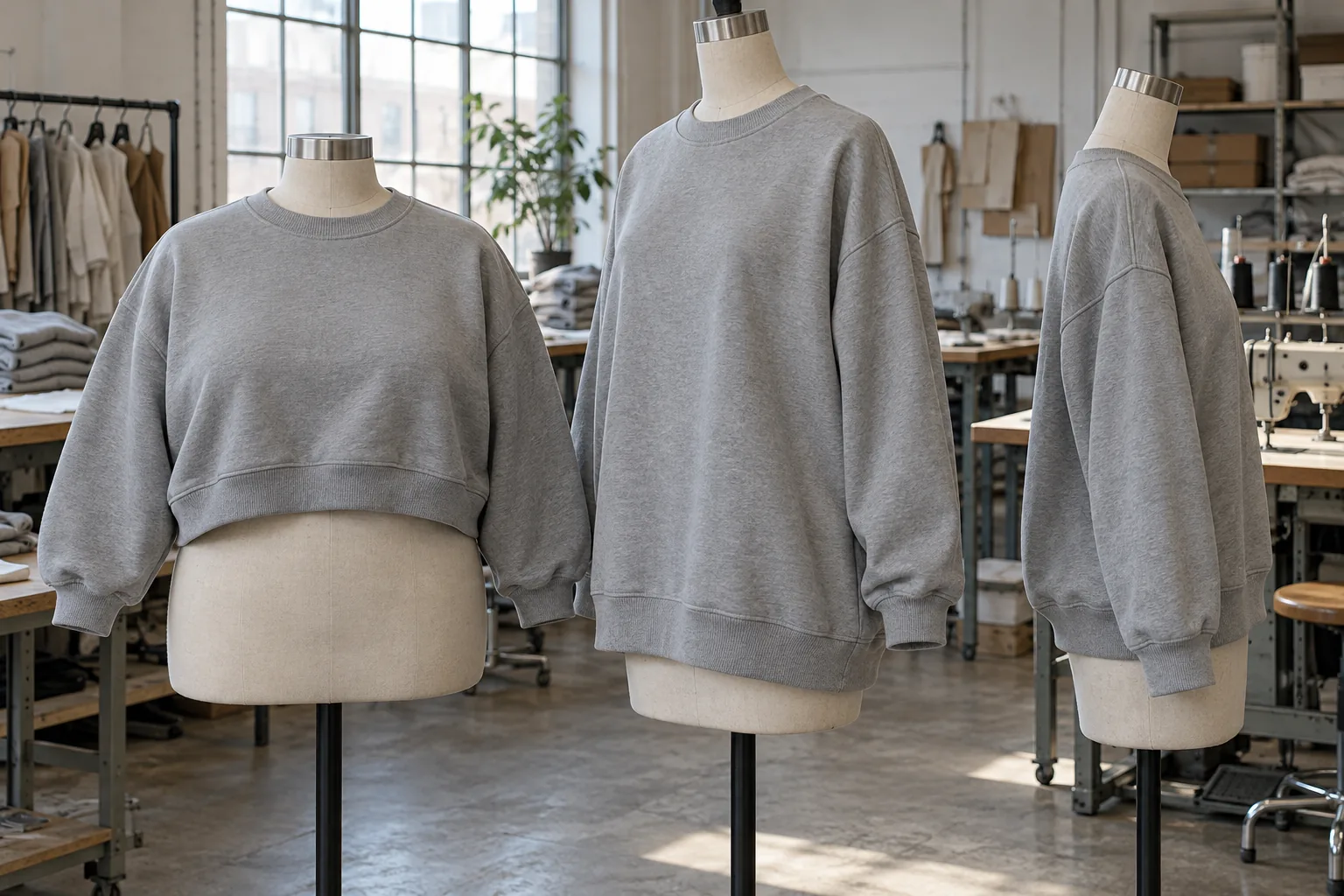
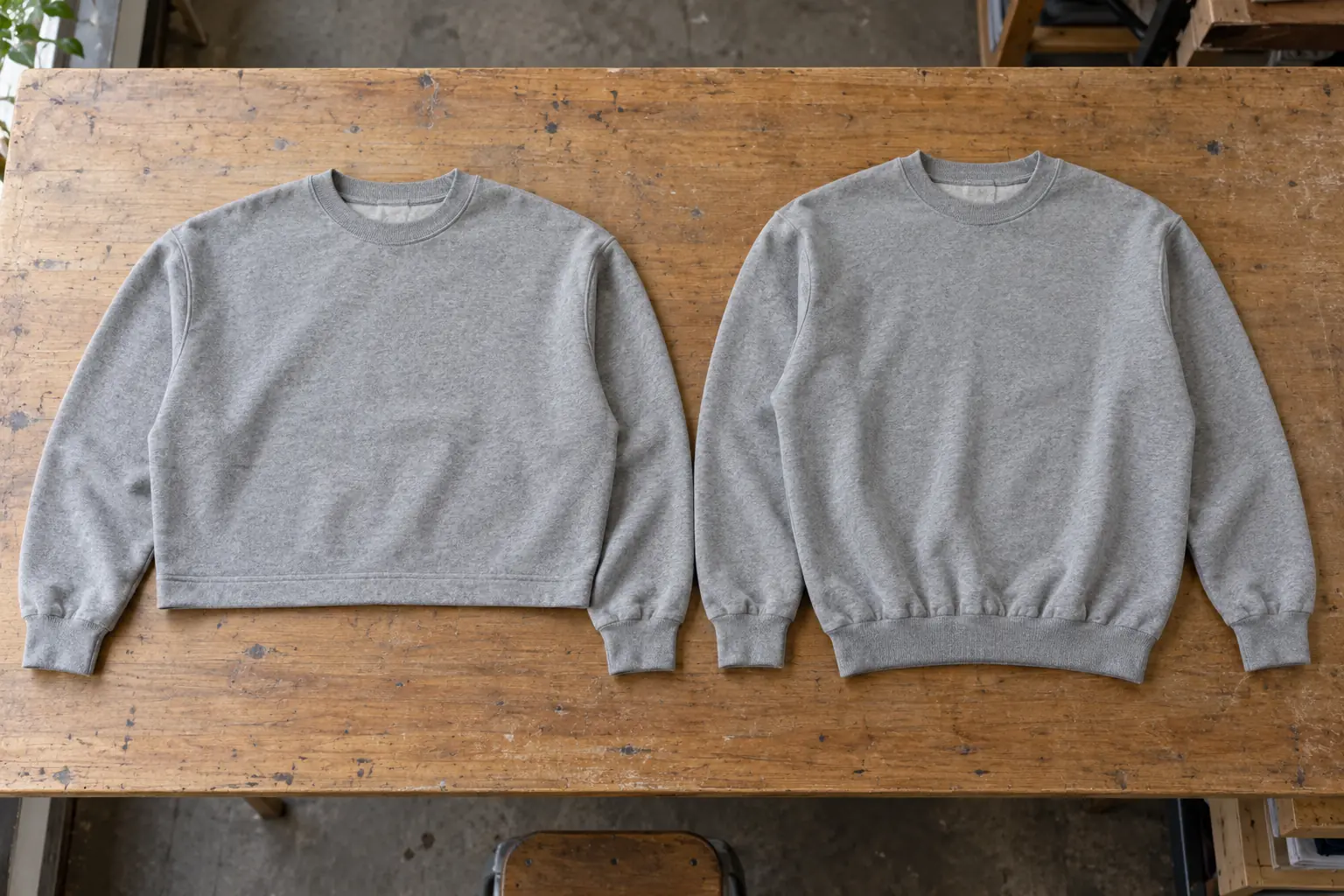
A boxy sweatshirt and an oversized sweatshirt can share a chest measurement and still fit very differently. One may finish near the waistband with a broad, deliberate outline; the other may hang lower, carry more sleeve volume, and leave room for layering. When buyers approve only the middle size, those differences can disappear at the ends of the range.
Fit approval becomes easier when the brand defines which proportions must survive grading, then tests those proportions on selected bodies. For a range spanning smaller through extended sizes, the useful question is whether every wearer gets the intended silhouette. This guide focuses on approving boxy and oversized tops before their size charts become bulk production instructions.
Choose the silhouette before choosing the reference size
“Boxy” describes a relationship between width and length. “Oversized” describes intentional room relative to the intended wearer. A garment can be both, but the terms are not interchangeable. Sending a reference photo labeled “oversized boxy fit” leaves the pattern maker to decide which feature takes priority when the garment grows.
Write a short silhouette brief with observable outcomes. For a boxy crewneck, that could mean a hem near the upper hip, a straight side seam, and a dropped shoulder that remains visible without swallowing the upper arm. For an oversized pullover, specify layering space, intended seat coverage, and whether the cuff should hold the sleeve above the hand.
Separate nonnegotiable features from adjustable ones. If cropped length defines the product, solve restricted movement through the armhole, sleeve, or body width before adding length. If layering defines it, check room over the actual base layer. These priorities give the supplier a useful basis for proposing pattern changes.
Convert boxy and oversized into measurable relationships
Chest width alone cannot identify the fit. Record body length, shoulder width, armhole depth, bicep width, sleeve length, and hem opening alongside it. Define how each measurement is taken: a half-chest measured flat below the armhole is different from a body chest circumference. Specify the measurement position and whether ribbing is relaxed.
The following dimensions are illustrative discussion points for two middle-size sweatshirt samples, not recommended specifications or a universal size chart. Confirm every measurement against the target customer and material.
| Measurement | Boxy example | Oversized example | Approval question |
|---|---|---|---|
| Half-chest | 64 cm | 64 cm | Where does the extra volume sit? |
| High-point shoulder to hem | 62 cm | 73 cm | Does coverage match the brief? |
| Shoulder width | 60 cm | 62 cm | Does the sleeve join land correctly? |
| Relaxed hem width | 62 cm | 56 cm | Does the hem hang straight or gather? |
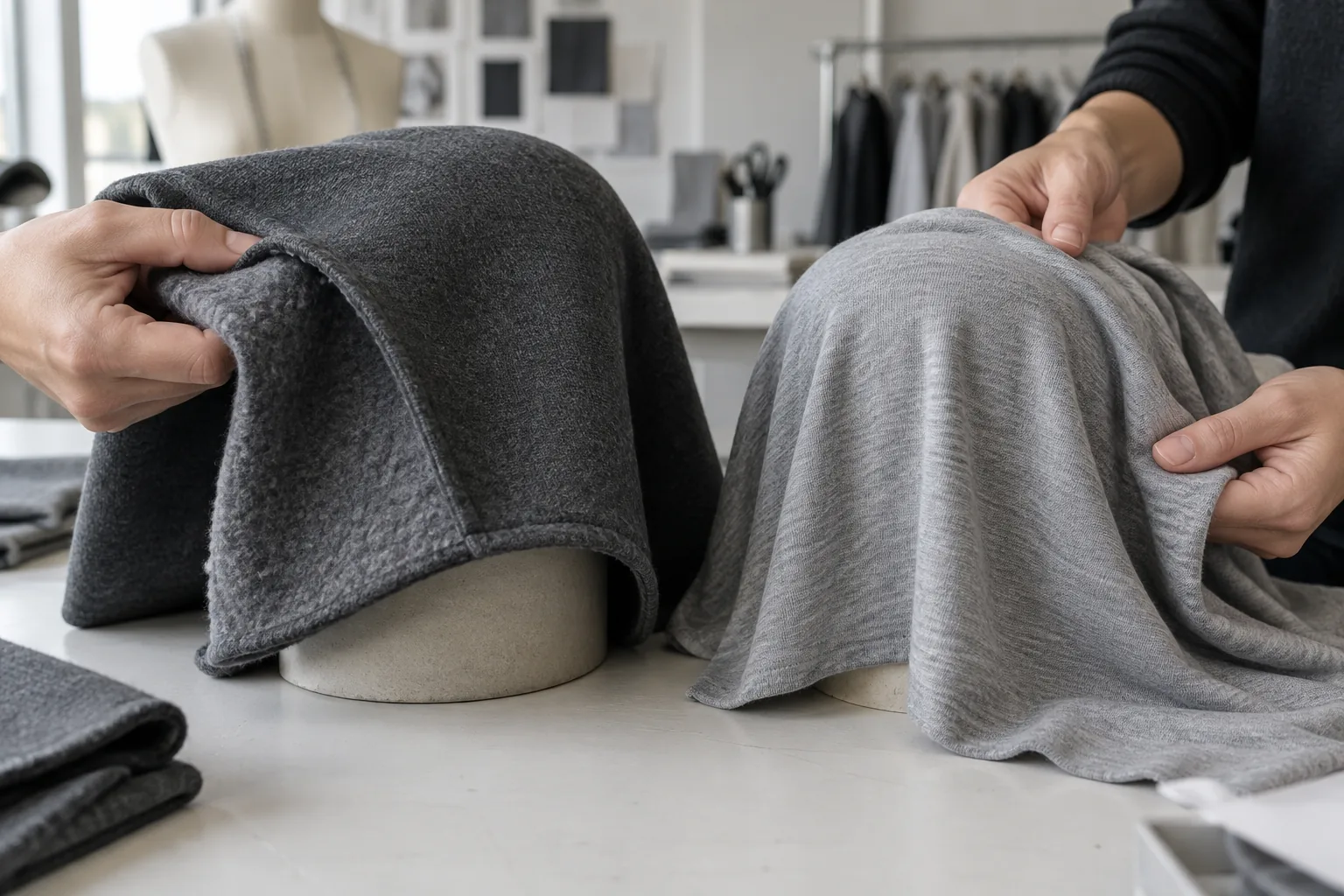
Also record the intended wearer’s body measurements. Garment chest circumference minus body chest circumference gives a useful ease reference, but it does not explain how that ease is distributed. A stiff fleece can stand away from the torso; a softer jersey can collapse around it. Approve the silhouette in the intended fabric, or explicitly mark substitute-fabric findings as provisional.
Place size-set samples where the silhouette is most vulnerable
Start with a reference size that represents a meaningful part of your customer base and has an available, measured fit model. Then identify the sizes most likely to expose a grading problem. For a new XS–3XL range, a reference sample plus the smallest and largest sizes can provide an initial check; add intermediate samples where the grading rule changes or results remain uncertain.
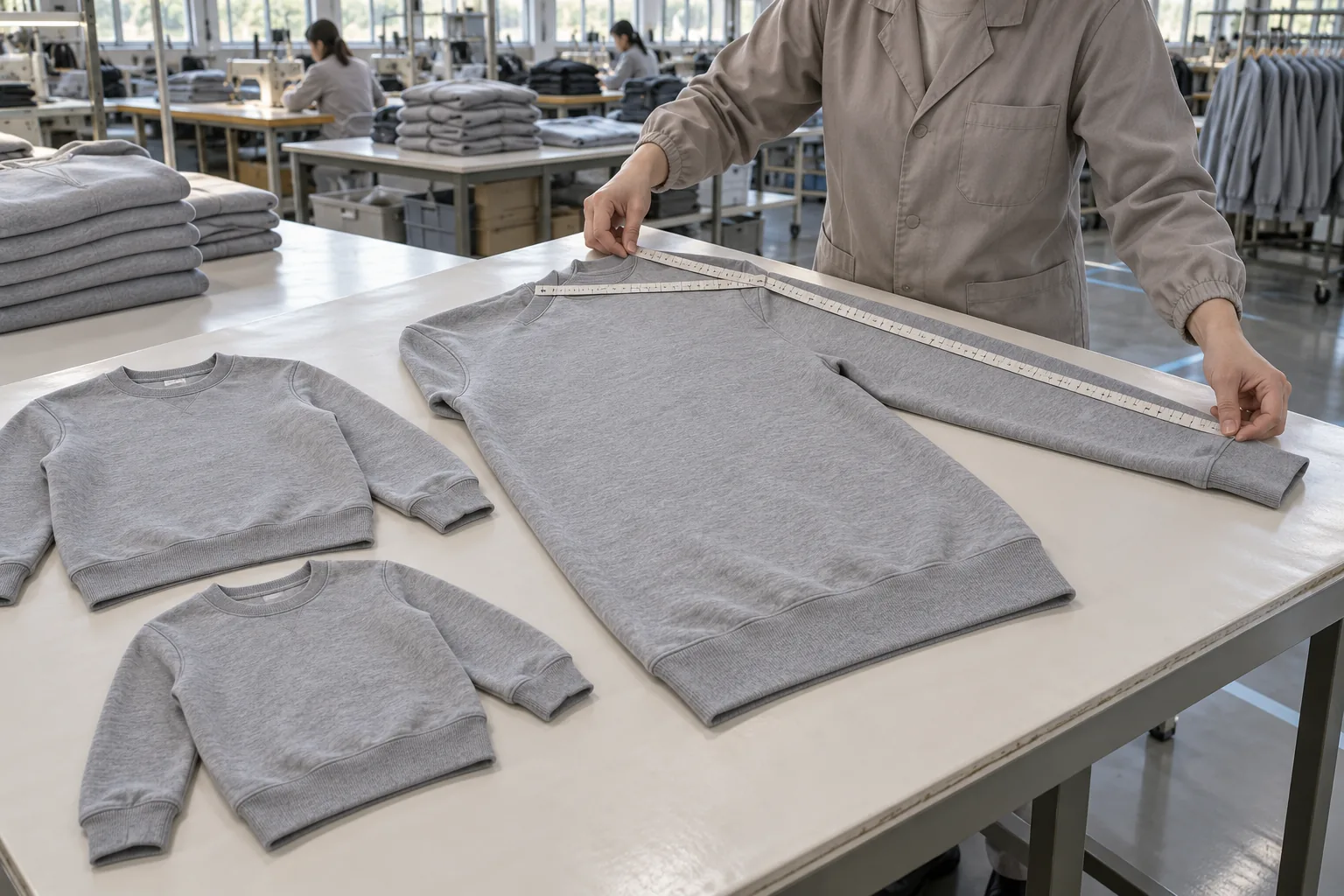
For boxy tops, watch the small size for excessive shoulder drop and the large size for loss of intended coverage. For oversized tops, check whether the smallest wearer disappears inside the sleeve and whether the largest wearer receives enough upper-arm and torso ease. Merely adding the same amount to every horizontal measurement may create a wide chest with a restrictive armhole.
Approve increments by measurement, not by a single scaling percentage. Body length might grow more slowly than chest width, while shoulder growth may need to moderate as sizes increase. Do not carry a single grade rule across separate petite, regular, and tall ranges without checking their length needs. Agree on which sizes require physical samples before booking the approval round.
Run fittings that distinguish extra room from poor balance
Use the same base layer and fitting sequence for each size. Record the wearer’s height, chest, waist, and relevant arm measurements, with consent. Photograph front, side, and back views at a consistent camera height. Begin with arms relaxed, then ask the wearer to reach forward, raise both arms, and sit.
A boxy top should retain its intended outline without the front hem climbing excessively during ordinary movement. If it does climb, inspect the armhole shape and sleeve relationship before assuming that the body needs length. An oversized top should allow movement without a heavy fold pulling from the underarm or cuffs repeatedly covering the fingers unless that is intentional.
Check shoulder drop and sleeve reach as a pair. Increasing shoulder width moves the sleeve attachment outward, so an unchanged sleeve length can still produce a longer effective reach. Compare the neck-to-cuff path as well as the listed sleeve measurement. This catches a common reason why a larger size feels much longer in the arms despite modest sleeve grading.
Write comments as evidence and requested action: “On the recorded XL wearer, the cuff covers the knuckles at rest; review shoulder drop and reduce effective sleeve reach.” Then agree on the numerical revision. Avoid sending an isolated instruction such as “make less oversized,” which could trigger unwanted reductions across the entire garment.
Build the QC checklist around silhouette failure points
Fit approval and production measurement checks serve different purposes. The approved sample establishes the intended result; the measurement sheet gives QC a repeatable way to check it. Set project-specific tolerances by measurement and construction. For discussion, a buyer might propose ±1 cm on half-chest and body length, with a tighter limit on a small neck opening; confirm feasibility before adopting those values.
- Measurement method: Specify a flat, relaxed garment, fastening position where relevant, and exactly where each tape path begins and ends.
- Proportion control: Review chest and length together. Individually acceptable deviations can combine into a visibly longer, narrower boxy top.
- Symmetry: Compare left and right sleeve lengths, shoulder positions, and hem level without stretching the garment into alignment.
- Rib recovery: Check that cuffs and hem recover after handling and do not distort the approved outline.
- After-care behavior: Measure before and after the agreed wash and drying method, documenting shrinkage, twisting, and changes in drape.
- Size identification: Match the size label to the measured specification and approved revision, especially when samples from several rounds share a table.
Do not treat dimensional tolerance as permission to change the silhouette. If a short body and broad chest define the design, assess their combined variation during sample review. Agree on how a garment that measures within limits but hangs incorrectly will be reviewed before bulk cutting begins.
Release one approval record for every size range
Close the review with one dated specification, an approved measurement chart, the grading rules, fitting photos, and a clear list of accepted samples. Identify any outstanding items and their owners. Keep a rejected sample labeled as rejected; an attractive but outdated reference can otherwise become an accidental cutting standard.
State whether approval applies before washing, after washing, or both. Record the fabric and rib used for the approved sample, because a later material substitution may require another fit check. If different ranges use different patterns, name each approved pattern and its applicable sizes instead of issuing one ambiguous “fit approved” message.
StitchQuote provides cut-and-sew, private label, sampling, fabric and trim sourcing, branding, and QC before packing. MOQ for most categories starts from 50 pieces per style; confirm the intended size allocation for your project. A 7-day sample is available for standard styles with confirmed specs and available materials. Complex styles, custom washes, and custom-developed fabric take longer; confirm scheduling for the size-set review separately.
Questions buyers ask when approving both silhouettes
Can one pattern support both a boxy and an oversized version?
It can be a starting point, but each version needs its own specifications and approval. Shortening an oversized body may leave an armhole or sleeve balance that does not suit a boxy design. Check both on the intended wearers.
Should every size have the same chest-to-length ratio?
No universal ratio works across bodies. A fixed ratio can make larger sizes too long or smaller sizes too short. Use the ratio as a diagnostic reference, then approve coverage, movement, and visual proportion on actual wearers.
Can we approve the largest size on a smaller fit model?
You can inspect construction and measure it, but that fitting cannot establish ease or balance for the intended wearer. Use a suitably measured model before signing off the largest size’s fit.
What if the washed sample loses its boxy shape?
Compare width and length changes separately and inspect rib contraction. Resolve the material, finishing, or pattern compensation with the supplier, then repeat the agreed care test before releasing the affected sizes.
Related reading and project support:
- Prepare a tech pack with clear measurement instructions
- Plan sampling and MOQ requirements
- Explore hoodie fit for streetwear brands
- Discuss your fit approval requirements with StitchQuote
Request a manufacturing quote
Share your product type, quantity range, and destination. We usually reply within one business day.