Custom Streetwear, Casualwear & Denim Manufacturer•MOQ 50 pcs•Denim MOQ 100 pcs•7-Day Sample Available

China Clothing Manufacturer vs Trading Company: What Buyers Should Compare
Use this factory-side guide to compare china clothing manufacturer vs trading company: what buyers should compare more clearly across supplier fit, quote scope.

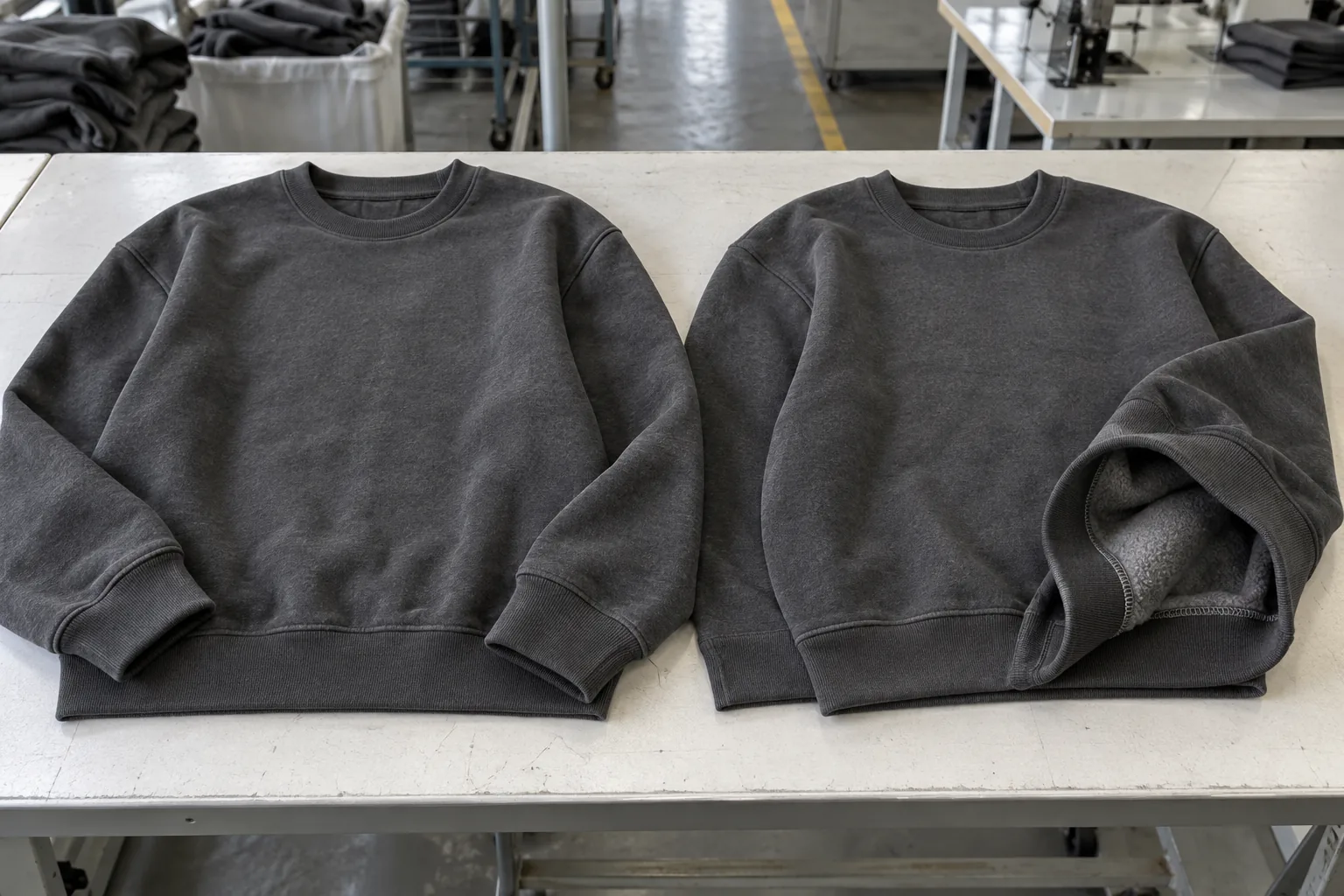
A factory quote and a trading company quote can describe the same sweatshirt while pricing different products. One may include compacted fleece, an approved rib quality and individual packing; the other may assume available fleece, substitute rib and bulk packing. The cheaper total tells you little until those assumptions match.
When comparing a China clothing manufacturer vs trading company, treat each offer as a proposed production contract. A manufacturer may provide a direct route to production decisions, while a trading company may coordinate several suppliers. Either arrangement can work. Your immediate job is to establish what each price buys, who controls changes and which evidence supports the promise.
Give every bidder one locked garment specification
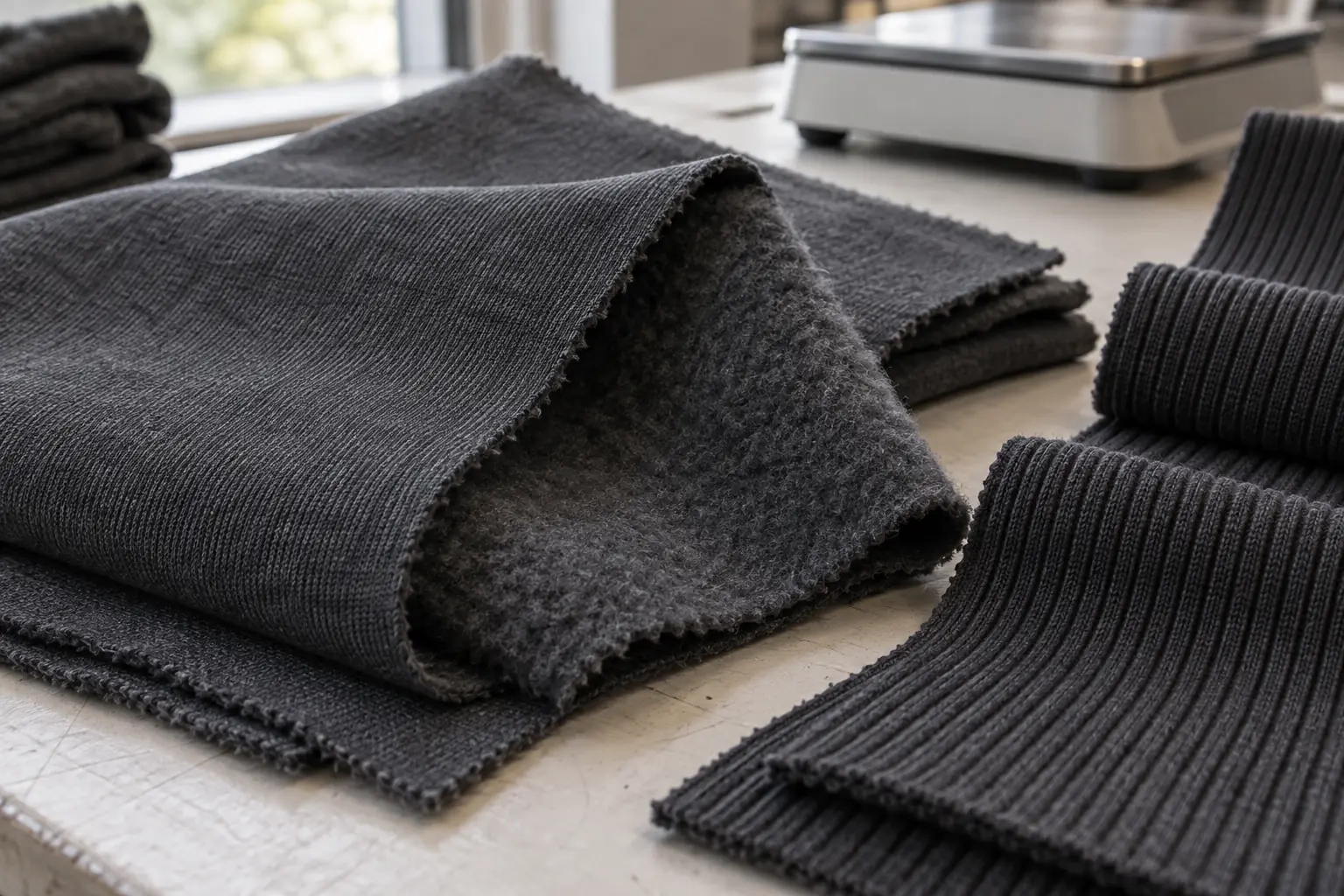
Start with one reference style rather than asking for a general price list. For example, request a pullover sweatshirt in 100% cotton brushed fleece, target finished weight 380 gsm, two colors, five sizes and a stated quantity per color and size. Specify whether the weight refers to fabric before or after finishing. These are illustrative buyer specifications, not StitchQuote product claims.
Add a measurement chart, construction details, artwork dimensions, label positions and packing instructions. A dropped shoulder silhouette needs more than a chest measurement: shoulder width, armhole depth, sleeve length and cuff opening all influence fit and material use. Identify critical measurements and propose tolerances for supplier confirmation rather than assuming all points accept the same variation.
Issue a dated revision identifier and require every quotation to cite it. Separate mandatory requirements from optional alternatives. If a supplier suggests lighter fleece or a different decoration method, request that as a separately priced option. Otherwise, an attractive alternative can quietly replace the specification you intended to compare.
Convert headline prices into matching cost scopes
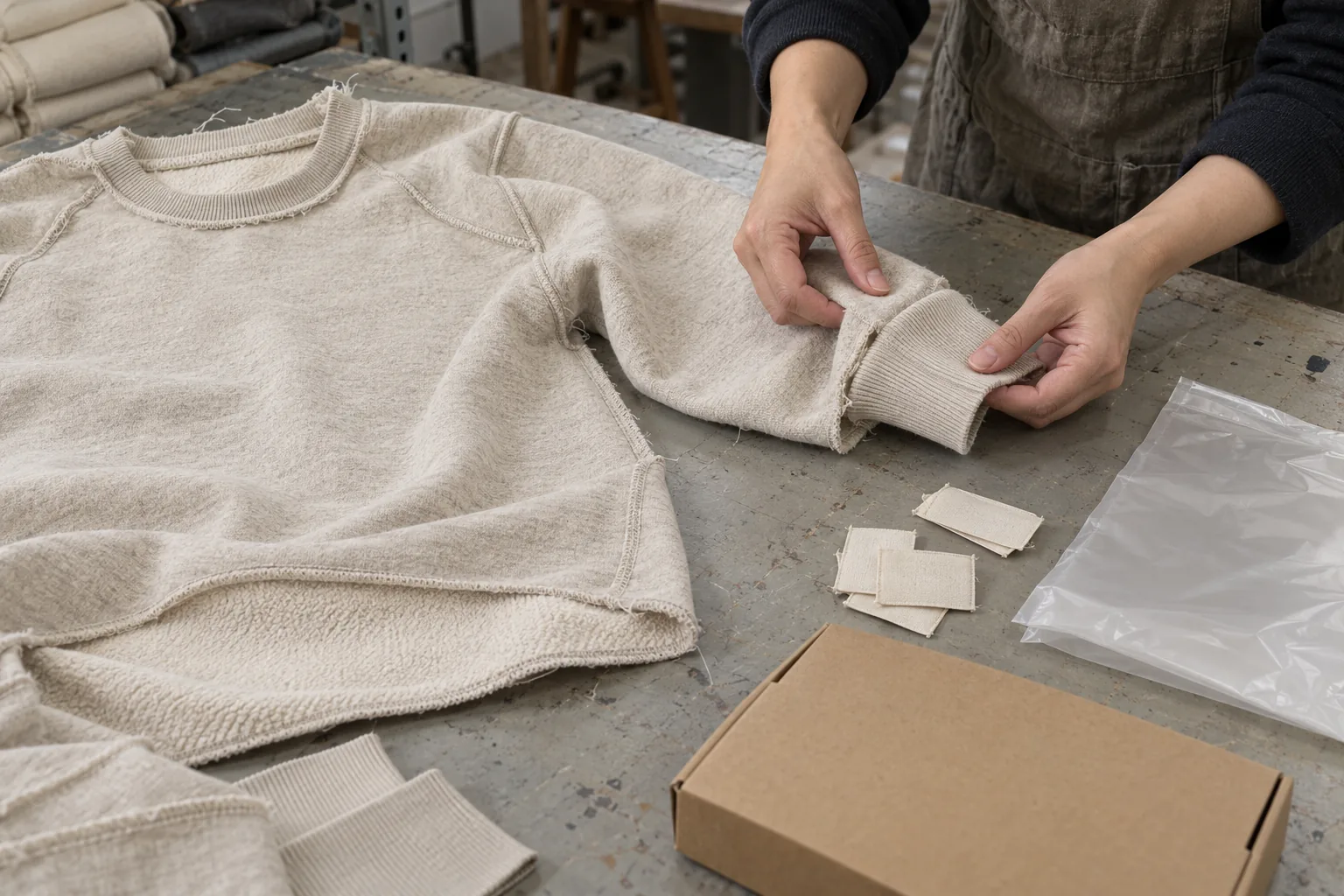
Ask both suppliers to complete the same quotation sheet. Keep the original offers, but copy their assumptions into a shared comparison. A blank entry means unresolved scope; it does not mean the service is free. Request the currency, quotation validity, payment schedule and named delivery term and place alongside the garment price.
| Quote item | Matching basis | Potential hidden difference |
|---|---|---|
| Fabric | Composition, weight, finish and approved quality | Available stock versus custom development |
| Decoration | Method, dimensions, placements and colors | Setup charges or artwork preparation excluded |
| Quantity | Identical style, color and size breakdown | Price assumes a larger order |
| Packing | Labels, folding, bags and carton requirements | Only bulk carton packing included |
| Delivery | Same named term and location | Freight or clearance responsibility differs |
Separate one-time charges from recurring unit costs. A useful calculation is quoted garment quantity multiplied by unit price, plus mandatory setup, packing and delivery charges within the agreed scope. Record sampling charges separately, including any stated conditions for credits. Do not compare a delivered offer with an ex-factory offer as though the totals represent equivalent obligations.
For uncertain charges, obtain an estimate marked provisional and identify what will fix it. Freight may depend on final carton dimensions; decoration costs may depend on approved artwork. A quote can remain useful with open items, provided they are visible and treated consistently across bidders.
Trace the quote to the people controlling production
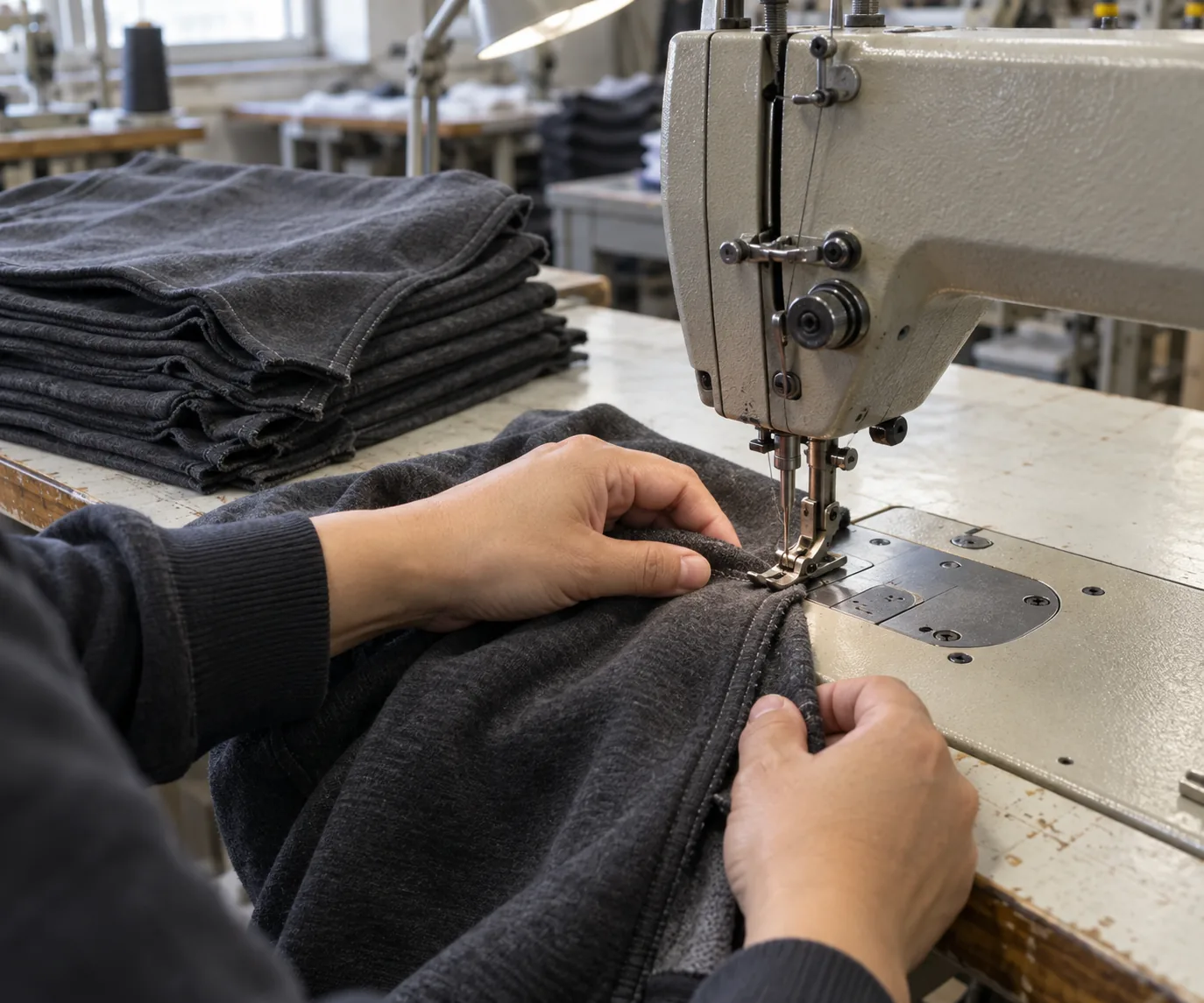
The business label alone does not explain the production route. Ask which entity will accept the order, which facility will cut and sew, and which operations will be handled elsewhere. Printing, embroidery or washing may involve separate specialists. The relevant issue is whether the quoted scope includes their work and whether one party remains accountable for the finished garment.
Use a concrete scenario: the approved rib is unavailable before bulk cutting. Who finds an alternative, submits a swatch, updates the price and obtains your written approval? A direct manufacturer still needs a clear approval process. A trading company needs enough access to production information to manage the same decision accurately.
Request evidence tied to your order, such as a proposed operation sequence, a sample measurement report or an explanation of how approved materials are identified. Facility photographs can provide context but cannot establish that your quoted fabric, finishing and inspection requirements are included. Record the commercial contact and technical decision-maker before paying for development.
Make sampling test the assumptions behind each offer
Send the same sample request to shortlisted suppliers. State whether you need a fit prototype, a decoration trial or a sample representing intended bulk materials and construction. A prototype made from substitute fabric can answer proportion questions, but it cannot establish the hand feel, shrinkage or appearance of the final garment.
Compare samples against the specification before comparing them against each other. Measure both under the same conditions, photograph identical views and record every substitution. For the sweatshirt example, check cuff recovery, fleece shedding, hood balance and embroidery distortion. If one sample uses a heavier rib or a different backing, determine whether that difference changes the quoted bulk cost.
At StitchQuote, a 7-day sample is available for standard styles with confirmed specs and available materials. Complex styles, custom washes and custom-developed fabric take longer. For any supplier, establish when the sample clock starts and whether material sourcing, shipping and buyer review sit outside it.
Ask for a revised quote after sample approval. Tie it to the approved sample and latest specification revision, with remaining departures listed explicitly. This prevents a successful development sample from being followed by bulk production priced against an earlier, less demanding brief.
Attach measurable acceptance checks to the quoted scope
Quality requirements affect both production work and inspection effort. Agree on the checks before selecting a bidder, including who performs them, what gets recorded and what happens when a result fails. “QC included” is too broad to establish whether measurements, decoration placement or wash performance will actually be checked.
- Measurements: identify measurement points and methods. An illustrative sweatshirt requirement might allow ±1 cm at half chest and body length; confirm suitability for the style and use tighter or different limits where justified.
- Material consistency: approve fabric and rib references, then check shade variation between panels and garments under agreed lighting. Confirm whether weight and composition verification are included.
- After-care behavior: specify the care method, number of wash cycles and dimensional-change limits. Agree whether testing occurs during development, before shipment or both.
- Workmanship and branding: inspect seam security, skipped stitches, label orientation and artwork placement. State a placement datum so “centered” has a measurable meaning.
- Release and remedies: agree inspection coverage, defect categories, reporting, rework responsibility and the evidence required before packing or shipment approval.
StitchQuote services include cut-and-sew, private label, sampling, fabric and trim sourcing, branding through woven labels, prints and embroidery, and QC before packing. Buyers should still confirm which checks and deliverables their particular order requires. A service description does not replace agreed acceptance criteria.
Resolve these questions before choosing the winning quote
Should a trading company disclose its margin?
A separate margin disclosure is less useful than a complete scope and clear accountability. Compare the total cost for the agreed garment and services. If coordination is part of the offer, establish its deliverables: material follow-up, consolidated reporting or management of multiple production steps. Evaluate those deliverables alongside the price.
What if the minimum order changes the comparison?
Request prices at your actual launch quantity and at any proposed higher quantity separately. StitchQuote MOQ for most categories starts from 50 pcs per style; denim starts from 100 pcs per style. Confirm color, material and trim constraints per project. Additional inventory is a purchasing commitment, even when it reduces the unit price.
Can a lower quote be accepted with unresolved substitutions?
Keep it provisional until the substitutions are approved and priced. A changed yarn, rib or wash can alter fit and appearance, so request evidence appropriate to the change. If the alternative is acceptable, issue an updated specification to all remaining bidders before making the final comparison.
How should lead time influence the final decision?
Compare timelines from the same starting event, such as material confirmation and sample approval. Separate production, inspection, packing and transit. Select against a feasible approval calendar as well as the total price, then incorporate the agreed specification, sample reference, scope and remedies into the order documents.
Related reading and next steps:
- Prepare a tech pack for comparable quotations
- Review sampling and minimum order planning
- Assess a cut-and-sew streetwear manufacturing partner
- Contact StitchQuote with your quotation brief
Request a manufacturing quote
Share your product type, quantity range, and destination. We usually reply within one business day.