Custom Streetwear, Casualwear & Denim Manufacturer•MOQ 50 pcs•Denim MOQ 100 pcs•7-Day Sample Available
Private Label Manufacturer vs Full-Service Development Partner
Use this factory-side guide to compare private label manufacturer vs full-service development partner more clearly across supplier fit, quote scope, approvals, and.

A supplier can offer both private label production and product development. The useful distinction is what you must resolve before that supplier can make a repeatable garment. For a brand choosing between a private label manufacturer and a full-service development partner, the bill of materials, or BOM, exposes that boundary more clearly than a service label.
Use this comparison when you are preparing a sourcing request, before comparing quotations. A complete BOM identifies every material that stays in or ships with the garment. An incomplete one reveals the decisions someone still needs to research, sample, cost, and approve. That difference determines whether you are buying execution against an established specification or paying for help creating that specification.
Read the empty BOM cells before choosing the service scope
A BOM is more than a fabric shopping list. Each line needs a component identity, its location, a specification, a quantity or consumption basis, and an approval reference. Supplier codes are useful, but they should not replace readable descriptions. If a mill code changes, the specification should still explain what the component must do.
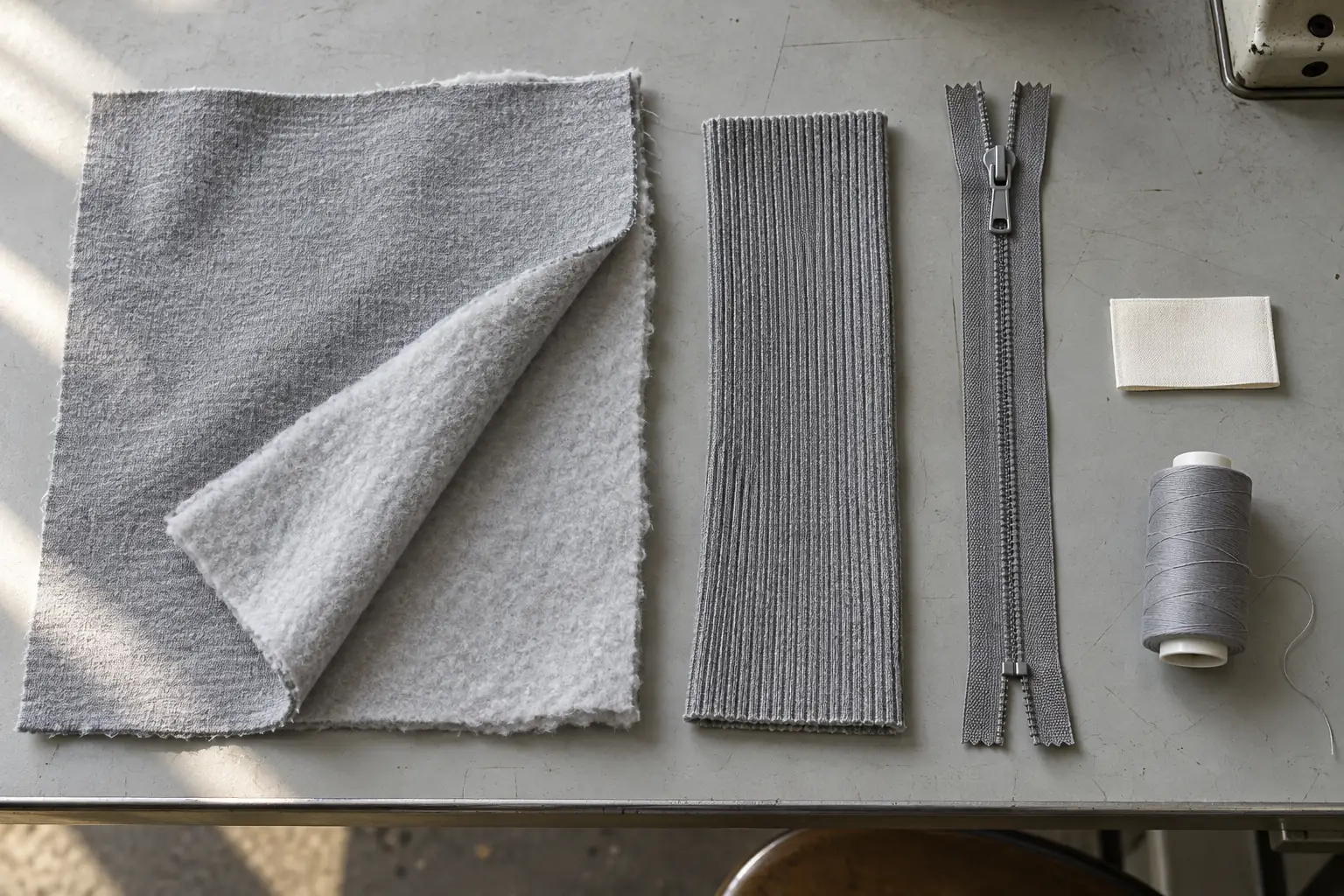
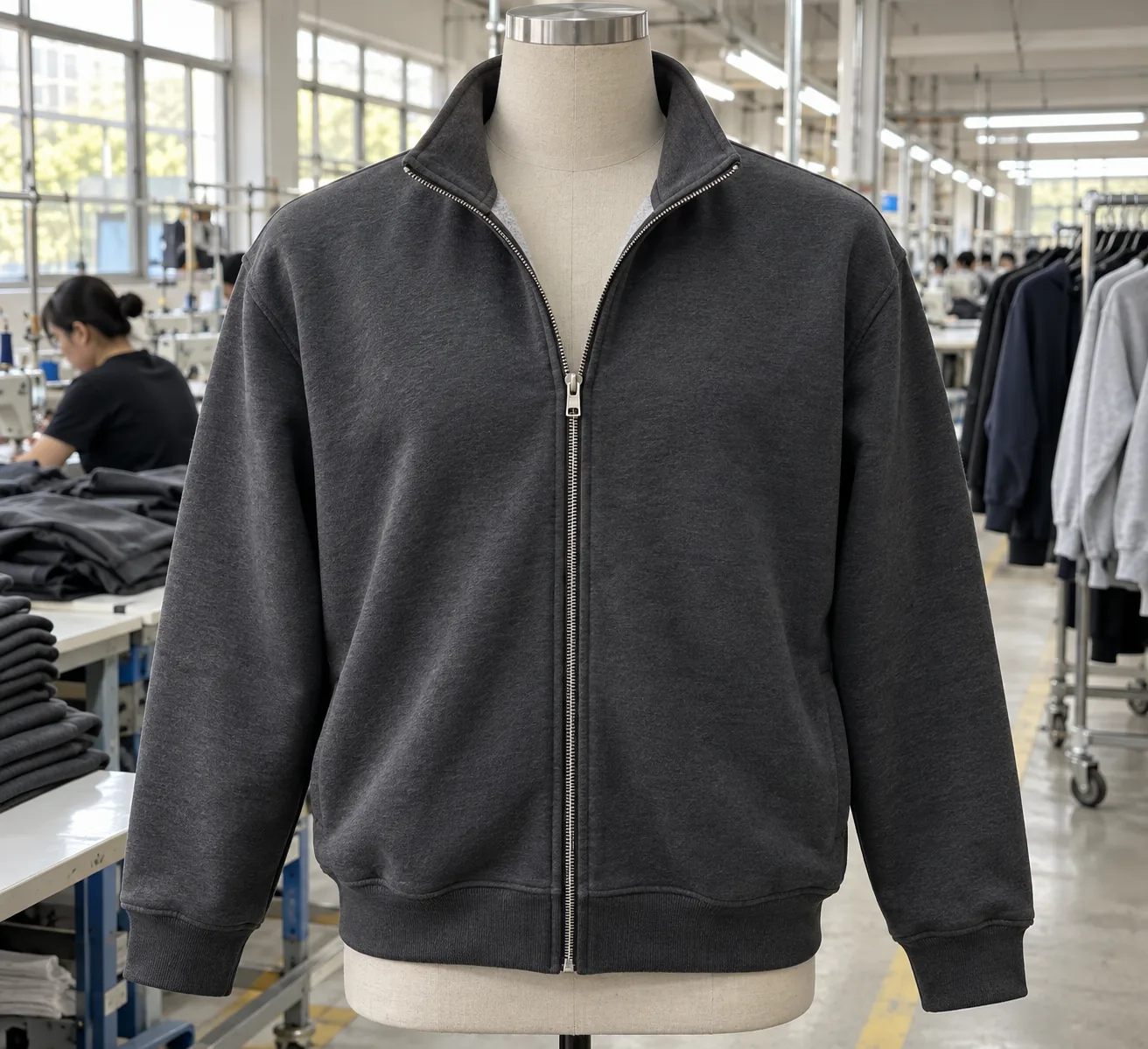
Consider a zip sweatshirt. The shell fabric might be approved, while the rib recovery, zipper finish, and pocket reinforcement remain undecided. Those are development tasks even if the silhouette already exists. Conversely, a new silhouette with approved materials and a finished pattern may require relatively little material development.
Mark each BOM line as approved, proposed, or unresolved. Then add an owner and the evidence needed to close it. A supplier quoting production against approved inputs has a different assignment from one expected to find alternatives and prove compatibility. Ask for that work to be described explicitly; neither business label guarantees its inclusion.
Make a component description survive a supplier handoff
Descriptions such as “heavy fleece,” “premium zip,” and “soft label” cannot support a reliable comparison. Two suppliers can interpret each phrase differently and both believe they have followed the brief. Build the description around measurable properties and an approved physical reference wherever appearance or handfeel matters.
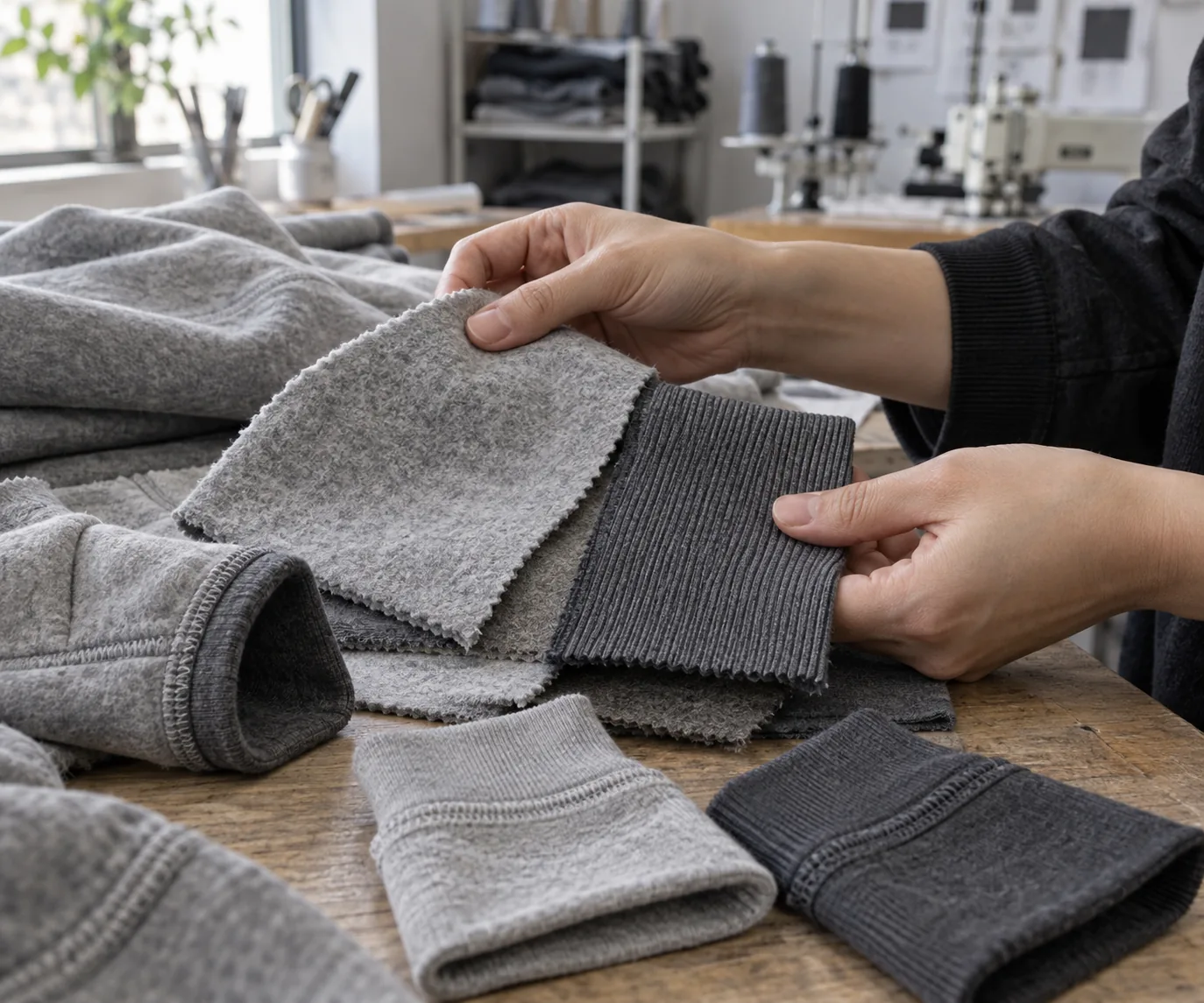
The following entries are illustrative buyer specifications, not universal requirements. Final values and tolerances should be confirmed for the garment, materials, and intended care method.
| Component | Useful BOM entry | Separate approval evidence |
|---|---|---|
| Shell fleece | 80% cotton, 20% polyester; brushed back; target 360 gsm; approved color reference | Fabric cutting and agreed wash assessment |
| Cuff rib | 2 × 2 construction; composition specified; finished cuff dimensions referenced to pattern | Recovery trial and washed shell/rib pairing |
| Front zipper | No. 5 coil; open-end; slider finish specified; length listed by size | Approved zipper sample and sewn installation |
| Neck label | Woven construction; finished 40 × 15 mm; end folds; artwork revision identified | Physical strike-off and attachment position |
Keep pattern dimensions and sewing instructions in their appropriate documents, but cross-reference them from the BOM. This avoids copying a cuff measurement into three places and updating only two. A revision identifier should connect the component list, artwork, measurements, and sample comments to the same garment version.
Use material interfaces to define development work
Development becomes valuable where individually acceptable components fail together. Rib can meet its own weight specification yet recover poorly after stretching. A zipper tape can behave differently from the shell during washing. An embroidery backing can stabilize stitching while making a lightweight chest panel uncomfortable.
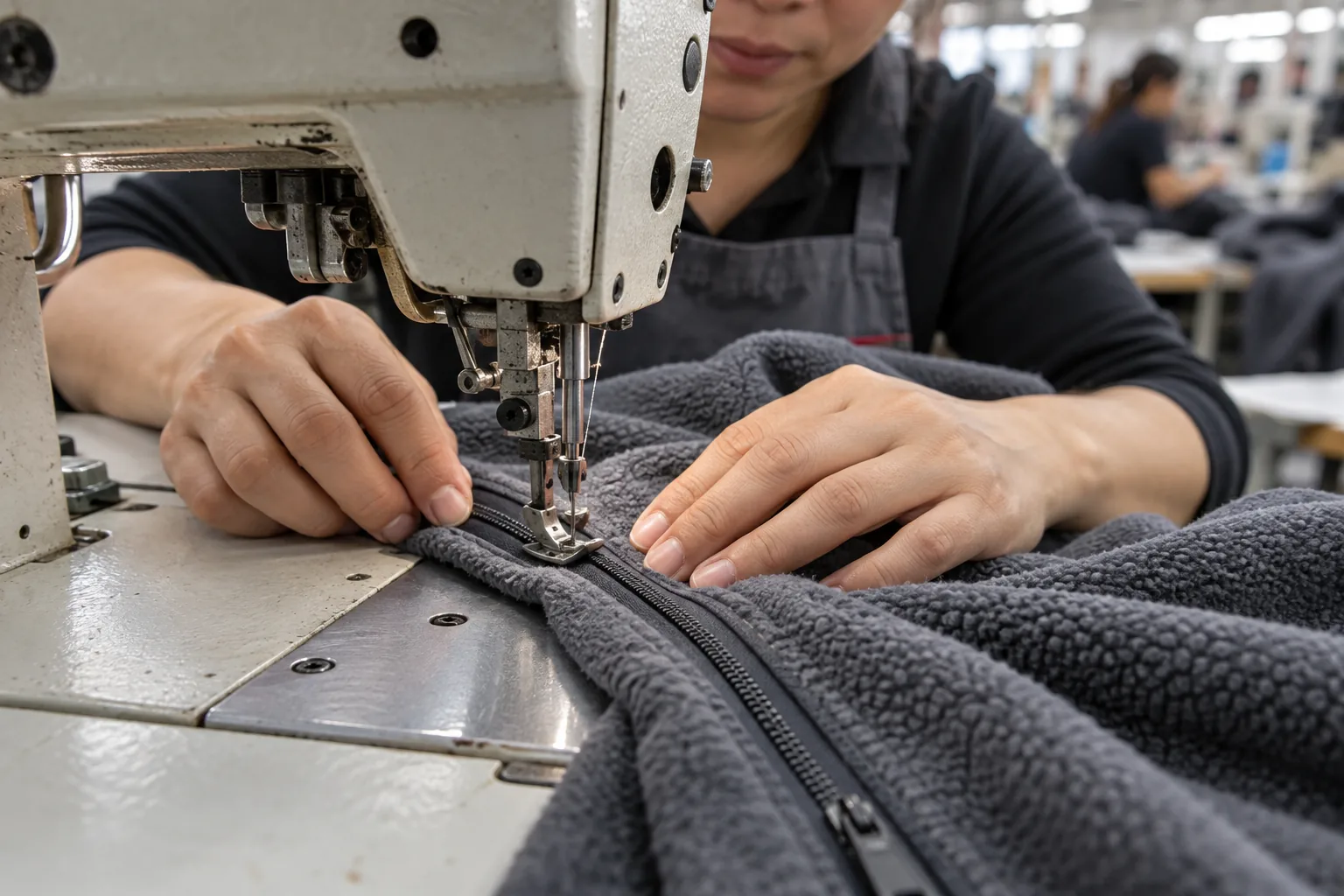
For a pigment-washed overshirt, ask who will evaluate sewing thread shade after processing, button appearance, label legibility, and differential shrinkage around plackets. Choosing the shell alone does not close the material brief. These interactions may require trials before the BOM can be released for production.
Describe development deliverables in the sourcing request: candidate materials, sewn compatibility trials, wash observations, and an updated BOM with rejected options removed. Production execution can then begin from the selected version. If your team already holds this evidence, ask suppliers to quote against it; if it does not, assign responsibility for producing it.
Separate garment quantities from material commitments
A clear BOM also shows why the garment order quantity is not the only commercial constraint. A stock zipper may be readily available, while a custom-colored zipper tape requires a separate sourcing commitment. Fabric, labels, and packaging can each have minimum purchase quantities that differ from the garment quantity. Request confirmation for each custom component.
StitchQuote’s MOQ for most categories starts from 50 pieces per style; denim starts from 100 pieces per style. These starting points do not establish that every custom fabric or trim is available at the same quantity. Ask how proposed materials affect the project before authorizing their purchase.
Keep net garment consumption separate from purchasing allowances. For example, a BOM may show one neck label and one zipper per sweatshirt, while the purchasing plan adds quantities for sampling, setup, or replacement. Fabric consumption also depends on usable width, size distribution, marker efficiency, and shrinkage. Treat early estimates as provisional until those inputs are checked.
Ask both suppliers to identify included development work, material assumptions, outstanding approvals, and any leftover material arrangements. A lower quote based on stock rib is not directly comparable with one based on custom knitting. Reconcile the BOM assumptions first, then evaluate the commercial difference.
Release a version that purchasing and sewing can both follow
A sample approval should produce a usable record, not simply a message saying “looks good.” Record the BOM revision, sample identifier, approved color references, and any exceptions. If the sample used a temporary zipper, say so and identify the remaining approval needed before bulk purchasing.
Give substitutions a defined route. The supplier should identify the affected component, explain the proposed replacement, and provide evidence relevant to the change. A substitute shell fabric may require a new wash or fit assessment; a different label fold may need only an attachment review. Approval should match the consequence of the change.
For reorders, ask whether the same material specification and approved sources remain available. Retaining a BOM does not guarantee that stock remains unchanged. Confirm current availability and compare new material lots with retained references before assuming the previous garment result will repeat.
StitchQuote provides cut-and-sew, private label, sampling, fabric and trim sourcing, branding through woven labels, prints and embroidery, and QC before packing. Use the BOM review to establish which of those services your project needs and which decisions your team will supply.
Check the BOM against the garment before packing
QC should verify both component identity and performance in the assembled product. Agree on inspection methods and acceptance criteria before production. A target fabric weight without a tolerance, conditioning method, or sampling approach leaves room for disagreement rather than providing a complete check.
- Material identity: Compare shell, lining, rib, and trims with approved references. Check lot records where available; visual inspection alone cannot establish fiber composition.
- Dimensional compatibility: Verify zipper lengths by size and check that cuffs and neckbands match the approved construction without unwanted puckering or stretching.
- Appearance after care: Use the agreed wash method to assess shade changes, differential shrinkage, trim distortion, and decoration condition against approved criteria.
- Branding placement: Check artwork revision, label orientation, fold type, attachment, and placement measurements. Define tolerances by location rather than assuming one allowance suits every detail.
- Packing components: Match size identification and packaging to the order. Confirm that any approved component substitution appears in the final production record.
Separate a documentation error from a garment defect, but resolve both. If production used an approved replacement and the BOM still lists the old trim, update the record before the next order repeats the wrong instruction.
Questions buyers ask when the BOM is still incomplete
Can a reference garment replace a component list?
It can anchor appearance and construction discussions, but it does not reliably identify composition, finishing, or hidden materials. Ask the supplier to turn the reference into proposed BOM entries, flag assumptions, and submit alternatives for approval. Specify which qualities matter most instead of expecting an exact reconstruction from sight alone.
Should every material be settled before requesting a sample?
No, provided the sample’s purpose and provisional components are documented. A fit sample can use a substitute material when its behavior is suitable for that assessment. It should not automatically become the color, handfeel, or wash standard. List the approvals still required after fitting.
When does a seven-day sample become a realistic request?
StitchQuote has a seven-day sample option for standard styles with confirmed specifications and available materials. Complex styles, custom washes, and custom-developed fabrics take longer. Review unresolved BOM lines first: an unavailable rib or unapproved zipper can prevent the project from meeting those conditions.
Who should keep the final BOM after development?
Agree who maintains the master and how revisions are shared. The buyer needs an accessible approved record for future quotes and reorders, while the manufacturer needs the same released version for purchasing and production. Confirm access to associated specifications and references when defining development deliverables.
Related reading and project enquiries:
- Prepare a tech pack that supports the component list
- Review sampling and MOQ considerations
- Explore private label clothing manufacturing
- Contact StitchQuote about your BOM and project scope
Request a manufacturing quote
Share your product type, quantity range, and destination. We usually reply within one business day.