Custom Streetwear, Casualwear & Denim Manufacturer•MOQ 50 pcs•Denim MOQ 100 pcs•7-Day Sample Available

How to Reduce Revision Pressure Without Forcing Faster Decisions
Use this factory-side guide to compare reduce revision pressure without forcing faster decisions more clearly across supplier fit, quote scope, approvals, and timing.

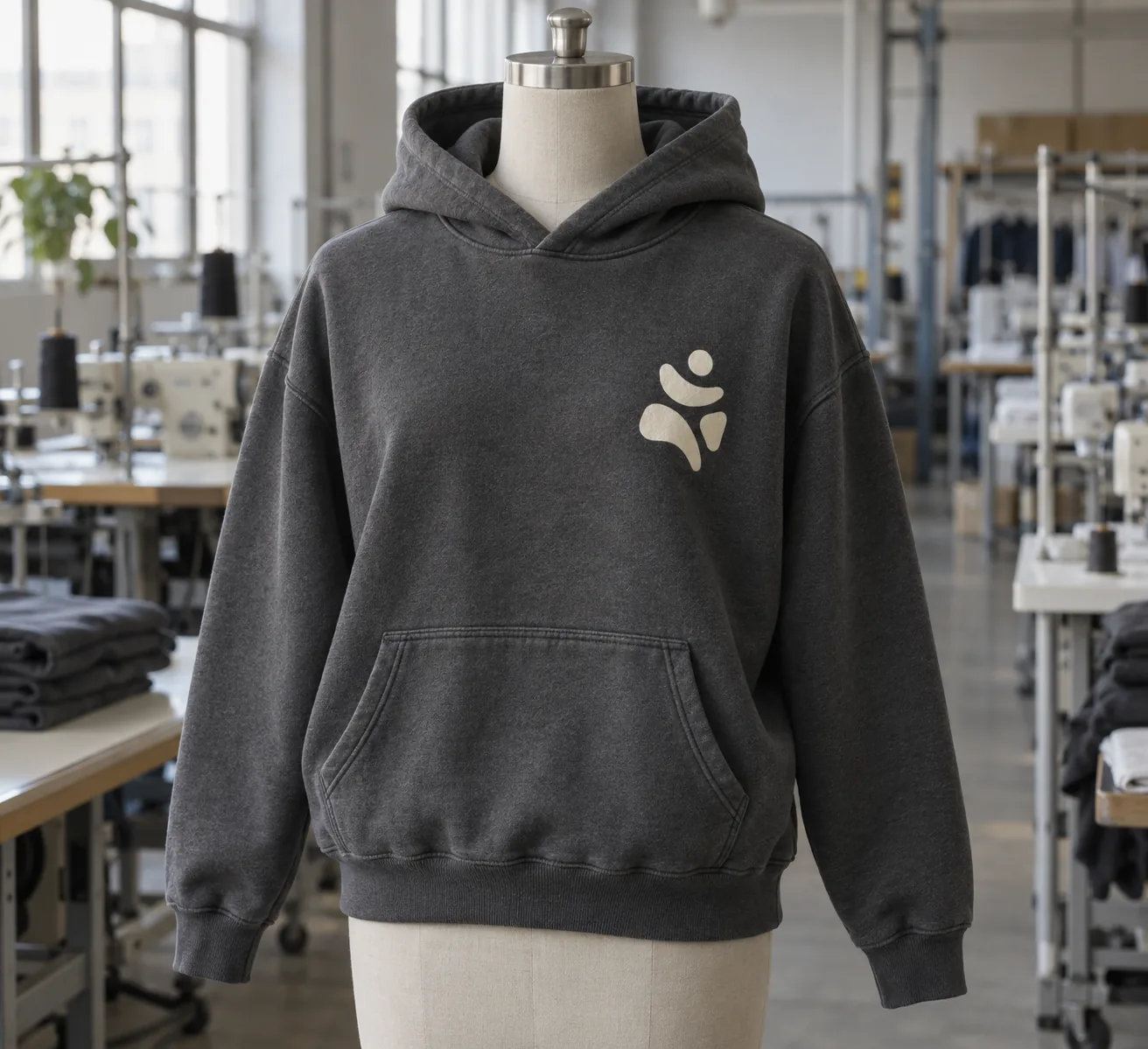
A graphic sweatshirt can fit correctly and still trigger another sample round because the print feels too heavy, loses detail, or changes after washing. When buyers approve artwork before choosing how it will be applied, the finished sample becomes an expensive place to discover a process mismatch. The resulting urgency often lands on the designer, even though the missing decision was technical.
Reducing revision pressure starts by choosing and testing the print method before final artwork and garment approval. Give each review a narrower purpose: establish the surface and hand feel, resolve reproduction limits, then check placement on the garment. Buyers can take the time they need on creative choices without reopening every production variable.
Choose the print behavior before polishing the graphic
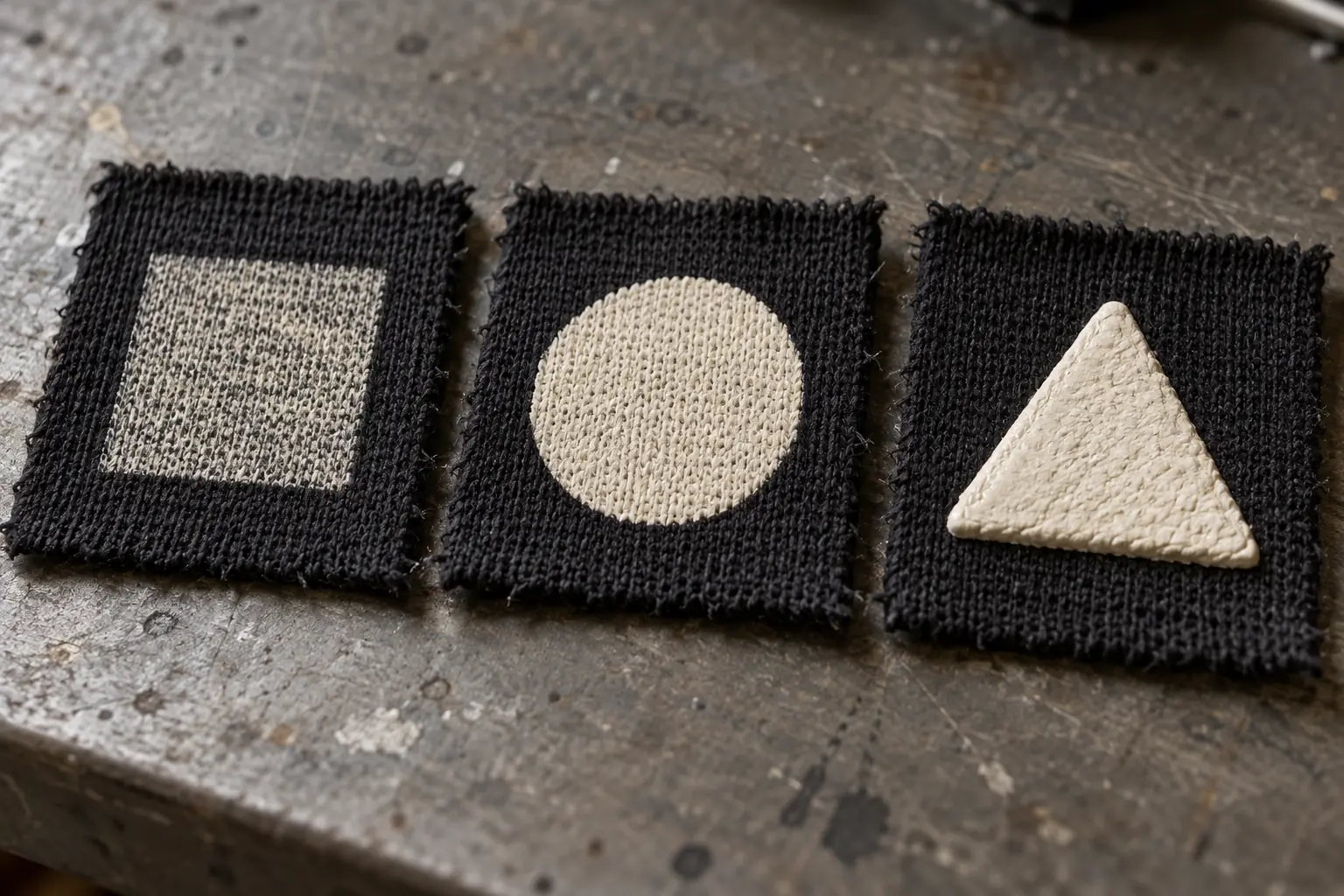
Start with what the wearer should experience. Is the graphic supposed to feel almost absorbed into a jersey tee, form an opaque block on dark fleece, or sit above the fabric with a raised surface? Those requirements help a print supplier propose a method. A reference image alone rarely reveals ink thickness, stretch recovery, or the preparation behind the result.
For example, a cream illustration on charcoal cotton fleece needs sufficient opacity, but a large solid area may feel stiffer than the buyer expects. A detailed photographic image on pale jersey poses a different problem: tonal reproduction matters more than a dense white base. Request method proposals around those outcomes before spending time refining tiny details.
Describe priorities in order: soft hand first, opacity second, fine detail third, for instance. If two priorities conflict, the supplier can prepare a meaningful comparison. Asking for “the best print” leaves the tradeoff unresolved until the team handles a sample.
Make the test fabric represent the eventual garment
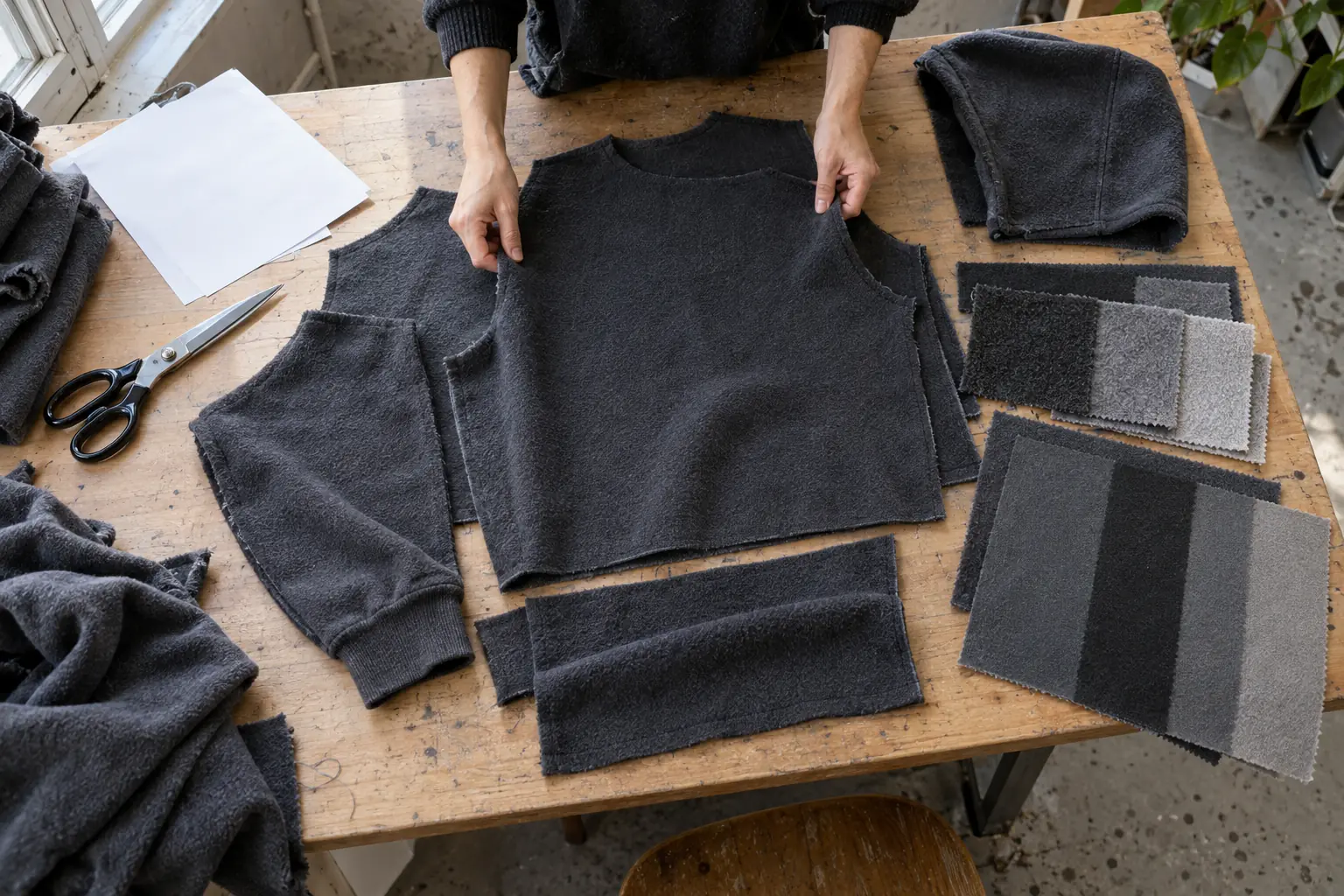
A successful print on a convenient scrap does not establish performance on the ordered fabric. Record composition, knit structure, fabric weight, color, and relevant finish with the trial request. A smooth cotton jersey and a brushed cotton-polyester fleece can produce different edges, absorption, and surface feel even when the artwork is identical.
For a proposed 320 gsm fleece sweatshirt, request a trial on the intended fabric and color where available. If a substitute must be used, identify it explicitly and list what remains unverified. Dye migration, adhesion, and shade appearance cannot be cleared simply because the substitute panel looks attractive.
State whether garment washing happens before or after printing. A wash after decoration may change both the graphic and the fabric dimensions. If custom-washed material is pending, approve only what the available trial can demonstrate. Keep final color and durability approval open until representative material can be tested.
Use a strike-off to settle one technical question at a time
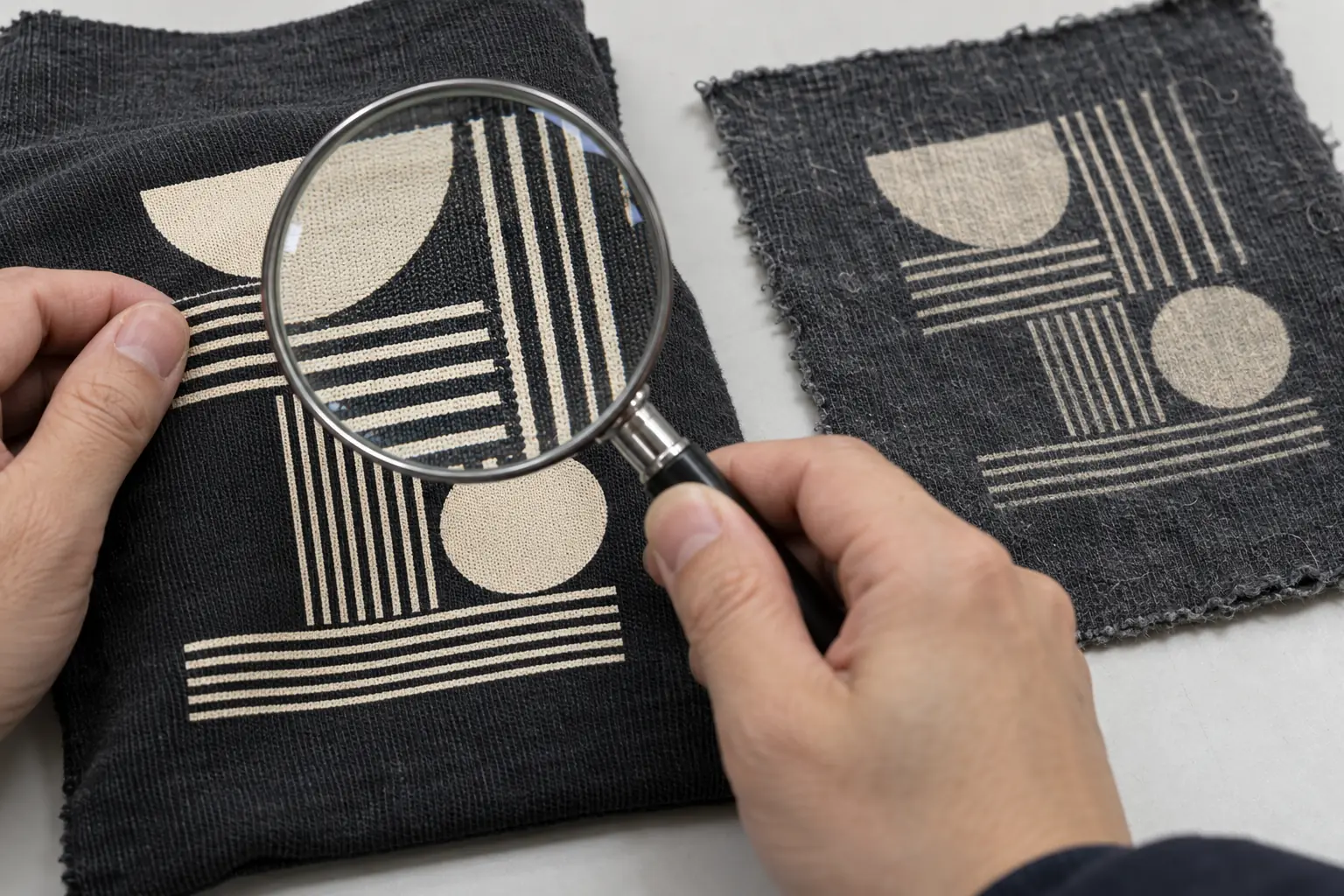
A strike-off is a small print trial used to evaluate the proposed decoration. Include the difficult parts of the design: the narrowest line, the smallest reversed gap, a large filled area, and any tonal transition. A simplified logo test will not answer whether a complex back graphic is reproducible.
Ask the supplier to identify the method and production-relevant settings behind each trial. The buyer does not need to prescribe a curing recipe; the print supplier should establish appropriate processing conditions. The sample record should still distinguish trials clearly so that an attractive result can be repeated.
| Candidate method | Question for the trial | Evidence to review |
|---|---|---|
| Screen printing | Can coverage and softness coexist? | Solid areas, fine edges, and hand feel after washing |
| Direct-to-garment printing | Does the artwork reproduce on this substrate? | Tonal detail, pretreatment appearance, and washed color |
| Transfer printing | Does the applied layer suit the garment? | Film feel, edge adhesion, and recovery after stretching |
These are comparison routes, not a statement that every process suits every fabric or is available for every order. Confirm feasibility with the supplier. When a trial fails, change one main variable at a time where practical; changing fabric, artwork, and process together makes the next result difficult to interpret.
Freeze the method while leaving creative room
Approval can have boundaries. A buyer might accept the soft surface of a particular trial while leaving the illustration scale undecided. Record that as method and hand-feel approval, not permission to start bulk printing. Name the unresolved decisions and identify who can close them.
Create a compact artwork record with file version, intended print dimensions, color references, and placement coordinates. For a chest graphic, a draft specification might state 260 mm width, centered on the garment, with its top edge 80 mm below the front neck seam. These are illustrative dimensions, not universal recommendations; check them against the actual silhouette.
After method approval, a different line drawing may still require a fresh strike-off if it introduces finer detail or more coverage. Establish that trigger in advance. A minor layout adjustment and a new ink effect should not automatically enter the same review path.
Consolidate comments into one dated decision sheet. Replace “make it nicer” with a visible difference, such as “open the negative spaces in the lower illustration; retain the approved surface feel.” Separate required corrections from optional exploration so the factory knows which comments block progress.
Let the garment sample answer placement and assembly questions
Once the trial establishes the print direction, the garment sample can focus on how the decoration behaves in use. Put the sweatshirt on a person or appropriately sized form. Check whether the graphic disappears beneath the hood, folds into the armhole, or competes with a kangaroo pocket when worn.
Review the printing sequence with the supplier. Printing a flat panel before sewing can improve access to some areas, but assembly may shift the visible position. Printing after assembly introduces seams and raised areas that can affect application. A design crossing a pocket or seam needs its own feasibility review.
Check the smallest and largest ordered sizes before assuming one artwork size works throughout. A fixed-width graphic occupies a different proportion of each chest. Decide whether to keep one print size or use size groups, then show the rule in the specification. Do not rely on the sample size to communicate the whole range.
Build a print approval checklist that survives washing
The approval reference should include an unwashed control and a tested counterpart. Agree on the care procedure, number of cycles, drying method, and inspection conditions before testing. Three wash cycles can serve as an initial development screen if both parties agree, but that does not establish lifetime durability.
- Placement: measure from a named seam or other fixed datum on a flat, relaxed garment. An illustrative starting tolerance is ±5 mm; confirm whether it is achievable for the design and process.
- Reproduction: inspect broken lines, filled gaps, pinholes, color registration, and coverage against the retained trial.
- Surface: compare stiffness, tackiness, edge lifting, and unexpected gloss before and after the agreed care procedure.
- Movement: stretch the area to an agreed extent appropriate to wear, release it, and inspect recovery. Record cracking or distortion rather than applying an undefined “stretch test.”
- Color: compare under consistent lighting after the fabric has dried fully. Separate fabric shade change from changes in the print.
Photographs help locate defects, but physical references are better for hand feel and subtle color differences. Keep the approved artwork version and signed sample record together. StitchQuote provides QC before packing; agree which print checks and acceptance references should form part of the project specification.
Questions buyers ask before closing print development
Can we approve the fit while the print method is unresolved?
Yes, provided the approval explicitly covers fit only. If printing or subsequent washing changes dimensions, stiffness, or drape, the decorated garment still needs review. Record which measurements must be rechecked after the final process.
Does a seven-day sample window include experimental printing?
Do not assume it does. StitchQuote offers a seven-day sample for standard styles with confirmed specifications and available materials. Complex styles, custom washes, and custom-developed fabrics take longer. Confirm the print trials and their approval dependencies separately before setting a review date.
Should every proposed print color receive its own trial?
Prioritize combinations that introduce different risks, such as pale ink on dark fabric or a substrate prone to dye migration. Agree on representative testing with the supplier. Approval on one color combination should not silently become approval for every remaining combination.
When should we confirm quantities for the printed style?
Share intended quantities while comparing methods, because setup and application can affect feasibility. StitchQuote’s MOQ for most categories starts from 50 pieces per style; denim starts from 100. Confirm how artwork variants, fabric colors, and size splits affect the specific proposal before committing.
Related reading and project support:
- Prepare the artwork and garment specification
- Review sampling and minimum order quantities
- Understand clothing sample timing
- Discuss your print sampling brief with StitchQuote
Request a manufacturing quote
Share your product type, quantity range, and destination. We usually reply within one business day.