Custom Streetwear, Casualwear & Denim Manufacturer•MOQ 50 pcs•Denim MOQ 100 pcs•7-Day Sample Available


How to Handle Buyer Team Disagreement During Fit Review
Learn fit review disagreement apparel team through a clearer factory-side view that helps brands reduce rework, align sample goals, and move toward approval with.

A fit meeting can end with three incompatible requests: merchandising wants a closer silhouette, design wants more volume, and ecommerce wants fewer size-related returns. Changing the sample to satisfy the loudest voice usually hides the real question: is the team disputing the base-size fit, the progression between sizes, or the customer body range?
Grade rules give that disagreement a measurable structure. They define how garment dimensions change from one size to another. Use the review to identify which rule is under challenge, test it on the affected sizes, and record one approved instruction. This approach is especially useful when a base-size sample looks convincing but nobody agrees that the smallest and largest sizes will deliver the same design intent.
Separate silhouette preferences from size progression
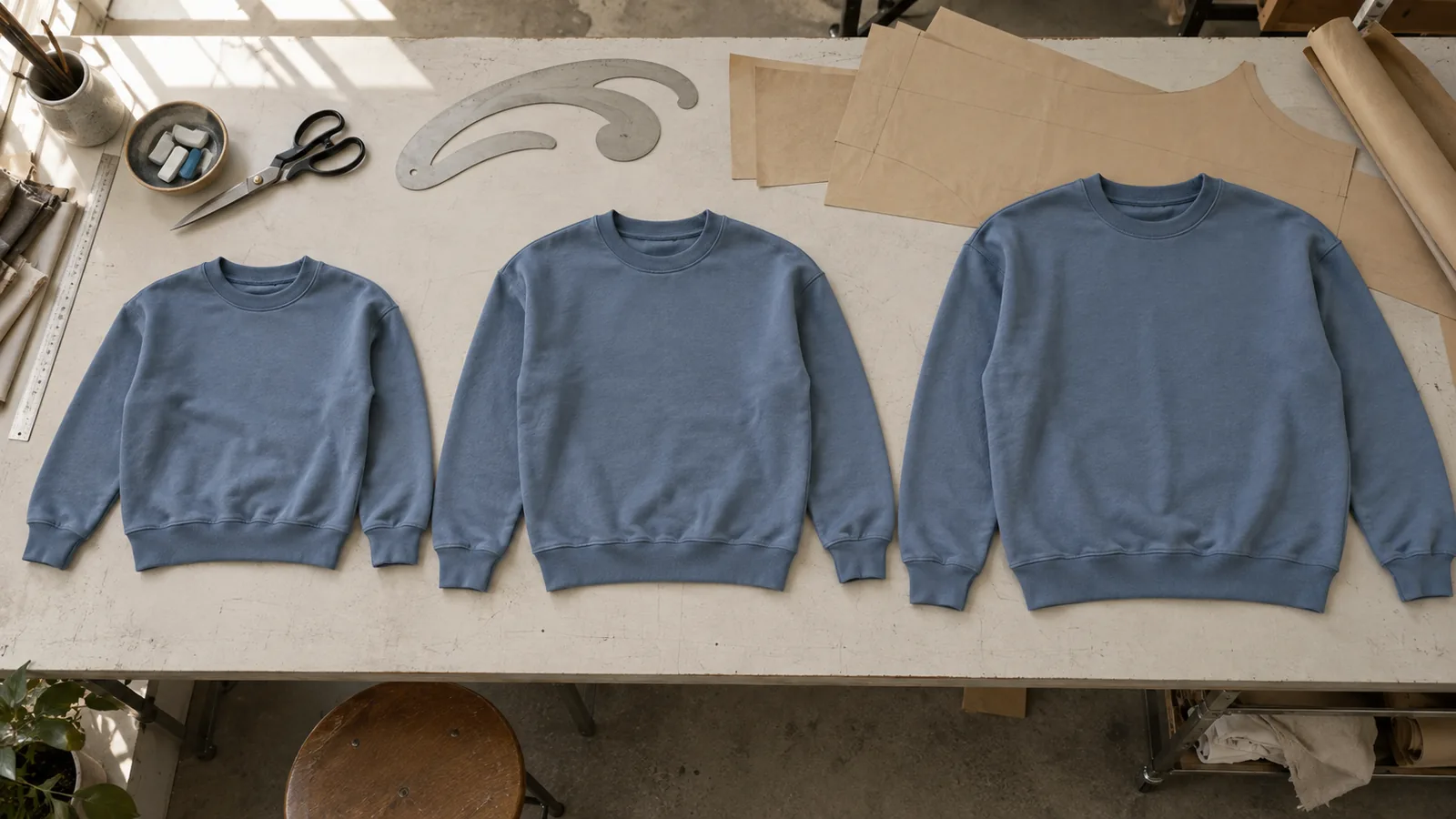
Start by asking each reviewer to describe the problem without proposing a correction. “The large looks too wide” could mean excess chest ease, a low armhole, an overly dropped shoulder, or a hem that catches on the hips and makes the body balloon. Those observations require different pattern decisions.
Classify every comment into one of three groups: base-size shape, grade progression, or sample execution. If every size has an unwanted shoulder slope, examine the base pattern. If the medium works but the extra-large has disproportionate shoulder drop, examine the shoulder grade. If one sleeve measures outside the agreed specification, correct the sample before using it as evidence against the grade.
Settle the intended silhouette first. A relaxed sweatshirt cannot simultaneously deliver a fitted chest and unchanged oversized proportions unless the team deliberately redesigns it. Record the approved layering assumption, shoulder position, and intended hem level so reviewers assess the same product.
Build the discussion around a size-to-size delta sheet
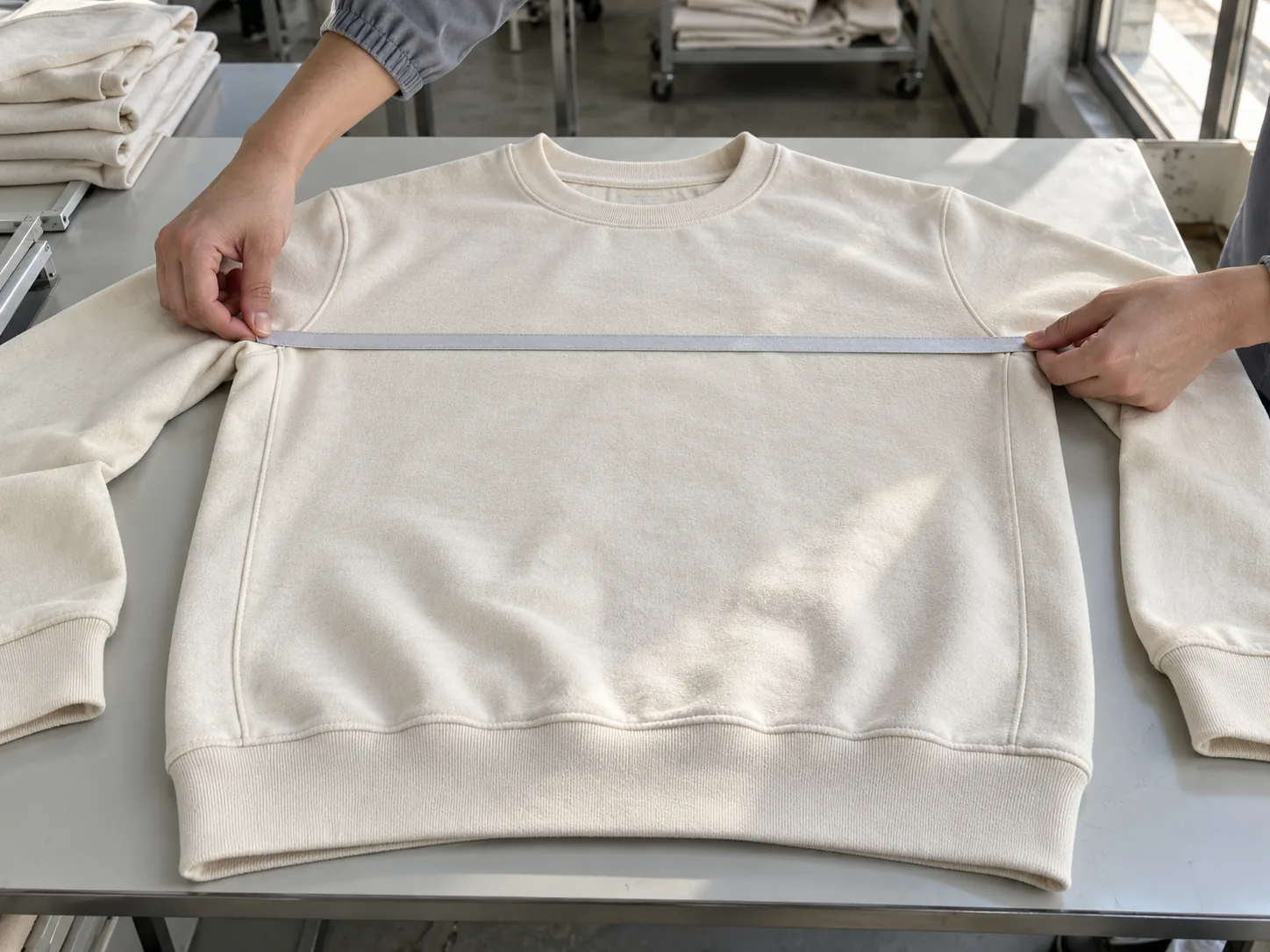
Bring a garment measurement chart showing both target dimensions and the increments between sizes. State whether a value is a flat width, full circumference, or curved seam measurement. A 2 cm increase in flat chest width adds approximately 4 cm around the garment; confusing those conventions can turn a modest request into a major fit change.
The following figures illustrate a hypothetical pullover discussion, not recommended production specifications. All measurements are in centimeters. Agree actual increments and tolerances for the fabric, silhouette, and size range before sampling.
| Point of measure | M target | L target | XL target | Question for the team |
|---|---|---|---|---|
| Half chest | 60 | 62 | 64 | Does added room match the intended wearer progression? |
| Body length from high shoulder point | 68 | 69 | 70 | Should length increase at the same rate across this range? |
| Shoulder width | 56 | 57 | 58 | Does shoulder drop remain intentional? |
| Sleeve length from shoulder seam | 59 | 59.5 | 60 | What happens to total reach as shoulders widen? |
Do not grade every dimension by the chest increment. Neck opening, cuff opening, pocket placement, and hood dimensions have separate functional limits. Mark any intentional breakpoint, such as a different increment above XL, rather than leaving the factory to infer it from rounded numbers.
Use wearer evidence to choose which rule changes
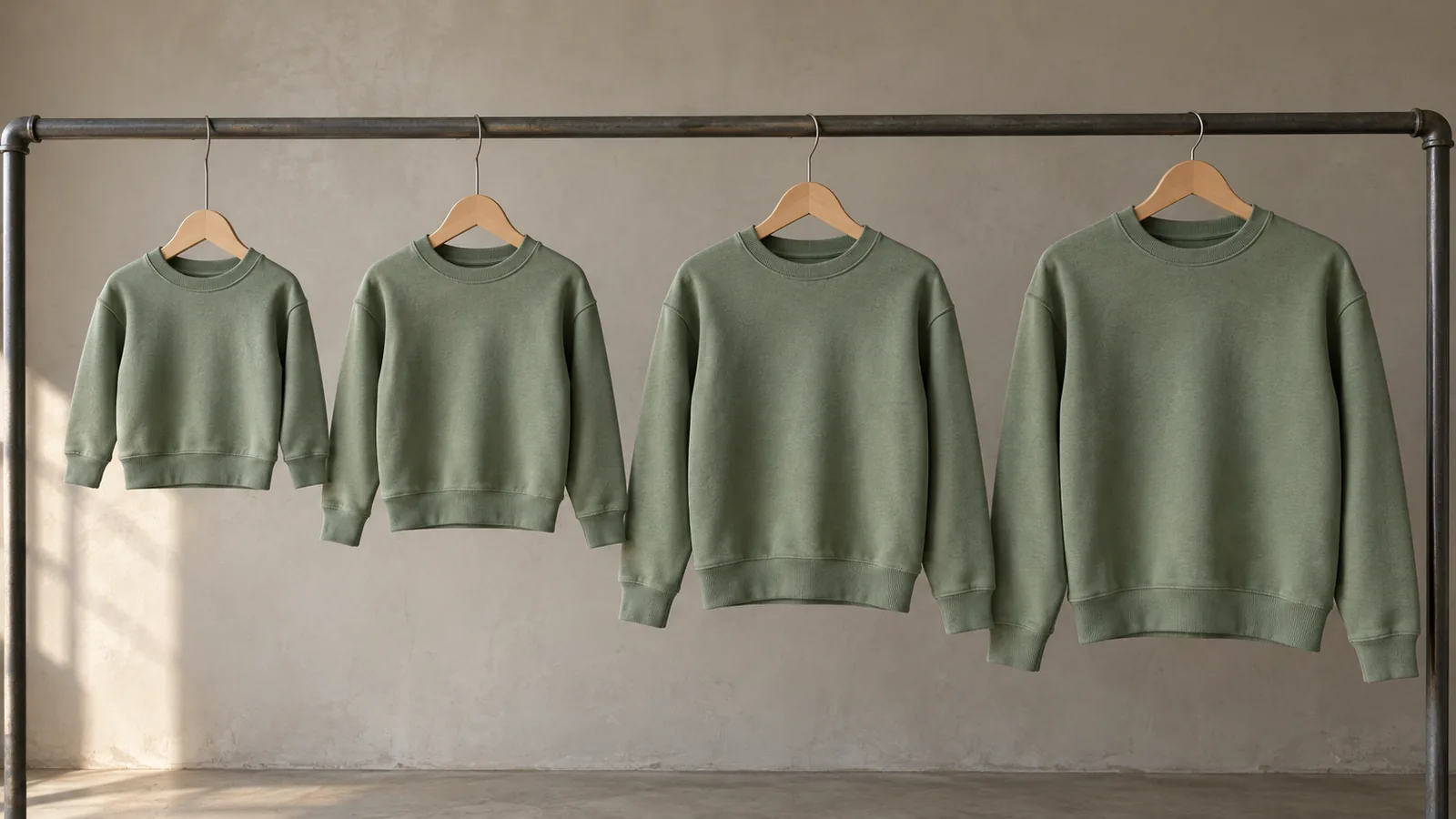
A reviewer wearing their usual retail size is not automatically a valid fit reference. Record the wearer’s relevant body measurements and compare them with the brand’s intended size allocation. For a pullover, chest, shoulder breadth, height, and relevant arm measurements help explain why two people experience the same sample differently.
Distinguish garment ease from the grade increment. Ease is the difference between garment circumference and the relevant body circumference. Suppose the intended body chest increases by 6 cm between two sizes while the garment chest increases by only 4 cm. The larger size has 2 cm less chest ease. That may be deliberate, but the team should approve the consequence explicitly.
Photograph front, side, and back views in a consistent stance, then assess a repeatable movement such as reaching forward. Keep underlayers consistent. Compare the base size and the disputed size; add the opposite size extreme when the proposed correction affects the whole range. A single middle-size fitting cannot establish whether a grade works at both ends.
Turn competing comments into a bounded pattern trial
Convert preferences into hypotheses. If design says the XL sleeve looks short while technical review says its measured length is correct, test whether shoulder position changes the perceived reach. Measure the relevant shoulder-to-cuff relationship and inspect sleeve pitch before adding length. An isolated sleeve correction can create excessive reach when combined with a wider shoulder.
Give each trial a defined scope. For example: retain the approved M pattern, revise the L-to-XL shoulder increment, and review sleeve reach and armhole balance on XL. Ask the pattern technician to identify connected dimensions that must move with the change. A revised armhole may require sleeve-cap adjustment even when the original comment mentions only width.
Assign one buyer-side approver to reconcile commercial and aesthetic priorities. Technical staff should explain consequences, while the designated approver selects the intended outcome. Record the accepted hypothesis, affected sizes, unchanged reference dimensions, and evidence required for approval. Avoid sending the factory several annotated photographs with mutually exclusive instructions.
Audit the size set before accepting the grade
Tolerance describes permitted variation around a target; a grade rule describes the change in targets between sizes. They are not interchangeable. If adjacent half-chest targets differ by 2 cm and each has an agreed tolerance of plus or minus 1 cm, an upper-limit smaller size can measure the same as a lower-limit larger size. Discuss whether that overlap is acceptable for the intended fit.
Use this checklist on the revised size set. Establish the measurement state first: finished, relaxed, and either before or after the specified wash treatment. Comparing a washed sample against an unwashed target can create a false grading dispute.
- Verify identity: match each sample to its size, pattern revision, fabric, and finishing condition.
- Measure consistently: use the same landmarks, fastening state, and tension; record actual values beside targets.
- Calculate actual increments: inspect differences between adjacent sizes, not just individual pass or fail results.
- Check connected features: inspect armhole and sleeve balance, pocket access, hood opening, and rib recovery where applicable.
- Review the disputed movement: repeat the original reach, sitting, or layering check on the relevant wearer.
- Document exceptions: identify any out-of-tolerance sample and decide whether it requires correction before approval.
Keep a measurable nonconformance separate from a preference. “XL chest is 1.5 cm above target” supports a different action from “XL should have less ease.” The first concerns execution; the second changes the specification.
Release one revision with explicit size coverage
The approval record should contain a versioned measurement chart, grade increments, measurement diagrams, tolerances, and dated fit comments. State which sizes were physically reviewed and which remain approved by calculation only. Archive superseded charts so an old attachment cannot become the cutting reference.
If the team accepts the base size but withholds the endpoints, label that status clearly. Base-size approval alone should not be read as approval of an untested grade. Ask for confirmation of any sampling and schedule implications before requesting another size set.
StitchQuote offers sampling, cut-and-sew, private label, fabric and trim sourcing, branding, and QC before packing. A 7-day sample is available for standard styles with confirmed specs and available materials; complex styles, custom washes, and custom-developed fabric take longer. Confirm the timing of a multi-size grading trial separately. MOQ for most categories starts from 50 pieces per style, while denim starts from 100 pieces per style; confirm the proposed size allocation for the project.
Questions that arise when reviewers challenge a grade
Should we change every size when only XXL feels restrictive?
First verify the sample measurements and the wearer’s intended size assignment. If the base and intermediate sizes meet the brief, investigate an upper-range grade adjustment. Check adjacent sizes for a smooth transition rather than spreading the correction automatically across the range.
Can a different size label resolve the disagreement?
A label change does not alter garment proportions. Reassigning labels may be appropriate if the whole size mapping is wrong, but it also changes the customer size chart. Approve body-size mapping and garment grading as separate decisions.
What if two approved fit wearers disagree about the same size?
Compare their proportions and describe the specific restriction or excess. Similar chest measurements can accompany different shoulder breadths or torso lengths. Decide which body profile the product targets, then document any accepted compromise instead of averaging incompatible fit comments.
When is another physical sample necessary?
Request one when a change affects movement, interacting pattern pieces, or a previously untested size extreme. A chart can confirm arithmetic but cannot demonstrate drape or comfort. Define the unresolved question before commissioning the sample.
Related reading and project support
- Prepare the tech pack that carries approved grade rules
- Review sampling and MOQ considerations
- Compare hoodie fit and proportion decisions
- Discuss your size-set review with StitchQuote
Request a manufacturing quote
Share your product type, quantity range, and destination. We usually reply within one business day.