Custom Streetwear, Casualwear & Denim Manufacturer•MOQ 50 pcs•Denim MOQ 100 pcs•7-Day Sample Available

What Makes a Manufacturer Easier to Work With During Sampling
Learn manufacturer easier to work with sampling through a clearer factory-side view that helps brands reduce rework, align sample goals, and move toward approval.

A sample can look ready for a showroom and still leave the fit unresolved. It can also fit correctly while using temporary fabric, missing branding, or unfinished trims. For a brand choosing a manufacturing partner, the useful question is whether the supplier makes those differences visible before anyone signs an approval.
Fit samples and salesman samples serve different decisions. The first helps establish how a garment sits and moves on the intended wearer; the second helps buyers assess and present the product commercially. A manufacturer becomes easier to work with when it separates those decisions, identifies what each garment actually proves, and keeps presentation deadlines from silently becoming production approvals.
Give each sample a job before cutting starts
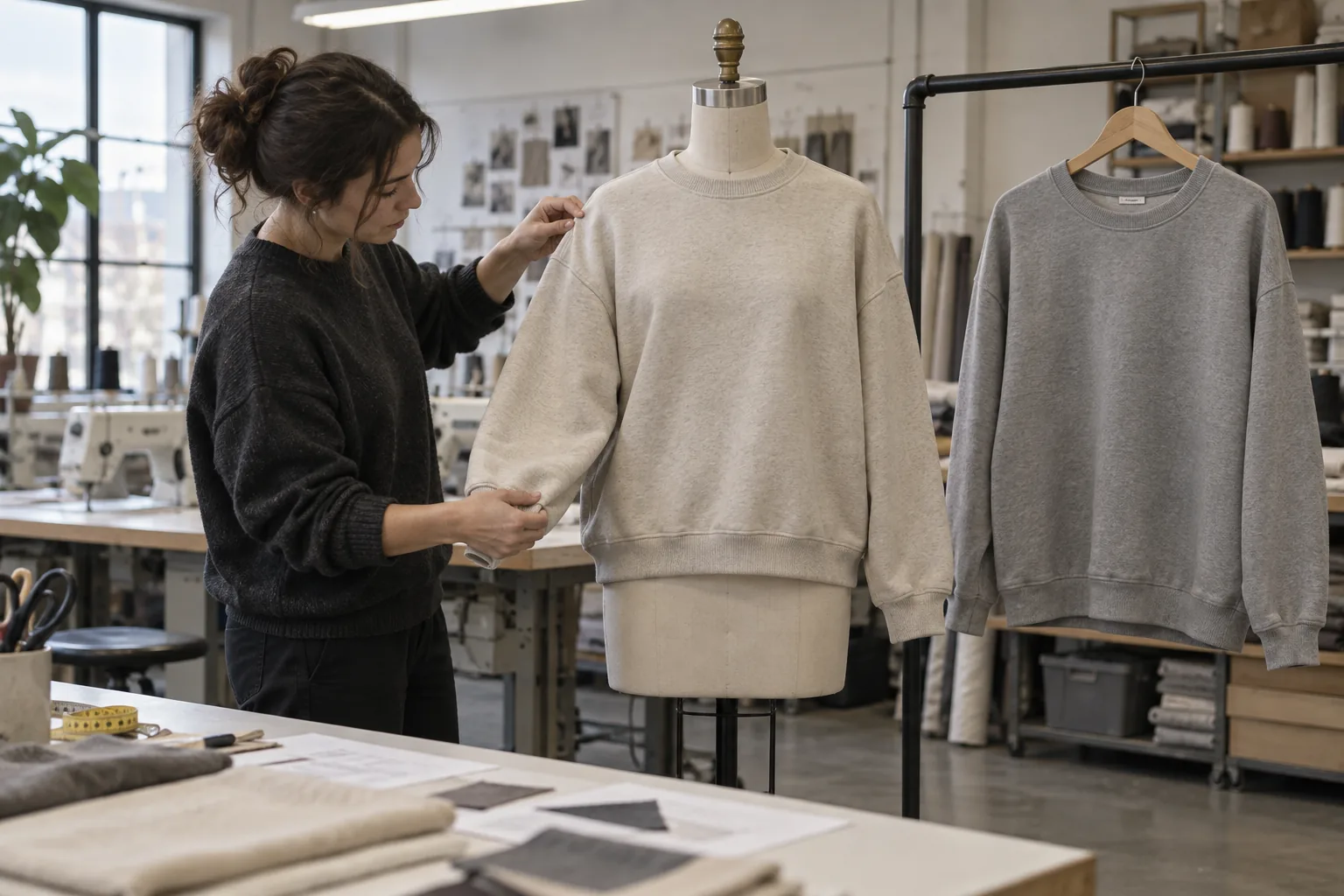
Do not assume that a supplier uses sample names exactly as your team does. Some brands call any early prototype a fit sample; others reserve that term for garments made in the intended fabric. A salesman sample, sometimes called a sales sample, might support wholesale appointments, photography, or an internal range review. Its required finish depends on that use.
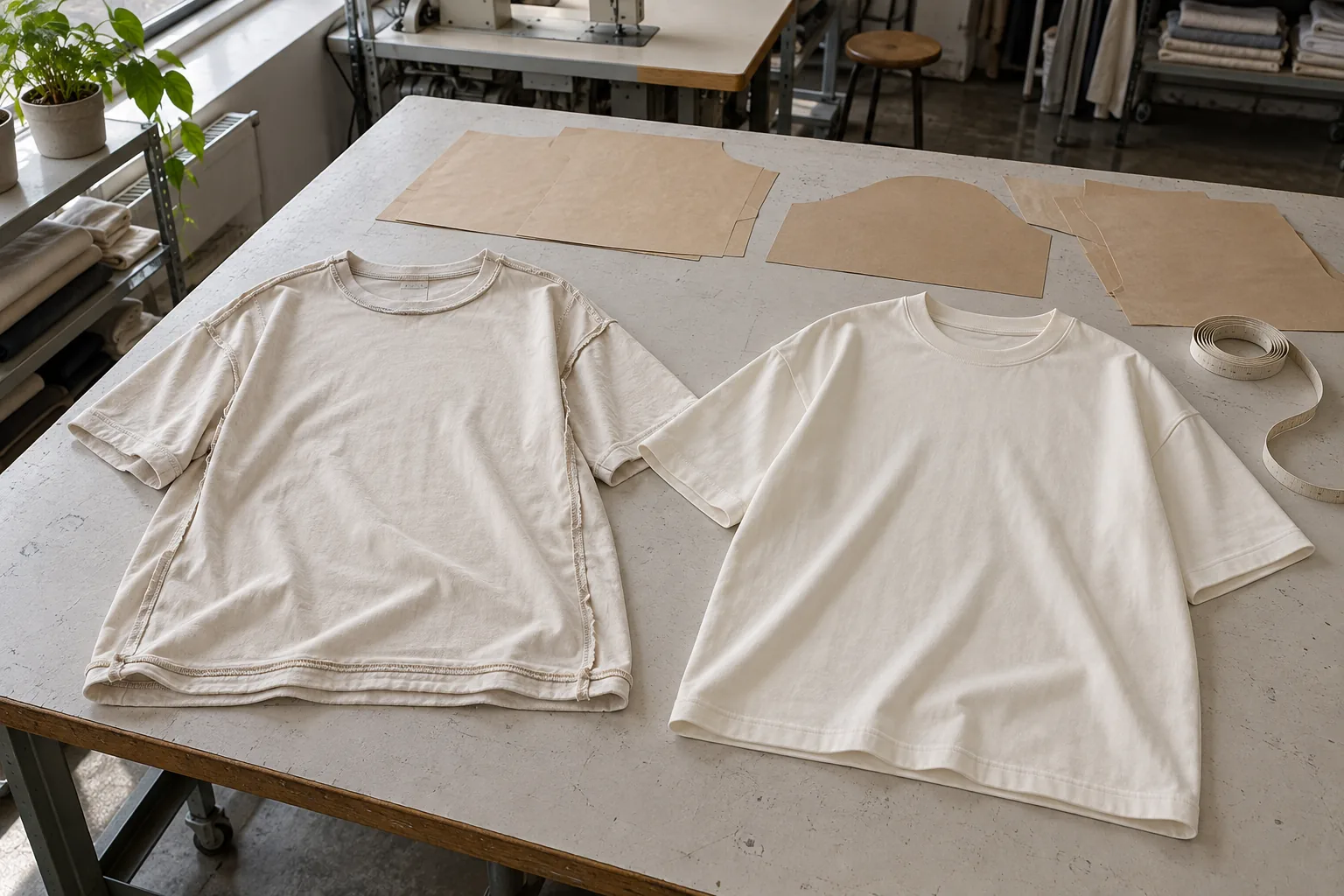
For an oversized jersey tee, a fit round might focus on shoulder drop, chest width, neck opening, and sleeve pitch. The sales version might need the planned garment color, finished neck label, and accurate chest artwork. If the first garment uses substitute jersey, its silhouette can inform discussion, but its drape and post-wash fit remain provisional.
Before cutting, request a sample brief identifying purpose, base size, material status, required branding, and permitted substitutions. It should also name the decision expected at delivery. A useful supplier checks these points instead of allowing “make a sample” to cover several incompatible expectations.
Ask what the fit garment can genuinely prove
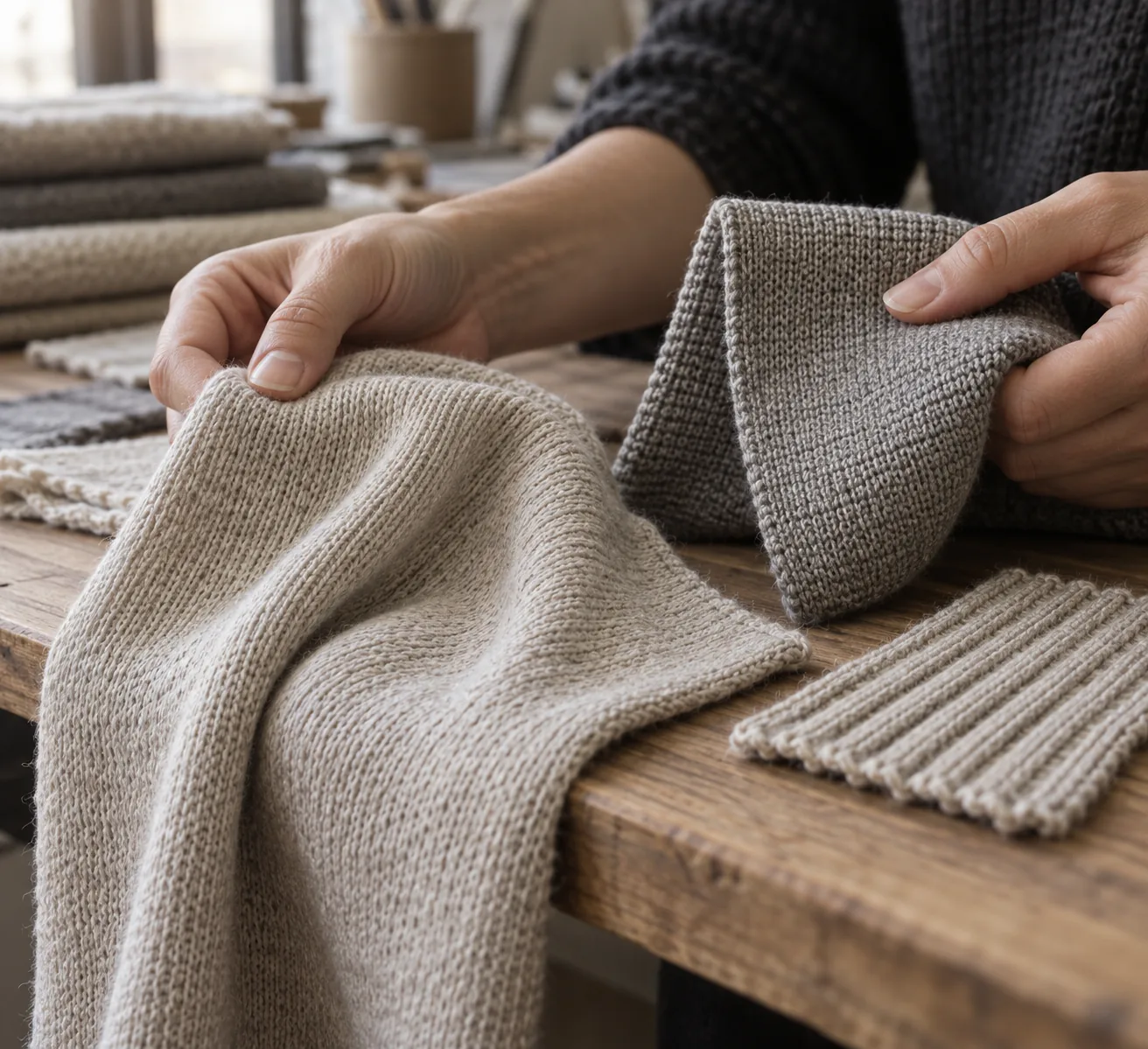
Fit is more than a measurement sheet. Two fabrics can share a stated weight yet behave differently because of knit structure, yarn, finishing, or stretch recovery. On a relaxed sweatshirt, a firmer rib may pull the hem inward; a softer body fabric may make the same shoulder measurement look more dropped. Ask the manufacturer to explain which substitutions could change the assessment.
Measure the garment using agreed points and methods. For example, define half chest as a flat width measured a specified distance below the armhole, and define body length from high shoulder point to hem. Record whether the garment is measured before or after washing. Mixing methods can produce an apparent pattern problem that is actually a reporting problem.
Agree tolerances by measurement and garment construction. An illustrative review target could allow ±0.5 cm at a neck opening and ±1 cm at half chest, but these are project examples, not universal acceptance limits. Review movement too: reaching forward, sitting, and lifting the arms can reveal restriction that flat dimensions miss. Ask for pattern corrections and material concerns to be reported separately.
Build the salesman sample around its actual audience
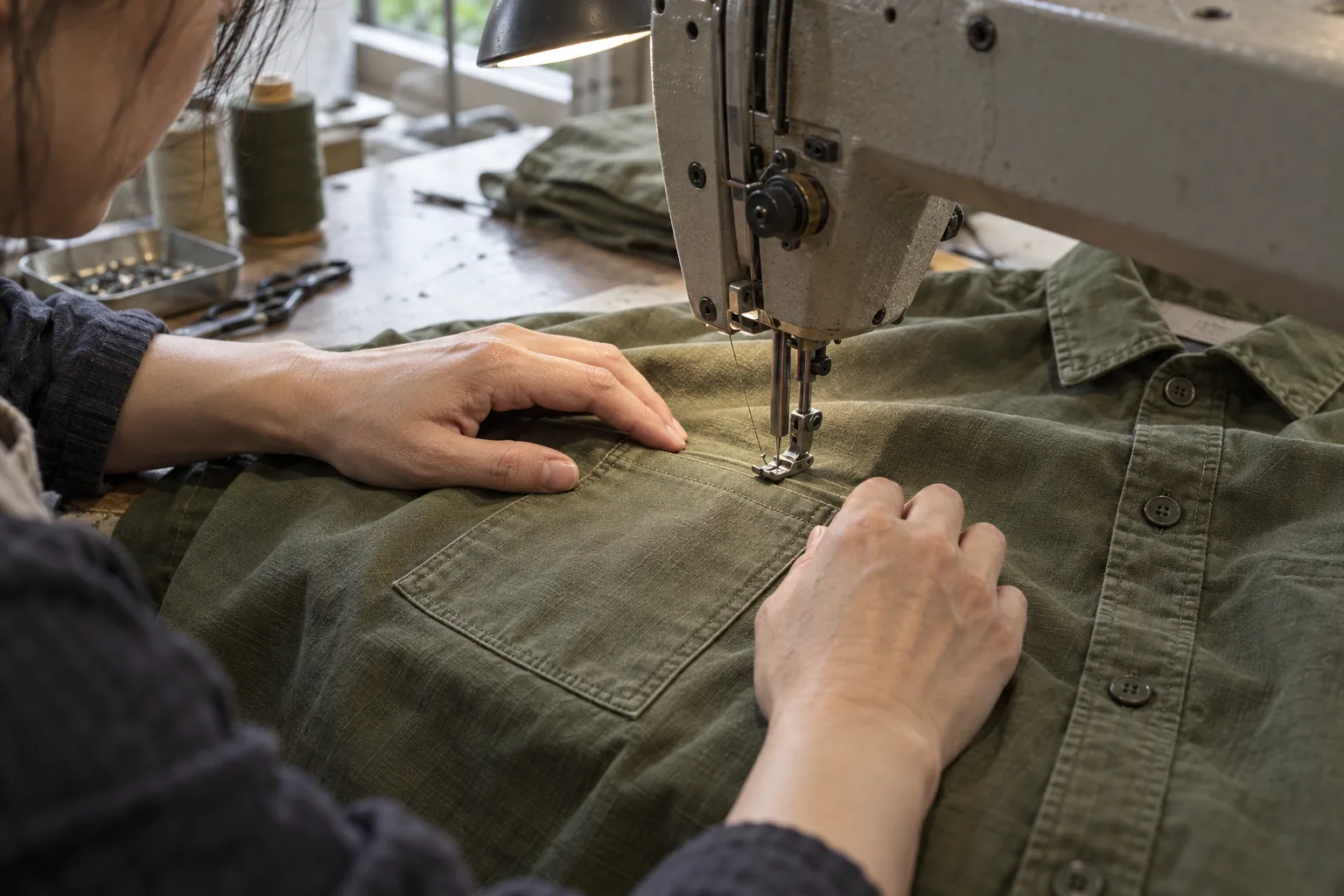
A wholesale buyer handling an overshirt needs a credible impression of fabric hand, pocket function, closure quality, and finish. A studio shooting a front-facing product image may prioritize color, shape, and visible details. Neither use automatically requires every size, but both need an honest record of departures from the intended production garment.
Separate visible accuracy from production readiness in the request. If a temporary button matches the appearance but comes from a different source, record that substitution. If embroidery uses the final artwork but a temporary backing, confirm whether stiffness or puckering could change. Hidden differences matter when they affect how the product feels, wears, or can be reproduced.
For a washed denim jacket, an attractive sales sample does not establish a repeatable bulk wash. Ask whether the fabric, wash recipe, and processing route are the intended production choices. A cooperative manufacturer flags these dependencies before the sales team promises the photographed shade or handle to customers.
Use a release matrix to stop approvals crossing stages
A short approval matrix is more useful than a message saying “sample approved.” It tells both teams what can move forward and what remains open. Keep it attached to the relevant sample ID and specification revision so the physical garment cannot become detached from its approval limits.
| Review point | Fit sample decision | Salesman sample decision |
|---|---|---|
| Shape and movement | Approve base-size fit or request pattern changes | Confirm presentation reflects the agreed silhouette |
| Fabric and finish | Record whether substitutes limit conclusions | Accept appearance and hand for the stated sales use |
| Branding and trims | Check any effect on comfort or construction | Check placement, color, finish, and visible completeness |
| Production release | List outstanding material and size checks | List unresolved differences from the intended bulk garment |
For example, a brand can approve the trouser rise and thigh shape while leaving waistband recovery unresolved. It can separately accept a salesman sample for a range meeting with a disclosed temporary zipper. These are limited approvals. The manufacturer should acknowledge the limits explicitly and identify the next evidence required before production release.
Evaluate the supplier through one revision cycle
The most revealing test is how a manufacturer handles a specific correction. Replace “the sleeve feels wrong” with an observation, a marked photograph, and a requested outcome: the cuff rises excessively when the wearer reaches forward; investigate sleeve pitch and armhole balance while preserving the approved chest width. This gives the pattern team room to diagnose the cause.
Send one consolidated comment sheet from a named decision owner. Give each comment a number, retain unchanged approved dimensions, and distinguish required corrections from optional styling ideas. Ask the supplier to return a response against each item, including any linked measurements it proposes changing. A silent adjustment elsewhere can invalidate the previous review.
Schedule fit and presentation work according to their dependencies. Final artwork placement may depend on pocket size; pocket size may still depend on a fit correction. Sewing a polished sales garment too early can create avoidable rework. The useful response is a dated sequence showing what can proceed now and what waits for approval.
StitchQuote offers a 7-day sample for standard styles with confirmed specifications and available materials. Complex styles, custom washes, and custom-developed fabric take longer. Treat that availability as conditional: confirm which sample stage is covered and whether your required materials and details meet those conditions.
Check the handoff before either sample leaves the review table
Use a compact QC checklist when receiving each garment. The aim is to establish whether it is suitable for its declared purpose and whether the next team can interpret it correctly. A beautiful finish should not hide an unresolved fit issue, and a successful fitting should not erase missing presentation details.
- Identity: Match style, size, sample ID, and specification revision to the accompanying report.
- Measurements: Compare actual readings with the agreed targets and tolerances; investigate exceptions rather than averaging them away.
- Construction: Inspect seam security, skipped stitches, pocket symmetry, closure operation, and any distortion around decoration.
- Material status: Record actual fabric, rib, trims, and finishing used, including every temporary substitution.
- Use readiness: For fitting, check movement and comfort; for sales presentation, check pressing, cleanliness, visible branding, and consistency with the intended range.
- Disposition: State accepted, revise, or accepted for a limited use, with an owner for every remaining action.
Keep photographs and measurement records with the comments, and retain an identified reference garment where practical. StitchQuote provides cut-and-sew, private label, sampling, fabric and trim sourcing, branding through woven labels, prints and embroidery, and QC before packing. Agree the project’s sample review criteria separately so both sides know what evidence to supply.
Questions buyers ask when fit and sales deadlines overlap
Can one garment serve both purposes?
Yes, if its fit, materials, and presentation finish meet both briefs. Review it twice against the separate criteria and record both decisions. If the fabric is temporary or the pattern remains unresolved, label the limits instead of treating a single garment as proof of everything.
Should every sales color have another fit review?
Not necessarily, but ask whether dyeing, washing, fabric construction, or finishing differs between colors. Changes that affect shrinkage, stretch, or hand may justify another assessment. A shared pattern alone does not establish equivalent fit across materially different versions.
Does approving a salesman sample establish the order minimum?
No. Confirm quantity requirements separately from sample acceptance. StitchQuote’s MOQ for most categories starts from 50 pieces per style; denim starts from 100 pieces per style. Discuss the proposed size and color allocation when defining the project rather than assuming a display sample settles it.
What if the showroom date arrives before fit approval?
Decide whether a clearly documented presentation-only garment is suitable for the meeting. Record known differences and avoid making unresolved characteristics into customer commitments. Ask the manufacturer for the remaining correction sequence and timing before setting the production release date.
Related reading
- Prepare the specification pack for each sample stage
- Review sampling and minimum order requirements
- Plan clothing sample timing
- Discuss your fit and sales sample brief with StitchQuote
Request a manufacturing quote
Share your product type, quantity range, and destination. We usually reply within one business day.