Custom Streetwear, Casualwear & Denim Manufacturer•MOQ 50 pcs•Denim MOQ 100 pcs•7-Day Sample Available

Why Reorders Are Easier When Branding Was Planned Cleanly the First Time
Use reorders easier with clean branding apparel to compare private label decisions more clearly, protect brand consistency, and keep product, trims, and commercial.

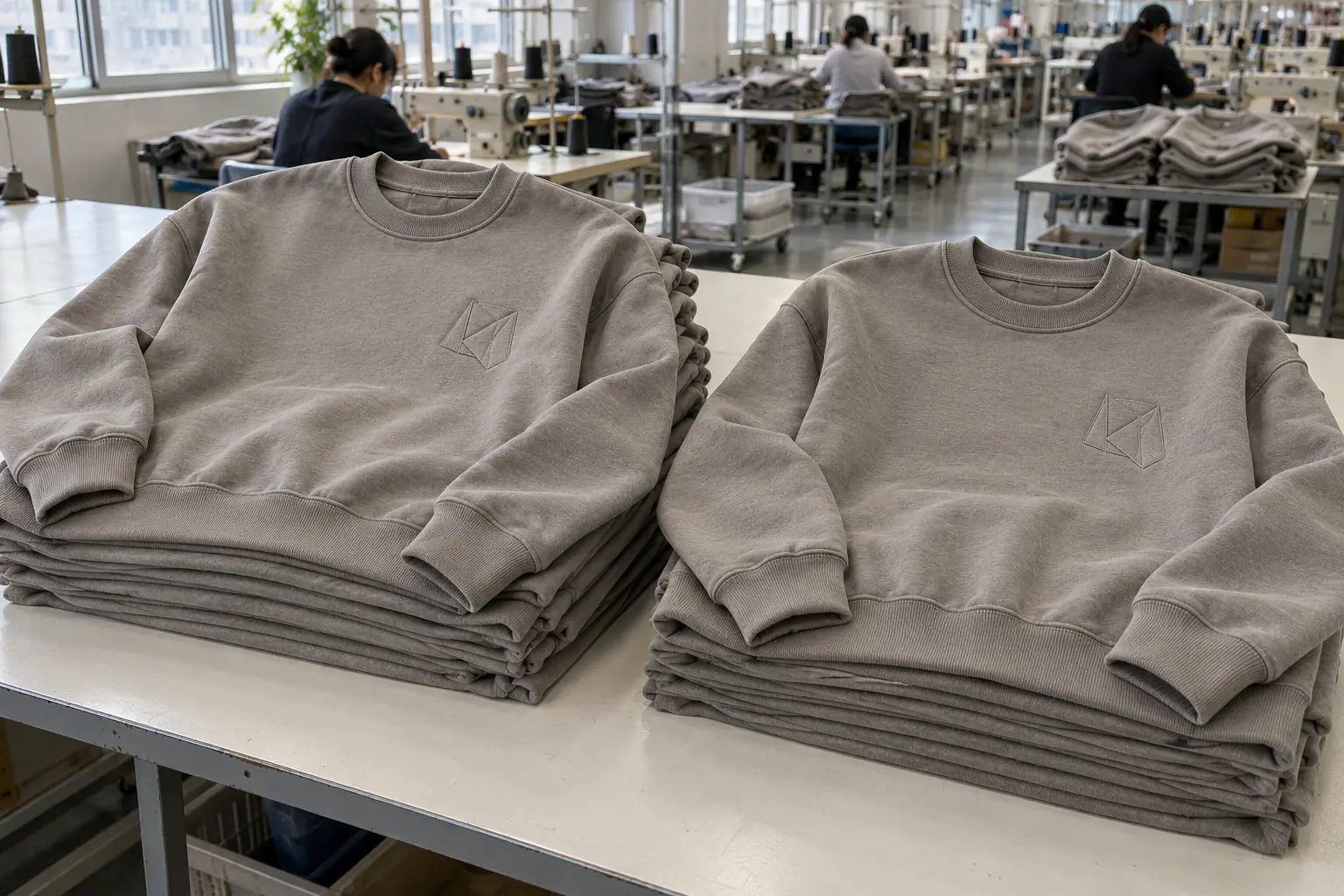
A repeat order should begin with a comparison, not a fresh interpretation of the brand. Yet a simple request for more sweatshirts can reopen questions about neck labels, embroidery size, or packaging when the first run left those decisions scattered across messages. The original garments may have sold well while the instructions behind them remained incomplete.
Planning branding cleanly means creating approval gates: specific points where a buyer accepts an identified version and authorizes the next step. For reorders, the value is practical. Your team can distinguish what must match, what has changed, and what needs another sample before materials are purchased or decoration begins.
Gate one: decide what counts as the approved brand expression
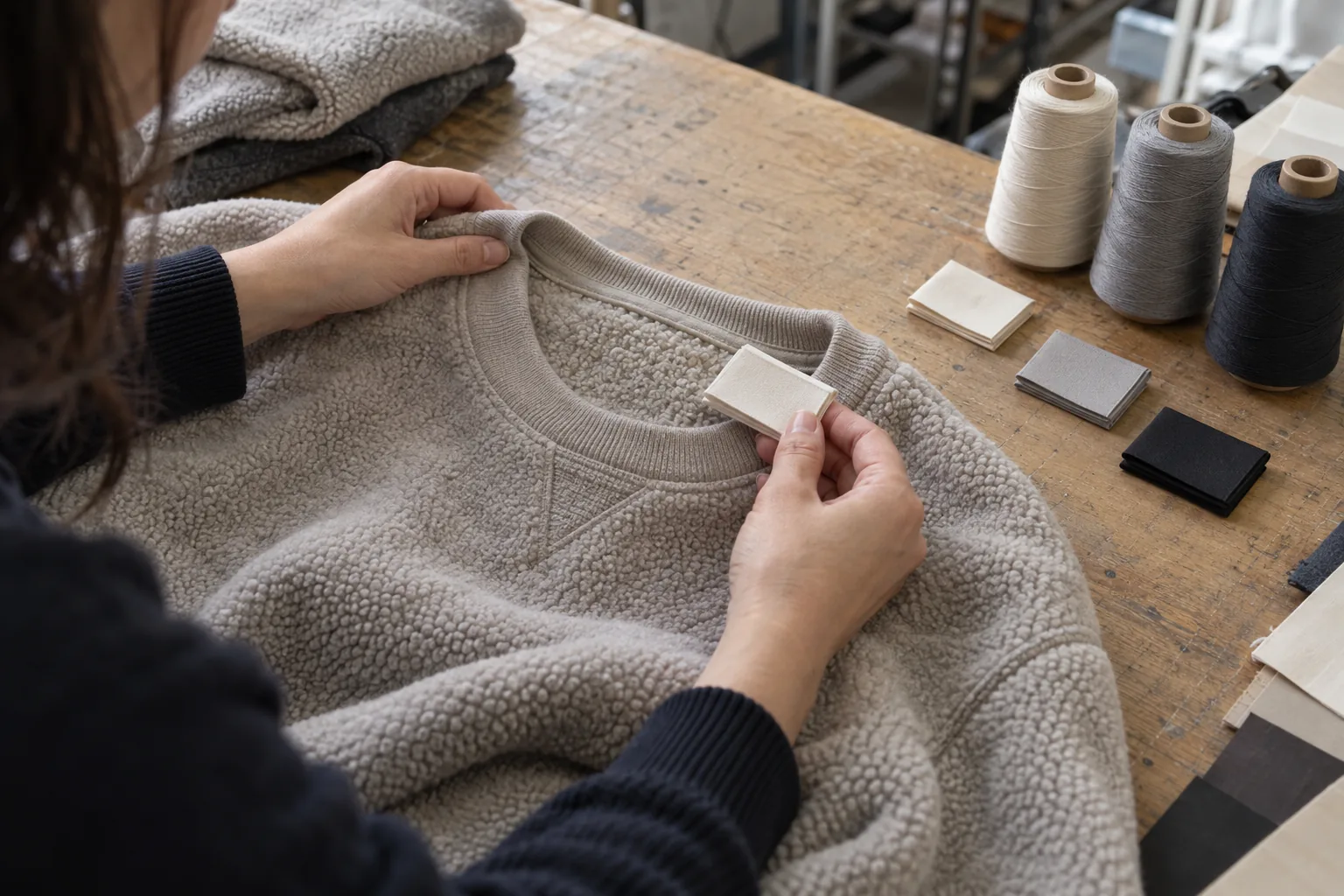
An artwork file alone is not a production standard. A small emblem on a heavyweight sweatshirt behaves differently from the same artwork on a lightweight jersey. Thread coverage, backing, print hand feel, and the surrounding fabric all influence the result. Approval should identify the combination that worked, rather than accepting the graphic in isolation.
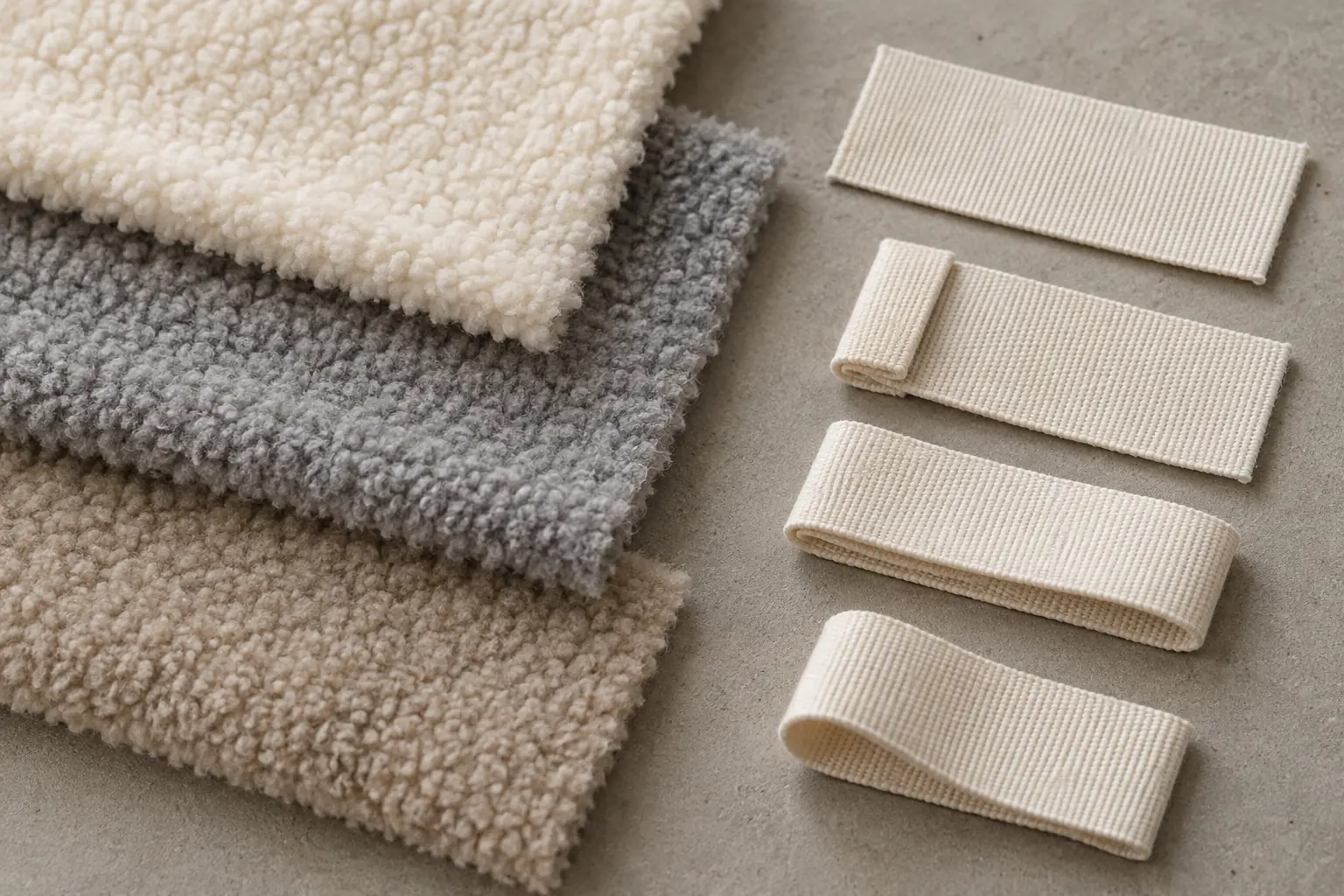
For example, a buyer developing a brushed fleece pullover might approve a woven neck label but overlook its folded edges. If the reorder uses a different fold, the label can feel stiffer or expose an unfinished edge even though its face looks identical. Record the construction as well as the appearance.
At this gate, assign a reference to each branding component and nominate the person who can approve it. Separate aesthetic acceptance from authorization to produce. A comment such as “looks good” should not silently release bulk decoration when the buyer still expects a placement adjustment.
Gate two: turn the accepted sample into a repeatable record
Once the first sample is accepted, capture enough information for someone outside the original conversation to reproduce it. Keep the approved physical garment where possible, supported by dated photographs and a controlled specification revision. Photographs help locate details; they should not be the sole reference for color or texture.
Define placement from a stable construction point. “Near the hem” leaves room for interpretation, whereas a measured offset from the finished hem and side seam gives the production team a usable instruction. State whether placement remains constant across sizes or follows a graded rule.
| Approval item | Record to retain | Reorder question it resolves |
|---|---|---|
| Decoration | Artwork revision, finished dimensions, technique, color reference | Which execution must be matched? |
| Labels | Material, dimensions, fold, seam location, attachment | Does the replacement trim perform like the original? |
| Placement | Measurement origin and size rule | Where does the detail belong on every size? |
| Acceptance | Sample identifier, date, approver, closed comments | Which version actually received approval? |
Do not archive an approved sample alongside unresolved comments without explaining their status. Either incorporate the correction into a new reference or clearly identify the exception and the evidence needed to close it.
Gate three: classify the reorder before releasing purchases
“Same as last time” is a request, not evidence that every input remains available. Before approving purchases, ask for a comparison against the archived standard. Check the garment fabric, trim specification, decoration method, and any proposed substitutions. Require a clear response for each item rather than a general assurance.
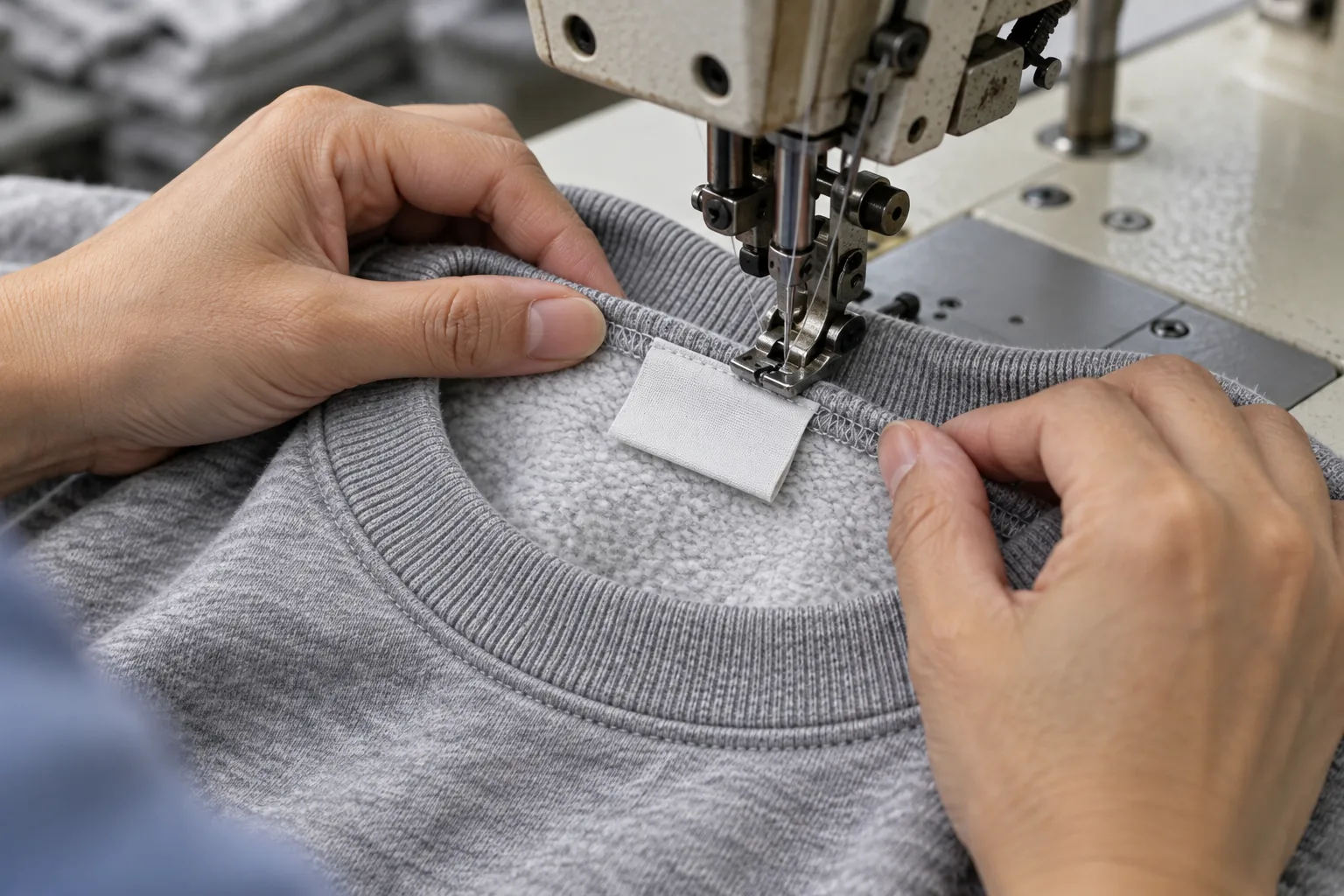
Use three decisions: unchanged and supported by matching references; changed but acceptable after targeted review; or unresolved and held from release. A new label supplier, for instance, does not automatically mean a worse label, but it does call for evidence that weave, edge finish, dimensions, and attachment remain acceptable.
A new garment color also deserves scrutiny. Pale embroidery on a dark sweatshirt may need a fresh appearance check even when its dimensions remain fixed. Approve only the affected work when the rest of the record is sound, but consider interactions: a fabric substitution can affect decoration stability and may require reviewing both together.
Gate four: authorize the right evidence before bulk decoration
The approval question is not always “Do we need a complete new sample?” It is “What evidence would resolve the change?” A loose trim sample can establish label construction. A decoration trial on the intended fabric can reveal puckering or excessive stiffness. A finished garment is more useful when placement, seams, or wearing comfort are involved.
Specify which evidence is required before the supplier begins the affected bulk operation. If a revised chest print needs approval, record that restriction directly in the order instructions. Approving the garment fabric does not also approve the print.
StitchQuote offers sampling, fabric and trim sourcing, cut-and-sew, private label, and branding including woven labels, prints, and embroidery. A 7-day sample is available for standard styles with confirmed specifications and available materials; complex styles, custom washes, and custom-developed fabric take longer. Confirm the evidence and timing for the particular reorder rather than assuming the original sample schedule applies.
Quantity should also be settled at this gate. StitchQuote’s MOQ for most categories starts from 50 pieces per style, while denim starts from 100 pieces per style. Confirm the proposed assortment and trim requirements for the project before treating an archived approval as permission to purchase.
Gate five: check the repeat against the reference before packing
Reorder QC should test continuity with the accepted standard, not simply whether the new garments look tidy. StitchQuote provides QC before packing. Agree on the checks, measurement tolerances, and reporting needed for your order so that acceptance does not depend on memory.
- Reference identity: Confirm that inspection uses the approved revision and sample, with any later exceptions attached.
- Decoration result: Compare finished size, position, color appearance, coverage, and fabric distortion.
- Label execution: Check fold direction, seam capture, edge finish, and comfort against the reference.
- Variation across the order: Review the agreed size and color coverage, including any graded placement rule.
- Required performance: Confirm any agreed wash or adhesion checks and their acceptance criteria before testing.
- Release status: Identify open deviations and obtain a recorded decision before affected goods proceed.
Close the order by saving the inspection record and accepted changes with the reorder reference. Otherwise, a correction made successfully on this run can disappear from the instructions for the next one.
Questions buyers ask when a branding approval is reopened
Can an older production garment replace a missing approval sample?
It can provide useful evidence, but record its condition. Wear, washing, and storage may alter color, dimensions, or hand feel. Compare it with retained specifications and photographs, then agree on a replacement reference before relying on it for acceptance.
Who should approve a substitution when the original buyer has left?
Name a current decision-maker with authority over the affected detail. Give that person the archived standard, the proposed difference, and comparison evidence. Approval should attach to an identified revision so a staffing change does not erase the decision trail.
Does changing only packaging reopen garment branding approval?
Usually the review can stay focused on the changed packaging, provided garment specifications remain intact. Check any interactions, such as a new attachment that could mark fabric. Record the limited scope explicitly instead of issuing a vague approval for the entire order.
Use these resources to prepare the approval record and discuss the evidence needed for your next run:
- Prepare a tech pack that preserves production decisions
- Review sampling and minimum order planning
- Discuss your reorder with StitchQuote
Request a manufacturing quote
Share your product type, quantity range, and destination. We usually reply within one business day.