Custom Streetwear, Casualwear & Denim Manufacturer•MOQ 50 pcs•Denim MOQ 100 pcs•7-Day Sample Available

Polybag Customization vs Retail-Ready Packaging: What Is Worth It First
Use this factory-side guide to compare polybag customization vs retail-ready packaging: what is worth it first more clearly across supplier fit, quote scope.

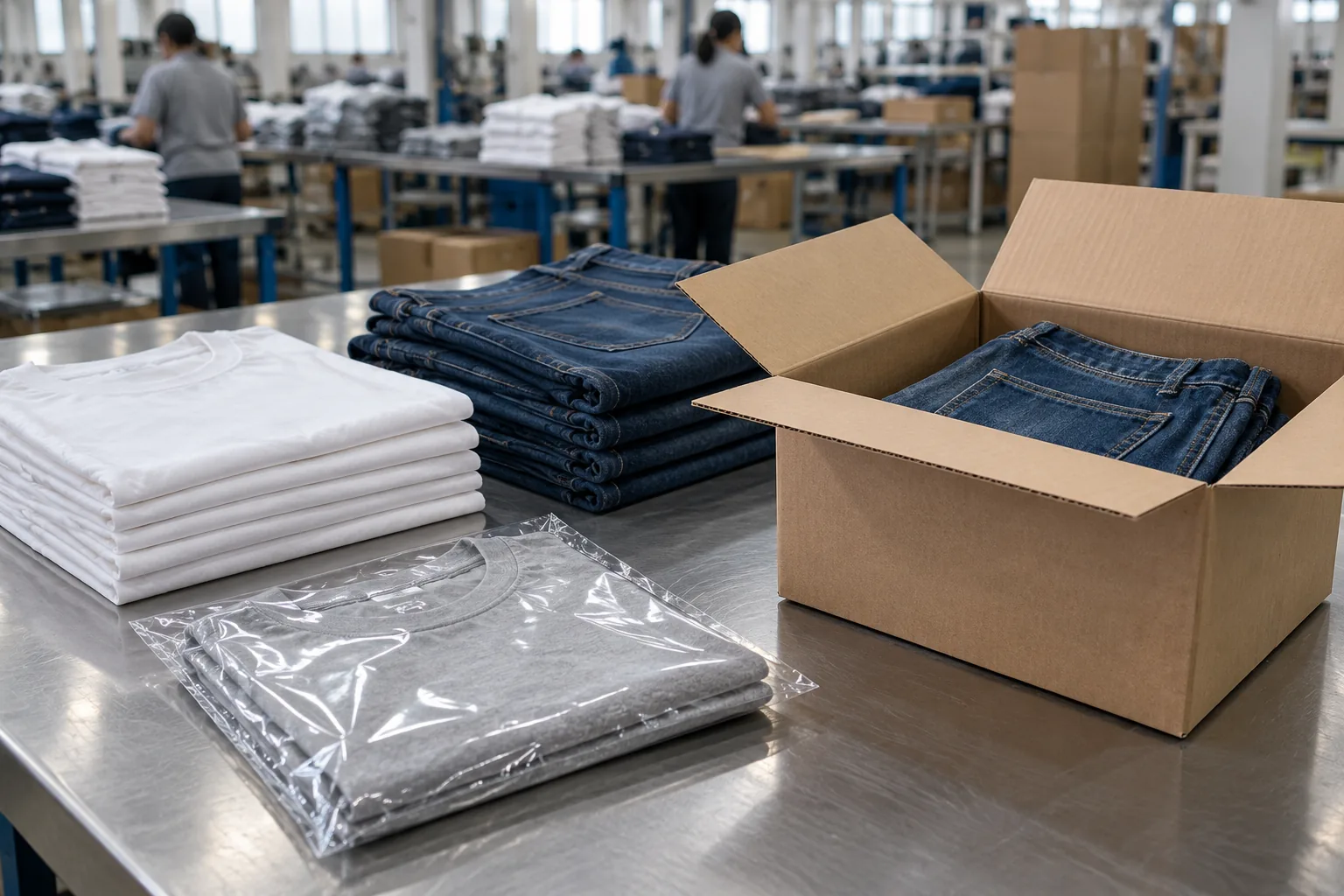
A printed bag can make an apparel delivery feel intentional, but it does not automatically make the garment ready for a store. A retailer may need a visible size, a scannable item code, a particular fold, or a hanger presentation. An online fulfillment team may remove that same packaging before shipping. The first worthwhile investment depends on who handles the garment next.
For a new collection, treat polybag customization as a protection and identification decision, then add presentation features where they serve a confirmed sales channel. Retail-ready packaging is worth prioritizing when it eliminates required preparation at the receiving end. Otherwise, approve a reliable basic pack before committing to decorative materials that tie up cash and storage.
Start with the destination, not the bag artwork
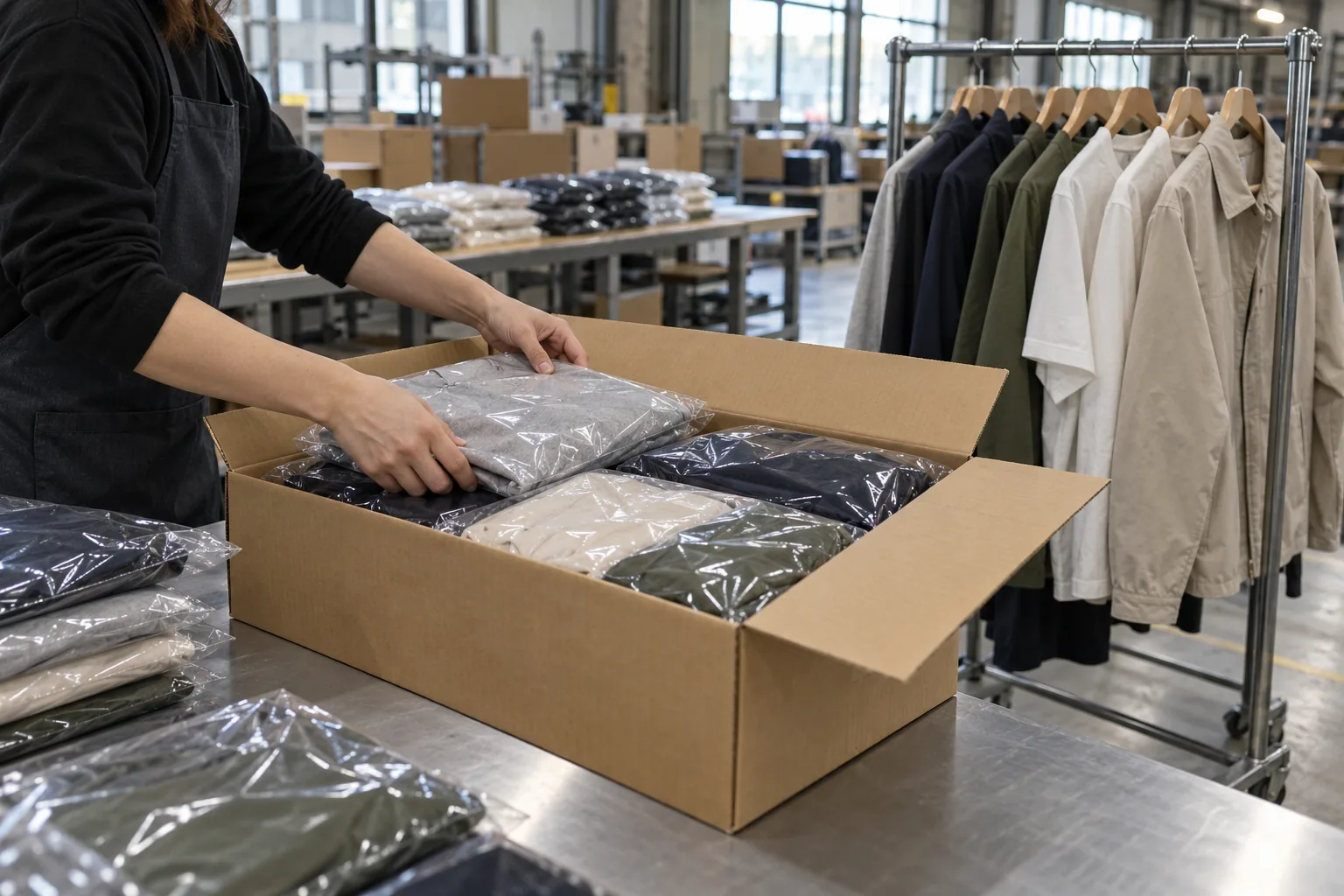
Map the journey from the packing table to the customer. For direct online orders, a garment may travel inside a protective bag, then enter a separate shipping mailer at a fulfillment center. For wholesale, staff may unpack it, remove the bag, and place the garment on a rail. For a folded display, the pack itself may remain visible until purchase.
These routes reward different details. A clear bag with a readable external SKU label can simplify picking even without printed branding. A display sleeve may help a folded T-shirt retain its shape, but can become waste if a shop immediately hangs every unit. Ask the receiving team which components stay, which get removed, and which missing details trigger repacking.
Obtain the retailer’s current packing instructions before approving artwork. Record whether units must arrive folded or hanging, where item labels belong, and whether individual bags are required. Do not assume a premium-looking pack satisfies operational requirements.
Buy the simplest pack that solves a real problem
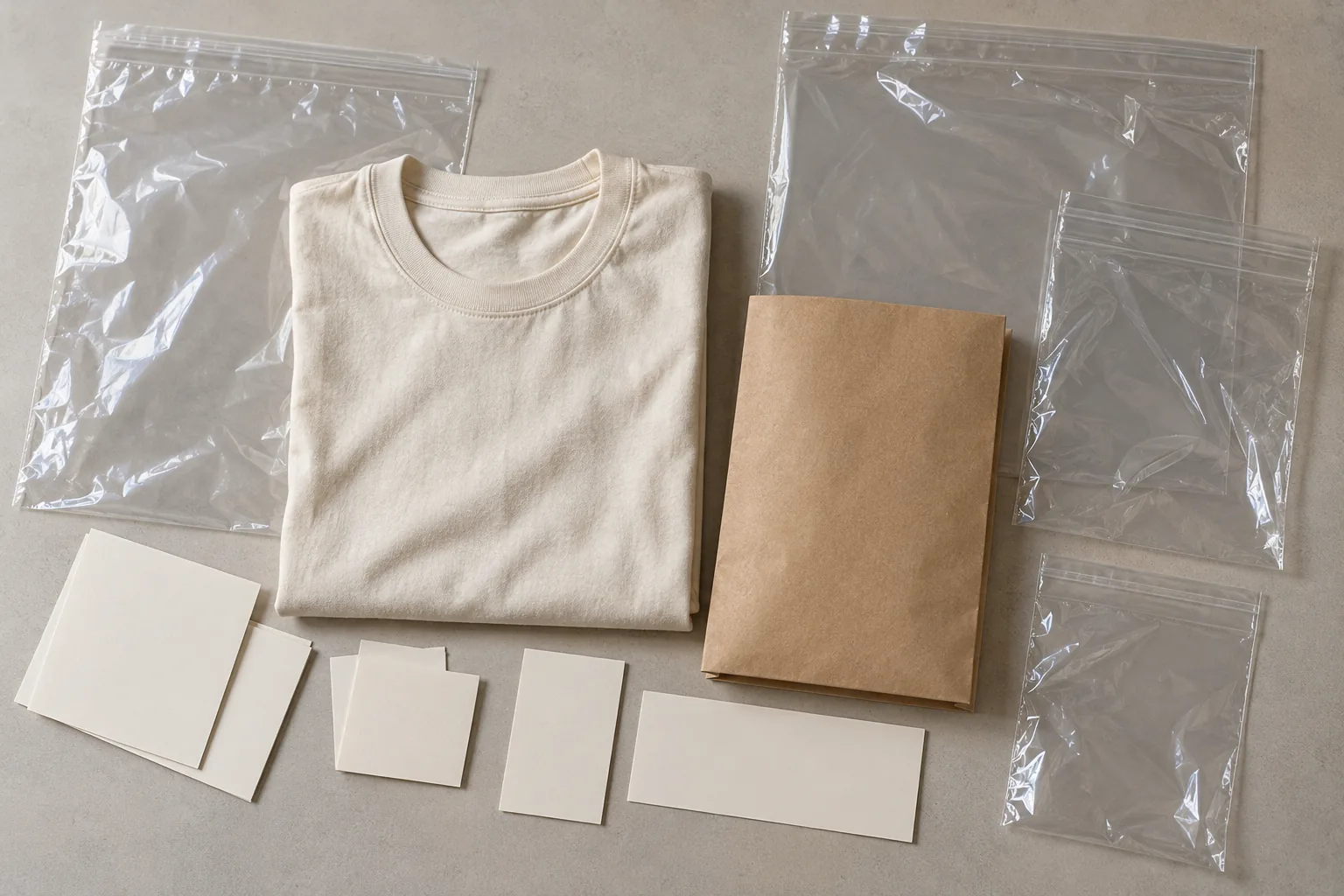
Start with protection, then identification, then presentation. A plain bag can perform the first two jobs well. Printing a logo does not correct a tight seal, a hidden size sticker, or a barcode that cannot scan through wrinkled film. Conversely, a retail band with the correct item information may solve a display requirement without a custom box.
| Receiving situation | First useful investment | Add only when justified |
|---|---|---|
| Online fulfillment with separate shipping mailer | Secure protective bag and external SKU identification | Printed bag if customers actually receive it |
| Wholesale garments unpacked onto rails | Required folding or hanging method and retailer labels | Display inserts only if the retailer retains them |
| Folded products sold from shelves | Stable fold and visible size and product information | Sleeve or carton validated against shelf dimensions |
| Gift presentation sold as a specific offer | Pack fit and protection through the intended delivery route | Decorative layers that survive handling intact |
Compare the total work created by each option. Include material, assembly, label application, storage volume, and destination repacking. A more elaborate pack may be worthwhile if it replaces store labor; it is harder to justify when it adds steps at both ends.
Specify a packed garment, not just a bag size
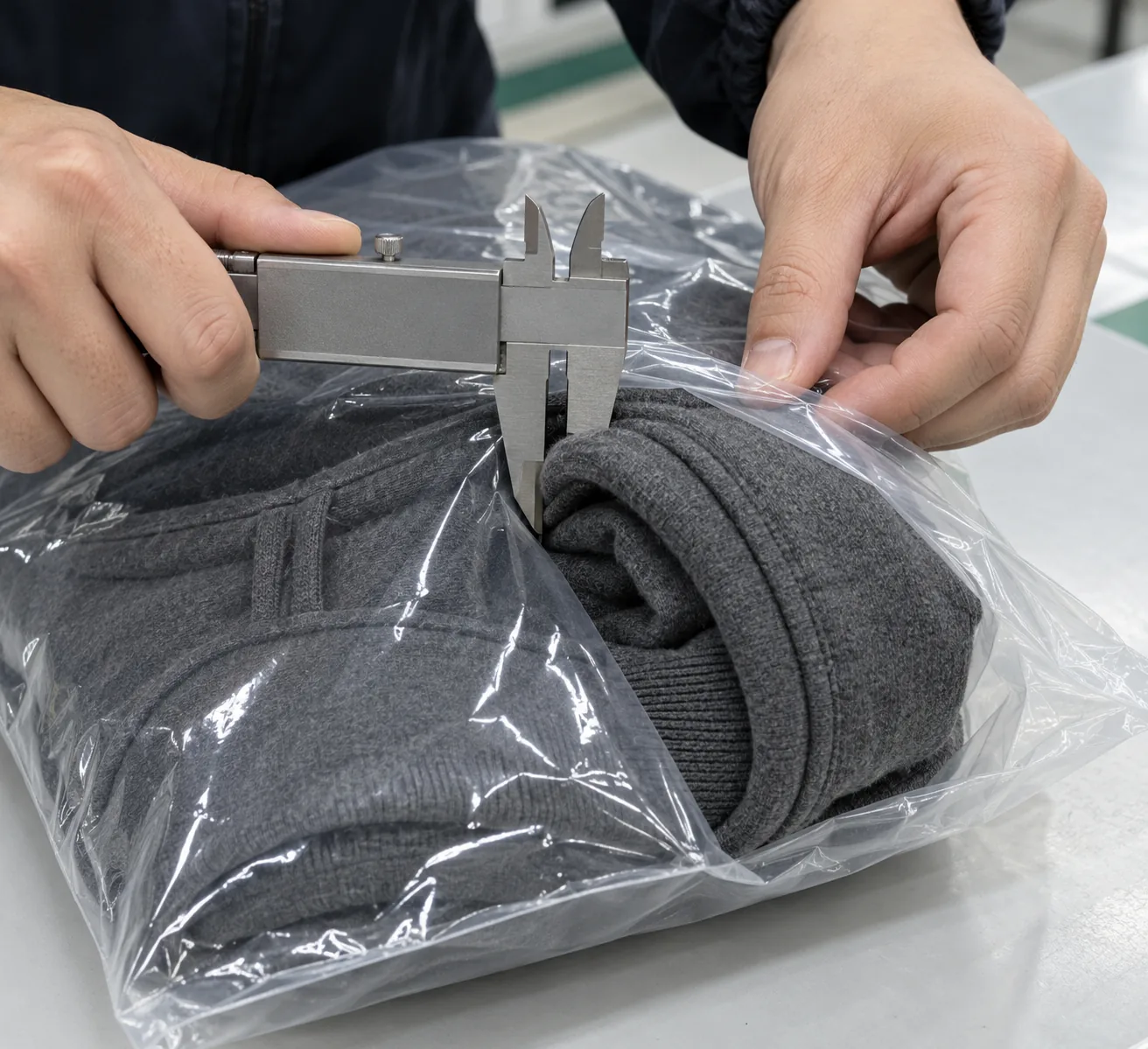
Measure the garment after the agreed fold. A heavyweight sweatshirt and a lightweight jersey tee can have similar folded width but very different thickness. Give the packaging supplier the folded length, width, and approximate height, then confirm usable internal bag dimensions. Identify whether a quoted length includes the closure flap; otherwise, two apparently identical quotes may cover different usable spaces.
For example, a buyer might approve a tee fold at 280 × 350 mm and propose a folding tolerance of ±10 mm. Those are project targets, not universal standards. Test the pack with the largest size and the thickest construction in the range before locking dimensions. The garment should enter without force, and the closure should meet cleanly without trapping fabric.
Specify film material and thickness in microns, closure type, label dimensions, and label position measured from a named edge. Ask whether thickness refers to a single film wall. Include a packing photograph showing garment orientation and which side faces the opening. If a sleeve is used, approve its internal clearance around the packed garment rather than only its flat artwork dimensions.
For any warnings, recycling information, or market-specific markings, have the buyer’s responsible team confirm the required wording and placement. Avoid printing environmental claims based solely on appearance or an unverified supplier description.
Separate garment quantities from packaging commitments
Packaging economics can diverge from apparel production quantities. A garment order that fits the manufacturing minimum may still be too small for an economical custom print run. Ask for separate quantities and lead times for plain bags, printed bags, labels, sleeves, and cartons. Confirm who owns unused stock and where it will be stored.
StitchQuote’s MOQ for most categories starts from 50 pieces per style; denim starts from 100 pieces per style. These garment minimums do not establish a minimum for a particular packaging component. For a small launch, compare a standard protective bag with an applied brand sticker against a fully printed bag, using the actual required quantity for each.
Keep variable information separate where possible. A shared bag can serve several colorways, while an applied label carries the size, color, and SKU. Printing a season, size, or launch date permanently onto every bag makes leftover stock harder to reuse. Approve a component list showing which items are common and which change by SKU.
StitchQuote offers a 7-day sample for standard styles with confirmed specs and available materials; complex styles, custom washes, and custom-developed fabrics take longer. Confirm packaging samples and component delivery dates separately so the garment sample timeline does not become an assumed packaging promise.
Run a packing trial before releasing the bulk instructions
A digital mockup cannot reveal every handling problem. Request an assembled pack using the actual garment, proposed materials, and final label layout. Include a small and large size, plus any construction that changes bulk, such as a hood or a heavy waistband. Review the pack after it has sat folded, not only immediately after assembly.
Use the following checklist for approval and for agreed checks during packing. StitchQuote provides QC before packing; confirm separately how packaging checks will be assigned and documented.
- Garment condition: Pack only after the garment is dry and has cooled after pressing. Check for trapped moisture, lint, and visible creasing that presentation layers could conceal.
- Fold and clearance: Measure against the approved fold target. Confirm that seams, zippers, and drawcord ends do not strain the film or distort a sleeve.
- Closure performance: Close and handle the sample as intended. Check that adhesive stays off the garment and that the seal remains closed after normal lifting and repositioning.
- Item identity: Match garment size and color to the external label. Scan the final barcode through the actual film where applicable; use the destination’s verification criteria if provided.
- Presentation stability: Check whether inserts slide, dark fabric picks up paper dust, or packaging ink transfers during handling. Record any additional transit testing required for the route.
- Carton fit: Trial the intended unit count in the shipping carton. Look for crushed corners, overcompression, and bulging before approving the packing arrangement.
Keep an approved physical reference and a dated packing instruction sheet. If the bag material, fold, or insert changes later, reassess the assembled pack rather than approving the replacement component in isolation.
Questions buyers ask before choosing the first upgrade
Does a printed polybag count as retail-ready packaging?
Only if it meets the receiving channel’s requirements. Printing provides branding; retail readiness may also require accessible product information, a specific presentation format, or a scannable retailer label. Ask the retailer to approve the complete unit, including the garment’s orientation inside it.
Can one pack serve both online orders and wholesale?
Often, a common protective bag can support both, with channel-specific labels or presentation components added where needed. Confirm that the wholesale customer accepts the base pack and that fulfillment staff can distinguish the versions. Document the allocation by SKU and destination.
Should a denim launch use the same bag as a tee launch?
Do not decide from folded width alone. Denim can create a thicker stack and concentrated pressure around hardware and waistbands. Trial the finished jeans in the proposed bag, checking closure clearance and contact points. A shared visual design can still use different physical dimensions.
When is a custom box worth approving first?
When a confirmed selling format needs it, such as a specified gift presentation or shelf display. Approve the box around the actual folded garment and test the intended outer shipping protection. Include assembly time and storage volume in the decision before ordering printed stock.
Turn the choice into a clear production brief
Send one brief containing the sales channel, garment range, fold reference, packing components, label data, and approval responsibilities. StitchQuote’s services include cut-and-sew, private label, sampling, fabric and trim sourcing, and branding through woven labels, prints, and embroidery. Confirm the specific packaging scope alongside the garment quotation.
Related reading and project support:
- Prepare a tech pack with clear production references
- Review sampling and minimum order planning
- Explore private-label garment development
- Contact StitchQuote to confirm your project scope
Request a manufacturing quote
Share your product type, quantity range, and destination. We usually reply within one business day.