Custom Streetwear, Casualwear & Denim Manufacturer•MOQ 50 pcs•Denim MOQ 100 pcs•7-Day Sample Available


How to Compare Communication Quality Between Clothing Suppliers
Use this factory-side guide to compare communication quality between clothing suppliers more clearly across supplier fit, quote scope, approvals, and timing before.

A supplier can answer quickly and still leave a buyer unsure what will actually be made. Before sending a complete collection brief, test whether the person answering can recognize missing information, separate assumptions from commitments, and carry a technical detail through a short exchange. This early screen helps you decide who deserves the time and information required for development.
To compare communication quality between clothing suppliers, give each candidate the same small, realistic exercise. You are assessing how they handle uncertainty before an order exists. A useful response should make your next decision easier, even when it says that a deadline, construction detail, or material choice cannot yet be confirmed.
Start with a screening card instead of your whole collection
Prepare a one-page card for a single representative garment. For example, describe an adult relaxed-fit jersey T-shirt, a proposed 240 gsm cotton fabric, one chest embroidery, two colors, and a first run of 120 pieces. Label these as screening assumptions. State whether your quantity means 120 total or 120 per color; otherwise, you cannot tell whether different answers reflect communication or different interpretations.
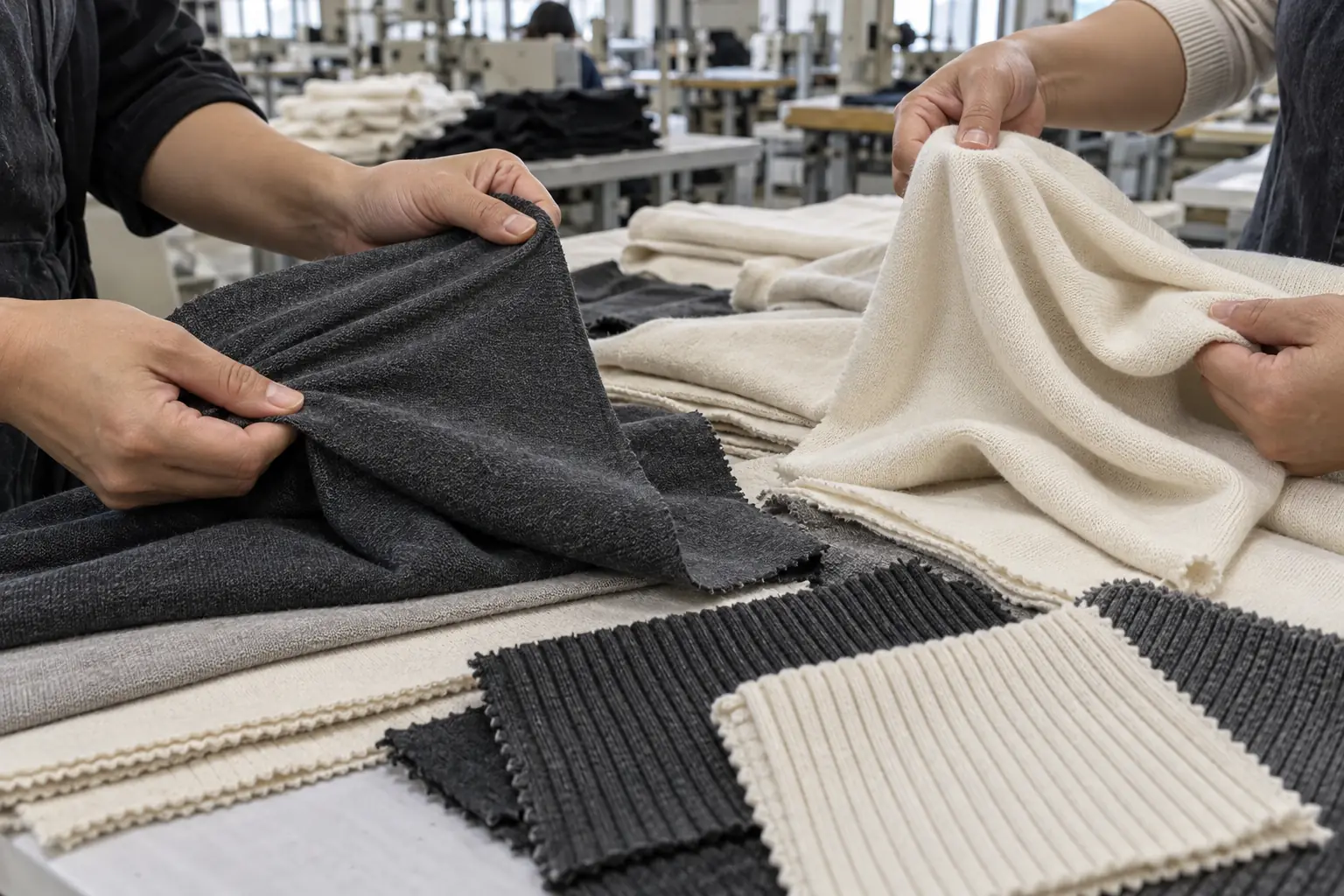
Ask three things: which details prevent a meaningful estimate, which garment feature needs technical review, and what information they need before proposing a sample schedule. Request a response format with confirmed points, open questions, and next actions. Avoid asking for a firm production quotation from this incomplete card; the point is to see whether the supplier recognizes its limits.
Keep unreleased graphics, the complete size range, and other collection styles out of this first exchange. A cropped embroidery reference and a basic silhouette are enough to start. Send the same card to every candidate and preserve the original version so that your comparison remains fair.
Look for questions that change a manufacturing decision
The number of questions matters less than their consequences. For the T-shirt example, a supplier might ask whether 240 gsm is the target before or after finishing, whether the handfeel should be compact or soft, and how large the embroidery will be. Those answers affect material selection and the risk of puckering. Asking only for your logo file leaves more consequential decisions unresolved.
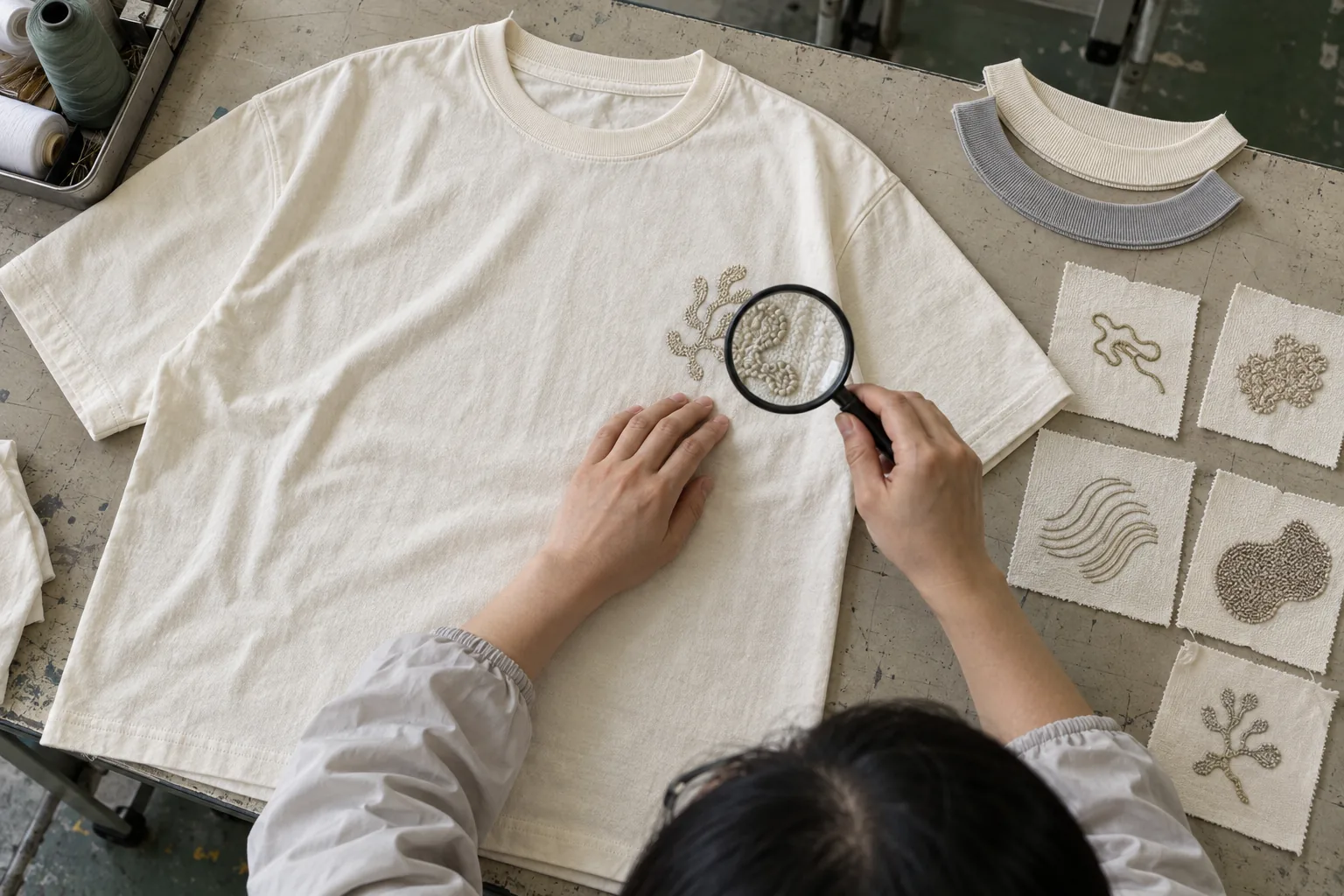
Include one openly unresolved choice, such as a narrow rib neckline versus a wider binding. Ask what each option would require to evaluate. A clear answer identifies the missing neck opening measurement or reference sample, explains the likely appearance difference, and proposes a way to check recovery. It should not quietly select whichever construction is easiest.
Distinguish a considered limitation from a generic refusal. “We need the finished neckline dimensions before recommending rib length” is actionable. “Send all details” is less useful unless the supplier names the specific details needed now. Strong communication reduces uncertainty in manageable steps instead of returning the entire problem to the buyer.
Send one revision and watch where the old detail goes
After the first response, make one controlled revision: move the embroidery from the chest to the sleeve and change its proposed width from 70 mm to 45 mm. Label the update “screening revision B” and explicitly supersede the earlier placement. Ask the contact to summarize the current requirement before discussing consequences.
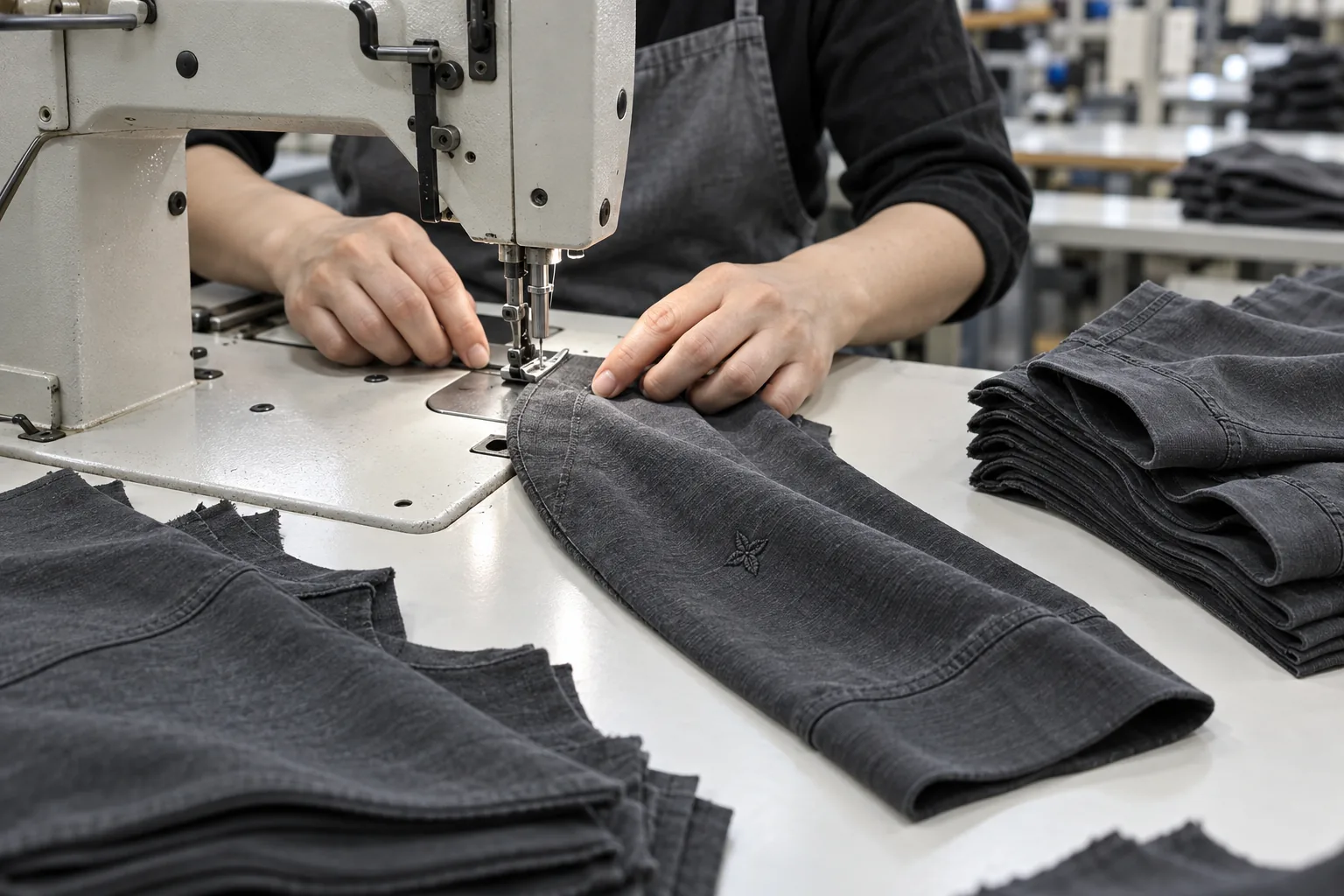
The reply should retain both changes. It should also flag that smaller lettering may need artwork review and that sleeve access can affect the embroidery sequence. A polished acknowledgment that repeats the old chest placement reveals a version-control problem before you have paid for sampling.
Ask how the confirmed revision would reach the sample room and who would check that it had been applied. You do not need access to internal software. A practical explanation might describe a dated specification sheet, marked reference image, and final check by the development contact. What matters is a traceable handoff rather than a promise that everyone has seen the chat.
Compare evidence on a compact scorecard
Record what each supplier actually did, rather than rating whether you liked their tone. The following scale is a buyer screening tool, not an industry certification. Score each row from zero to two and attach a short quotation or reference to the relevant reply. Keep technical observations separate from subjective impressions.
| Signal | 0 points | 1 point | 2 points |
|---|---|---|---|
| Requirement accuracy | Changes key details | Restates some details | Captures scope and revision correctly |
| Missing information | Promises without questions | Requests broad clarification | Names inputs and their consequences |
| Timing explanation | Gives an unconditional date | Mentions dependencies | Defines start conditions and next update |
| Handoff ownership | No owner identified | Names a general department | Identifies a responsible contact and check |
Agree on a reasonable reply window that accounts for working hours and time zones. An acknowledgment within that window, followed by a specific time for the technical answer, can be more useful than an immediate unsupported commitment. Record missed promised updates separately; raw elapsed hours alone can unfairly favor candidates in your own time zone.
Use the total to organize your shortlist, then review serious gaps individually. A high score elsewhere does not resolve a repeatedly missed revision. Equally, concise English should not lower a score when dimensions, dependencies, and next steps are unambiguous.
Run a QC conversation before there is a sample to reject
A pre-brief screen should include a hypothetical measurement disagreement. Tell the supplier that your proposed medium-size chest width is 60 cm, measured flat at an agreed distance below the armhole, with a proposed tolerance of ±1 cm. State that this is an exercise requiring project confirmation, not a universal garment standard. Ask what they would do if a sample measured 61.5 cm.
A useful answer first checks the measurement method and garment condition. Was the shirt relaxed on a flat surface? Was it measured before or after the agreed wash procedure? If the reading remains 61.5 cm under the agreed method, it exceeds the proposed upper limit of 61 cm. The response should identify the discrepancy and seek a disposition rather than silently accept it.
- Method: Confirm the measurement point, units, and garment condition before comparing readings.
- Evidence: Request a clear measurement photograph and the recorded result, with the garment identified.
- Containment: Ask which next step would pause while the discrepancy is assessed.
- Decision: Establish who can authorize correction, remeasurement, or a documented exception.
- Closure: Confirm how the final decision updates the reference used for subsequent work.
This conversation tests whether QC findings can reach you in a usable form. It does not prove factory capability or replace sample evaluation. Treat an answer that dismisses every discrepancy as “normal tolerance” without reviewing the agreed specification as a reason for further investigation.
Give the full brief to suppliers who make commitments conditional and clear
Advance candidates who preserve requirements, ask relevant questions, and explain what must happen before a promise becomes firm. Send those suppliers the complete technical pack and ask them to identify any difference between the screening assumptions and the actual project. This gives the earlier exchange a clear endpoint.
When considering StitchQuote, use its stated scope as a starting point: cut-and-sew, private label, sampling, fabric and trim sourcing, woven labels, prints, embroidery, and QC before packing. MOQ for most categories starts from 50 pieces per style; denim starts from 100 pieces per style. Confirm how your proposed colors, materials, and quantities fit the project rather than assuming that a style-level minimum answers every allocation question.
A 7-day sample is available for standard styles with confirmed specifications and available materials. Complex styles, custom washes, and custom-developed fabric take longer. A useful scheduling conversation therefore establishes whether those conditions are met and what remains unresolved. Use the same discipline when comparing another supplier’s sample promise: ask what starts the clock and what could change the date.
Questions buyers ask during an early communication screen
Should every candidate receive the same unresolved detail?
Yes. Keep the uncertainty explicit and identical so you can compare how candidates address it. An undeclared trick can test guesswork instead of communication. Explain that you want a recommendation and the information needed to support it.
What if the sales contact cannot answer the technical question?
Look for ownership of the follow-up. A contact who refers the question to a technical colleague, gives a return time, and brings back a specific answer can support development well. Repeated forwarding without a consolidated answer leaves you managing the supplier’s internal handoff.
Does a video call provide better evidence than email?
A call can reveal whether both sides understand a construction issue, but preserve the outcome in writing. Send a short recap with the current specification, unresolved points, and assigned actions. Ask the supplier to correct it before treating it as agreed.
Can a good screen justify skipping sampling?
No. Communication screening selects who merits deeper evaluation. A physical sample still needs to demonstrate fit, fabric behavior, workmanship, and interpretation of your specifications. Compare that result with the promises and assumptions captured during the screen.
Related reading and next steps:
- Prepare the technical pack for shortlisted suppliers
- Review sampling and MOQ planning
- Assess broader streetwear manufacturer fit
- Discuss your project with StitchQuote
Request a manufacturing quote
Share your product type, quantity range, and destination. We usually reply within one business day.