Custom Streetwear, Casualwear & Denim Manufacturer•MOQ 50 pcs•Denim MOQ 100 pcs•7-Day Sample Available

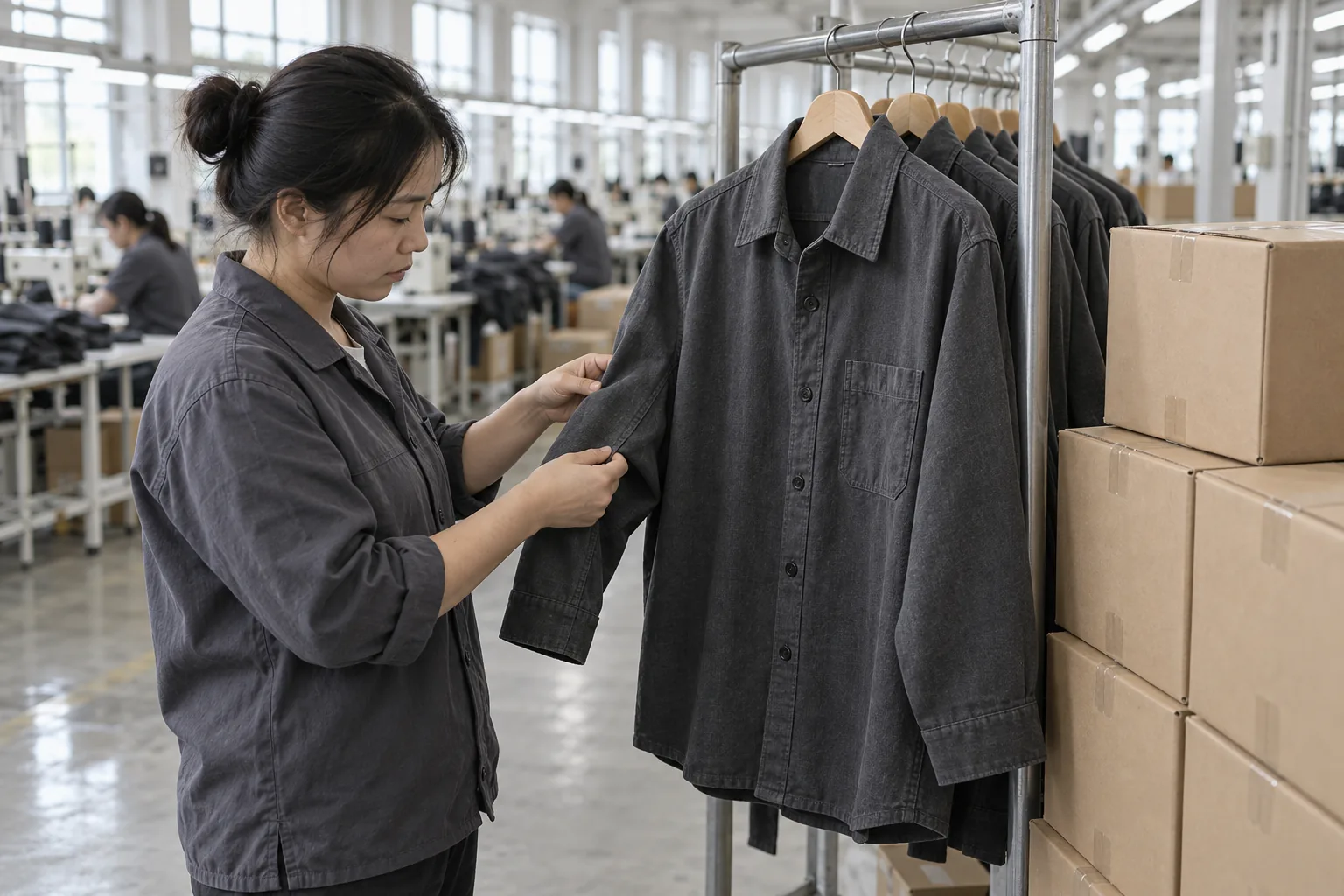
How to Ask Better Questions About Production Scheduling
Use this factory-side guide to compare ask better questions about production scheduling more clearly across supplier fit, quote scope, approvals, and timing before.

A delivery date is only as useful as the decisions behind it. When a supplier says a run can finish in a certain week, ask which approvals must arrive first, who can issue them, and what happens if one arrives late. Those answers turn an estimated calendar into a sequence your buying team can manage.
To ask better questions about production scheduling, focus on permission to move forward. A fabric approval does not necessarily authorize cutting; a fit approval does not necessarily release a print placement. For an apparel launch, each approval gate should identify the accepted standard, the evidence needed, and the next operation it unlocks. Here is how to build that conversation before a promised dispatch date becomes difficult to protect.
Define what each date actually commits to
Start by separating an estimate, a provisional capacity reservation, and an agreed production milestone. Ask: “Is this sewing start conditional on approvals, or is capacity already allocated? Until when can that allocation be held?” A date without its conditions can look firm in your launch spreadsheet while remaining tentative in the supplier’s plan.
Also define the endpoint. “Ready” might mean sewing complete, goods inspected, or cartons available for collection. If your campaign needs stock in a warehouse, factory dispatch is only one dependency. Keep carrier booking, transit, customs, and warehouse receiving visible as separate steps rather than folding them into a manufacturing promise.
Request a short gate register alongside the calendar. The following is an illustrative structure, not a fixed sequence for every garment. Some development work can overlap, but the supplier should identify which operations genuinely depend on each release.
| Gate | Evidence to accept | Permission granted |
|---|---|---|
| Specification freeze | Dated specification revision and closed comments | Develop against one agreed brief |
| Material release | Approved fabric, shade, trims, and relevant checks | Use identified materials for the agreed purpose |
| Pre-production release | Accepted sample and resolved construction details | Start agreed bulk operations |
| Packing release | QC findings closed and assortment verified | Pack accepted goods |
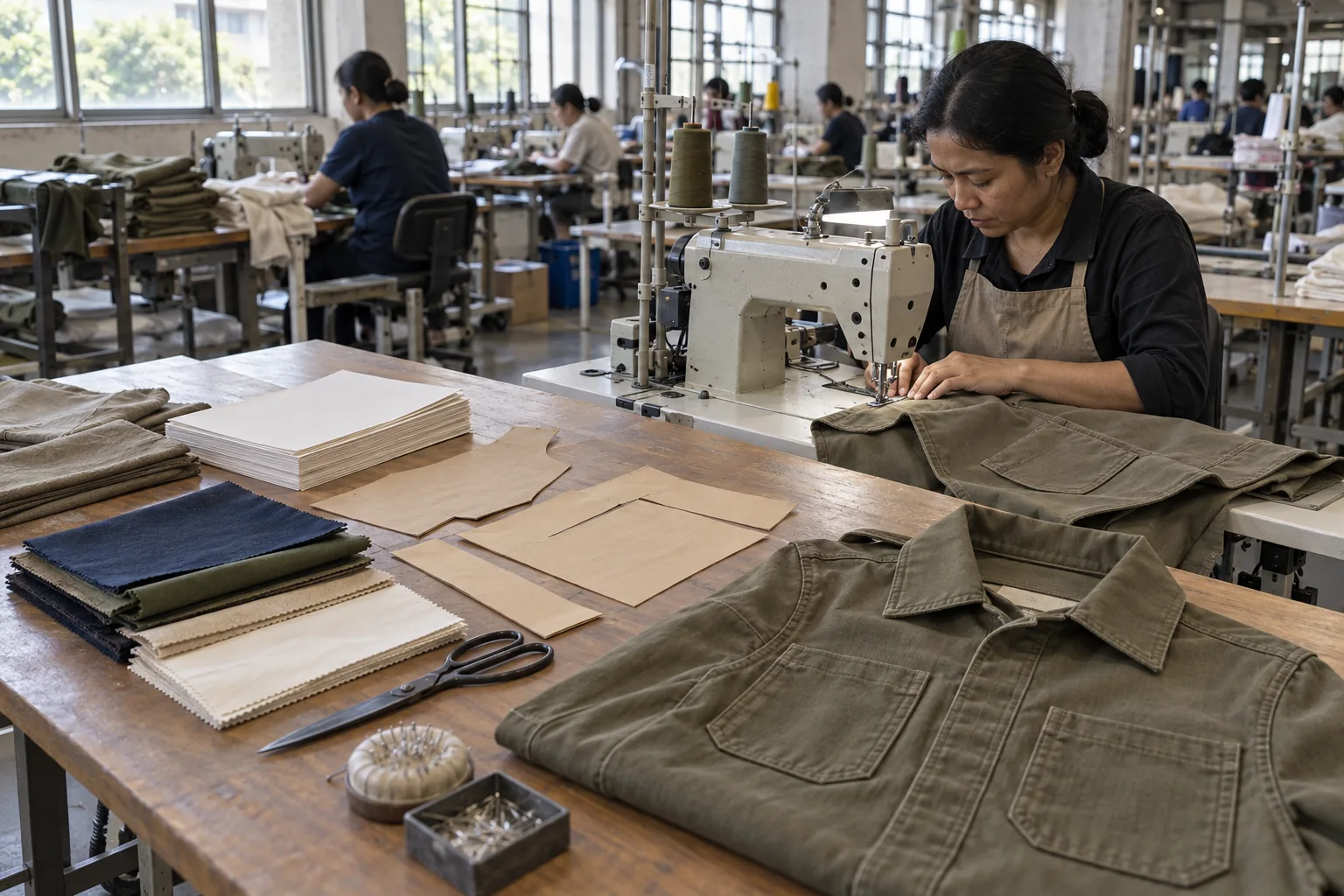
Separate material availability from material permission
“The fabric is here” answers a location question. It does not establish whether that fabric can be cut. Ask whether the received lot matches the approved composition, weight, construction, color, and usable width. For a brushed fleece sweatshirt, the approved handfeel and shrinkage behavior can matter as much as the face color.
Ask: “Which checks are still pending, and when will their results be available?” A wash trial may reveal dimensional change that requires pattern adjustment. A roll inspection may identify shade groups that need separate cutting bundles. Either finding can affect the sequence even when every roll has arrived.
Make authorization specific to material and use. You might accept a rib option for a development sample while withholding permission to order bulk quantities. State that distinction in the approval record. If a substitute is proposed, request its effect on fit, appearance, performance, and timing before accepting it.
For example, a twill overshirt with tonal snaps can have shell fabric ready while the snap finish remains unresolved. Ask whether cutting can safely proceed, what risk remains, and who owns any rework if the final trim changes the construction.
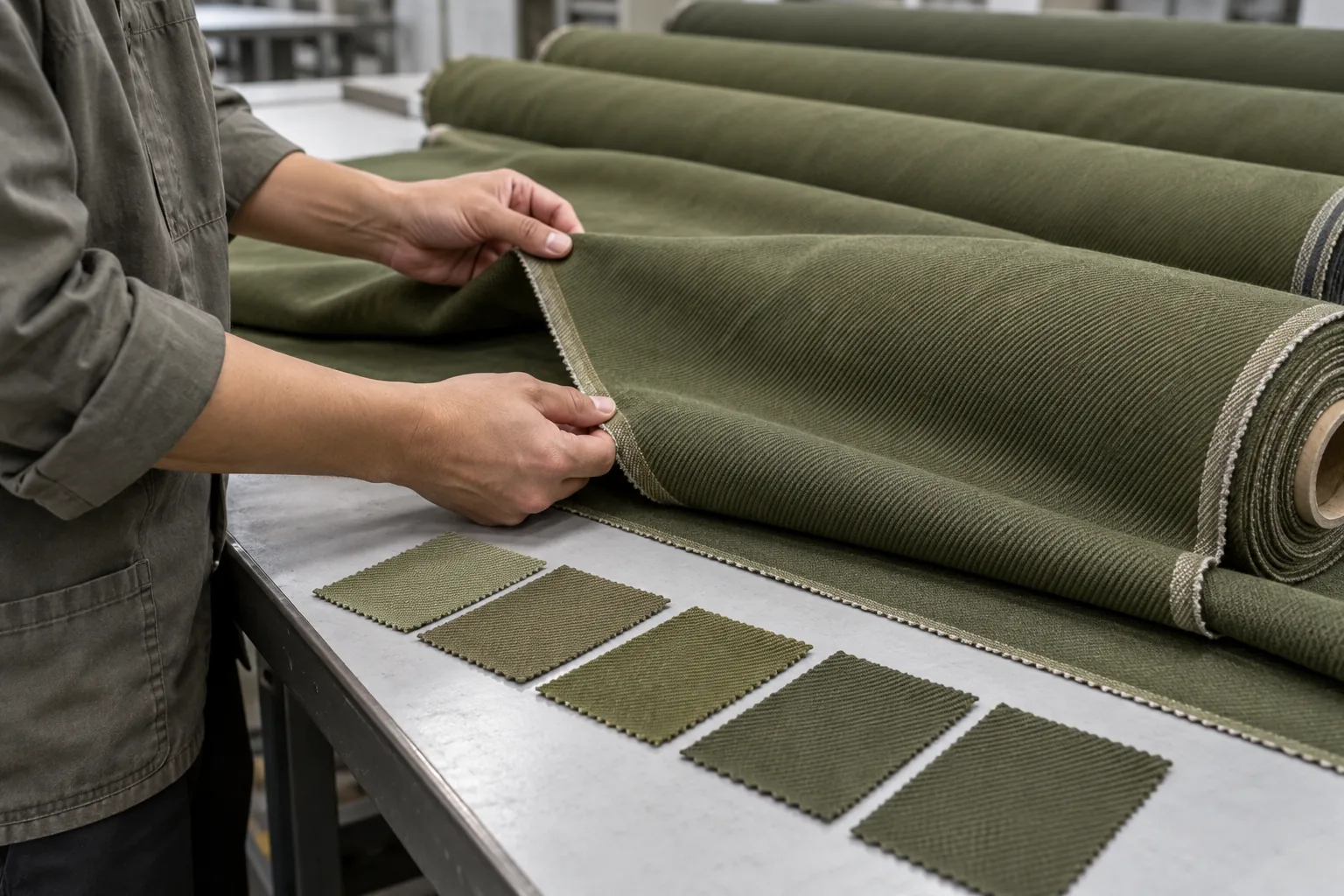
Make sample comments end in a decision
A comment such as “looks good, please improve the collar” leaves the factory guessing whether production may begin. Instead, separate accepted features from open items and specify the evidence required to close each one. If the collar stand needs revision, identify the finished measurement, measurement method, and whether a physical sample is required.
Use one consolidated response from an authorized buyer. Ask the supplier to acknowledge the revision number and list any comments that conflict. Merchandising, design, and technical teams can review internally, but competing instructions should be resolved before the factory receives a release.
Discuss whether approval applies to fit only, construction only, or the complete pre-production standard. A sample in substitute fabric can help resolve proportions but cannot reliably prove the drape or wash response of the intended bulk material. Record those limitations instead of letting a general “approved” message cover them.
StitchQuote offers a 7-day sample for standard styles with confirmed specs and available materials. Complex styles, custom washes, and custom-developed fabric take longer. Treat that sample option as a development milestone; ask separately about review time, revisions, material readiness, and the conditions for bulk release.
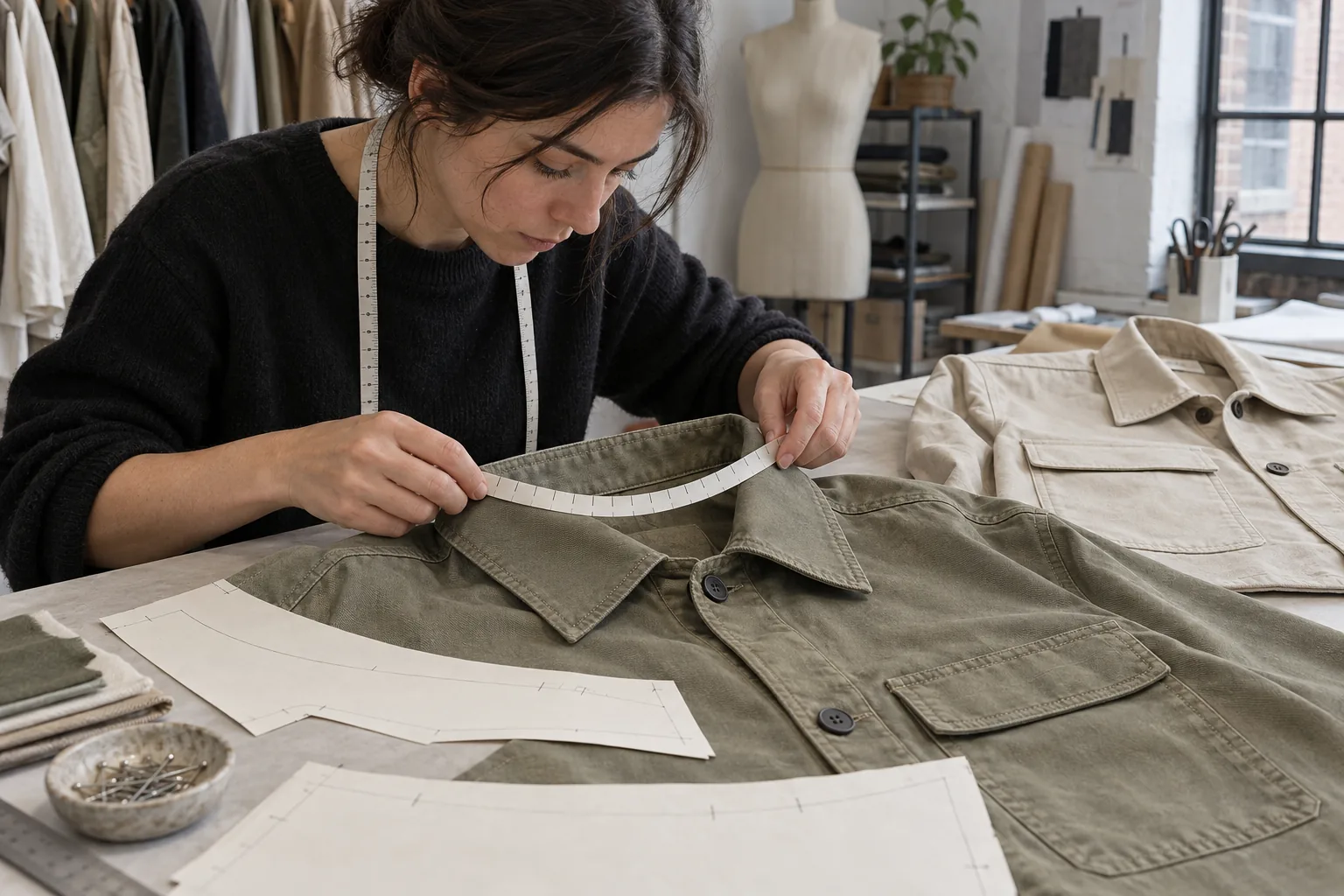
Ask what expires when an approval misses its window
Every gate should have a requested response date and a consequence if it is missed. Ask: “If we approve on Thursday instead of Tuesday, which downstream dates need reconfirmation?” The answer may involve a later cutting slot, a different embroidery booking, or a changed packing sequence. Avoid assuming that a two-day approval delay always produces exactly two days of delivery delay.
Agree the working calendar, including local holidays and the time zone used for deadlines. Name a backup approver for absences. If a physical sample must travel to your team, include receipt and review time before setting the decision deadline.
When recovering time, ask for options with explicit tradeoffs. Could an approved color proceed while another remains on hold? Would splitting the run affect shade consistency, assortment packing, or dispatch arrangements? Require a revised schedule showing the consequences before authorizing the change. Faster movement is useful only when everyone understands which product and delivery commitments it preserves.
Protect the release with a measurable QC checklist
Approval should connect development standards to production checks. Ask which characteristics will be checked before cutting, during sewing, and before packing, then agree who reviews failures. A pre-production sample on a shelf is not enough if operators and inspectors are using different measurement instructions.
- Measurements: Identify key points, the measuring method, and tolerances by point. An illustrative chest-width tolerance of ±1 cm is a discussion starting point, not a universal standard; confirm suitability for the fabric and fit.
- Decoration: Record placement from a repeatable reference, such as center front and the neck seam. Set an agreed tolerance and check the relevant sizes rather than relying only on a visual impression.
- Appearance: Compare shade, seam finish, pressing, and wash effect with the accepted references. Specify which differences require buyer review.
- Assortment: Verify size and color quantities, garment labels, and carton allocation against the approved order before packing.
- Failure closure: Record the affected quantity, correction, reinspection result, and release authority. Keep unresolved goods outside the released quantity.
StitchQuote’s services include cut-and-sew, private label, sampling, fabric and trim sourcing, woven labels, prints, embroidery, and QC before packing. Ask which records and checkpoints will apply to your order. If the team proposes a first-output review, define whether work pauses pending acceptance and how quickly the buyer must respond.
Keep later changes from silently reopening closed gates
After release, even a small design edit can invalidate earlier decisions. Moving a pocket may affect embroidery placement; changing a waistband can alter fit and trim consumption. Ask for a change record identifying the affected operations, materials already committed, and approvals that must be repeated.
Use a clear hold instruction while the impact is assessed. For example: “Hold cutting for the revised pocket panels; confirm whether unaffected pieces may proceed.” The supplier should confirm what can be isolated safely. Avoid a blanket instruction to keep production moving when the revised specification is still unsettled.
Request one updated calendar after the change is accepted, with superseded dates clearly identified. Keep the accepted sample, specification revision, and release message aligned so the next team works from the same decision.
Questions buyers raise before releasing a run
Can we approve a sample from photographs?
Photographs can establish visible details such as pocket shape or label position when scale and reference points are clear. They do not reliably establish handfeel, fit, or dimensional behavior after washing. Agree which evidence is sufficient for each open item before replacing a physical review.
Does a small order need the same approval gates?
Small quantities still need a defined product standard. StitchQuote’s MOQ for most categories starts from 50 pieces per style; denim starts from 100 pieces per style. Confirm project requirements, but simplify the paperwork rather than skipping material, sample, or quality decisions.
What should we request when the schedule changes?
Ask for the unresolved gate, its owner, the earliest achievable decision date, and the downstream milestones requiring revision. Request options only after that dependency is clear. This makes the discussion actionable and helps your launch team work from an updated commitment.
Related reading and project support:
- Prepare the specification package behind each approval
- Review sampling and MOQ requirements
- Discuss your approval milestones with StitchQuote
Request a manufacturing quote
Share your product type, quantity range, and destination. We usually reply within one business day.