Custom Streetwear, Casualwear & Denim Manufacturer•MOQ 50 pcs•Denim MOQ 100 pcs•7-Day Sample Available

How to Prevent Fit Feedback from Becoming Too Subjective
Learn fit feedback subjective apparel through a clearer factory-side view that helps brands reduce rework, align sample goals, and move toward approval with better.

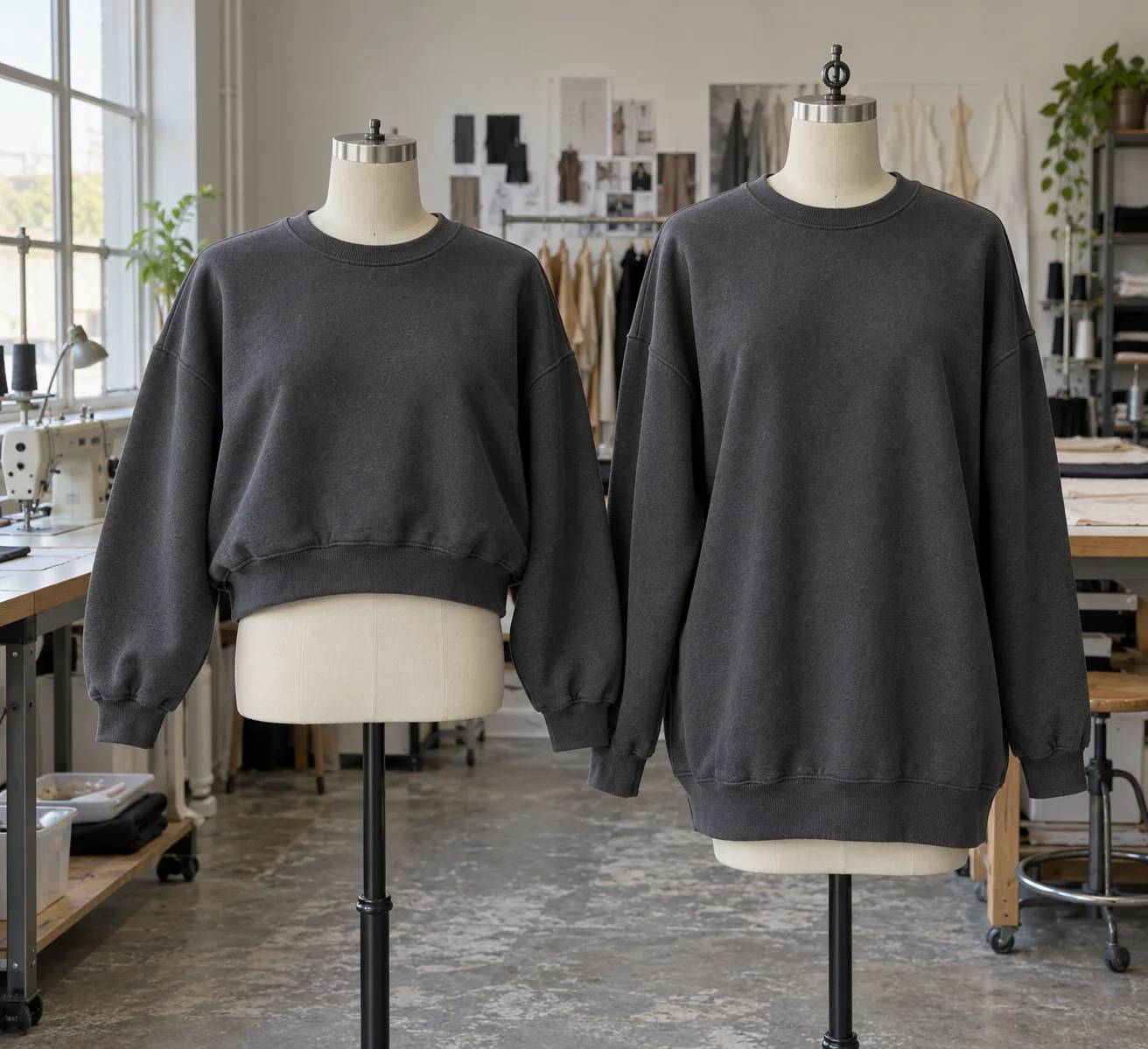
“Make it boxier” and “make it more oversized” can send a pattern in opposite directions. One reviewer may want a wider, shorter body; another may expect more length, deeper armholes, and extra sleeve volume. If both comments enter the same revision sheet without clarification, the next sample can satisfy neither person.
For a brand choosing between boxy and oversized silhouettes, objective fit feedback starts with separating shape from wearing ease. The aim is not to remove creative judgment. It is to turn that judgment into a repeatable sample approval decision: what should change, by how much, on which wearer, and what must stay fixed.
Choose the silhouette before voting on the sample
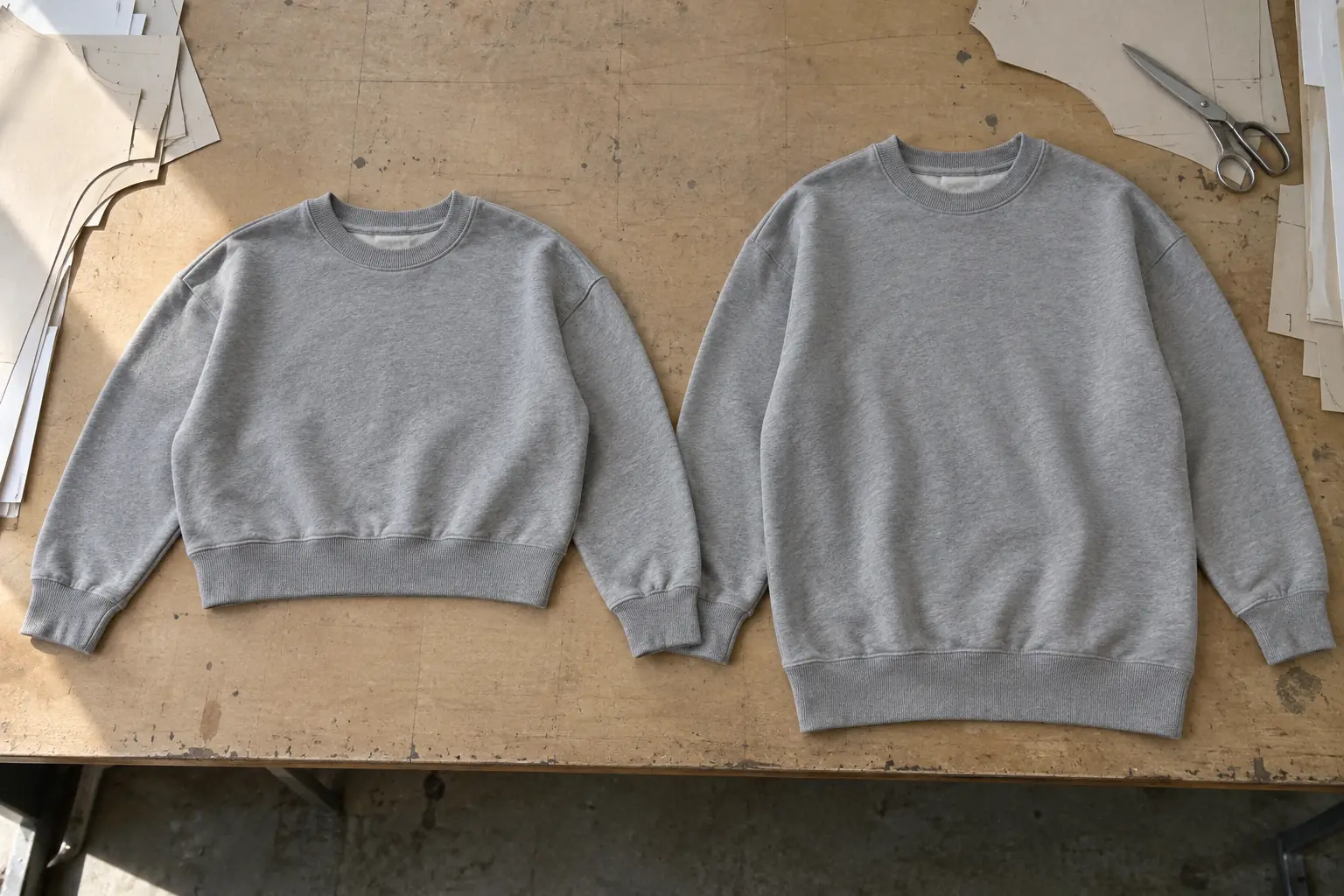
Boxy describes a proportion: a relatively broad body with a compact length and a straighter outline. Oversized describes added room relative to the intended wearer. A garment can be both, but neither term determines every measurement. A long, roomy sweatshirt may be oversized without looking boxy; a short, wide tee may look boxy while offering limited clearance at the neck or sleeve opening.
Write a silhouette statement before the first fitting. For example: “Compact body ending near the upper hip, broad chest, dropped shoulder, sleeves that reach the wrist without covering the hand.” That gives reviewers four visible outcomes to assess. “Oversized streetwear fit” gives them almost nothing to agree on.
Also name the intended wearer and styling conditions. A sweatshirt developed over a thin tee should not be rejected because it feels tight over a heavyweight hoodie. Record whether the hem should hang freely, sit against the hip, or blouse above a fitted waistband.
Build a measurement comparison that exposes the difference
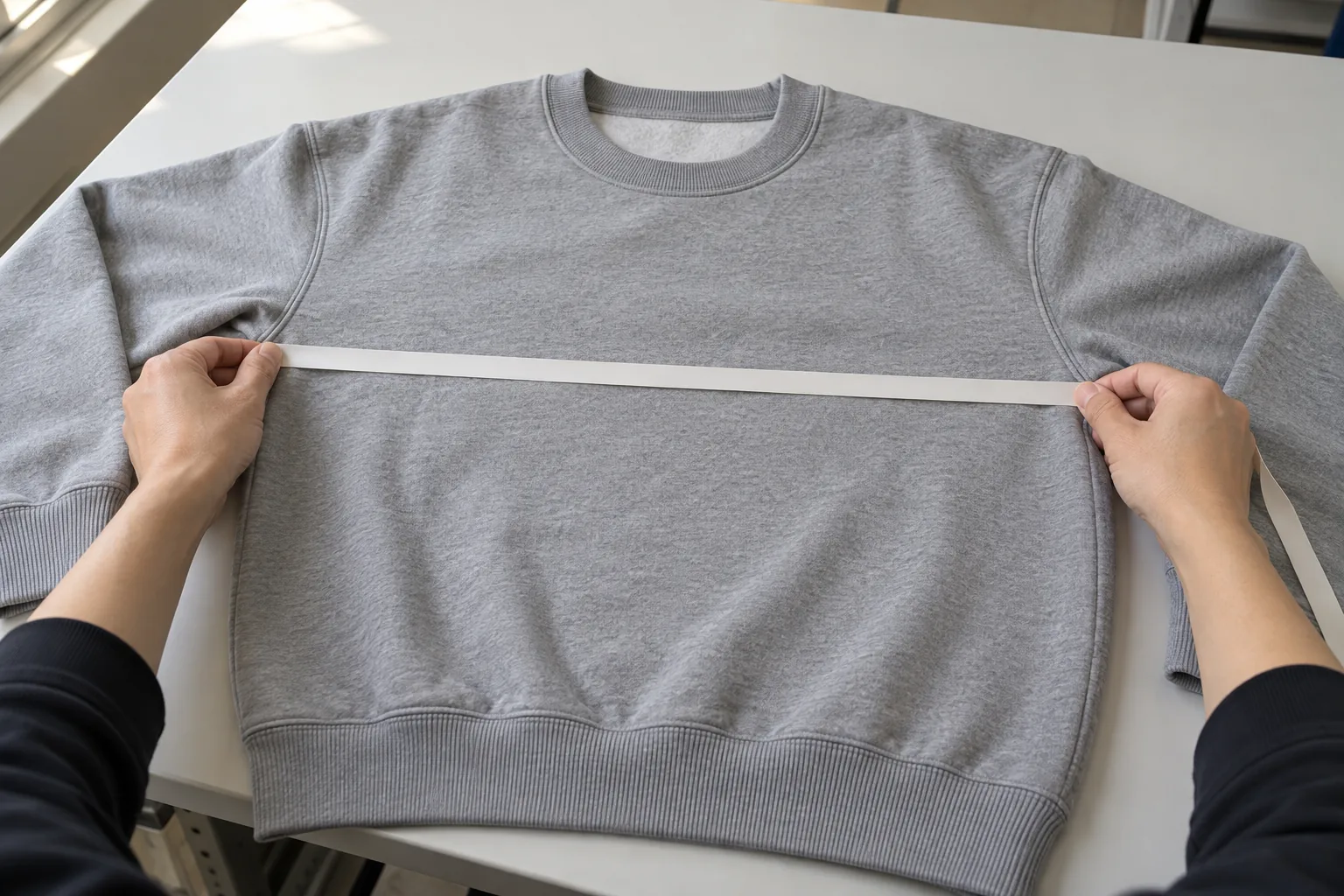
Compare two controlled options in the same base size, fabric, and finishing condition. The figures below are illustrative development targets for one sweatshirt project, not universal size recommendations. Both options could suit the same target wearer, but they express different proportions.
| Point of measure | Compact boxy option | Longer oversized option |
|---|---|---|
| Half chest, 2.5 cm below armhole | 64 cm | 67 cm |
| Body length, high shoulder point to hem | 63 cm | 72 cm |
| Shoulder width, seam to seam across back | 60 cm | 62 cm |
| Sleeve length, shoulder seam to cuff edge | 55 cm | 57 cm |
Draw each measurement path on a technical sketch. State whether the garment lies relaxed, how ribbing is positioned, and whether measurements apply before or after washing. A half-chest measurement is a flat width, not a body circumference. Keep those units distinct when discussing ease.
Do not approve this table in isolation. A wider shoulder moves the sleeve attachment outward, so an unchanged sleeve length can place the cuff farther down the hand. Check the combined shoulder-and-sleeve reach on the wearer before shortening sleeves. Otherwise, the team may solve one visible symptom while preserving the underlying proportion problem.
Hold the fitting conditions steady enough to trust the comments
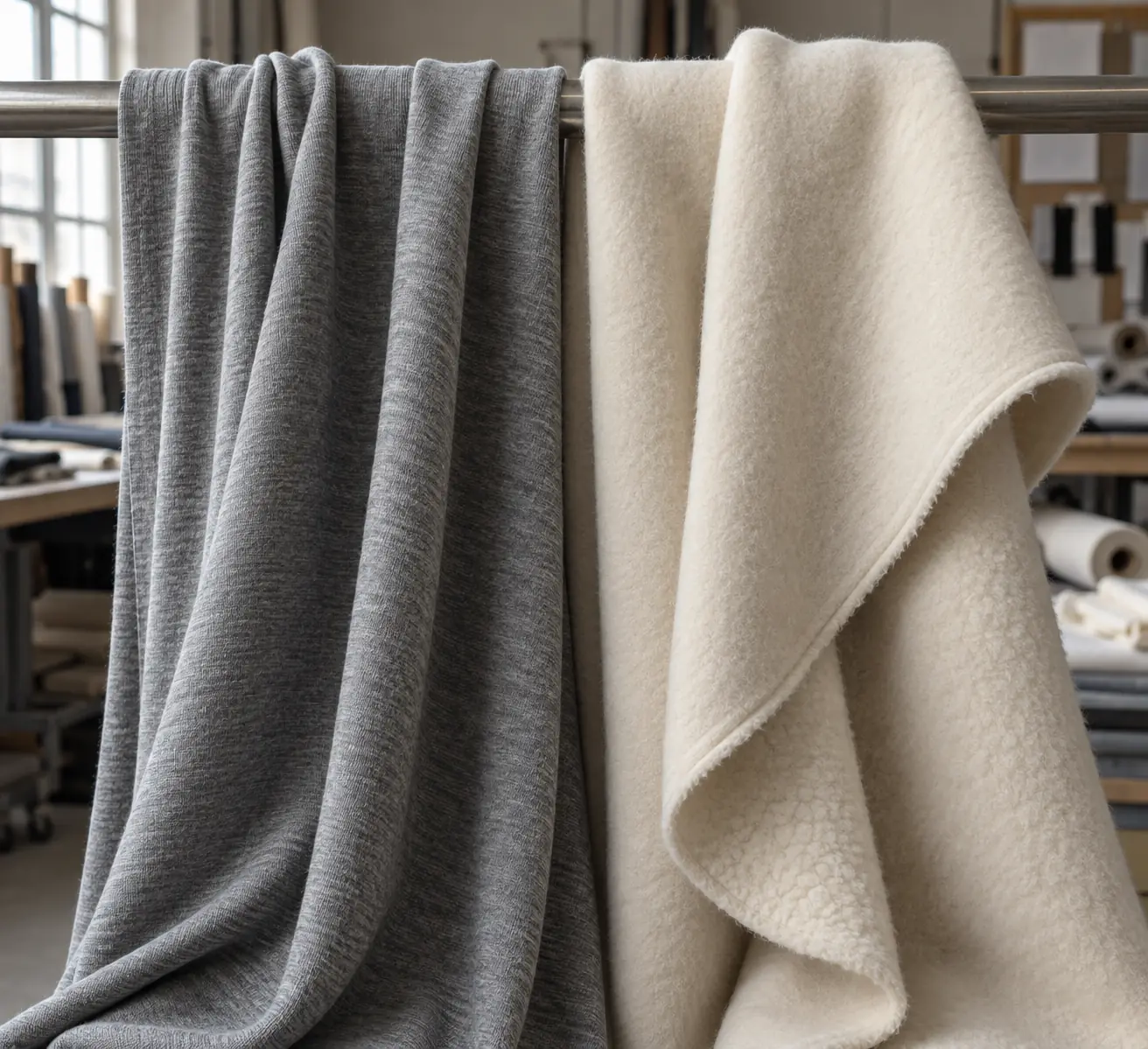
A soft jersey can collapse around the torso where a firmer fleece holds a broad outline. Reviewers may call the first sample “too slim” even when both have the same chest width. Before changing the pattern, compare fabric weight, stretch, recovery, and drape against the intended material. Record any substitution on the sample review sheet.
Use the same fit model for consecutive rounds whenever possible, recording height, chest, waist, and relevant posture observations. Photograph front, side, and back views from a fixed camera position with the camera level. Avoid wide-angle closeups that exaggerate shoulder width or shorten the legs.
Start with a neutral stance, then repeat a short movement sequence: arms forward, arms raised, seated posture, and hands in pockets where relevant. Judge a compact hem at rest and during movement separately. Some lift is unavoidable; the buyer must specify the acceptable coverage for this product.
Keep washed and unwashed assessments separate. If the selling promise depends on the washed silhouette, establish the care method and measure after the agreed drying and resting procedure. Do not compare a freshly pressed sample with a washed reference and attribute every difference to the pattern.
Rewrite taste-based reactions as bounded pattern requests
Useful comments contain an observation, a requested change, and a protected feature. Replace “too oversized” with “The hem extends below the intended upper-hip position; reduce body length by 3 cm while retaining chest width and shoulder placement.” The latter tells the pattern maker what success looks like.
For sleeve volume, specify where the excess occurs. “Sleeves are baggy” could mean upper-arm width, forearm taper, cuff circumference, or excessive length stacking above the cuff. Mark the location in a photograph and pin the proposed change on the sample. Treat pinning as evidence for pattern review, not as a complete construction instruction.
Separate dimensional corrections from design changes. If the approved half chest is 64 cm and the sample measures 66 cm, first establish why it missed the specification. Asking for a narrower design at the same time can hide a cutting, sewing, or measurement issue.
Give one person responsibility for consolidating comments. Merchandise, design, and technical teams can all contribute, but the factory should receive one resolved revision sheet. Label each request “correct to specification,” “change target,” or “investigate cause.” Preserve the previous target beside the revised value so nobody has to reconstruct the decision from chat messages.
Use a silhouette QC gate before approving the size set
Once the base-size silhouette is accepted, check whether grading preserves its character. Simply adding the same amount everywhere can make smaller sizes look disproportionately short or larger sizes excessively long. Review at least the base size and relevant size-range endpoints according to the project’s sampling plan, using wearers appropriate to those sizes.
- Measurement condition: Confirm fabric, wash state, resting procedure, and measuring method match the approved reference.
- Critical dimensions: Check chest, body length, shoulder width, armhole depth, sleeve length, and hem opening against the current specification.
- Proportion: Confirm the compact or elongated outline remains visible across the reviewed sizes.
- Movement: Check forward reach, seated comfort, hem lift, and cuff position without changing the agreed underlayer.
- Construction influence: Look for shoulder seam distortion, uneven rib attachment, twisting side seams, or puckering that changes how the garment hangs.
- Approval record: Attach dated measurements and photographs to the exact sample identifier and specification revision.
Agree tolerances per point of measure before production. As an indicative example only, a project might discuss ±1 cm for flat chest and body length, with tighter limits for smaller details; confirm achievable limits for the actual fabric and construction. A tolerance allows manufacturing variation around an approved target. It does not authorize a new silhouette.
Consider combined variation too. A sample at the widest accepted chest and shortest accepted length may look noticeably boxier than the reverse combination. Review these boundary conditions with the supplier instead of assuming every individually acceptable measurement produces an acceptable overall shape.
Questions buyers ask when boxy and oversized overlap
Can we get a boxy fit by shortening an existing oversized pattern?
Possibly, but inspect pocket position, armhole depth, hem opening, and sleeve balance first. Shortening only the body can leave a kangaroo pocket too close to the hem or create an awkwardly deep upper body. Test the revised outline in a sample before treating the change as complete.
What if two reviewers prefer different amounts of ease?
Return to the target customer and silhouette statement. Ask each reviewer to identify a specific functional or visual failure. If both samples meet the brief, the remaining choice is a merchandising decision. Record who owns that decision rather than averaging incompatible measurement requests.
Should every size have the same width-to-length relationship?
No fixed ratio guarantees a consistent appearance. Body proportions and preferred coverage change across a size range. Use width and length comparisons to flag unexpected grading shifts, then verify the result on appropriate wearers. Preserve the design’s intended appearance rather than enforcing a mathematical ratio alone.
What should we send StitchQuote for the next fit round?
Send the current specification, sample identifier, wearer measurements, marked photographs, and one consolidated revision sheet. StitchQuote provides cut-and-sew, private label, sampling, fabric and trim sourcing, branding, and QC before packing. A 7-day sample is available for standard styles with confirmed specifications and available materials; complex styles, custom washes, and custom-developed fabrics take longer. MOQ for most categories starts from 50 pieces per style; denim starts from 100.
Related reading and project support:
- Prepare a tech pack with clear measurement instructions
- Review sampling and MOQ considerations
- Explore hoodie fit for streetwear brands
- Contact StitchQuote about your fit revision
Request a manufacturing quote
Share your product type, quantity range, and destination. We usually reply within one business day.