Custom Streetwear, Casualwear & Denim Manufacturer•MOQ 50 pcs•Denim MOQ 100 pcs•7-Day Sample Available

How to Brief Fit Preferences Without Overwriting the Tech Pack
Learn how to brief fit preferences without conflicting with the tech pack, so your factory can quote faster, reduce rework, and keep sample approvals aligned.

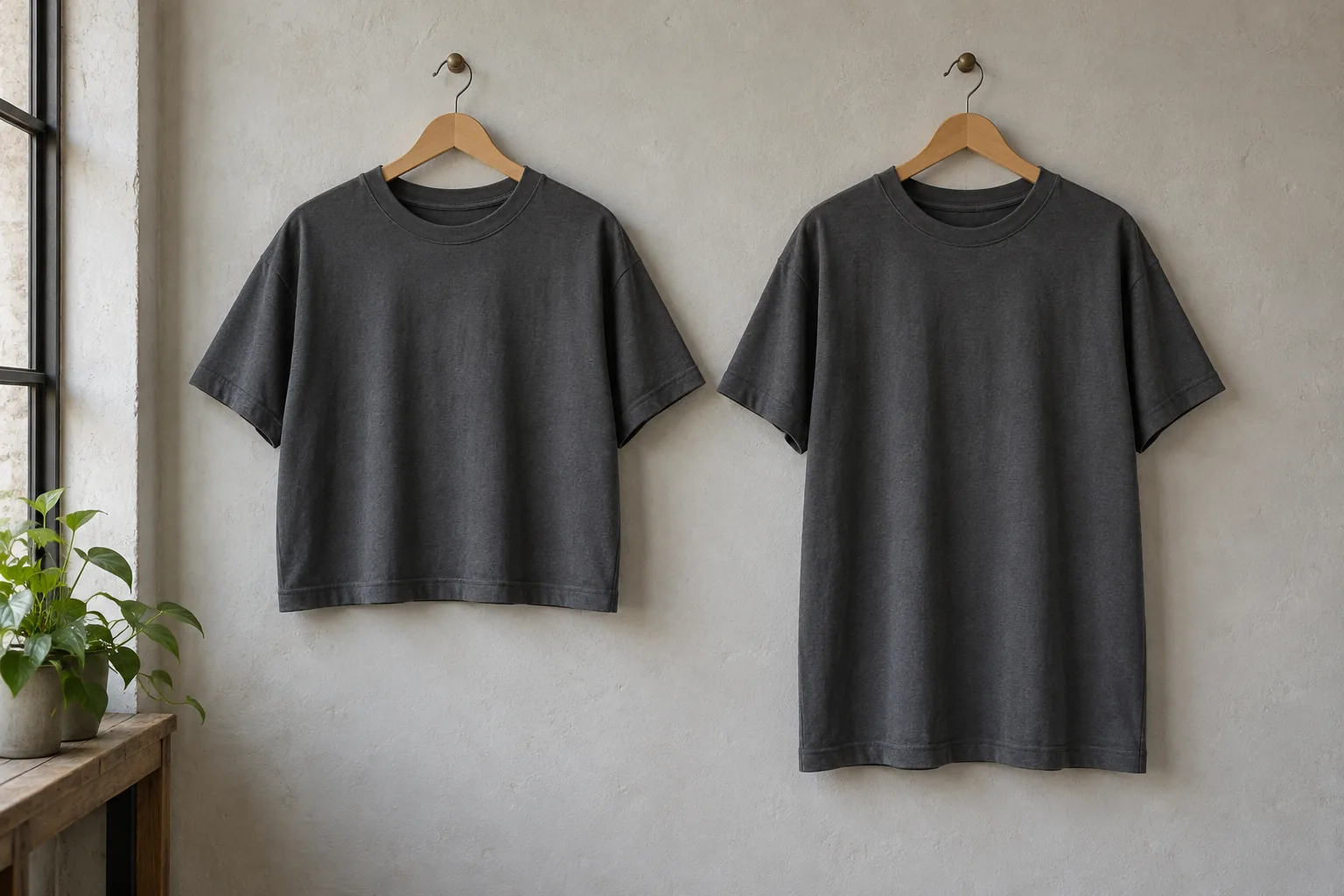
A boxy sweatshirt and an oversized sweatshirt can have the same chest measurement yet look completely different on the wearer. One might sit wide and square above the hip; the other might hang below it with longer sleeves and deeper armholes. Telling a sample room to make either garment “more relaxed” leaves the most important decisions unresolved.
To brief fit preferences without overwriting the tech pack, treat silhouette feedback as a controlled proposal against an identified sample. Explain which proportions create the intended look, which dimensions must stay fixed, and what evidence will decide approval. The following approach is for buyers comparing boxy and oversized directions before committing a revised pattern to production.
Choose the proportion you want shoppers to notice
Boxy describes a relationship between width and length, not simply a large chest. A wide body with a comparatively short hem position often reads as boxy, especially when the fabric holds away from the torso. Oversized describes deliberate volume beyond the intended wearer’s body dimensions. That volume may extend through the chest, shoulder, sleeve, and body length, but it does not have to increase equally everywhere.
These descriptions overlap. A garment can be both boxy and oversized. Your brief should therefore identify the dominant visual result: “broad torso ending at the upper hip” is more useful than asking the factory to choose between two labels. Specify the intended wearer’s body measurements and base size so the team knows how much ease the sample actually provides.
Write one silhouette sentence and two limits. For example: “Create a wide, square jersey tee with a visible shoulder drop; retain the approved neckline and keep the hem above the fullest hip.” Those limits prevent a request for width from quietly becoming a longer, deeper garment throughout.
Turn the silhouette into a small set of linked measurements
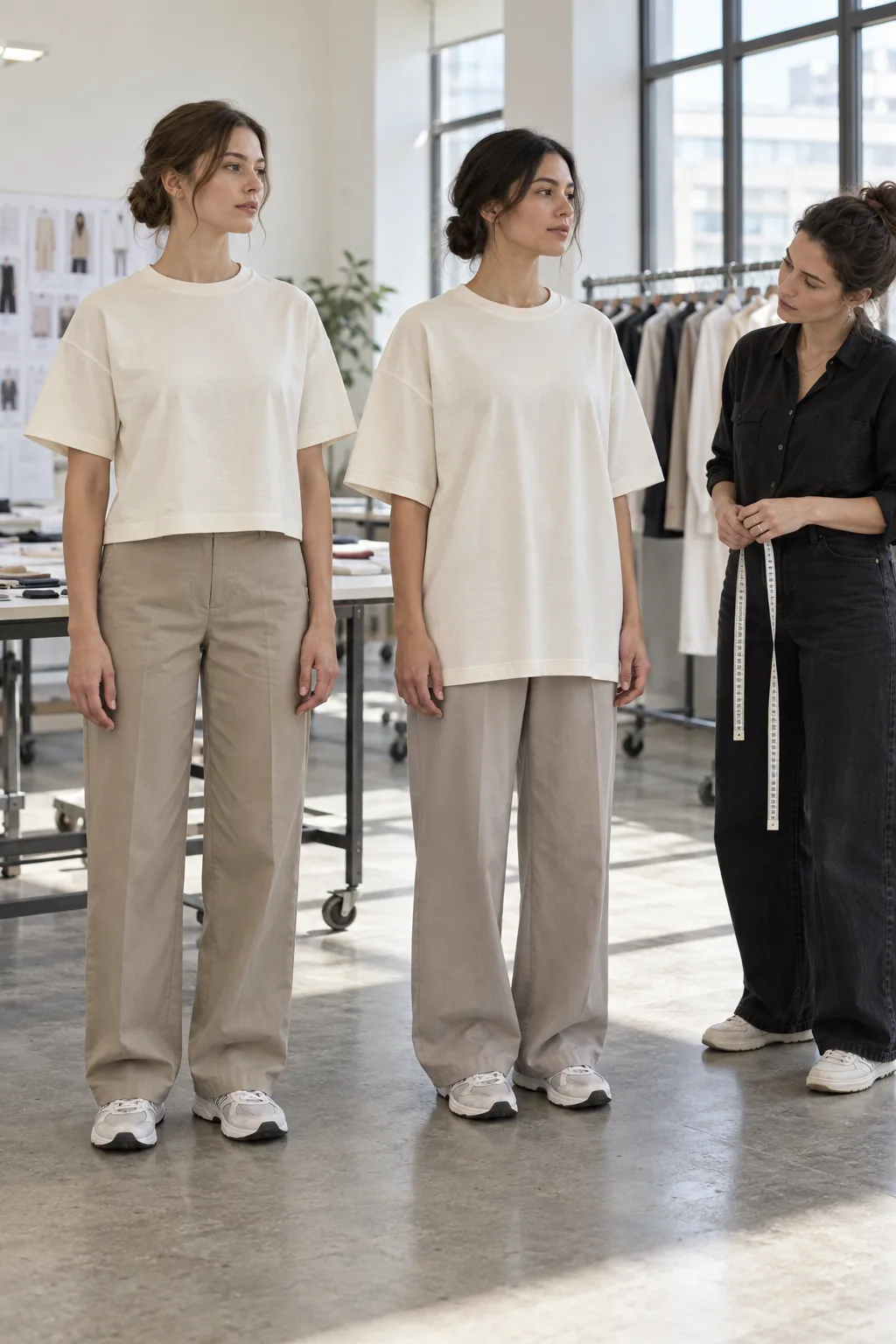
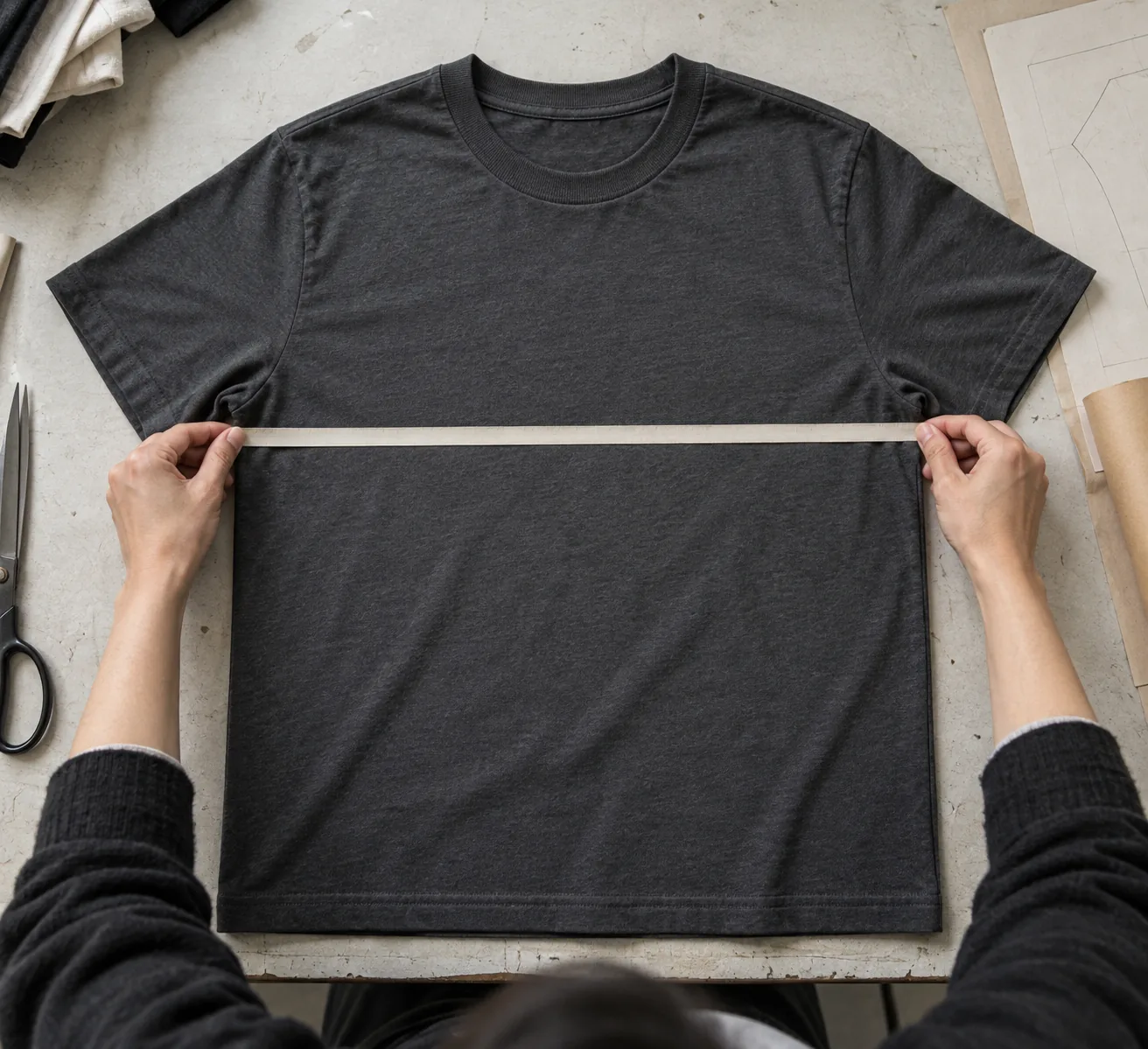
Use the existing point-of-measure definitions rather than introducing a second measuring system in comments. If body length is measured from high point shoulder, keep that origin. If half chest is taken at a defined distance below the armhole, show that position in the sample photo. Otherwise, two accurate measurements can still describe different locations.
The example below is an illustrative comparison for one adult jersey top, not a recommended size chart. Dimensions are finished-garment targets in centimetres; fabric, wearer, and project requirements must determine the actual values.
| Point of measure | Boxy proposal | Longer oversized proposal | Fit implication |
|---|---|---|---|
| Half chest | 62 | 62 | Equal torso circumference |
| High point shoulder to hem | 65 | 73 | Different hip coverage |
| Shoulder seam to seam | 58 | 58 | Equal nominal shoulder width |
| Sleeve length from shoulder seam | 23 | 26 | Different upper-arm coverage |
Do not infer sleeve reach from sleeve length alone. Moving the shoulder seam outward changes where the sleeve starts. Ask the pattern team to assess the combined shoulder and sleeve result on the wearer, including elbow position and cuff location for long sleeves. Armhole depth and sleeve width also need review when additional torso width changes the underarm shape.
Record both the sample’s actual measurement and the proposed target. “Shorten body by 2 cm” is ambiguous if the sample already measures 1 cm below its specification. “Sample measures 67 cm; trial target 65 cm” makes the instruction traceable without silently changing the production chart.
Hold fabric behavior steady while testing shape
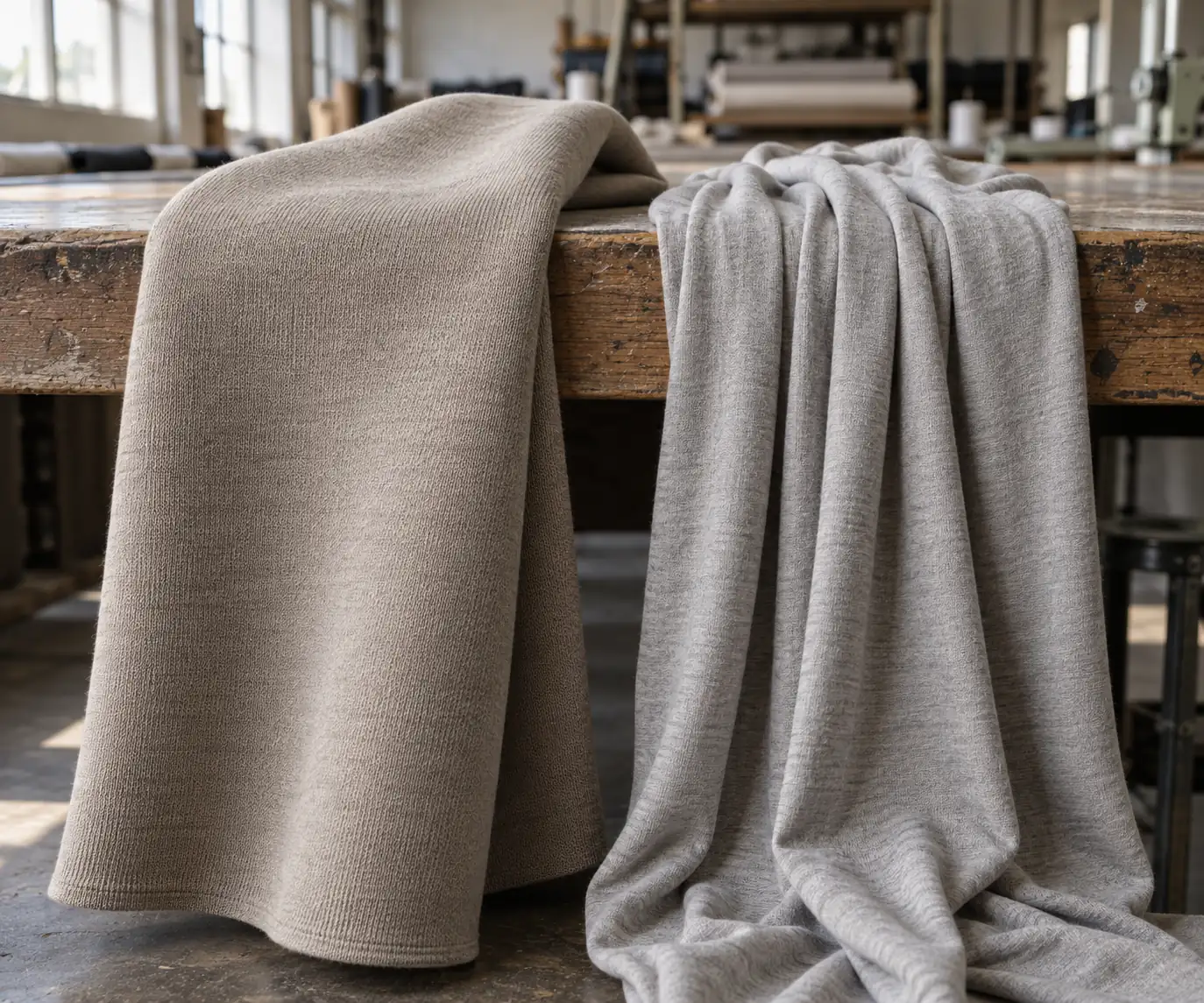
A silhouette comparison becomes unreliable if the two samples use different fabrics. A compact jersey may support a square outline, while a softer jersey of similar weight can collapse toward the body. Fabric weight alone does not establish drape. Knit structure, finishing, stretch recovery, and washing can change the result even when the pattern remains identical.
For a proportion trial, use the same fabric reference, finishing route, and evaluation condition wherever possible. Identify whether each sample is unwashed or washed according to the proposed care instructions. Compare measurements in the same relaxed condition, and agree how long garments should rest after unpacking or laundering before measuring.
If the approved fabric is unavailable, label the substitute as a limitation in the fit report. You may be able to approve neckline placement or pocket position while withholding final approval of body stand-away and hem behavior. Avoid compensating for an unusually limp substitute by repeatedly widening the pattern; the correction may become excessive when the intended fabric returns.
Send a fit decision sheet with a clear revision boundary
Attach one decision sheet to the current tech pack. Its header should identify the style, sample round, base size, fabric reference, and tech-pack revision being evaluated. Mark the sheet as proposed changes until the responsible buyer approves them. This lets the sample room investigate a new direction without treating every exploratory comment as a permanent specification.
Separate each entry into observation, proposed action, and protected feature. For example: “Front hem catches on the hip during walking; trial an additional 1 cm at each half-hem edge in the flat measurement, subject to pattern review; retain the approved body length.” A sketch should clarify the intended total width change whenever edge-based wording could confuse the pattern team.
Ask the technician to flag dependent adjustments before cutting. Widening a hem may affect side-seam shape; reducing armhole depth may require sleeve changes. Once the revised sample is accepted, transfer approved values and construction decisions into a newly numbered tech pack. Archive the superseded sheet and state which file controls the next sample or production run.
Check the square outline in movement and across sizes
A front photograph with arms down cannot establish whether the fit works. Evaluate the garment on the intended body profile, wearing consistent underlayers. Photograph front, side, and back views, then check reaching forward, raising arms, and sitting. A short, wide top may expose more torso during movement even when its resting hem position looks correct.
- Measurement control: Check chest, body length, shoulder, sleeve, armhole, and hem against the approved revision using the documented methods.
- Project tolerances: Agree tolerances by measurement. An illustrative ±1 cm body-length tolerance may have a noticeable effect on a short top; confirm an achievable limit before approval rather than assuming it applies universally.
- Balance: Inspect whether the hem tilts, the neckline pulls backward, or excess fabric gathers at the underarm. Record the wearer posture and view where the issue appears.
- Recovery and wash: Recheck the outline after the agreed laundering procedure, including seam twisting and rib recovery where relevant.
- Size coverage: Assess selected smaller and larger sizes. Confirm that the grading preserves intended coverage and ease instead of merely enlarging every dimension at the same rate.
Keep manufacturing deviation separate from a design change. If a sample exceeds the approved length tolerance, first establish its correct appearance at the intended length. Otherwise, a buyer may shorten the specification to compensate for a sewing or measurement error and create a new problem in the next round.
Questions that come up when boxy becomes oversized
Can we use one size larger as the oversized reference?
Use it as a visual reference, but document what you like about it. Sizing up also changes neckline, length, shoulder, and potentially trim positions. A dedicated oversized fit may retain the original neck opening while adding torso volume. Identify those differences before asking for a new pattern.
Does a boxy top always need a tight hem rib?
No. A rib that draws the hem inward can create a bloused shape rather than a straight square outline. If that is the intention, specify the relaxed rib opening and evaluate its stretch and recovery. For a straighter fall, review the relationship between body width and finished hem opening.
When should we request two competing samples?
Request two when the team genuinely needs to compare different proportions on the same wearer. Keep fabric and construction consistent, identify each option, and agree the decision criteria before sampling. Avoid changing fabric, length, and sleeve shape independently in both options, because the result becomes difficult to diagnose.
Can a quick sample settle the final fit direction?
It can support a decision when specifications and materials are ready. StitchQuote offers a 7-day sample for standard styles with confirmed specs and available materials; complex styles, custom washes, and custom-developed fabric take longer. Confirm the scope before planning a fit review. MOQ for most categories starts from 50 pieces per style; denim starts from 100. StitchQuote provides sampling, cut-and-sew, private label, fabric and trim sourcing, branding, and QC before packing.
Related reading and project support:
- Prepare the technical file that holds your approved fit
- Review hoodie proportions for streetwear
- Check sampling and minimum-order planning
- Discuss your fit sample with StitchQuote
Request a manufacturing quote
Share your product type, quantity range, and destination. We usually reply within one business day.