Custom Streetwear, Casualwear & Denim Manufacturer•MOQ 50 pcs•Denim MOQ 100 pcs•7-Day Sample Available

Why Packaging Decisions Should Follow Product Stability, Not Mood Boards
Use packaging after product stability apparel to compare private label decisions more clearly, protect brand consistency, and keep product, trims, and commercial.

A presentation box can look right on a mood board and still be wrong for the garment that reaches packing. A sweatshirt may gain bulk after its fabric changes, while a denim wash revision may alter the finished hand and folding behavior. If packaging dimensions were approved earlier, the buyer inherits a second development problem just as production needs a clear release.
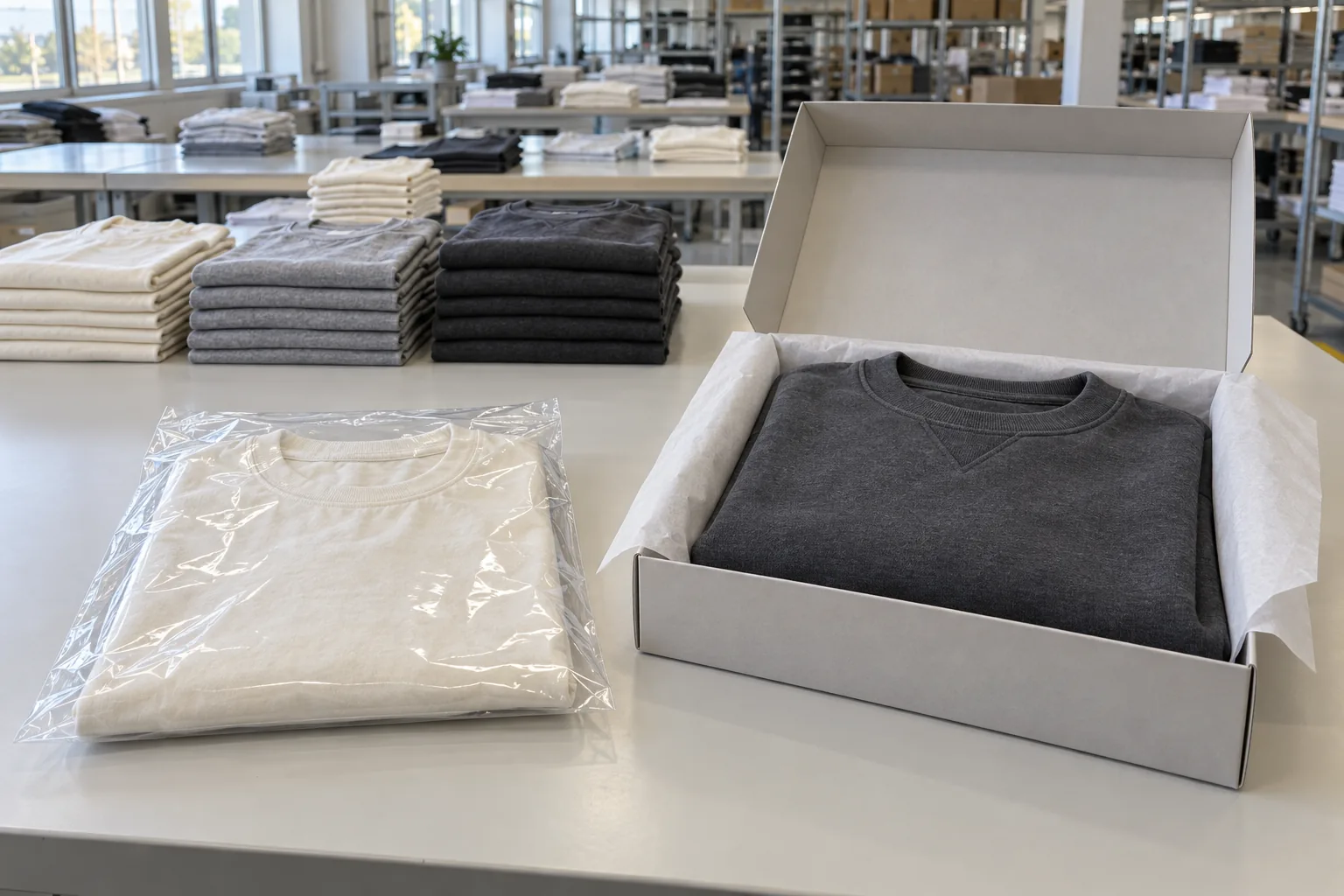
The useful choice is between a protective polybag and a retail-ready presentation built around a stable product. Decide what the sales channel needs early, but commit to packaging dimensions and printed quantities only when the garment can support them. This approach lets brand buyers separate necessary protection from presentation features that depend on final fit, finishing, and assortment.
Start with the destination of the packed unit
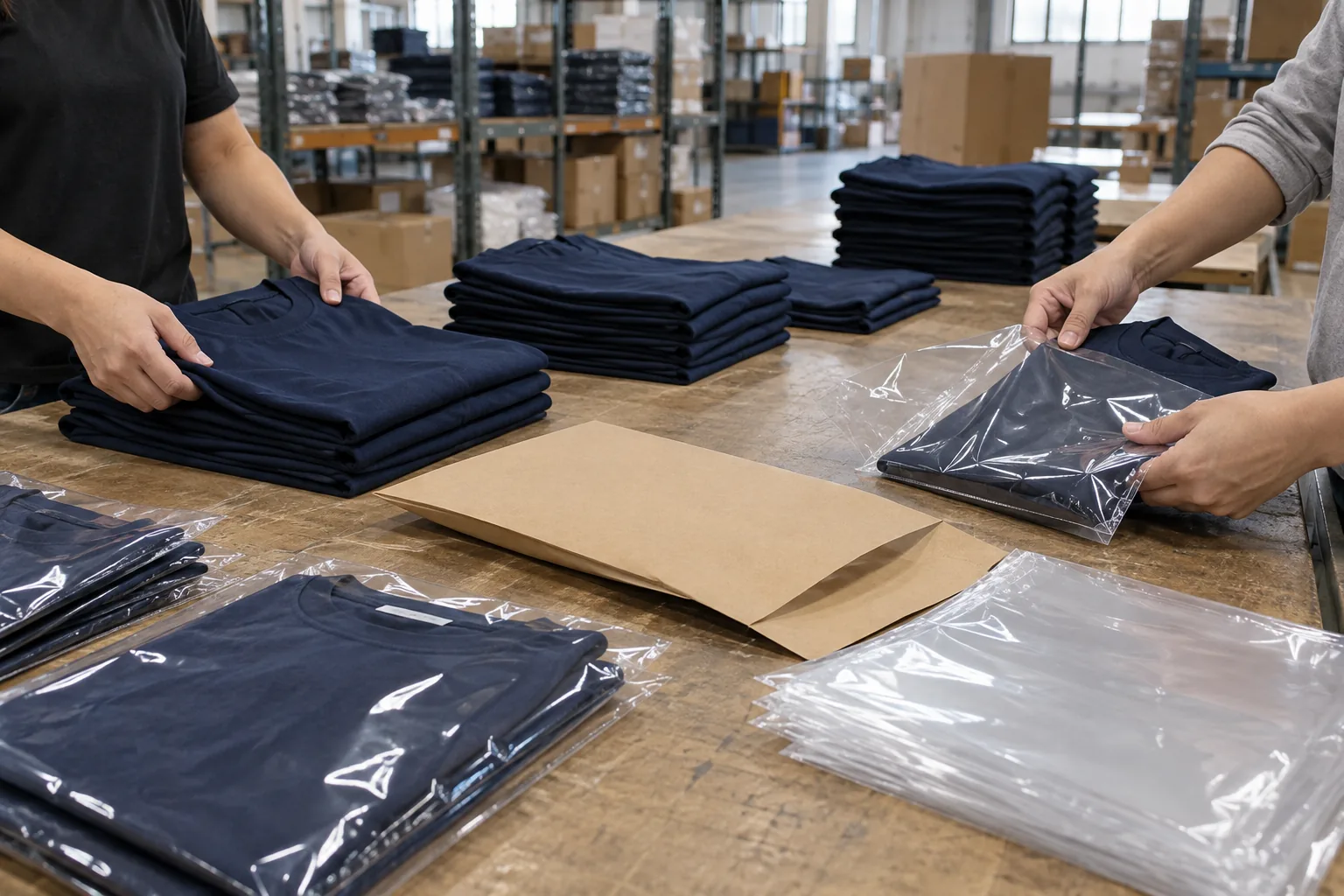
Ask who first opens or handles the unit. A fulfillment warehouse may need a protected garment with a readable stock identifier. A shop may need a presentation that can go directly onto a shelf. A customer receiving a gift order may encounter the packaging before seeing the product.
These destinations can justify different pack formats for the same style. A direct-to-consumer tee might travel in a simple inner bag inside an outbound mailer; a folded boutique assortment might need a sleeve and a specific display fold. Neither format automatically replaces transit protection. Confirm what happens between factory packing, warehouse receiving, and the final handover before specifying decorative components.
A polybag solves protection before it solves presentation
A polybag can contain the garment, help limit handling dirt, and keep a folded unit together. It is often a practical starting point while presentation details remain open. It still needs a specification: usable dimensions, material, closure, label position, and any destination-specific warnings or material requirements agreed with the buyer.
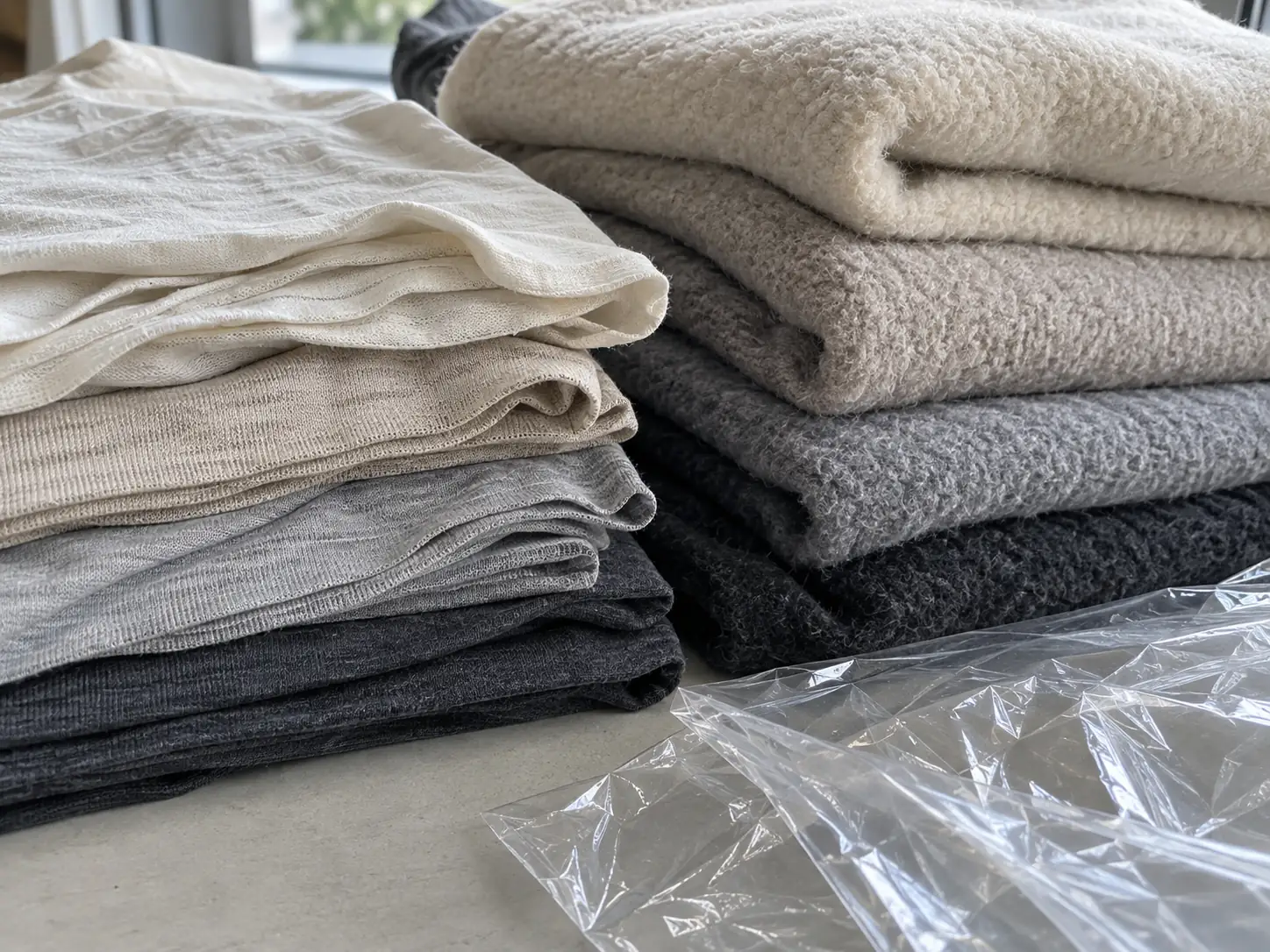
A bag selected around a lightweight sample may become tight after a heavier fabric is approved. Excessively loose packaging can let the fold shift and obscure identifiers. Test the actual finished garment, including its labels and hangtag, rather than estimating from flat chest measurements. For decorated pieces, check whether the chosen fold puts pressure on a print or pushes embroidery against a visible surface.
Retail-ready formats need a stable garment envelope
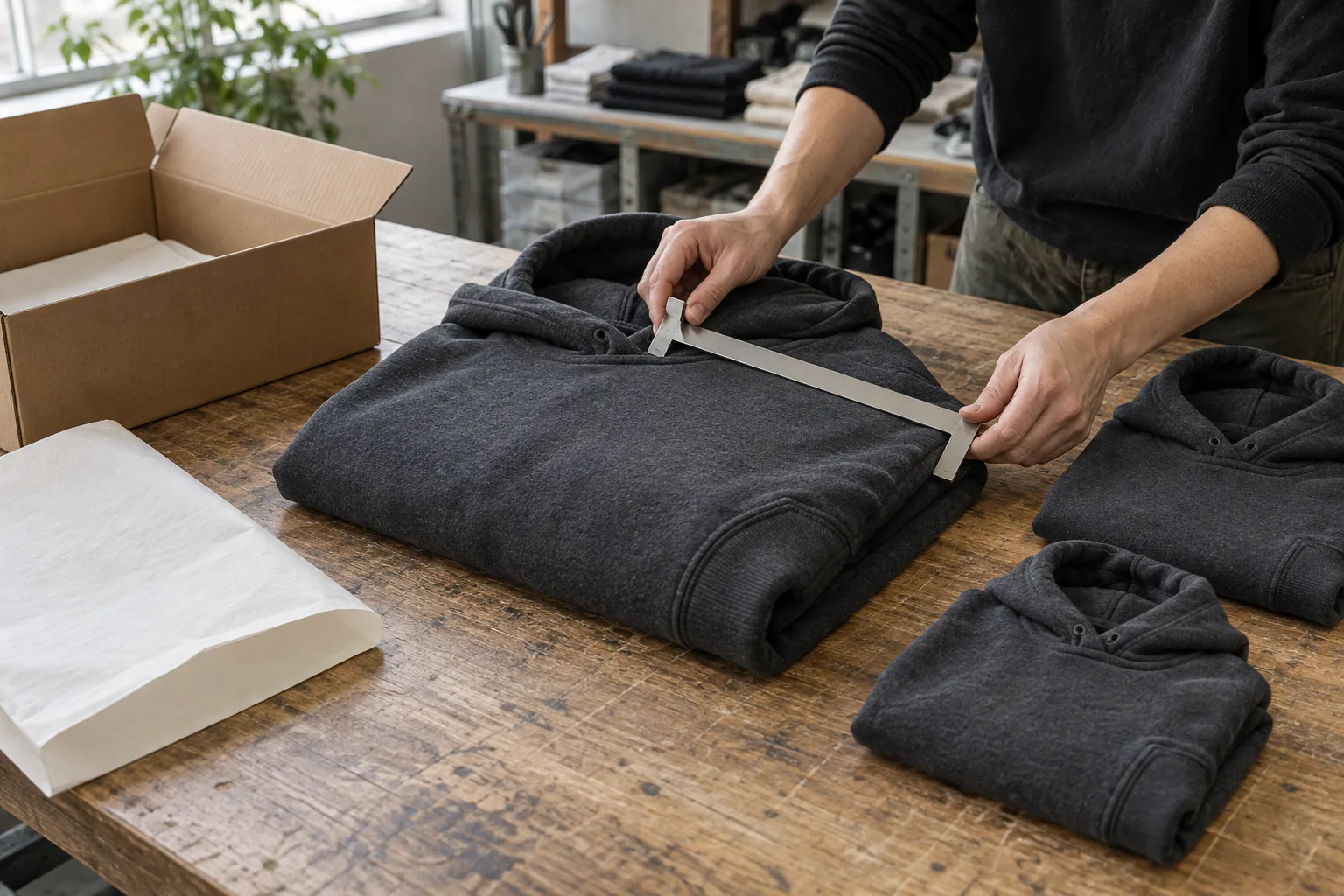
A sleeve, rigid box, or fitted insert depends on the garment’s folded width, length, and thickness. Together these dimensions form the garment envelope. A brushed hoodie can occupy more space than an unbrushed development sample even when both meet the same finished measurements.
Retail presentation also creates dependencies beyond size. The display face may need the chest artwork centered, a hangtag hidden, or a size marker accessible without opening the package. Those choices affect fold instructions and packing work. Request a physical pack mockup using the approved garment and proposed components before treating an attractive rendering as production approval.
Test the smallest and largest sizes and any materially different fabric or finish. One box across a range can simplify ordering, but it should not crush larger units or leave smaller units loose without an agreed solution.
Record folded measurements with a repeatable method
Add a packing measurement sheet to the garment approval record. Lay the finished garment on a flat surface, fasten it as instructed, and fold it using the approved reference. Measure width across the folded body, length from the top fold to the bottom edge, and thickness at the highest point, including a hood, waistband, or layered seam where applicable. Record the size and fabric version beside each result. Measure without pressing the garment flat unless a defined compression method is part of the agreed packing process.
Fabric weight is useful context, but GSM alone cannot predict package depth. As an illustrative comparison, a 180 GSM jersey tee and a 320 GSM brushed fleece sweatshirt require different folding trials; neither weight is a StitchQuote stock specification. Brushing, knit structure, rib trims, and embroidery can change the packed profile. Use the finished sample after the specified wash or finishing process, and record fabric composition and GSM so a later material substitution triggers a meaningful review.
Set tolerances against the approved mockup rather than borrowing garment measurement tolerances. A buyer might propose a folded-width target of 280 mm with a plus-or-minus 5 mm allowance as a trial specification, then check whether units at both limits fit the sleeve cleanly. This is an example for agreement, not a universal acceptance standard. Record usable internal packaging dimensions separately from external dimensions, and check that seams, closures, or inserts do not reduce the available space.
Work through the quantity split before ordering components
Consider an illustrative order of 120 sweatshirts in one style: 80 units for online fulfillment and 40 for store display. The buyer specifies protective bags for the online allocation and sleeves with suitable transit protection for the store allocation. Build a packing matrix listing size, color, destination, format, and quantity for every row. The row totals must reconcile to 120 garments, while the sleeve requirement follows the 40-unit store allocation. Any extra components for setup or replacements should be agreed separately rather than silently added to the garment quantity.
Use this matrix to compare a shared sleeve design with size-specific versions. Separate artwork versions, print setup, component minimums, manual folding time, and additional carton volume can all affect cost. Ask the supplier to identify which costs change with quantity and which are incurred once. If a component minimum exceeds the immediate requirement, document who owns the remaining stock, where it will be stored, and whether future garment or artwork changes could make it unusable.
Before packing the full order, check a first packed unit from each format against the approved reference. Verify the garment label against the external identifier and scan any required barcode using the receiving team’s agreed system. Reconcile the completed carton counts to the packing matrix, and record exceptions such as a missing sleeve or incorrect size label for correction before release.
Release packaging in stages, with a clear hold point
Product stability does not mean delaying every packaging conversation. Establish channel requirements during development, then release irreversible packaging commitments against evidence. Use a compact approval record to distinguish decisions that can proceed from those awaiting a finished sample.
| Product status | Packaging work to advance | Commitment to hold |
|---|---|---|
| Fabric and fit under review | Choose sales-channel requirements and compare pack concepts | Final fitted dimensions |
| Finished garment approved | Test folds, closures, and size coverage with mockups | Bulk custom components until pack approval |
| Pack mockup approved | Confirm artwork, identifiers, quantities, and packing instructions | Shipment release until packing checks pass |
Name the person authorized to release each stage. If the garment changes afterward, reopen the affected packaging checks. A revised wash may require another fit-in-pack trial; a renamed color may require new identifier artwork even when the bag dimensions remain valid.
Compare the cost of a complete packed unit
Compare proposals using the same scope: packaging materials, artwork setup, assembly steps, labels, carton arrangement, and expected handling at the destination. A lower component quote may involve additional warehouse work if garments arrive in a format the receiving team must rebuild.
Ask separately about garment and packaging minimums. StitchQuote’s MOQ for most categories starts from 50 pieces per style, while denim starts from 100 pieces per style. Those garment thresholds do not establish the order quantity for a custom packaging component. Confirm component quantities, unused-material handling, and replenishment terms per project.
Keep sample timing separate, too. A 7-day sample is available for standard styles with confirmed specifications and available materials; complex styles, custom washes, and custom-developed fabric take longer. This does not establish a delivery date for custom boxes or a complete retail presentation.
Inspect the pack as a repeatable production operation
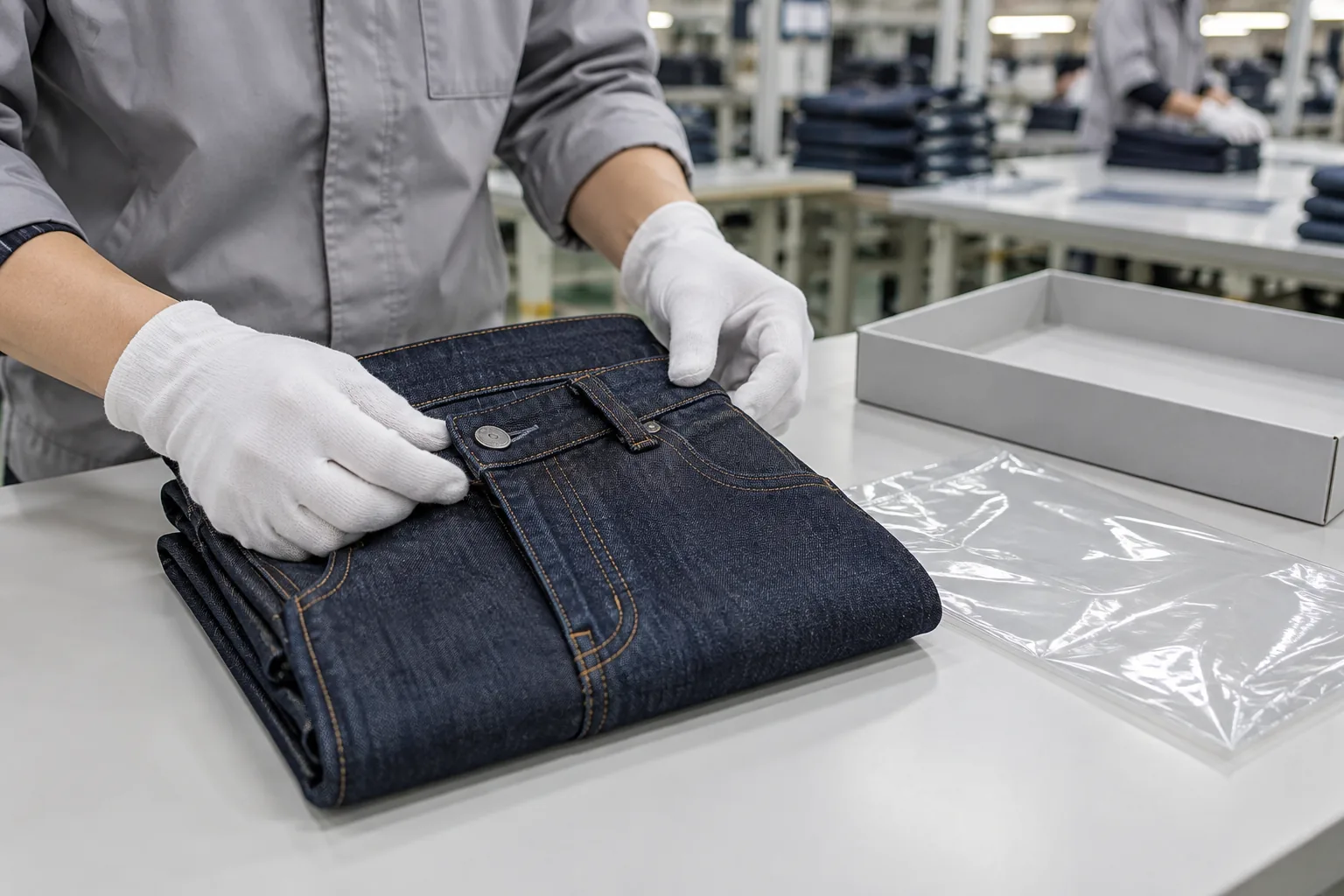
StitchQuote’s services include cut-and-sew, private label, sampling, fabric and trim sourcing, branding through woven labels, prints and embroidery, and QC before packing. Define packaging checks separately so the buyer’s presentation requirements become explicit acceptance points.
- Product identity: Match garment style, color, and size to the approved pack identifier.
- Condition: Check garment cleanliness and dryness, plus damaged or contaminated packaging components.
- Fold and fit: Compare with the approved reference; confirm the closure works without force and decoration is not trapped awkwardly.
- Presentation: Verify tag placement, display orientation, and the agreed position of inserts or sleeves.
- Handling: Open and reclose trial units where relevant, and inspect for shifting or creasing after agreed handling checks.
- Carton arrangement: Confirm unit counts and assortment against the packing instructions, with identifiers accessible as required.
Photograph an accepted packed unit and record its component versions. Where a handling test is needed, agree the method and pass criteria before inspection; an informal squeeze of one box cannot establish transit performance.
Questions buyers ask before committing to retail presentation
Can one style use polybags for online orders and sleeves for stores?
Yes, provided the order clearly allocates quantities to each format. Give each packing variant a distinct instruction and reconcile those quantities before packing begins.
Should a box be sized around the middle garment size?
Use it as an initial mockup only. Check the range extremes and bulky variants before approval, then decide whether one format or multiple sizes will work.
What if a wash changes after packaging approval?
Check the revised finished garment for folded dimensions, surface condition, and interaction with pack materials. Release existing packaging only after the affected checks pass.
What belongs in the brief for a packaging discussion?
Include the sales channel, approved garment reference, size range, desired fold, pack components, identifier requirements, and destination handling instructions. Mark unresolved items clearly so a concept is not mistaken for a released specification.
Related reading
- Prepare a tech pack with clear approval references
- Review sampling and garment MOQ planning
- Explore private-label clothing manufacturing
- Discuss your garment and packaging brief
Request a manufacturing quote
Share your product type, quantity range, and destination. We usually reply within one business day.