Custom Streetwear, Casualwear & Denim Manufacturer•MOQ 50 pcs•Denim MOQ 100 pcs•7-Day Sample Available

How to Read Shipping Timing Without Misreading Factory Timing
Use this factory-side guide to compare read shipping timing without misreading factory timing more clearly across supplier fit, quote scope, approvals, and timing.

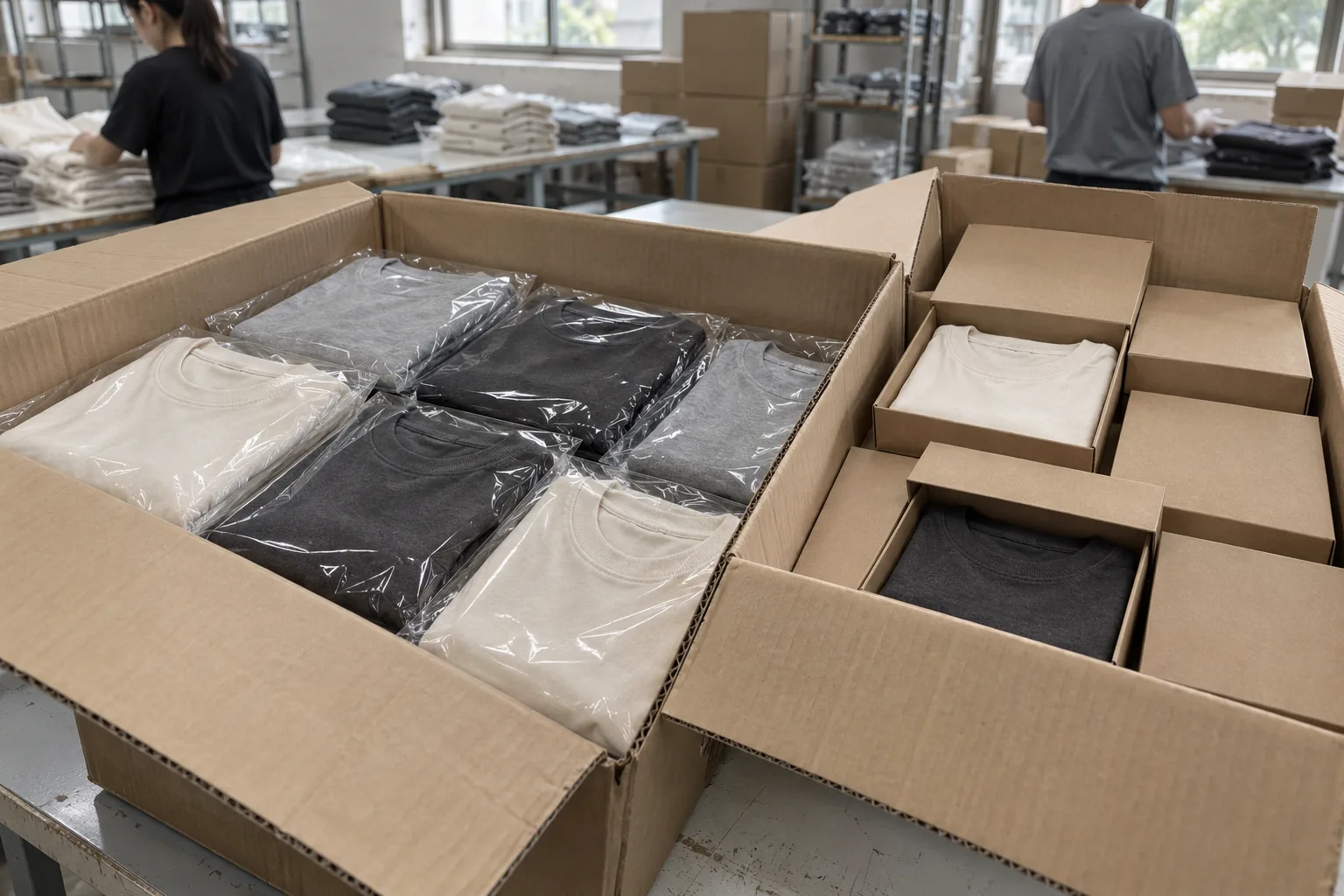
A shipping estimate can look reassuring while hiding an unfinished packing job. For an apparel buyer, “production complete” may mean garments have left the sewing line; for a retailer, usable inventory may mean folded units with approved hangtags, scannable barcodes, correct size identification, and cartons arranged for direct receipt. Those are different milestones, even when they concern the same order.
To read shipping timing accurately, start with the packaging route: individual polybags for warehouse handling or a retail-ready presentation with additional assembly and checks. The useful question is not simply when the clothes will be finished. It is what must be inside each sealed carton before a forwarder can collect it, and who must approve that condition.
Choose the receiving route before accepting a dispatch date
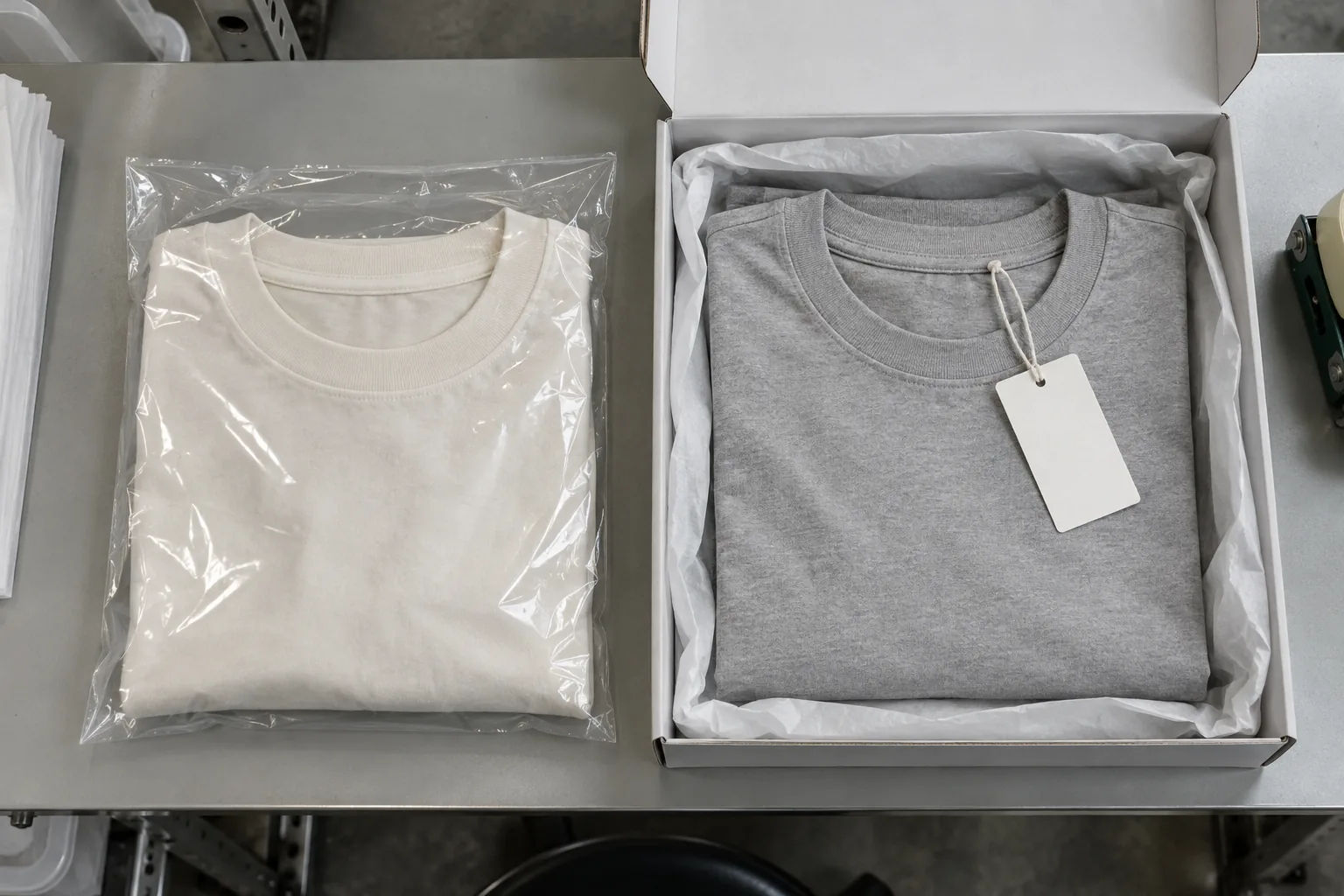
A basic polybag route generally protects an individual garment and identifies its variant. It can suit a brand whose warehouse will add promotional inserts or prepare customer orders later. Retail-ready packing might include a precise fold, tissue, a hangtag attached at an agreed point, a price ticket, a belly band, or a presentation box. Define the actual components; the phrase “retail-ready” alone is not a packing instruction.
For example, a heavyweight tee sent to a fulfillment warehouse may need a clear bag and an outward-facing SKU label. The same tee sent to a store could require a fold that reveals the chest graphic, a hangtag tucked behind the neckline, and size-grouped cartons. A protective bag can also be part of the retail-ready route, so treat these as operating requirements rather than mutually exclusive materials.
Ask the receiving team for its rules before choosing the route. Confirm whether units arrive individually packed, whether mixed-size cartons are allowed, and whether carton identifiers must match an advance shipment notice. Work performed upstream can reduce warehouse handling, but it becomes part of the factory release schedule.
Turn the presentation into a controlled packing specification
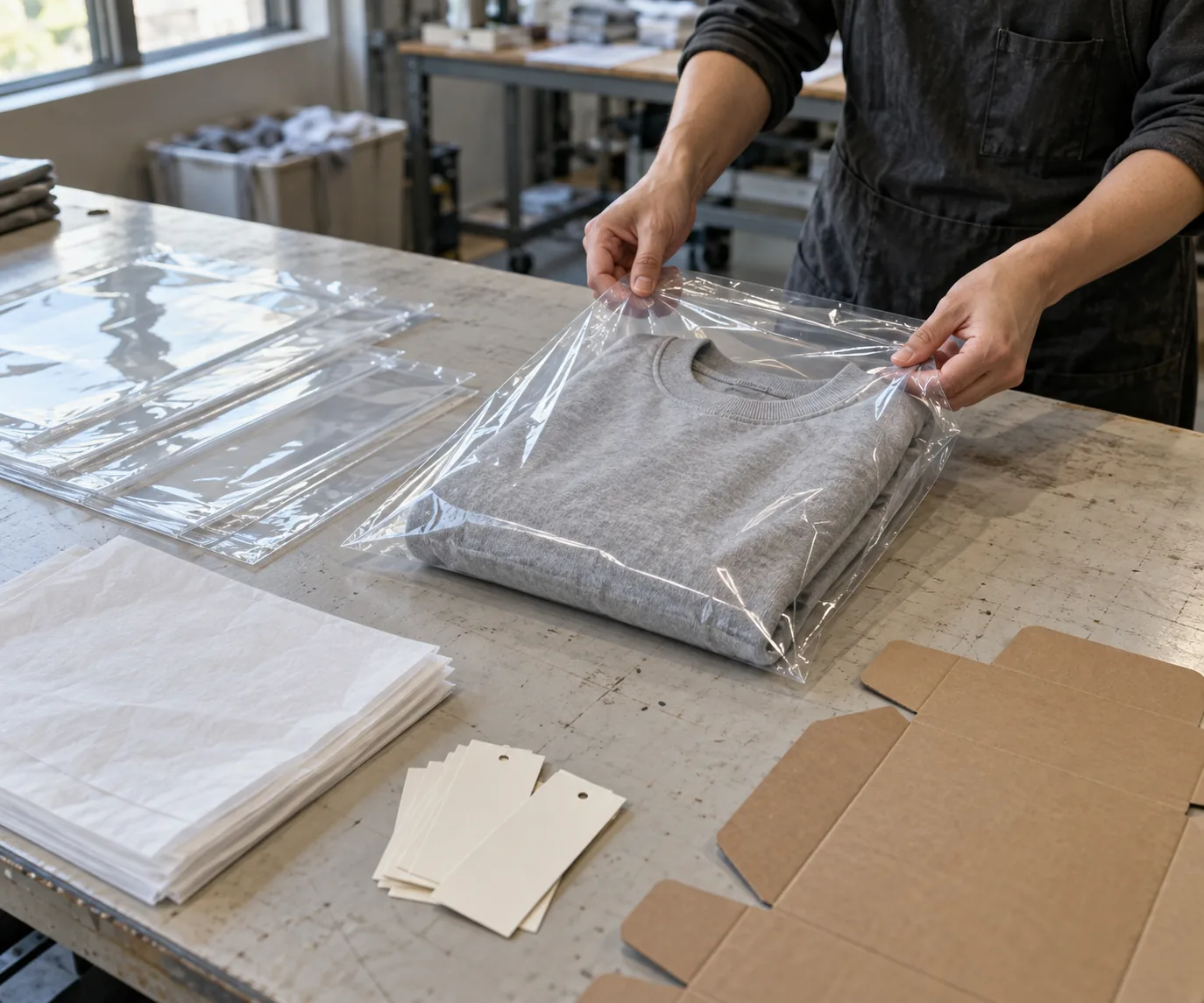
Create a packing sheet alongside the garment specification. Include the folded dimensions, bag dimensions and closure, label location, hangtag attachment point, component references, and units per carton. State whether dimensions are internal or external. A box that fits a light jersey sample may compress a bulk fleece garment or leave its lid under tension.
Use measurable acceptance points. As a proposed project specification, a folded tee could target 28 by 35 cm with a tolerance of ±1 cm, subject to a packing trial. That is an example, not a universal factory standard. Check that the largest size fits without distorting the garment and that the smallest size does not move enough to conceal its identifier.
Record label artwork revisions and the data source for each SKU. A physically correct sticker with the wrong barcode is still a packing failure. Any required warnings, origin information, or retailer-specific disclosures should be supplied and approved by the buyer for the destination concerned.
Approve one fully packed reference unit, not separate loose components only. Photograph the fold, attachment, bag orientation, and finished presentation. Record the version and approval date so a later artwork change cannot quietly replace the reference used for bulk packing.
Separate garment completion from permission to seal cartons
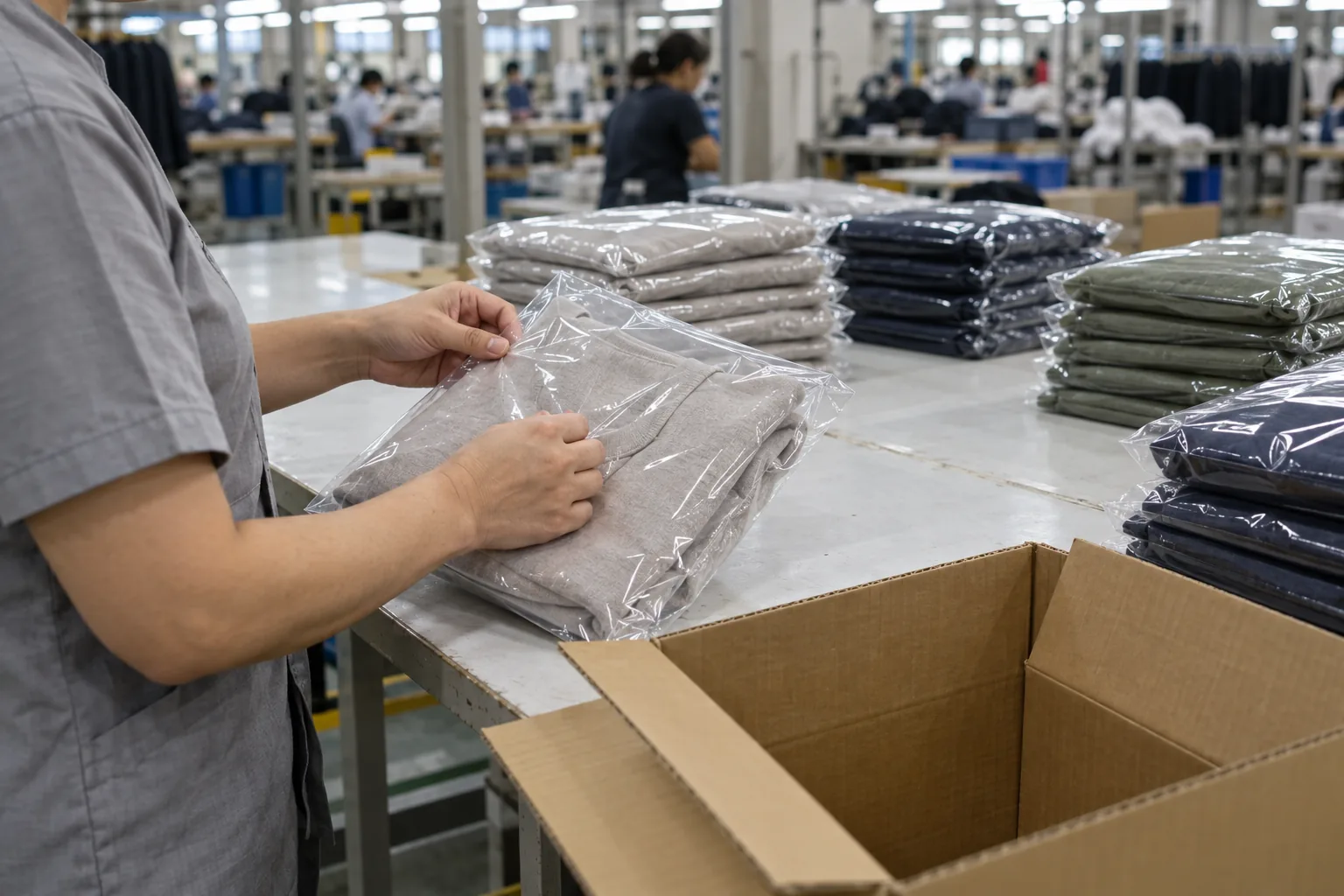
Packaging changes the meaning of “ready.” A factory can finish sewing while waiting for printed sleeves, approved barcode data, or a replacement box. Conversely, packaging can be available while garments still need inspection or corrective work. A schedule should show these dependencies separately instead of folding them into one unexplained completion date.
| Milestone | Evidence to request | What it does not establish |
|---|---|---|
| Garments finished | Quantity by style, color, and size awaiting final checks | Units are approved for packing |
| Packing inputs released | Approved reference, correct materials, final SKU data | All garments are packed |
| Cartons ready for collection | QC release, sealed carton count, weights and dimensions | Cargo has departed |
| Carrier handoff completed | Collection record and applicable transport confirmation | Customs clearance or warehouse receipt |
Request dates against these milestones and name the owner of each approval. A retail buyer may control ticket data, while the brand controls artwork and the factory controls assembly. If ticket data arrives after packing was due to begin, the original collection date needs reassessment even when garment production stayed on schedule.
Also define the quoted delivery point and applicable Incoterms rule with its named place. Factory readiness, forwarder collection, vessel or aircraft departure, and final delivery should never share a single unlabeled “ship date.”
Test whether added presentation changes the freight plan
A presentation box can change carton capacity before it changes garment weight. If a trial carton holds 40 bagged tees but only 24 boxed tees, a 240-unit order would require six cartons in the first arrangement and ten in the second. These are illustrative counts; confirm capacity with actual garments, packaging, and safe stacking conditions.
That difference can affect chargeable weight, available cargo space, and warehouse appointments. Give the forwarder the revised carton count, external dimensions, and gross weights. A freight estimate prepared for flat polybags should be rechecked after adding rigid boxes or substantial protective inserts.
Run the carton trial before booking against a fixed cargo profile. Include the largest or bulkiest variant and assess whether compression affects prints, collars, or presentation materials. Do not assume every size produces the same packed volume.
Ask for both the cargo-ready deadline and the carrier’s relevant documentation and receiving cutoffs. Finishing packing on a collection day leaves little room for quantity reconciliation or an incorrect carton label. Any buffer should reflect the chosen route and booking requirements, rather than an unexplained standard number of days.
Use a packing release checklist that catches shipment blockers
Inspect the presentation before the packing team repeats it across the order. Then check finished cartons against the same approved reference and quantity records. Agree the inspection coverage and defect handling in advance; checking one attractive unit does not demonstrate correct assortment throughout the shipment.
- Condition before enclosure: Check for loose threads, marks, trapped debris, and residual moisture. Confirm that the garment is suitable for packing before closing the bag or box.
- Unit identity: Compare garment size, sewn label, hangtag, and bag barcode. Scan identifiers and verify that the resulting SKU matches the physical item.
- Presentation consistency: Compare fold dimensions, graphic visibility, tissue placement, and attachment position with the approved packed reference.
- Protective fit: Check for strained closures, sharp tag fasteners, crushed boxes, and pressure against decoration. Reassess the largest size if its fit differs materially.
- Carton assortment: Reconcile actual contents with the packing list. Check size ratios, unit counts, and carton numbering before sealing.
- Collection data: Verify external carton measurements, gross weights, shipping marks, and any receiver-required identifiers against the final documents.
Record failures by affected SKU and carton, then isolate the units requiring correction. A misplaced hangtag may be corrected locally; a wrong barcode sequence can require a broader check. Update the ready date based on the actual rework scope instead of describing all packing defects as minor.
Questions buyers ask when packaging meets a launch deadline
Can we approve the clothes now and decide the packaging later?
You can separate those approvals, but identify the packing decision as an open dependency. Reserve a deadline for final components, artwork, and the packed reference. Until those are resolved, treat the carton-ready date as conditional, especially where materials need custom printing or development.
Does a standard-style sample prove the retail pack will be ready?
No. StitchQuote offers a 7-day sample for standard styles with confirmed specs and available materials; complex styles, custom washes, and custom-developed fabric take longer. That garment sampling condition does not establish a delivery date for custom packaging. Confirm the packing trial and component availability separately.
Can a small clothing order use custom presentation materials?
Confirm it per project. StitchQuote’s MOQ for most categories starts from 50 pieces per style, while denim starts from 100 pieces per style. Packaging suppliers may have separate minimums or production constraints. Ask how any excess components would be handled before approving the pack.
Would splitting the shipment protect a store launch?
It may help if a complete, correctly packed subset is ready and the receiver accepts partial deliveries. Confirm added freight, separate packing lists, carton numbering, and receiving appointments first. Sending incomplete retail packs can simply move the delay to the destination.
Brief the order around a verifiable handoff
Send the intended receiving route, packing sheet, reference images, SKU quantities, destination, and required receipt date together. Ask for garment completion, packing release, and collection readiness as separate milestones. StitchQuote’s services include cut-and-sew, private label, sampling, fabric and trim sourcing, woven labels, prints, embroidery, and QC before packing. Confirm the requested packaging scope for the specific project.
For related planning details:
- Prepare a tech pack with clear production instructions
- Review sampling and order minimums
- Explore private-label manufacturing support
- Discuss your packing scope and shipment milestones
Request a manufacturing quote
Share your product type, quantity range, and destination. We usually reply within one business day.