Custom Streetwear, Casualwear & Denim Manufacturer•MOQ 50 pcs•Denim MOQ 100 pcs•7-Day Sample Available

Why Denim Wash Outcome Should Be Discussed Before Fit Is Treated as Final
Learn denim wash before final fit through a clearer factory-side view that helps brands reduce rework, align sample goals, and move toward approval with better.

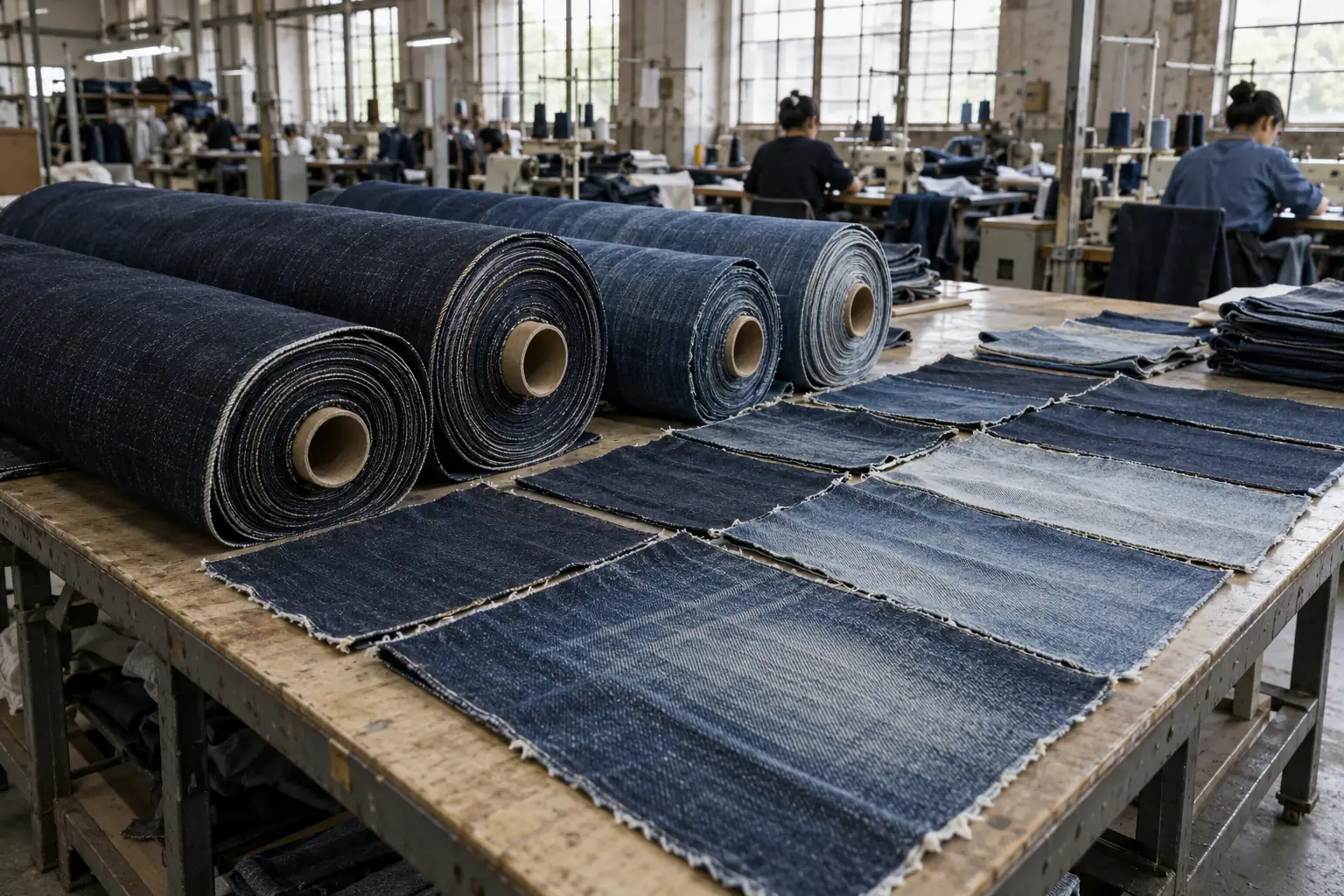
A denim fit approval is only useful if it represents the garment customers will receive. A jean can measure correctly before finishing, then change in the waist, rise, or leg after washing. When production fabric comes from several dye lots, an additional complication appears: bringing those lots toward one shade target may require different finishing adjustments, which can also affect dimensions and hand feel.
For buyers approaching bulk approval, shade lot control connects the visual standard to the fit standard. The practical question is whether each approved fabric and wash combination produces an acceptable finished garment. Establishing that evidence before signing off fit helps prevent a color correction from quietly becoming a sizing problem.
Separate fabric identity from the finished shade target
A fabric dye lot and a garment wash batch are different control points. Several rolls may belong to one dye lot, while a production order may pass through several wash batches. Neither a shared fabric name nor a shared wash recipe guarantees an identical finished appearance.
Before cutting, ask how rolls will be grouped, how their identity will follow cut bundles, and how finished garments will be traced to a wash batch. Where practical, panels within one garment should come from a compatible shade group. A dark back pocket on a lighter seat may be visible even when the overall garment falls within the approved color range.
This is also the moment to state the commercial expectation. A washed black carpenter jean sold individually may allow a broader shade range than a denim jacket and trouser advertised as a matching set. Define that expectation before the factory allocates fabric.
Approve a shade range that can coexist with the intended fit
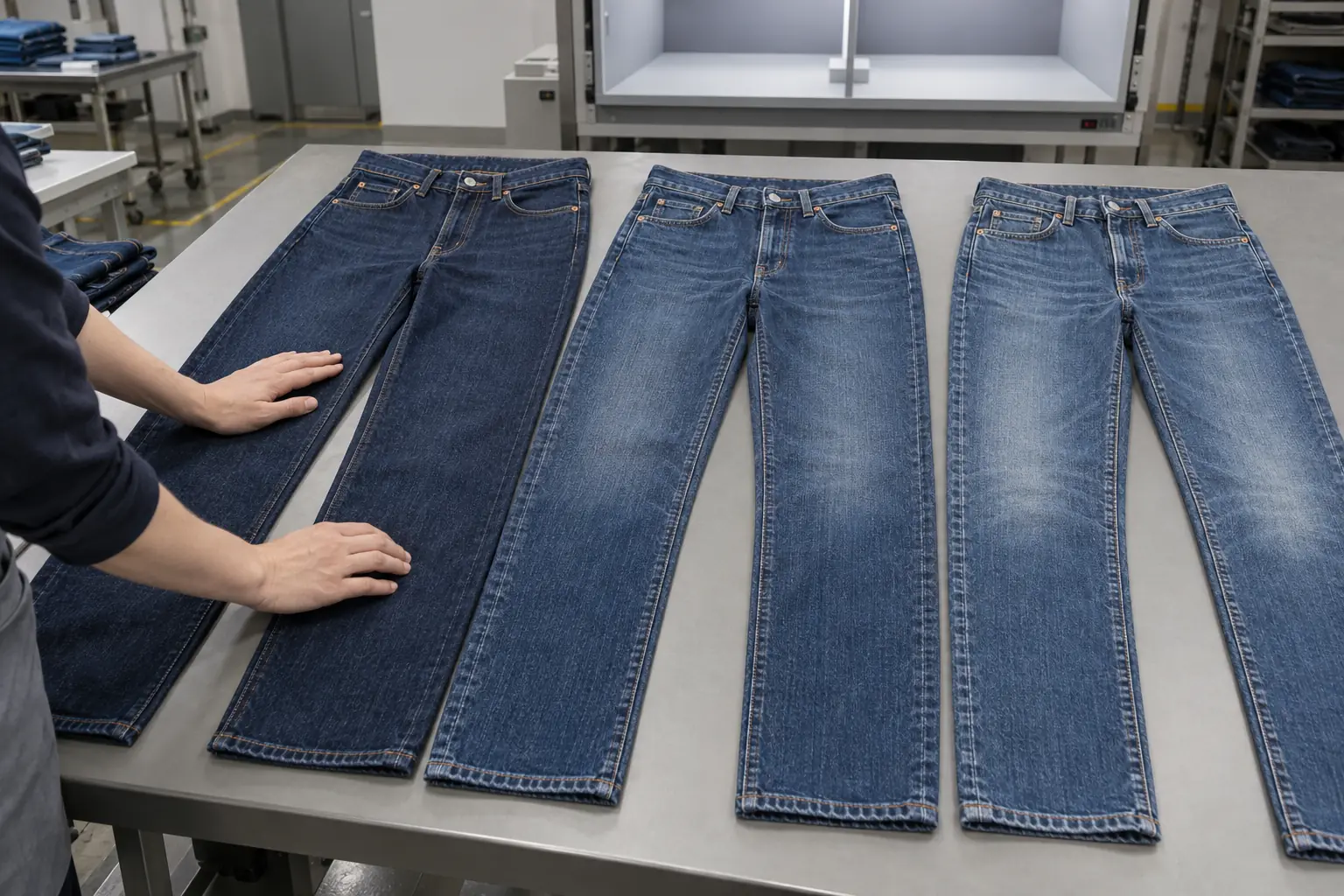
A single attractive sample does not describe the full acceptable range. Request physical references for the target shade and, where needed, acceptable lighter and darker boundaries. Assess them under agreed lighting and viewing conditions. Screen photographs can support discussion, but camera exposure and display settings make them unreliable as the sole color authority.
Discuss undertone, seam contrast, and localized abrasion separately from overall darkness. A greenish cast is not necessarily acceptable just because its depth resembles the target. Likewise, an excessively pale thigh may change how a relaxed leg looks without changing its measured width.
Pair each proposed shade boundary with finished measurements and a hand-feel review. If achieving the lighter boundary requires additional processing, check whether it also produces excessive waist contraction, seam puckering, or a softer leg than intended. The acceptable color range must sit inside an acceptable garment-performance range.
Use lot comparisons to decide when fit can be signed off
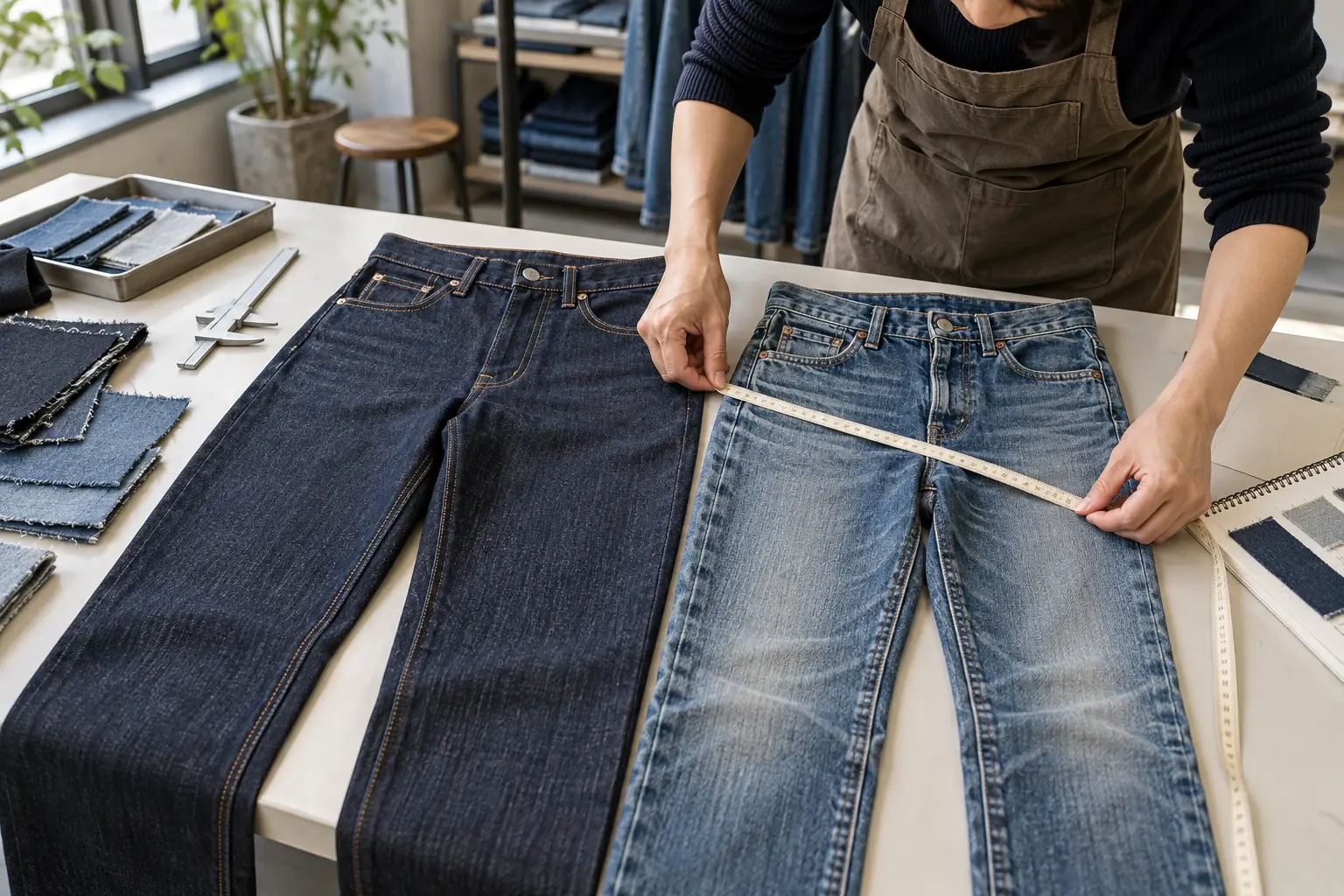
Keep early pattern feedback provisional until representative production material has been washed. For a tapered jean, compare the same size across the proposed shade groups so that size grading does not obscure the effect of the finish. Include additional sizes where construction or proportion makes the risk different.
| Approval evidence | Buyer decision |
|---|---|
| Unwashed sample with construction measurements | Confirm assembly and initial pattern direction. |
| Washed samples from representative fabric lots | Compare shade, dimensional change, and garment balance. |
| Finished sample meeting both shade and measurement limits | Approve the specific material and finish combination. |
| Bulk batch comparison against retained references | Release, segregate, or investigate the batch. |
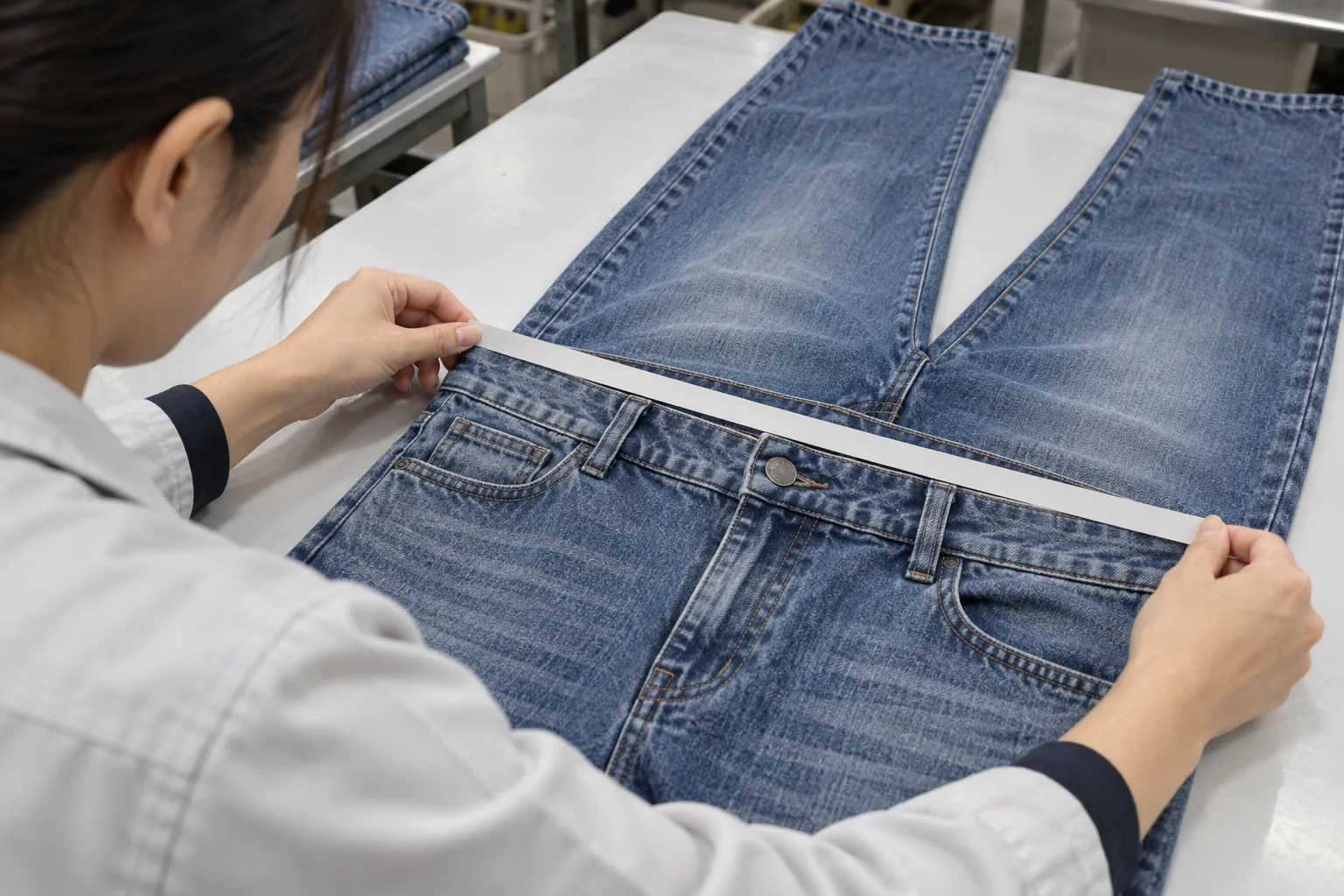
Specify when measurements are taken after drying and conditioning, and use the same method for comparisons. Record key points such as waist, front rise, thigh, inseam, and leg opening. A washed garment that is still damp or has been stretched during handling can produce misleading readings.
Fit approval should identify the fabric reference, lot information available at that stage, wash revision, and measurement sheet. A change to any of these may require targeted revalidation; it should not inherit approval automatically.
Make wash corrections trigger a fit review
Imagine that the first bulk batch is too dark while its measurements meet the specification. Additional washing might improve the color, but it can also change shrinkage, surface wear, or stretch recovery. Treat the proposed correction as a new approval question with both visual and dimensional consequences.
Ask the supplier to isolate the affected batch and trial the correction on a representative selection before processing all remaining garments. Compare corrected pieces with retained references, measure them again, and record the disposition. Do not blend corrected and original batches simply to average out their appearance.
If a batch cannot meet both shade and fit limits, the buyer needs an explicit decision: reject it, approve a documented concession, or consider a separate commercial allocation. Any concession should identify the affected quantity and departure from specification. It should not silently become the standard for future orders.
Check shade continuity before garments enter cartons
Final QC should preserve the connection between color, dimensions, and batch identity. Ask for the inspection scope and acceptance criteria to be agreed before bulk production. A mixed pile of finished jeans can hide a systematic problem concentrated in one wash batch.
- Traceability: Confirm that inspected pieces can be linked to their fabric group and wash batch.
- Within-garment consistency: Compare legs, waistband, pockets, and adjoining panels for unintended shade breaks.
- Batch comparison: Review garments against retained physical shade references under agreed lighting.
- Finished dimensions: Check critical measurement points across relevant sizes and batches, including corrected pieces.
- Surface and handle: Look for uneven abrasion, pronounced seam puckering, and unexpected stiffness or softness.
- Packing allocation: Keep identified shade groups controlled where matching sets or coordinated retail deliveries require it.
A passed color check cannot substitute for a passed measurement check. Record both outcomes before release, with unresolved pieces held separately.
Buyer questions about shade-linked fit approval
Can one approved wash sample cover every fabric lot?
It establishes a reference, but does not prove that all lots respond alike. Request representative comparisons before extending approval, especially when incoming fabric shows visible variation or the wash needs adjustment.
Should different shades use different patterns?
Only if measured evidence supports that choice. First determine whether the difference comes from material behavior or inconsistent processing. Any pattern compensation should be checked through another finished sample and tied to the relevant shade specification.
What if the reorder uses the same denim specification?
Retain the previous approved garment and its measurement record, then compare the new material after finishing. A repeated specification is useful purchasing information, but a new lot still needs evidence of acceptable shade and dimensional behavior.
Does a small denim order remove the need for lot control?
No. Even a small order can contain different rolls or wash batches. StitchQuote denim starts from 100 pieces per style. A 7-day sample is available for standard styles with confirmed specs and available materials; custom washes, complex styles, and custom-developed fabrics take longer.
Build the approval brief around the finished garment
Send the shade references, finished measurement limits, material details, and matching requirements together. StitchQuote provides cut-and-sew, private label, sampling, fabric and trim sourcing, branding, and QC before packing. Confirm the project’s lot-control and approval requirements during the inquiry so the sampling work answers the decisions needed for bulk release.
- Prepare the garment specification and measurement brief
- Review sampling and minimum order planning
- Understand the denim wash approval process
- Discuss your denim project with StitchQuote
Request a manufacturing quote
Share your product type, quantity range, and destination. We usually reply within one business day.