Custom Streetwear, Casualwear & Denim Manufacturer•MOQ 50 pcs•Denim MOQ 100 pcs•7-Day Sample Available

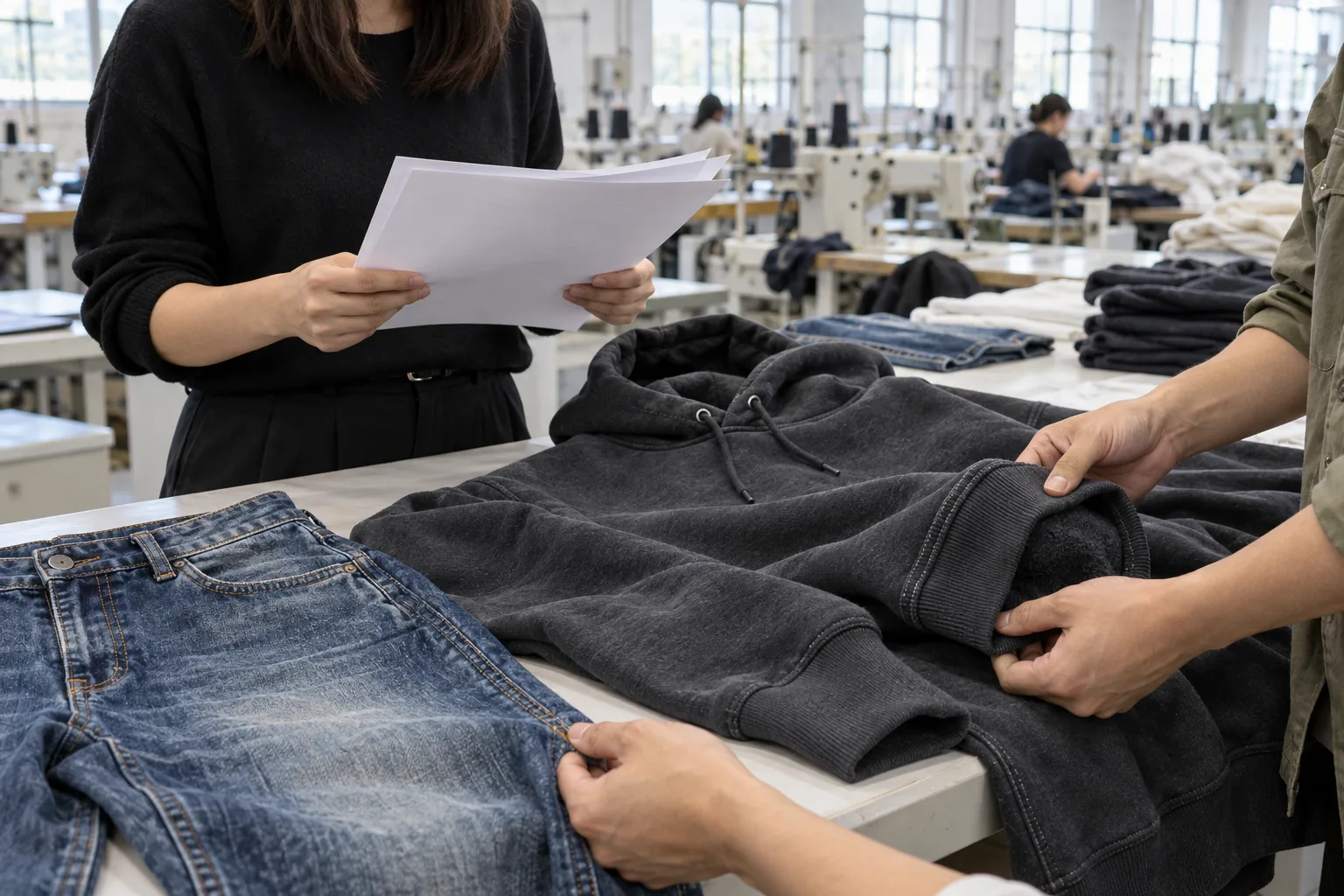
What Buyers Usually Miss in the First Factory Proforma Invoice
Use this factory-side guide to compare what buyers usually miss in the first factory proforma invoice more clearly across supplier fit, quote scope, approvals, and.

A first factory proforma invoice can look complete while leaving the garment itself surprisingly undefined. Style names, quantities and payment terms may all be present, yet the document may price a basic sweatshirt when your collection requires a structured heavyweight hoodie with reinforced pockets and embroidery. Before paying, check whether the commercial description matches the category you actually intend to sell.
For brand buyers, this is a supplier-fit checkpoint. The invoice should connect the proposed product to its materials, construction, finishing and approval requirements. It does not need to reproduce an entire technical file, but it should identify the documents that define the order and expose assumptions that could change the price or delivery commitment.
Read the product line as a test of category understanding
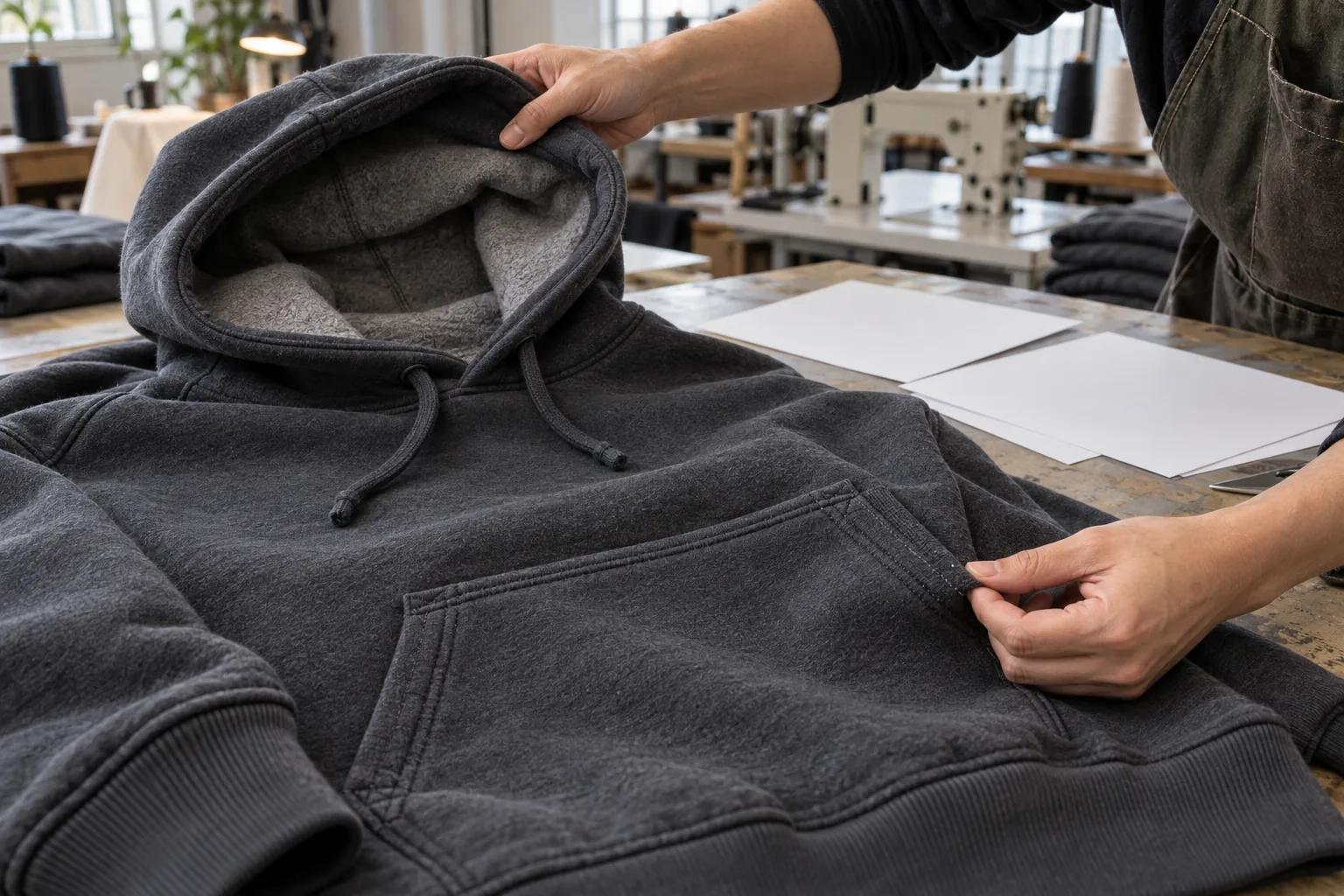
Start with the noun on the invoice. “T-shirt,” “hoodie” and “jeans” describe broad products, not production requirements. A premium jersey tee may depend on opacity, neckline recovery and controlled shrinkage. A fashion hoodie may depend on hood volume and the way its rib holds the hem. Denim may require an agreed wash appearance before anyone can judge the finished fit.
Ask the supplier to reference a style code, specification revision and relevant sample status against each line. For example, an illustrative description could read “HD-04 pullover, technical specification revision C, bulk fabric pending approval.” This is more useful than a description that implies everything is approved simply because a style number exists.
Then ask what the quoted category excludes. Does the hoodie allowance cover a lined hood? Are pocket bartacks included? Is the denim price for an unwashed garment or the approved finished wash? Specific answers help reveal whether the supplier has understood the work. An invoice alone cannot prove manufacturing capability; it can show where a targeted sample must provide that evidence.
Separate fabric identity from the finished garment result
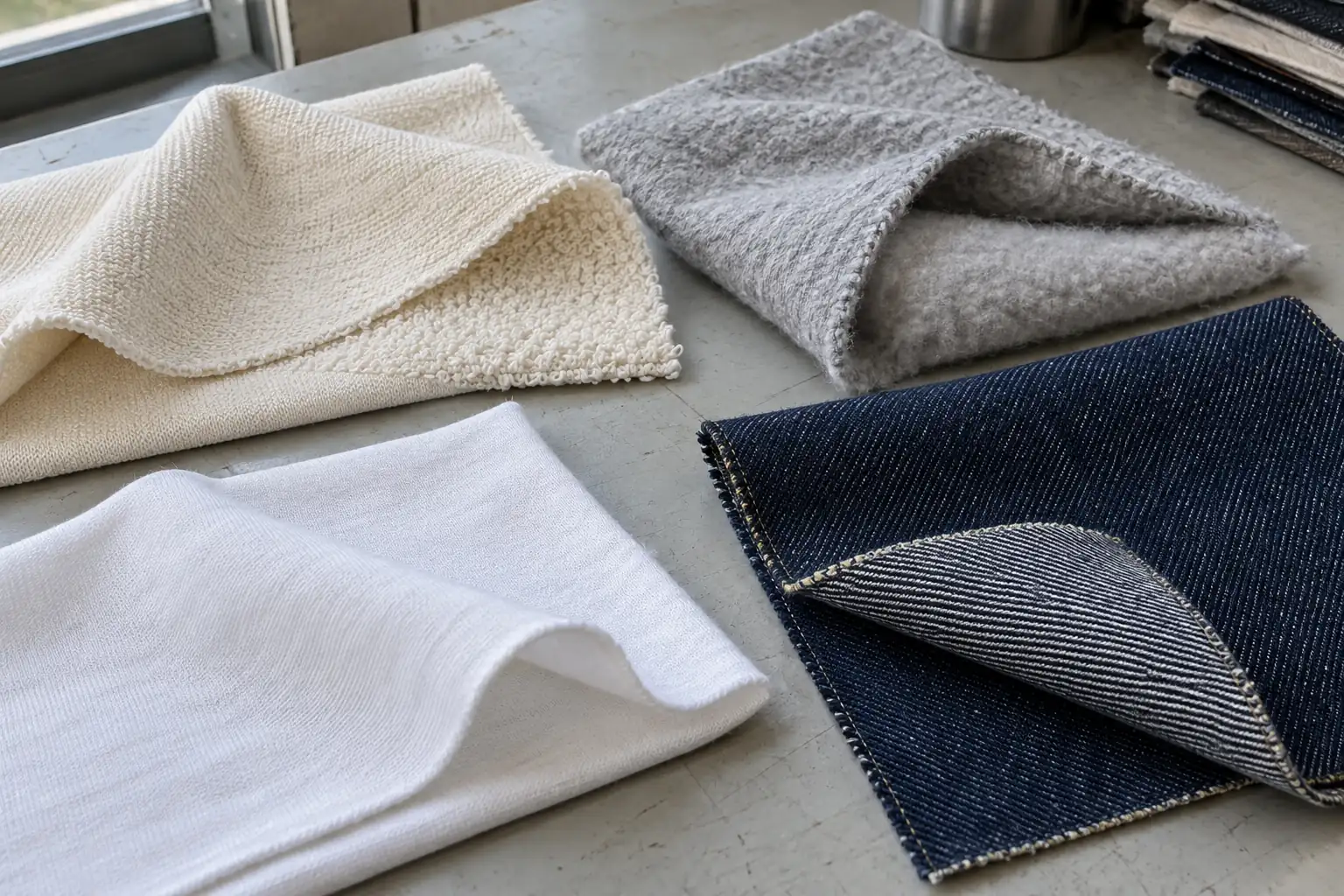
A fabric weight is useful, but insufficient. Two fabrics described as 320 gsm can behave differently because of composition, yarn, knit structure and finishing. For a sweatshirt, confirm whether the quoted material is loopback or brushed fleece. For a tee, distinguish a compact jersey from a slubby fabric if a smooth printed surface matters.
The invoice or its referenced material schedule should identify composition, nominal weight, color reference and approval status. Record whether fabric is available stock or requires development. An acceptable weight variation should be agreed for the project rather than silently assumed. If a proposed material changes after sampling, request a revised reference before approving bulk production.
For denim, separate the incoming fabric from the finished appearance. Base shade, stretch content and fabric weight do not fully describe an enzyme wash or faded effect. Specify an approved wash reference and how shade variation will be assessed. Measurements should also state whether they apply before or after the agreed wash, because that distinction affects both costing and fit approval.
Match the price scope to the operations your category needs
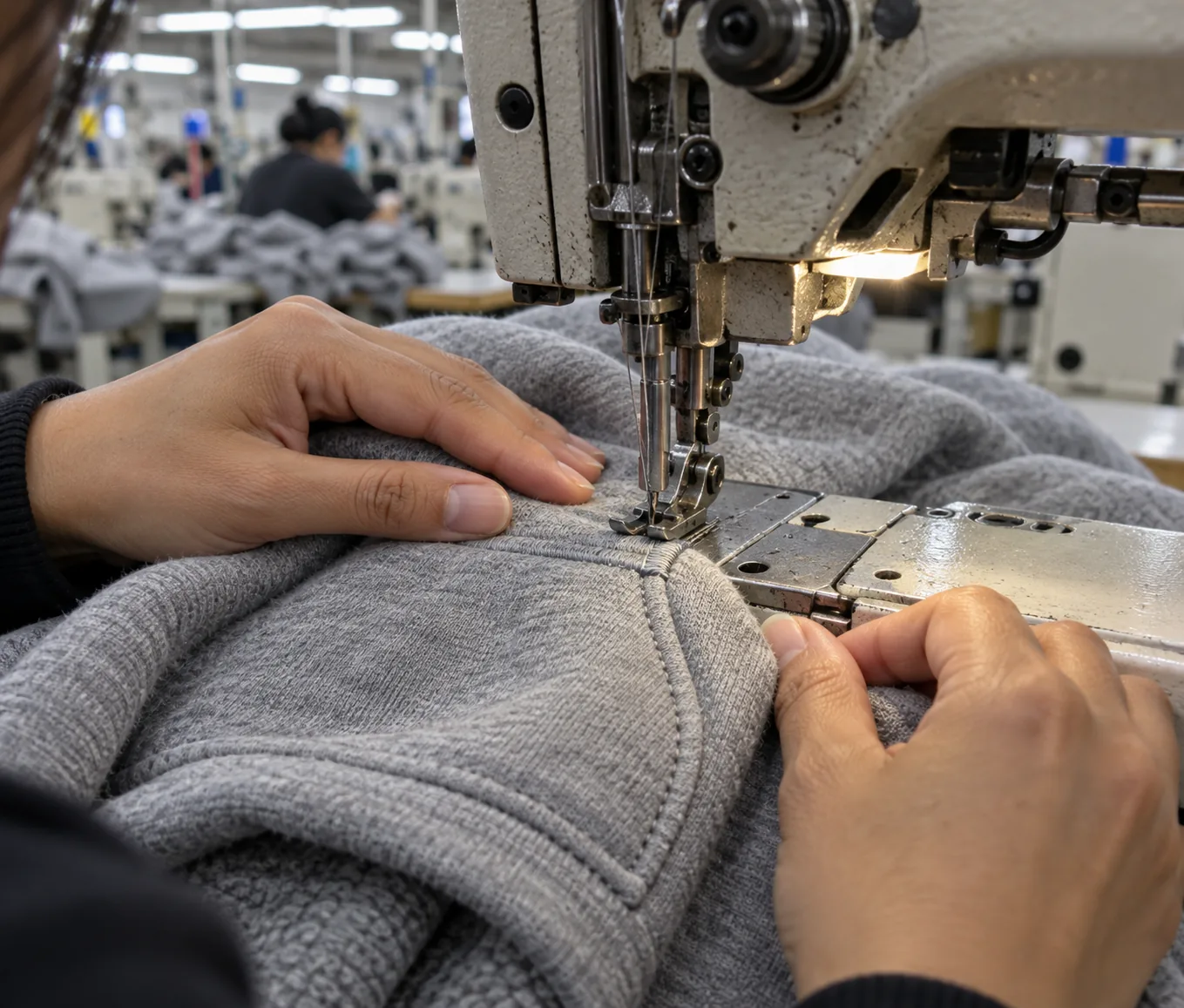
Use a short scope comparison to identify operations hidden inside a unit price. The examples below are review prompts, not universal construction requirements. Your design determines which operations belong in the order.
| Category example | Detail to reconcile | Evidence to request |
|---|---|---|
| Premium jersey tee | Neck rib, shoulder tape and hem finish | Construction specification linked to an approved sample |
| Heavyweight hoodie | Hood lining, pocket reinforcement and embroidery backing | Sample showing bulk-intent layers and decoration |
| Washed denim jeans | Wash treatment, hardware and reinforcement | Wash reference, trim approval and post-wash measurements |
| Casual woven overshirt | Interlining, pocket matching and button attachment | Material schedule and finished construction reference |
Decoration deserves its own scope check. “Logo included” leaves placement, dimensions, technique and number of positions open. A small chest embroidery and a large dense back embroidery create different production requirements. Specify artwork revision, finished dimensions and placement reference, then identify whether development or setup charges are separate.
Ask which labels and packing components are included as well. Woven neck labels, care labels and individual packaging should not depend on a verbal understanding. StitchQuote offers cut-and-sew, private label, sampling, fabric and trim sourcing, and branding through woven labels, prints and embroidery. Confirm the selected services for your particular order rather than treating the full service list as an automatic inclusion.
Reconcile quantities before treating the total as your commitment
A mixed collection can conceal incompatible minimums. StitchQuote’s MOQ for most categories starts from 50 pieces per style; denim starts from 100 pieces per style. These are starting points, not a promise that any combination of colors, sizes, fabrics and finishes is workable at that quantity.
For example, a planned order of 50 tees and 50 jeans cannot be evaluated as one 100-piece style. The denim allocation is below its stated starting MOQ. Likewise, splitting a style into several colors may introduce material or processing constraints. Request explicit confirmation of the permitted split and any resulting change to the quoted quantity.
Check that size quantities add up to each style total and that each style total matches the invoice calculation. Establish how shortages, extra units and rejected units will be handled; do not accept an unexplained production allowance. If a size attracts a different unit price, the affected sizes and quantities should be visible.
Finally, reconcile currency, deposit basis, balance trigger and delivery terms. Identify the named delivery location and whether freight, duties or taxes are included or excluded. A correct garment price still produces an unreliable purchase decision if the buyer mistakes a goods-only total for the full landed cost.
Build category-specific acceptance checks into the approval trail
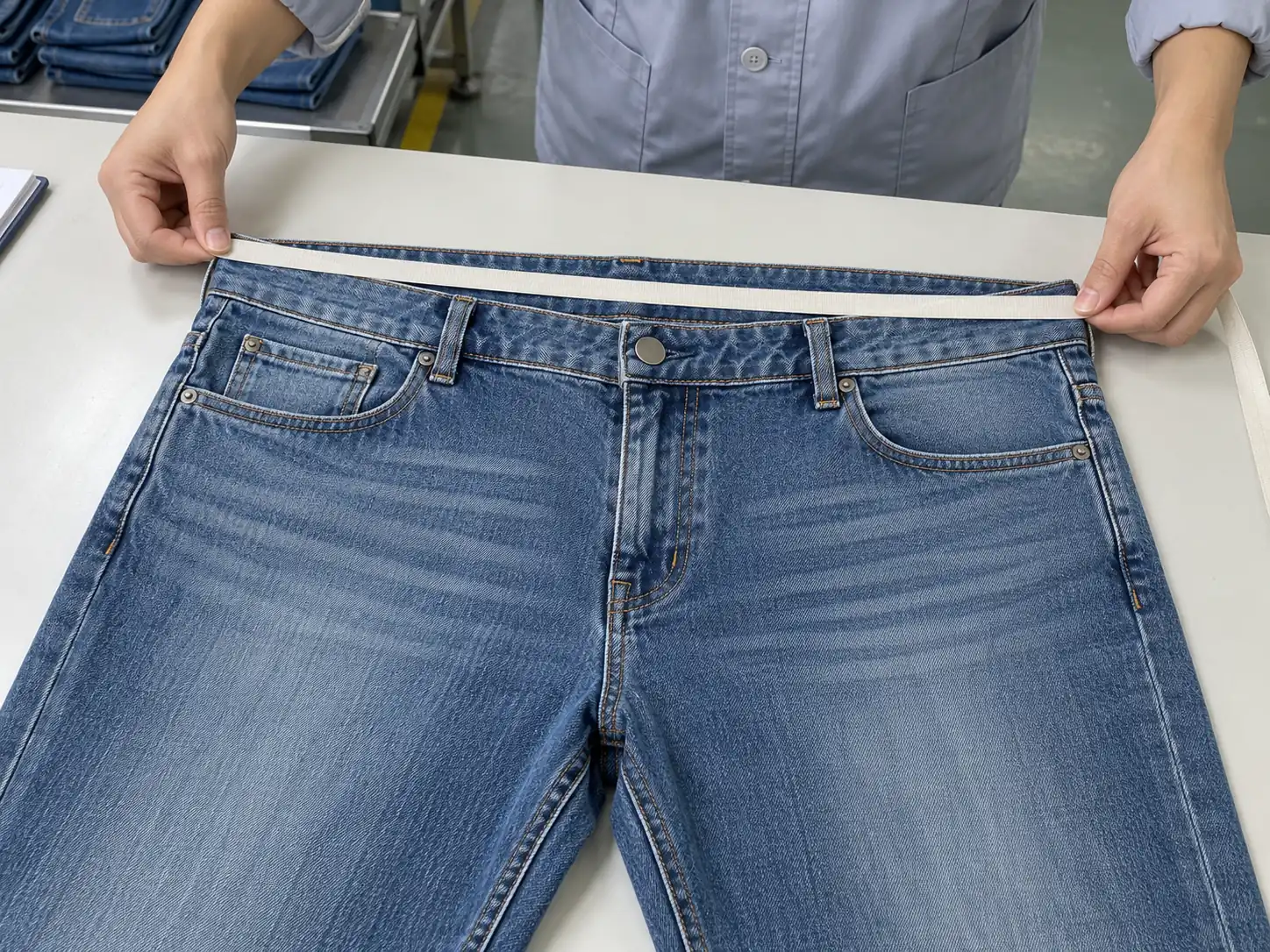
The most useful QC checklist follows the risks of the garment. StitchQuote provides QC before packing, but buyers should confirm the inspection criteria, reporting arrangements and remedy process for their project. A general promise to inspect does not establish what counts as an acceptable result.
- Fit and measurement: Identify measurement points, garment condition and tolerances. As an illustrative proposal only, a buyer might request a chest-width tolerance of ±1 cm on a laid-flat adult tee; confirm suitability for the material and size range.
- Wash-dependent dimensions: For denim, check waist, inseam and leg opening after the specified finishing process. State any conditioning or laundering procedure used for approval.
- Surface and shade: Agree how panels, garments and approved references will be compared under consistent lighting. For intentional wash variation, define an acceptable range.
- Construction and decoration: Inspect the category’s vulnerable areas, such as pocket corners, neckline seams, embroidery edges and hardware attachment.
- Order identity: Check size labels, care-label content, color quantities and packing allocation against the approved order.
Keep the approval record traceable. Reference the accepted sample, specification revision and outstanding exceptions in writing. If an invoice is issued before these are settled, identify the open items and agree which commitments can proceed. Avoid allowing a payment milestone to be interpreted as approval of an untested material or unfinished fit.
Questions to resolve when the invoice arrives before the sample
Can a standard sample lead time cover a custom-washed style?
Not automatically. StitchQuote has a 7-day sample available for standard styles with confirmed specifications and available materials. Complex styles, custom washes and custom-developed fabric take longer. Ask which conditions apply to the invoiced style and what starts the timing. Keep sampling and bulk delivery commitments separately identified.
What if the invoice says “as sample” but the sample uses substitute fabric?
List the substitutions and their approval status. A prototype may demonstrate silhouette without validating bulk fabric recovery, shrinkage or hand feel. Request a clear reference to the intended production material and agree what further sample or testing is needed before bulk approval.
Should a jersey tee and denim jeans share one approval schedule?
They can appear on one invoice, but their approval dependencies should remain visible. A tee may await print placement while jeans await wash shade and post-wash fit. Ask whether shipment is consolidated or split, and how a delay in one category affects the other.
How should a specification change appear after the first payment?
Request a written revision identifying the changed detail and its effect on scope, cost and timing. Retain the earlier version for traceability, but make the controlling version explicit. Confirm treatment of any materials already committed before authorizing the change.
Use the first invoice to close the category-fit decision
Before accepting the order, send one consolidated list of unresolved product, quantity and approval points. Ask for a revised invoice or a clearly linked specification schedule covering the answers. The outcome should be a purchase scope that your buyer, technical reviewer and supplier can all interpret consistently.
Related reading and project support:
- Prepare a tech pack that supports the invoice scope
- Review sampling and MOQ planning
- Assess a cut-and-sew streetwear manufacturer
- Discuss your category and order specifications with StitchQuote
Request a manufacturing quote
Share your product type, quantity range, and destination. We usually reply within one business day.